
Why an Interlocking Paver Walkway Transforms Your Home
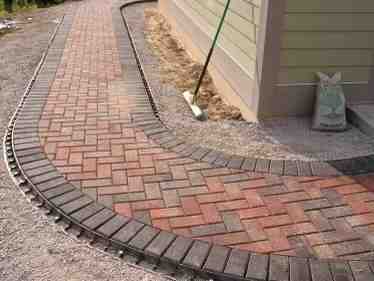
An interlocking paver walkway installation is one of the smartest investments a North Shore homeowner can make. These pathways blend stunning aesthetics with exceptional durability, lasting up to 50 years when installed correctly. They do more than connect point A to B; they elevate your home’s curb appeal, significantly increase its property value, and make a lasting first impression.
Imagine pulling into your driveway to be greeted by a beautifully crafted pathway instead of cracked, stained concrete. The custom pattern and rich colors perfectly complement your home’s exterior, making an immediate statement of quality and care. Unlike traditional concrete that inevitably cracks, spalls, and heaves under New England’s harsh freeze-thaw cycles, interlocking pavers are engineered as a flexible system built to endure these exact conditions.
The durability advantage isn’t just anecdotal—it is rooted in how interlocking systems are engineered. Concrete pavers manufactured to recognized performance standards provide exceptional compressive strength (often over 8,000 psi), superior abrasion resistance, and proven freeze-thaw durability. Industry bodies such as the Concrete Masonry & Hardscapes Association publish best-practice guidance for design and construction, and quality pavers are produced to the ASTM C936 standard for solid concrete interlocking paving units.
Beyond strength, the design versatility of pavers is a key advantage. Available in concrete, natural stone, and permeable options, they offer endless creative possibilities. You can create custom patterns with a vast array of colors, shapes, and textures that reflect your personal style. For homeowners in Essex County, they provide a functional and beautiful solution to guide visitors, prevent lawn damage from foot traffic, and, with permeable varieties, even manage water runoff in an eco-friendly way.
Life-cycle value is another critical reason homeowners choose pavers. While your upfront investment may be higher than a poured concrete path, the long-term cost of ownership is often significantly lower. Consider the expense of demolishing and repouring a cracked concrete slab versus the simple, low-cost task of resetting a few pavers. Because pavers are modular, if a utility line needs access or a paver becomes stained, the affected units can be lifted and replaced—no jackhammer, no patchwork repair scars, and no starting from scratch.
Planning and Designing Your Dream Walkway
A successful interlocking paver walkway begins with thoughtful planning and intentional design. This stage transforms your idea into a tangible vision that improves curb appeal, increases property value, and enhances how you experience your landscape. Consider the walkway’s primary purpose: is it a grand, formal entrance, a meandering garden path, or a practical connector to a patio or driveway? The answer will guide your design choices in shape, material, and scale.
Design Considerations
- Width and Accessibility: Functionality is paramount. A 36-inch width is standard for a single person, but 48 inches is more comfortable for two people walking side-by-side. If you want your path to be accessible for wheelchairs, strollers, or anyone with mobility challenges, maintain a clear width of at least 36 inches with periodic passing spaces, target a maximum running slope of 1:20 (5%), and provide cross slopes around 1:48 (2%) for drainage, as outlined in guidelines like the 2010 ADA Standards for Accessible Design.
- Straight vs. Curved Paths: The path’s shape defines your landscape’s character. Straight paths offer a formal, direct, and efficient look that complements modern or colonial architecture. Curved paths create a softer, more organic feel, inviting a leisurely stroll and adding a sense of mystery by partially obscuring the destination. Use a garden hose or marking paint to visualize the flow and ensure curves are gradual and pleasing to the eye.
- Paver Materials and Standards: The material you choose sets the tone—and the performance. Concrete pavers offer the broadest palette of colors, shapes, finishes (smooth, textured, tumbled, flagstone-like), and color blending technology (through-mix vs. face-mix); select products manufactured to recognized performance standards such as ASTM C936 for dimensional consistency and durability. Natural stone like bluestone, granite, travertine, and slate delivers a timeless, upscale feel with unique variation, though some types vary in porosity and suitability for cold climates. If your property experiences drainage challenges, permeable interlocking concrete pavers (PICP) are a smart choice that store and infiltrate rainwater through an open-graded base, a key strategy in green infrastructure recognized by the EPA.
- Pattern, Borders, and Accents: The artistry of pavers shines in customization. Classic patterns like herringbone (excellent for load distribution), basket weave, and running bond each create distinct visual rhythms. Borders in a contrasting color or a soldier course (pavers laid side-by-side) help define the edges and protect the field from lateral movement, while accent bands or medallions add a unique personality. To see how we translate inspiration into built work, review our custom walkway and stair designs with real-world examples of materials and layouts.
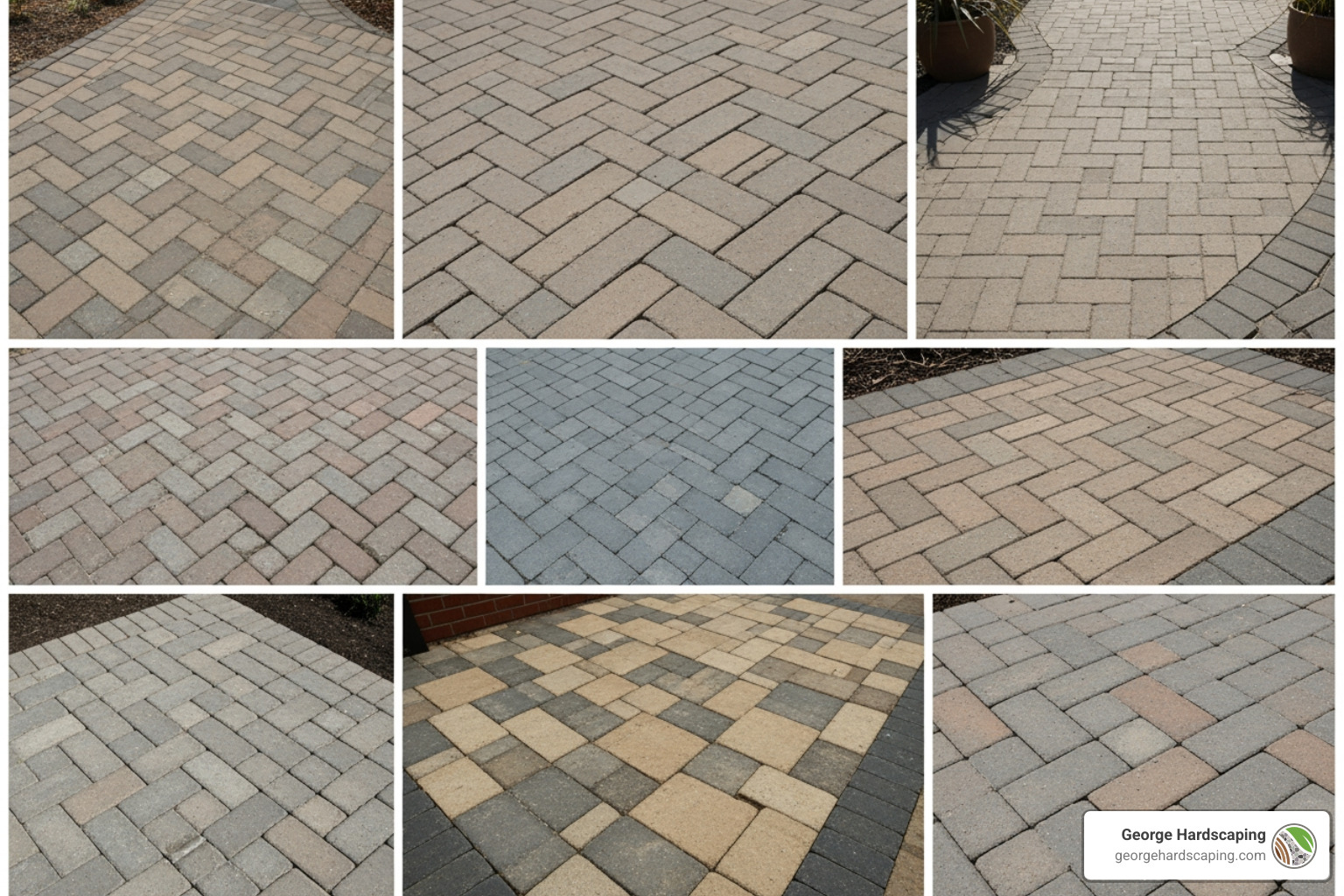
Layout Tips That Lift the Design
- Use the home’s architecture to guide geometry. Align main walkway axes with front doors, columns, or prominent windows for a composed, intentional look.
- For curved paths, maintain smooth, generous radii to avoid choppy cuts and to keep joint lines neat and consistent.
- Consider wayfinding and comfort. A slightly wider section at the front step or at patio entries provides a natural landing or pause space.
- Plan for lighting and utilities ahead of time. If you intend to add low-voltage path lighting or irrigation, set conduit during excavation to avoid disturbing the finished walkway later.
George Hardscaping helps you translate ideas into a clear scope of work: material schedule, pattern, edges, and elevations that address drainage and the realities of your site. We integrate walkways with patio design services to ensure grades, steps, and joints align perfectly.
Gearing Up: Tools and Materials for Installation
Proper preparation is the foundation of a smooth installation and a long-lasting result. Before starting your interlocking paver walkway, gather all the necessary tools and materials and align them with industry guidance so your project performs over decades, not just years.
Essential Materials:
- Interlocking Pavers: Order 5–10% extra for cuts, waste, and future replacements. For the best long-term performance, choose products manufactured to recognized standards such as ASTM C936 for concrete pavers; it helps ensure consistent strength, color, and freeze-thaw durability.
- Crushed Aggregate Base: Use a well-graded, angular stone base (often called dense-graded aggregate or DGA) to create interlock within the base itself. In traditional (non-permeable) installations, 3/4″ crushed stone with fines is common. In permeable installations, use open-graded aggregate like No. 57 stone for sub-base and No. 8 stone as bedding. Industry resources from the Concrete Masonry & Hardscapes Association provide guidance on base gradations and thickness by soil and climate.
- Coarse Bedding Sand: For standard installations, a 1-inch layer of coarse, washed concrete sand (similar to ASTM C33 gradation) is ideal for leveling pavers. Avoid stone dust or screenings; their fine particles retain moisture, which can lead to frost heave, and they can break down over time, causing pavers to settle.
- Polymeric Sand: This specialized sand includes polymers that, when activated with water, harden to lock pavers together, deter weed growth, and resist insect tunneling.
- Geotextile Fabric: A non-woven geotextile fabric is crucial. It separates the native soil from the aggregate base, preventing contamination and improving stability—especially important in clay or silty soils common in New England.
- Paver Edge Restraints: Use heavy-duty plastic, aluminum, or steel edge restraints secured with 10-inch spikes driven into the compacted base, not just the bedding layer. Concrete curbing is another robust option for heavy-duty edges.
Essential Tools:
- Excavation & Transport: Shovel, spade, pick, and wheelbarrow. For larger projects, a mini-excavator or skid steer can save significant time and labor.
- Layout & Leveling: Tape measure, stakes, string line, line level or laser level, and marking paint. A garden hose is handy for visualizing curves.
- Compaction: A hand tamper is useful in tight zones, but a heavy-duty plate compactor is essential for compacting base lifts and for setting pavers into the bedding layer. Lowe’s and other home improvement stores offer plate compactor rentals for larger projects.
- Setting & Cutting: Rubber mallet, paver spacers (if required), and a masonry saw with a diamond blade or a guillotine splitter for clean, safe cuts. Wet cutting is strongly preferred to minimize harmful silica dust.
- Safety Gear: Safety goggles, hearing protection, heavy-duty gloves, steel-toe boots, and a NIOSH-approved dust mask or respirator when cutting. Review OSHA’s crystalline silica standard for construction to understand safe cutting practices and exposure control.
Pro Tip: Stage materials near, but not on, your work area. Keep the sand clean and dry; covered pallets protect pavers from rain and staining before installation.
If you prefer full-service delivery with professional-grade equipment, our comprehensive hardscaping and masonry services include project management, material procurement, and expert installation tailored to North Shore soils and weather.
The Ultimate 8-Step Guide to Installing an Interlocking Paver Walkway
With planning complete and materials on site, it’s time to build your interlocking paver walkway. This process requires precision, patience, and physical effort to ensure a beautiful, long-lasting result that won’t shift or settle.
Step 1 & 2: Site Preparation and Excavation
This foundational stage is the most critical for durability. First, always Call 811 a few days before you dig to have underground utility lines marked. This free service prevents dangerous and costly accidents.
Next, mark the walkway’s layout using stakes and string lines. For curves, a garden hose is a useful guide. Establish the finished elevation and a gentle slope of roughly 1/4 inch per foot (a 2% grade) away from structures to manage surface water. Clear all sod, topsoil, roots, and organic material; these will decay and cause settlement if left in place.
Excavate to accommodate the total system thickness: the compacted aggregate base, the bedding layer, and the paver thickness. In most North Shore settings, excavate 7 to 9 inches for standard walkways (e.g., 4-6″ base + 1″ sand + 2 3/8″ paver). Go deeper in soft clay soils or where tree roots and prior fill are present.
Step 3 & 4: Building a Bulletproof Base
The base is the most important element for the longevity of your walkway. A solid, uniformly compacted base is what allows pavers to last for decades without sinking or heaving.
Start by laying non-woven geotextile fabric across the entire excavated trench, overlapping seams by 6-12 inches. This fabric separates the soil from your gravel, preventing mixing and enhancing stability.
Add the crushed aggregate base in lifts (layers) no thicker than 2-3 inches at a time. Compact each lift thoroughly with a plate compactor, making at least two overlapping passes (one north-south, one east-west) until the compactor moves smoothly without settling further. Maintain your intended slope using string lines or a laser level.
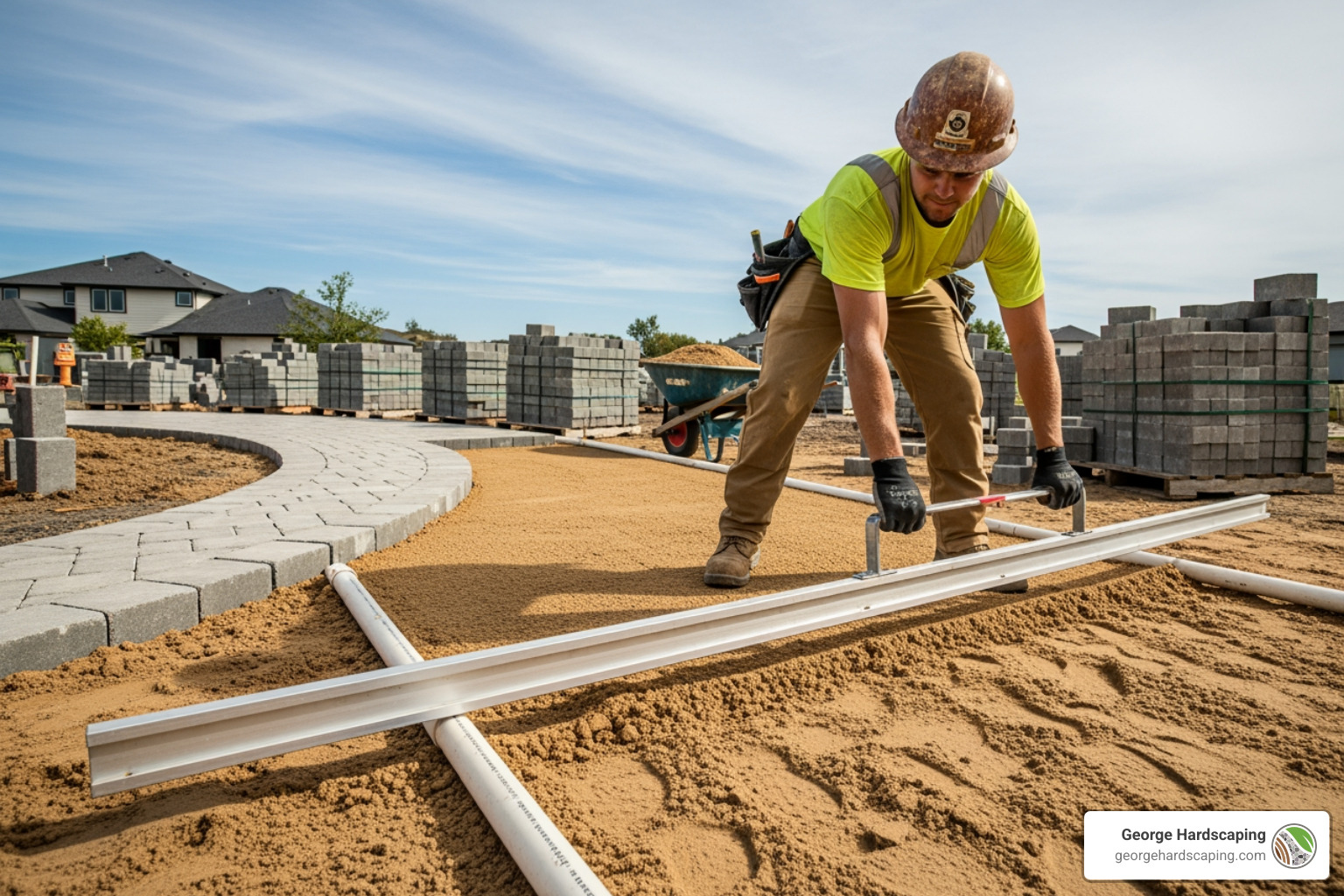
Finally, for standard installations, spread a 1-inch layer of coarse bedding sand on top of the compacted base. Use a technique called screeding to create a perfectly level surface: lay two parallel 1-inch outside-diameter pipes on the base, fill the area with sand, and drag a straight 2×4 across the pipes to strike off the excess. Remove the pipes and carefully fill the voids.
Step 5 & 6: Laying Pavers and Edge Restraints
Begin laying pavers from a fixed edge, like a foundation or a taut string line. Place each paver snugly against the next, keeping joint lines straight. Work from the installed surface to avoid disturbing the screeded bedding layer. Use a rubber mallet to gently set pavers to a uniform plane.
Cut pavers to fit edges and curves using a wet saw with a diamond blade. Always wear eye, ear, and respiratory protection. Keep cut pieces no smaller than one-third of a full paver whenever possible for better interlock at the edges.
Install paver edge restraints around the perimeter as you progress. Edge restraints must sit on the compacted base, not just on the bedding sand, and be anchored with 10-inch spikes at intervals per manufacturer guidance.
Step 7 & 8: Finishing with Jointing Sand and Curing
To lock everything together, sweep polymeric sand into the joints until they are completely full. Make several passes from different directions to ensure all voids are filled. Then, run a plate compactor over the surface (with a protective pad or urethane mat) to seat pavers into the bedding and vibrate sand deep into the joints. Sweep more sand in if needed.
Before activation, it is critical to use a leaf blower on low to remove every grain of sand from the paver surfaces. Any residue left behind can create a permanent haze when wetted. Finally, lightly mist the walkway with a hose on a gentle shower setting per the polymeric sand manufacturer’s instructions to activate the binding agents. Allow the walkway to cure for 24-48 hours without foot traffic.
Pavers vs. The Rest: Why Interlocking Is a Superior Choice
For homeowners in Essex County, an interlocking paver walkway offers clear, measurable advantages over traditional poured concrete or asphalt. The differences in durability, aesthetics, repairability, and long-term value are significant.
| Metric | Interlocking Pavers | Poured Concrete | Asphalt |
|---|---|---|---|
| Durability | Up to 50+ years; flexible and crack-resistant. | 10–20 years; prone to cracking from freeze-thaw. | 10–20 years; cracks, crumbles, and softens in heat. |
| Repairability | Easy and invisible; individual pavers can be lifted and replaced. | Difficult and obvious; patches never match in color or texture. | Difficult; patching is noticeable and requires equipment. |
| Aesthetics | High; vast array of colors, shapes, patterns, and textures. | Limited; typically gray, with some stamping options that can’t hide cracks. | Limited; typically black and utilitarian in appearance. |
| Lifetime Cost | Higher initial cost, but lower long-term costs due to longevity and low-cost repairs. | Lower initial cost, but high replacement/major repair costs. | Lowest initial cost, but high maintenance needs and shorter lifespan. |
| Weather Resistance | Excellent; designed to withstand New England freeze-thaw cycles. | Poor; cracks easily from frost heave and deicing salt damage. | Moderate; becomes brittle in cold and soft in heat. |
The Interlocking Advantage
- Durability and Flexibility: Pavers form a flexible pavement system. Each unit can move slightly with thermal expansion, minor base movement, and freeze-thaw cycles, distributing loads and minimizing the risk of the large structural cracks that often plague rigid concrete slabs.
- Easy Repairs: Because the system is modular, utility access or repairs don’t scar the surface. A plumber can access a buried pipe, or a stained paver can be replaced, and the surface can be relaid to its original, flawless condition. The repair is invisible.
- Environmental Benefits: Permeable paver options are an excellent, sustainable choice. They allow rainwater to filter through the joints into the ground, reducing runoff, recharging groundwater, and filtering pollutants. Review the EPA’s guidance on permeable pavements to see how they support green infrastructure and water quality goals.
- Life-Cycle Value: When you consider maintenance and repair over time, pavers provide a superior life-cycle cost. This long-term perspective is central to modern asset management. Agencies like the Federal Highway Administration use Life-Cycle Cost Analysis (LCCA) to evaluate infrastructure projects, favoring systems with lower maintenance and repair costs over their lifespan. The same logic applies to your home; a paver walkway is a resilient asset, not a disposable surface.
Want to see how these advantages scale for larger projects? Compare materials and details with our paver driveway installation services and align your walkway palette with your broader outdoor plan. If your project includes seating areas, explore our patio design services to coordinate borders, accents, and lighting as a single, polished design.
Maintaining Your Walkway and The DIY vs. Pro Decision
An interlocking paver walkway is famously low-maintenance, but a little care goes a long way in preserving its beauty and integrity. Here’s how to keep it looking its best and how to decide if installation is a project for you or a professional.
Long-Term Paver Care
- Routine Cleaning: Regularly sweep away leaves and debris to prevent stains. Periodically rinse with a garden hose to keep colors vibrant. Avoid aggressive pressure washing, which can erode joint sand and damage the paver surface.
- Weed and Ant Control: High-quality polymeric sand is your best defense, creating a firm, water-resistant joint that deters both weeds and insects. If a weed pops up, remove it promptly before it can establish roots.
- Joint Sand Refresh: Inspect joints annually, especially after a harsh winter. If joints have settled or eroded, top them up with polymeric sand and activate per the manufacturer’s instructions on a dry day.
- Sealing (Optional): Applying a breathable, high-quality sealer every 3-5 years can enhance color, protect against stains, and make cleaning easier. Choose between natural-look penetrating sealers or color-enhancing film-forming sealers.
- Winter Care in Cold Climates: Use plastic shovels or a snowblower with skids set slightly high to avoid scraping the surface. If you use deicers, avoid harsh rock salt (sodium chloride); products containing calcium magnesium acetate (CMA) are generally gentler on concrete pavers.
A Guide to Common Stains
- Efflorescence: A white, powdery haze caused by natural salts leaching from the concrete. It’s not a defect and often weathers away. If persistent, it can be cleaned with specialized efflorescence remover.
- Organic Stains: From leaves, berries, or moss. Usually removable with a 10:1 water-to-bleach solution or dedicated paver cleaner.
- Oil and Grease: Must be treated quickly. Blot the excess, then apply a poultice or a commercial degreaser designed for concrete pavers.
- Rust: From metal furniture or fertilizers with iron. Requires an acidic cleaner; test in an inconspicuous area first as it can etch the paver surface.
DIY vs. Hiring a Professional
Installing a paver walkway is a rewarding but physically and technically demanding project.
The DIY Approach:
- Pros: Savings on labor costs and the satisfaction of building it yourself. Flexible scheduling.
- Cons: Significant time and physical effort, especially in rocky or clay soils. Tool rentals add up. Most importantly, base preparation is technical; mistakes in excavation depth, base compaction, or drainage slope can lead to settling, heaving, edge failure, and uneven surfaces that are difficult to fix.
Hiring a Professional:
- Pros: A contractor like George Hardscaping brings expertise, efficiency, and commercial-grade equipment, ensuring a stable base, accurate grades, and a flawless finish. We understand local soils, codes, and drainage needs, source quality materials, and back our work with warranties. Projects are completed faster with less disruption.
- Cons: Higher upfront cost due to skilled labor—an investment that is often offset by longevity and zero repair costs over time.
If you want peace of mind and guaranteed quality, our expert team is ready to help. View our project gallery to see the craftsmanship and design range we bring to North Shore properties.
Frequently Asked Questions about Interlocking Paver Walkways
Here are answers to common questions about designing, installing, and maintaining an interlocking paver walkway.
What are the main benefits of an interlocking paver walkway?
Interlocking pavers are individual units that fit together to create a strong, flexible, and beautiful surface. Their primary benefits include:
- Longevity: Service life up to 50 years with proper base construction and edge restraints.
- Aesthetics: An extensive range of colors, shapes, textures, and patterns to elevate curb appeal.
- Easy Repairs: Single units can be lifted and replaced if stained or damaged, making repairs invisible.
- Sustainability Options: Permeable systems can reduce stormwater runoff and support groundwater infiltration.
How long do interlocking pavers really last?
A professionally installed interlocking paver walkway can last for 50 years or more. This impressive lifespan depends almost entirely on a properly excavated and compacted base, correct edge restraint installation, and adequate drainage. Poor base preparation is the number one cause of premature failure.
Can you install pavers over an existing concrete walkway?
This is not recommended and violates industry best practices. Laying pavers over concrete traps moisture between the two layers, can lead to failure in freeze-thaw cycles, creates an improper finished height at thresholds, and will telegraph any cracks or movement from the slab below into the paver surface.
How deep should the base be in New England?
For typical pedestrian walkways, a 4–6 inch deep compacted dense-graded base over a stable subgrade is common, with 1 inch of bedding sand and pavers on top. In the clay soils or freeze-prone, poorly drained areas common to the North Shore, increasing base thickness to 6–8 inches is a wise investment in long-term stability.
What kind of sand should I use?
For the 1-inch bedding layer in traditional installations, use a coarse, washed concrete sand (comparable to ASTM C33). For the joints, always use polymeric sand for its ability to lock pavers together, resist weeds, and deter ants. For permeable systems, replace bedding sand with a small open-graded stone (e.g., ASTM No. 8) to maintain infiltration.
What is efflorescence and should I be concerned?
Efflorescence is a white, crystalline deposit that can appear on the surface of any concrete or masonry product. It’s caused by natural salts within the paver being drawn to the surface by water, which then evaporates, leaving the salt deposit behind. It is a natural phenomenon and not a product defect. It typically weathers away on its own over several months. If you wish to remove it sooner, you can use a specialized efflorescence cleaner and a stiff brush, but often the best course of action is patience.
How do pavers compare to stamped concrete?
Stamped concrete is a poured concrete slab that is textured and colored to mimic pavers, stone, or brick. While it can look appealing initially, it is still a monolithic slab. This means it is susceptible to the same large, unsightly cracking that plagues standard concrete, especially in freeze-thaw climates. Once a crack appears, it is impossible to repair invisibly, ruining the pattern. Interlocking pavers, being a flexible system of individual units, do not suffer from this problem, and repairs are seamless.
Are permeable pavers right for my property?
Permeable interlocking concrete pavers (PICP) are ideal for properties with periodic ponding, strict local stormwater requirements, or for homeowners with a goal of reducing runoff. They store water in a deep, open-graded base and promote infiltration into the subsoil. To learn more, consult EPA permeable pavement guidance and local regulations such as the Massachusetts Stormwater Handbook to size the sub-base appropriately.
How do I handle snow and ice on pavers?
Use a plastic shovel or a snowblower with its skids set slightly above the paver surface to avoid scratches. For deicing, avoid overuse of traditional rock salt (sodium chloride); calcium magnesium acetate (CMA) is a gentler alternative. Properly installed polymeric sand in the joints will limit water penetration, reducing the risk of frost heave.
Will pavers shift or settle over time?
When installed correctly, pavers will not shift or settle. The combination of a deeply compacted base, proper edge restraints that prevent lateral movement, and joints filled with polymeric sand creates a stable, unified surface. If a localized area does settle due to unforeseen issues like a water leak, the modular system allows for easy lifting, base correction, and re-laying of the original pavers.
How do I choose a pattern?
Herringbone patterns offer excellent interlock and load distribution, making them a great choice for any application. Running bond and basket weave patterns are classic and visually appealing. Incorporate borders in a complementary color to frame the field and protect the edges. For inspiration, browse design idea boards on Pinterest and see our project gallery for local examples and material palettes.
Still have questions or want tailored recommendations? Contact our team for a free consultation and we’ll help you evaluate materials, drainage, and design details for your site.
Conclusion
An interlocking paver walkway is an exceptional investment for any North Shore home, offering a unique combination of durability, beauty, and long-term value. From excavation and base preparation to pattern selection and edges, a well-built paver path lifts curb appeal and provides decades of functional elegance.
Whether you tackle it as a DIY project or want the confidence of a professional installation, the path to success is the same: follow proven construction standards, use quality materials, and respect drainage and climate. When built correctly, a paver walkway looks as good in year ten as it did on day one—and if life happens, the modular system makes repairs clean and invisible.
If you’re ready to upgrade your entry or garden paths, we can help with concept, design, and a precise build plan. Request your free estimate today and let George Hardscaping craft the custom interlocking paver walkway your home deserves. For integrated projects, explore our patio design services and walkway and stair installation to create a cohesive outdoor space from driveway to back patio.
