
Interlocking Driveway Pavers: 7 Stunning Benefits 2024
Interlocking driveway pavers are a game-changer for homeowners looking to improve the curb appeal and functionality of their properties. These pavers are not only stylish but are also built to withstand the test of time. Having survived since the days of ancient Rome, the method of interlocking stones for paths and roads has proven itself both enduring and reliable. Today, with advanced techniques and materials, installing interlocking driveway pavers remains a top choice for modern homes.
Here’s why interlocking driveway pavers stand out:
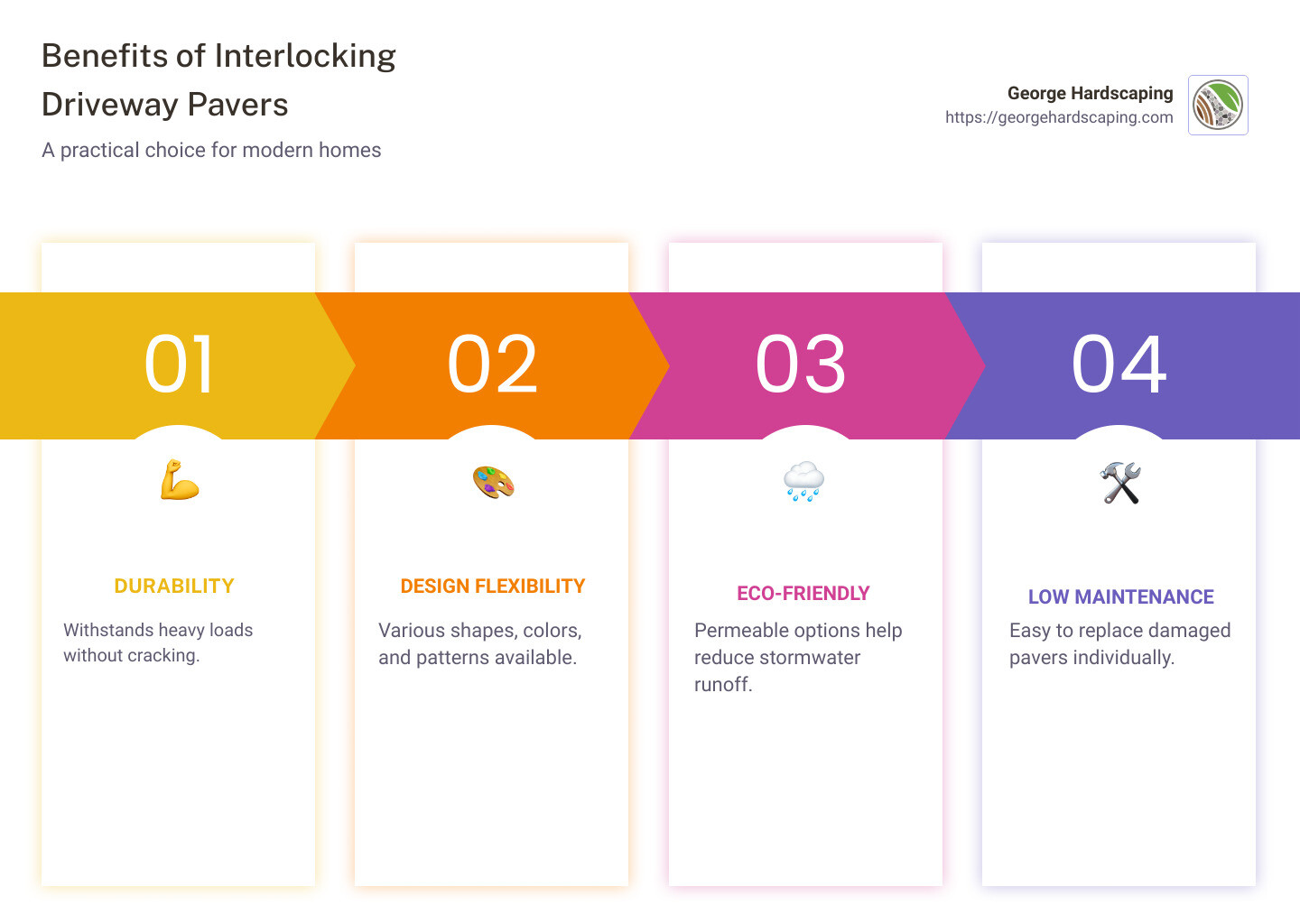
- Durability: Known for their ability to withstand heavy loads without cracking.
- Design Flexibility: Available in a vast array of shapes, colors, and patterns.
- Eco-Friendly Options: Permeable varieties help manage stormwater and reduce runoff.
- Low Maintenance: Damaged pavers can be easily replaced without disturbing the rest.
Interlocking pavers go beyond just looks—they bring practical benefits that improve outdoor spaces seamlessly. For Essex County homeowners, these pavers provide a robust solution against soil erosion while adding aesthetic charm that aligns beautifully with local architecture.
Interlocking driveway pavers glossary:
– are concrete pavers good for driveways
– can you make a driveway out of pavers
– permeable driveway pavers
Why Choose Interlocking Driveway Pavers?
Interlocking driveway pavers are a top choice for homeowners who want a durable, flexible, and eco-friendly option for their driveways. Let’s explore why these pavers are a smart investment.
Durability
Interlocking pavers are renowned for their strength. They can handle the weight of heavy vehicles without cracking. Unlike traditional concrete or asphalt, these pavers are designed to last for decades, even under frequent use. Their durability is best, making them a wise choice for any driveway.
Flexibility
One of the standout features of interlocking driveway pavers is their flexibility. The interlocking design allows them to move slightly without breaking. This flexibility helps them withstand freeze-thaw cycles and shifting ground, which can cause other materials to crack. With interlocking pavers, you get a surface that adapts to environmental changes, maintaining its integrity over time.
Design Options
When it comes to design, interlocking pavers offer endless possibilities. They come in a wide range of shapes, colors, and patterns, allowing homeowners to customize their driveways to match their home’s style. Whether you prefer a classic look or something more modern, there’s a design option for you. You can create unique patterns like herringbone, basket weave, or even circular designs to make your driveway truly stand out.
Environmental Benefits
Interlocking driveway pavers also offer significant environmental benefits. Permeable pavers, in particular, allow water to seep through the gaps and into the ground. This natural filtration reduces stormwater runoff and helps recharge groundwater. By choosing permeable pavers, you’re not only enhancing your property’s curb appeal but also contributing to a healthier environment.
In conclusion, interlocking driveway pavers provide a blend of durability, flexibility, and aesthetic appeal, along with eco-friendly features that make them a standout choice for any homeowner. Whether you’re looking to boost your home’s value or simply want a driveway that’s both beautiful and practical, these pavers are an excellent option.
Installation Process
Installing interlocking driveway pavers is a straightforward process, but it requires careful planning and attention to detail. Let’s break down each step to ensure a successful installation.
Planning
Start by mapping out the area you want to pave. Use paint or stakes and strings to mark the borders.
Tip: Ensure there’s a slight slope—about ¼ inch per foot—away from your house to prevent flooding. This will aid in proper drainage.
Measure the square footage to determine how many pavers you’ll need. Always include a 5% waste factor for straight paths, and a bit more for curved designs. Also, consider the depth of excavation, which depends on the thickness of your pavers and the base materials.
Base Preparation
Once the area is marked, excavate the site to the necessary depth. Remove any grass or debris.
Lay a layer of aggregate or sand as the base. For pedestrian paths, aim for a base between 2-4 inches thick. For driveways, increase this to 4-6 inches. Level the base and compact it using a hand tamper or a mechanical plate compactor. This step is crucial for stability.
Edge Restraint
Edge restraints are vital to prevent the pavers from shifting. They can be made of plastic, metal, or concrete.
- Plastic restraints are easy to install but may not withstand extreme weather.
- Metal restraints are flexible, making them ideal for curved paths.
- Concrete restraints are the most common and durable option.
Placing Pavers
Begin laying the pavers on the prepared sand base. Use string lines to ensure they are straight and level.
Fun Fact: Interlocking pavers fit together like puzzle pieces, ensuring a tight fit with no gaps larger than ⅛ inch.
Compacting
After placing the pavers, compact the entire area using a plate compactor. This not only levels the surface but also ensures the pavers are firmly set in the sand bed. If your pavers are fragile, attach a protective mat to the compactor.
Sand and Sealing
Sweep fine sand into the joints between the pavers. Make another pass with the compactor to settle the sand. Repeat this process until the joints are completely filled. For joints larger than ⅛ inch, use polymeric sand, which hardens when wet.
Finally, clean the pavers with a light pressure washer and let them dry before applying a sealant. Choose a sealant that matches your paver type, whether it’s enhancing, natural-look, or grip sealer.
Advantages of Interlocking Driveway Pavers
Interlocking driveway pavers offer several standout benefits compared to traditional driveway materials like asphalt or concrete. Let’s explore why they are a smart choice for homeowners.
Minimal Maintenance
One of the most appealing aspects of interlocking pavers is their low maintenance. Unlike asphalt, which requires regular sealing, or concrete, which can crack and need repairs, pavers are easy to care for. A simple sweep or rinse keeps them looking great. And if you ever need to replace a paver, you can do so without disturbing the entire driveway.
Easy Repairs
Repairs are a breeze with interlocking pavers. If a paver gets stained or damaged, you can replace just that piece, not the entire surface. This is a huge time and cost saver compared to other materials, where you might need to patch or even redo large sections.
High Load-Bearing Capacity
Interlocking pavers are known for their strength and durability. They can withstand the weight of heavy vehicles without cracking or shifting. This makes them a reliable option for driveways that see a lot of traffic or need to support heavy loads.
Slip-Proof Surface
Safety is a priority, and interlocking pavers provide a slip-resistant surface. This is especially important in wet or icy conditions, helping to prevent accidents on your driveway. The textured surface of pavers offers excellent traction.
Stain and Oil Resistance
Many pavers come in stain- and oil-resistant varieties, making them ideal for driveways. They resist spills and stains from vehicles, keeping your driveway looking clean and new. Some products even feature advanced stain resistance technology, like the EasyClean™ Stain Resistance from Unilock.
Weather Resistance
Interlocking pavers are built to handle all sorts of weather conditions. Whether it’s the scorching heat or freezing cold, these pavers remain intact and functional. Their design allows for natural expansion and contraction, reducing the risk of cracking.
In summary, interlocking driveway pavers are a versatile and practical choice for any home. They offer a combination of durability, easy maintenance, and aesthetic appeal that is hard to beat. Plus, with their environmental benefits, they are an eco-friendly option for those looking to make sustainable choices for their property.
Next, let’s dig into the exciting world of design possibilities with these versatile pavers.
Design Options
When it comes to interlocking driveway pavers, the design possibilities are almost endless. Let’s explore the different elements you can customize to make your driveway truly unique.
Shapes
Interlocking pavers come in a variety of shapes, allowing you to create striking patterns. Choose from classic rectangular or square pavers, or opt for something more unique like hexagonal or circular shapes. Each shape offers a different look and can be combined for a custom design.
Colors
Color is a powerful tool in driveway design. Pavers are available in a wide range of hues, from neutral grays and browns to bold blues and greens. You can match your home’s exterior or create a contrast for a dramatic effect. The choice is yours!
Textures
Texture adds depth and interest to your driveway. You can select pavers with smooth finishes for a sleek, modern look or go for a rougher texture to mimic natural stone. Textured surfaces also provide added grip, enhancing safety.
Patterns
Patterns can transform the look of your driveway. Popular options include the classic Herringbone pattern, known for its stability and elegance, and the Basketweave, which brings a rustic charm. The Running Bond pattern offers simplicity, while the Circular and Fan patterns add a touch of sophistication.
Borders, Bands, and Ribbon Accents
Add flair to your driveway with borders, bands, or ribbon accents. These elements can frame your driveway, highlight specific areas, or create visual interest. Use contrasting colors or textures to make these features stand out.
With so many design options available, interlocking driveway pavers allow you to express your personal style and improve your home’s curb appeal. Whether you prefer a simple, understated look or a bold, eye-catching design, there’s a solution for every taste and preference.
Now that we’ve explored the creative possibilities, let’s turn our attention to the cost considerations involved in choosing interlocking pavers.
Cost Considerations
When considering interlocking driveway pavers, cost is a key factor. Let’s break it down into upfront costs, long-term value, comparisons with other materials, and the choice between DIY and professional installation.
Upfront Cost
The initial cost for interlocking driveway pavers ranges from $10 to $30 per square foot. This includes the materials and installation. While this might seem high compared to options like gravel or asphalt, it’s important to consider what you’re getting for the price. Pavers offer durability, design flexibility, and a premium look that can improve your home’s value.
Long-term Value
Though the upfront cost is higher, the long-term savings are significant. Interlocking pavers require minimal maintenance and can last over 50 years. Unlike asphalt, which needs resealing every few years, or concrete, which may crack, pavers are easy to repair. If one paver is damaged, you can replace it without disturbing the others. This not only saves money but also reduces hassle over time.
Comparison with Other Materials
- Gravel: Cheapest upfront at $1 to $2 per square foot, but it shifts and requires regular maintenance.
- Asphalt: Costs around $7 to $13 per square foot. It’s cheaper initially but needs frequent upkeep.
- Concrete: Price ranges from $10 to $70 per square foot depending on customization. It’s durable but can crack under severe weather.
In the long run, interlocking pavers provide better value due to their durability and low maintenance needs.
DIY vs Professional Installation
If you’re handy, installing pavers yourself can save money. However, it’s a labor-intensive process that requires planning, excavation, and precision. Mistakes can lead to uneven surfaces or drainage issues. Hiring professionals ensures a quality installation, often with a guarantee. While this adds to the upfront cost, it can prevent costly repairs later.
Choosing interlocking driveway pavers is an investment in your home’s future. They offer a blend of style, durability, and value that few other materials can match. Now that we’ve covered costs, let’s explore the environmental benefits of these versatile pavers.
Environmental Benefits
When it comes to interlocking driveway pavers, the environmental advantages are significant. These pavers offer more than just a pretty face; they help protect our planet too.
Permeable Options
One of the standout features of interlocking driveway pavers is their permeable nature. These pavers allow water to seep through the gaps, reducing surface runoff. This means less water pooling on your driveway and more water returning to the ground. It’s a simple yet effective way to manage stormwater and prevent flooding.
Water Runoff Reduction
By reducing water runoff, interlocking driveway pavers help prevent soil erosion and protect local waterways from pollution. When rainwater flows over impermeable surfaces, it picks up pollutants and carries them into rivers and lakes. Permeable pavers act as a natural filter, trapping these pollutants and keeping our water cleaner.
Recycled Materials
Many interlocking driveway pavers are made from recycled materials, like post-consumer plastic. This not only reduces waste but also saves energy. According to a study by the Association of Plastic Recyclers, using recycled plastic can cut total energy consumption by up to 88% for certain materials. Choosing pavers made from recycled materials is a smart way to reduce your carbon footprint.
Eco-Friendly
Overall, interlocking driveway pavers are an eco-friendly choice for your home. They help recharge groundwater, reduce the urban heat island effect, and support a sustainable environment. Plus, their durability means they won’t need replacing as often as other materials, which saves resources in the long run.
Incorporating interlocking driveway pavers into your landscape isn’t just a design choice—it’s a commitment to sustainability. Next, let’s dive into the frequently asked questions about these versatile pavers.
Frequently Asked Questions about Interlocking Driveway Pavers
What are the disadvantages of interlocking pavers?
While interlocking driveway pavers offer many benefits, they do have some downsides.
Weeds: Over time, weeds can grow between the pavers. To prevent this, regular maintenance is needed. Applying a weed killer or using a specialized sealant can help keep weeds at bay.
Erosion of Sand: The sand between the pavers can erode, especially with heavy rain or water runoff. This can cause the pavers to shift. Regularly applying sand to fill in gaps is necessary to maintain stability.
Regular Maintenance: Although maintenance is minimal, it’s still required. You might need to reapply sand or sealant every few years to keep your driveway looking good and functioning well.
Are interlocking pavers expensive?
Cost per Square Foot: Interlocking pavers typically cost between $10 to $30 per square foot. This is more than some other materials like gravel or plain concrete. However, they offer long-term value due to their durability and aesthetic appeal.
Comparison with Other Materials: While the upfront cost is higher than asphalt or concrete, interlocking pavers don’t require frequent repairs or replacements. This can save money over time, making them a cost-effective choice in the long run.
Why is interlocking so expensive?
Several factors contribute to the cost of installing interlocking driveway pavers.
Project Size: Larger areas require more materials and labor, increasing the overall cost.
Location: Prices can vary based on where you live. Areas with higher labor costs or limited access to materials might see higher prices.
Accessibility: If your driveway is difficult to access or has challenging terrain, installation costs can rise. More effort and time are needed to prepare the site and lay the pavers properly.
Understanding these factors can help you budget for your project and weigh the long-term benefits against the initial investment. Let’s explore the various design options available for interlocking driveway pavers.
Conclusion
In choosing interlocking driveway pavers, you’re investing in a durable, flexible, and visually appealing solution for your home’s exterior. These pavers not only improve the curb appeal but also offer long-term value with their minimal maintenance and high load-bearing capacity. Although the initial cost might be higher than other materials, the benefits they bring far outweigh the price.
At George Hardscaping, we are committed to delivering top-notch craftsmanship and service. Our team of experts is ready to help you transform your driveway into a stunning feature that stands the test of time. We pride ourselves on using only the best materials and the latest techniques to ensure your satisfaction.
For more information about our services and to get started on your project, visit our Driveway Paver Installation page. If you have any questions or need personalized advice, contact us. Our friendly team is here to assist you every step of the way.
Invest in quality with George Hardscaping, and let your driveway make a lasting impression.
