
How to repair cracks in stone retaining wall: Top 1 Fix
Why Stone Retaining Wall Cracks Need Your Immediate Attention
Learning how to repair cracks in a stone retaining wall starts with quick assessment, correct materials, and timely action. Small cracks can be straightforward DIY projects; larger or structural issues demand professional intervention. Acting early in New England’s freeze-thaw climate is critical—water intrusion followed by winter freezing accelerates deterioration and can turn a minor blemish into a safety hazard.
At a glance:
- Minor hairline cracks: Clean thoroughly and apply a masonry repair caulk rated for exterior use.
- Wider cracks (about 1/8″ to 1/4″): Remove loose mortar to solid material, clean, then repack with the correct mortar.
- Major cracks (over 1/4″) or failed stones: Remove damaged material, reset or replace stones with proper bedding and joint mortar.
- Leaning, bulging, or rapid crack growth: These indicate structural issues—contact a professional immediately.
Your retaining wall is a working structure that holds back soil, protects grading and plantings, and can influence drainage patterns across your property. In Massachusetts and the broader North Shore, seasonal moisture and freeze-thaw cycles magnify every weakness. A small crack ignored today can become a costly rebuild next season. A simple DIY repair often costs under $100 in materials, while a section rebuild can run into the thousands. See our detailed stone retaining wall repair cost guide for typical ranges and variables. For custom solutions, our retaining wall contractor team can assess whether your wall needs repair, reinforcement, or partial rebuild based on site conditions and drainage.
What you’ll learn in this guide:
- How to diagnose what caused the crack (drainage, frost heave, settlement, or roots) so you fix the problem—not just the symptom
- The exact tools and materials you’ll need for durable repairs (and why mortar selection matters)
- Step-by-step methods for hairline cracks, wider joints, and full stone replacement
- Pro-level tips for drainage improvements that prevent repeat cracking
- When to call a pro, permitting guidelines, and realistic timelines and costs
Strong CTA: If your wall is leaning, bulging, or showing multiple large cracks, don’t wait. Request a professional estimate for a comprehensive evaluation and safety-focused plan.
We’ll also include authoritative references so you can verify best practices and codes for your situation. For example, mortar selection is governed by widely recognized standards like ASTM C270 Standard Specification for Mortar for Unit Masonry, and structural masonry design guidance is outlined in TMS 402/602 (Building Code Requirements and Specification for Masonry Structures). Understanding these standards helps ensure your repair choices align with proven methods and local building expectations.
Before we begin, remember: No repair lasts without addressing water. Most long-term success comes from controlling hydrostatic pressure behind the wall. We’ll cover practical drainage upgrades later in this guide and how our hardscaping masonry services can implement them if your site requires more than surface fixes.
Understanding Why Stone Retaining Walls Crack
Even robust stone retaining walls are constantly battling natural forces: water pressure from behind, seasonal freeze-thaw expansion, and soil movement. Understanding these forces helps you choose a repair method that actually lasts.
Primary causes of retaining wall cracks:
- Hydrostatic pressure: Water accumulating in backfill exerts force on the wall, often the root cause of cracking, bulging, and leaning. Without drainage, water has nowhere to go—pressure builds until joints open up.
- Poor drainage: Lack of weep holes or a proper drain behind the wall traps water. Over time, the wall becomes a dam instead of a drainable barrier.
- Freeze-thaw cycles: In Essex County, MA, freeze-thaw is relentless. Moisture in joints and pores freezes, expands approximately 9%, and progressively widens cracks (a process often called frost heave). Seasonal cycles amplify small defects.
- Soil settlement and inadequate foundation: If the base isn’t on properly compacted, stable material—or if soils consolidate unevenly—the wall can settle and rack, producing step cracks and shifted stones.
- Tree root intrusion: Roots seeking moisture can push into weak points, displacing stones and breaking mortar joints.
Common types of damage to look for:
- Hairline cracks in mortar: Often cosmetic early on, but a pathway for water.
- Step cracks: Zigzag patterns along joints; commonly linked to settlement.
- Vertical cracks: Indicate significant stress or differential movement, sometimes from concentrated loads or inadequate drainage.
- Bulging or leaning: Urgent red flag. This points to excessive pressure or base failure and requires immediate professional attention.
- Efflorescence: White, powdery salt deposits signaling ongoing moisture migration through the wall.
How to assess urgency and map a plan:
- Document: Photograph cracks, measure widths at several points, and mark end points with pencil. Check again after heavy rain or the spring thaw.
- Monitor growth: Rapidly widening or lengthening cracks, or new cracks after storms, point to active movement and potential structural risk.
- Check drainage behavior: After a moderate rain, note how water sheds at the top and base of the wall. Standing water or soggy soil behind the wall suggests trapped moisture and rising pressure.
- Look beyond the wall: Examine surface grading, downspout discharge locations, impermeable surfaces above the wall, and nearby irrigation.
Ignoring early warning signs can lead to progressive structural failure and even collapse. In addition to safety hazards, a failing wall accelerates soil erosion, threatens plantings and hardscapes, and can create liability issues if it impacts neighboring property. For complex or advanced damage, our retaining wall contractor services provide diagnostic expertise and engineered solutions custom to North Shore soils and weather.
Helpful references for deeper context:
- ASTM C270 — mortar selection guidance (strength and composition) from a respected standards body.
- Masonry design provisions in TMS 402/602 — recognized engineering requirements for masonry structures.
- Frost heave overview and freeze-thaw impacts on soils from Penn State Extension’s cold-climate soil guidance provide useful background on seasonal mechanisms.
Prep School: Gathering Tools and Preparing for the Repair
Proper preparation is what separates temporary patches from durable repairs. With masonry, surface condition, material selection, and curing are just as important as technique.
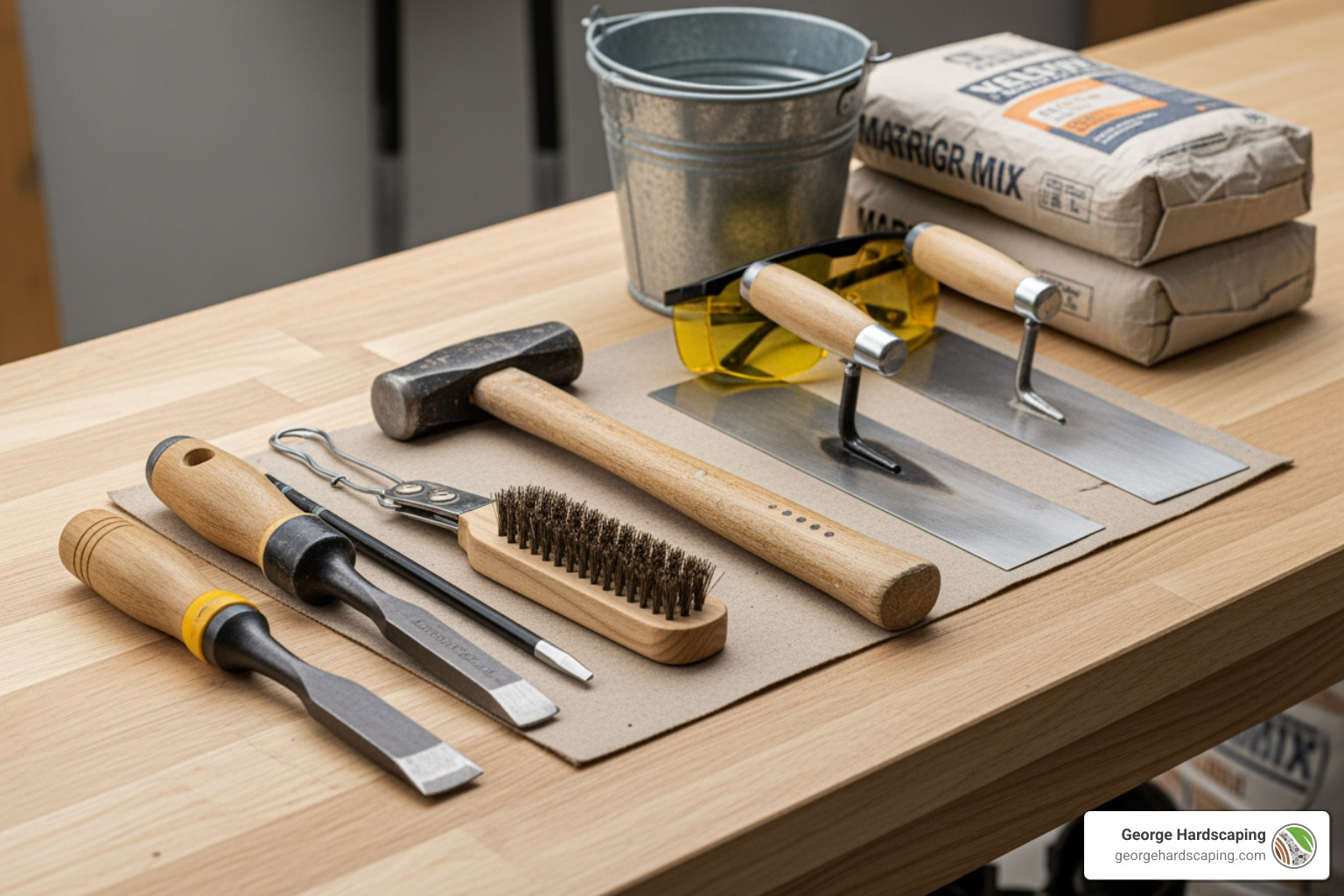
Essential tools and materials:
- Safety gear: Safety glasses, cut-resistant work gloves, hearing protection for chisel/hammer work, and a dust mask or respirator when grinding
- Cleaning and removal: Cold chisel, mason’s hammer, joint raker or tuckpointing grinder with masonry wheel (optional), wire brush, stiff brush, and shop vacuum
- Application: Pointing trowel, margin trowel, grout bag (helpful for tight joints), mixing bucket or mortar tub, caulking gun for packaged mortar/caulk
- Repair materials: Correct mortar (Type N or Type S), high-quality masonry repair caulk for hairline cracks, replacement stones (as needed), clean water, and a spray bottle for dampening
- Weather protection: Plastic sheeting or tarps to shield fresh mortar from rain and direct sun; curing blankets if working in borderline cool weather
Choosing the right repair materials:
- Mortar instead of concrete patch: Mortar is engineered to bond well to masonry and to be compatible in stiffness with stone and legacy joints. Concrete patches are too rigid and can trap moisture, creating new stress points that crack adjacent to the repair.
- Type N vs. Type S mortar: Type N is a general-purpose, medium-strength mortar typically suitable for above-grade stone walls and softer historic masonry. Type S is higher strength and better for walls subject to heavier loads or partial burial. For historic or soft stone, a lime-rich (softer) mortar may be preferable to avoid damaging the stone—matching original hardness is crucial.
- Follow recognized standards: Mortar selection and proportioning are covered by ASTM C270. For broader masonry guidance, see TMS 402/602, which informs best practices used by engineers and inspectors.
- Specialty fillers: High-quality masonry repair caulk works well for hairline cracks that don’t warrant repointing. For structural cracks in stone (not just the joints), epoxy or polyurethane injection may be considered, but these are typically specialty procedures that should be evaluated by a pro.
Preparing the crack for a lasting fix:
1) Remove unsound joint material: Use a hammer and cold chisel (or a joint raker) to take out loose or crumbling mortar until you reach firm, intact material. Avoid damaging adjacent stones.
2) Create a slight V-groove: Shape the joint slightly wider at the face to improve mechanical key for the new mortar. This step improves bond and durability.
3) Clean thoroughly: Wire-brush the joint and vacuum dust and grit. Debris interferes with bond and wicks water away from the mix too rapidly.
4) Pre-dampen the joint: Mist the area so the surrounding stone doesn’t draw water from the fresh mortar. The goal is surface damp but not glistening wet.
5) Condition the environment: Ideal air and substrate temperatures are typically between 50°F and 90°F. In cool conditions, extend cure time and shield from overnight cold; in hot/dry conditions, shade the work and maintain moisture for proper curing.
Material sourcing tip: You can review common mortar repair products and color-matching options at major home improvement retailers like Home Depot; compare data sheets for exterior rating, flexibility, and cure time. If you’re unsure which mortar matches your wall or you’re working on historic masonry, our hardscaping masonry services can help you select and blend the right product for compatibility.
The Art of the Fix: How to Repair Cracks in a Stone Retaining Wall
With proper prep complete, your focus shifts to careful application and curing. The goal is a repair that blends visually and performs structurally through seasons of wet, dry, freeze, and thaw.
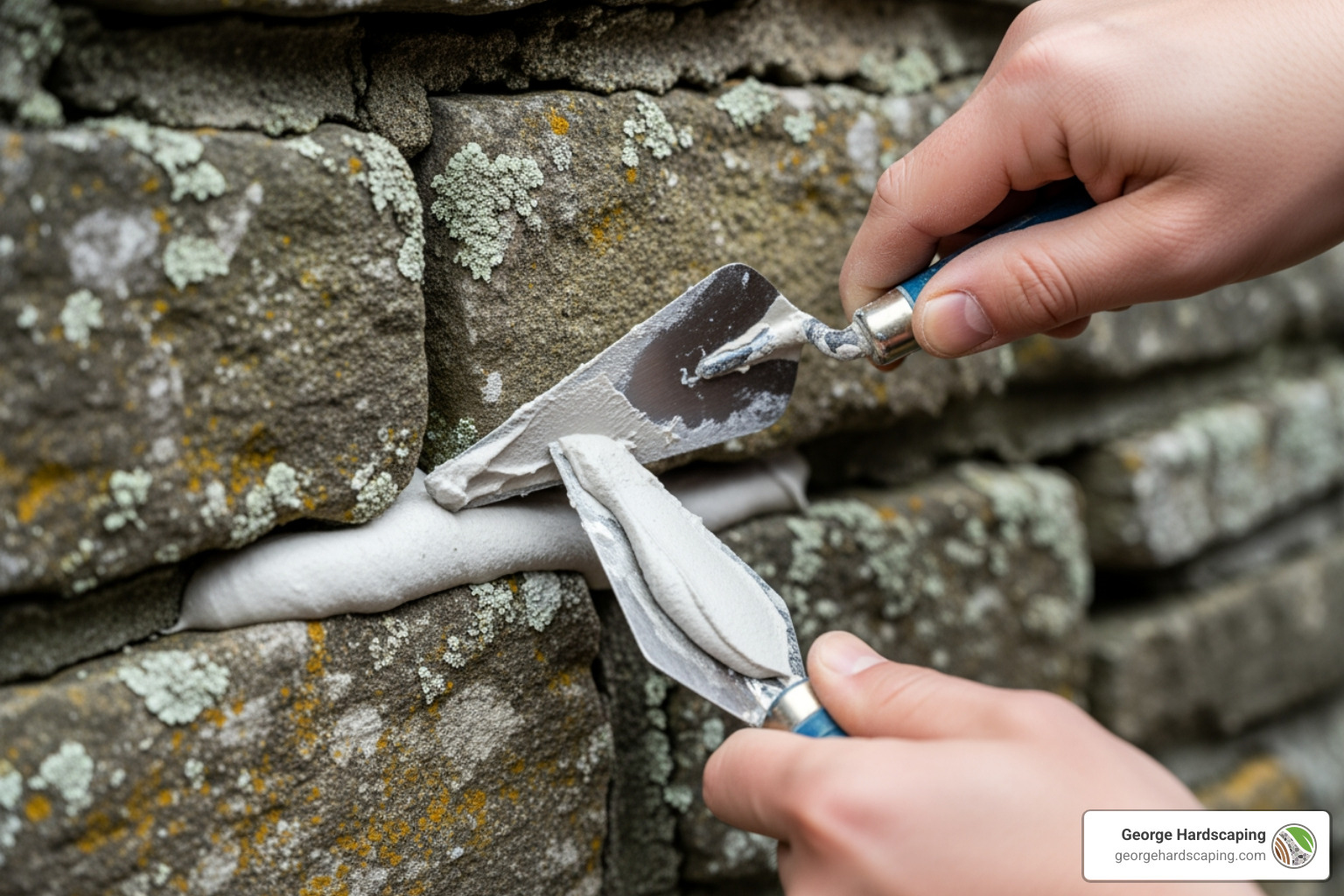
How to repair minor (hairline) cracks:
1) Clean the crack: Brush out dust and loose grains; vacuum to remove fines that inhibit adhesion.
2) Apply filler: Use a high-quality masonry repair caulk or pre-mixed mortar in a tube. Cut the nozzle small and work slowly to ensure the material penetrates the full depth.
3) Tool and blend: Immediately tool the bead to match the existing joint profile. Lightly texture or sponge to blend with adjacent mortar if necessary. Wipe stray residue before it skins over.
4) Protect and cure: Shield from direct sun and rain while it sets. Avoid high-pressure water on the repair for at least a week.
Repairing wider cracks and deteriorated joints (tuckpointing):
1) Mix mortar correctly: Follow manufacturer instructions, aiming for a peanut-butter-like consistency that holds shape on the trowel. Let the mortar slake (rest) as directed, then remix before use to improve workability.
2) Pack the joint: Starting at the back of the joint, press mortar firmly with a pointing trowel or grout bag. Work in lifts so there are no voids. Consolidate as you go.
3) Match the profile: After the mortar achieves initial set (often 30–60 minutes, weather dependent), tool the joint to match the wall’s existing profile. Concave profiles shed water effectively; match what the wall has to avoid visual patchwork.
4) Clean edges: Use a stiff brush after the mortar has set but before it fully cures to remove smears from stone faces. Don’t over-brush and disturb the joint.
5) Cure slowly: Lightly mist the area one to two times daily for 3–5 days, especially in warm, dry weather. Proper curing improves ultimate strength and bond.
Advanced repair: Replacing a damaged stone
1) Remove the stone: Carefully chisel away surrounding mortar. If needed, split the damaged stone into sections for removal without disturbing neighbors. Work methodically to avoid loosening adjacent units.
2) Clean and prepare the cavity: Remove old mortar and dust, square up edges if required, and pre-dampen the cavity.
3) Select and test-fit: Choose a stone that closely matches color, texture, and dimensions. Dry-fit, aiming for approximately 3/8-inch joints on all sides.
4) Butter and set: Apply a full, supportive bed of mortar to the cavity base. Butter the stone sides and back. Press into place and tap gently to align faces. Use a level and sight lines to maintain the wall’s visual plane.
5) Fill joints and tool: Pack joints tight, tool to match existing profiles, and cure as above.
Color and texture matching tips:
- Use mortar pigments sparingly and test on a sample board; dry color can differ from wet.
- Slightly varied sand blends can better mimic legacy mortar texture—don’t over-finish to a glossy sheen.
- Clean surrounding stone faces carefully to avoid bright, scrubbed patches that highlight the repair.
When cracks suggest deeper issues:
- If joints open again within weeks, or if nearby stones loosen without visible cause, underlying drainage or base stability is likely at fault. Patchwork won’t hold until water and load paths are corrected.
- For significant movement or repeated cracking, enlist a retaining wall contractor to evaluate footing conditions, soil composition, and back-of-wall drainage. Taller or heavily loaded walls may need engineered remedies.
Quality control checklist after repairs:
- Joints are solidly filled with no visible voids
- Profiles match surrounding work and shed water
- No visible smears on stone faces after final cleanup
- Repair area remains crack-free after a few rain cycles
If you prefer a professional-grade finish without the mess and trial-and-error, our hardscaping masonry services handle everything from mortar matching to joint tooling so the repair blends with your wall—not against it.
Ensuring Durability and Knowing When to Call a Pro
A successful repair does more than seal a crack—it manages the water and loads that caused the crack in the first place. In our Massachusetts climate, drainage is the make-or-break factor.
Pro-level prevention: Drainage and long-term care
- Improve drainage behind the wall: Ensure there’s a free-draining zone immediately behind the wall. A common approach is 12–18 inches of 3/4-inch angular crushed stone wrapped on the soil side with a suitable geotextile to prevent fines from migrating into the drain zone. This helps maintain porosity and prevents clogs over time.
- Weep holes and drain pipes: Clear existing weep holes at the base. For walls that hold persistent moisture, install a perforated drain pipe (holes down) at the base behind the wall, pitched to daylight or a dry well. Include cleanouts where feasible for future maintenance.
- Surface grading: Grade soil at the top so water flows away from the wall. Redirect downspouts and irrigation so they don’t discharge toward the backfill zone.
- Choose the right backfill: Replace dense or clayey soil that holds water with free-draining aggregate in the drainage zone. Well-graded angular stone is more stable than rounded pea gravel for resisting lateral movement.
- Seal judiciously: After repairs fully cure, use a breathable, water-repellent masonry sealer designed for stone and mortar. Avoid non-breathable coatings that trap moisture.
- Seasonal inspections: Walk the wall each spring and fall. After major storms, check weep holes and the base for pooling water or clogged debris.
When to call a professional immediately
- Cracks wider than 1/4 inch or growing over time
- Noticeable bulging or leaning
- Multiple large cracks appearing at once
- Cracks or failures at the base/footing
- Walls over 4 feet tall, or walls supporting driveways, slopes, or structures
These conditions often require excavation and engineered solutions. Permitting can apply to structural repairs and taller walls; your municipality may follow the International Building Code framework, which typically triggers engineering requirements for higher-risk walls. When you hire our retaining wall contractor team, we handle permitting, work with engineers when required, and construct drainage improvements that address the root cause—not just the symptom.
Drainage details that add years of service life:
- Filter fabric: Separate native soil from the drainage stone with geotextile to prevent fines migration. Wrap the stone on the soil side while keeping the wall side open to allow the structure to breathe.
- Pipe slope and outlets: Maintain a minimum positive slope toward an outlet. Ensure the outlet is protected from blockage and animals and is set at an elevation that reliably drains the system.
- Maintenance access: If possible, incorporate cleanouts on long runs of drain pipe for periodic flushing.
If your wall shows escalating issues, it’s time for a deeper assessment. Strong CTA: Schedule a site visit and request a professional estimate so we can diagnose the cause, stabilize the wall, and implement a long-term fix that stands up to North Shore weather.
Internal services you might need in tandem:
- For walls abutting walkways or steps, our walkways and stairs services can correct grades and edge conditions that feed water toward the wall.
- If your project scope includes broader masonry improvements, our hardscaping masonry services provide coordinated stonework and drainage upgrades so you get a cohesive, lasting result.
Frequently Asked Questions about Stone Retaining Wall Repair
Homeowners across the North Shore—Ipswich, Manchester-by-the-Sea, Beverly, and beyond—often ask similar questions when cracks appear. Here are clear, practical answers.
What is the best time of year to repair my stone retaining wall?
- The ideal window is dry, moderate weather (late spring through early fall) with consistent temps above 50°F. Mortar needs time to hydrate and gain strength—freezing halts that process and weakens the bond. If your wall is leaning or breaking apart, don’t wait for perfect weather; contact a pro for stabilization options and a safe repair plan.
Can I use regular concrete to fill cracks in a stone wall?
- No. Use mortar designed for masonry joints. Mortar’s composition (per ASTM C270) provides compatibility, flexibility, and breathability that stone walls need. Concrete patches are too rigid and can cause new cracks to form alongside the repair.
How do I know if a crack is cosmetic or structural?
- Cosmetic cracks are typically hairline, stable in size, and not accompanied by displacement or water issues. Structural concerns include widening or multiple cracks, vertical offsets, bulging or leaning, and cracks that grow after rain. If you’re seeing any of those signs, schedule an on-site assessment with our retaining wall contractor team.
How long will a mortar repair last?
- When the root cause (usually water) is addressed, a well-executed tuckpointing repair can last many years. Neglecting drainage often shortens the life of any patch to a season or two. Longevity depends on exposure, freeze-thaw cycles, and overall wall condition.
Do I need a permit for retaining wall repair in Essex County, MA?
- Minor cosmetic work like filling hairline cracks generally doesn’t require a permit. Structural repairs, walls over roughly 3-4 feet, or walls supporting loads may require permits and, in some cases, engineering. Local jurisdictions follow building code frameworks based on the International Building Code. When you hire us, we manage local permit coordination and, when needed, engineering.
How do I match the existing mortar color and texture?
- Start with a small test batch. Use similar sand type and gradation; sand color often dominates the finished look. Pigments can fine-tune color but should be used sparingly. Tool joints to match the existing profile and lightly brush after initial set for texture consistency. Our hardscaping masonry services include mortar matching to blend new joints seamlessly.
Can I pressure wash the wall after repairs?
- Wait at least 28 days before moderate pressure washing, and avoid aggressive tips or very high PSI. Excessive pressure can erode fresh mortar or drive water into joints. Gentle cleaning methods are safest.
What about winter repairs?
- Cold-weather masonry is possible but requires strict controls: heated materials, protected work areas, and extended curing. For non-urgent cosmetic repairs, wait for warmer weather. For urgent structural problems, call a pro to stabilize safely.
What if water keeps reappearing behind the wall?
- Persistent moisture points to drainage design. Consider adding or clearing weep holes, installing a perforated base drain to daylight, and replacing dense backfill with a free-draining aggregate wrapped with geotextile. If the site has complex runoff patterns, we can evaluate surface regrading and downspout redirection.
How much does repair cost?
- Small DIY hairline crack repairs can cost under $100 in materials. Professional tuckpointing, stone replacement, or drainage upgrades vary by access, wall height, extent of damage, and water management needs. For detailed ranges and cost drivers, review our stone retaining wall repair cost guide and request a professional estimate for a site-specific proposal.
Will sealing the wall solve my water problem?
- Sealers can reduce surface absorption but don’t replace drainage. Use breathable water-repellent products only after the repair has cured fully, and always address back-of-wall water first.
Is epoxy injection a good option for cracks in the stones themselves?
- Epoxy or polyurethane injection can work for certain structural cracks, but success depends on identifying and eliminating movement and moisture sources first. These methods are typically best left to professionals and may require engineered evaluation.
How do I prevent future cracking?
- Maintain drainage (clear weep holes, keep outlets open), slope surface grades away from the wall, redirect downspouts, avoid overwatering adjacent beds, and inspect seasonally. Tackle small issues before winter; freeze-thaw multiplies minor defects.
If you’re unsure which approach fits your wall, we can help you evaluate options, from simple repointing to drainage upgrades and partial rebuilds. For peace of mind and lasting results, request a professional estimate and we’ll create a plan custom to your wall, soil conditions, and budget.
Conclusion
You now have a complete, field-tested framework for how to repair cracks in a stone retaining wall: diagnose the cause, prepare the surface carefully, apply the right materials with the right technique, and—most importantly—manage water behind the wall. With New England’s freeze-thaw cycles, addressing drainage is the difference between a repair that lasts and a crack that quickly returns.
Key takeaways:
- Prioritize diagnosis: Cracks usually trace back to hydrostatic pressure, freeze-thaw, or settlement. Fix the cause, not just the symptom.
- Use compatible materials: Mortar (Type N or S) and breathable sealers help your wall move and dry as designed.
- Follow best practices: Clean, pre-dampen, pack joints completely, tool to shed water, and cure slowly.
- Upgrade drainage: Free-draining backfill, weep holes, and a sloped base drain are long-term insurance.
- Know your limits: Leaning, bulging, or rapidly growing cracks require professional evaluation and, often, engineered solutions.
If your wall needs expert attention—or you simply want the confidence of professional craftsmanship—our team can help. Strong CTA: Request a professional estimate to stabilize, repair, and protect your retaining wall with a solution built for North Shore weather.
Looking to lift your outdoor space as part of the project? Our walkways and stairs services refine circulation and grading around your wall, and our custom outdoor firepits bring your gathering space to life—both designed to complement durable masonry and sound water management.
From small crack repairs to complex drainage retrofits and partial rebuilds, we deliver results that protect your property, improve curb appeal, and stand the test of time. When you’re ready to move forward, request a professional estimate and let’s get your wall—and landscape—back to strong, beautiful, and worry-free.
