
How to Install Stone Walkway: 3 Easy Steps
Why Learning How to Install Stone Walkway is Worth Your Time
Image metadata: Alt text updated; Source: Pexels; License: Pexels free license; Context: Introductory visual illustrating a completed sand-set stone walkway with correct spacing and scale for a residential landscape.
Learning how to install stone walkway is an investment that pays off with curb appeal, safer access, and a boost to property value. With the right plan and preparation, a DIYer can build a durable, attractive path over a weekend or two—saving substantially compared to hiring out the entire project while still meeting professional-quality standards.
Quick Answer: Stone Walkway Installation Steps
- Plan and Measure: Choose a path 36–48 inches wide, map curves, check for utilities, and calculate materials.
- Excavation: Dig 5–7 inches deep (or more in poor soils), maintain a 1/4-inch-per-foot slope for drainage.
- Build Foundation: Install geotextile, then a compacted 4-inch base of crushed gravel, plus 1–2 inches of leveling sand.
- Lay Stones: Set 2–3-inch-thick flagstone or bluestone with 1–2-inch joints; level and align with a mallet.
- Fill Joints: Sweep in polymeric sand, regular sand, or fine gravel; activate and cure as directed.
- Add Edging: Install discrete plastic/metal edging or a stone/brick border to lock everything in.
Cost and Value Snapshot
- DIY materials often total about $2.50–$3.50 per square foot, depending on stone choice and base depth. Professional installation can range from $8 to $25+ per square foot, reflecting skill, speed, equipment, and warranties.
- Expect a meaningful return in curb appeal and functionality, especially when a walkway ties together entries, patios, and garden features.
If you prefer to turn the heavy lifting over to pros, or want help with design, drainage, or complex layouts, our dedicated hardscaping team is here. Explore our services at https://georgehardscaping.com/hardscaping-masonry-services/ and view finished projects in our gallery at https://georgehardscaping.com/gallery/.
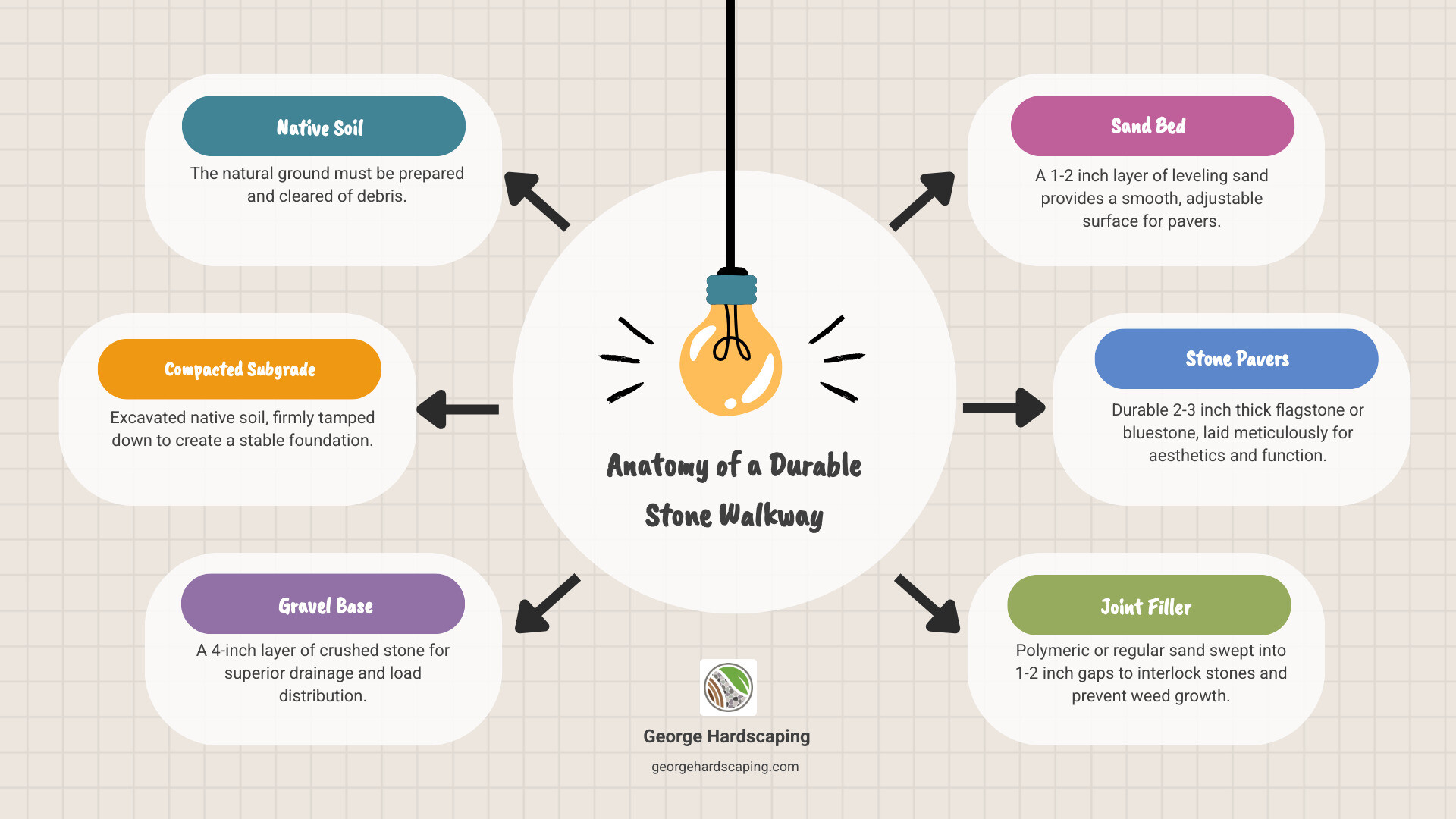
Image metadata: Alt text preserved and refined; Creator: Bannerbear (generated illustration); Use: Educational schematic for base-layer composition; Context: Reinforces the layered system that supports a long-lasting walkway.
Project Overview
- Skill Level: Beginner-friendly with moderate physical effort
- Recommended Method: Sand-set (dry-laid) for flexibility and ease of repair
- Stone Thickness: 2–3 inches (flagstone and bluestone are common, durable options)
- Time Required: 1–2 days for small-to-medium projects; larger or more complex designs may take an extra weekend
The foundation is everything. Most early failures come from skipping excavation, using the wrong base material, or under-compacting. Get the base right and your stone walkway can last for decades through freeze-thaw cycles. To dig deeper into options and budgeting, see the cost overview at https://georgehardscaping.com/cost-to-install-stone-walkway/ and base best practices at https://georgehardscaping.com/base-for-flagstone-walkway/.
Strong CTA: Ready to turn a sketch into a stunning path? Get a fast, professional estimate at https://georgehardscaping.com/request-estimate/ and we’ll help you choose the right stone, layout, and base for your site.
Planning and Preparation: Your Blueprint for Success
Thoughtful planning is the fastest way to a flawless build. Define how the walkway will be used (front approach, garden meander, utility path) and design accordingly.
Layout and Dimensions
- Width: 36 inches is comfortable for one person; 42–48 inches is ideal for two people walking side by side. Go wider for frequent cart or mower access.
- Geometry: Straight lines convey formality; gentle curves feel natural in gardens and help the path flow around plant beds or trees. Use a garden hose to test curves before marking with paint.
- Slope and Drainage: Aim for about 1/4 inch of fall per linear foot, guiding water away from foundations and low spots. Over 20 feet, that’s 5 inches of total drop. Avoid creating water traps at edges.
- Surface Height: Plan the top of stone to sit slightly above surrounding grade (about 1/2 inch) to discourage soil wash-in.
Accessibility and Comfort
- Trip-free Joints: Keep height differences between adjacent stones minimal; align surfaces as you lay.
- Traction: Choose natural, non-polished textures. In freeze-prone climates, avoid smooth finishes.
- Lighting: Plan for low-voltage fixtures or solar path lights now; conduits or cable runs are easier to place before edging goes in.
Choosing the Right Stone
- Flagstone: Natural cleft texture, irregular shapes for a rustic look. Thickness of 2–3 inches resists breakage.
- Bluestone: A type of flagstone with blue-gray tones; durable and excellent in freeze-thaw regions.
- Granite: Extremely tough, contemporary look; heavier to work with but long-lasting.
- Slate: Attractive but choose thicker, natural cleft pieces for outdoor traction and durability.
Local stone often blends best with the regional landscape and may reduce cost and transport emissions. Purchase 5–10% extra for cuts, breakage, and selection.
Calculate Materials with Confidence
- Area: Length x width of your path in feet.
- Gravel Base: For a 4-inch base, multiply area by 0.33 to get cubic feet; divide by 27 for cubic yards.
- Leveling Sand: For 1–2 inches, multiply area by 0.08–0.17 to get cubic feet; divide by 27 for cubic yards.
- Stone Quantity: Estimate by surface area coverage of your chosen flagstone thickness and size; your supplier can help translate square footage to tonnage.
Tools and Supplies Checklist
- Layout: Stakes, string, hose, marking paint, tape measure
- Excavation & Base: Shovels, wheelbarrow, landscape fabric (geotextile), crushed gravel (3/4-inch minus or crusher run), coarse sand or stone dust
- Compaction: Hand tamper for small paths; rent a plate compactor for best results and larger areas
- Setting & Finishing: 4-foot level, straight 2×4 screed, rubber mallet, broom, edging (plastic, metal, or masonry border), polymeric sand or joint infill, utility knife
- Safety: Gloves, eye protection, hearing protection (for compaction), steel-toe boots
Permits and Utilities
- Always call 811 a few business days before you dig. It’s free and prevents dangerous or expensive utility strikes.
- Check local codes for setbacks or drainage restrictions. Most walkways don’t require a permit, but it’s wise to confirm if you’re near property lines or conservation areas.
Reference and Inspiration
- See how different stones and layouts look in real yards: https://georgehardscaping.com/gallery/
- If you want a pro to help with design, drainage, or the full build, explore services at https://georgehardscaping.com/hardscaping-masonry-services/.
- For general design guidance, the U.S. Access Board’s outdoor accessibility considerations are a helpful reference: https://www.access-board.gov/ (high-authority, non-competitive resource).
The Ultimate Guide on How to Install a Stone Walkway
We focus here on the sand-set (dry-laid) method. It’s forgiving to seasonal movement, DIY-friendly, and simple to repair by lifting and resetting individual stones. If your site has poor soils or heavy frost heave, the key is a properly compacted, well-draining base.
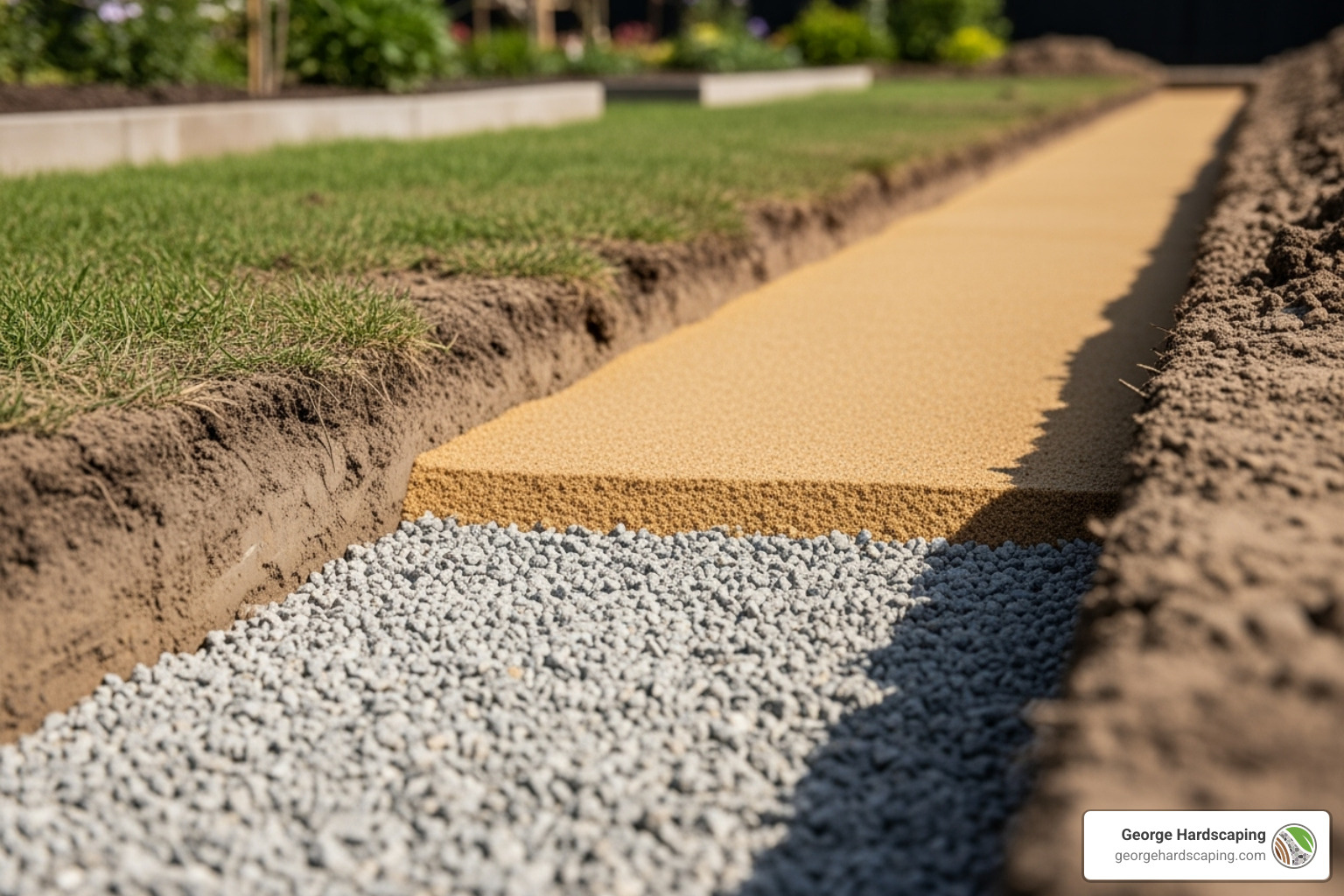
Image metadata: Alt text refined; Creator: Bannerbear (generated instructional photo illustration); Context: Demonstrates ideal excavation depth, geotextile placement, gravel base, and screeded sand layer before stone placement.
Step 1: Excavation and Subgrade Prep
- Mark and Strip: Mark the path edges with paint. Cut and remove sod with a spade or sod cutter.
- Depth: Dig 5–7 inches below the intended finished height, adjusting for stone thickness and desired top-of-stone elevation. In clay or poorly draining soils, consider an extra inch of base.
- Slope: Maintain a 1/4-inch-per-foot slope. Use a string line set to the finished slope to guide digging.
- Subgrade: Remove roots, large stones, and organic matter. Compact the native soil with a tamper or plate compactor until firm.
- Pro Tip: If the subgrade pumps or feels spongy, excavate soft spots a bit deeper and backfill with compacted gravel.
Step 2: Build a Stable, Free-Draining Foundation
- Geotextile: Lay landscape fabric across the entire excavation to separate soil from base. Overlap seams 4–6 inches.
- Base Material: Use 3/4-inch minus crushed gravel (crusher run with fines). The angular mix locks together under compaction.
- Lift Thickness: Place base in 2-inch lifts and compact each lift thoroughly. For a 4-inch base, that’s two compaction passes with proper moisture.
- Compaction: A plate compactor provides best results. Make 2–3 passes per lift, overlapping each pass. Lightly dampen the gravel if it’s dusty to help it bind.
- Final Grade: Shape the compacted base to maintain the 1/4-inch-per-foot slope and leave room for the 1–2-inch sand bed and stone thickness.
Step 3: Screed the Leveling Layer
- Material: Coarse sand or stone dust (also called screenings) works as a bedding layer. Avoid soft, powdery materials that shift easily.
- Screed Guides: Set two parallel pipes or straight edges at the correct height and pull a straight 2×4 board across them to create a smooth, even layer 1–2 inches thick.
- Remove the guides and fill the channels—they should not remain in the bed.
Step 4: Dry-Fit and Lay the Stones
- Pre-Layout: Arrange stones on adjacent lawn to preview spacing and shape. Start with larger anchor stones and infill with smaller pieces.
- Joint Spacing: Aim for 1–2-inch joints for a natural look and easy sweeping of joint material.
- Set and Level: Place stones onto the screeded layer, wiggle them into position, and tap with a rubber mallet. Use a level across multiple stones to keep surfaces even while following the overall slope.
- Fine-Tuning: If a stone rocks, lift it and adjust the sand beneath. Eliminate wobble to prevent future movement.
- Cutting: A masonry saw with a diamond blade or an angle grinder makes clean cuts. Score and snap for smaller adjustments. Always wear PPE.
Step 5: Edge Restraints and Borders
- Plastic or Metal Edging: Anchor with spikes at 12–18-inch intervals on the outside of the walkway. Install edging tight to the stone edges to lock the field in place.
- Masonry Borders: A soldier course of brick or thinner stones can make an neat border and provide excellent restraint.
Step 6: Fill Joints
- Polymeric Sand: Sweep dry polymeric sand over the stone and into joints until full. Clean stone surfaces carefully, then mist lightly in multiple passes to activate binders. Protect from rain per manufacturer’s instructions (usually 24 hours). Avoid over-watering, which washes out binders.
- Regular Sand: Cost-effective; sweep in and mist. It may need more frequent top-ups and allows more weed growth.
- Fine Gravel: Great for wider, informal joints; provides a natural look and fast drainage.
Step 7: Clean-Up and First Use
- Sweep the surface thoroughly. If you used polymeric sand, follow cure times before foot traffic.
- Recheck for any stones that settled during joint filling and adjust if needed.
Common Mistakes to Avoid
- Skimping on Base or Compaction: The most common cause of settling and wobble.
- Wrong Base Material: Pea gravel doesn’t compact well; use angular crushed stone with fines.
- No Slope: Flat or back-pitched paths trap water and accelerate damage.
- Over-Wetting Polymeric Sand: It can create a crust or haze. Follow the bag instructions exactly.
Advanced Tips for Tough Sites
- Heavy Clay: Increase base depth to 6 inches, add a second layer of geotextile beneath the base, and ensure surface water has an exit.
- Tree Roots: Curve the path to avoid major roots. If proximity is unavoidable, leave extra allowance for future root growth and consider a flexible edging approach.
- Freeze-Thaw: A well-compacted base and sand-set system accommodate movement. Avoid rigid mortar set unless you’re on a frost-protected concrete slab.
Helpful Resources
- Practical DIY overview with pictures: https://www.familyhandyman.com/project/how-to-build-a-stone-path/
- Professional guidance from the Interlocking Concrete Pavement Institute: https://www.icpi.org/
- Best-practice base guidance for local conditions: https://georgehardscaping.com/base-for-flagstone-walkway/
- For a deeper overview of walkway projects and options: https://georgehardscaping.com/building-a-walkway/
Want an expert to handle excavation, compaction, and perfect stone fitting? Explore professional options at https://georgehardscaping.com/hardscaping-masonry-services/ and request a quote at https://georgehardscaping.com/request-estimate/.
Finishing Touches and Long-Term Maintenance
Edging and Borders
- Discreet Plastic or Metal: Nearly invisible, easy to install, and excellent at locking the field.
- Masonry Edging: Brick, cobble, or cut stone creates a finished, classic look and adds mass at the edges.
- Plant-Friendly Borders: If you plan to integrate groundcovers, allow space just beyond the edge restraint and choose species that tolerate light foot traffic.
Groundcovers and Planting
- Low-Growing Options: Creeping thyme, woolly thyme, Irish moss, and sedum varieties add color and fragrance while tolerating light traffic.
- Planting Technique: After stones are set and joints filled (with gravel or non-polymeric infill), tuck small plugs between stones with enough soil volume to root, then water gently.
Lighting and Safety
- Solar Lights: Simple and wire-free; great for soft illumination.
- Low-Voltage Systems: More robust and controllable; plan transformer placement, cable routing, and fixture spacing during layout.
- Visibility: Focus light at turns, steps, and entries. Avoid glare by shielding fixtures and aiming light downward.
Joint Options and Best Practices
- Polymeric Sand: Superior weed and ant resistance. Install only on dry surfaces and protect from rain during cure. Follow the manufacturer for temperature and moisture limits; detailed directions are available from major brands like Alliance Gator: https://www.alliancegator.com/ (high-authority manufacturer site).
- Regular Sand: Budget-friendly, easy to top up. Best for tight joints in low-traffic areas.
- Fine Gravel: Ideal for wider joints and a natural look; drains quickly and is easy to refresh.
Cleaning and Care
- Routine: Sweep debris regularly to prevent organic buildup. Rinse as needed with a garden hose; use a mild detergent and a stiff brush for stains.
- Power Washing: Avoid high pressure that can blast out joint material. If necessary, use low pressure and re-fill joints afterward.
- Winter: Shovel with plastic blades to avoid chipping stone edges. Avoid rock salt; use calcium magnesium acetate or pet-safe alternatives that are less harsh on stone and plants.
- Refill Joints: Expect to top up sand or gravel periodically, especially after the first season.
Troubleshooting
- Wobble or Settling: Lift the stone, add or re-screed sand, and reset. If settling is widespread, the base may be insufficient—add base depth in problem areas.
- Drainage Issues: Check slope and edges. You may need to regrade adjacent soil or create a subtle swale to redirect runoff.
Style Upgrades that Pair Well with Walkways
- Fire Features: A walkway that ties into a patio and fire pit creates a unified outdoor living zone. Explore custom options at https://georgehardscaping.com/custom-outdoor-firepits/.
- Steps and Retaining: If your path traverses slopes, steps and small retaining elements add safety and structure; see services at https://georgehardscaping.com/hardscaping-masonry-services/.
CTA: Prefer a turn-key finish with perfect edging, lighting, and jointing? Let our team handle it all—start here: https://georgehardscaping.com/request-estimate/.
Frequently Asked Questions about Stone Walkway Installation
Can you lay stones directly on soil or grass?
No. Without a proper base, stones will sink, shift, and become tripping hazards, especially after freeze-thaw cycles. A compacted, layered base with gravel and a leveling bed is critical for longevity and safety.
How do you ensure proper drainage?
Build in a gentle slope of about 1/4 inch per foot to move surface water away from structures. Use a compacted 3/4-inch minus base that allows infiltration, and separate soil and base with geotextile. Together, they keep water moving and the foundation clean and stable.
What’s the difference between a dry-laid and mortar-set walkway?
- Dry-Laid (Sand-Set): Stones rest on compacted base and sand; joints filled with sand or polymeric sand. Flexible, repairable, and ideal for freeze-thaw climates.
- Mortar-Set: Stones bonded to a concrete slab with mortar and mortared joints. Very rigid and durable on stable substrates but prone to cracking in moving or frost-prone soils; best left to pros and specific site conditions.
How thick should my base be?
A standard 4-inch compacted base works for most pedestrian walkways on stable soils. In heavy clay or poor soils, increase to 6 inches and compact in 2-inch lifts. On exceptionally soft subgrade, consider a second geotextile layer for separation.
Should I use sand or stone dust for the bedding layer?
Both can work. Coarse concrete sand drains and compacts well. Stone dust (screenings) can create a firm bed when used thinly and compacted, but avoid overly fine, powdery material that shifts. Follow local best practices and supplier recommendations.
What joint material is best?
- Polymeric Sand: Most weed- and ant-resistant; ideal for 1/2–1 1/2-inch joints. Follow weather and watering instructions carefully.
- Regular Sand: Inexpensive and easy, but needs more maintenance.
- Fine Gravel: Natural look for wider joints; excellent drainage and easy to refresh.
Do I need edging?
Yes, especially on curves. Edging locks stones in place, preserves joint integrity, and minimizes lateral creep. Choose discrete plastic/metal edging or a masonry border.
Can I install a walkway over roots?
Avoid cutting major roots when possible. Curve the path or bridge minor roots with slightly thicker bedding. Trees rely on their roots for stability and health.
How much stone should I buy?
Calculate square footage of the path and add 5–10% for cuts and selection. Your supplier can convert square footage into tonnage based on stone type and thickness.
How long will it take?
Small straight paths can be completed in 1–2 days. Larger curved walkways with cutting and borders may take two weekends, especially if you’re renting tools and working solo.
How do I keep weeds out?
Start with proper geotextile separation and use polymeric sand in joints. Sweep regularly and address any growth early. Good drainage reduces weed-friendly conditions.
What does it cost?
DIY materials might run $2.50–$3.50 per square foot depending on stone choice and base depth. Professional projects range from $8 to $25+ per square foot. See a deeper breakdown here: https://georgehardscaping.com/cost-to-install-stone-walkway/.
Is sealing necessary?
Most natural flagstone and bluestone are left unsealed outdoors. If you prefer improved color or extra stain resistance, consult a sealer made for your stone type and follow manufacturer guidance.
Still deciding between DIY and pro installation?
Browse real-world examples in our gallery at https://georgehardscaping.com/gallery/ and review our full suite of services at https://georgehardscaping.com/hardscaping-masonry-services/. When you’re ready, request a custom estimate at https://georgehardscaping.com/request-estimate/.
Conclusion: Enjoy Your New Walkway—or Call the Pros
You now have a complete plan to install a stone walkway that looks great, drains properly, and stands up to freeze-thaw seasons. Success comes from careful planning, correct excavation, a compacted base, and precise stone setting—finish with thoughtful edging and joint material and you’ll enjoy a path that lifts your landscape for years.
Prefer a professional build with guaranteed results? At George Hardscaping, we design and install patios, walkways, retaining walls, steps, and custom firepits that are custom to your home and climate conditions. See what’s possible at https://georgehardscaping.com/hardscaping-masonry-services/ and https://georgehardscaping.com/custom-outdoor-firepits/.
We proudly serve Essex County and the North Shore, including Beverly, Boxford, Danvers, Georgetown, Gloucester, Ipswich, Lynnfield, Manchester-by-the-Sea, Marblehead, Newburyport, North Reading, Peabody, Rockport, Rowley, Salem, Swampscott, Topsfield, and Wenham.
CTA: Ready to transform your outdoor space with a stone walkway that’s built to last? Request your professional estimate today: https://georgehardscaping.com/request-estimate/.
