
How Much for Retaining Wall Installation: 2025 Top Cost Guide
Why How Much for Retaining Wall Installation Matters for North Shore Homeowners
How much for retaining wall installation typically ranges from $20 to $50 per square foot, or $40 to $300 per linear foot, with most homeowners paying between $3,500 and $9,400 for a complete project. Here’s what you can expect:
Quick Cost Breakdown:
– Small walls (25 ft): $2,000 – $6,000
– Medium walls (50 ft): $4,000 – $15,000
– Large walls (100 ft): $8,000 – $30,000+
– Materials: $5 – $20 per sq ft
– Labor: $10 – $30 per sq ft
– Permits: $50 – $450
Note: These are average costs based on internet data and not actual costs for George Hardscaping.
If you’re dealing with soil erosion on your North Shore property or need to create usable space from a sloped yard, you’re probably wondering about the real costs involved. A retaining wall isn’t just about holding back dirt – it’s an investment that can boost your home’s value by up to 15% while solving serious drainage and erosion problems.
The price you’ll pay depends on several key factors: wall size, material choice, site conditions, and local permit requirements. Essex County’s rocky soil and strict building codes can affect your bottom line, but they also ensure your wall will last decades.
Whether you’re considering a simple timber garden wall or an engineered stone structure for a steep slope, understanding these costs upfront helps you budget properly and avoid surprises.
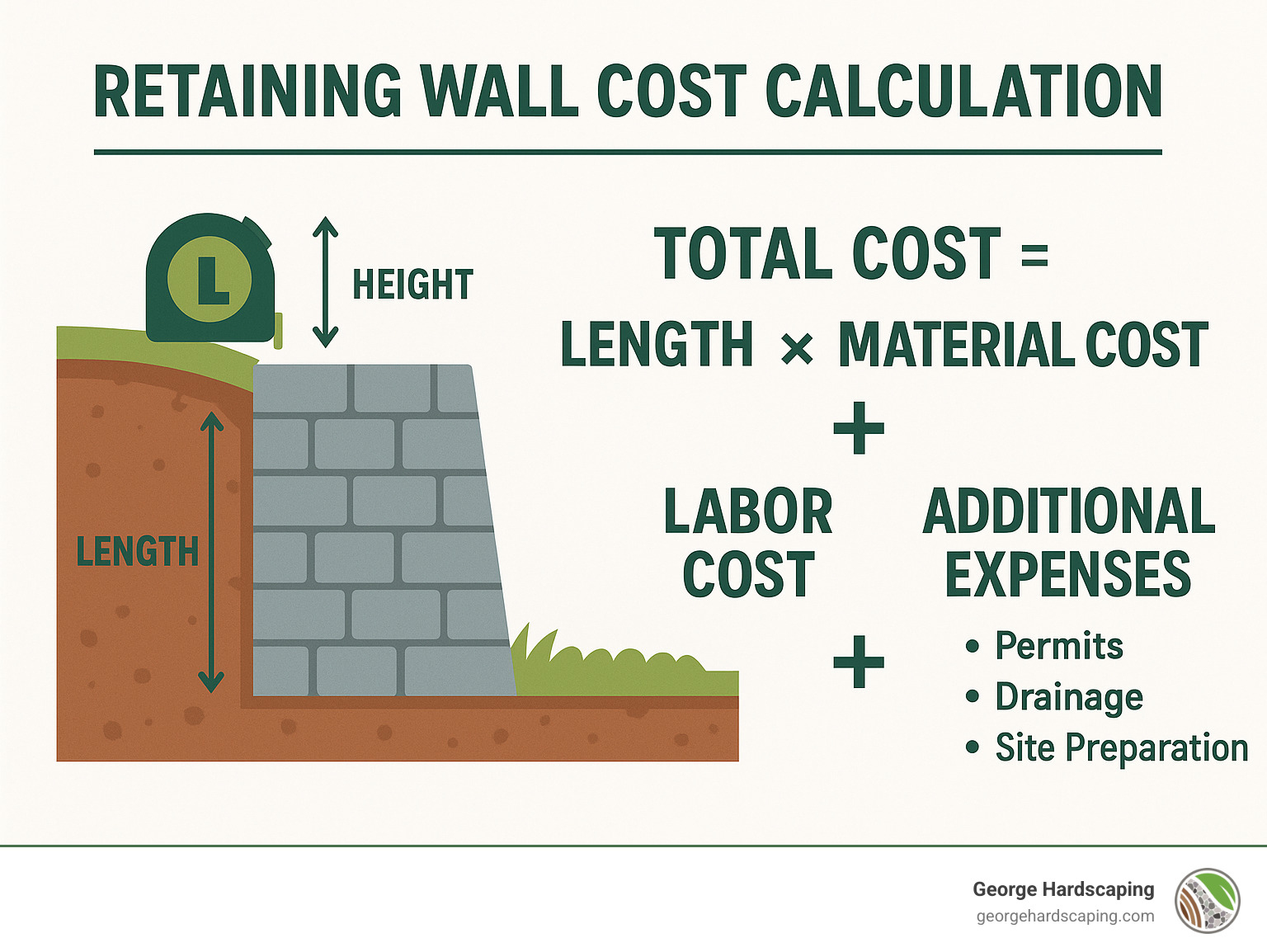
How Much for Retaining Wall Installation? 2025 National & Regional Averages
When homeowners across the country ask “how much for retaining wall installation,” they’re looking at a national average of $6,300. But here’s the thing – that number is just the starting point for your planning.
The reality is much more nuanced, especially here on the North Shore. Your final cost depends heavily on where you live, what you’re building, and how Mother Nature has shaped your particular piece of Massachusetts soil.
Wall length makes the biggest difference in your total investment. A modest 10-foot wall might cost between $400 and $3,600 (averaging around $2,000), while a substantial 100-foot installation can range from $4,000 all the way up to $36,000, with most homeowners paying around $20,000.
| Wall Length | Cost Range | Average Cost |
|---|---|---|
| 10 ft | $400 – $3,600 | $2,000 |
| 25 ft | $1,000 – $9,000 | $5,000 |
| 50 ft | $2,000 – $18,000 | $10,000 |
| 100 ft | $4,000 – $36,000 | $20,000 |
Note: These are average costs based on internet data and not actual costs for George Hardscaping.
The inflation outlook for 2025 shows continued pressure on both material and labor costs. Supply chain improvements have helped stabilize pricing somewhat, but skilled mason wages continue climbing as demand outpaces available craftspeople.
National Averages: how much for retaining wall installation in 2025
Most American homeowners spend between $3,500 and $9,400 for their retaining wall projects. The budget-conscious can get started around $1,200 for basic timber installations, while premium engineered stone walls easily climb past $25,000 for complex projects.
Here’s how your money typically gets divided: labor costs eat up 50-60% of your total budget, while materials account for the remaining 40-50%. This split makes sense when you consider the skill required for proper excavation, foundation work, and precise stone placement.
Labor rates have jumped significantly in 2025. Basic masonry work now commands $50-$75 per hour, while complex installations requiring specialized engineering knowledge can hit $100-$200 per hour. The good news? Quality craftsmanship at these rates means your wall will likely outlast your mortgage.
North Shore Snapshot: how much for retaining wall installation varies by location
Living in Essex County brings unique challenges that affect your wallet. Our beautiful region demands specific approaches that national averages simply don’t capture.
Cold-climate footings are non-negotiable here. Massachusetts frost lines require foundations extending 4 feet deep, adding $18-$55 per linear foot to your project. It’s not optional – it’s the difference between a wall that lasts decades and one that shifts with the first hard freeze.
Local quarry stone gives us access to gorgeous New England granite and fieldstone, but specialty materials can bump transportation costs by 10-15%. The trade-off? Stone that perfectly matches our regional aesthetic and has already proven it can handle our weather.
Our higher cost-of-living reality means labor rates typically run 20-30% above national averages in communities like Beverly, Marblehead, and Salem. Quality craftspeople command premium wages, and frankly, they’ve earned them dealing with our challenging soil conditions.
Delivery fees can surprise homeowners in historic neighborhoods. Those charming narrow streets in Newburyport or Salem’s older sections? They can add $200-$500 to your project when trucks struggle to access your property. It’s worth factoring in during your initial planning.
Key Cost Factors & Permit Requirements That Move Your Bottom Line
When you’re planning a retaining wall project, the sticker price is just the beginning. Several behind-the-scenes factors can make or break your budget, and understanding them upfront saves you from unpleasant surprises down the road.
Site preparation often catches homeowners off guard. That beautiful sloped yard needs serious work before the first stone gets laid. Land clearing, grading, and excavation typically add $5-$15 per square foot to your project. Here on the North Shore, our rocky New England soil doesn’t make things easier – you might need specialized equipment just to break ground, which bumps costs even higher.
Drainage systems aren’t optional if you want your wall to last. Poor drainage is the number one killer of retaining walls, so expect to invest $10-$30 per linear foot for French drains, weep holes, and proper gravel backfill. Trust us, this isn’t where you want to cut corners.
The soil conditions on your property play a huge role in how much for retaining wall installation you’ll actually pay. Clay soil, common in parts of Essex County, demands extra excavation and base preparation work. Rocky conditions might require blasting or bring in heavy machinery that costs extra by the hour.
Slope angle can double your costs faster than you’d think. Building on steep slopes increases expenses by 25-100% due to additional excavation, terracing requirements, and often the need for engineering plans. What looks like a simple hillside project can quickly become a complex engineering challenge.
Property access matters more than most people realize. Those charming narrow streets in Salem or Newburyport that give our neighborhoods character? They can make equipment delivery a nightmare, significantly increasing labor time and costs.
Permits are required for most walls over 3-4 feet tall, costing $50-$450 depending on which North Shore town you call home. Complex walls often need engineering plans that add another $350-$750 to your budget. But hey, at least you’ll know your wall meets all safety codes.
Waterproofing at $2-$10 per square foot is especially crucial in our wet New England climate. Backfill materials run $5-$30 per cubic yard for quality dirt, with drainage gravel adding to the tab. And if you’re building in winter? Expect to pay 15-25% more due to frozen ground conditions and limited contractor availability.
Note: These are average costs based on internet data and not actual costs for George Hardscaping.
More info about retaining wall construction cost
Hidden Expenses Homeowners Miss
The sneaky costs are often the ones that hurt the most. Demolition work for removing existing walls or structures runs about $20 per square foot, with disposal fees tacking on another $200-$500.
While Dig Safe utility locates are free in Massachusetts, actually relocating utilities that end up in your wall’s path can cost thousands. Nobody thinks about this until the gas line runs exactly where your beautiful stone wall needs to go.
Land clearing becomes expensive fast. Tree removal, stump grinding, and brush clearing can add $500-$3,000 to your project depending on how much vegetation needs to go. Construction waste removal typically costs $300-$800 for retaining wall projects.
Here’s one that really stings: multiple inspection trips. If your wall fails inspection the first time, re-inspection fees and the cost to fix whatever went wrong can add $200-$500 to your final bill. This is why working with experienced contractors who know local codes inside and out makes such a difference.
Upgrades & Customizations That Add Wow (and Dollars)
A basic retaining wall does its job, but the right upgrades can transform it from purely functional to absolutely stunning. LED lighting systems cost $15-$50 per linear foot but create incredible nighttime ambiance while improving safety for walkways and steps.
Integrated flower beds add $20-$40 per linear foot but turn your retaining wall into a living garden feature with beautiful terraced plantings. Some municipalities require safety fencing for walls over certain heights, which costs $25-$75 per linear foot but can be designed to complement your landscape rather than detract from it.
Paver patios built on top of or adjacent to your wall add $15-$30 per square foot for the patio area, creating valuable outdoor living space. For the ultimate outdoor entertainment setup, custom outdoor kitchens integrated into retaining walls can add $5,000-$15,000 to your project – but imagine the dinner parties you’ll host!
Note: These are average costs based on internet data and not actual costs for George Hardscaping.
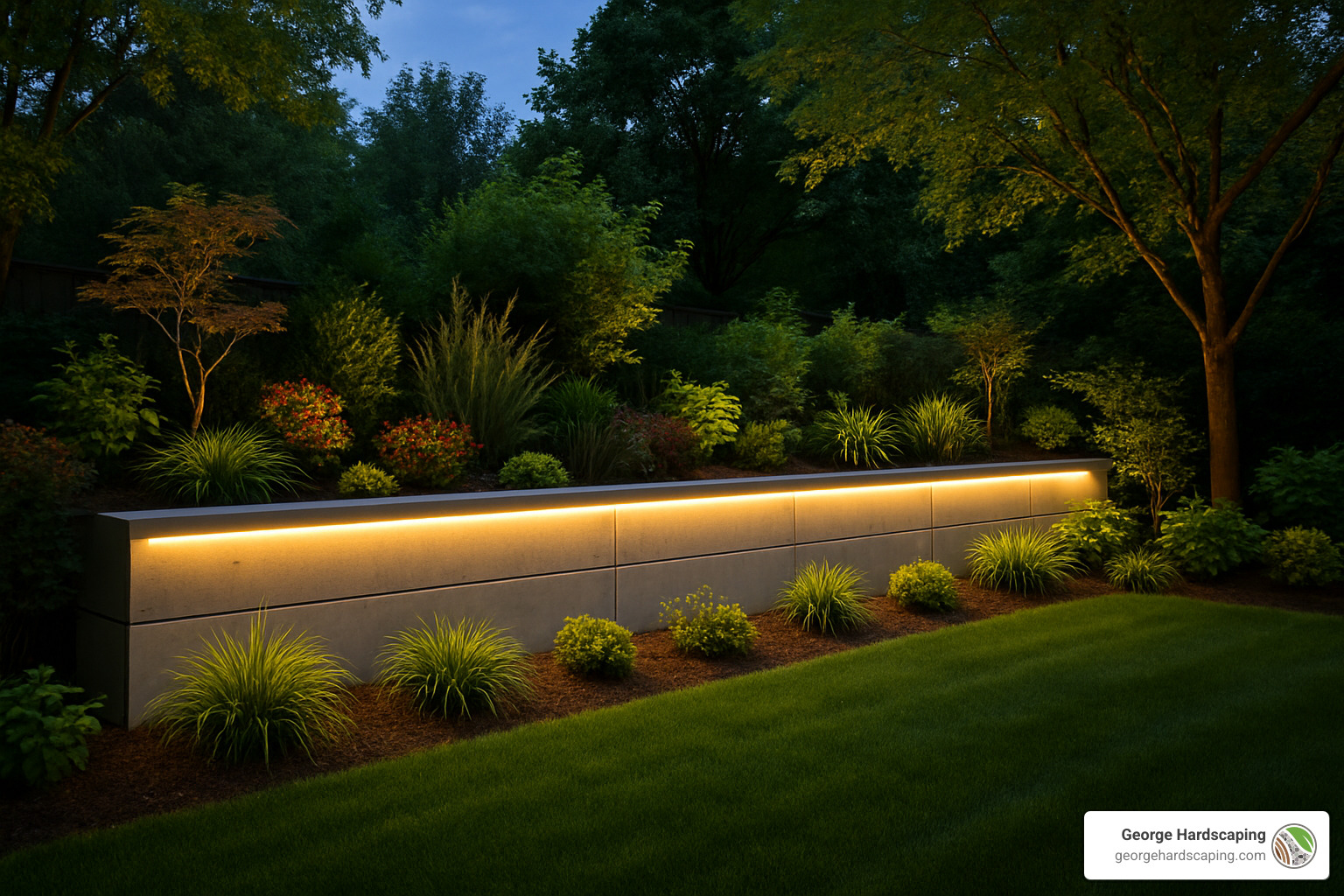
Material, Size & Terrain: Price-Per-Foot Breakdown
Choosing the right material for your retaining wall is like picking the foundation of your home – it affects everything from your upfront investment to how your wall looks and performs decades down the road. Each material brings its own personality and price tag to the table.
Concrete remains the workhorse of retaining walls, offering incredible versatility whether you choose poured concrete, precast blocks, or interlocking systems. It’s tough, adaptable, and handles our New England freeze-thaw cycles like a champ.
Natural stone is where your wall becomes a work of art. Local fieldstone and granite don’t just hold back soil – they tell the story of New England’s landscape. Yes, you’ll pay more upfront, but these walls often outlast the houses they protect.
Wood and timber options give you the most bang for your buck initially, making them perfect for budget-conscious homeowners or temporary solutions. Just remember, Mother Nature has plans for wood, and you’ll likely be replacing it in 10-20 years.
Vinyl keeps things simple and maintenance-free, though it’s best suited for shorter walls where you want function over form. Gabion walls – those wire cages filled with stone – offer excellent drainage and a unique industrial look that’s growing popular with modern homeowners.
For those wanting something truly distinctive, COR-TEN steel creates stunning contemporary walls that develop a beautiful rust patina over time. Boulder walls bring natural, organic beauty but require serious equipment and expertise to install properly.
Product and Supplies Data: Home Depot Concrete and Masonry Materials
Cost per Square Foot by Material
Understanding how much for retaining wall installation costs per square foot helps you budget realistically for different material choices. Here’s what you can expect to invest:
Concrete typically runs $20-$45 per square foot, with poured concrete hitting the higher end around $30-$40, while basic concrete blocks start around $15-$30. Interlocking block systems fall somewhere in between at $17-$53 per square foot.
Natural stone commands premium pricing at $25-$100 per square foot, and for good reason. Local fieldstone runs $25-$50, cut granite jumps to $40-$85, and premium stone veneer can reach $60-$100 per square foot.
Wood and timber options keep costs manageable at $10-$40 per square foot. Pressure-treated lumber stays budget-friendly at $10-$25, railroad ties run $14-$37, while cedar or redwood upgrades cost $25-$40 per square foot.
Vinyl maintains the lowest cost at $10-$15 per square foot, though it’s limited to walls under 4 feet. Gabion systems offer good value at $10-$40 per square foot with excellent drainage built in.
Steel options vary dramatically from $25-$150 per square foot depending on the system. COR-TEN weathering steel runs $40-$80, while heavy-duty I-beam construction can reach $60-$150 per square foot.
Note: These are average costs based on internet data and not actual costs for George Hardscaping.
Wall Height & Length Multipliers
The size of your wall dramatically affects your final bill, with height being the biggest cost driver due to engineering requirements and safety regulations.
3-foot walls typically cost $120-$400 per linear foot and often fly under the permit radar. These friendly little walls work great for garden beds and gentle slopes without breaking the bank or requiring extensive engineering.
6-foot walls jump to $240-$800 per linear foot and almost always need permits. At this height, proper foundation work and drainage become critical, but you’re still in manageable territory for most homeowners.
8-foot walls reach $320-$1,200 per linear foot and always require professional engineering. You’re looking at reinforcement like rebar or tiebacks, plus significant excavation that can test your patience and your budget.
10+ foot walls start at $400 per linear foot and can easily exceed $2,000 per linear foot for complex installations. At these heights, we often recommend terraced systems – multiple shorter walls stepped up your slope. This approach costs 15-25% more than one massive wall, but provides better stability and drainage while looking more natural.
Location also plays a role in your costs. Driveway walls stick to standard pricing, while shoreline installations add 25-50% for marine-grade materials and wave protection. Pool area walls typically add 10-20% for safety compliance and the aesthetic upgrades most homeowners want around their backyard oasis.
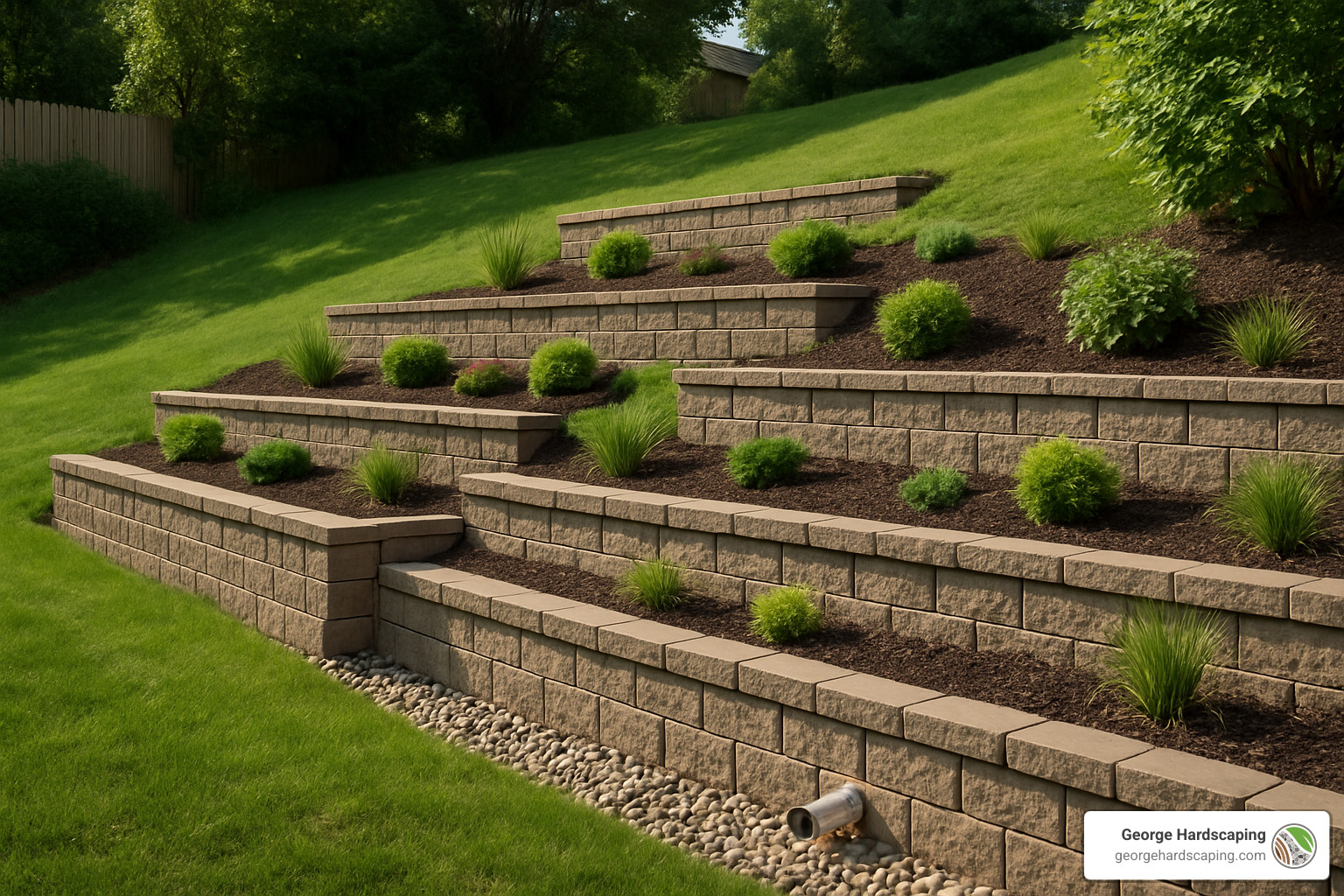
DIY vs Professional Builds, Repairs & Replacement
The choice between DIY and professional installation for how much for retaining wall installation often comes down to more than just money. While the cost difference is significant, there are hidden factors that can make or break your project.
DIY installations typically cost $4-$20 per square foot for materials alone. You’ll spend around $4-$8 per square foot for basic interlocking blocks, plus $2-$5 per square foot for concrete and gravel. Don’t forget tool rentals – expect $200-$500 for equipment like excavators ($300-$500 per day), compactors ($50-$100 per day), and concrete mixers ($40-$80 per day). Most homeowners invest 40-80 hours of their weekends into a typical retaining wall project.
Professional installation runs $20-$53 per square foot total, but this includes everything: materials, skilled labor, proper permits, and most importantly, a warranty that protects your investment. What takes you several weekends gets completed by professionals in 3-7 days.
Here’s the reality check: while simple garden walls under 3 feet might be manageable for handy homeowners, anything taller requires serious expertise. Poor drainage installation or inadequate foundations can cause wall failure within 2-5 years. That “savings” quickly becomes expensive when you’re paying for both the failed DIY attempt and professional reconstruction.
The warranty value alone makes professional installation worthwhile for most walls. A 2-5 year warranty covering materials and workmanship can save thousands in repair costs if something goes wrong.
Note: These are average costs based on internet data and not actual costs for George Hardscaping.
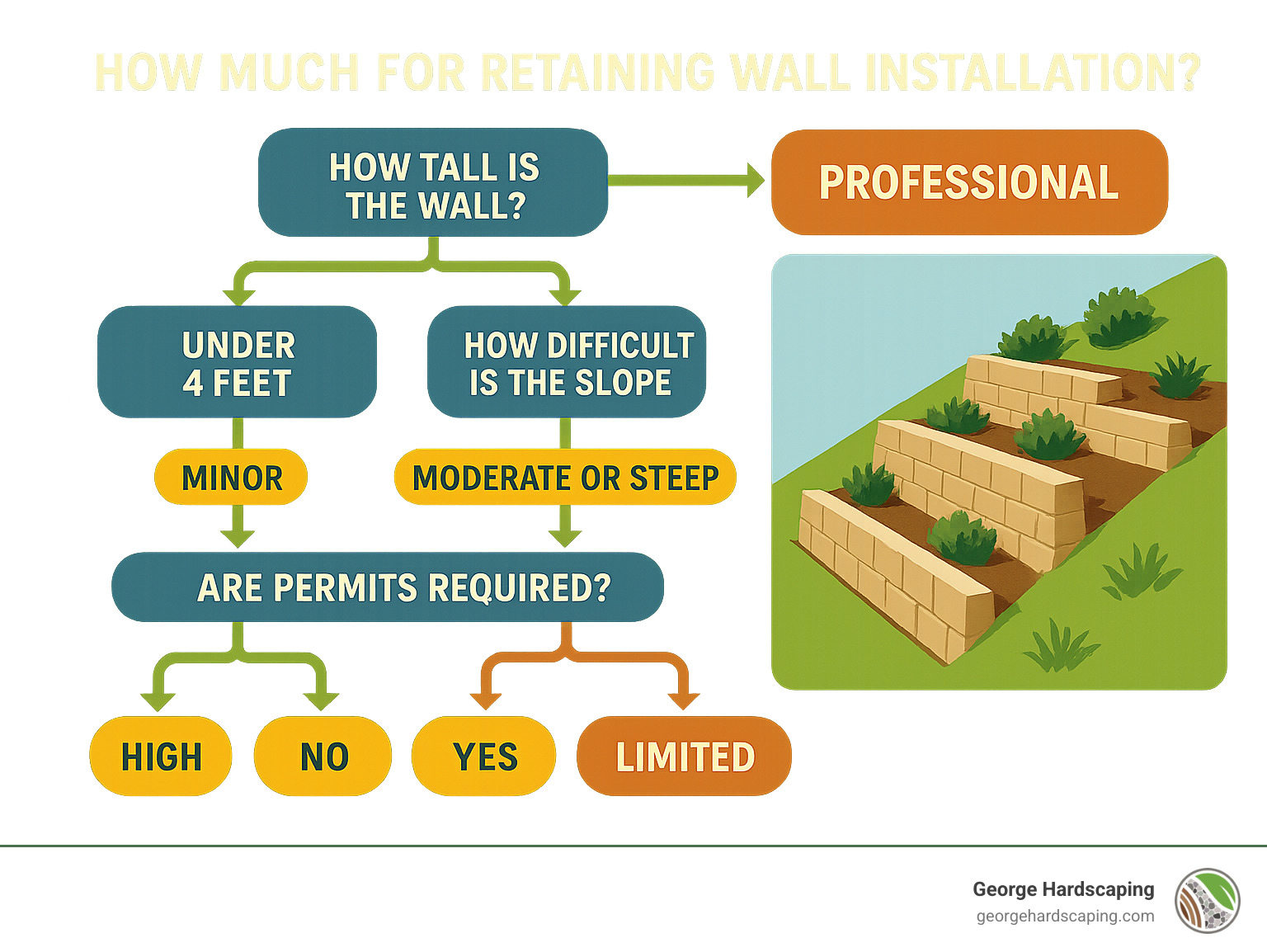
Saving Money Without Sacrificing Strength
Smart planning can significantly reduce your retaining wall costs without cutting corners on quality or durability.
Off-season scheduling offers the biggest savings opportunity. Winter and early spring installations can save 10-15% on labor costs. Yes, weather delays are possible, but patient homeowners often see substantial savings during contractors’ slower seasons.
Recycled stone provides authentic New England character at 30-50% less cost than new materials. Reclaimed granite blocks and fieldstone often have more character than fresh-cut stone, and you’re helping the environment too.
Phased construction makes sense for large projects. Building your wall in sections over multiple seasons spreads the financial impact and gives your budget time to recover between phases. Many homeowners start with the most critical section and expand over time.
Bulk material purchases reward planning ahead. Buying stone, blocks, or concrete in larger quantities typically provides 10-20% savings per unit. If you’re planning multiple landscape projects, coordinate material orders to maximize these discounts.
Simple, straight designs cost significantly less than curved or stepped walls. While complex architectural features look stunning, they can add 25-50% to labor costs. Sometimes the cleanest design is also the most budget-friendly.
Signs Your Wall Needs Help & What It Costs
Even well-built retaining walls don’t last forever, especially in New England’s harsh freeze-thaw cycles. Catching problems early saves money and prevents dangerous failures.
Repair costs typically range from $200-$1,000, depending on the issue. Minor crack sealing runs $200-$400, while drainage improvements cost $500-$1,500. More serious problems like tie-back installation ($800-$2,000) or foundation reinforcement ($1,000-$3,000) require professional assessment.
When repairs aren’t enough, replacement becomes necessary. Complete wall removal costs $10-$20 per square foot, site preparation adds $5-$15 per square foot, and new wall installation runs $20-$50 per square foot. Total replacement typically costs $30-$70 per square foot.
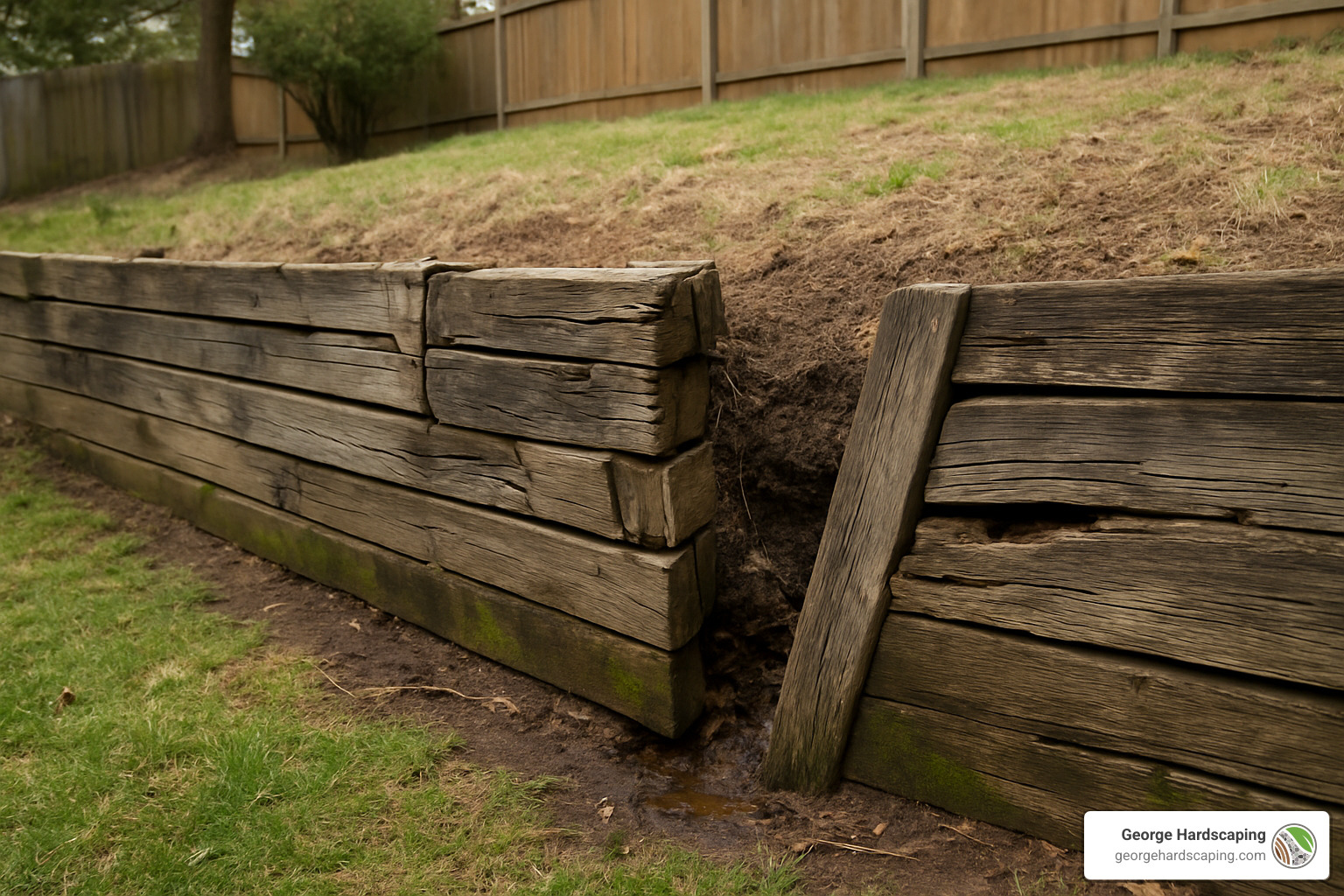
Watch for these warning signs: cracks wider than 1/4 inch, leaning or bulging sections, water pooling behind the wall, drainage system clogs, soil washing through joints, and foundation settling or shifting. Any of these symptoms deserve immediate professional attention.
The key insight? Early intervention typically costs 50-75% less than complete replacement. A $500 drainage repair today can prevent a $15,000 wall replacement next year.
More info about How to Find a Contractor to Build a Retaining Wall
Conclusion
Understanding how much for retaining wall installation involves much more than simply getting a quick estimate online. The figures we’ve explored throughout this guide – ranging from $20-$50 per square foot or $3,500-$9,400 for typical projects – represent average costs based on internet data and national trends, not specific pricing for any individual contractor.
Your actual investment will depend entirely on your unique circumstances. The size and complexity of your wall, your material preferences, your property’s site conditions, and your local permit requirements all play crucial roles in determining your final costs.
Here’s what many homeowners forget to budget for: proper drainage systems and necessary permits. These aren’t optional extras – they’re the foundation of a wall that will still be standing strong decades from now. Skipping these essentials might save money upfront, but it almost always leads to expensive repairs or complete rebuilds down the road.
The encouraging news? A professionally built retaining wall can boost your home’s value by up to 15% while solving serious problems like soil erosion and water drainage. It’s not just an expense – it’s an investment that improves both your property’s functionality and its curb appeal.
For North Shore homeowners throughout Essex County, partnering with experienced local contractors makes all the difference. Our unique rocky soil conditions, harsh winter climate, and strict building codes require specialized knowledge that out-of-area contractors often lack. We’ve witnessed too many DIY attempts and bargain installations crumble within just a few years, ultimately costing homeowners far more than investing in quality craftsmanship from the start.
At George Hardscaping, we bring generations of experience to retaining wall projects across Beverly, Salem, Marblehead, Newburyport, and the entire North Shore region. We understand the local regulations, soil challenges, and design considerations that ensure your wall will protect and beautify your property for decades to come.
Ready to explore your retaining wall possibilities? We’re here to help you steer the costs, materials, and design options that make perfect sense for both your property and your budget. Trust in craftsmanship and local code knowledge – it’s the smartest investment you can make.
More info about Retaining Wall Cost
