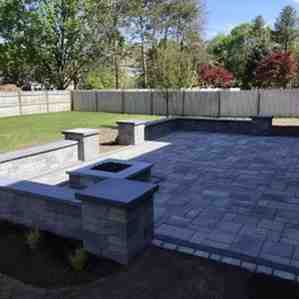
Hardscape and Landscape: Top 7 Essential Tips for 2024
Hardscape and landscape are two critical components in outdoor design, each playing a unique role. Hardscape refers to the non-living, structural elements like patios, walkways, and retaining walls. Landscape includes the living, soft elements such as grass, trees, and plants.
- Hardscape: Structures like stone pathways, decks, and fire pits.
- Landscape: Living elements like flowers, shrubs, and lawns.
By understanding hardscape and landscape, you can achieve a balanced and harmonious outdoor space that improves both appearance and function.
Hardscape vs. Landscape: Knowing the Difference
Understanding the difference between hardscape and landscape is crucial for creating a balanced outdoor space. Let’s dive into the details of each and explore how to integrate them seamlessly.
Hardscape Elements
Hardscape elements are the backbone of your outdoor space. They include all the non-living, structural components that add function and form. Here are some key hardscape elements:
- Patios: These provide a durable, flat surface for outdoor furniture and activities.
- Walkways: Pathways made from stone, brick, or concrete that guide you through the garden.
- Retaining Walls: Structures that hold back soil, create level areas, and add visual interest.
- Fire Pits: These not only serve as a focal point but also extend the usability of your outdoor space into cooler months.
These elements not only add structure but also help with drainage, erosion control, and defining different areas in your yard.
Landscape Elements
Landscape elements are the living parts of your outdoor design. They add color, texture, and life to your yard. Key landscape elements include:
- Grass: Provides a lush, green carpet that’s soft underfoot.
- Plants: Shrubs, flowers, and ground covers that add layers of color and texture.
- Trees: Offer shade, privacy, and a vertical element to your design.
- Flowers: Bring seasonal color and attract pollinators like bees and butterflies.
These elements create a natural, calming atmosphere and can quickly transform your space into a serene oasis.
Integration Techniques
Combining hardscape and landscape elements effectively can be a bit tricky, but it’s essential for a cohesive design. Here are some integration techniques:
- Balance and Proportion: Ensure that hardscape elements do not overwhelm the natural beauty of the landscape. For example, a large patio should be balanced with ample greenery around it.
- Flow and Continuity: Create pathways that lead naturally through different areas, connecting hardscape features like patios and fire pits with landscape elements like garden beds and trees.
- Material Harmony: Use materials that complement each other. For instance, a stone walkway can be lined with native plants that thrive in the same environment.
- Functional Zones: Define areas for different activities. A retaining wall can create a raised garden bed, while a pergola can provide shade over a seating area.
By thoughtfully integrating these elements, you can create an outdoor space that is both functional and beautiful.

In the next section, we’ll explore the key components of hardscape and landscape in more detail, focusing on the essentials you need to consider for your design.
Key Components of Hardscape and Landscape
Hardscape Essentials
Patios
Patios are flat, open spaces usually made from materials like stone, concrete, or pavers. They provide a sturdy surface for outdoor furniture, making them perfect for dining or lounging. A well-designed patio can serve as an extension of your indoor living space, offering a seamless transition from inside to outside.
Walkways
Walkways guide you through your yard, connecting different areas like the garden, patio, and front door. They can be made from various materials, including gravel, brick, and flagstone. Walkways not only make your yard more navigable but also add a visual flow to your outdoor space.
Retaining Walls
Retaining walls are structures that hold back soil, preventing erosion and creating level areas in sloped landscapes. They can be made from stone, brick, or concrete blocks. Besides their functional role, retaining walls can also serve as seating areas or as a backdrop for plants and flowers.
Fire Pits
Fire pits are a popular feature for outdoor spaces, providing warmth and a focal point for gatherings. They can be built from stone, brick, or metal and come in various shapes and sizes. A fire pit extends the usability of your yard into the cooler months and adds a cozy, inviting atmosphere.
Landscape Essentials
Grass
Grass forms the foundation of most landscapes, offering a lush, green carpet that softens the look of hardscape elements. It provides a space for play, relaxation, and helps to cool the surrounding environment. Options include natural grass varieties suited to your climate or low-maintenance artificial turf.
Plants
Plants add color, texture, and life to your yard. They range from small ground covers to large shrubs and can be chosen based on their size, color, and maintenance needs. Using native plants can make your garden more sustainable and easier to care for.
Trees
Trees are the giants of the landscape world. They provide shade, improve air quality, and can even increase property value. When selecting trees, consider their mature size, growth rate, and seasonal changes. Trees can also serve as focal points or natural privacy screens.
Flowers
Flowers bring vibrant colors and fragrances to your garden. They can be planted in beds, containers, or even hanging baskets. Choose a mix of annuals and perennials to ensure continuous blooms throughout the seasons. Flowers also attract pollinators like bees and butterflies, enhancing the ecological health of your yard.
By incorporating these hardscape and landscape essentials, you can create a balanced, functional, and aesthetically pleasing outdoor space.
In the next section, we’ll dive into designing with hardscape and landscape, covering planning, material selection, and environmental considerations.
Designing with Hardscape and Landscape
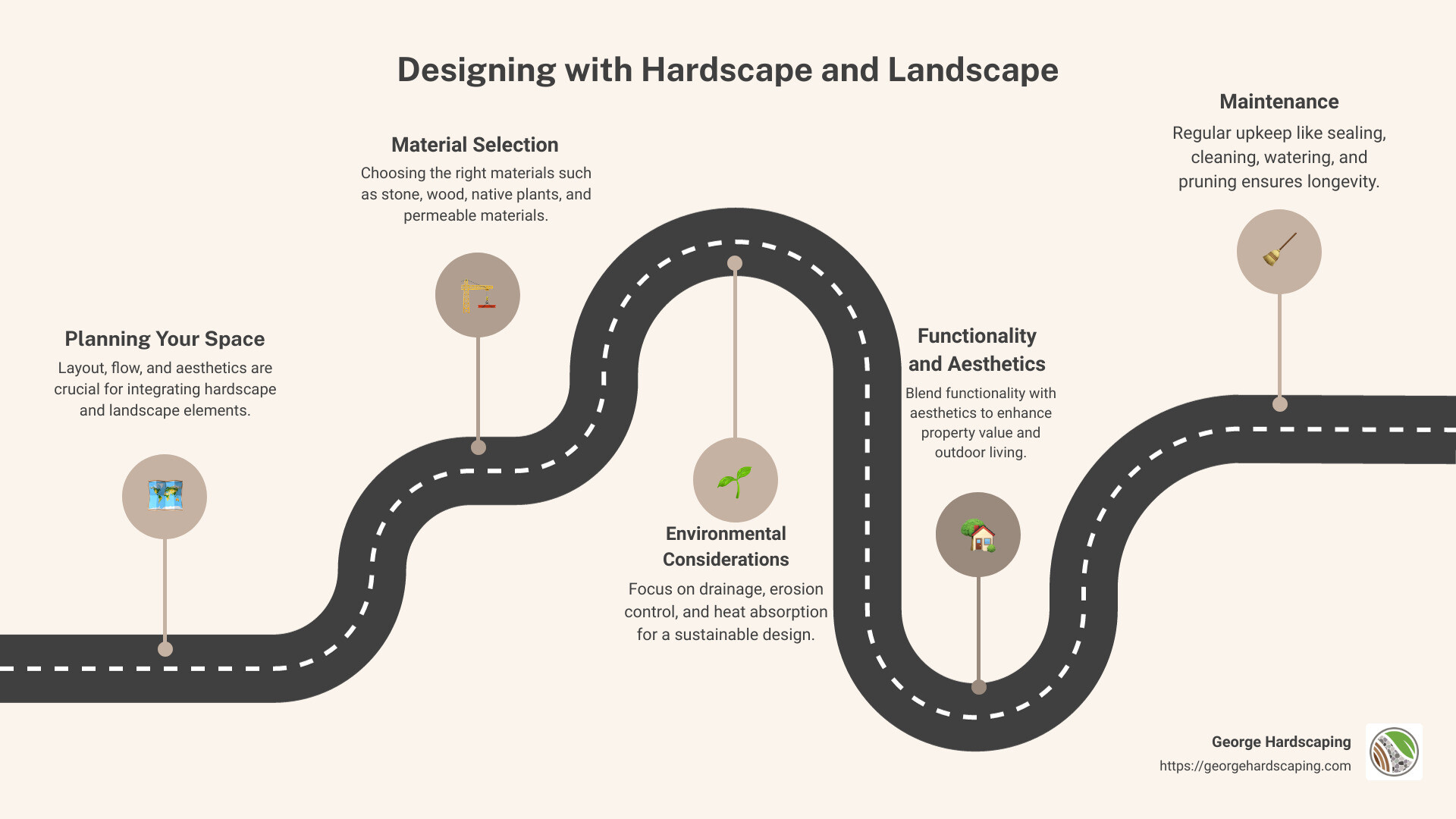
Planning Your Space
Creating a harmonious outdoor area starts with good planning. Think about how you want to use your space. Do you need a quiet spot for reading or a large area for entertaining?
Layout and Flow: Start by sketching a rough layout. Consider how people will move through the space. Pathways should be wide enough for easy walking and should connect different areas smoothly. For example, a stone walkway can lead from your back door to a patio, guiding guests seamlessly.
Aesthetics: Balance is key. Too much hardscape can make your yard look like a parking lot, while too much landscape can make it feel like a jungle. Mix elements like wooden pergolas with soft grasses and colorful flowers to create a visually appealing space.
Material Selection
Choosing the right materials is crucial for both function and appearance.
Stone: Durable and timeless, stone is perfect for patios, walkways, and retaining walls. It absorbs heat, which can help dry out surrounding soil and prevent standing water.
Wood: Ideal for decks and pergolas, wood adds warmth and a natural feel to your yard. Make sure to choose weather-resistant options like cedar or treated lumber.
Native Plants: These require less water and maintenance. They are adapted to your local climate and soil, making them an eco-friendly choice.
Permeable Materials: These allow water to pass through, reducing runoff and erosion. Options include permeable pavers and gravel.
Environmental Considerations
Your design should also take environmental factors into account.
Drainage: Proper drainage prevents water from pooling and causing damage. Use materials like gravel or permeable pavers to help water seep into the ground. Retaining walls can also direct water flow away from your home.
Erosion Control: Sloping yards can suffer from erosion. Retaining walls and terracing can help keep soil in place. Planting ground cover plants can also stabilize the soil.
Heat Absorption: Materials like stone and concrete absorb heat, which can be beneficial in cooler climates. However, in hot climates, consider using lighter-colored materials that reflect heat.
By thoughtfully planning your space, selecting the right materials, and considering environmental factors, you can create a beautiful, functional outdoor area that blends hardscape and landscape elements seamlessly.
Next, we’ll explore the practical benefits of combining these elements, including improved functionality, aesthetics, and property value.
Practical Benefits of Combining Hardscape and Landscape
Functionality
Combining hardscape and landscape elements creates a more functional outdoor space. Think about a paved walkway that guides you through a lush garden. It’s not just pretty; it keeps your shoes clean and makes the garden accessible even after a rain.
Retaining walls are another example. They can hold back soil, prevent erosion, and create flat areas in a sloped yard. This makes your outdoor space more usable and safe.
Aesthetics
A well-designed mix of hardscape and landscape elements can transform your yard into a visual masterpiece. Imagine a stone patio surrounded by vibrant flowers and shrubs. The hard surfaces contrast beautifully with the soft, green plants, creating a balanced look.
Outdoor lighting can highlight these features, making your garden look magical at night. Pathway lights, for example, not only guide you but also accentuate the beauty of your walkways and plants.
Property Value
Investing in both hardscape and landscape can significantly boost your home’s value. Features like patios, decks, and outdoor kitchens are highly attractive to potential buyers. They see these as extensions of the living space.
According to Forbes, well-designed landscaping can increase property value by up to 20%. Hardscape features like fire pits and retaining walls make your home more appealing and functional, leading to a higher return on investment.
Outdoor Living
Combining hardscape and landscape elements improves your outdoor living experience. A deck or patio provides a perfect spot for family gatherings or quiet evenings. Surround it with plants and flowers, and you have a cozy, inviting space.
Fire pits and outdoor kitchens add even more functionality. They allow you to cook and entertain outside, making your yard an extension of your home. Imagine roasting marshmallows around the fire or having a barbecue with friends—all in your beautifully designed outdoor space.
By blending hardscape and landscape elements, you can create a yard that is not only beautiful but also functional and valuable. Next, we’ll look at some maintenance tips to keep your outdoor space looking its best.
Maintenance Tips for Hardscape and Landscape
Hardscape Maintenance
Sealing
Adding a protective seal to your hardscape surfaces like patios and decks can prevent cracks, chips, and other damage. A fresh coat of sealant also renews the look of your materials, making them appear brand new.
Cleaning
Regular cleaning helps maintain the beauty of your hardscape. Remove spills quickly to avoid stains. For surfaces like flagstone or concrete, a pressure washer can be effective. However, be careful with materials like composite decking or wood, as high pressure can cause damage.
Weed Prevention
Filling in cracks between pavers can block weeds and prevent moisture from widening gaps. This simple step can save you from more extensive repairs down the line.
Landscape Maintenance
Watering
Proper watering is crucial for maintaining a healthy landscape. Efficient irrigation systems like drip irrigation minimize water waste and ensure your plants get the moisture they need.
Pruning
Regular pruning keeps your plants healthy and looking their best. Trim overgrown branches and remove dead or diseased parts to promote new growth.
Fertilizing
Fertilizing provides essential nutrients that help your plants thrive. Use the right type of fertilizer for your plants and follow the recommended application rates to avoid over-fertilizing.
By following these maintenance tips, you can keep your hardscape and landscape elements in top condition, ensuring your outdoor space remains beautiful and functional.
Adding Value to Your Home with Hardscape and Landscape
ROI (Return on Investment)
When it comes to increasing your home’s value, hardscape and landscape are a dynamic duo. According to a survey by Virginia Tech, quality landscaping can boost your home’s value by up to 12%. Hardscape features like patios, decks, and outdoor kitchens are particularly high ROI projects. These elements not only attract potential buyers but also offer functional outdoor living spaces that improve daily life.
Curb Appeal
First impressions matter, especially in real estate. A well-designed hardscape and landscape can significantly improve your home’s curb appeal. Picture this: a beautifully paved walkway leading to a lush garden filled with vibrant flowers and well-maintained shrubs. This inviting scene can make your home stand out in the neighborhood and entice buyers to take a closer look.
Outdoor Features
Adding outdoor features is a surefire way to lift your property. Think about incorporating a cozy fire pit for cool evenings or a stone retaining wall that doubles as seating. These features not only add utility but also create a unique ambiance. According to Forbes, incorporating elements like water features or garden art can transform your yard into a serene oasis.
George Hardscaping
At George Hardscaping, we specialize in blending hardscape and landscape to create stunning outdoor spaces. Our team uses high-quality materials like Techo-Bloc and El Dorado Stone to ensure durability and aesthetic appeal. Whether you’re looking to install a new patio or improve your garden with retaining walls, we offer customized solutions custom to your needs.
By investing in both hardscape and landscape, you not only improve your living environment but also increase your property’s market value. Ready to transform your outdoor space? Contact George Hardscaping today for a free consultation and let us help you bring your vision to life.
Conclusion
Enhancing your outdoor spaces with a thoughtful blend of hardscape and landscape elements can transform your yard into a stunning, functional oasis. At George Hardscaping, we believe in the power of quality craftsmanship and aesthetic appeal to create outdoor areas that not only look beautiful but also serve practical purposes.
Quality is at the heart of everything we do. We use only the best materials, like Techo-Bloc and El Dorado Stone, to ensure your hardscaping features stand the test of time. Our skilled professionals are dedicated to delivering exceptional results that meet your unique needs and preferences.
Craftsmanship is another cornerstone of our work. We take pride in our attention to detail, from the initial design phase to the final installation. Whether it’s a cozy fire pit, a durable retaining wall, or a picturesque patio, our team ensures every project is executed to the highest standards.
When it comes to aesthetics, we understand that your outdoor space is an extension of your home. Our designs are custom to complement your existing landscape and architectural style, creating a seamless flow between your indoor and outdoor living areas. We focus on creating visually appealing spaces that invite you to relax, entertain, and enjoy the beauty of your surroundings.
Ready to improve your outdoor space with a blend of hardscape and landscape elements? Contact George Hardscaping today for a free consultation. Let us help you bring your vision to life with our expertise in quality, craftsmanship, and aesthetics.
Improve your outdoor living experience with George Hardscaping—where quality meets beauty.