
Granite Steps Design Ideas: Top 10 Stunning Inspirations
Changing Your Outdoor Space with Granite
Looking for granite steps design ideas to lift your home’s exterior? Here are the top 5 granite step designs homeowners are implementing in 2023:
- Classic Bullnose Granite – Timeless appeal with rounded edges
- Modern Minimalist – Clean lines with polished surfaces
- Mixed Material – Granite treads with contrasting risers
- Illuminated Steps – Integrated LED lighting for safety and style
- Natural Garden Integration – Irregular granite slabs blended with landscaping
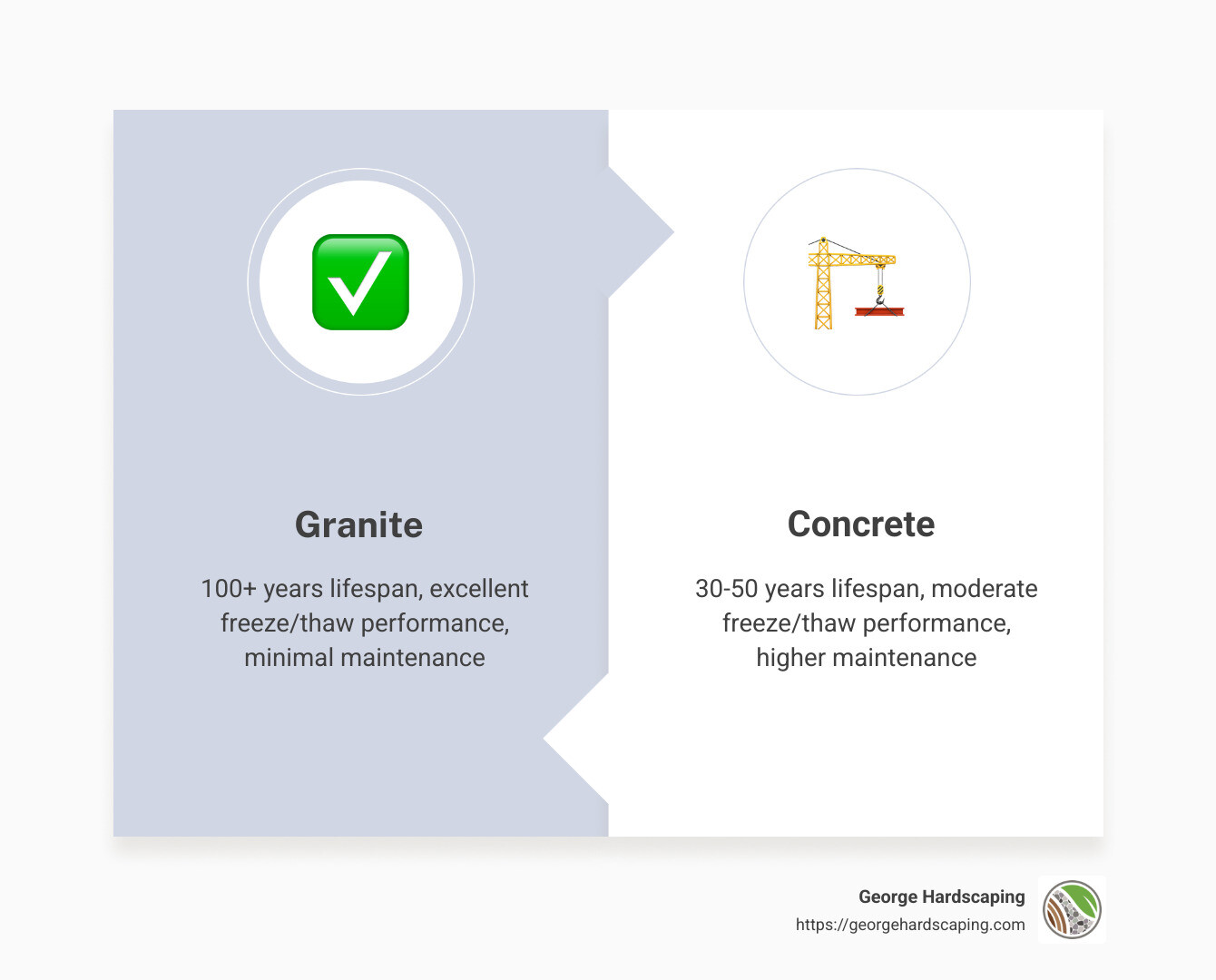
Granite steps design ideas combine beauty with best durability, making them an excellent investment for any home. Unlike wood, brick, or concrete, granite steps resist freeze/thaw cycles, don’t chip easily, and remain unaffected by ice-melting chemicals. These natural stone steps can transform your entryway or garden path while providing reliable performance for decades.
When homeowners choose granite for their exterior steps, they’re not just making a practical choice—they’re making a statement. As one industry expert notes, “Your front door and steps often make the first impression of your home.” Granite steps offer that perfect balance of elegance and resilience that few other materials can match.
Whether you’re looking to improve your home’s curb appeal with a grand entrance or create a seamless transition in your landscape, granite steps provide versatile design options. They can be customized to complement traditional New England styles, modern minimalist aesthetics, or anything in between.
The natural variations in granite’s color and texture make each installation unique. From speckled patterns to solid colors, from polished finishes to flamed textures for better traction, granite steps can be custom to suit your specific design vision and practical needs.
Quick look at granite steps design ideas:
– natural stone steps ideas
– outdoor stone stairs ideas
1. Classic Entrance with Granite Steps
There’s something truly special about a home with classic granite steps leading to the front door. Here in Essex County, MA, we’ve seen countless properties transformed by this simple yet powerful addition. A well-designed granite entrance doesn’t just provide access to your home—it makes a statement about your attention to quality and detail.
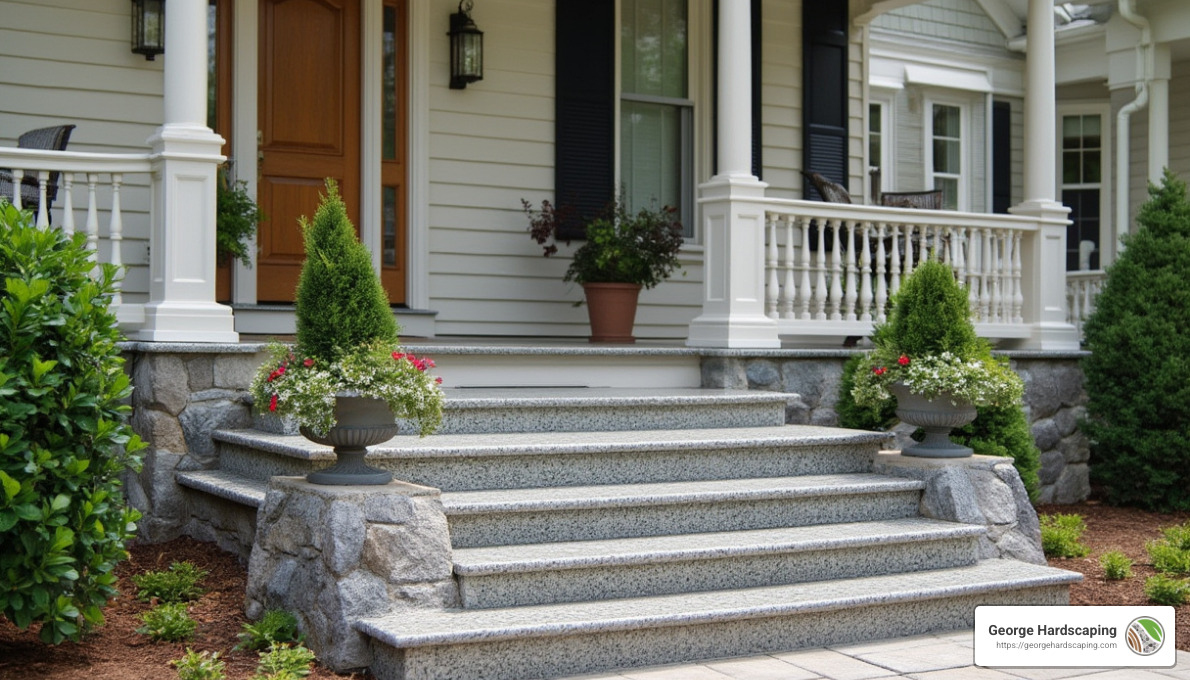
Traditional homes throughout the North Shore benefit tremendously from granite entrances. Walking through neighborhoods in Marblehead, Salem, or Newburyport, you’ll notice how granite steps seem to belong with these historic properties—adding character while providing durability that modern homeowners appreciate. Whether your home is centuries old or newly built in a traditional style, granite steps design ideas can be custom to improve its architectural integrity.
Achieving Timeless Appeal
What makes granite front steps so enduring isn’t just their physical longevity—though that’s certainly impressive. Many granite steps in Beverly and Salem have stood for over 100 years and still look magnificent! It’s the way granite combines beauty with function that creates true timeless appeal.
Unlike concrete steps that crack and crumble over decades, granite maintains its dignified appearance through generations of use. Each set of steps tells its own story through subtle variations in color and pattern. For traditionally styled homes, soft grays and warm beiges offer understated elegance, while homeowners seeking more drama might choose deeper blacks or rich greens.
There’s something reassuring about the solid presence of granite steps. As one of our Ipswich clients recently told us after their installation, “Our granite steps don’t just lead to our home—they announce it.” That sense of permanence is hard to achieve with other materials.
Incorporating Traditional Elements
The beauty of working with granite is how wonderfully it pairs with classic design elements. For homes throughout Essex County, we often improve granite steps design ideas with traditional touches:
Bullnose edges add both visual refinement and practical water-shedding capability to your steps. That gentle curve at the front edge of each tread softens the overall appearance while helping prevent ice buildup in winter.
Antique finishes work beautifully for homes in historic districts like Salem or Newburyport. Using special techniques, we can give brand new granite the character and patina of stone that’s weathered generations of New England seasons.
Your front door and steps often make the first impression of your home. This insight from a design expert is especially true here in New England, where front entrances set the tone for the entire property. Many homeowners choose to personalize their granite steps with curved railings, slightly wider bottom steps, or subtle pattern details.
For a family in Manchester-by-the-Sea, we recently installed granite steps with a gentle flare at the bottom. This small design touch creates a more welcoming approach to their home. The owner later shared that guests regularly comment on how the steps seem to “invite you into the home”—exactly the feeling most homeowners want to create.
When properly designed, classic granite steps don’t just improve curb appeal—they become an integral part of your home’s identity, welcoming family and visitors for generations to come.
2. Modern Minimalist Granite Staircases
For homeowners dreaming of a contemporary look, modern minimalist granite staircases offer a breathtaking alternative to traditional designs. These sleek installations celebrate clean lines, open spaces, and granite’s natural beauty without unnecessary frills or decorations.

We’ve noticed growing enthusiasm for these contemporary designs throughout Swampscott and Marblehead communities. Modern minimalist granite steps design ideas work wonderfully whether you’re building a new home or refreshing an existing property for an updated appearance.
Want to explore more inspiration? Check out Granite Staircases – Some Wonderful Design Ideas To Explore.
Sleek Lines and Open Spaces
The magic of modern minimalist granite staircases lies in their geometric precision and visual lightness. Unlike traditional styles with ornate details, minimalist stairs let the pure form of the steps take center stage.
What makes these designs so distinctive? Open risers create an airy feel by eliminating the vertical face between steps, allowing light to flow through the staircase. Floating steps give the illusion that granite treads are suspended in mid-air—a stunning effect we achieve by cleverly concealing structural supports within walls. Consistent thickness across all treads creates a satisfying visual rhythm that draws the eye upward.
I remember a recent project in North Reading where we installed floating granite steps with hidden steel supports. The homeowners couldn’t stop smiling at how their polished black granite steps seemed to defy gravity against crisp white walls. That dramatic staircase instantly became the conversation piece of their entryway.
Integrating Glass and Metal
To improve that contemporary feel, we often pair minimalist granite staircases with complementary materials like glass and metal. Tempered glass railings provide essential safety without blocking sightlines, keeping your beautiful granite steps as the visual focus. Stainless steel handrails—slim and wall-mounted or side-mounted—offer support without visual bulk. And recessed LED lighting beneath floating steps not only creates dramatic evening ambiance but also improves safety.
“The contrast between the solid granite and transparent glass creates exactly the modern yet timeless look we wanted,” one Lynnfield homeowner told us after their installation was complete. I couldn’t have said it better myself.
What I love about these modern designs is their versatility. They shine in contemporary homes, of course, but they can also create fascinating juxtapositions in more traditional settings. Last year in Gloucester, we installed minimalist granite steps in a renovated Victorian home. The clean lines of the new staircase created a captivating conversation between old and new—honoring the home’s history while bringing it confidently into the present.
When you’re ready to explore how modern minimalist granite steps design ideas might transform your home, we’d love to help you envision the possibilities.
3. Granite Steps with Contrasting Risers
Want to make your entrance truly stand out? One of the most eye-catching granite steps design ideas combines different colors or materials for treads and risers. This creative approach adds visual interest and can transform an ordinary staircase into a stunning architectural feature.
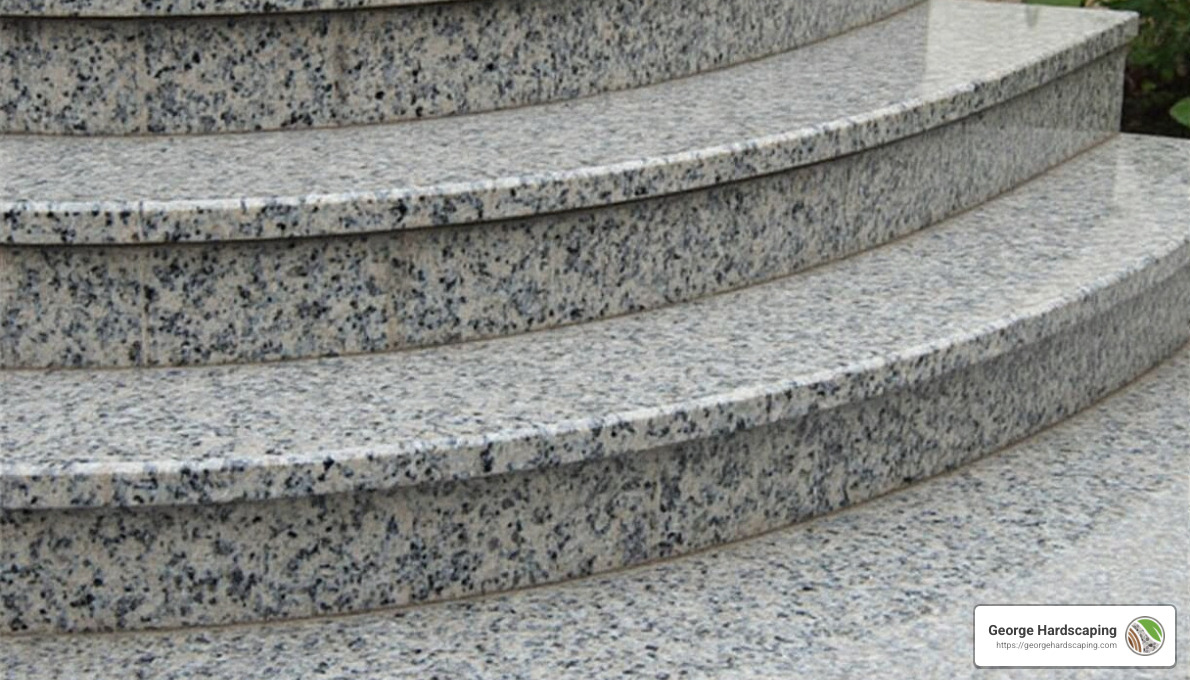
Combining Different Finishes
Granite’s incredible versatility gives you freedom to play with different textures and finishes, creating steps that are both beautiful and practical.
When we installed a new entrance for a family in Danvers, we paired thermal-finished granite treads with polished risers. The textured treads provided excellent grip during wet New England winters, while the smooth, reflective risers caught the light beautifully.
“These steps are like having an art installation at our front door,” the homeowner told us after the project was complete. “But they’re also incredibly practical for our weather.”
You might consider polished treads with honed risers for a more subtle contrast. The polished horizontal surfaces create that luxurious, high-end look, while the more subdued honed finish on vertical surfaces hides scuff marks and dirt.
Edge treatments offer another way to create visual interest. Rounded bullnose edges on treads paired with crisp, straight edges on risers add dimension without being flashy. This approach works particularly well for homes with traditional architecture throughout Essex County.
Color Play for Impact
The thoughtful use of contrasting colors can transform your granite steps from merely functional to truly spectacular.
For homeowners who want to make a bold statement, red and white granite combinations create an unforgettable entrance. The rich warmth of red granite treads against bright white or light-colored risers draws the eye and creates a focal point that improves your home’s curb appeal.
A Georgetown client chose black and gray pairings for their front entrance, with deep black granite treads and soft gray risers. “The contrast makes the steps much more visible, which is so important for safety, especially at night,” they explained. “But it also gives our entrance this wonderful graphic quality that sets our home apart.”
For historic homes in Salem or Marblehead, we’ve found that contrasting granite steps can introduce a subtle contemporary element while still honoring traditional architecture. The key is selecting colors and finishes that complement your home’s existing exterior palette.
You might also consider pairing granite with complementary stone types. While we recommend durable granite for treads that must withstand foot traffic and weather, other stones like limestone or marble can work beautifully for vertical risers, creating unique combinations that showcase the natural beauty of different materials.
At George Hardscaping, we love helping homeowners throughout the North Shore find how contrasting elements in granite steps design ideas can create entrances that are both distinctive and timeless.
4. Incorporating Lighting into Granite Steps
Integrating lighting into your granite steps serves both practical and aesthetic purposes. Well-designed lighting improves safety after dark while also highlighting the natural beauty of the stone and creating dramatic nighttime effects.
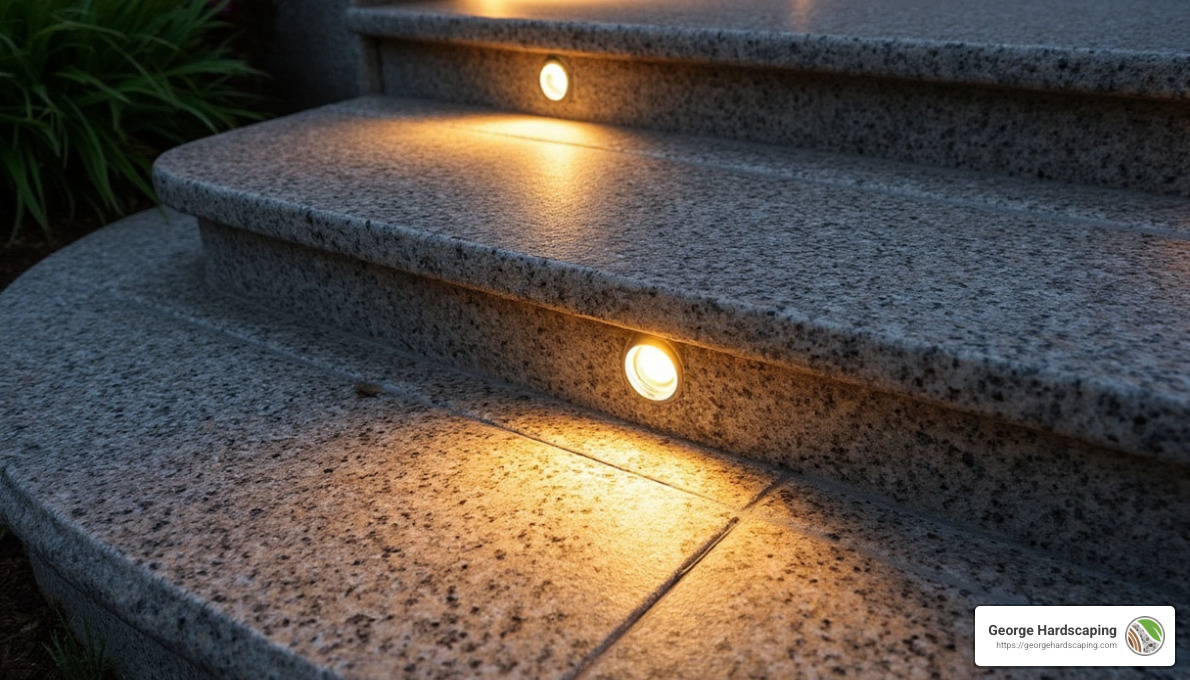
Throughout Essex County, we’ve noticed a growing enthusiasm for illuminated granite steps, especially in coastal towns like Gloucester and Rockport. There’s something magical about granite steps that light up as the sun goes down, particularly for homeowners who love entertaining on their patios during those perfect summer evenings.
Practical and Aesthetic Lighting
The right lighting approach transforms your granite steps from merely functional to genuinely stunning as darkness falls. I remember a client in Ipswich who called me a year after we installed lights in their granite steps to say, “I still pause every night just to admire them when they light up.”
Under-tread LEDs create that floating effect that’s become so popular. When installed beneath each step, these lights not only illuminate the walking surface below but cast a gentle glow that makes the granite itself seem to hover in the darkness.
Many North Shore homeowners are opting for riser lights – small fixtures embedded directly in the vertical faces that provide gentle illumination without the harsh glare of traditional pathway lighting. The effect is subtle but transformative.
For those looking to highlight the natural beauty of their granite, accent lighting with strategically placed spotlights can reveal the stone’s texture and color variations in ways that daylight simply can’t match.
I’ll never forget the waterfront project we completed in Manchester-by-the-Sea last summer. We installed granite steps with integrated LED strip lighting along the risers, using soft blue-toned lights that complemented both the cool tones in the granite and the nearby ocean views. What was once a treacherous nighttime walk to the water became both safer and stunning.
“The lighted steps have completely transformed how we use our outdoor space in the evenings,” the homeowner later told me. “They’re not just functional—they’re magical.” That’s exactly the reaction we aim for with our granite steps design ideas.
Energy-Efficient Options
Today’s lighting technologies offer smart, efficient solutions that won’t drive up your electric bill while beautifying your outdoor space.
For homes with ample sunlight, solar-powered lights provide an eco-friendly option that’s perfect for garden pathways or beach access points far from electrical outlets. A Boxford client who chose solar lighting for their woodland granite steps shared, “We wanted to minimize our environmental impact. The solar lights charge during the day and provide just enough illumination in the evening to steer the steps safely without disrupting the natural setting.”
Motion sensors have become increasingly popular for Essex County homes, especially for front entrances. These smart systems activate only when someone approaches, conserving energy while ensuring guests are never left fumbling in the dark.
Most of our lighting installations now use low-voltage LED systems that consume minimal electricity while providing years of reliable service. One Danvers homeowner was amazed that her beautifully lit granite entrance steps added less than $3 to her monthly electric bill.
When designing lighting for granite steps design ideas, we consider both practical safety requirements and the overall aesthetic effect. For a contemporary home in Ipswich, we created a dramatic entrance with uplighting that emphasized the crystalline structure of the granite. What was once a simple set of steps became a stunning architectural feature that welcomed visitors and improved the home’s presence after dark.
The right lighting doesn’t just illuminate your granite steps—it reveals their true character and extends their enjoyment long after the sun goes down.
5. Garden Pathways with Granite Steps Design Ideas
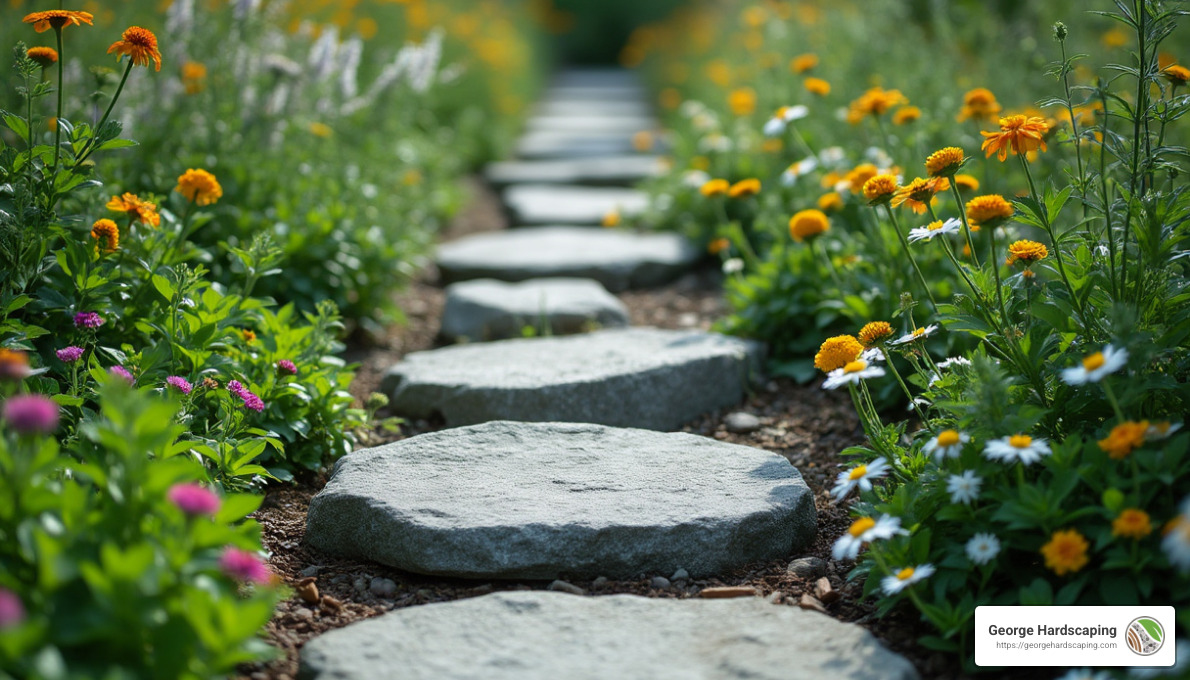
Incorporating granite steps into garden pathways creates both functional transitions between different elevations and striking focal points within your landscape design. Throughout Essex County, we’ve helped homeowners transform ordinary garden paths into extraordinary journeys using thoughtfully designed granite steps.
Blending with Nature in Your Granite Steps Design Ideas
The key to successful garden steps is achieving a balance between formal structure and natural integration. We’ve found that natural stone slabs with irregular shapes and faces create steps that appear to have emerged organically from the landscape, almost as if nature herself placed them there. Many of our North Shore clients are particularly drawn to this approach for woodland gardens and naturalistic landscapes.
Creating moss-friendly installations is another beautiful way to integrate granite into your garden. By leaving slightly wider spacing between stones, you allow moss or creeping thyme to grow between steps, softening edges and creating that magical, established look that makes a garden feel timeless. One client in Manchester-by-the-Sea jokes that her granite and moss steps “look like they’ve been there since the Pilgrims arrived.”
For more rustic properties, especially those in wooded areas of Boxford or Topsfield, boulder-style steps made from minimally processed granite create a natural-looking pathway that appears to have been there for centuries. These substantial pieces anchor the landscape while providing safe passage through sloped areas.
In Rockport, we created a winding garden path using granite slabs of varying sizes, allowing the steps to follow the natural contours of the land. The client, an avid gardener, was delighted with how the steps seemed to belong in the landscape rather than imposing upon it.
“The granite steps have this wonderful way of looking both ancient and timeless,” she told us. “They guide you through the garden but also invite you to pause and notice the plantings around them.”
Customizing Granite Steps Design Ideas for Your Garden
The versatility of granite allows for endless customization possibilities to suit your specific garden style. Many of our clients improve their pathways by incorporating flower bed borders alongside their steps. These small planting pockets provide opportunities for seasonal color and texture that frame the journey through the garden. In spring, these might showcase early bulbs, while summer brings the opportunity for aromatic herbs that release their scent when brushed against.
Wider granite slabs can double as integrated seating areas, creating natural pause points along a garden journey. This approach is particularly popular for sloped properties in Beverly and Hamilton, where the steps can create a series of “rooms” within the garden. One Hamilton client had us design extra-wide landings every fifth step specifically to place garden sculptures and seasonal containers.
For those who love the soothing sound of water, small channels or basins carved into granite steps can introduce water features into your garden design. A Marblehead property we worked on featured a thin water channel running alongside the granite steps, creating a gentle babbling brook effect that masked road noise and attracted birds to the garden.
For a property in Topsfield with significant grade changes, we designed a series of granite slab steps interspersed with small terraced gardens. Each level featured different plant collections, turning what could have been a challenging slope into a showcase for the owner’s horticultural interests.
“What I love about my granite garden steps is how they create these distinct ‘rooms’ in the garden,” the homeowner explained. “Each set of steps leads you to a new findy.”
In coastal areas like Marblehead and Swampscott, we often incorporate beach-inspired elements into garden step designs. Smooth, wave-worn granite pieces recall the shoreline, while plantings of ornamental grasses and salt-tolerant perennials improve the coastal feel. These gardens create a natural transition from manicured landscape to the wilder coastal environment beyond.
6. Granite Steps for Hills and Slopes
Taming a steep hillside with granite steps not only solves practical access challenges but also creates opportunities for dramatic landscape features. Throughout the hilly terrain of Essex County, from the rocky coastlines of Gloucester to the inland slopes of Boxford, we’ve helped homeowners transform challenging grades into functional, beautiful transitions.
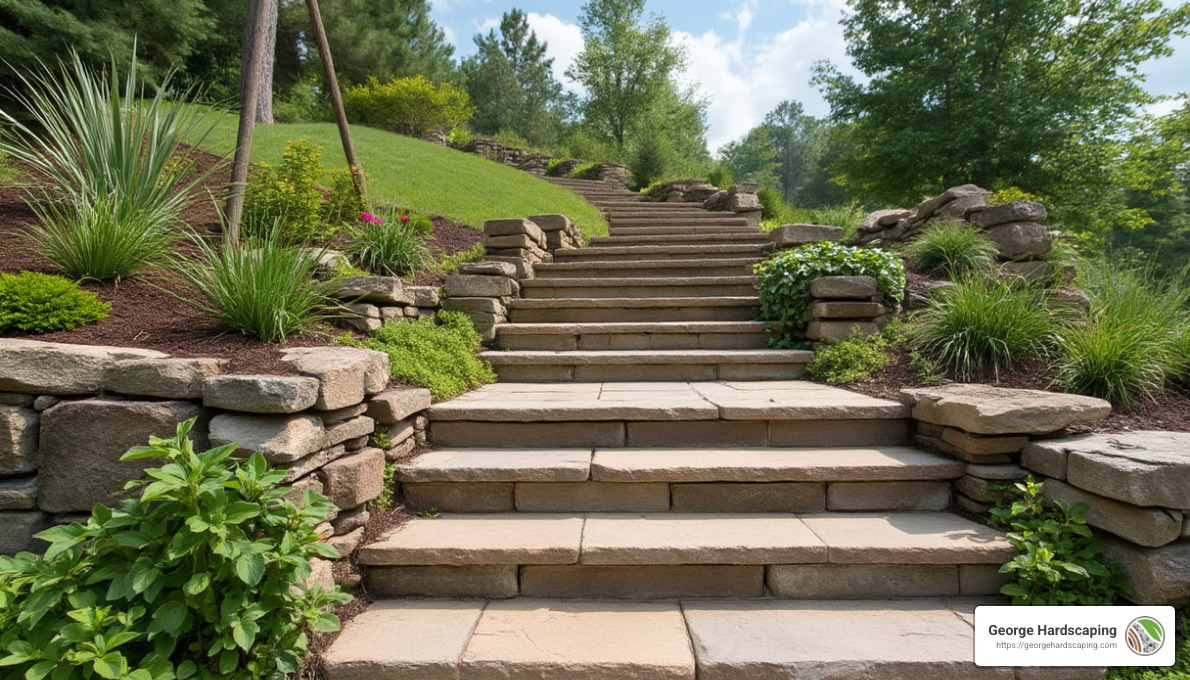
When we meet with homeowners facing sloped properties, we often see both frustration and untapped potential. That steep backyard that’s been avoided for years? It could become your property’s most distinctive feature with the right granite steps design ideas.
For inspiration beyond our local projects, check out how others have tackled similar challenges with Use Flagstone Steps to Make a Hill Safe and Beautiful.
Safe Navigation on Slopes
Creating safe, stable steps on hillsides requires careful planning and proper construction techniques. We’ve learned through years of experience that the foundation makes all the difference in hillside installations.
For a solid base, we typically excavate 12 inches deep, then install geotextile fabric to prevent soil migration underneath. This gets topped with a 10-inch layer of compacted crushed stone and finished with 2 inches of fine crushed stone before the granite goes in. It sounds technical, but this careful preparation prevents shifting and settling that could create hazards down the road.
Even on irregular terrain, maintaining consistent step dimensions is crucial for safety. We aim for a 6-7 inch rise and 12-14 inch tread depth—measurements that match the natural human stride and make climbing feel effortless rather than awkward.
Surface texture matters tremendously on slopes. A client in Wenham learned this the hard way before calling us. Their previous concrete steps became treacherously slippery after morning dew or rain. We replaced them with thermal-finished granite that provides excellent traction in all weather conditions.
“Before, that hill was treacherous after rain or snow,” they told us afterward. “Now, we have safe, year-round access that looks beautiful and requires virtually no maintenance.”
Design Solutions for Challenging Landscapes
Hillsides present unique design opportunities that can be improved with thoughtful granite steps design ideas. Rather than seeing slopes as problems, we view them as chances to create something special.
For very steep slopes, we often incorporate flat landing areas every 5-7 steps. These landings serve multiple purposes—they provide resting points during the climb, create opportunities for planters or seating, and visually break up what might otherwise feel like an intimidating staircase.
Steps that follow curved rather than straight lines can reduce the perceived steepness of a hill. The gentle meander creates a more interesting journey through your landscape while making the ascent feel less demanding. It’s a psychological trick as much as a design choice, and clients are often surprised by how much more approachable their hillside becomes.
For significant grade changes, combining granite steps with matching granite retaining walls creates cohesive, structurally sound solutions. This approach allows us to carve usable space from steep slopes that might otherwise remain inaccessible.
A waterfront client in Gloucester faced a particularly challenging slope to their beach. We transformed what had been a difficult scramble into an inviting descent by creating a series of granite steps integrated with low retaining walls. Each wall section was stepped back, creating planting pockets that we filled with coastal perennials and grasses.
“The granite steps completely transformed our relationship with the waterfront,” the homeowner shared over coffee during our follow-up visit. “What was once an avoided part of our property is now a beautiful journey down to the shore that everyone comments on.”
Water management is particularly crucial for hillside installations. We often incorporate subtle channels between stones to direct runoff away from the walking surface. In a recent Essex project, the homeowner had experienced years of erosion problems before we designed a drainage system hidden beneath and alongside the granite steps. Now, even during New England’s heaviest downpours, the water follows our planned path rather than creating its own destructive route down the hill.
With the right design approach, those challenging slopes can become the most distinctive, memorable features of your landscape—functional, beautiful, and uniquely yours.
7. Combining Granite with Other Materials
One of the most exciting aspects of working with granite steps design ideas is seeing how beautifully this stone complements other materials. Throughout our years serving Essex County, we’ve created countless distinctive entrances and pathways by thoughtfully pairing granite with elements like wood, metal, brick, and concrete.
Creating Contrast and Harmony
The magic happens when you find that sweet spot between contrast and harmony with material combinations. It’s like composing a visual symphony where each element plays its part perfectly.
When we pair granite with wood, something special happens. The natural warmth of cedar, ipe, or mahogany softens granite’s cool solidity. Just last month, a Beverly family chose this combination for their backyard steps – the rich tones of ipe wood railings brought out the subtle flecks of amber in their granite treads.
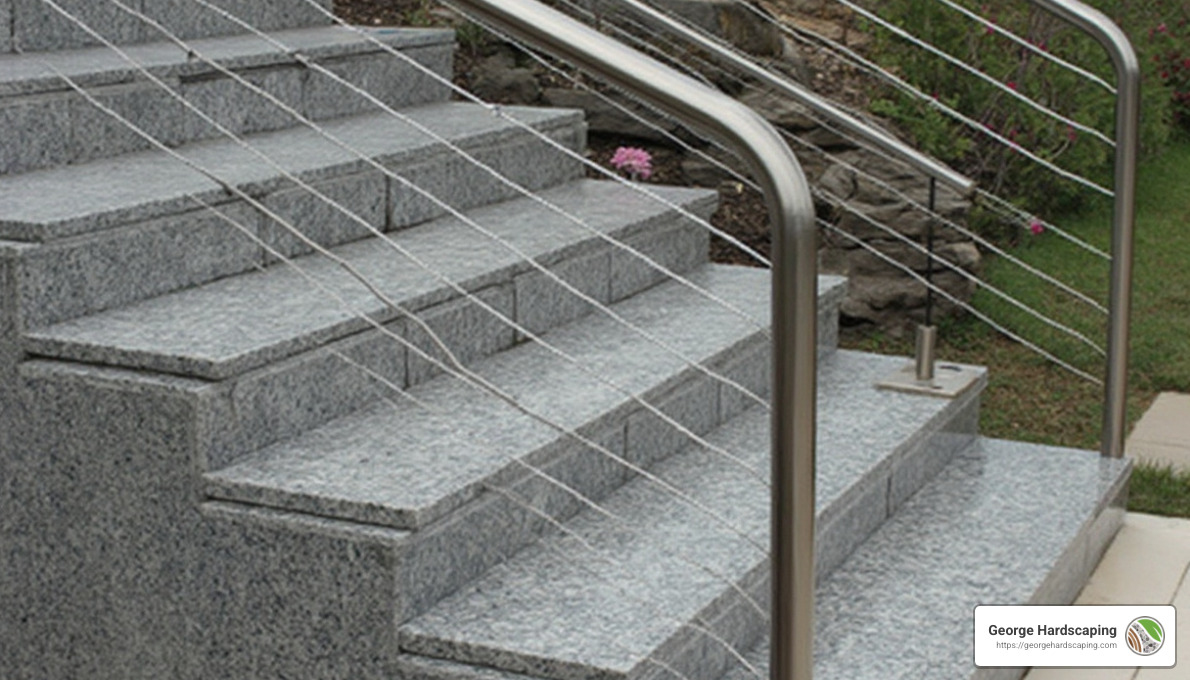
Granite and metal partnerships create some of our most striking modern installations. There’s something about the clean lines of stainless steel or the artistic potential of wrought iron that lifts granite steps from merely functional to truly spectacular. The reflective quality of polished metal actually highlights the crystalline structure within the stone itself.
For homes with traditional New England character, especially in historic districts like Salem or Newburyport, granite and brick combinations pay homage to our regional architectural heritage. A client in Marblehead wanted exactly this look – we installed granite steps with antique-finished treads, then surrounded them with reclaimed brick pavers in a herringbone pattern.
“The combination of materials tells a story about our home’s history while ensuring it will stand strong for generations to come,” they told us afterward, perfectly capturing why these material pairings matter so much.
Enhancing Durability
Beyond just looking good together, combining materials significantly improves the overall functionality of your steps. This is particularly important in New England, where our steps need to withstand everything from summer heat to winter ice.
Metal railings provide essential safety features while allowing granite to remain the star of the show. For taller staircases especially, these railings aren’t just decorative – they’re necessary safety elements that give homeowners peace of mind.
Though you’ll never see them in the finished installation, properly engineered concrete footings beneath granite steps ensure long-term stability. This invisible foundation work becomes particularly crucial during our freeze-thaw cycles, when the ground shifts beneath our feet.
Surrounding your granite steps with complementary pavers creates a cohesive hardscape that manages water runoff while providing stable approaches. A Manchester-by-the-Sea client combined their granite steps with bluestone pavers, creating a seamless transition from driveway to front door that looks as though it’s always been there.
| Material | Durability | Maintenance | Aesthetic Quality | Cost Range |
|---|---|---|---|---|
| Granite | Excellent (100+ years) | Minimal | High | $300-$1,800 per step |
| Concrete | Good (20-30 years) | Moderate | Moderate | $100-$800 per step |
| Wood | Fair (10-15 years) | High | Warm, natural | $150-$600 per step |
| Brick | Good (25+ years) | Moderate | Traditional | $200-$700 per step |
Note: These are average costs based on internet data and not actual costs for George Hardscaping. Actual costs may vary widely based on design complexity, site conditions, and material choices.
We recently completed a showstopper entrance for a contemporary home in Swampscott by combining honed black granite steps with a custom-fabricated stainless steel and cable railing system. The homeowner’s comment perfectly captured the relationship between these materials: “The granite provides this solid, unmovable foundation, while the steel and cable railing adds a light, almost floating quality. Together, they create exactly the modern entrance we envisioned.”
For more inspiration on combining materials effectively, check out our guide on How to Build Stone Steps, which explores various material combinations in depth.
8. Customizing Granite Steps with Finishes
The finish applied to granite dramatically affects both its appearance and functionality. Different finishing techniques can transform the same stone from sleek and reflective to textured and grippy, allowing you to customize your steps for specific locations and uses.
Choosing the Right Finish
When we talk with homeowners about granite steps design ideas, the conversation almost always turns to finishes. It’s like choosing the right pair of shoes – they need to look great, but they also need to work for your specific situation.
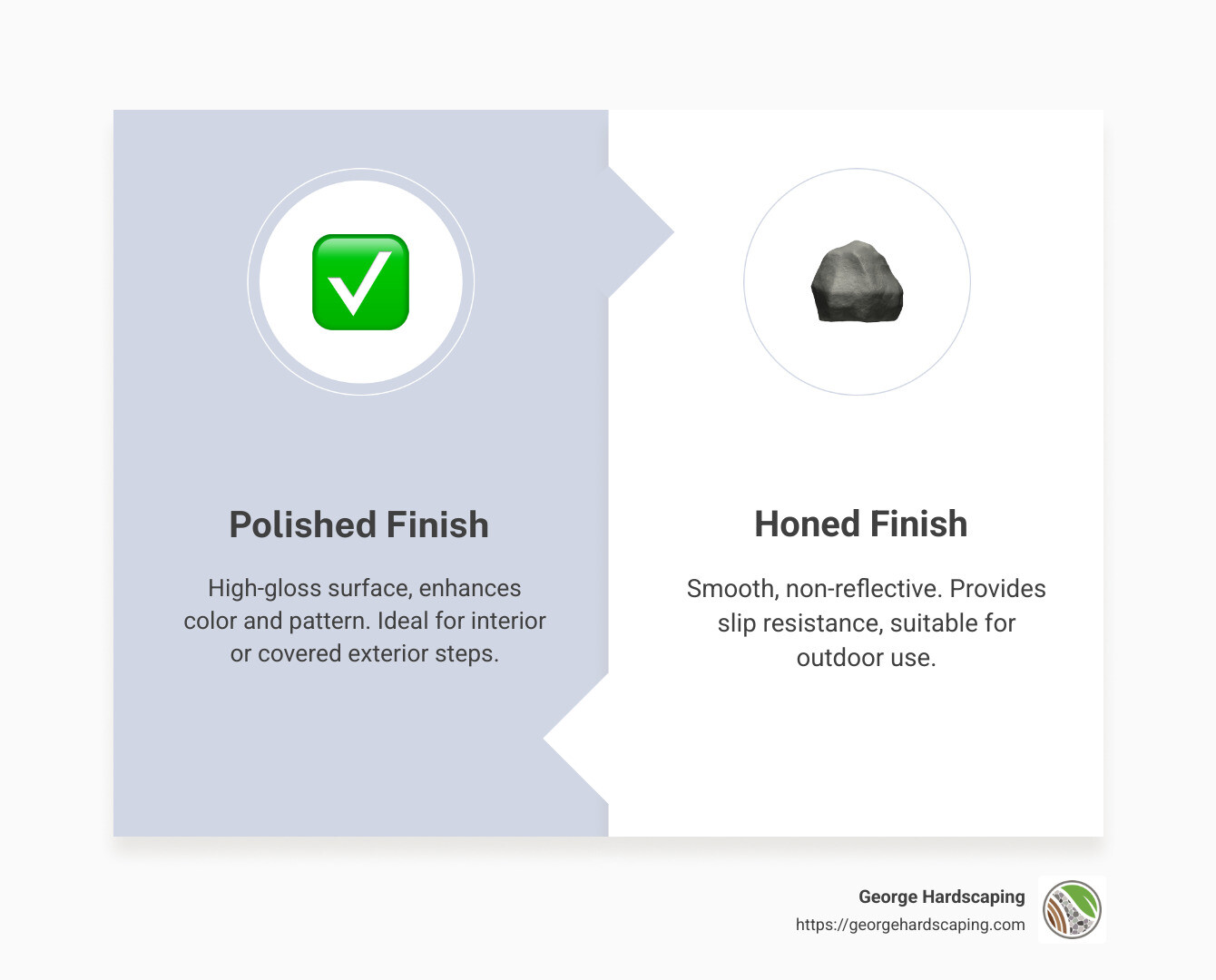
Polished finishes create that mirror-like, glossy surface that many people first picture when thinking about granite. The high shine beautifully showcases the stone’s colors and crystal patterns. I remember installing polished granite steps for a covered entryway in Marblehead – the way they catch and reflect light makes the entrance feel grand and welcoming. However, polished surfaces can become slippery when wet, so they’re best for covered areas or interior applications.
For homes that need something more practical but still refined, a honed finish offers the perfect middle ground. This smooth, matte surface downplays the reflectivity while maintaining the stone’s neat appearance. A Beverly family chose honed granite for their front steps because they wanted something sophisticated that wouldn’t become a slip hazard during our notorious New England rain showers.
When safety is the top priority, especially for north-facing or shaded steps that stay damp longer, thermal-finished (or flamed) granite is our go-to recommendation. The process uses intense heat that causes surface crystals to burst, creating a textured, naturally non-slip surface. A client in Rockport who has steps leading down to their dock swears by their thermal-finished granite – even when the morning dew is heavy, they feel secure walking on them.
For those who want a distinctly rustic look, bush-hammered finishes create a stippled, textured surface that looks like it’s been there for centuries. These work beautifully with colonial and farmhouse styles throughout Essex County, blending seamlessly with historic architecture while providing excellent traction.
Personalizing Your Steps
Beyond standard finishes, the granite steps at your home can become a personal expression of your style and even your family story.
Many of our clients opt for mixed finish applications – perhaps thermal-finished treads for safety, paired with polished risers for visual impact. This combination gives you the best of both worlds: practical walking surfaces with eye-catching vertical elements that stay cleaner since they don’t collect foot traffic.
Edge treatments add another dimension of customization. While straight edges offer a clean, contemporary look, bullnose edges (with their rounded profile) create a softer, more traditional appearance. For a recent project in Hamilton, we created subtle chamfered edges that catch the light beautifully and add a refined detail that visitors might not immediately notice but definitely appreciate.
“Granite steps are the ultimate choice in beauty and durability,” as one industry expert notes, and the finishing touches make them uniquely yours. For truly personalized installations, we can incorporate special textures or patterns. A Newburyport family with deep maritime roots commissioned steps with a subtle sandblasted anchor design on the front riser – a small detail that connects their home to their heritage.
Another client in Manchester-by-the-Sea wanted to honor their property’s history as part of an old estate. We were able to salvage and repurpose original granite from the property, applying a contemporary thermal finish to the walking surfaces while preserving the original hand-cut marks on the visible edges – blending old and new in a meaningful way.
It’s worth noting that your finish choice affects maintenance requirements too. Polished surfaces, while stunning, tend to show water spots and fingerprints more readily. Thermal and bush-hammered finishes are more forgiving, hiding minor dirt and requiring little more than occasional rinsing with a garden hose – perfect for busy families who’d rather enjoy their outdoor spaces than maintain them.
Whatever finish you choose, granite’s exceptional durability ensures your steps will maintain their beauty for generations, making them a worthy investment in your home’s character and curb appeal.
9. Cost Considerations for Granite Steps
When planning your dream entrance or garden pathway, understanding the financial commitment for granite steps helps you make informed decisions. While granite represents a premium choice, its exceptional longevity often makes it a smart investment for your home.
Understanding the Investment
Granite steps typically cost more upfront than alternatives, but their remarkable durability often proves economical over decades of ownership:
“Granite steps are the ultimate choice in beauty and durability.” This industry saying captures why many homeowners ultimately choose granite despite the higher initial price tag. When you factor in the minimal maintenance and century-plus lifespan, the value proposition becomes clear.
The total investment for granite steps includes several components:
Material costs typically range from $10 to $25 per square foot, varying based on the specific granite type, color, and origin. Premium or rare granite varieties can push this figure higher.
Installation labor generally runs between $300 and $900 per step, with complete projects (5-9 steps) ranging from $1,500 to $8,100 depending on complexity and design. Proper installation requires specialized equipment and expertise.
Custom features like specialized finishes, intricate cuts, lighting integration, or decorative elements will increase your overall investment but can dramatically improve the final result.
A recent client in Danvers initially experienced sticker shock when comparing granite to concrete options but later shared: “After seeing how beautiful the granite looks and realizing I’ll never need to replace these steps in my lifetime, the value became obvious. They’ve completely transformed our home’s entrance.”
Comparing Costs to Other Materials
To put granite’s cost in perspective, it helps to compare it with other popular step materials:
Concrete steps cost significantly less initially ($100-$800 per step) but typically last only 20-30 years in our harsh New England climate. They’re also prone to cracking, chipping, and staining, requiring periodic repairs and eventual replacement.
Wood steps offer warmth and charm at moderate initial costs ($150-$600 per step) but demand regular maintenance including staining, sealing, and eventual replacement every 10-15 years as they succumb to rot, warping, and insect damage.
Brick steps provide traditional appeal at mid-range prices ($200-$700 per step) with lifespans around 25+ years. However, they require periodic repointing and may suffer from frost heave in our climate.
By contrast, granite steps installed today will likely outlast your home’s ownership and possibly the home itself. Many historic properties throughout Essex County still showcase their original granite steps installed a century or more ago.
For budget-conscious homeowners, we sometimes recommend strategic approaches like using granite for your most visible front entrance steps while choosing less expensive materials for secondary garden pathways or utility areas.
A Marblehead client recently followed this approach: “We splurged on gorgeous granite steps for our front entrance but used stone pavers for the side yard path. The granite makes the statement where it matters most, and we stayed within our overall budget.”
These are average costs based on internet data and not actual costs for George Hardscaping. Actual costs may vary widely based on design complexity, site conditions, and material choices, with the high end potentially being at least 3x average pricing.
10. Enhancing Curb Appeal with Granite Steps
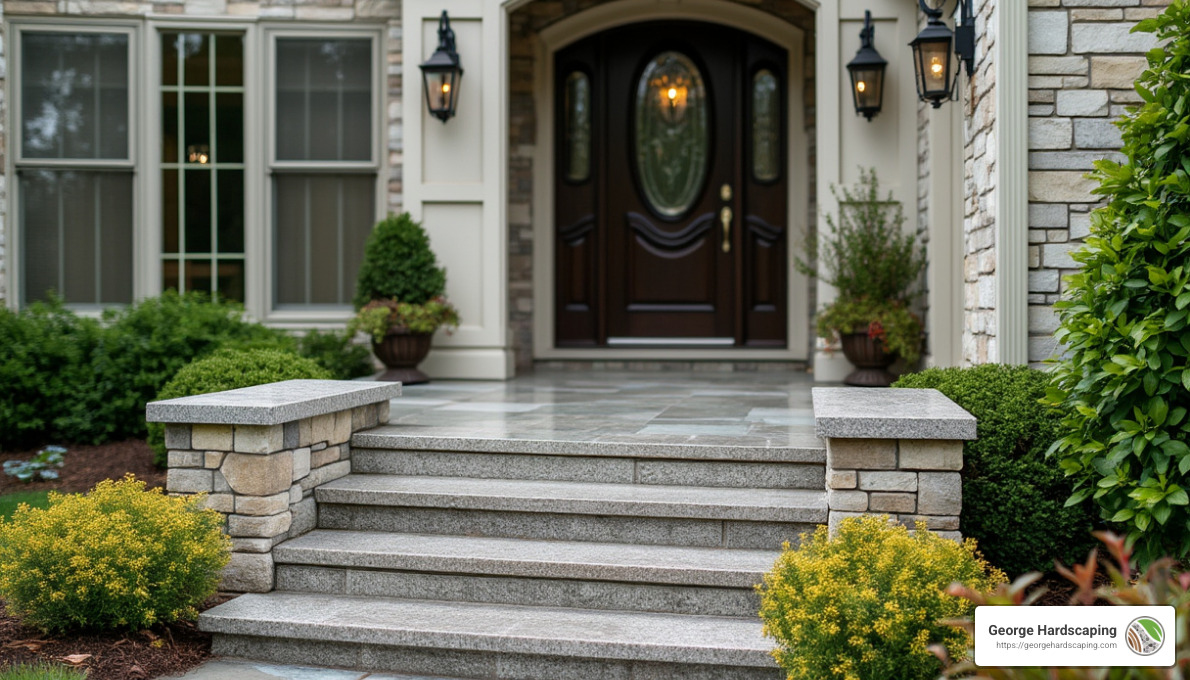
Few exterior improvements can match the impact of well-designed granite steps on a home’s curb appeal. Throughout Essex County, from the historic streets of Salem to the coastal properties of Rockport, we’ve seen how granite entrances transform properties and create memorable first impressions.
Making a Statement
Granite steps do more than provide access to your home—they make a statement about your property’s character and quality. When we install granite steps design ideas for our clients, we’re not just creating a way to enter the home; we’re crafting a visual introduction that sets expectations for what lies beyond.
The architectural improvement that comes with granite steps can emphasize your home’s unique style, whether it’s a colonial in Ipswich, a Victorian in Salem, or a contemporary residence in Swampscott. The substantial presence and visual weight of granite creates a sense of permanence and quality that lighter materials simply cannot match.
I remember a client in Danvers who invested in a new granite entrance after realizing how much their deteriorating concrete steps were detracting from their otherwise well-maintained colonial home.
“It’s remarkable how much difference the granite steps made,” they told me with genuine excitement. “They’ve completely lifted the appearance of our home—we’ve even had neighbors stop to compliment us. The steps have this timeless quality that perfectly complements our traditional home.”
What makes granite truly special is its natural beauty. Each installation features unique patterns and colors that add visual interest manufactured materials simply cannot replicate. These natural variations create a one-of-a-kind entrance that becomes distinctly yours.
Real estate professionals throughout Essex County consistently note that attractive, well-maintained entrances significantly impact potential buyers’ perceptions. When showing homes, the entrance creates that crucial first impression, and granite steps, with their combination of beauty and durability, often feature prominently in property listings as a valuable selling point.
Working with Professionals
While granite steps represent a significant investment, working with experienced professionals ensures results that improve your property for generations. At George Hardscaping, we’ve seen how the right design choices can transform an ordinary entrance into something extraordinary.
Expert design makes all the difference when planning your granite steps. Professional designers can recommend proportions, finishes, and details that complement your home’s architecture and landscape. They understand how factors like the width of steps, the choice of finish, and even small details like edge treatments can dramatically affect the overall impression.
Proper installation is absolutely crucial for granite steps, especially in New England’s variable climate. These substantial stone pieces require precise installation techniques to ensure long-term stability and proper drainage. Our team takes care to prepare appropriate foundations that will prevent settling or shifting over time—a particularly important consideration during our freeze-thaw cycles.
Quality craftsmanship is where truly exceptional installations stand apart. Details like consistent joints, proper alignment, and carefully finished edges distinguish extraordinary work from merely adequate installations. These seemingly small details make a tremendous difference in the final appearance and longevity of your granite steps.
A Marblehead client who chose our team for their waterfront home renovation captured this perfectly: “What impressed me most was how the team considered every aspect of our project—not just how the steps would look, but how they would function in our coastal environment, how they would integrate with our existing landscape, and how they would serve our family for years to come. That level of thoughtfulness makes all the difference.”
The best granite steps design ideas come from this combination of thoughtful design, proper installation techniques, and meticulous attention to detail. When you’re ready to transform your home’s entrance, our team at George Hardscaping brings decades of combined experience to create granite steps that will improve your property’s unique character while providing generations of reliable service.
Frequently Asked Questions about Granite Steps Design Ideas
What are the benefits of using granite for outdoor steps?
When homeowners in Essex County ask us about granite steps, we often smile and say, “How much time do you have?” The benefits are truly impressive.
Granite steps stand the test of time like few other materials can. While your neighbors might replace their concrete steps every few decades, your granite entrance will remain virtually unchanged for generations. This incredible durability isn’t just about longevity – it’s about performance in our challenging New England climate.
Unlike concrete or brick, granite doesn’t absorb water, which means it won’t crack during our notorious freeze-thaw cycles. This is particularly important along the North Shore, where winter can bring dramatic temperature swings. Granite also shrugs off ice-melting chemicals that can quickly deteriorate concrete steps, saving you the frustration of seeing your entrance slowly crumble.
The low maintenance aspect of granite steps is something our busy clients particularly appreciate. There’s no sealing, painting, or regular repairs needed – just an occasional cleaning to keep them looking their best. As one Gloucester client with an oceanfront property told us:
“After replacing our wooden steps three times in fifteen years, we decided to invest in granite. Twenty years later, they look exactly as they did when installed, despite constant exposure to salt spray, freezing temperatures, and summer heat.”
Perhaps most importantly, granite offers a timeless beauty that manufactured materials simply can’t match. The natural variations in color and pattern ensure that your steps will retain their aesthetic appeal indefinitely, improving your home’s appearance for decades to come.
How does granite compare to other materials like wood, brick, and concrete?
Each stepping material has its own personality and performance characteristics. We often help homeowners understand these differences to make the best choice for their specific needs.
Granite offers exceptional longevity (100+ years) with minimal maintenance. It handles our New England weather beautifully and, while requiring a higher initial investment, typically proves more economical over its lifetime. The natural beauty and solid feel of granite create an undeniable sense of quality and permanence.
Wood steps provide a warm, natural appearance at a lower initial cost, but their 10-15 year lifespan and high maintenance requirements (regular sealing or staining) make them less economical long-term. They perform reasonably well when dry but can become slippery when wet – a consideration for our rainy spring and fall seasons.
Brick offers a traditional aesthetic that works beautifully with many North Shore homes. With proper installation, brick steps can last 25+ years, though they typically require occasional repointing as mortar deteriorates. While their initial cost is moderate, their shorter lifespan compared to granite means potentially higher lifetime costs.
Concrete provides versatility at a lower initial price point, with a lifespan of 20-30 years under ideal conditions. However, in our harsh New England climate, concrete often develops cracks and spalling that require repairs and eventually replacement. The aesthetic, while customizable, rarely matches the natural beauty of stone.
An Ipswich homeowner summed it up perfectly: “After having wood, concrete, and now granite steps at different homes, I can say without hesitation that granite has been the best investment. The others required constant attention and eventually replacement. My granite steps look as good today as when they were installed a decade ago.”
How can granite steps be customized to fit different architectural styles?
One of the things we love most about working with granite is its chameleon-like ability to complement virtually any architectural style. Through thoughtful customization, we can create steps that feel like they’ve always been part of your home.
For Colonial and Federal homes throughout Salem and Newburyport, we often recommend straight granite steps with simple, neat profiles. Clean lines and traditional railings respect the original architecture while providing modern durability. A slightly antiqued finish can help new granite blend seamlessly with historic surroundings.
Victorian homes call for more elaborate treatments that honor their ornate character. Bullnose edges, decorative balusters, and potentially more complex step configurations complement these architectural styles beautifully. The substantial presence of granite provides an appropriate foundation for these stately homes.
For contemporary homes, we focus on clean lines and minimal embellishment. Honed or polished finishes create sleek surfaces, while creative combinations with glass or metal railings improve modern aesthetics. The natural patterns within the stone add organic interest to otherwise geometric designs.
Coastal properties throughout Cape Ann and the North Shore benefit from granite steps with a more casual, organic appearance. Thermal-finished surfaces provide excellent traction in marine environments, while the stone’s natural resistance to salt makes it ideal for waterfront locations.
Color selection plays a crucial role in customization as well. Traditional gray granites tend to complement classic New England architecture, while black or red granites can make bolder statements in contemporary settings.
“What surprised me was how many options were available,” noted a Beverly homeowner we worked with last year. “I had assumed granite steps would all look basically the same, but the variations in color, finish, and design details allowed us to create something that perfectly suits our home’s character.”
Whether you’re restoring a historic property in Marblehead or building a modern masterpiece in Swampscott, granite steps design ideas can be custom to improve your home’s unique architectural identity while providing generations of beautiful, reliable service.
Conclusion
Choosing granite for your outdoor steps isn’t just an upgrade—it’s a legacy decision that will improve your home for generations. There’s something remarkable about the way granite combines practical durability with timeless elegance, making it perfectly suited for New England homes facing our challenging seasons.
Throughout Essex County, we’ve seen how granite steps design ideas transform ordinary entrances into stunning focal points. Whether it’s a classic granite staircase leading to a Federal-style home in Salem or sleek minimalist steps complementing a contemporary waterfront property in Marblehead, granite adapts beautifully to every architectural style.
What our clients appreciate most is the peace of mind that comes with granite. While wood rots, concrete cracks, and brick crumbles over time, granite stands strong decade after decade with almost no maintenance. As one Ipswich homeowner told us after their installation, “It’s wonderful not having to worry about our steps anymore—they’re simply there, looking beautiful through every season.”
The versatility of granite continues to surprise even those familiar with the material. From thermal-finished surfaces that provide excellent traction on rainy days to polished finishes that highlight the stone’s natural beauty, the customization options let you create an entrance that perfectly expresses your home’s character.
At George Hardscaping, we take pride in helping homeowners throughout the North Shore find the perfect granite steps design ideas for their unique properties. Our team brings not just technical expertise but also a genuine appreciation for how these elements contribute to your home’s story and value.
We understand that granite steps represent a significant investment in your property. That’s why we approach each project with meticulous attention to detail—from the initial design consultation through precise installation techniques that ensure your steps will remain beautiful and functional for generations.
As you consider options for improving your home’s exterior, we invite you to explore the possibilities that granite steps offer. Browse through our portfolio of completed projects and reach out for a conversation about how we can help create an entrance that welcomes you home every day with beauty and permanence.
View our walkways and stairs projects to see examples of our craftsmanship and find how granite steps might transform your own property’s appearance and value.
