
Flagstone Walkway and Stairs: Top 5 Stunning Designs 2024
The Timeless Appeal of Flagstone Walkways and Stairs
Flagstone walkway and stairs bring an undeniable charm and warmth to any outdoor space. Not only do they provide a durable and functional pathway, but their natural patterns, shapes, and textures also create stunning visual appeal. Whether you’re looking to improve a front entryway, garden path, or another area in your landscape, flagstone offers a classic and timeless design.
Here’s a quick overview:
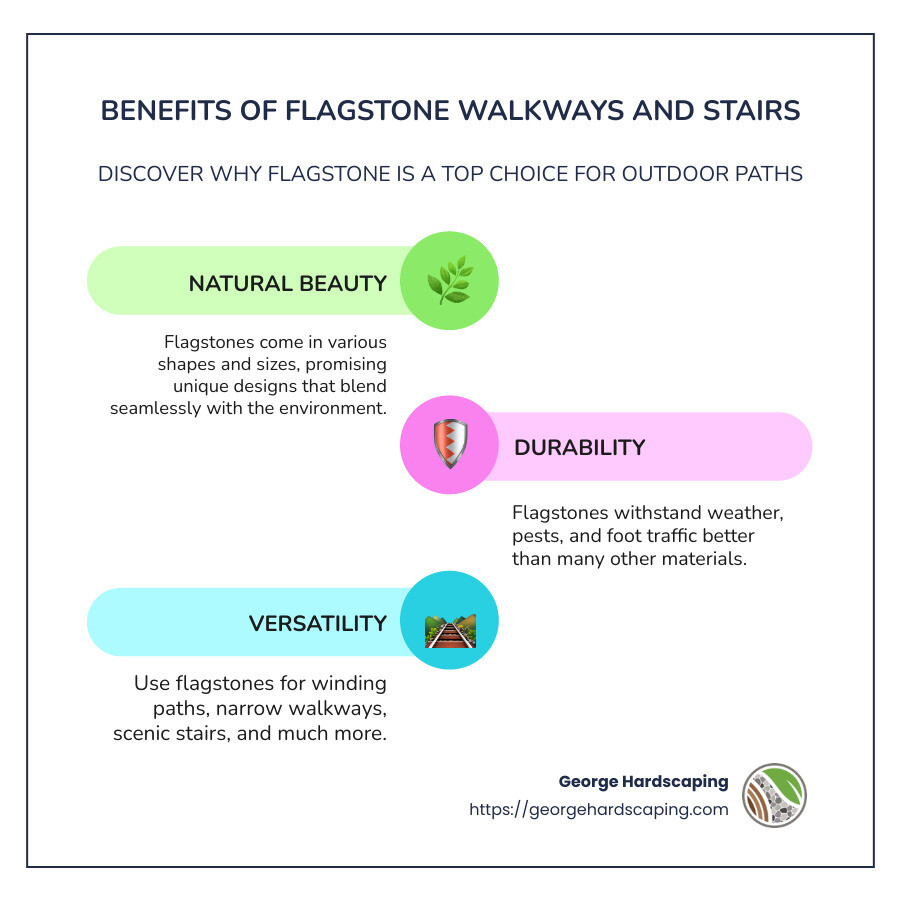
- Natural Beauty: Flagstones come in various shapes and sizes, promising unique designs that blend seamlessly with the environment.
- Durability: Flagstones withstand weather, pests, and foot traffic better than many other materials.
- Versatility in Design: Use flagstones for winding paths, narrow walkways, scenic stairs, and much more.
Flagstone walkways and stairs are more than just functional paths – they are an invitation to explore and enjoy your landscape.
Know your flagstone walkway and stairs terms:
– bluestone stairs and walkway
– concrete stairs and walkways
– how to repair brick walkway and stairs
Choosing the Right Flagstone for Your Walkway and Stairs
When it comes to flagstone walkway and stairs, choosing the right type of flagstone is crucial. Here’s what you need to know:
Types of Flagstone
Flagstone comes in several varieties, each with its own unique characteristics.
- Sandstone: Known for its earthy tones and textures, sandstone is a popular choice for walkways and stairs. It’s relatively easy to cut and shape, making it versatile for different designs.
- Limestone: This type offers a smoother texture and comes in shades of gray, tan, and blue. Limestone is durable and can withstand heavy foot traffic.
- Slate: Slate provides a more rugged look with its rich colors ranging from dark gray to green. It’s highly durable but can be slippery when wet.
- Bluestone: A type of sandstone, bluestone is known for its blue-gray hues. It’s very durable and ideal for both walkways and stairs.
Color Variations
Flagstone offers a palette of natural colors that can complement any landscape design.
- Neutral Tones: Grays, browns, and tans are versatile and blend well with most outdoor settings.
- Bold Hues: For a striking look, consider flagstones in deep blues, rich greens, or even multi-colored stones. These can add a unique flair to your design.
Texture and Durability
The texture of flagstone affects both its appearance and functionality.
- Smooth Texture: Ideal for walkways, smooth stones provide a sleek look and are easy to walk on.
- Rough Texture: Better suited for stairs, rough-textured stones offer more grip and reduce the risk of slipping.
- Durability: Most types of natural flagstone are extremely durable, resisting cracks, chips, and weather-related wear. For example, sandstone and bluestone are particularly resilient and can last for decades with proper maintenance.
Choosing the right flagstone involves balancing aesthetics with practical considerations. Whether you prioritize color, texture, or durability, there’s a flagstone that will meet your needs and improve your outdoor space.
Next, we’ll dive into the planning and design aspects to help you create the perfect layout for your flagstone walkway and stairs.
Designing Your Flagstone Walkway and Stairs
Designing flagstone walkways and stairs involves careful planning and creativity. Here’s how to get started:
Layout Planning
First, decide where you want your walkway and stairs to go. Think about the flow of your yard and how people will use the space.
- Main Paths: These should be wide enough for two people to walk side by side, typically 4-6 feet wide.
- Secondary Paths: Narrower paths can be 2-3 feet wide, perfect for leading to a garden or a secluded spot.
- Stair Placement: If your yard has different levels, plan where the stairs will be. Ensure they are in convenient spots, like leading up to a patio or down to a garden.
Integration with Landscape
A well-designed flagstone path should blend seamlessly with your landscape.
- Natural Flow: Avoid straight lines. Instead, create gentle curves that mimic natural paths found in nature.
- Vegetation: Use plants and flowers along the edges to soften the look. For instance, low-growing plants like thyme or moss can grow between the stones, adding charm.
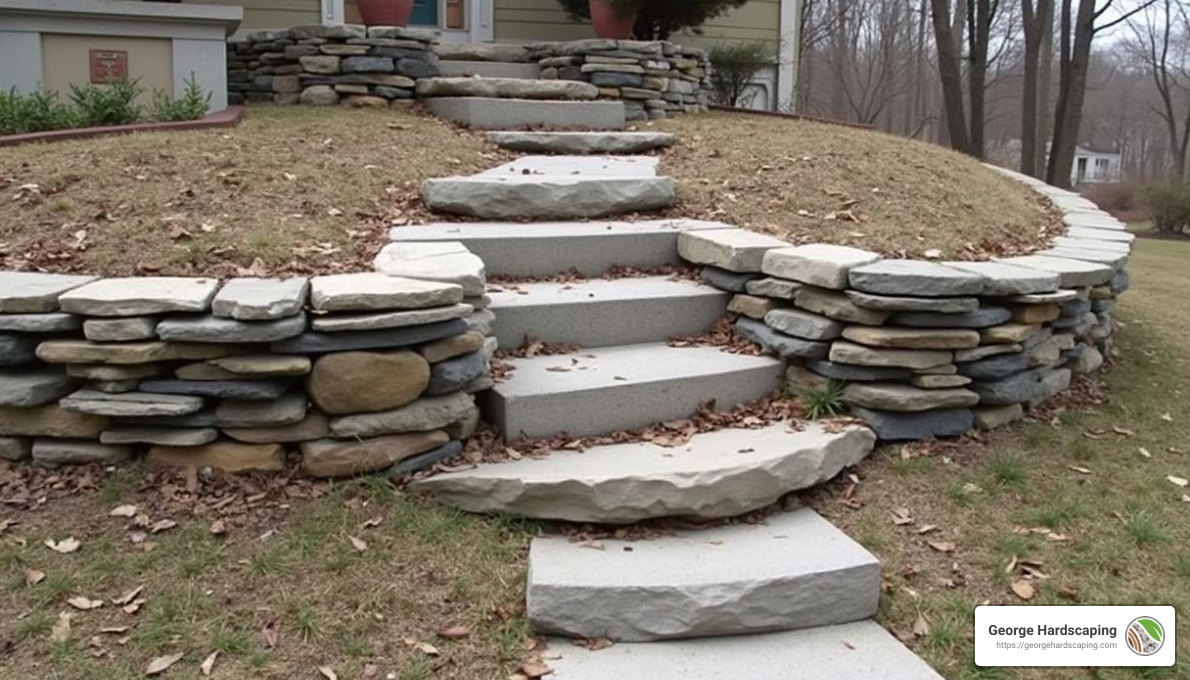
- Elevation Changes: Use stairs to steer slopes. Flagstone stairs can be integrated into retaining walls, creating a cohesive look.
Aesthetic Considerations
Your flagstone walkway and stairs should not only be functional but also visually appealing.
- Stone Placement: Use larger stones in high-traffic areas and smaller ones in less-used sections. Mix and match shapes and sizes for a natural look.
- Color Coordination: Choose flagstones that complement your home’s exterior and existing landscape. Neutral tones like gray and brown are versatile, while bold colors can make a statement.
- Texture Variety: Combine smooth and rough-textured stones. Smooth stones work well for walkways, while rough stones are ideal for stairs to prevent slipping.

For example, a winding flagstone path through a garden can lead to a cozy seating area, making the journey as enjoyable as the destination. Or, a scenic flagstone stair walkway can blend beautifully with low stone walls, adding both function and beauty to your yard.
By planning your layout, integrating the path with your landscape, and considering aesthetics, you can create a stunning and practical flagstone walkway and stairs.
Next, we’ll explore the installation techniques to ensure your walkway and stairs are built to last.
Installation Techniques for Flagstone Walkway and Stairs
Preparation
Before you start laying flagstones, proper preparation is key.
- Mark Your Placement: Use white cobbles or stakes to outline where each step and walkway section will go.
- Clear the Area: Remove any sod, roots, and debris from the marked area.
- Level the Ground: For stairs, dig out the slope to create a solid base. For walkways, ensure the ground is even.
- Add Landscape Fabric: This helps prevent weeds and keeps the gravel base from sinking into the soil.
- Gravel Base: Add a layer of gravel for drainage and stability. Compact it well to create a firm foundation.
Setting Flagstones
Now that your base is ready, it’s time to set the flagstones.
- Start at the Bottom: Begin with the lowest landing or step. Place your first row of flagstones to support the initial step.
- Place the Stones: Lay the flagstones roughly where they will sit. Adjust as needed to fit them together like a puzzle.
- Level with Sand: Use sand to level the stones. Keep a small bucket handy for adjustments.
- Overlap for Stability: Ensure that each stone step overlaps the previous row by 2-3 inches for added stability.
- Fill Gaps: Use smaller stones or gravel to fill any gaps between the flagstones.
Mortar vs. Mortarless
Choosing between mortar and mortarless installation depends on your needs and preferences.
Mortar Installation:
- Pros: Provides a stable, long-lasting structure. Ideal for high-traffic areas and steep slopes.
- Cons: Requires more skill and time. Can be more expensive due to the need for additional materials.
- How-To: Mix mortar according to instructions. Apply a layer under each stone and set them in place. Use a level to ensure evenness.
Mortarless Installation:
- Pros: Easier and faster to install. Allows for natural movement and drainage.
- Cons: May shift over time, requiring occasional adjustments. Less stable for steep slopes.
- How-To: Place stones directly on the gravel base, using sand to level them. Fill gaps with gravel or small stones.
Example: Diane’s Garden Path
Diane’s garden project is a great example of a successful flagstone installation. She started at the bottom, removing sod and adding landscape fabric. Diane then placed a gravel base and used sand to level her flagstones. She chose a mortarless method for a more natural look and planted thyme between the stones for added charm.
By following these steps, Diane created a beautiful and sturdy flagstone path that blends seamlessly with her garden.
Next, we’ll discuss how to maintain your flagstone walkway and stairs to keep them looking great for years to come.
Maintaining Your Flagstone Walkway and Stairs
Sealing Options
Sealing your flagstone walkway and stairs helps protect them from weather, stains, and wear.
Types of Sealers:
- Penetrating Sealers: Soak into the stone, providing protection without changing the appearance. Ideal for a natural look.
- Topical Sealers: Form a protective layer on the surface. They can improve color but may make the stone slippery when wet.
- Enhancing Sealers: Deepen the color of the stone while offering protection. Great for a more vibrant look.
How to Seal:
- Clean the Surface: Remove dirt and debris.
- Apply Sealer: Use a brush or roller. Follow the manufacturer’s instructions.
- Drying Time: Allow the sealer to dry completely. This can take anywhere from a few hours to a day.
Cleaning Tips
Keeping your flagstone clean helps maintain its beauty and longevity.
- Sweeping: Regularly sweep to remove dirt and leaves.
- Water Rinse: Use a garden hose to wash away loose debris.
- Mild Detergent: For tougher stains, mix water with a mild detergent. Scrub with a soft brush and rinse thoroughly.
Deep Cleaning:
- Pressure Washing: Use a pressure washer for a deep clean. Be cautious with the pressure setting to avoid damaging the stone.
- Stain Removal: For stubborn stains, use a stone-safe cleaner. Follow the product instructions carefully.
Weed Prevention
Weeds can be a nuisance, but there are ways to keep them at bay.
Preventive Measures:
- Landscape Fabric: As mentioned earlier, placing landscape fabric under the gravel base helps prevent weeds.
- Joint Filler: Use polymeric sand or gravel between the stones. This not only fills gaps but also deters weed growth.
Maintenance:
- Regular Inspection: Check for any emerging weeds and remove them promptly.
- Weed Killer: Apply a stone-safe weed killer if needed. Be sure to follow the product’s guidelines to avoid harming your plants.
Example: Diane’s Maintenance Routine
Diane’s garden path is a great example of effective maintenance. She chose a penetrating sealer to keep the natural look of her flagstones. Diane regularly sweeps and rinses her path to keep it clean. For weed prevention, she used polymeric sand between the stones and inspects her walkway weekly to pull any stray weeds.
By following these simple steps, Diane ensures her flagstone walkway and stairs remain beautiful and functional year-round.
Next, let’s dive into some frequently asked questions about flagstone walkways and stairs to address common concerns and curiosities.
Frequently Asked Questions about Flagstone Walkway and Stairs
Is Flagstone Good for Steps?
Absolutely, flagstone is an excellent choice for steps. Its natural texture provides good grip, reducing the risk of slipping, which is especially important in wet conditions. Plus, flagstone is very durable and can withstand heavy foot traffic and weather extremes.
Example: A homeowner in Pennsylvania used flagstone to create steps leading to their garden. The natural look of the stone blended beautifully with the surrounding landscape, and the textured surface made the steps safer to walk on, even during rainy weather.
What is the Average Cost for Installing a Flagstone Walkway?
The cost of installing a flagstone walkway can vary widely based on factors such as stone type, labor, and area size. On average, you can expect to pay between $15 to $30 per square foot. This includes both materials and labor.
Factors Influencing Cost:
- Stone Type: Different types of flagstone have varying costs.
- Labor: Skilled labor is essential for proper installation.
- Preparation: Ground preparation and base materials can add to the cost.
Example: According to Forbes, flagstone patios, which are similar in installation to walkways, can last at least 10 years with good maintenance, making the investment worthwhile.
What are the Disadvantages of a Flagstone Patio?
While flagstone patios have many advantages, there are a few drawbacks to consider:
- Cost: Flagstone can be more expensive than other materials like concrete or brick.
- Installation: Requires skilled labor for proper installation, adding to the overall cost.
- Maintenance: Needs regular sealing and cleaning to maintain its appearance and durability.
Example: A homeowner mentioned on Pinterest that finding the right type of gravel for between the stones was a challenge. The wrong kind of filler can lead to weed growth and uneven surfaces.
By understanding these aspects, you can make an informed decision about whether flagstone is the right choice for your walkway and stairs. Next, let’s explore some practical tips for maintaining your flagstone surfaces.
Conclusion
At George Hardscaping, we pride ourselves on changing outdoor spaces into stunning and functional areas. Whether it’s a flagstone walkway and stairs or a custom firepit, our commitment to quality and craftsmanship ensures that every project not only improves the beauty of your home but also stands the test of time.
Our team of skilled professionals is dedicated to providing personalized solutions that fit your specific needs. We understand the importance of balancing aesthetics with functionality, and we work closely with you to bring your vision to life. Our expertise in masonry and hardscaping means that we can handle everything from the initial design to the final installation with precision and care.
Enhancing Outdoor Spaces:
- Aesthetic Appeal: We use high-quality materials and expert techniques to create visually stunning walkways and stairs that complement your home’s architecture.
- Durability: Our installations are built to withstand harsh weather conditions and heavy foot traffic, ensuring longevity and minimal maintenance.
- Safety: Flagstone’s natural texture provides excellent grip, making it a safe choice for steps and walkways, especially in wet conditions.
Commitment to Craftsmanship:
- Quality Materials: We source the best flagstones and other materials to ensure a premium finish.
- Skilled Labor: Our team consists of experienced professionals who take pride in their work, ensuring every detail is perfect.
- Customer Satisfaction: We prioritize your satisfaction and work tirelessly to exceed your expectations.
For those looking to improve their outdoor spaces with beautiful, durable, and safe flagstone walkways and stairs, George Hardscaping is your go-to expert. Visit our Walkways and Stairs Services page to learn more about how we can help transform your landscape.
By choosing George Hardscaping, you’re investing in the expertise and dedication of a team committed to making your outdoor spaces as beautiful and functional as possible. Thank you for considering us for your next project!
