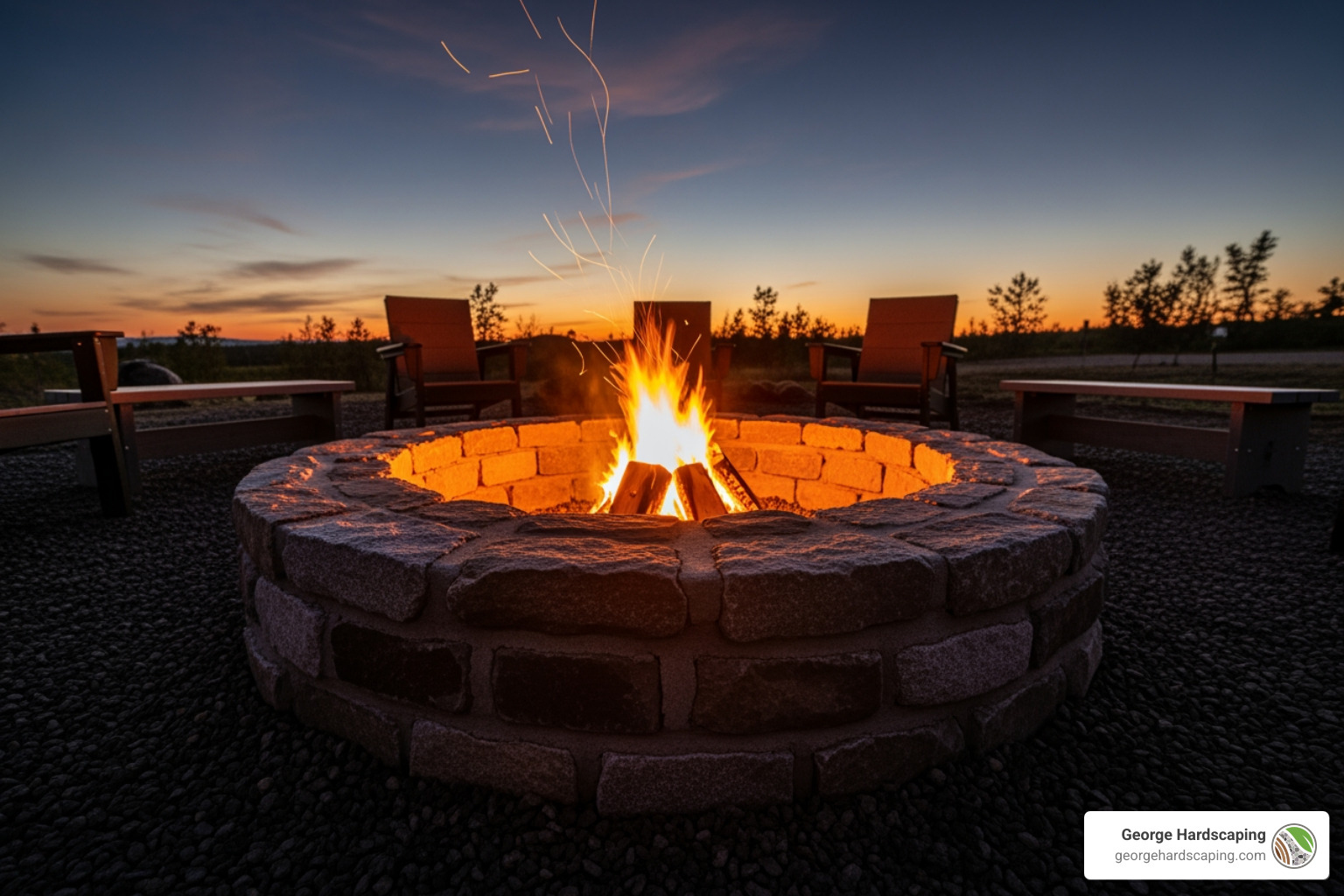
Introduction: The Timeless Allure of a Stone Fire Pit
A fire pit stone structure is the foundation for a durable, beautiful outdoor gathering space, changing your backyard into a year-round destination. There’s something primal about gathering around a fire. It draws people together, slows down conversation, and creates lasting memories. A stone fire pit gives that ancient ritual a permanent home in your backyard—a place where neighbors become friends and ordinary evenings become special.
However, not all fire pit stone is created equal. The material you choose determines whether your fire pit will look great in twenty years or start crumbling after a few harsh New England winters. It affects heat retention, ease of construction, and how well it complements your existing patio design. For homeowners on the North Shore and throughout Essex County, MA, where freeze-thaw cycles are brutal, choosing the right stone is about durability as much as aesthetics.
Here are some of the best stone options to consider:
- Granite: The most durable choice, proven to be 3-5 times stronger than concrete, with excellent heat resistance.
- Fieldstone: Offers a natural, rustic look with unique, irregular patterns.
- Concrete Blocks: A cost-effective and popular DIY option with uniform sizing.
- Fire Brick: An essential inner liner for any wood-burning pit to ensure maximum heat protection.
With proper materials and installation, a stone fire pit becomes a focal point that improves your property value and quality of life for decades. Whether you’re planning a DIY project with a kit or a custom-built masterpiece integrated with our hardscaping and masonry services, understanding your options is the first step. This guide will walk you through everything you need to know about fire pit stone, from choosing materials that handle extreme heat to understanding installation techniques that prevent cracking and ensure safety.
Choosing Your Champion: A Guide to Fire Pit Stone Materials
When building a fire pit that stands the test of time in Essex County, Massachusetts, the choice of material is paramount. Your fire pit stone needs to be durable, heat-resistant, and aesthetically pleasing. Let’s explore the top options, from the rugged charm of natural stone to the versatile appeal of manufactured blocks.
Natural Stone: The Authentic Choice
Natural stone brings unparalleled character to any outdoor space. Each piece is unique, ensuring your fire pit is truly one-of-a-kind.
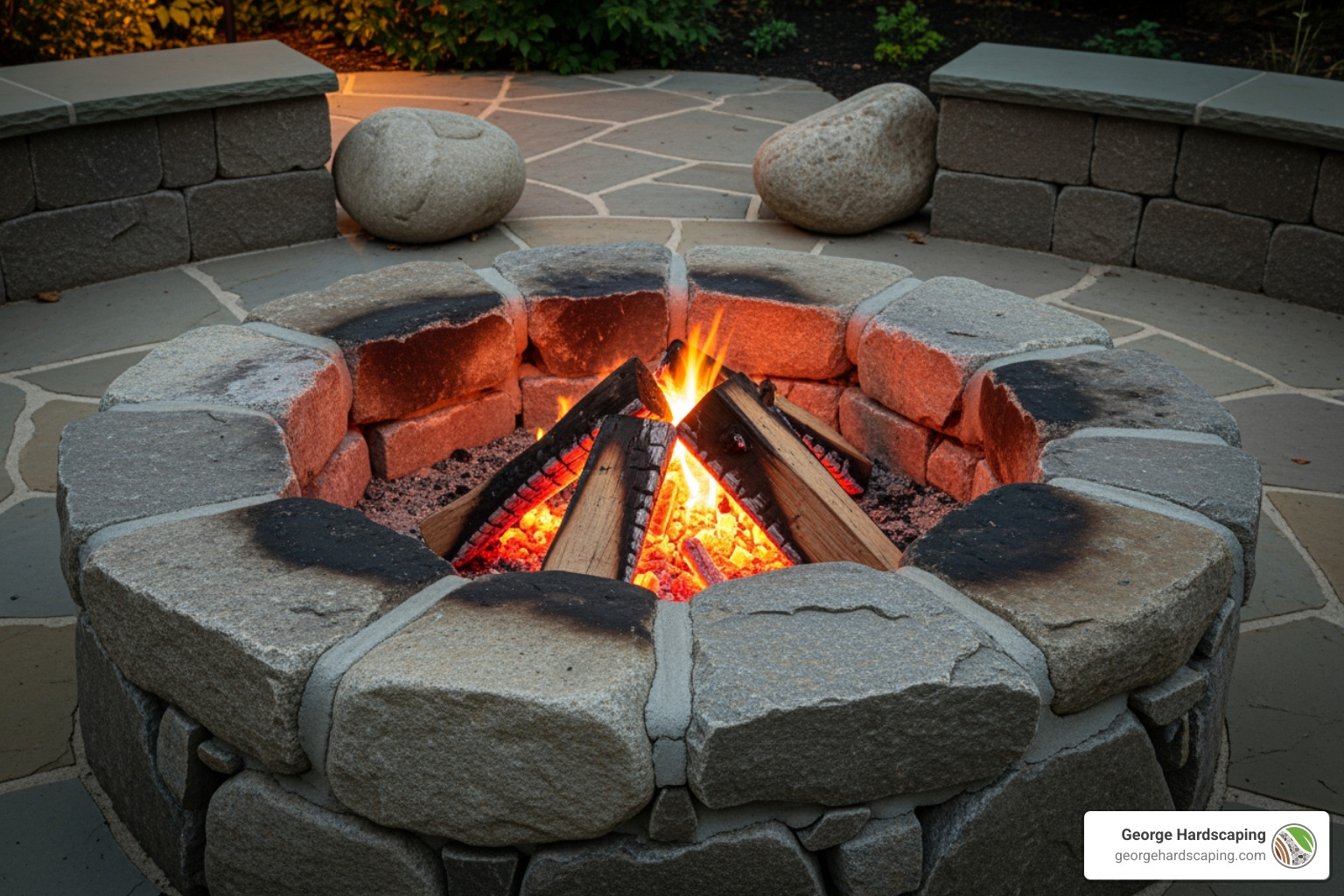
- Granite: Often considered the king of fire pit stone, granite is an igneous rock formed under immense heat, making it incredibly dense and resilient. Research shows granite is 3-5 times stronger than pre-cast concrete, making it exceptionally resistant to cracking and fading. Its superior heat resistance means it can handle intense fires without compromise. While it’s a higher initial investment, granite’s longevity and premium aesthetic offer timeless sophistication.
- Limestone and Sandstone: These sedimentary stones offer a softer, earthy look. However, it’s crucial to select dense, non-porous varieties. Porous stones can absorb moisture, which turns to steam when heated and can cause the stone to crack or spall—a major concern in New England’s freeze-thaw cycles.
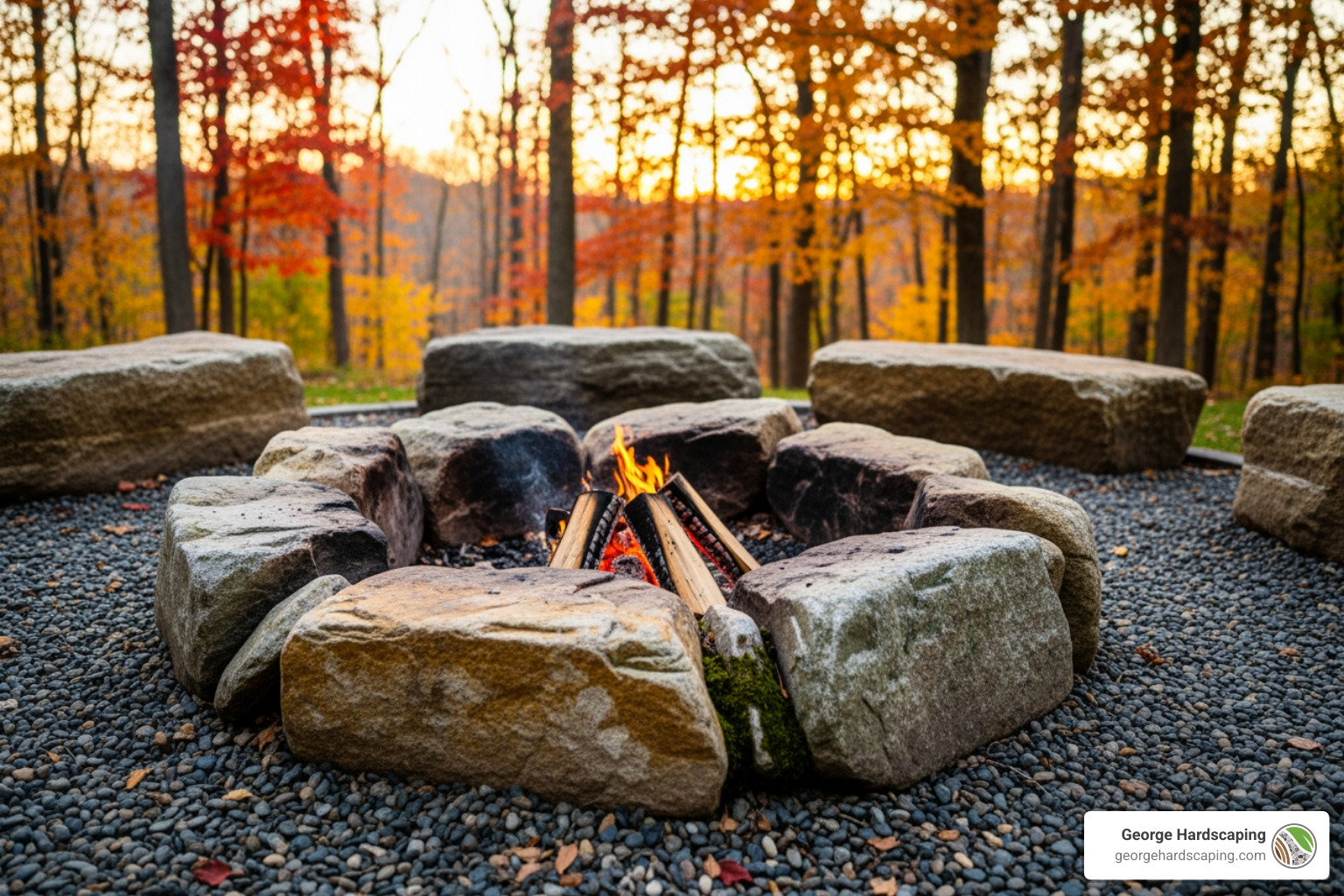
- Fieldstone: For a rustic, naturalistic look, fieldstone is an excellent choice. These irregularly shaped stones provide a charming, informal appeal that looks like it’s been part of the landscape for generations. Our specialized masonry services can ensure proper construction for a durable and beautiful result.
Manufactured Stone: Versatility and Value
For homeowners seeking a more uniform look, easier installation, or a budget-friendly option, manufactured stone is a fantastic alternative. These materials are engineered to mimic natural stone while providing consistent sizing and performance.
- Concrete Retaining Wall Blocks: This is a popular choice for DIY fire pits due to their availability in a wide range of colors and styles. Their uniform shape makes dry-stacking simple and quick, allowing for significant aesthetic customization.
- Cast Stone: These products offer a natural chiseled stone appearance with the benefit of easy assembly, often featuring interlocking sections for straightforward DIY construction. Cast stone provides a refined look with the durability of long-lasting concrete.
- Ledgestone and Stacked Stone Veneer: For a modern, textured finish, these veneers can be applied over a concrete block base. This allows for a wide array of aesthetic choices without the weight or cost of solid natural stone.
What is the Best Fire Pit Stone for Heat Resistance?
Direct exposure to fire requires specific materials for safety and longevity. The best fire pit stone for heat resistance is non-negotiable.
- Igneous Rocks Like Granite: Granite’s dense, non-porous nature means it withstands high temperatures without absorbing moisture that could lead to cracking.
- Fire Brick Liners: We strongly recommend lining the interior of any wood-burning fire pit with fire brick. Also known as refractory brick, it’s designed to withstand extreme temperatures (up to 1,800°F) and thermal shock. This inner layer protects your outer fire pit stone from the most intense heat, significantly extending the life of your fire pit.
- Steel Ring Inserts: A heavy-gauge steel ring is another essential component for a wood-burning fire pit. It protects the stone from direct flame, helps maintain the wall’s structural integrity, and contains the fire. These are especially important in climates with temperature fluctuations, as they mitigate stress on the masonry.
- Critical Safety Warning: Avoid River Rocks: Never use stones found in riverbeds or any porous, wet stone. They often contain trapped moisture that can turn to steam when heated, causing the stone to explode violently. Always use stone specifically rated or known to be safe for high-heat applications.
Stone vs. The Contenders: Why Stone Reigns Supreme
While metal and poured concrete fire pits have their place, we firmly believe that fire pit stone offers the best combination of benefits for homeowners seeking a permanent, high-quality, and aesthetically integrated outdoor feature. Let’s compare why stone often reigns supreme.
Stone vs. Metal Fire Pits
Metal fire pits are often portable and have a lower initial price. However, they come with significant trade-offs for a permanent outdoor living space.
- Durability: Metal is susceptible to rust and corrosion, especially in the humid climate of the North Shore. Over time, it can warp and become an eyesore. Dense natural stone like granite or quality cast stone offers superior longevity, withstanding years of exposure to the elements.
- Heat Retention: Stone is an excellent thermal mass, meaning it absorbs and radiates heat. A stone fire pit continues to emit warmth long after the flames die down. Metal heats and cools quickly, offering less prolonged comfort.
- Aesthetic Integration: A stone fire pit naturally blends into its surroundings, complementing existing hardscaping and architecture. It feels like an integral part of your landscape design, unlike a metal pit which can feel like a temporary addition. We specialize in creating harmonious outdoor spaces where the fire pit is a focal point, seamlessly integrated with your patio design and installation.
Stone vs. Poured Concrete Fire Pits
Poured concrete can create sleek, modern shapes but has drawbacks compared to natural or manufactured stone.
- Natural Beauty: Poured concrete, even when stained or textured, rarely achieves the organic beauty and varied texture of natural stone. The unique veining of granite or the rugged charm of fieldstone is difficult to replicate.
- Potential for Cracking: Concrete can be prone to cracking from thermal shock and freeze-thaw cycles, a common issue in our region. This is where granite’s superior strength (3-5 times stronger than pre-cast concrete) truly shines.
- The Best of Both Worlds: For a robust, custom-shaped structure with a high-end look, applying a stone veneer over a concrete block base is an excellent solution. This method combines structural rigidity with the beautiful aesthetic of natural stone.
For a quick comparison, see the table below.
[TABLE] Comparing Stone, Metal, and Concrete on Durability, Aesthetics, Cost, and Maintenance
| Feature | Stone Fire Pits | Metal Fire Pits | Poured Concrete Fire Pits |
|---|---|---|---|
| Durability | Excellent. Resists cracking (especially granite), weathering, and heat. Lasts decades with proper care. | Moderate. Prone to rust, warping, and corrosion over time, especially in harsh climates. | Good. Can crack due to thermal shock or freeze-thaw cycles. Strength varies with mix. |
| Aesthetics | Natural, organic, timeless. Highly customizable with various stone types, colors, and textures. Seamless integration with landscape. | Modern, industrial. Can look temporary. Limited design variation. Prone to discoloration from heat. | Modern, minimalist. Can be stained or textured, but lacks natural variation. Can look artificial. |
| Cost | Moderate to High. DIY kits start around $400, custom builds significantly more. High upfront investment, but excellent long-term value. | Low to Moderate. Often the cheapest initial option, but may require replacement sooner. | Moderate. Can range from DIY to custom-designed, with costs varying based on complexity and finish. |
| Maintenance | Low. Regular ash removal, occasional cleaning of capstones, checking for shifted stones. | Moderate. Requires rust treatment, painting, or replacement. | Low to Moderate. May require sealing, crack repair, or cleaning of stains. |
| Heat Retention | Excellent. Absorbs and radiates heat, providing warmth long after the fire dies down. | Low. Heats up quickly but cools down rapidly. | Good. Similar to stone, but can be less efficient depending on density. |
| Portability | None. Designed as a permanent fixture. | Excellent. Many are lightweight and designed to be moved or stored. | None. Permanent fixture. |
Designing Your Dream Fire Pit: From Kits to Custom Builds
Once you’ve decided on fire pit stone, the next step is designing your dream fire pit. This involves considering its size, shape, and integration with your overall outdoor living space. Whether you opt for a convenient kit or a custom-built masterpiece, thoughtful planning is key.
Key Features of Fire Pit Kits
Fire pit kits offer a streamlined, accessible solution for DIY enthusiasts. They provide all the necessary stone components and often a steel insert, simplifying the construction process.
- Size and Shape: Kits come in various sizes and shapes, with round and square being the most common. Round pits foster a communal, campfire-like feel, while square or rectangular pits offer a more modern look that aligns well with linear hardscaping. The right choice depends on your personal preference and existing patio layout.
- What’s Included: Most quality fire pit stone kits include pre-cut wall blocks, a durable steel fire ring insert (essential for protecting the stone), and construction adhesive. Some kits also include a cooking grate, turning your fire pit into a versatile outdoor grill.
- Ease of Assembly: A major draw of kits is their DIY-friendly nature. Thanks to interlocking sections and uniform blocks, many can be assembled in a single afternoon, making for a rewarding weekend project.
Aesthetic and Functional Considerations
Beyond kits, designing your fire pit involves considering how it will look and function within your unique outdoor space.
- Matching Stone to Your Home and Patio: The goal is harmony. Consider the existing materials and colors of your home and any adjacent hardscaping. A fire pit stone can either complement your patio material for a cohesive look or provide a pleasing contrast. The wide range of stone finishes and colors allows for incredible design flexibility.
- Creating a Focal Point: Your fire pit shouldn’t be an afterthought; it should be an integral part of your outdoor living plan. A well-designed stone fire pit naturally draws the eye and becomes the heart of your outdoor room. We excel at creating custom patio design and installation that seamlessly incorporates fire pits, often by matching the capstone to patio pavers or designing integrated seating walls.
Safety First: Placement and Preparation
Before any work begins, safety must be your top priority. Improper placement can turn a beloved feature into a serious hazard.
- Local Regulations: Always check with your local municipality in Essex County, MA, for specific regulations, setback requirements, or permits needed for outdoor fire pits.
- Safe Distance: As a general rule, place your fire pit at least 10 to 25 feet away from combustible structures, including your home, sheds, fences, and overhanging tree branches.
- Surface and Location: The ideal location is on a level, non-combustible surface like a stone patio or gravel bed. Never place a fire pit directly on a wooden deck or dry grass without adequate protection.
- Plan for Access: Think about the entire experience. Planning for comfortable seating and safe, accessible walkways and stairs ensures everyone can enjoy the fire pit safely and comfortably.
Building Your Fire Pit: A Step-by-Step DIY Guide
For the intrepid homeowner, building with fire pit stone can be a rewarding project. While George Hardscaping offers professional custom outdoor fire pits for a flawless finish, a DIY kit or a block-based build is achievable with careful planning. This guide focuses on a robust method using retaining wall blocks.
Tools and Materials
Gathering your tools and materials beforehand will ensure a smooth process.
- Retaining Wall Blocks: The quantity depends on your desired size and height.
- Steel Pit Ring: A crucial component to protect the stone and maintain the pit’s shape.
- Shovel: For excavation.
- Level: To ensure every course is perfectly flat.
- Tamper: For compacting the base materials.
- Gravel and Sand: For creating a stable, well-drained foundation.
- Construction Adhesive: Optional, but recommended for securing the capstones.
- Safety Gloves and Glasses: Always protect yourself.
DIY Fire Pit Stone Installation in 7 Steps
This method ensures a stable, well-drained, and durable fire pit.
- Site Preparation: After choosing a safe location, mark out a circle for your fire pit’s outer diameter. You’ll need to clear a larger area for the foundation. Remove all sod and vegetation within this area.
- Dig the Foundation: Excavate the entire marked circle to a depth of about 12 inches. This provides space for a stable base and proper drainage.
- Create a Drainage Sump: In the center of the excavated circle, dig a deeper hole (about 2 feet deep) to act as a sump. Fill this hole with coarse gravel to help rainwater drain away and prevent pooling.
- Lay the Gravel and Sand Base: Spread and tamp a 4-inch layer of coarse gravel across the entire excavated area. Follow this with a 4-inch layer of sand, which you will also tamp and level. This creates the stable foundation for your fire pit stone blocks.
- Lay the First Course: Place your first layer of blocks on the compacted sand base. Use your level constantly to ensure this first course is perfectly level, as it dictates the stability of the entire structure. Adjust with sand underneath as needed.
- Stack the Walls: Place the steel fire pit ring inside the first course to guide your work. Continue stacking subsequent layers of fire pit stone blocks in an overlapping, brick-like pattern. This dry-stacking technique is quick and allows for easier repairs. Leave small, random gaps between stones in each course to allow air to feed the fire.
- Finishing Touches: Once the walls reach your desired height (typically 3-5 courses), ensure the steel ring insert is snugly in place. Fill the bottom of the pit with a few inches of gravel for additional drainage. For a more detailed visual guide, you can review these step-by-step fire pit building instructions from The Spruce.
Cost, Care, and Long-Term Enjoyment
Building a stone fire pit is an investment in your home and lifestyle. Understanding the costs, maintenance, and safety practices will ensure your fire pit remains a cherished feature for years, especially in the challenging climate of Essex County, MA.
What is the Real Cost of a Stone Fire Pit?
The cost of a fire pit stone project varies based on your approach. (Note: These are industry averages, not official George Hardscaping prices.)
- DIY Project Cost: A basic block-built fire pit can be an affordable project, with material costs often starting around $500. This typically includes blocks, a steel ring, sand, and gravel.
- Kit Costs: Pre-fabricated fire pit stone kits offer a middle ground, with prices generally ranging from $400 to over $2,000. The price depends on the material (concrete vs. cast stone), size, and included features like cooking grates.
- Professional Installation: While DIY saves on labor, professional installation guarantees a perfectly level, structurally sound, and aesthetically pleasing result. Factors influencing the final price include material type (natural stone like granite is a premium choice), size, complexity, and custom features like integrated seating or a gas fire pit installation. For an accurate assessment of your vision, we encourage you to request a free estimate for your custom outdoor fire pit.
Maintenance and Longevity
A well-built fire pit stone structure can last for decades with simple, regular care. This is crucial for mitigating the effects of our Massachusetts freeze-thaw cycles.
- Clean Out Ash: After the pit cools completely, shovel out excess ash to ensure good airflow for your next fire and prevent moisture absorption.
- Inspect the Stone: Periodically check for any cracked or shifted stones. For dry-stacked pits, a shifted stone can often be easily re-seated. Early detection prevents minor issues from becoming major repairs.
- Use a Cover: A high-quality, weather-resistant cover is a great investment. It protects the fire pit stone from rain and snow, which is the best way to prevent freeze-thaw damage.
- Clean the Capstones: Smoke and soot can stain the top stones over time. Use a stiff brush and a specialized stone cleaner to keep them looking their best.
- Ensure Drainage: The gravel base is vital. Keep it clear of debris to ensure water can drain away effectively, protecting the foundation from water damage.
- Practice Fire Safety: Always have a water source or fire extinguisher nearby when a fire is lit. Never leave a fire unattended, and only burn appropriate materials like untreated firewood. For more detailed guidelines, review the National Fire Protection Association fire pit safety tips.
Conclusion: Igniting Your Outdoor Living Space
A fire pit stone is more than a source of heat; it’s a hub for connection, relaxation, and making memories. Whether you choose a DIY kit or a professionally installed masterpiece, selecting the right fire pit stone is the key to creating a durable and beautiful focal point for your backyard.
From the superior strength of granite to the versatile appeal of manufactured blocks, the options for crafting your perfect outdoor fire feature are plentiful. In Essex County, where outdoor living is cherished, a well-built stone fire pit becomes an extension of your home—a place where stories are shared and laughter echoes under the stars.
Call to Action #1:
Ready to transform your backyard? Contact George Hardscaping today to discuss your vision and get a custom outdoor fire pit designed and installed by our expert team.
Call to Action #2:
Explore our full range of hardscaping and masonry services to create a cohesive, stunning outdoor living space that will be the envy of your neighborhood.