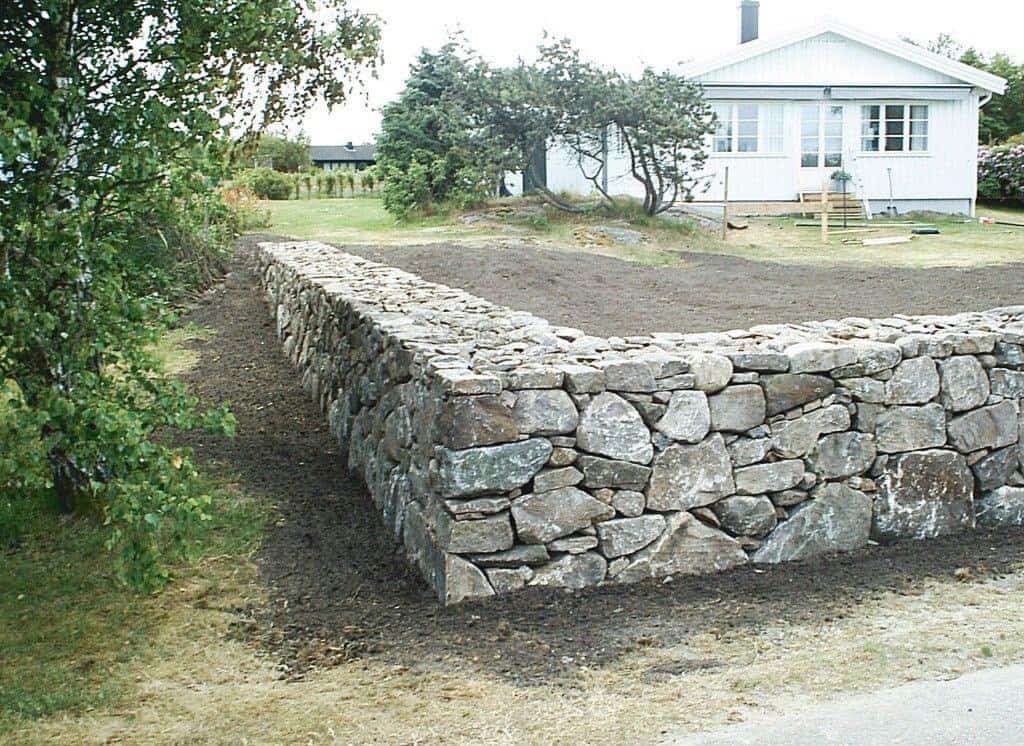
Concrete Retaining Wall Construction: Top 2024 Guide
Introduction
Concrete retaining wall construction is a powerful solution for homeowners looking to manage soil erosion, enhance landscape aesthetics, and create functional outdoor spaces. Here’s a quick overview:
Key Points:
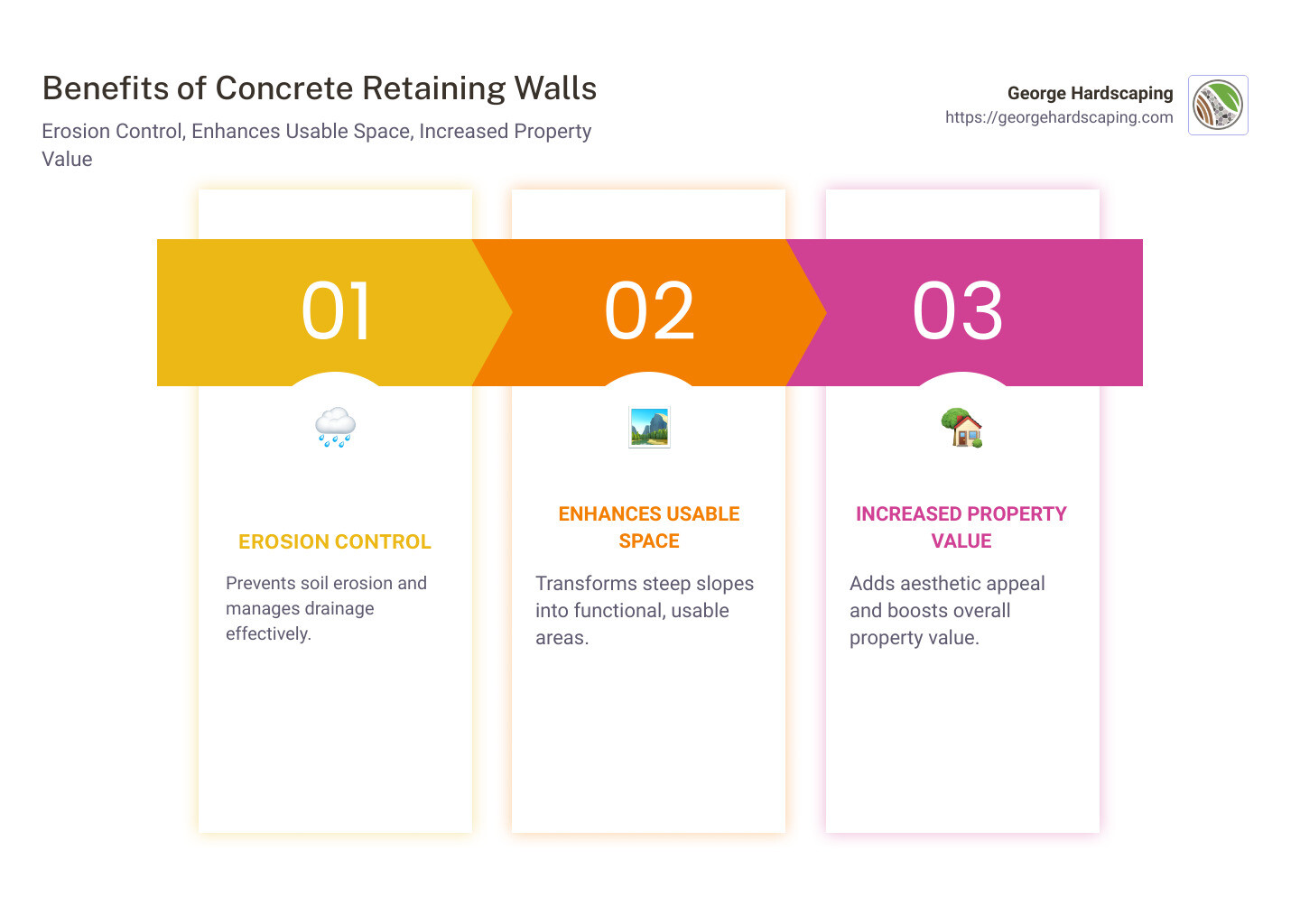
– Purpose: Holds back soil, prevents erosion, and manages drainage.
– Benefits: Adds beauty, increases property value, and creates usable spaces.
– Materials: Concrete blocks, rebar, gravel, sand.
Concrete retaining walls are prized for their durability and strength. By holding back soil and preventing erosion, these walls protect your landscape from the damage caused by runoff and shifting earth. They are not only functional but can also be customized with colors, textures, and embedded objects to complement the aesthetics of your outdoor space.
Whether you’re transforming a steep slope into terraced gardens or creating a level area for a patio, a well-built concrete retaining wall provides a lasting solution that combines functionality and beauty.
Planning Your Concrete Retaining Wall
Planning is the first and most crucial step in concrete retaining wall construction. This section will guide you through the essential elements: site assessment, design considerations, legal requirements, and permits.
Site Assessment
Before breaking ground, understand the site conditions. Here’s what you need to consider:
- Soil Type: Different soils have different load-bearing capacities. Sandy soils drain well but aren’t as stable as clay soils, which hold water and can exert more pressure on the wall.
- Slope and Elevation: Assess the slope of the land to determine the height and length of the wall. Steeper slopes may require taller walls or even multiple terraced walls.
- Drainage: Proper drainage is essential to prevent water buildup behind the wall, which can lead to failure. Drainage lines wrapped in geotextile or buried in a granular filter bed are often used.
Design Considerations
The design of your retaining wall should be both functional and aesthetically pleasing. Here are some key factors to keep in mind:
- Height and Length: Determine the dimensions based on the site’s slope and the intended use of the area behind the wall. Walls over four feet often require special engineering.
- Materials: Choose between concrete blocks, poured concrete, or other materials. Concrete offers flexibility in color, texture, and embedded objects, making it highly customizable.
- Reinforcement: Adding rebar every 16 inches on center is a common practice. This reinforcement increases the wall’s strength and durability.
- Aesthetics: Consider decorative face options like vertical concrete overlays or form liners to achieve the desired look. These options add texture and visual interest to your wall.
Legal Requirements
Building a retaining wall can impact the natural flow of water and affect neighboring properties. Therefore, it’s crucial to adhere to local regulations:
- Building Codes: Check with your local building code official for specific requirements related to wall height, drainage, and setbacks from property lines.
- Permits: Depending on your location and the wall’s dimensions, you may need a permit. This often involves submitting detailed plans and scheduling a property inspection.
- Utility Lines: Before digging, contact DigSafe (811) to ensure no buried utility lines are in the way. This step is vital to avoid legal and safety issues.
Permits
Securing the necessary permits is an essential part of the planning process. Here’s a quick checklist:
- Submit Plans: Provide detailed plans that include the wall’s design, dimensions, and drainage solutions.
- Inspection: Schedule an inspection to ensure your plans comply with local regulations.
- Approval: Wait for the official approval before starting construction. This step ensures that all legal requirements are met and that your project won’t face any legal hurdles down the line.
By following these steps, you’ll lay a solid foundation for your concrete retaining wall project. Proper planning not only ensures compliance with local laws but also sets the stage for a successful and durable construction.

Next, we’ll dive into the materials and tools you’ll need to bring your retaining wall to life.
Materials and Tools Needed for Concrete Retaining Wall Construction
Building a concrete retaining wall requires the right materials and tools to ensure durability and stability. Here’s a breakdown of what you’ll need:
Materials
Concrete Blocks
Concrete blocks are the backbone of your retaining wall. They come in various sizes, colors, and textures. Choose blocks designed specifically for retaining walls, as they often have features like interlocking edges for added stability.
Rebar
Rebar (reinforcing steel bars) adds strength to your wall, especially if it’s over 4 feet tall. It helps to hold the concrete together and resist the pressure from the soil behind the wall.
Gravel
Gravel is essential for the base and backfill of your retaining wall. A compacted gravel base provides a solid foundation, while backfill gravel helps with drainage, preventing water buildup that could damage the wall.
Sand
Sand is used for leveling the base layer. A 1-inch layer of leveling sand ensures that the first course of blocks sits perfectly level, which is crucial for the stability of the entire wall.
Tools
Trowel
A trowel is used for spreading and smoothing concrete or mortar. It’s essential for ensuring a clean, professional finish on your wall.
Level
A 4-foot level is crucial for checking that each course of blocks is perfectly horizontal. For longer walls, you might also use a transit level to ensure consistency over greater distances.
Wheelbarrow
A wheelbarrow is indispensable for transporting materials like gravel, sand, and concrete. It saves time and reduces physical strain, making the construction process more efficient.
Shovel
A shovel is needed for digging the trench for your wall’s foundation, moving gravel and sand, and mixing concrete. A sturdy, well-designed shovel will make these tasks much easier.
Tamper
A tamper is used to compact the gravel base. Proper compaction is critical for a stable foundation, reducing the risk of wall shifting over time.
Tape Measure
A tape measure ensures that your wall is built to the correct dimensions. Accurate measurements are vital for both the trench and the placement of each block.
Transit Level
For larger or more complex projects, a transit level helps ensure your base is perfectly flat. This tool is especially useful for longer walls where a 4-foot level might not be sufficient.
Having the right materials and tools on hand will make the construction of your concrete retaining wall much smoother and more efficient. Up next, we’ll walk you through the step-by-step construction process, from site preparation to finishing touches.
Step-by-Step Construction Process
Site Preparation
Clearing
Start by clearing the area where the retaining wall will be built. Remove any plants, topsoil, and debris. This process, often called “grubbing,” ensures a clean and stable base for your wall.
Excavation
Next, excavate the area to create a trench for the wall’s foundation. The trench should be at least 24 to 28 inches wide and 4 to 6 inches deep. This allows enough space for the compactable base material and the wall itself.
Grading
Use a transit level or a 4-foot level taped to a straight 2×4 to establish a common stake height, indicating the top of your sand leveling bed. This ensures a flat and stable base for your wall.
Building Strong Foundations
Footings
Pour a concrete footing at the base of your trench. The footing should be at least 2 feet deep and below the seasonal frost line to prevent frost heave. The length of the base slab is usually 50% to 70% of the wall’s total height.
Depth and Frost Line Considerations
Ensure the footings are deep enough to reach below the frost line, especially in colder climates. This prevents the wall from shifting due to freeze-thaw cycles.
Constructing the Wall
Form Building
Build the forms for your wall using sturdy materials like plywood. The forms will shape the concrete as it cures. Make sure they are level, straight, and securely anchored.
Rebar Placement
Place rebar inside the forms for reinforcement. Rebar should be spaced every 16 inches on center. This adds strength and stability to the wall.
Pouring Concrete
Pour the concrete into the forms, ensuring it fills all spaces. If the wall exceeds 4 feet in height, pour the footings and wall separately. Use a vibrator to remove air pockets and ensure the concrete is well-compacted.
Curing
Allow the concrete to cure according to the manufacturer’s instructions. This usually takes several days. Proper curing is essential for the wall’s strength and durability.
Finishing Touches
Surface Finishing
After removing the forms, finish the surface of the wall as desired. Options include smoothing the surface, adding texture, or applying a decorative overlay.
Waterproofing
Apply a waterproofing membrane to the back of the wall to prevent water infiltration. This is crucial for the wall’s longevity.
Drainage Systems
Install a drainage system behind the wall to manage water runoff. Use perforated drain pipes wrapped in geotextile fabric and backfill with crushed gravel. This prevents water buildup, which can cause pressure and damage to the wall.
By following these steps, you’ll ensure your concrete retaining wall is built to last. Up next, we’ll cover how to maintain your concrete retaining wall to keep it in top condition.
Maintaining Your Concrete Retaining Wall
Proper maintenance is key to ensuring your concrete retaining wall remains strong and durable for years to come. Let’s dive into the essential steps:
Inspection
Regular Inspections
Inspect your wall at least twice a year, ideally in spring and fall. Look for signs of cracking, bowing, or tilting. Pay special attention after heavy rains or freezing temperatures, as these can cause significant damage.
Check Drainage
Ensure that drainage systems like weepholes and perforated pipes are clear and functional. Blocked drainage can lead to water buildup and increased pressure on the wall.
Cleaning
Debris Removal
Remove any dirt, leaves, or other debris that may have accumulated on or around the wall. This prevents moisture retention and potential staining.
Mild Cleaning Solutions
For general cleaning, use a mild soap solution and a soft brush. Avoid harsh chemicals that can damage the concrete.
Repair
Small Cracks
For minor cracks, use a concrete repair caulk or sealant. Clean the crack thoroughly before application to ensure a good bond.
Larger Issues
If you notice significant structural issues like large cracks, bowing, or tilting, it’s best to consult a professional. These problems may indicate underlying issues that require expert attention.
Reapply Sealant
Over time, the waterproof sealant on your wall may wear off. Reapply sealant every few years to maintain its protective barrier.
By following these simple steps, you can keep your concrete retaining wall in excellent condition, ensuring it continues to provide both functional and aesthetic benefits to your landscape.
Frequently Asked Questions about Concrete Retaining Wall Construction
How thick should a poured concrete retaining wall be?
The thickness of a poured concrete retaining wall is crucial for its stability and durability. In general, the top of the wall should be at least 12 inches thick. This allows enough space for proper concrete placement and structural reinforcement.
Tom Ralston, owner of Tom Ralston Concrete in Santa Cruz, CA, emphasizes the importance of adequate thickness to withstand soil pressure and environmental factors. The thickness can also vary based on soil type and exposure levels. For more technical details, check out Tom Ralston’s guide.
Do concrete retaining walls need footings?
Yes, concrete retaining walls absolutely need footings. The footings provide a stable base and help distribute the wall’s load evenly. The depth of the footings should be at least two feet, but they must also extend below the seasonal frost line to prevent shifting due to freeze-thaw cycles.
The length of the base slab typically ranges from 50% to 70% of the wall’s total height. Proper footings are essential for preventing issues like sliding or tilting, as highlighted by George Hardscaping.
What are the disadvantages of concrete retaining walls?
While concrete retaining walls offer many benefits, they also come with some disadvantages:
- Cracking: Concrete can crack over time, especially in areas with heavy rainfall or extreme weather conditions. Woody from Woody’s Custom Landscaping notes that cracks are hard to repair and often require rebuilding the wall.
- Complex Installation: Poured concrete walls are challenging to install. They require precise formwork and skilled labor. Mistakes can be costly and may compromise the wall’s integrity.
- Cost: Concrete walls can be more expensive than other materials like wood or masonry blocks. The cost includes materials, labor, and potential repairs.
- Visual Challenges: Forming in the negative can be a visual challenge, as errors are only visible once forms are removed.
Despite these challenges, concrete retaining walls are growing in popularity in mild climates like Southern California, where modern design trends favor their sleek, minimalist look. For more insights, visit George Hardscaping’s website.
By understanding these FAQs, you can make informed decisions about your concrete retaining wall construction project.
Conclusion: Concrete Retaininig Wall Construction
Concrete retaining walls offer a blend of durability and aesthetics that is hard to match. They are an excellent choice for homeowners who want a long-lasting, visually appealing solution for their landscaping needs.
Durability
Concrete retaining walls are built to last. Unlike wood or masonry blocks, concrete can endure harsh weather conditions, resist erosion, and require minimal maintenance. According to landscape architect Joseph Huettl, an 8″ concrete wall is stronger than an 8″ block wall, making it ideal for areas where strength and longevity are crucial. This durability means fewer repairs and replacements, saving you both time and money in the long run.
Aesthetics
Concrete walls seamlessly blend with modern architectural styles, providing a sleek and minimalist look. They can be customized with various finishes and capstones, like the beautiful travertine stone cap mentioned earlier. This adaptability allows you to create a retaining wall that complements your home’s exterior, enhancing your property’s overall aesthetic appeal.
Why Choose George Hardscaping?
At George Hardscaping, we specialize in creating custom-built landscape retaining walls that meet the highest standards of quality and design. Our team of experienced professionals is dedicated to delivering solutions tailored to your specific needs. From the initial design to the final installation, we ensure every detail is handled with care and precision.
Ready to transform your landscape with a durable and stylish concrete retaining wall? Contact us today to get started on your project. Let’s create a stunning and functional outdoor space that you will admire for years to come.