
Building an Outdoor Fireplace: Ultimate 2025
Why Building an Outdoor Fireplace Creates the Ultimate Backyard Experience
Building an outdoor fireplace is more than a construction project; it’s an investment in your home’s lifestyle and value. It fundamentally transforms a simple backyard into a true outdoor living room—a year-round gathering space that brings family and friends together for unforgettable moments. An outdoor fireplace serves as a powerful focal point for any outdoor living space, creating an irresistible, cozy ambiance for quiet evenings under the stars or lively, memorable gatherings. It extends the usability of your patio or deck, providing warmth and light that pushes back the chill of autumn evenings and even offers a magical setting on a mild winter day.
The process, while rewarding, demands careful planning, the use of high-quality materials, and strict adherence to safety codes and building standards. While DIY kits are available and may seem tempting, a professionally executed, custom-built fireplace offers unparalleled durability, complete design flexibility, and superior long-term value. Engaging professional masons ensures the structure is built correctly from the foundation up, complies with all local regulations, and often comes with warranty protection for your peace of mind.
Here’s a quick overview of what’s involved in this transformative project:
Essential Steps:
- Plan & Permit: Define your vision, choose a safe and strategic location, thoroughly research local building codes, and secure all necessary permits before any work begins.
- Prepare Foundation: Excavate and pour a robust, steel-reinforced concrete pad that extends below the frost line to prevent shifting and cracking.
- Build Structure: Meticulously stack concrete masonry units (CMUs) to form the main body and construct a high-performance firebox using specialized firebrick and refractory mortar.
- Construct Chimney: Engineer and build a smoke chamber and flue system designed for optimal draft, ensuring smoke is drawn up and away from your seating area.
- Apply Finishes: Clad the structure with your chosen exterior finish, such as natural stone veneer, classic brick, or modern stucco, to match your home’s aesthetic.
- Cure & Test: Allow the entire masonry structure a full 30 days to cure properly before cautiously lighting the first small, introductory fires.
Key Requirements:
- A minimum clearance of 10-20 feet from combustible structures, property lines, and dense foliage.
- A proper foundation depth determined by the local frost line to ensure stability.
- Use of high-temperature-rated materials (firebrick, refractory mortar) for all parts of the firebox exposed to direct flame.
- An adequate chimney height (often at least 2 feet higher than anything within a 10-foot radius) to create a proper draft.
- Professional, licensed installation for any gas lines to ensure safety and code compliance.
Timeline: Approximately 1-2 weeks for professional construction, followed by a mandatory 30-day curing period.
Cost Range: $1,300 for basic DIY kits (materials only) to $10,000-$20,000+ for professionally designed and installed custom masonry projects, depending on size, materials, and complexity.
Phase 1: Planning and Preparation Before You Build
A successful outdoor fireplace project begins long before the first brick is laid. This comprehensive planning phase is the most critical stage, as it lays the groundwork for a safe, functional, and beautiful backyard centerpiece that will provide years of cozy evenings.
Choosing the Perfect Location
The right spot for your outdoor fireplace impacts everything from safety and functionality to overall enjoyment and integration with your landscape. Rushing this decision is a common mistake.
- Safety First: The cardinal rule is clearance. Maintain at least a 10-foot clearance—though 15-20 feet is even better—from any combustible structures, including your house, deck, pergola, shed, or large trees with overhanging branches. This protects against both radiant heat and stray sparks.
- Wind Direction: Spend time in your yard at different times of the day to observe the prevailing wind patterns. You want to position the fireplace so that smoke is naturally carried away from your primary seating areas, open windows, and your neighbors’ property. A poorly placed fireplace can make your patio unusable.
- Ground Conditions and Utilities: The ideal location is on level, stable ground with excellent drainage to prevent the heavy foundation from settling, shifting, or suffering from frost heave. Before you dig, always call 811 to have underground utility lines (gas, water, electric) marked. An unseen utility line can turn your project into a disaster.
- Overall Vision and Integration: How will the fireplace anchor your outdoor living space? It shouldn’t feel like an afterthought. Many of our most successful projects integrate the fireplace into a comprehensive patio design and installation, creating a cohesive outdoor room with designated zones for dining, lounging, and conversation.
Navigating Local Codes and Permits
Dealing with permits and building codes upfront is non-negotiable and will save you from enormous future headaches, potential fines, or even a tear-down order. Every municipality in Essex County has its own specific set of rules regarding chimney height, setbacks from property lines, foundation requirements, and approved construction materials. Homeowners Association (HOA) covenants can be even more restrictive, so always get their written approval first. The permitting process typically involves submitting detailed plans and scheduling multiple inspections (e.g., footing, structural, and final) to ensure your fireplace is built safely and to professional standards. Never skip this step; unpermitted work can create major liabilities and complications when you eventually sell your home.
Design Decisions: Custom Build vs. Kit Components
When building an outdoor fireplace, you have two primary paths: a completely custom, scratch-built structure or one that utilizes pre-engineered kit components.
| Feature | Custom (Scratch) Builds | Kit Components |
|---|---|---|
| Cost | Higher initial investment due to bespoke design, engineering, and intensive masonry labor. | Generally more budget-friendly as major components are mass-produced. |
| Time | Longer timeline required for design development, material sourcing, and complex on-site construction. | Significantly faster installation due to pre-cut and pre-engineered materials. |
| Skill Level | Requires advanced, professional-level masonry expertise and structural design experience. | More accessible for skilled DIYers, but still demands precision, skill, and heavy lifting. |
| Customization | Virtually unlimited design possibilities. Can be tailored to any size, shape, and material to perfectly match your home’s architecture. | Limited to pre-designed styles and sizes, though customization is possible with veneer and finishes. |
Custom builds offer the ultimate in creative freedom, allowing the fireplace to become a true work of art that is perfectly integrated with your home and landscape. Our professional masonry services specialize in creating these one-of-a-kind, heirloom-quality features. A popular hybrid approach involves using high-quality kit components for the core firebox and flue system—ensuring optimal performance and safety—and then wrapping this core with custom stonework. This method combines the reliability of an engineered system with the bespoke aesthetic of a full custom build.
Wood-Burning vs. Gas: Selecting Your Fuel Source
Your choice of fuel source will fundamentally shape how you use and maintain your fireplace.
- Wood-Burning Fireplaces: These deliver the quintessential, multi-sensory experience: the crackle of logs, the radiant heat, and the nostalgic aroma of wood smoke. This authenticity comes with more effort, including sourcing and storing seasoned hardwood, managing the fire, regular ash removal, and annual chimney cleaning to prevent creosote buildup. An outside fireplace brick design is a timeless and popular choice for this traditional style.
- A gas fireplace outdoor model offers the pinnacle of convenience and ease of use. With the flip of a switch or the press of a remote, you get instant, consistent, and adjustable heat with virtually no cleanup. Gas units burn cleanly with no sparks or smoke, making them an excellent choice for smaller patios or areas with strict burn regulations. However, the installation is more complex and costly, as it requires a licensed technician to run the gas line safely and in accordance with strict codes, such as the National Fireplace Institute (NFI) guidelines.
Phase 2: Gathering Your Materials and Tools
With your plans approved and your design finalized, it’s time to transition to the tangible part of the project: gathering your supplies. Having high-quality materials and the correct tools organized and ready on-site is essential for making the process of building an outdoor fireplace flow smoothly and efficiently.
Essential Tools for the Project
Using the right tools is not just about convenience; it’s critical for achieving a professional, durable, and safe result. A well-equipped mason will have:
- Excavation & Transport: A pointed spade shovel for digging, a flat shovel for moving materials, and a heavy-duty wheelbarrow.
- Measurement & Leveling: A 4-foot level (and a smaller torpedo level), a quality tape measure, a framing square, and mason’s line with line blocks.
- Concrete & Mortar Work: A concrete mixing tub or a mechanical mixer, masonry hoes, a variety of masonry trowels (pointing, margin, brick), a rubber mallet for setting blocks, and a magnesium float for finishing concrete.
- Cutting & Shaping: A brick hammer and chisel for minor adjustments, and a gas-powered or electric wet saw with a diamond blade for precise cuts on block, brick, and stone veneer.
- Safety Gear: This is non-negotiable. Always use heavy-duty work gloves, safety glasses or goggles, a dust mask (especially when cutting masonry), and steel-toed boots.
Materials for a Solid Foundation
A strong, stable foundation is the most critical structural element of your fireplace. It supports thousands of pounds of masonry and must withstand New England’s demanding freeze-thaw cycles without shifting or cracking.
- Base: A 4-8 inch thick, compacted layer of all-purpose gravel or crushed stone (often called a sub-base) to provide a stable platform and allow for proper drainage.
- Forms: 2×6 or 2×8 lumber to build a temporary frame that will contain the wet concrete.
- Concrete: A high-strength (4000 PSI) concrete mix. For a large pad, ordering ready-mix concrete from a truck is often easier and ensures a consistent product.
- Reinforcement: A grid of #3 or #4 steel rebar and/or wire mesh placed in the middle of the concrete slab. This provides crucial tensile strength, helping the concrete resist the pulling-apart forces that cause cracking.
To prevent frost heave—where moisture in the soil freezes, expands, and pushes the foundation upward—the base of the foundation must extend below your area’s designated frost line. You can consult local building codes or use a resource like your area’s frost line depth map to ensure it’s built correctly from the very start.
Materials for the Fireplace Structure
These materials form the heart and soul of your fireplace, providing both its structural integrity and its final aesthetic.
- Core Structure: Standard concrete masonry units (CMUs), or cinder blocks, are used to build the main body of the fireplace quickly and cost-effectively.
- Firebox: This is the high-performance core. It must be lined with specialized firebricks, which are dense, low-porosity bricks designed to withstand extreme temperatures. These are assembled with high-temperature refractory mortar, a special cement that can handle temperatures exceeding 2000°F without failing.
- Support & Venting: A heavy-gauge steel lintel is placed across the top of the firebox opening to support the immense weight of the chimney above. The chimney itself is lined with interlocking ceramic or stainless steel flue liners, which create a safe, smooth, and insulated passage for hot gases and smoke, protecting the outer masonry from heat and corrosive byproducts.
- Safety & Protection: A chimney cap, typically made of stone or metal, is installed at the top. It must include a spark arrestor (a wire mesh screen) to prevent hot embers from escaping and landing on your roof or yard.
- Finishing Touches: The exterior is what everyone will see. This is typically a veneer of natural stone, cultured (manufactured) stone, classic brick, or modern stucco. Our professional masonry services can guide you in selecting materials that are not only beautiful but also proven to be durable enough for our harsh coastal climate.
Phase 3: The Step-by-Step Guide to Building an Outdoor Fireplace
This is where your vision, plans, and materials converge. Building an outdoor fireplace is a methodical, layer-by-layer process where patience and meticulous attention to detail are rewarded with a beautiful, functional, and enduring centerpiece for your outdoor living space.
Step 1: Constructing the Foundation
The foundation is the unsung hero of your fireplace, responsible for its long-term stability. The process begins with careful excavation to the required depth below the frost line. We then install and compact a 6-inch layer of gravel to create a stable, well-draining sub-base. Next, we build level and perfectly square concrete forms, place a grid of steel rebar inside for reinforcement, and pour the concrete to a minimum thickness of 4-8 inches. The wet concrete is screeded flat, then smoothed with a float. This critical pad must cure for at least 48-72 hours before it’s strong enough to bear the weight of the first course of blocks.
Step 2: Building the Base and Firebox
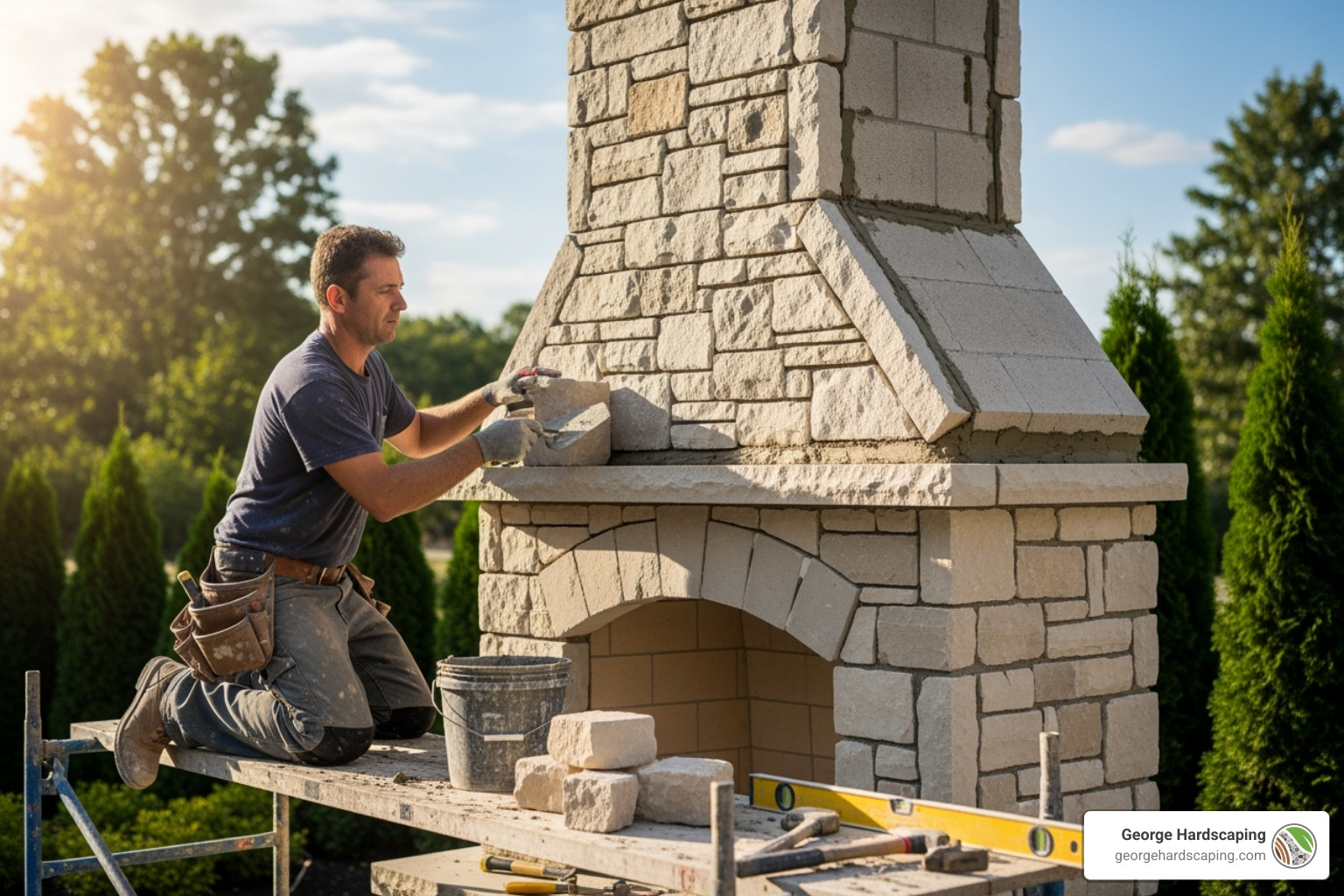
With the foundation cured, the structure begins to rise from the ground. We lay the first course of cinder blocks in a bed of mortar, taking great care to ensure it is perfectly level, square, and centered on the pad. This first course dictates the accuracy of the entire structure. We build up the base walls course by course, staggering the joints for strength and constantly checking our work with a level and square.
The firebox is the most technical component. It is constructed inside the main structure using specialized firebricks set with thin, tight joints of high-temperature refractory mortar. This precision work is crucial for withstanding the intense, repeated cycles of heating and cooling. Finally, a heavy-duty steel lintel is installed across the top of the firebox opening, a critical step to support the massive weight of the chimney above.
Step 3: Building the Smoke Chamber and Chimney
An effective draft system is the secret to a pleasant, smoke-free patio experience. The magic happens in the transition zone between the firebox and the chimney. Just above the firebox, we construct a “smoke shelf” and a narrowed “throat,” which work together to improve the upward flow of smoke and prevent downdrafts. Above this, the smoke chamber is formed by carefully angling the masonry blocks inward, creating a funnel that smoothly guides smoke into the flue. We then begin stacking the ceramic or stainless steel flue liners, sealing each joint with refractory mortar.
These liners create a smooth, insulated, and protected path for the smoke to travel. The outer chimney structure is built up around the flue, ensuring it is perfectly plumb (vertically straight). It must extend at least 2 feet above any part of the structure within a 10-foot radius to ensure it clears wind currents and creates a proper draft. A chimney cap with a spark arrestor is the final piece, keeping rain out and embers in.
Step 4: Applying the Finishing Touches
This final construction phase is where the fireplace’s personality emerges and your unique vision comes to life.
- Exterior Veneer: This is the aesthetic skin of the fireplace. We meticulously apply your chosen finish, whether it’s rugged natural fieldstone, classic red brick, or sleek modern stucco. Each stone or brick is carefully cut and placed to create a beautiful, durable facade. Our gallery of custom stone and brickwork showcases the stunning range of possibilities.
- Hearth and Mantel: A hearth is a mandatory safety feature, typically built from a single slab of stone or brick, extending at least 16-20 inches from the firebox opening to catch stray embers. A mantel, made of stone, reclaimed wood, or concrete, can be added above the opening as a beautiful decorative element.
- Integrated Features: This is where a good design becomes a great one. We can create a complete outdoor room by adding built-in wood storage boxes (wood-nooks), seating walls that flow from the fireplace, or even small counters. These features work beautifully with broader landscape and seating wall installations to create a truly cohesive and highly functional outdoor living space.
Phase 4: Curing, Safety, and Long-Term Maintenance
Your outdoor fireplace is built, but the project isn’t quite finished. A few final, crucial steps are needed to ensure its structural longevity, its safe operation, and your family’s continued enjoyment. This is the final stretch before you can light that first celebratory fire and start making memories.
The Importance of Curing Your New Fireplace
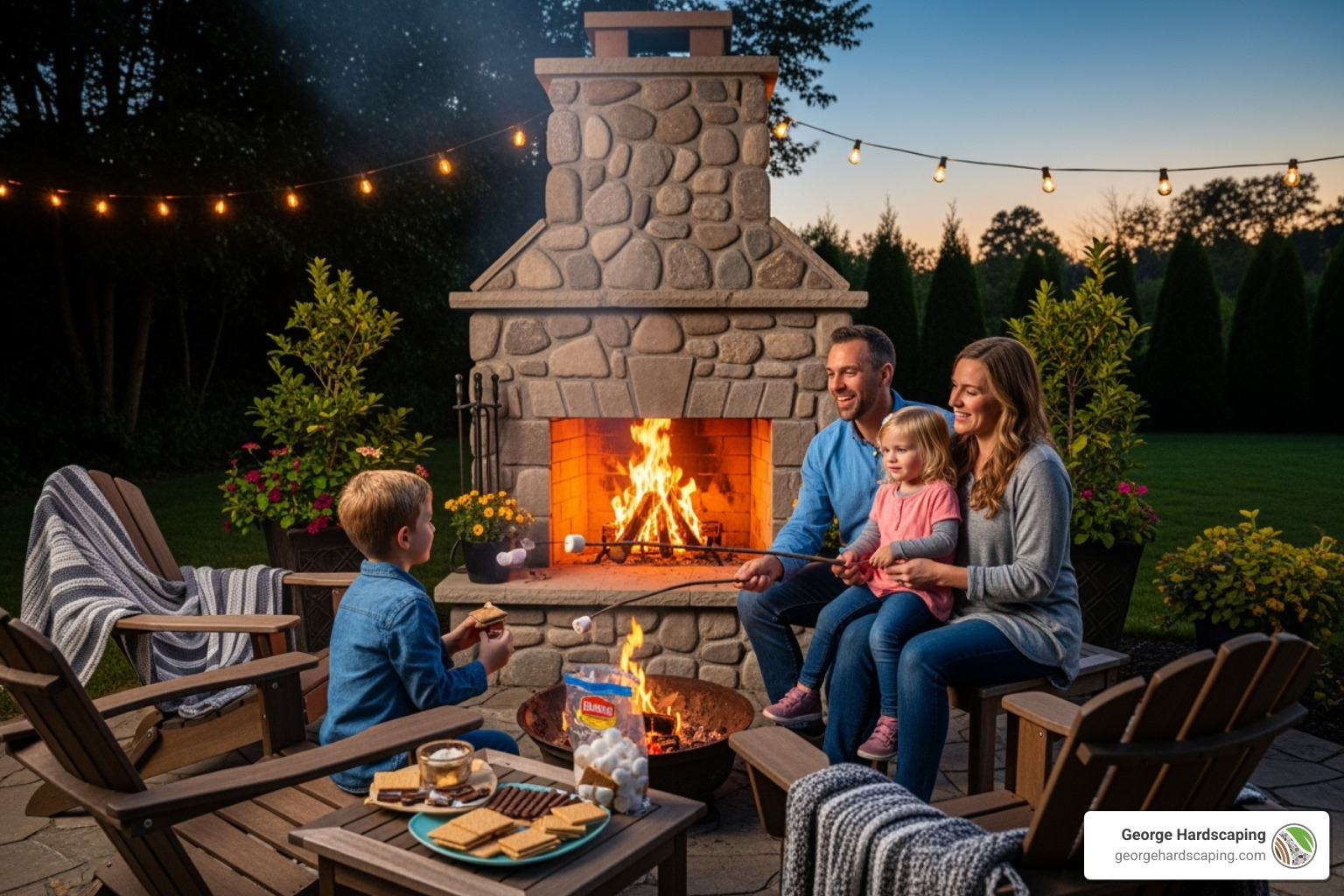
Curing is a critical, non-negotiable step that requires patience. The mortar and concrete in your new fireplace gain their strength through a chemical process called hydration, not just by drying out. This process needs time and moisture to complete.
We recommend a minimum of 28-30 days for a full cure before lighting your first fire. Heating the fireplace too soon will cause the residual water within the masonry to turn to steam, creating immense internal pressure that can lead to severe cracks and long-term structural damage. When the curing period is over, don’t start with a large, roaring fire. Instead, build a series of small, short-duration fires over several days, gradually increasing their size and duration. This allows the materials to acclimate slowly to the thermal stress.
Safety First: Operating Your Outdoor Fireplace
A professionally built fireplace is exceptionally safe when operated correctly and with respect. Always follow these essential safety rules:
- Never leave a fire unattended, even for a moment. A sudden gust of wind can change everything.
- Keep a fire extinguisher, a charged garden hose, or a bucket of sand nearby at all times.
- Always check and strictly observe local burn bans and air quality regulations, especially during dry or windy conditions in towns like Danvers or Salem, MA.
- Maintain a 10-foot clear zone around the fireplace, free of leaves, pine needles, cushions, blankets, or any other flammable materials.
- Use a fireplace screen to contain sparks and embers.
- Supervise children and pets closely, establishing a clear “no-go” zone around the hearth.
- Never use accelerants like gasoline, lighter fluid, or charcoal starter to light your fire. Use a natural fire starter and dry kindling.
Following these rules ensures your time by the fire is relaxing and safe. Beyond the ambiance, studies have even shown that fire-gazing can provide significant physiological benefits, including reduced blood pressure and a state of relaxation, as noted in this research on the health benefits of fire-gazing.
Ensuring Longevity and Maintenance
With proper care, your masonry fireplace can last a lifetime. A simple maintenance routine will keep it looking great and functioning safely for decades.
- Cleaning: After the fire is completely out and the ashes are cold (this can take 24-48 hours), remove them from the firebox. A thick layer of ash can absorb moisture and corrode the masonry over time.
- Annual Inspection: At least once a year (spring is a great time), carefully inspect the firebox, chimney, and exterior for any cracks in the bricks or mortar joints. Check that the chimney cap is secure.
- Repairs: Address any crumbling or missing mortar joints promptly through a process called tuckpointing. For any significant cracks or damage, especially within the firebox or flue, it is always best to call a professional mason for an assessment and repair.
- Winter Protection: In climates with harsh winters, using a high-quality, breathable fireplace cover is highly recommended. This shields the masonry from excessive snow and ice, preventing moisture from seeping in and causing damage during freeze-thaw cycles.
- Professional Check-ups: Every 3-5 years, consider scheduling a professional inspection to assess the structural integrity, check for creosote buildup in the chimney (for wood-burning units), and ensure overall safety.
Frequently Asked Questions about Building an Outdoor Fireplace
When considering the significant investment of building an outdoor fireplace, homeowners understandably have many important questions. Here are detailed answers to the most common inquiries we receive.
How much does it cost to build an outdoor fireplace?
The cost to build an outdoor fireplace varies widely based on size, materials, design complexity, and fuel type. A small, basic DIY project using a simple kit might start around $1,300-$2,500 for materials alone, not including the foundation or labor. For professional installations, the typical range is from $8,000 to $20,000, with large, elaborate, custom fireplaces featuring premium stone and integrated features often exceeding $25,000.
Key factors that influence the final price include:
- Size and Complexity: A larger fireplace with a taller chimney, curved walls, or intricate design elements will cost more in both labor and materials.
- Materials: The choice of veneer is a major cost driver. Locally sourced manufactured stone is more affordable than premium natural stone, which requires more labor to install.
- Fuel Type: A gas fireplace requires professional gas line installation by a licensed plumber, which can add several thousand dollars to the project cost compared to a wood-burning model.
- Site Access: A difficult-to-access backyard may require more labor to transport materials, increasing costs.
While the initial investment is higher, choosing professional craftsmanship ensures your fireplace is built to code, is structurally sound, and comes with a warranty, protecting your investment for many years to come.
Please note these are industry averages. We provide detailed, custom quotes for all projects to match your specific vision, property, and budget.
How long does it take to build an outdoor fireplace?
The total timeline from start to first fire is longer than many people expect, primarily due to necessary curing times.
- Planning & Permitting: This phase can take anywhere from a week to a month, depending on the complexity of your design and the efficiency of your local building department.
- Foundation: Pouring the concrete pad takes 1-2 days, but it must then cure for 2-3 days before it’s strong enough to begin building on.
- Construction: For a professional crew, the physical construction of a typical custom fireplace takes approximately 1-2 weeks, depending on weather and complexity.
- Final Curing: This is the longest and most crucial waiting period. The entire masonry structure, especially the mortar and firebox, needs a full 28-30 day curing period after construction is complete before you can safely light a fire. Rushing this step will damage your new fireplace.
Weather can also significantly impact the schedule. Masonry work cannot be done in freezing temperatures or heavy rain, which can cause delays.
Can an outdoor fireplace increase my property value?
Absolutely. A well-designed, professionally built outdoor fireplace is a smart financial investment that improves both your lifestyle and your home’s marketability. It elevates your backyard from a simple yard to a true outdoor living area, a feature that is highly desirable to modern homebuyers. According to research from the National Association of Realtors on home features and value, high-quality, well-designed outdoor living features can increase a home’s perceived value by up to 12 percent. A beautiful masonry fireplace acts as a major focal point, boosting curb appeal and making your home stand out in a competitive market, which often translates to a faster sale and a better return on your investment.
Conclusion: Bring Your Dream Backyard to Life
There is something uniquely magical and deeply primal about gathering around a fire. Building an outdoor fireplace does more than just add a feature to your yard; it creates a destination. It transforms your property into a year-round sanctuary where precious memories are forged with family and friends. It becomes the heart of your outdoor living space, drawing people together for countless evenings of warmth, conversation, and celebration under the open sky.
While the process requires meticulous planning, deep knowledge of materials, and skilled craftsmanship, the rewards are immeasurable. A custom fireplace is a profound lifestyle improvement, extending the seasons you can enjoy your outdoor space. It is also a wise financial decision that can significantly increase your property value and make your home the envy of the neighborhood.
We understand that building an outdoor fireplace is a significant undertaking that can seem complex. For homeowners throughout Essex County, MA—from the coastal homes of Marblehead to the historic properties of Newburyport—creating outdoor spaces that last requires specialized local expertise. At George Hardscaping, we live and breathe custom masonry. We ensure every project we build is engineered to stand the test of time against our harsh New England winters and coastal air. Our dedicated team prides itself on superior craftsmanship and an unwavering attention to detail, turning your unique vision into a durable, beautiful, and functional reality.
Your dream backyard is closer than you think. Let us help you create a space that will bring joy for generations.
Contact us today for a free, no-obligation estimate and let’s start a conversation about bringing your vision to life. We are ready to guide you through every step, from the initial design concept to that first celebratory fire.
An outdoor fireplace is often the stunning centerpiece of a larger vision. Explore our full range of hardscaping and masonry services to see how we can create a complete, integrated outdoor sanctuary for you and your family.
