
Best Pavers for Pool Area: Top 5 Stunning Choices 2025
Best pavers for pool area can transform an average backyard into a stunning oasis. Selecting the right paver isn’t just about aesthetics—it’s about creating an inviting, safe, and functional space. Here are some popular options for the best pavers:
- Concrete Pavers – Affordable and versatile, offering various designs.
- Travertine – Known for its luxury look, durability, and slip resistance.
- Granite – Provides a sophisticated, natural look and excellent durability.
When envisioning the perfect outdoor space, the pool deck is crucial. It extends your living area and turns it into a relaxing spot for gatherings or personal retreats. Whether you choose a classic or modern design, the perfect paver sets the tone for your entire backyard experience.
Explore the ideal balance between design, durability, and cost to create a pool area that’s not only beautiful but also meets your practical needs.
Common Pool Deck Materials
When designing a pool deck, choosing the right material is key. Each option has its pros and cons, so it’s important to weigh them carefully.
Poured Concrete
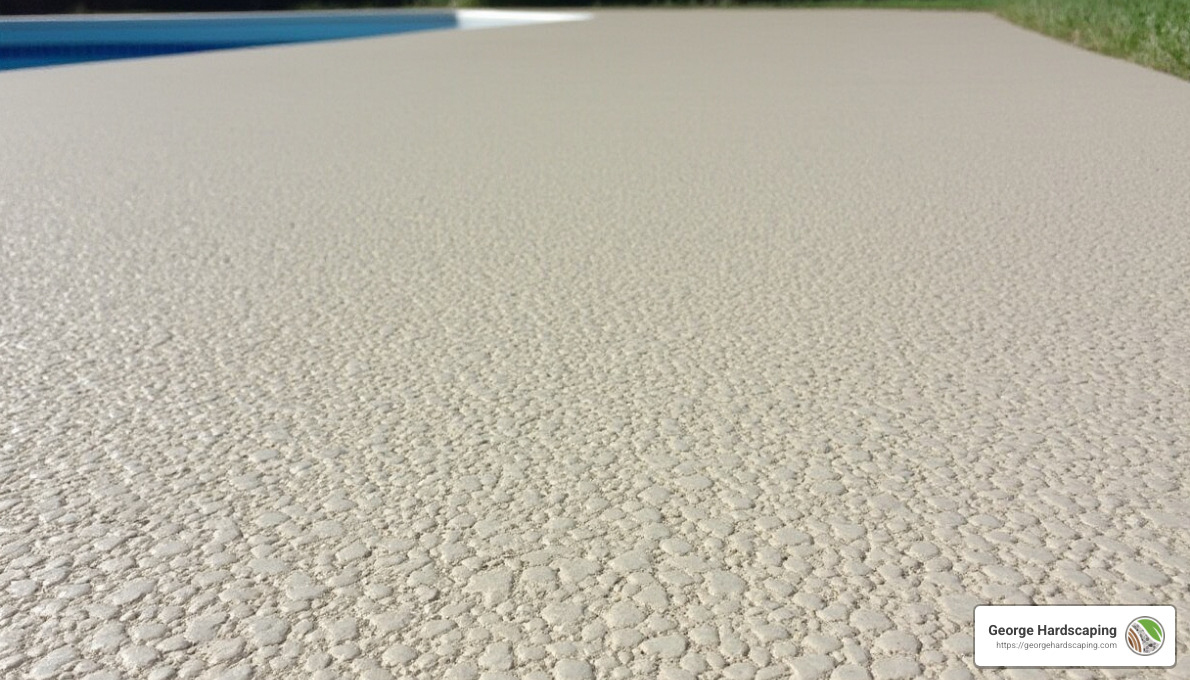
Poured concrete is a popular choice for pool decks because it’s simple and affordable. You can mold it into various shapes and add textures for a slip-resistant surface. However, it may not offer much in terms of design creativity. Once you’ve seen one poured concrete deck, you’ve pretty much seen them all.
Wooden Decks
Wooden decks provide a warm, natural look and feel great underfoot. But they require regular maintenance to prevent damage from weather and insects. Over time, the cost of upkeep can add up, making wood less cost-effective than other materials.
Brick Pavers
Brick pavers offer a rustic and timeless appeal, especially for historic homes. They are durable and can be laid in various patterns for a unique design. However, bricks can get hot in direct sunlight and can be pricey due to the cost of materials and labor.
Natural Stone
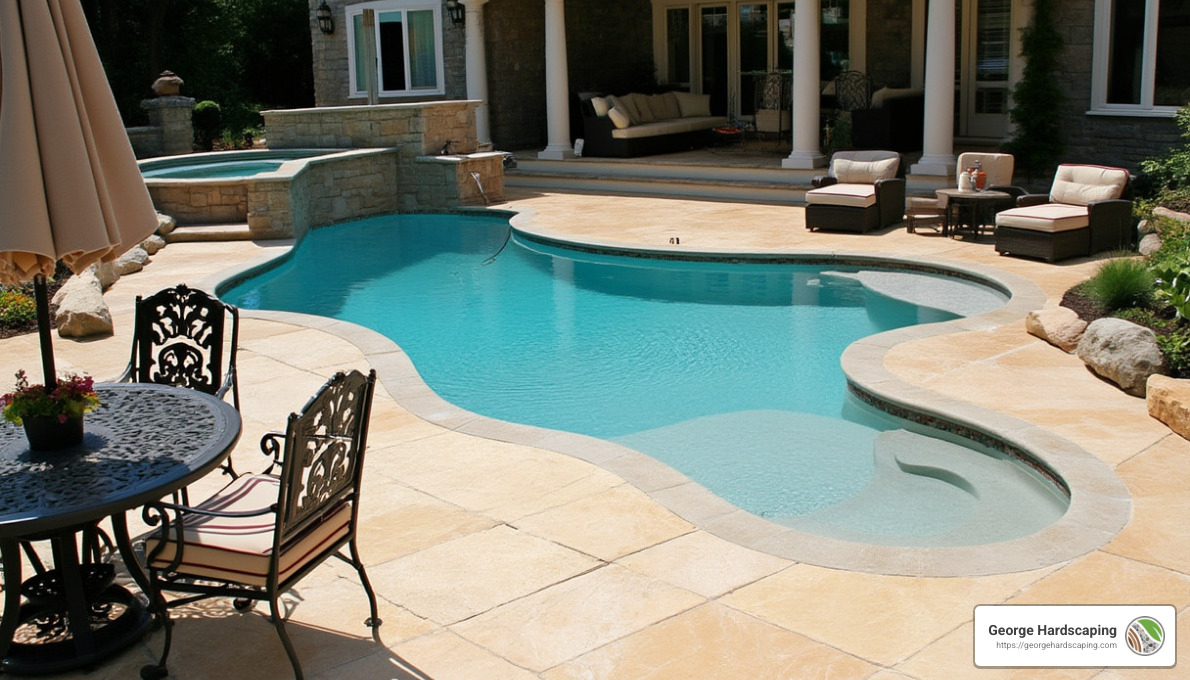
Natural stone, like travertine or bluestone, adds a luxurious feel to any pool area. It’s visually stunning and offers a wide range of colors and textures. Yet, the cost can be high due to quarrying and installation expenses. Despite this, many choose natural stone for its beauty and durability.
Choosing the right material for your pool deck is about balancing style, durability, and budget. Each option offers something unique, so consider what fits best with your vision and practical needs.
Best Pavers for Pool Area
When it comes to selecting the best pavers for pool area, there are several standout options to consider. Each material brings its own set of benefits, making your pool deck not only functional but also beautiful.
Concrete Pavers
Concrete pavers are a top choice for many pool decks. They combine affordability with versatility. You can find them in various colors, shapes, and sizes, allowing for endless design possibilities. Concrete pavers are also slip-resistant and stay cooler underfoot compared to other materials, making them safe and comfortable for barefoot walking.
Travertine
Travertine is a natural stone known for its classic beauty and durability. It is slip-resistant and stays cool, even in direct sunlight, which is perfect for poolside areas. However, travertine can be more expensive than concrete pavers, and it requires sealing to maintain its appearance over time.
Granite
Granite is another excellent choice for pool decks. It is incredibly hard and durable, making it resistant to wear and tear. Granite’s natural beauty and range of colors can improve any pool area. It also provides a non-slip surface, which is ideal for safety. However, granite can be on the pricier side, both in terms of material and installation costs.
Limestone
Limestone offers a wide spectrum of colors, from cool greys to warm beiges, adding a touch of sophistication to your pool area. It is a durable option that can withstand weather changes. Limestone is also slip-resistant, but like travertine, it may require sealing to protect its surface and maintain its look.
Choosing the right paver for your pool area depends on your personal style, budget, and the specific needs of your outdoor space. Whether you prefer the affordability and design flexibility of concrete pavers or the timeless elegance of natural stone like travertine or granite, there is a perfect option for every poolside paradise.
Concrete Pavers: The Ideal Choice
Concrete pavers are often hailed as the ideal choice for pool decks, and for good reason. They offer a unique combination of affordability, durability, and design flexibility that few other materials can match.
Affordability
Concrete pavers are a budget-friendly option, making them accessible for many homeowners. They provide a high-end look at a fraction of the cost of natural stone. This affordability doesn’t compromise on quality, as these pavers are designed to withstand the elements and high foot traffic typical of pool areas.
Durability
When it comes to durability, concrete pavers shine. They are built to last and can handle the wear and tear of a busy poolside environment. Unlike poured concrete, which can crack over time, pavers are individual units that can move slightly with the ground, reducing the risk of cracking. This makes them an excellent long-term investment for any pool area.
Design Options
The design options with concrete pavers are nearly limitless. Available in a wide array of colors, shapes, and sizes, they allow for creative and personalized designs. Whether you prefer a sleek, modern look or a more rustic, natural appearance, concrete pavers can be arranged to suit your style. Their versatility extends to patterns as well, enabling intricate layouts that add visual interest to your pool deck.
In summary, concrete pavers offer a practical and stylish solution for pool decking. They combine cost-effectiveness with a robust structure and versatile design possibilities, making them a top choice for homeowners looking to improve their outdoor spaces.
Travertine vs. Pavers: A Comparative Analysis
When choosing the best material for your pool area, travertine and pavers both have their merits. Here’s a closer look at how they stack up in terms of durability, aesthetics, maintenance, and cost.
Durability
Travertine is known for its natural beauty and can last for decades if properly maintained. However, it is porous, which means it requires regular sealing to prevent damage from water and weather. This makes it somewhat less durable than pavers, especially in harsh climates.
Pavers, on the other hand, are built tough. They resist scratches, chips, and the effects of weather. Their ability to move slightly with the ground helps prevent cracking, making them a durable choice for pool areas that see a lot of activity.
Aesthetics
Travertine offers best natural beauty with its warm earthy tones and unique patterns. It can give your pool area a luxurious and timeless look. The stone comes in various colors and finishes, such as polished or tumbled, which complement both traditional and contemporary styles.
Pavers offer endless design possibilities. They can mimic the appearance of natural stone, classic brick, or sleek concrete. With a vast array of colors, patterns, and finishes, pavers allow you to create a pool deck that reflects your personal style.
Maintenance
Travertine requires regular cleaning and sealing to maintain its appearance and protect it from stains and weathering. It’s important to avoid acidic cleaners, which can damage the stone.
Pavers are low-maintenance. Occasional cleaning and resealing are usually sufficient to keep them looking their best. If a paver becomes damaged, it can be easily replaced without disturbing the surrounding area.
Cost
Travertine is generally more expensive than pavers, with installation costs ranging from $15-$30 per square foot. The natural stone’s beauty comes at a premium, and the cost can vary based on stone quality and project complexity.
Pavers are a more budget-friendly option, with installation costs typically between $10-$20 per square foot. This makes them an attractive choice for homeowners looking to achieve a stunning pool deck without breaking the bank.
In conclusion, both travertine and pavers have their advantages. The choice between them depends on your priorities—whether you value the natural elegance of travertine or the durability and versatility of pavers.
Frequently Asked Questions about Pool Pavers
What type of pavers are best around a pool?
Choosing the best pavers for pool area involves considering factors like safety, durability, and aesthetics. Concrete pavers and travertine are popular choices.
Concrete pavers are known for their slip-resistant surface, making them safe for wet areas. They are durable and come in various colors and patterns to suit any style.
Travertine, a type of natural stone, is praised for its cool-to-the-touch feel and neat appearance. Although it requires regular sealing, its beauty and slip resistance make it a favorite for luxurious pool areas.
Is it cheaper to put concrete or pavers around a pool?
When comparing costs, concrete pavers often emerge as the more economical choice. Installation costs for concrete pavers typically range from $10-$20 per square foot, while travertine can cost between $15-$30 per square foot.
Labor costs also play a role. Installing concrete pavers is generally less labor-intensive than laying natural stone like travertine, which can require more precise handling and sealing. This makes concrete pavers a budget-friendly option for those looking to improve their pool area without overspending.
What is the best stone to use around a pool?
When it comes to natural stone options, granite, limestone, and sandstone are excellent choices for pool decks.
Granite is incredibly durable and resistant to heat, making it ideal for sunny poolside settings. Its natural beauty and wide range of colors add a touch of elegance to any pool area.
Limestone offers a softer, more muted appearance. It’s slip-resistant and stays cool underfoot, providing comfort on hot days. However, like travertine, it requires sealing to prevent staining.
Sandstone is another great option, known for its earthy tones and natural texture. It blends seamlessly with outdoor environments, offering a rustic charm. Sandstone is durable but, like other natural stones, requires sealing to maintain its look.
Each of these stones offers unique benefits, so the best choice depends on your specific needs and aesthetic preferences.
Conclusion
At George Hardscaping, we pride ourselves on changing outdoor spaces into stunning retreats that blend beauty with functionality. Our commitment to quality craftsmanship ensures that every project we undertake not only improves the aesthetic appeal of your home but also adds lasting value.
Whether you’re dreaming of a serene poolside getaway or a vibrant space for entertaining, our expert team is here to bring your vision to life. We specialize in crafting pool decks with the finest materials, including concrete pavers and natural stones like travertine and granite, to create the perfect setting for your outdoor oasis.
Our focus is on delivering exceptional results that reflect your personal style while ensuring safety and durability. With our experience in the North Shore area, we understand the unique challenges and opportunities of outdoor design, allowing us to tailor solutions that meet your specific needs.
Ready to improve your outdoor space? Find how our pool deck installation services can transform your backyard into a place of relaxation and enjoyment. Contact us today to learn more about our offerings and to start planning your dream poolside paradise.
At George Hardscaping, we don’t just build decks; we create experiences that you and your family will cherish for years to come.
