
Backyard Stone Steps Ideas: 10 Inspiring Designs
Why Backyard Stone Steps Are a Game-Changer for Your Landscape
Backyard stone steps ideas are changing ordinary yards into extraordinary outdoor living spaces. If you’re looking for ways to steer a sloped yard, connect different levels, or simply add dramatic visual appeal, stone steps deliver on all fronts.
Quick Answer: Top Backyard Stone Steps Ideas
- Grand Entrance Steps – Wide stone slabs leading to a raised patio
- Rustic Garden Path – Meandering flagstone steps through landscaping
- Terraced Steps with Walls – Combined with retaining walls for steep slopes
- Modern Floating Steps – Minimalist slabs with grass or gravel gaps
- Dry-Stack Risers – Old-world charm with stacked stone construction
- Creek Crossing Steps – Decorative bridge over drainage features
- Poolside Transitions – Safe, non-slip steps for pool decks
- Illuminated Steps – Integrated lighting for safety and ambiance
- Fire Pit Approach – Steps leading to sunken seating areas
- Integrated Patio Steps – Seamless level changes within hardscaping
Stone steps aren’t just functional—they’re an investment in your property’s beauty and value. According to industry research, stone steps can significantly contribute to curb appeal and property value while offering excellent traction and stability. They’re renowned for their longevity and durability, able to withstand harsh New England weather conditions without the rot, decay, and pest problems that plague wooden alternatives.
The beauty of stone is its versatility. Whether your North Shore home features traditional colonial architecture or modern contemporary design, there’s a stone step style that fits perfectly. Natural materials like flagstone create an organic, rustic feel that blends seamlessly with garden landscapes. Cut granite or bluestone delivers clean, formal lines ideal for structured outdoor rooms. The naturally rough surface of stone provides superior grip even in wet conditions—a crucial safety feature for Massachusetts homeowners dealing with rain, snow, and ice.
Perhaps most importantly, stone steps require minimal maintenance. Unlike wood that needs annual staining or composite materials that fade, stone steps need only occasional sweeping and cleaning. They’re resistant to the freeze-thaw cycles that destroy other materials, making them ideal for our Essex County climate. When properly installed on a solid foundation, stone steps can last for generations, making them one of the most cost-effective landscaping investments you can make.
Explore more about backyard stone steps ideas:
Why Choose Stone? The Best Benefits for Your Backyard
When we discuss backyard stone steps ideas, we’re not just talking about a pathway; we’re talking about a significant improvement to your outdoor living experience. Stone steps offer a compelling array of benefits that make them a superior choice for any landscape design, especially here in the often-challenging climate of Essex County, MA.
Durability and Longevity
One of the foremost advantages of stone steps is their incredible durability and longevity. Unlike wood, which is susceptible to rot, decay, and insect infestations, natural stone is virtually impervious to these issues. It stands up remarkably well to the harsh New England winters, resisting the freeze-thaw cycles that can crack and crumble less resilient materials like poured concrete. We’ve seen countless stone steps in our region that have stood the test of time, looking as stately and functional decades later as they did on the day they were installed. This makes stone steps a truly long-term investment that minimizes the need for frequent repairs or replacements.
Safety and Stability
Safety is paramount in any outdoor space, and stone steps excel in providing a secure footing. Their naturally rough and textured surfaces offer excellent traction, ensuring stability for you and your guests, even when wet from rain, dew, or melting snow. This inherent slip resistance is a critical advantage over smoother materials, significantly reducing the risk of falls. Properly installed stone steps, anchored on a solid foundation, also provide best stability, preventing wobbling or shifting that can occur with less robust construction.
Low Maintenance
Who wants to spend their precious weekends on step maintenance? Not us! Stone steps are renowned for their low maintenance requirements. They are resistant to rot, decay, and pests, meaning no painting, staining, or sealing is typically required, unlike wood. A simple sweep to remove debris and an occasional rinse with a hose or pressure washer (on a low setting) is usually all that’s needed to keep them looking their best. This frees up your time to actually enjoy your beautiful backyard in Beverly, Danvers, or Newburyport.
Aesthetic Versatility
Stone steps are a canvas of natural beauty, offering an aesthetic versatility that can complement virtually any architectural style or garden theme. From the rugged charm of natural fieldstone to the neat precision of cut granite, there’s a stone to match your vision. The unique patterns, colors, and textures inherent in natural stone add depth and character to your outdoor space, changing an ordinary landscape into a stunning and practical haven. They introduce a timeless look that makes them perfect for homes of any architecture, from historic Marblehead estates to modern Boxford residences.
Increased Property Value
Integrating stone steps into your landscape design can significantly improve the value of your property. The aesthetic appeal, functionality, and long-lasting durability of stone steps make them an attractive feature for potential buyers. They lift the overall curb appeal, conveying a sense of quality and permanence that adds tangible value to your home. This makes them not just a functional improvement but a smart financial decision.
Stone steps are a long-term investment that pays dividends in both beauty and home value, outlasting materials like wood which are prone to rot and decay. Natural stone offers excellent traction, making it a safer choice for navigating slopes, especially in wet or icy conditions. Unlike poured concrete that can crack, well-installed stone steps can last for generations with minimal upkeep. Explore our hardscaping and masonry services to see how quality craftsmanship makes a difference.
A Foundation of Style: Popular Stone Materials for Steps
Choosing the right stone material is crucial for achieving the desired look, feel, and performance for your backyard steps. This section details the most common materials, helping you choose the perfect stone to match your home’s architecture and your backyard’s aesthetic. We’ll cover the unique characteristics of natural stone versus the consistency of manufactured options, keeping in mind the specific demands of our climate in places like Gloucester, Ipswich, and Rockport.
| Material | Cost (Average Internet Data) | Durability | Maintenance | Best Use |
|---|---|---|---|---|
| Flagstone | $15-$30 per square foot (material only); installed $20-$40 per sq ft | Good | Low | Rustic paths, informal gardens, naturalistic settings |
| Granite | $30-$60 per square foot (material only); installed $40-$80 per sq ft | Excellent | Very Low | Formal entrances, modern designs, high-traffic areas, extreme durability |
| Bluestone | $20-$40 per square foot (material only); installed $30-$60 per sq ft | Very Good | Low | Classic patios, pool decks, formal or semi-formal landscapes |
Note: These are average costs based on internet data and not actual costs for George Hardscaping. Installed costs can vary significantly based on project complexity, site conditions, and labor rates, with high-end projects potentially exceeding $100 per square foot.
Natural Stone: Timeless and Unique
Natural stone materials bring an unparalleled authenticity and character to your landscape. Each piece is unique, reflecting millions of years of geological history, which adds a depth and richness that manufactured materials simply can’t replicate.
- Flagstone: Flagstone offers a rustic, irregular look perfect for naturalistic gardens and winding paths. Its varied shapes and sizes, along with its often earthy tones, blend seamlessly into organic landscapes. It’s a popular choice for garden steps that feel like they’ve always been there.
- Granite: For those seeking ultimate durability and a more formal, consistent appearance, granite is an excellent choice. This igneous rock is incredibly hard and dense, making it highly resistant to wear, weathering, and staining. Formed from the slow crystallization of magma, granite is composed of hard minerals like quartz and feldspar, giving it its signature durability and resistance to acid rain. This geological resilience means it won’t etch or degrade. Cut granite steps offer clean lines and a sophisticated aesthetic, ideal for grand entrances or contemporary designs. Vermont Woodbury Grey Granite, for example, is locally quarried and suits both traditional and contemporary designs, while Caledonia Granite features a wide array of colors including blues, grays, charcoal, black, pink, tans, and browns. It is the ultimate ‘set it and forget it’ material for high-traffic areas.
- Bluestone: A classic choice, bluestone is renowned for its beautiful blue-gray hue and options for either a smooth (thermal) or textured (natural cleft) finish. The distinction is important: a natural cleft finish comes from splitting the stone along its natural layers, creating an organic, uneven surface. A thermal (or flamed) finish is created by applying intense heat, which pops the surface crystals for a uniform, textured, non-slip grip. Thermal bluestone is often cut into precise shapes for a formal look, while natural cleft bluestone lends itself to more irregular patterns. It’s a versatile stone that works wonderfully for both neat patios and charming garden paths, and its excellent non-slip qualities make it a top choice for pool surrounds.
- Fieldstone: Often collected directly from fields, fieldstone embodies a rugged, natural beauty. Its irregular shapes and earthy tones make it perfect for creating steps that look like they emerged organically from the landscape. It’s particularly effective for rustic garden paths or integrating with existing stone walls.
- Boulders: For dramatic and robust steps, especially on steep hillsides, large, flat-topped boulders can be strategically placed. These create a powerful, naturalistic statement and are incredibly durable, providing a sense of permanence and grandeur.
- Limestone: While less common for steps in our New England climate due to its porosity, limestone offers a softer, more uniform look and is often seen in historical settings. If considering limestone, proper sealing and drainage are crucial for its longevity in our region.
- Quartzite: South Bay Quartzite, for instance, is a visually smooth yet heavily textured sandstone. It provides a unique aesthetic with excellent durability, offering a distinct look that can range from earthy to subtly shimmering, depending on the specific type.
- Travertine: Often associated with Mediterranean villas, travertine is a form of limestone known for its fibrous appearance and earthy tones. Its naturally pitted surface offers good slip resistance and stays cool underfoot, making it popular for pool decks in warmer climates. However, for our New England climate, travertine must be chosen with care. It is more porous than granite, making it susceptible to damage from freeze-thaw cycles if water penetrates and freezes. If you love the look of travertine, it is critical to select a high-density grade and ensure it is properly sealed and installed with excellent drainage to ensure its longevity in Essex County.
Manufactured Stone & Pavers: Consistency and Versatility
Manufactured stone and concrete pavers offer a different set of advantages, particularly consistency, cost-effectiveness, and a wide range of styles.
- Concrete Pavers: Modern concrete pavers are engineered to be durable, slip-resistant, and available in an astonishing array of colors, textures, and shapes. They can mimic the look of natural stone, brick, or even wood, providing immense design flexibility. Manufactured products offer predictable sizing and color, which can simplify installation and create a more uniform look. They are an excellent choice for integrating steps with a matching paver patio design, ensuring a cohesive aesthetic across your hardscaped areas. They are often more cost-effective than natural stone, making them a great option for larger projects or budget-conscious homeowners in places like Topsfield or Wenham.
10 Inspiring Backyard Stone Steps Ideas to Lift Your Landscape
Now that we’ve explored the benefits and materials, let’s dive into some truly inspiring backyard stone steps ideas that can transform your outdoor space. From grand entrances to subtle garden transitions, these concepts will help you envision the perfect steps for your home.
1. The Grand Entrance: Wide Steps to a Patio
Imagine stepping out your back door onto a majestic, wide set of stone steps that gracefully descends to your patio. This design creates a welcoming, expansive transition from lawn to living space, making your patio feel like an extension of your home. It’s ideal for connecting the back door of a home to a raised patio, providing both elegance and ease of access. We often use large, uniform slabs of cut stone like granite or bluestone for a formal, impressive look in areas like Swampscott or Peabody. This design improves the feeling of an outdoor room, perfect for a custom patio installation.
2. The Rustic Path: Meandering Garden Steps
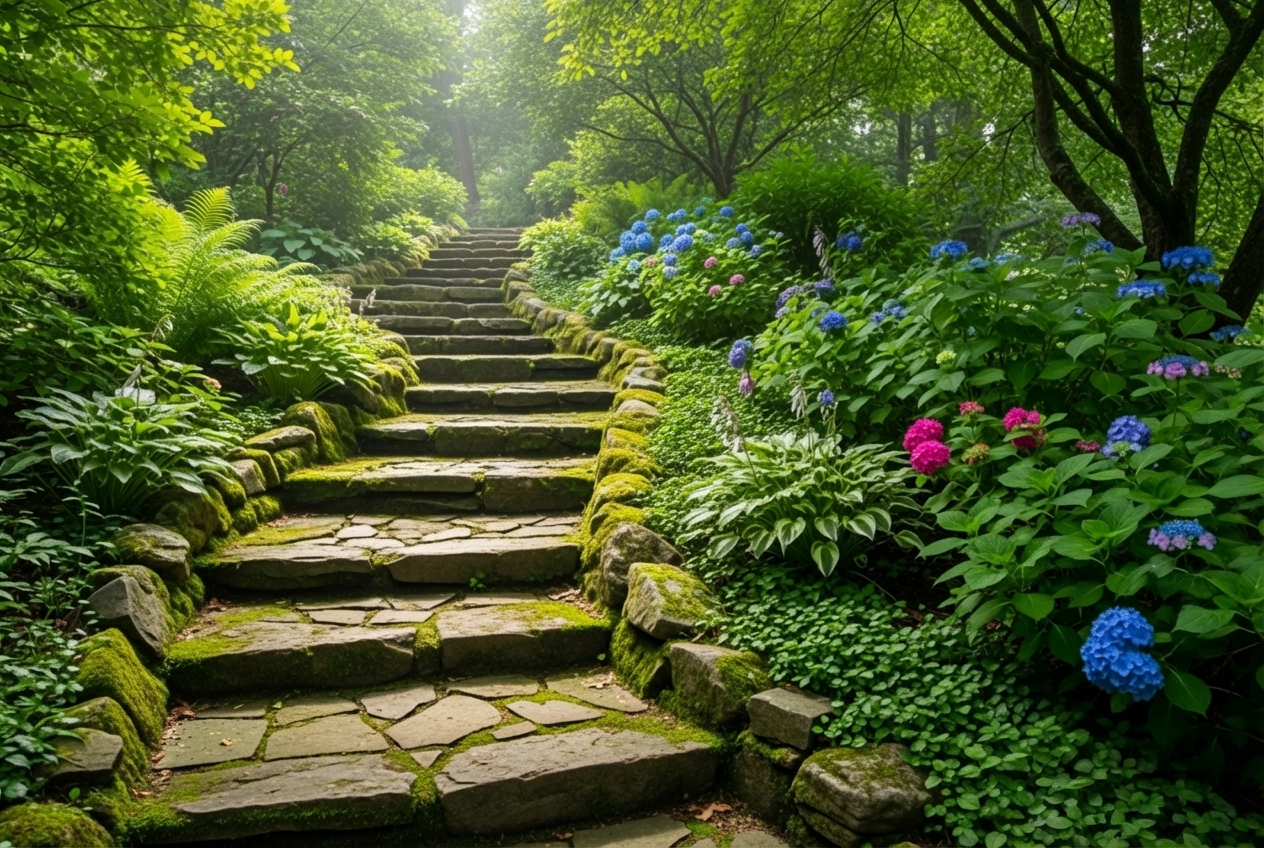
For a more natural and organic feel, consider rustic, meandering garden steps. These steps follow the natural contours of your landscape, seemingly blending into the environment. They are perfect for informal gardens, wooded areas, or sloped pathways that wind through your property. We love using irregular flagstone, fieldstone, or even large, flat-topped boulders as treads for this style. To soften the look and integrate them further into the garden, we often suggest planting ground cover between the stones.
3. Taming the Slope: Terraced Steps with Retaining Walls
Sloped yards can be a challenge, but they also present a fantastic opportunity for creative design. Terraced steps with integrated retaining walls are an effective solution for managing steep or challenging grades in a yard. This combination not only provides safe and accessible pathways but also creates usable, level planting pockets for beautiful terraced gardens. Dry-stack stone walls offer a classic, textured look that pairs beautifully with stone slab treads, creating a stunning and functional landscape feature. Learn more about integrating steps with landscape retaining walls.
4. The Floating Illusion: Modern Slab Steps
For homeowners in Georgetown or Danvers who prefer a contemporary aesthetic, modern floating slab steps offer a minimalist and sleek design. This style achieves a sense of lightness with large, rectangular slabs of stone set individually, with deliberate gaps in between. These gaps are typically filled with grass, gravel, or low-growing ground cover, enhancing the “floating” effect. This clean, architectural look works best with precisely cut granite or high-quality concrete slabs, creating a striking visual statement.
5. The Old-World Charm: Dry-Stack Stone Risers
Accept the timeless beauty of traditional masonry with dry-stack stone risers. This technique, where the vertical parts of the steps are built from carefully fitted smaller stones without visible mortar, adds incredible texture and craftsmanship to your steps. The treads (horizontal part) are typically large, single slabs that cap the dry-stacked risers. This style provides a sturdy, substantial feel that complements traditional or cottage-style homes, evoking an old-world charm that’s perfect for our historic towns in Massachusetts.
6. Bridging the Gap: Steps Over a Dry Creek Bed
Turn a functional drainage solution into a captivating landscape feature with steps over a dry creek bed. This idea is both practical and highly decorative. A few large, thick stone slabs can create a simple bridge-like crossing over a swale or dry creek bed in your garden. It adds an element of findy and improves the naturalistic design of your garden, making the journey across a normally overlooked feature an enjoyable experience.
7. The Poolside Transition: Safe & Stylish Pool Deck Steps
For homes with raised pool decks, safe and stylish pool deck steps are essential. These steps provide an attractive transition from your pool area to the lawn or a lower patio. Safety is paramount here, so we always recommend choosing a non-slip surface like thermal-finished bluestone, which offers excellent grip even when wet. Wide, comfortable steps can also double as extra seating, perfect for lounging by the pool. See how steps can be integrated into a custom pool deck installation that prioritizes both aesthetics and safety.
8. The Illuminated Pathway: Steps with Integrated Lighting
Extend the usability and beauty of your backyard into the evening with steps featuring integrated lighting. This is one of the most impactful backyard stone steps ideas for improving both function and atmosphere. Low-voltage LED lights can be discreetly installed under the lip of the treads or built directly into the risers. This not only improves safety for nighttime navigation, preventing trips and falls, but also adds a dramatic, ambient glow to your landscape, highlighting the texture and beauty of the stone.
9. The Fire Pit Approach: Steps to a Sunken Seating Area
Create a distinct, cozy destination within your backyard by designing steps that lead down into a sunken fire pit area. This arrangement improves the sense of enclosure and intimacy, making the fire pit a true focal point for gathering and relaxation. This design works well with both rustic, circular fire pits and modern, linear designs, offering a welcoming descent into your outdoor haven. Complete the look with a custom outdoor firepit that becomes the heart of your evening entertainment.
10. The Subtle Rise: Integrated Patio Steps
Not every elevation change requires a grand staircase. For subtle shifts in terrain, integrated patio steps are the perfect solution. A single, wide step can be built along the entire edge of a patio, using the same or a contrasting material to the patio itself. This creates a seamless, built-in look that neatly defines the patio edge and handles slight elevation changes without breaking the visual flow. It’s a sophisticated way to add dimension and functionality to your outdoor living space.
From Concept to Creation: Key Installation & Design Considerations
Bringing your backyard stone steps ideas to life requires more than just picking a pretty stone. Proper installation is the key to ensuring your stone steps are safe, durable, and beautiful for decades to come, especially given the variable climate of Massachusetts. This section covers the essential technical aspects from foundation to finishing touches.
Safety First: The Rules of Rise and Run
When designing and installing steps, safety should always be our top priority. The “rise” refers to the vertical height of each step, and the “run” refers to the horizontal depth of the tread. Consistent step height (rise) and depth (run) are crucial for preventing trips and falls. Our bodies naturally adjust to a rhythm when climbing or descending stairs, and any inconsistency can be a hazard. We ensure all treads are perfectly level from side to side to ensure stability and comfortable footing. It’s important to follow best practices for safe and comfortable stairs, as detailed in guides like this one on how to build a stone path and steps. We also generally recommend against single steps, as they can be tripping hazards; ideally, a flight of steps should have at least two rises.
Building to Last: The Critical Role of the Foundation
The longevity and stability of your stone steps hinge entirely on the quality of their foundation. A solid, compacted gravel base is the most important factor for long-term stability. This base must be deep enough to extend below the frost line in our region to prevent heaving and shifting during freeze-thaw cycles. Without an adequate, well-compacted base, steps can become wobbly, sink, or tilt within a season or two. Proper site excavation and meticulous drainage planning are also essential to divert water away from the base of the steps, preventing erosion and water damage. In Essex County, where we experience significant temperature fluctuations and precipitation, a robust foundation is non-negotiable.
Mastering Drainage and Water Management
Uncontrolled water can erode the base, compromise the foundation, and cause devastating damage through freeze-thaw cycles. Effective water management is a core component of a lasting installation. This involves:
- Proper Grading: The surrounding landscape must be graded to slope away from the steps, preventing water from pooling.
- Permeable Foundation: The compacted gravel base doubles as a drainage channel, allowing water to filter through and away from the structure.
- Integrated Drainage Systems: For steps built into a hillside or with a landscape retaining wall, a more robust system is often needed. This can include a perforated drain pipe (French drain) behind the structure to collect and channel water away, relieving pressure and preventing failure.
Common Problems and Solutions for your backyard stone steps ideas
Even with the most durable materials, issues can arise if not properly addressed during installation or maintenance.
- Wobbly Stones: If individual stones in your steps feel loose or wobble when stepped on, it’s almost always an indication of an inadequate or shifting foundation. This requires professional attention to reset the stones on a properly compacted base.
- Crumbling Mortar: Over time, mortar joints between stones can crack, erode, or crumble due to weathering, freeze-thaw cycles, or improper mixing. This not only looks unsightly but can also compromise the structural integrity of the steps. The solution is often repointing, a process where the old, deteriorated mortar is carefully removed and replaced with fresh, durable mortar. This can revitalize older flagstone steps, as shown in this helpful DIY flagstone step repair guide.
- Efflorescence and Staining: This chalky, white powder is called efflorescence. It occurs when water moving through the masonry dissolves natural salts and deposits them on the surface as it evaporates. While unsightly, it is typically a cosmetic issue. The first step is to address the source of excess moisture. For removal, you can often scrub it off with a stiff brush and water. For stubborn cases, specific masonry cleaners are available. You can learn more about this common issue by understanding and treating efflorescence from the Masonry Institute.
Frequently Asked Questions about Backyard Stone Steps
We often get questions about backyard stone steps ideas from homeowners in our service areas like Manchester-by-the-Sea, Rowley, and Salem. Here are some of the most common inquiries we address:
How much do backyard stone steps cost?
The cost of backyard stone steps can vary widely based on several factors: the chosen material, the complexity of the design, site accessibility, and current labor rates. Natural stone like granite, with its superior durability and aesthetic, is typically more expensive than manufactured concrete pavers.
Based on average internet data, a simple run of flagstone steps might cost anywhere from $20 to $40 per square foot installed, while granite or bluestone steps could range from $30 to $80 per square foot installed. For highly customized designs, difficult terrain, or premium materials, costs can easily exceed $100 per square foot. These are average costs based on internet data and not actual costs for George Hardscaping. We always provide a detailed estimate custom to your specific project needs and preferences.
Can I build stone steps myself?
For homeowners with a strong DIY spirit, basic stone step projects on a gentle slope can be tackled, especially if using modular concrete blocks or simple flagstone slabs. However, the work is physically demanding and requires precision in excavation, leveling, and material handling. You’ll need specific tools, including levels, tampers, and potentially a cut-off saw for precise cuts.
For steep slopes, projects involving integrated retaining walls, or for a guaranteed professional result that meets safety codes and withstands our New England climate, hiring an experienced mason is the safest and most reliable option. We’ve seen many DIY attempts that end up costing more in repairs than professional installation would have initially. Our team at George Hardscaping specializes in these complex installations, ensuring structural integrity and beautiful aesthetics.
How do I maintain my stone steps?
One of the great joys of stone steps is their minimal maintenance! For most natural and manufactured stone steps, regular sweeping to remove leaves, dirt, and other debris is all that’s usually needed. For deeper cleaning, especially after pollen season or a muddy spell, you can use a garden hose with a spray nozzle or a pressure washer on a low setting. Avoid harsh chemicals that could stain or damage the stone or surrounding plants.
Annually, we recommend inspecting your stone steps for any signs of shifting, wobbling, or cracked mortar joints. Addressing these small issues promptly, such as repointing mortar, can prevent bigger problems down the line. If you notice any significant structural concerns, it’s always best to consult with a hardscaping professional.
Ready to Transform Your Backyard?
Stone steps are more than just a way to get from one level to another; they are a defining feature that adds character, value, and timeless beauty to your landscape. From rustic fieldstone to sleek granite, the right design can unify your entire outdoor space. They provide essential functionality on sloped terrains, improve safety with their natural traction, and require minimal maintenance, making them an ideal choice for homeowners across Essex County, MA.
At George Hardscaping, we specialize in bringing these backyard stone steps ideas to life with expert craftsmanship and an eye for detail. Whether you envision a grand entrance to your patio in Newburyport, a meandering path through your garden in Topsfield, or a safe and stylish transition to your pool deck in Manchester-by-the-Sea, our team is equipped to design and build stunning, durable stone steps. We pride ourselves on creating expertly designed walkways and stairs that are both beautiful and built to last, enhancing your property’s value and your enjoyment for years to come.
Ready to take the next step and lift your outdoor living experience? Contact us today for a free estimate and let’s start building the backyard of your dreams.
