
Why a Custom Propane Fire Pit is the Ultimate Outdoor Upgrade

A custom propane fire pit transforms your outdoor space into a year-round gathering place. Whether you’re looking to add warmth to cool New England evenings or create a stunning focal point for your patio, a propane fire pit offers the perfect blend of convenience, safety, and design flexibility.
Quick Answer: What to Know When Shopping for a Custom Propane Fire Pit
- Fuel Type: Propane provides instant ignition, clean burning, and no smoke or ash cleanup.
- Design Options: Choose from various burner shapes and materials like stone, concrete, or steel.
- Key Components: A professional installation includes a burner, ignition system, air mixer, proper gas lines, and ventilation.
- Average Cost: Internet data suggests a range of $1,500-$8,000+, depending on size and materials (not George Hardscaping pricing).
- Professional Installation: Essential for safety, code compliance, and optimal performance.
The demand for high-quality outdoor living spaces has surged, with fire pits becoming a must-have feature. Propane models dominate the market, as homeowners value their ease of use and low maintenance. Unlike wood-burning pits that require constant tending and messy cleanup, a propane fire pit lights with the push of a button. There’s no smoke to bother guests, no sparks to cause worry, and no ashes to scoop up the next day.
A well-designed fire feature can also be a smart investment, potentially increasing your property value by creating an attractive, functional outdoor living area that appeals to future buyers. It becomes the centerpiece of your backyard, drawing people together and extending your home’s usable space into the cooler months.
George Hardscaping specializes in creating custom outdoor fire pit solutions that integrate seamlessly with your landscape. Our team handles everything from design to professional installation, ensuring your fire pit is both beautiful and safe. The beauty of a custom propane fire pit lies in the endless design possibilities, allowing you to match your home’s style and coordinate with existing patio design services.
This guide covers the key components, design options, and safety considerations to help you understand what goes into creating the perfect outdoor fire feature.
Custom propane fire pit helpful reading:
Why Choose Propane for Your Custom Fire Pit?
When planning a fire feature for your outdoor space in Essex County, MA, the choice of fuel is a critical decision. While wood offers rustic charm and natural gas provides piped-in convenience, propane stands out as a superior option for many homeowners, particularly for custom installations.
Advantages of Propane as a Fuel Source
Propane fire pits offer a host of benefits that make them incredibly popular. They provide instant gratification; with a simple push of a button or turn of a key, you have a beautiful fire without the effort of building one from scratch. This convenience is a primary reason gas options are a top choice for consumers.
Furthermore, propane is a clean-burning fuel. It produces significantly fewer emissions than wood, which is better for air quality and won’t bother neighbors in residential communities like Beverly or Lynnfield with smoke. The U.S. Environmental Protection Agency (EPA) notes propane’s efficiency and lower environmental impact as key advantages.
Propane vs. Wood-Burning Fire Pits
The choice between propane and wood often comes down to lifestyle and maintenance. Propane typically wins for these reasons:
- No Smoke, No Sparks: You can sit anywhere you like without dodging smoke, and there’s no risk of stray embers damaging patio furniture or creating a fire hazard.
- Instant On/Off: Enjoy a fire for any length of time, whether it’s for a quick 20-minute warm-up or an entire evening, without the commitment of a full wood fire.
- Clean Burning & No Ash: Propane leaves no messy ash or soot, which means cleanup is virtually non-existent. You spend more time enjoying your fire pit and less time maintaining it.
- Improved Safety: The absence of flying embers significantly reduces the risk of accidental fires, offering greater peace of mind.
Propane vs. Natural Gas: Portability and Flexibility
While natural gas is also a convenient option, propane offers distinct advantages, especially for properties where a natural gas line isn’t easily accessible.
- Installation Flexibility: Running a dedicated propane line from a tank can be simpler and less invasive than extending a natural gas line from your home’s main supply. This is ideal for new patio additions or placing a fire pit further away from the house.
- Location Versatility: Propane allows for fire pit installation in more remote areas of your property, such as poolside or in a secluded garden corner, far from a home’s gas meter. This makes it perfect for expansive backyards in towns like Ipswich or Boxford.
At George Hardscaping, we guide you in choosing the best fuel type for your specific property and vision. Learn more about our custom outdoor fire pit solutions designed for Essex County homeowners.
The Anatomy of a Custom Propane Fire Pit: Understanding the Core Components
A custom propane fire pit is a sophisticated system of components engineered for safety, performance, and beauty. Understanding these parts is key, whether you’re planning a project or hiring a professional.
Fire Pit Burner: The Heart of the Flame
The burner is where propane and air mix to create the flame. For longevity in New England weather, high-quality burners are made from 304-grade or marine-grade stainless steel to resist corrosion and heat. Customization shines here, with burners available in various shapes like round, linear, H-shaped, or star configurations to fit any design. The burner sits inside a burner pan, which holds the fire media (like glass or lava rock) and provides a stable base within the fire pit’s main structure.
Ignition Systems: Bringing the Fire to Life
How you start your fire impacts both convenience and safety. There are three primary types:
- Match-Lit Ignition: The simplest and most cost-effective system. You manually turn a key valve to release gas and use a long lighter to ignite it. It’s highly reliable with few moving parts.
- Push-Button Spark Ignition: A step up in convenience, this system uses a battery-powered igniter to create a spark at the push of a button, eliminating the need for a lighter. You still control the gas flow with a manual valve.
- Electronic Ignition Systems (AWEIS): The premium choice for luxury and safety. These All-Weather Electronic Ignition Systems offer remote control operation (via wall switch, remote, or app) and are designed to work in wind and rain. A key safety feature is the auto-shutoff function, which cuts the gas supply if the flame is extinguished, preventing dangerous gas buildup. This makes them ideal for any high-end residential or commercial setting.
Propane Air Mixer: The Key to a Clean Flame
Propane is heavier than air and requires pre-mixing with oxygen to burn cleanly. A propane air mixer is a critical component that draws in ambient air and blends it with the propane before it reaches the burner. This process is essential for achieving a full, vibrant, orange flame while preventing the soot and weak output that would occur without it. This component is unique to propane setups and is non-negotiable for proper performance.
Proper Ventilation for Safety
Ventilation is an absolute must for any gas fire pit, especially one using propane. Because propane is heavier than air, any potential leak could cause gas to pool inside the fire pit enclosure. Proper ventilation, typically consisting of vents at the base of the structure, allows this heavier gas to escape, preventing a dangerous accumulation. It also ensures the burner gets enough oxygen for efficient combustion.
Gas Delivery: Lines, Fittings, and Valves
The system connecting your propane source to the burner includes several key parts. Stainless steel flex lines carry the gas, while specialized fittings ensure secure, leak-proof connections. A key valve, usually located on the fire pit’s exterior, provides a manual shut-off point to control the gas flow. Given the specific pressure requirements and components for propane, professional installation is essential to ensure all parts are correctly sized, installed, and tested for safety and performance. For more on the technical aspects, you can review a guide on fire pit components from Celestial Fire Glass.
Designing Your Perfect Custom Propane Fire Pit
Designing your custom propane fire pit is the most exciting part of the process, where your vision for a unique outdoor feature comes to life.

‘Customized’ vs. Truly ‘Custom’
It’s helpful to know the difference between a “customized” and a truly “custom” project. A customized fire pit often uses high-quality, pre-existing components (burners, pans, kits) that are integrated into a unique structure, like a stone veneer surround. This is an economical approach with faster timelines. A truly custom project involves fabricating unique components, such as a specially shaped burner or a cast concrete top, to create a one-of-a-kind masterpiece. At George Hardscaping, we excel at both, guiding you to the best solution for your vision and budget.
Our Collaborative Design Process
We begin with a collaborative design process to understand your style, functional needs, and overall goals for your outdoor space. We consider your home’s architecture and existing landscape to ensure the fire pit integrates seamlessly. A professionally designed fire feature is a valuable investment, enhancing your lifestyle and potentially increasing your property value. Our hardscaping and masonry services ensure a harmonious integration with your entire outdoor oasis.
Step 1: Choosing Your Fire Pit’s Structure and Finish
The exterior of your fire pit defines its aesthetic. We can match it to your home or create a stunning focal point.
- Material Options:
- Poured Concrete: Offers a sleek, modern look with immense design flexibility.
- Stone or Brick Veneer: Creates a traditional or rustic feel, perfect for matching existing masonry from our walkways and stairs projects.
- Corten Steel: Provides a durable, industrial-chic look with its distinctive rust-like patina.
- Powder-Coated Aluminum: A lightweight, corrosion-resistant option available in many colors.
- Finish Options: Finishes like stamped concrete, polished surfaces, or custom color matching add another layer of personalization. See examples in our project gallery.
Step 2: Selecting Fire Media
The media covering your burner affects both appearance and function.
- Fire Glass: Creates a modern, mesmerizing look with a dazzling array of colors. It reflects heat efficiently and is easy to clean.
- Lava Rock: Offers a natural, earthy appearance for rustic designs. Its porous nature helps distribute gas for a more organic flame.
- Ceramic Logs: Mimics the look of a real wood fire without the smoke or mess. They are durable and add visual depth.
Step 3: Essential Accessories and Add-Ons
Complete your fire pit experience with these practical accessories:
- Wind Guards: Tempered glass panels that protect the flame from wind, improving consistency and safety.
- Hard Covers: A custom-fitted metal or composite lid protects the burner from weather and debris. It can also convert your fire pit into a usable table.
- Remote Controls: For electronic ignition systems, remotes offer the ultimate convenience.
- Integrated Seating and Lighting: We can build custom stone benches or low walls to create a complete outdoor room. Subtle LED lighting can further improve the ambiance.
Installation Essentials: Gas Lines, Safety, and Professional Help
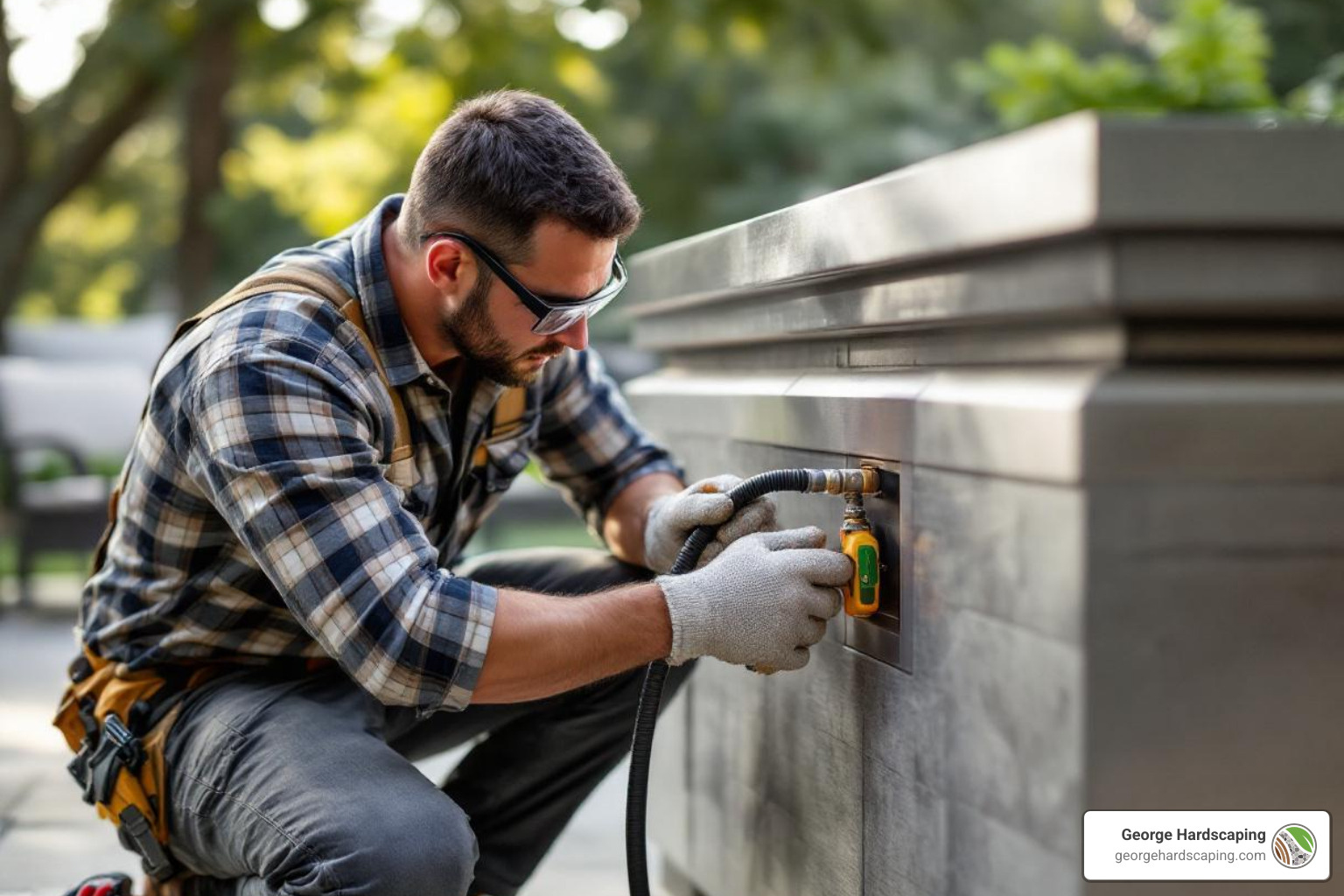
The performance and safety of your custom propane fire pit hinge on a professional installation, especially the gas line system. This is not a DIY job; it requires certified expertise to ensure everything is done correctly and to code in Massachusetts.
Why Professional Gas Line Installation is Critical
Installing a gas line for a fire pit is a complex task governed by strict safety codes. Professional installation is essential for several key reasons:
- Proper Gas Line Sizing: A gas line must be perfectly sized for the burner’s BTU rating and the distance from the propane source. An undersized line will result in a weak, disappointing flame. A professional calculates the required pipe diameter based on the burner’s fuel demand, the length of the gas line, and the number of bends, ensuring optimal pressure and volume for a robust flame.
- Code Compliance: Our licensed technicians are experts in the local building codes for towns across the North Shore, from Salem to Wenham. We ensure your installation is fully compliant, avoiding potential fines and safety hazards.
- Safety and Performance: Incorrect installation can lead to dangerous gas leaks. Professionals use the right tools and techniques to create leak-free connections, ensure proper ventilation, and test the entire system. This guarantees your fire pit operates safely and performs exactly as designed.
While some homeowners may be curious about the process, this overview of propane fire pit installation best practices underscores the complexity and reinforces the need to hire a qualified professional for all gas-related work.
Critical Safety Considerations for Your Custom Propane Fire Pit
Safety is our top priority. We adhere to strict protocols during every installation to protect your home and family.
- Proper Ventilation: The fire pit enclosure must have vents at the base (typically 18 sq. inches of cross-ventilation per 100,000 BTUs) to allow any leaked propane gas, which is heavier than air, to escape.
- Clearance from Combustibles: We ensure your fire pit is installed with safe clearance from combustible materials like decks, fences, and overhead structures, as specified by local fire codes.
- Adherence to Local Codes: We manage all necessary permits and ensure every aspect of the installation complies with regulations, including the National Fuel Gas Code (NFPA 54).
- Professional Leak Testing: After installation, a thorough leak test is performed on the entire gas system to confirm its integrity before the first use.
- User Safety: We educate homeowners on safe operating procedures, such as supervising children and pets, never leaving a fire unattended, and knowing how to use the emergency shut-off.
Frequently Asked Questions about Custom Propane Fire Pits
Investing in a custom propane fire pit is a big decision, and it’s natural to have questions. Here are answers to some of the most common inquiries we receive from homeowners on the North Shore.
How can a wood-burning fire pit be converted to use propane?
Converting an existing wood-burning pit to propane is a popular project for those seeking more convenience. The process involves several key steps, and professional installation is strongly recommended.
- Assess the Structure: The existing pit must be made of non-combustible materials (stone, brick, etc.) and be structurally sound.
- Add Ventilation: The enclosure must be modified to include proper ventilation at the base to prevent propane gas from accumulating.
- Install a Burner Kit: This includes running a gas line and installing a propane burner, pan, air mixer, and ignition system.
- Hire a Professional: Due to the complexities of gas connections and safety codes in Massachusetts, a certified professional should always handle the conversion.
How much heat does a propane fire pit produce?
The heat output of a propane fire pit is measured in BTUs (British Thermal Units). Typical residential fire pits range from 50,000 BTUs for smaller, ambient features to over 150,000 BTUs for large fire pits designed to provide significant warmth. The actual warmth you feel is influenced by:
- BTU Rating: Higher BTUs mean more potential heat.
- Flame Height: Taller, fuller flames radiate more heat.
- Wind Conditions: Wind can dissipate heat, making a wind guard a useful accessory.
- Fire Media: Fire glass tends to reflect heat, while lava rock absorbs and radiates it.
While a large wood fire can feel hot, a propane fire provides more consistent, controllable, and comfortable warmth.
What maintenance is required for a propane fire pit?
One of the biggest advantages of a custom propane fire pit is its low maintenance. However, some simple care will ensure its longevity and performance.
- Routine Cleaning: Periodically clean the fire media (glass or lava rock) to remove debris. Check the burner ports for any blockages and clear them with a soft brush.
- Use a Cover: A weatherproof cover is the most important maintenance tool. It protects the burner and other components from rain, snow, and debris, preventing corrosion and keeping it clean.
- Winterize Properly: For New England winters, disconnect the propane source, clean the unit thoroughly, ensure it is dry, and cover it securely.
- Annual Professional Inspection: We recommend an annual service check before the main season begins. A technician can inspect gas connections, test the ignition system, and ensure continued safe and optimal operation.
Your Dream Fire Pit Awaits
This guide has highlighted the many benefits of a custom propane fire pit, from the clean-burning convenience of the fuel to the endless design possibilities. A propane fire pit is a premium addition to any outdoor space, offering improved safety, unparalleled style, and a tangible increase in your property’s value.
Beyond the practical advantages, a fire pit creates a magical ambiance, drawing friends and family together and extending the joy of outdoor living into the cooler months in Essex County, MA. It transforms a simple patio into a true outdoor living room.
At George Hardscaping, we pride ourselves on our expertise in creating integrated outdoor living spaces. Our commitment to quality craftsmanship ensures your custom propane fire pit is a masterpiece that complements your home and lifestyle. We serve communities across the North Shore, from Beverly and Danvers to Newburyport and Rockport, bringing dream outdoor spaces to life.
Ready to transform your outdoor space? Request your free estimate for a custom propane fire pit today! Our team is eager to discuss your vision and bring it to fruition.
Explore our portfolio of custom fire pit projects and see what’s possible for your home. Let our previous work inspire your next outdoor renovation.
For more inspiration, browse our patio design services and hardscaping and masonry solutions to complete your dream outdoor living area.
