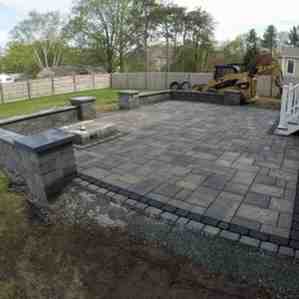
Custom fire pit ideas: Top 3 Stunning Designs
Why Custom Fire Pit Ideas Are Changing North Shore Backyards
Custom fire pit ideas are redefining how Essex County and North Shore homeowners use their outdoor spaces. A fire pit isn’t just a place to burn wood; it becomes the heart of the backyard, a natural gathering spot on cool evenings and a design anchor that extends your living space outdoors. With thoughtful planning and professional installation, a custom fire pit elevates comfort, increases resale appeal, and adds year-round functionality to your landscape.
Quick Answer: Top Custom Fire Pit Ideas
- Circular stone fire pits with built-in seating walls
- Rectangular fire tables with wide ledges for drinks
- Sunken paver fire pits for a cozy, conversation-focused space
- Steel fire bowls with modern or personalized cutout designs
- Multi-level fire features integrated with retaining walls
- Gas-powered fire pits with fire glass for instant ambiance
- Rustic fieldstone rings that blend into garden settings
The popularity of fire features continues to rise, and for good reason: they deliver ambiance, warmth, and an inviting focal point for entertaining. A well-designed fire pit can be a standalone destination space or the keystone feature of a larger outdoor living plan that includes a patio design and installation, walkways and stairs, and accent landscape retaining walls.
At George Hardscaping, we’ve seen how the right fire feature transforms a yard from “nice” to “can’t wait to be outside.” Our custom outdoor fire pits are engineered for New England freeze–thaw cycles, designed for safety, and crafted to complement your home’s architecture. Because every property is different, a custom build lets you match materials to existing patios, choose the perfect size and shape, and add personal touches like engraved capstones or metal cutouts.
This guide covers the essentials—planning, materials, fuel types, design ideas, costs, and FAQs—so you can build a fire pit that’s safe, beautiful, and built to last. We reference widely accepted safety guidance from authorities like the Massachusetts open burning safety guidelines and the National Fire Protection Association (NFPA) to help you make informed choices that fit your space and local codes.
Whether you’re picturing a rustic fieldstone ring tucked into a garden or a sleek, gas-powered fire table integrated into a modern patio, we can help bring your vision to life. When you’re ready to take the next step, request a design consult for your project and see how a fire feature can anchor your entire outdoor living plan.
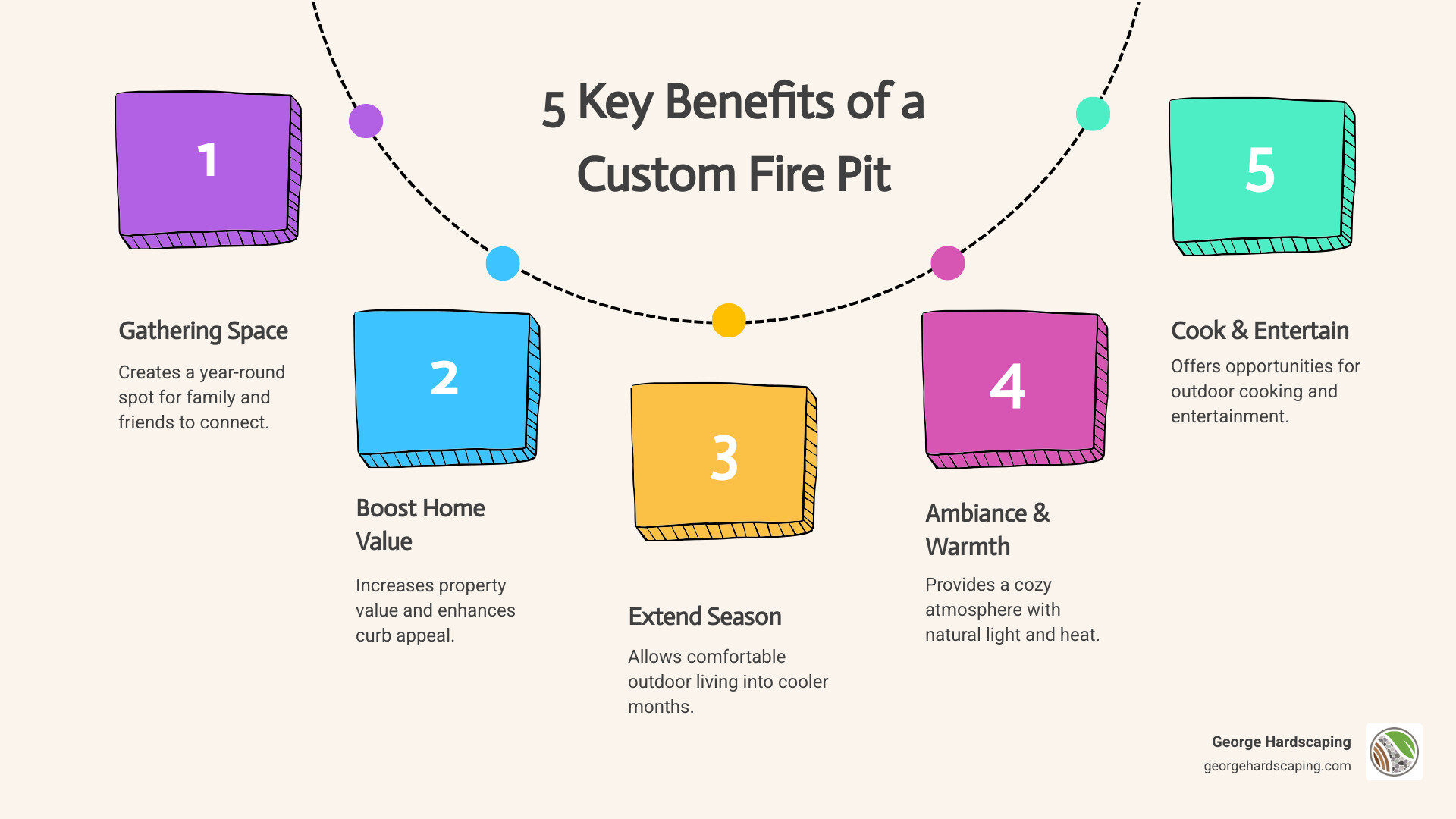
Planning Your Perfect Fire Pit: Location, Size, and Safety
Before the first marshmallow is toasted, careful planning ensures your fire pit is safe, functional, and perfectly suited to your space. Getting these fundamentals right is the key to a feature that brings joy for decades—and meets the safety expectations of your town and insurance.
Sizing and Shaping Your Vision
The shape and size set the tone for your entire outdoor area. Circular pits encourage conversation and radiate heat evenly. Square and rectangular fire pits or fire tables lean contemporary, offering clean lines and convenient edges for resting drinks and small plates. Freeform shapes can echo garden beds or integrate with curved landscape retaining walls.
Right-size guidelines and practical dimensions:
- Interior diameter/length: 30–36 inches works well for intimate seating of 4–6; 42–54 inches accommodates larger groups; 60–72 inches suits expansive patios or integrated seating walls.
- Seat wall height and depth: 18–20 inches high with a 12–16 inch deep cap is comfortable for most guests. If you’re including a patio design and installation, plan seat counts early so circulation paths stay clear.
- Clearance around the pit: Maintain at least 36–60 inches of open space for chairs and safe movement. Leave 6–8 feet to high-traffic walkways or doors to prevent congestion.
- Furniture planning: Typical lounge chairs require 30–36 inches depth. A rectangular fire table with a 12–16 inch ledge provides both warmth and practical surface area.
Finding the Ideal Location
Selecting the right spot balances comfort, code, and aesthetics.
- Safe distance: Place fire pits at least 10–15 feet from your home, sheds, fences, or overhanging branches. Many towns require more; confirm with your local fire department.
- Wind and smoke: Consider prevailing wind to reduce smoke drift. A landscape screen or strategic placement can protect the flame. You can check local wind trends using trusted resources like the National Weather Service.
- Views and privacy: Angle seating toward your favorite sightlines and away from car lights or neighboring windows. A low retaining wall can double as a privacy and seating feature.
- Utilities and lines: Always mark buried utilities before digging. Call 811 (Dig Safe) to locate lines before excavation.
- Access and flow: Keep trips short from the house to encourage frequent use. If running a gas line, choose a route that minimizes disruption to existing patios and landscaping.
- Drainage: Fire pits should sit on a stable, well-drained base. For sunken designs, plan a gravel sump and drain outlet to prevent water accumulation.
Navigating Safety Guidelines and Local Regulations
Local codes vary by town across Essex County, and homeowners associations may have their own requirements. Professional planning saves time and avoids costly rework.
- Codes and permits: Some municipalities require permits for gas lines, open burning, or masonry structures. We coordinate with inspectors and ensure compliant construction.
- Base and liner: Every installation should have a non-combustible, compacted base (gravel or concrete). Wood-burning fire pits should be lined with fire brick or rated steel to withstand high temperatures.
- Overhead clearance: Avoid placing a fire pit under a roof, low pergola, or canopy unless your design and fuel type specifically allow it. Gas features under pergolas require increased clearances and fire-rated design considerations per manufacturer requirements and accepted practices referenced by the National Fire Protection Association (NFPA).
- Spark control: A mesh spark screen is essential for wood-burning pits, and a metal lid protects the bowl when not in use.
- Burn seasons and bans: In Massachusetts, open burning has seasonal restrictions. Confirm your town’s rules and statewide guidance at Mass.gov. Gas fire features are often allowed when wood-burning is not, but always verify locally.
- Professional gas work: If you choose gas, the burner, supply sizing, and shutoff must meet code. Work should be performed by licensed professionals in coordination with your hardscape contractor.
We build to best practices and recognized standards so you get a stunning result that’s safe, efficient, and truly enjoyable. If you’re integrating a new patio, seat walls, or steps, our team coordinates the entire plan to ensure your fire pit becomes the natural focal point of your patio design and installation.
Material Matters: Building a Durable and Stylish Fire Pit
Choosing the right materials shapes the look, durability, maintenance, and cost of your fire pit. As masonry experts on the North Shore, we recommend materials that balance beauty with New England’s freeze–thaw cycles and coastal exposure.
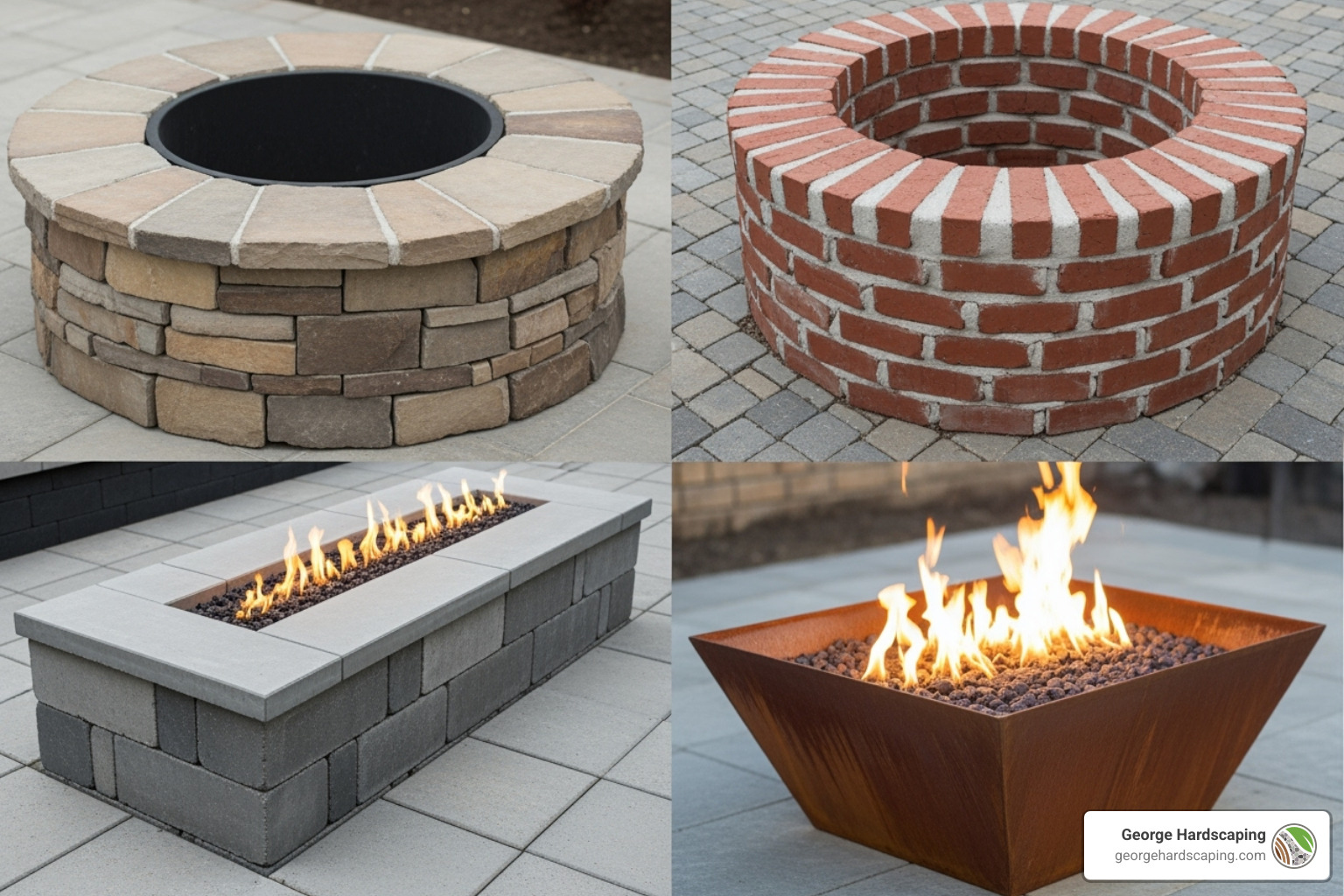
From rugged fieldstone to sleek steel, each material has a distinct personality. Here’s how popular options compare.
Natural Stone and Boulders
For a timeless, organic look, natural stone—fieldstone, granite, and flagstone—can’t be beat. Each piece is unique, with rich textures and colors that weather beautifully. Stone’s mass retains heat, gently radiating warmth after the fire wanes. It’s a premium choice due to both material cost and the skilled labor required to achieve tight, stable fits. When we build stone fire pits, we use proper footing, drainage, and an inner fire-rated liner for longevity. Natural stone pairs perfectly with matching stone landscape retaining walls or steps within a cohesive hardscaping and masonry services plan.
Brick and Pavers
Brick offers a classic aesthetic and strong value. It works beautifully in traditional settings and can be laid in patterns like herringbone or basket weave. Concrete pavers expand your color and texture options and can match your existing walkways and stairs or patio. Critical detail: the firebox should be lined with fire-rated brick or a manufactured steel insert. Ordinary pavers alone can crack or spall from high heat. With correct detailing and an insulated interior, paver fire pits are durable, cost-effective, and versatile.
Poured Concrete
Poured-in-place concrete creates a modern, architectural statement. It can be formed into crisp rectangles, generous circles, or sculptural curves. Finish options include polished, honed, board-formed, or subtly textured surfaces. Proper reinforcement, control joints, and finishing are essential to avoid cracking. In coastal or high-freeze zones, we use air-entrained mixes and meticulous base prep. Concrete pairs well with sleek metal accents and low-voltage lighting within a contemporary patio design and installation.
Steel and Metal
Metal brings modern lines and incredible customization. Heavier-gauge carbon steel or weathering Corten steel is durable and can be crafted with laser-cut patterns, family names, or logos for dramatic glow-through effects. Corten forms a stable protective patina, though runoff can temporarily stain nearby surfaces during the patina-forming phase—something we account for in our layout. Stainless steel is lower maintenance in coastal air, while powder-coated finishes add color options. Because metal can get hot to the touch, we design surrounding seating with safe clearances and recommend protective accessories when children or pets are present.
Material selection is also about maintenance preferences. Stone and brick require little upkeep beyond occasional cleaning and resealing of some caps or joints. Metal bowls may need seasonal oiling or patina care. Concrete can be sealed to resist staining. Whatever you choose, we build with proven techniques—proper base, drainage, and fire-rated liners—to maximize longevity.
Ready to explore materials and start designing your perfect custom fire pit? Request your free estimate today and let’s discuss the possibilities for your space and style.
Fueling the Flames: Wood-Burning vs. Gas-Powered Pits
Choosing a fuel source shapes your daily experience. Do you love the ritual and aroma of a real wood fire, or do you prefer push-button convenience and precise control? There’s no wrong answer—only the best fit for your lifestyle, property, and local regulations.
Wood-Burning: Classic Ambiance and High Radiant Heat
A wood-burning fire pit delivers the unmistakable crackle, aroma, and storytelling magic of a traditional campfire. Wood fires often produce stronger radiant heat than low-output gas flames, which can be ideal for chilly New England evenings. They’re typically less expensive to build initially because they don’t require gas lines, burners, or ignition systems. With an optional cooking grate, wood pits turn into a fantastic grill for cast-iron cooking and smoky flavors.
Practical considerations:
- Fuel storage: You’ll need a dry place to keep seasoned hardwood. For cleaner burning, aim for wood with moisture content under ~20%. The EPA’s Burn Wise guidance covers best burn practices and tips for reducing smoke and creosote.
- Cleanup: Plan for regular ash removal into a metal container with a tight lid. Store ash cans outdoors on non-combustible surfaces until fully cold.
- Smoke management: Placement relative to prevailing winds is key. A spark screen and ember-safe surroundings reduce risk.
- Restrictions: Open burning has seasonal rules in Massachusetts, and some communities limit wood fires on high-risk days. Always confirm at Mass.gov and check your town’s website.
Gas: Instant On/Off, Clean, and Controllable
Gas fire pits emphasize convenience. With a turn of a knob or push of a button, you get instant flames—and a clean burn with no ash or embers. You also get precise flame height control, and decorative media like fire glass or lava rock. Gas can be supplied via natural gas (unlimited fuel, fixed location) or propane (flexibility with a hidden tank).
Design and safety considerations:
- Burner output: Common residential fire pits range from 45,000–200,000 BTUs. Proper sizing considers wind exposure, seating distance, and desired flame height.
- Ventilation: Enclosures must include cross-ventilation to safely dissipate leaked gas—especially for propane, which is heavier than air. We follow manufacturer specs and best-practice guidance referenced by the American Gas Association.
- Ignition systems: Match-lit (simple, reliable), spark ignition, or electronic ignition (with flame-sensing and automatic shutoff). Electronic systems can integrate timers, remotes, or smart controls.
- Gas line planning: Licensed professionals size and install the line and shutoff. Any masonry enclosure must include access panels and ventilation per the burner manufacturer and local code.
- Under cover: Gas fire features under pergolas or solid roofs require increased clearances and specific burner approvals. We design to manufacturer and inspector expectations informed by NFPA principles.
What About “Smokeless” Pits?
Double-walled wood pits that promote secondary combustion can significantly reduce visible smoke when used with dry wood and proper airflow. While portable smokeless units are common, a built-in version requires careful air channel design and high-temperature materials. If you love wood but want lower smoke, we can discuss design details and performance expectations.
Whether you favor the rustic ritual of wood or the modern ease of gas, our professional fire pit installers can guide you to the perfect specification and handle safe, code-compliant installation. Want to compare fuel types on your property? Book a design consult and we’ll walk your space, discuss options, and provide a custom plan.
Strong next step: Ready to make your yard the neighborhood gathering spot? Secure your spot on our schedule—request your free estimate now.
Inspiring Custom Fire Pit Ideas and Designs
This is where ideas become a design that’s uniquely yours. The best custom fire pits feel integrated—not just placed. They coordinate materials, proportions, and sightlines so the feature enhances how you live outdoors.
Integration ideas that elevate a fire pit from good to unforgettable:
- Built-in seating walls: Define the space and ensure there’s always a comfortable seat. Caps at 18–20 inches high are a sweet spot for most guests. Add accent lighting beneath the caps for nighttime ambience.
- Multi-level terraces: On sloped sites, tie your fire pit into landscape retaining walls and steps to create zones: dining, lounging, and a fire circle. This approach maximizes usable space and captures views.
- Sunken conversation pits: Lowering the pit and seating can shield wind and heighten the cozy factor. Plan for a gravel sump and drain outlet to handle stormwater.
- Fire tables: A rectangular fire table offers warmth plus a ledge for small plates and drinks. It’s ideal for frequent entertaining and pairs well with sectional seating.
- Fire + water: Combine a linear fire feature with a rill or reflecting pool for a dramatic elemental juxtaposition. Careful placement prevents wind from pushing flames toward water features or plantings.
- Personalized details: For steel pits, custom cutouts with your family name, meaningful dates, or local motifs create a signature look. For masonry, consider engraved capstones or a compass inset in the paving.
- Cooking-ready features: Add a removable swivel grate or plancha to a wood pit. For versatility, a fitted metal cover turns the pit into a low table when not in use.
Style concepts that work beautifully on the North Shore:
- Coastal contemporary: Honed bluestone caps, light-gray pavers, and a rectangular gas fire table with tempered glass wind guard. Pair with driftwood-toned furniture and marine-grade fabrics.
- New England classic: Granite or fieldstone circular pit, brick paving in herringbone, and a curved seating wall capped in thermal bluestone. Plant hydrangeas and evergreens for seasonal color.
- Modern organic: Board-formed concrete bench, a round Corten steel bowl, and native planting with ornamental grasses. Low-voltage path lights frame the approach.
When we plan a fire feature, we also plan the approach: comfortable walkways and stairs, safe circulation, and night lighting for steps and seat walls. We’ll align the fire pit with your broader patio design and installation so every choice—from materials to seat count—works together.
See how different styles look in real homes: browse our project gallery and save examples you love. Then, let’s turn your inspiration into a build-ready plan—request your free estimate to get started.
Bringing Your Vision to Life: Costs and Professional Installation
With your design and fuel type in mind, it’s time to look at budget and build. Understanding cost drivers and the construction process will help you prioritize features and avoid surprises.
What Is the Typical Cost for a Custom Fire Pit?
Total investment depends on size, materials, fuel, and complexity. A compact, wood-burning paver kit professionally installed may start in the lower range, while a custom masonry or steel fire pit with integrated seating, drainage, lighting, and a gas line will be higher. Based on industry averages, professionally installed fire pits typically range from $2,000–$8,000 for simpler designs. Fully custom builds with premium stone, complex geometry, and gas systems commonly range $5,000–$25,000+ depending on scope and site conditions. These are general industry estimates—George Hardscaping provides custom pricing tailored to your site and selections.
Primary cost drivers:
- Size and geometry: Larger and more complex shapes require more materials and labor.
- Materials: Natural stone and poured concrete carry premium costs; pavers and brick offer value with strong aesthetics.
- Fuel and systems: Gas burners, electronic ignition, and trenching for gas lines add cost but deliver convenience.
- Site conditions: Access, excavation, slope, and drainage needs influence the labor required.
- Integration: Built-in seating, steps, lighting, or new patio areas increase scope but create a cohesive destination.
What to Expect During Professional Installation
We handle every step—planning, permitting, and construction—to deliver a safe, durable result.
1) Site evaluation and utilities: We confirm property lines, elevations, and drainage. We coordinate with 811 to locate underground utilities before digging.
2) Design confirmation: We finalize dimensions, materials, and details like seat wall height, cap style, and fuel type. If gas, we coordinate a licensed installer to size and run the line.
3) Base and drainage: We install a compacted, non-combustible base and, where appropriate, a drain or gravel sump—especially for sunken pits.
4) Build and liner: Masonry is constructed with proper fire-rated liners or steel inserts where required. Gas enclosures include required ventilation and access panels.
5) Finishing and testing: We set caps, finish joints, and test burners or ventilation. We review safe operation and provide care tips.
Why Hire a Professional Hardscape Contractor?
DIY kits can be tempting, but professional work protects your investment. We ensure code compliance, structural stability, and long-term performance in New England conditions. Our team integrates the fire pit with your broader hardscape—tying materials, colors, and heights into your patio design and installation and surrounding spaces. We use high-quality, rated components and proven methods, and we stand behind our craftsmanship.
Vetting contractors? Massachusetts homeowners can review licensing and consumer guidance through the state’s Home Improvement Contractor program at Mass.gov. For gas safety questions, the American Gas Association provides helpful consumer information.
Strong CTA: Ready to turn your ideas into a build-ready plan? Reserve your consultation and get a detailed proposal—request your free estimate today.
Frequently Asked Questions about Custom Fire Pits
We’ve compiled answers to common questions from North Shore homeowners planning a custom fire pit.
How far should a fire pit be from a house?
At least 10–15 feet from structures and overhangs is a typical minimum, but many towns require more. We confirm setbacks with your local fire department and build to code. Refer to statewide guidance at Mass.gov and safety tips from the NFPA.
Can you put a custom fire pit on a wood deck or a paver patio?
Avoid wood decks due to heat and spark risk. On paver patios, yes—if built properly. We use an insulated firebox (fire brick or rated steel) and a non-combustible base to protect your patio. For new patios, we design the entire patio installation so the fire feature blends seamlessly with seating and circulation.
How long does it take to build a custom fire pit?
A simple kit can be installed in about a day by our professional team. Complex, fully custom builds with gas lines, seat walls, and patio work can take a week or more depending on site conditions and weather. We provide clear timelines before work begins.
Do I need a permit?
Permits vary by town. Wood-burning pits may not require a building permit but must follow open-burning rules. Gas lines typically require permits and inspections. We coordinate all approvals and ensure compliance.
Can I put a gas fire pit under a pergola?
Sometimes—if the burner is approved for overhead installations and clearances are met. We design to manufacturer specs and accepted safety principles informed by the NFPA. We also incorporate ventilation and heat deflection strategies where appropriate.
How many BTUs do I need for a gas fire pit?
Common residential ranges are 45,000–200,000 BTUs. Exposure to wind, seating distance, and desired flame height matter. We size the burner and media to your layout and conditions and coordinate proper gas supply sizing with licensed installers.
What media should I use—lava rock or fire glass?
Both are effective. Lava rock is budget-friendly and durable; fire glass offers a sleek, modern look and reflective sparkle. We choose media based on burner type and manufacturer specifications.
How do I reduce smoke with a wood fire pit?
Use seasoned hardwood, avoid softwood resins, build smaller hot fires, and mind wind direction. The EPA’s Burn Wise site offers best burn practices. Smokeless (secondary combustion) designs can help when properly ventilated and fueled.
How do I extinguish and store ash safely?
Spread embers, sprinkle with water, and stir until fully cold. Transfer ash to a metal container with a tight lid and store outdoors on non-combustible surfaces for several days before disposal.
Will a fire pit damage nearby plants or grass?
Radiant heat can stress plants at close range. We use heat-tolerant spacing and suggest hardscape buffers. For fire-safe planting concepts, see resources like NFPA’s Firewise USA principles and then adapt them to local conditions.
What maintenance is required?
- Wood: Empty ash, brush soot, and protect caps with a cover when not in use.
- Gas: Keep burners and vents clear; check ignition and fittings seasonally. We provide owner care guidance after installation.
- Masonry/stone: Periodically clean and, if desired, seal caps. Inspect joints and re-point as needed over time.
Can a fire pit increase home value?
While exact ROI varies, a well-executed outdoor living space with a fire feature enhances usability, curb appeal, and perceived value. Integrating the pit with a cohesive hardscaping and masonry plan creates a standout backyard.
How do I choose between a fire pit and a fireplace?
Fire pits are more social and flexible for groups; fireplaces offer a vertical focal point, wind protection, and architectural presence. Your choice depends on space, style, and whether you need a vertical wind break. We can help you weigh pros and cons for your property.
What safety accessories should I consider?
A spark screen for wood, a metal lid, a nearby ABC fire extinguisher, heat-resistant gloves, and a protective cover for off-season. Follow basic guidance reinforced by organizations like the NFPA and local authorities.
Have more questions? Our team is happy to help you choose materials, fuel type, and layout. Get personalized answers and a detailed plan from our fire pit installers.
Ready to transform your backyard? Take the first step today—request your free estimate and we’ll design a custom fire feature that fits your home and lifestyle.