
retaining wall drainage system: Flawless Guide 2025
Why Your Retaining Wall Needs Drainage to Survive
A retaining wall drainage system is a network of components designed to manage water behind your wall, preventing structural failure and extending its lifespan. Without it, even the most well-built retaining wall will eventually crack, lean, or collapse under the force of water pressure.
Essential components of a retaining wall drainage system:
- Gravel backfill – At least 12 inches of crushed stone behind the wall
- Perforated pipe – Collects and redirects water away from the foundation
- Filter fabric – Prevents soil from clogging the drainage system
- Weep holes – Allow trapped water to escape through the wall face
- Proper slope – Ensures water flows away from the structure
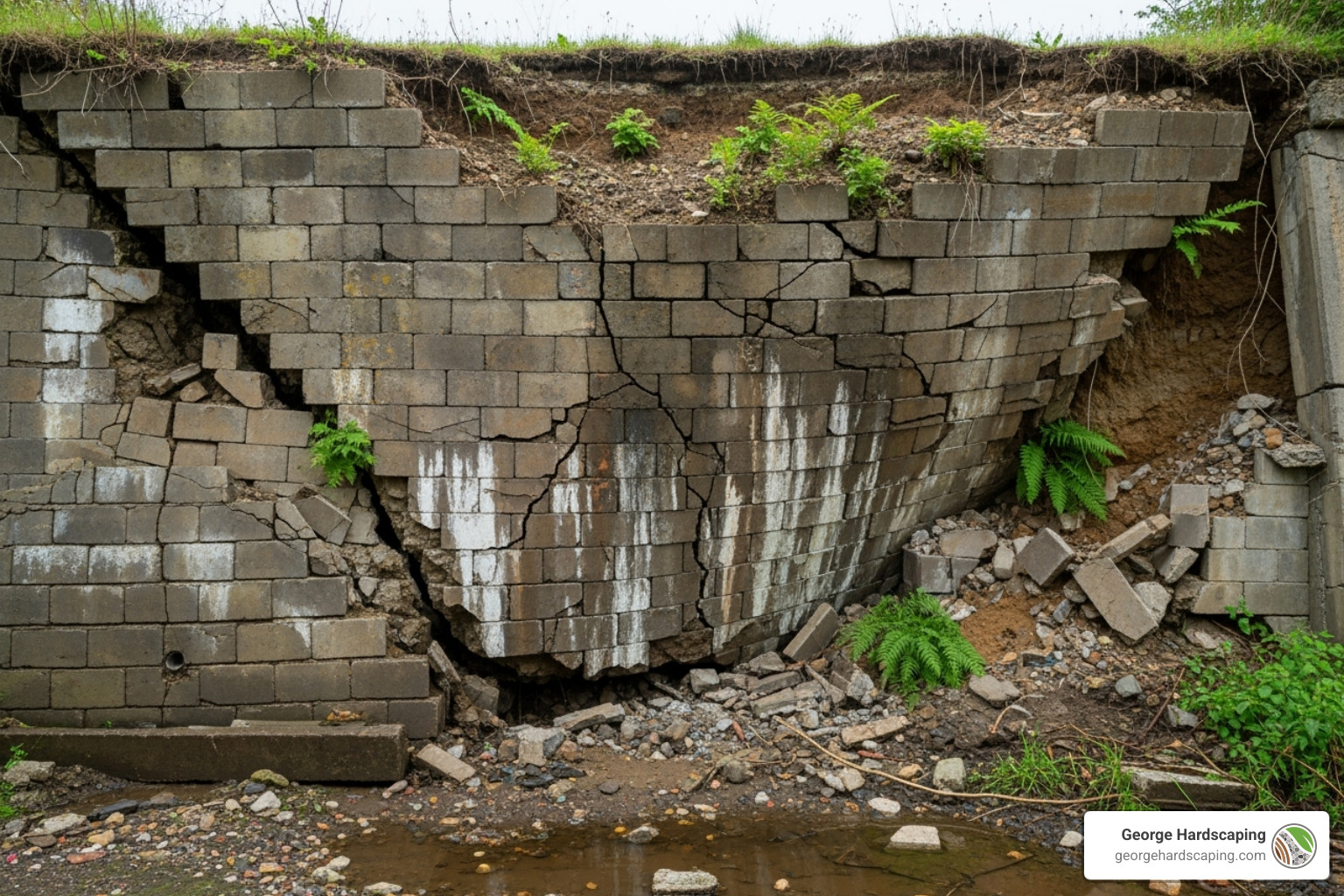
Water is your retaining wall’s greatest enemy. When soil becomes saturated, it creates hydrostatic pressure—a silent force that can push against your wall with thousands of pounds of pressure. This pressure causes the saturated soil to become heavy and unstable, leading to cracks, bulges, and eventual wall failure.
Proper drainage prevents this. By installing the right system during construction, you protect your investment and avoid costly repairs. Understanding how these systems work is key to making smart decisions about your property’s stability and value.
Why Proper Drainage is Your Wall’s Best Friend
A sturdy retaining wall can transform a sloped yard into beautiful, usable terraces. But when that wall starts to lean, bulge, or crack, the culprit is often not poor construction but the silent force of water. A proper retaining wall drainage system is essential for your wall’s strength and longevity. Good drainage is the single most important factor in preventing retaining wall failure. When water saturates the soil behind a wall, it creates immense hydrostatic pressure that can push even the strongest structures past their breaking point. That’s why prevention of wall failure starts with designing proper drainage from day one.
Beyond the risk of collapse, poor drainage causes other problems. It leads to soil erosion, washing away the ground that supports your wall. In cold climates, trapped water freezes and expands in a process called frost heave, which exerts incredible stress on the wall. This freeze-thaw cycle can cause concrete to chip and crumble, shortening your wall’s life. According to the National Association of Home Builders, proper water management is one of the most critical factors in preventing structural failures in residential construction projects.
Ignoring drainage leads to expensive repairs or even a full rebuild. It can also damage your landscaping and create foundation issues for nearby structures. At George Hardscaping, our goal when building Landscape Retaining Walls is to create lasting beauty and function, which always starts with smart water management.
The Unseen Enemy: Hydrostatic Pressure
Hydrostatic pressure is the force exerted by standing water. When rainwater or groundwater soaks the soil behind your wall, that soil acts like a sponge. If the water has nowhere to go, it builds up, putting enormous pressure on the wall. A single cubic foot of water weighs over 62 pounds; saturated soil can exert thousands of pounds of force per square foot. This pressure can be significant and will overpower a wall not designed to handle it. The result is a wall that bulges, leans, cracks, or collapses—often appearing as if it’s being pushed over from the top.
Understanding the mechanics of hydrostatic pressure helps explain why even small amounts of trapped water can cause major problems. Water doesn’t compress like air—it maintains its volume and transfers force directly to whatever contains it. When soil becomes waterlogged, it essentially becomes a liquid mass pressing against your wall with relentless force. This is why proper drainage isn’t just recommended—it’s absolutely essential for any retaining wall installation.
The Consequences of Poor Drainage
When a retaining wall drainage system is inadequate or absent, the consequences can be severe:
- Erosion and Settlement: Water washes away supporting soil, causing the wall to sink or shift unevenly.
- Foundation Weakening: As soil erodes, the wall loses its stable base.
- Freeze-Thaw Damage: In colder climates, trapped water freezes and expands, causing materials to crack, flake, and crumble.
- Efflorescence and Staining: Moisture pulls salts from the wall materials to the surface, leaving unsightly white, powdery patches and other stains.
- Reduced Lifespan: All these issues combine to drastically shorten the life of your wall, turning a long-term asset into a costly problem.
- Safety Hazards: A failing wall can collapse suddenly, potentially causing injury or property damage.
- Decreased Property Value: Visible wall problems signal poor construction quality to potential buyers.
A leaning wall is a common sign of drainage failure that could have been prevented from the start. The key is recognizing that water management must be built into the wall from the beginning—retrofitting drainage later is possible but far more expensive and disruptive.
The Anatomy of an Effective Retaining Wall Drainage System
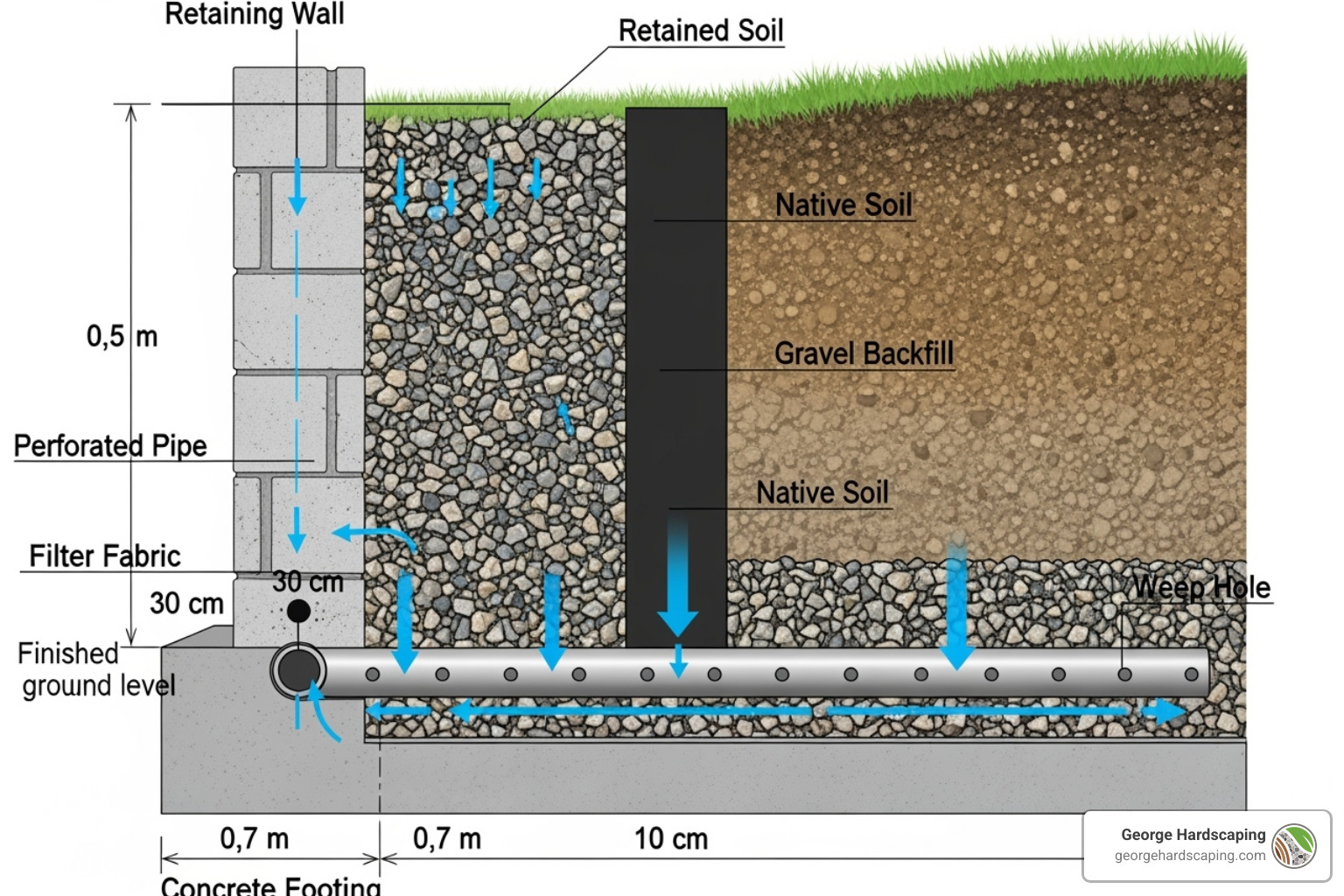
An effective retaining wall drainage system relies on several key components working together to manage water and protect the wall’s structure. Each part has a specific job, but all share the same mission: to move water away from the wall before it can cause damage. Our approach to Retaining Wall Construction Detail treats drainage as a critical, integrated system.
Gravel Backfill: The First Line of Defense
The first line of defense in your retaining wall drainage system is the gravel backfill. We use clean, angular crushed stone, typically 1/2 to 3/4 inch in size. The angular pieces lock together, creating stability while leaving plenty of space (voids) for water to flow through freely, much like a colander. This prevents the native soil from becoming saturated.
This drainage aggregate is installed in a layer at least 12 inches deep behind the wall. For taller walls or sites with significant water issues, this layer can be up to 24 inches thick. This porous zone is essential for converting destructive water pressure into harmless, fast-flowing drainage. You can learn more about the right materials in our guide to Retaining Wall Stone.
The quality of your gravel backfill directly impacts the entire system’s performance. Clean stone means it’s been washed to remove fine particles that could clog the drainage system over time. Angular shapes are crucial because they interlock mechanically, providing structural support while maintaining the void spaces necessary for water flow. Round stones like pea gravel may seem adequate, but they don’t provide the same structural integrity and can shift over time, reducing drainage capacity.
Perforated Pipes: The Underground Water Highway
While gravel gives water a path, perforated pipes act as an express highway to carry it safely away. These 4 to 6-inch diameter PVC or HDPE pipes have small holes that allow water to enter. The pipe is placed at the base of the wall, nestled in the gravel backfill.
We install these pipes with a gentle but consistent slope—at least 1 inch of drop for every 8 feet of pipe—to ensure gravity keeps the water moving. The pipe must “daylight,” meaning it exits at a lower point where water can drain away harmlessly, such as into a storm drain or a dry well. For walls over 4 feet tall, this toe drain system is essential for long-term stability.
The perforations in these pipes are strategically sized and spaced. Too large, and soil particles can enter and clog the system. Too small, and water flow is restricted. Professional-grade drainage pipes feature perforations that are precisely engineered for optimal water collection while preventing soil infiltration. The pipe material itself must be durable enough to withstand soil pressure and resist crushing over decades of service.
Weep Holes and Drainage Panels
Weep holes are small openings that act as pressure-release valves, allowing any water trapped directly against the wall to escape. For walls around 6 feet or taller, we install 3 to 4-inch diameter weep holes every 3 to 4 feet. Smaller walls may only need 1.5-inch holes every 8 feet. These openings are angled downward and protected with geotextile fabric to prevent soil from clogging them.
For more advanced applications, geocomposite drainage panels can be used. These prefabricated mats are installed against the back of the wall and consist of a drainage core wrapped in filter fabric. They offer excellent water-flow capacity in a compact design and are especially useful for very tall walls or in tight spaces. These panels connect to collector pipes at the base, providing an efficient, low-maintenance solution for water management.
Modern drainage panels represent a significant advancement in retaining wall technology. They combine multiple functions into a single product: water collection, filtration, and protection of the wall surface. The drainage core is typically made from a three-dimensional plastic matrix that maintains its shape under soil pressure while providing excellent flow capacity. This technology is particularly valuable in challenging installations where space is limited or where maximum drainage performance is required.
Step-by-Step: Installing Your Drainage System
Installing a retaining wall drainage system correctly is a precise process. Following these steps ensures each component is placed correctly for a long-lasting result. Before starting, ensure you have the right safety gear and tools.
- Safety Gear: Sturdy work gloves, safety glasses, and steel-toed boots.
- Essential Tools: Shovel or excavator, wheelbarrow, level, tamper, utility knife, measuring tape, and a string line with stakes.
- Materials: Perforated drainage pipe (4-6 inch diameter), clean angular crushed stone, and geotextile filter fabric.
This process is an integral part of how we Construct Retaining Wall projects from start to finish.
Step 1: Excavate and Prepare the Base
Proper excavation is the foundation of your drainage system. Start by marking your excavation area. The trench must be wide enough for the wall blocks, at least 12 inches of gravel backfill, and the drainage pipe. This typically means digging 2-3 feet wider than the finished wall.
The depth is also critical. You need space for a compacted base layer (6-12 inches of crushed stone), the first course of blocks, and the drainage pipe, which must sit at the lowest point. Once excavated, the base must be leveled and compacted. A poorly compacted base will settle, disrupting the pipe’s slope and causing the system to fail. We use a mechanical tamper to create a rock-solid, level foundation.
Step 2: Install the Core Drainage Components
With the base prepared, it’s time to install the core drainage components.
First, lay the perforated pipe on the compacted base at the back of the trench. The pipe must have a consistent slope of at least 1 inch for every 8 feet of run to allow gravity to drain the water effectively. Use a string line and level to verify the slope.
Next, wrap the pipe completely in filter fabric. This geotextile layer lets water in but keeps out soil and silt that would otherwise clog the system. Overlap the fabric seams by at least 6 inches.
Finally, add the gravel backfill in 6 to 12-inch lifts. Place the gravel carefully around and over the pipe, then lightly compact each layer. The gravel should extend at least 12 inches behind the wall. This drainage aggregate is your wall’s best defense against hydrostatic pressure.
Step 3: Backfill and Finish the Wall
As you build the wall course by course, the drainage system is integrated with the structure.
If your design includes weep holes, they are typically installed in the first or second course, angled slightly downward to promote drainage. The native soil is then backfilled behind the gravel layer. It’s crucial to compact this soil in thin layers (4-6 inches at a time) to prevent future settlement.
Finally, perform final surface grading. The ground behind and around the wall should slope away from the structure to direct surface runoff away before it has a chance to seep into the backfill. This attention to detail is what separates a professional Block Retaining Wall Construction from one that may fail prematurely.
Common Mistakes and Advanced Considerations
Even with the best intentions, small errors in a retaining wall drainage system can lead to major problems. Knowing what to avoid is as important as knowing what to do. Additionally, every property is unique, requiring a drainage plan custom to its specific conditions.
Top Mistakes to Avoid in Your Retaining Wall Drainage System
- Skimping on Gravel: Using too little drainage gravel or substituting it with soil is a critical error. We recommend at least 12 inches of clean, angular crushed stone.
- Forgetting Filter Fabric: This fabric prevents soil from clogging your pipes and gravel. Without it, the system will eventually fail.
- Incorrect Pipe Slope: The perforated pipe must slope at least 1 inch for every 8 feet to ensure water flows away and doesn’t pool.
- Omitting Weep Holes: These small openings provide a crucial escape route for any water trapped directly against the wall face.
- Improper Soil Compaction: Backfill soil must be compacted in thin layers to prevent settlement, which can damage the drainage system.
- Ignoring Local Soil Type: Heavy clay soil holds more water and requires a more robust drainage plan than sandy soil.
- Poor Surface Grading: Failing to slope the ground away from the wall allows surface water to pool and infiltrate the backfill.
- Using Contaminated Fill: Backfill containing organic matter, clay, or debris can compromise drainage and wall stability.
These mistakes often stem from trying to cut costs during construction, but they inevitably lead to much higher expenses when the wall fails prematurely. Professional contractors understand that proper drainage is an investment in the wall’s longevity, not an optional upgrade.
Adapting Drainage to Wall Type and Site Conditions
A one-size-fits-all approach doesn’t work for a retaining wall drainage system. The design must be custom to the site.
- Wall Height: Walls over four feet tall are under significantly more pressure and require a robust drainage system, including a perforated pipe. For Large Retaining Wall Construction, drainage is the backbone of the structure’s stability.
- Tiered Walls: Each tier needs its own independent drainage system to prevent water from overwhelming the lower walls.
- Soil Type: Clay soils drain poorly and increase the risk of hydrostatic pressure and frost heave, requiring a more aggressive drainage strategy than sandy soils.
- Climate: In Essex County, MA, our rainy seasons and freezing winters make effective water management critical. Freeze-thaw cycles put immense stress on walls with trapped moisture.
- Topography: A wall at the bottom of a hill will receive more runoff and needs a drainage system designed to handle the extra volume.
- Groundwater Conditions: High water tables or seasonal springs require special consideration and may need additional drainage measures.
- Proximity to Structures: Walls near buildings or other structures may need improved drainage to protect foundations.
Each of these factors influences the drainage design. For example, a wall in clay soil might need a thicker gravel backfill layer and more frequent weep holes, while a wall on a steep slope might require additional surface drainage measures to handle runoff.
When to Call a Professional
While some small walls can be a DIY project, installing the retaining wall drainage system often requires a professional. Consider calling an expert if you face any of the following:
- Wall Height Exceeds 4 Feet: Taller walls carry significant loads and require engineered drainage for safety and longevity.
- Complex Site Conditions: Tricky soils, high water tables, steep slopes, or existing drainage problems require an expert solution.
- Building Codes and Permitting: Many towns in Essex County, MA, like Beverly or Danvers, have specific codes for retaining walls that require permits and professional designs.
- Structural Concerns: If the wall supports a driveway, patio, or part of a home, or if its failure could cause damage or injury, professional and structural engineer input is essential for safety.
- Utility Conflicts: If underground utilities are present, professional excavation and coordination are necessary.
- Environmental Considerations: Walls near wetlands, streams, or environmentally sensitive areas may require special permits and design considerations.
At George Hardscaping, we can help you How to Find a Contractor to Build a Retaining Wall who understands these critical factors. Professional installation ensures that your drainage system is properly designed, installed, and integrated with the wall structure for maximum effectiveness and longevity.
Frequently Asked Questions about Retaining Wall Drainage
We often hear common questions about retaining wall drainage systems. Here are answers to some of the most frequent inquiries we receive.
Does a short retaining wall (under 4 feet) still need drainage?
Yes, absolutely. Hydrostatic pressure can build up behind any wall, regardless of its height. While codes often mandate drainage for walls over 4 feet, neglecting it for smaller walls can lead to the same leaning, bulging, and cracking. This is especially true in clay soil or on a slope where water collects. Proper drainage is a best practice for all retaining wall installations to ensure they last.
What is the best type of gravel for retaining wall drainage?
The best material for a retaining wall drainage system is clean, angular crushed stone, typically 1/2 to 3/4 inch in diameter.
- “Clean” means the stone is free of dirt and fine particles that can clog the system.
- “Angular” refers to the sharp, irregular shapes that interlock. This provides stability while creating large voids for water to flow through easily.
We generally advise against using rounded pea gravel. Its smooth shape prevents it from interlocking, making it less stable and more likely to compact over time, which reduces its drainage capacity.
Can I add drainage to an existing retaining wall?
Yes, it is possible to add drainage to an existing wall, but it is a complex and labor-intensive process that is more costly than installing it during construction. The process typically involves:
- Careful Excavation: The soil behind the wall must be dug out, which can be challenging around existing landscaping or structures.
- Retrofitting Components: A perforated pipe, gravel backfill, and filter fabric are installed behind the existing wall.
- Drilling Weep Holes: If the wall lacks them, weep holes can be drilled through the face of the wall to provide an additional outlet for water.
This type of retrofit requires professional expertise to avoid damaging the existing wall and to ensure the new drainage system functions correctly. It is not a recommended DIY project.
Protect Your Investment with a Flawless Drainage System
A retaining wall is a significant investment in your property’s beauty and functionality. Protecting that investment requires a professionally installed retaining wall drainage system. It’s not an optional add-on; it’s the most critical element for ensuring your wall’s longevity and preventing costly failures.
We’ve seen too many walls fail prematurely because drainage was overlooked to save money upfront, only to lead to thousands in repairs later. Proper drainage is what separates walls that last for decades from those that fail in a few seasons. It prevents the hydrostatic pressure that causes cracking and collapse, stops erosion at the wall’s foundation, and combats the destructive freeze-thaw cycles common in our New England climate.
A well-built wall with proper drainage also improves your property value, signaling quality construction to potential buyers. More importantly, it ensures safety by preventing a catastrophic collapse that could damage property or cause injury.
The reality is simple: drainage is essential, not optional. At George Hardscaping, every wall we build includes a comprehensive drainage system designed for long-term stability. We serve communities throughout Essex County—from Gloucester and Manchester-by-the-Sea to Georgetown and Boxford—and we understand how to build structures that withstand our challenging weather. As your trusted Retaining Walls Contractor, we focus on building walls that will perform for generations.
Invest in proper drainage now, or pay far more for repairs later. We’re here to help you make the smart choice.
Like us on Facebook!
