
Best Way to Lay Flagstone Walkway: Flawless 2025
Why a Flagstone Walkway is a Timeless Choice
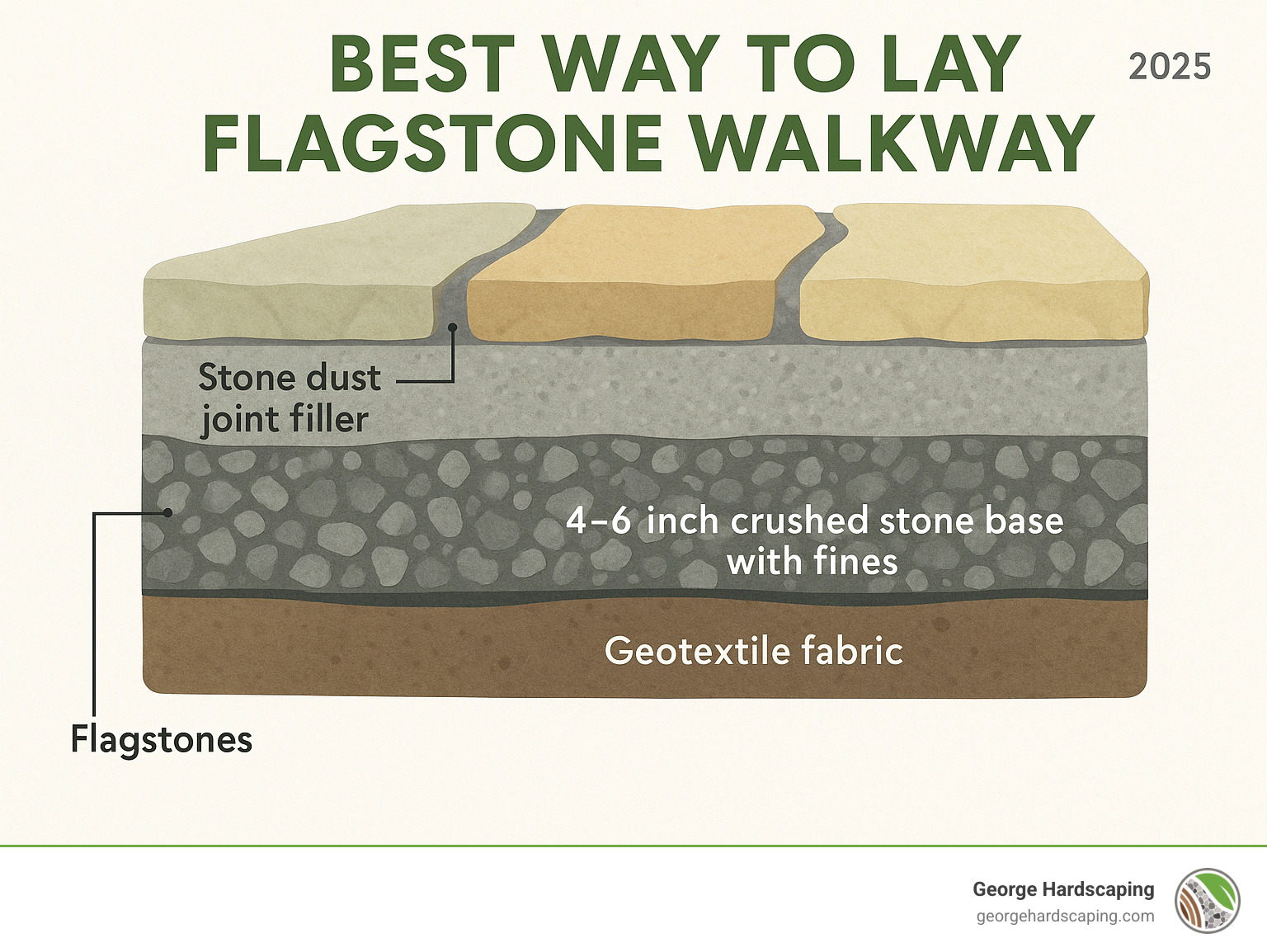
The best way to lay a flagstone walkway is a dry-lay method using a crushed stone base and stone dust joints. The process involves careful planning, excavation, base preparation, and stone placement.
Key Steps for Success:
- Excavate 6-8 inches deep (base + setting bed + stone thickness)
- Install a 4-6 inch compacted crushed stone base with fines
- Add a 1-inch stone dust or coarse sand setting bed
- Place flagstones with 1-2 inch gaps, starting with the largest stones
- Fill joints with stone dust, then sweep and mist to settle
A carefully installed flagstone walkway is both useful and inviting, adding significant appeal and value to your home. Flagstone offers superior durability and timeless beauty compared to other materials. Unlike concrete, which can crack in New England’s freeze-thaw cycles, a properly installed flagstone path flexes with ground movement. Its naturally rough surface provides excellent traction, even when wet.
Flagstone delivers lasting value through:
- Natural aesthetic that complements any landscape style
- Durability lasting decades with minimal maintenance
- Increased property value with professional-grade results
- Non-slip surface for year-round safety
- DIY-friendly installation when you follow proper methods
Success lies in what happens below the stones. A proper base is crucial to prevent the shifting, settling, and cracking that plague poorly installed walkways.
Phase 1: Planning and Preparation for Your Project
This section covers the crucial first steps before you break ground, ensuring your project is set up for success from the start.
Choosing the Right Flagstone for Your Walkway
Choosing the right flagstone sets the tone for your outdoor space. Flagstone is a general term for large, flat quarried stones used for paving, and each type has a unique character.
Sandstone provides warm, earthy tones (buffs, browns, reds, grays) that age gracefully. Its natural texture offers excellent grip, ideal for New England weather.
Slate offers a dramatic, layered look in darker shades like gray, black, and green. It’s naturally slip-resistant, making it great for high-traffic areas.
Bluestone, a dense sandstone in shades of blue, gray, and brown, is extremely durable against New England’s freeze-thaw cycles. It’s popular in Essex County for complementing local architecture.
Quartzite is exceptionally hard and dense, often with a subtle sparkle. It’s the most durable option, built to withstand the elements.
Limestone has a softer, uniform look in light shades like white, cream, or gray. It’s easier to cut and shape, making it a good choice for DIY projects.
When selecting, match the stone to your home’s existing colors and textures. The best way to lay flagstone walkway starts with choosing stones at least 1.5 to 2 inches thick. Thinner stones are prone to cracking under foot traffic and ground movement, especially during harsh winters. You’ll also need to decide between irregular-shaped flagstones for an organic look or cut stones for a formal design. We recommend visiting a local stone yard to hand-pick your materials, allowing you to inspect each piece for quality and variation.
At George Hardscaping, we’ve helped countless homeowners select the perfect stone to bring their outdoor vision to life. More info about our masonry services.
Essential Tools and Materials
Gather all your tools and materials before you begin to avoid project delays.
Tools: You’ll need pointed and flat shovels for digging, a wheelbarrow for moving heavy materials, a tape measure, and a 4-foot level for accuracy and proper slope. A rubber mallet or dead blow mallet helps set stones without damage. For compaction, use a hand tamper for small areas or rent a plate compactor for larger projects. For layout, you’ll need stakes, mason’s line, and landscaping paint. For safety, have goggles and gloves. To shape stones, use a brick hammer and chisel or an angle grinder with a diamond blade.
Materials: Your primary material is the flagstones. For the foundation, you need a crushed stone base (3/4-inch with fines, also called road base or crusher run); the fines are crucial for tight compaction. For the layer directly under the stones, you’ll need stone dust or coarse sand for the setting bed. Edging (steel or vinyl) contains the base, and landscape fabric prevents weeds. Finally, choose a joint filler like stone dust (recommended), polymeric sand, or pea gravel.
Designing Your Flagstone Path
Smart planning ensures your walkway is both functional and beautiful. Consider the walkway’s purpose; a direct route to the front door differs from a meandering garden path, which will guide your layout and width.
Straight paths are formal and simpler to install, while curved paths feel more organic but require more planning. For width, 36 inches is standard for single-file traffic; 48 inches allows two people to walk side-by-side. Don’t overlook drainage; plan for a slope of 1/4-inch per foot away from your house to prevent water pooling, which can cause erosion and slippery spots.
To mark your layout, use a garden hose for curves or stakes and mason’s line for straight paths, then mark the perimeter with spray paint. Do a \”dry fit\” by laying out a few stones to visualize the design before excavating. It’s much easier to move a hose than a laid stone!
If you’re planning something more complex or want professional guidance from the start, we’re here to help. Explore our hardscape design services.
Phase 2: The Best Way to Lay a Flagstone Walkway Step-by-Step
Here we detail the physical process of installation, from excavation to laying the final stone. Following these steps ensures a stable and long-lasting path.
Step 1: Excavation and Site Preparation
This is the most critical step for a long-lasting walkway. Before digging, call 811 to have underground utility lines marked. This free service is required by law and prevents dangerous and costly accidents.
Dry-Lay vs. Mortar: Which Installation Method is Right for You?
The base and jointing method you choose will significantly impact your walkway’s longevity, appearance, and maintenance needs, especially in climates with frost.
A key decision is choosing between a dry-lay or a wet-lay (mortar) method. This choice impacts the installation process, long-term performance, and appearance. Dry-lay is a flexible, adaptable system, while wet-lay is rigid. In New England’s climate, the flexible dry-lay method is superior.
Comparing Installation Techniques
Let’s break down how these two methods compare:
- DIY Friendliness: Dry-lay is highly DIY-friendly. It’s forgiving, requires fewer specialized skills, and mistakes are easily corrected. Wet-lay has low DIY friendliness, requiring expertise in mixing and applying mortar with little room for error.
- Cost: Dry-lay has a moderate cost. Materials are less expensive, and DIY installation can save on labor. Wet-lay has a high cost, requiring a concrete slab, specialized mortar, and professional installation.
- Durability in Freeze-Thaw Climates: Dry-lay offers excellent durability. The flexible base accommodates ground movement from frost heave without cracking. Wet-lay shows poor performance, as the rigid base is prone to cracking and heaving.
- Ease of Repair: With dry-lay, repairs are easy. Individual stones can be lifted and reset. With wet-lay, repairs are difficult, requiring chipping out old mortar, which risks damaging stones.
- Flexibility and Permeability: Dry-lay is highly flexible and permeable. It allows water to drain, reducing runoff and adapting to ground shifts. Wet-lay is impermeable, which can increase runoff and makes it vulnerable to cracking.
Why Dry-Lay is Often the Best Way to Lay a Flagstone Walkway in New England
In New England’s climate of temperature swings and freeze-thaw cycles, the dry-lay method is superior due to frost heave—the upward swelling of soil during freezing conditions. This movement puts immense stress on rigid structures like mortared walkways.
Here’s why dry-lay excels:
- Flexibility: A dry-laid base of compacted crushed stone can move with the ground during frost heave, preventing cracks. The walkway essentially “breathes” with the seasonal ground movement.
- Mortar Cracking: Wet-laid walkways use a rigid concrete slab and mortar joints. When the ground heaves, this inflexible surface cracks, leading to difficult and expensive repairs.
- Permeability: Dry-laid paths allow water to drain through the joints, reducing runoff and preventing ice buildup in winter. This helps manage stormwater and recharge groundwater.
- Easy Repairs: If a stone in a dry-laid path becomes uneven, it’s simple to lift it, adjust the base, and reset it. Repairing a mortared path is a complex and costly process.
For these reasons, especially in the challenging New England climate of towns like Beverly, Danvers, and Ipswich, George Hardscaping recommends the dry-lay method. It provides the durability, longevity, and natural look our clients want, with the resilience needed for our area.
Considering a sloped walkway? Learn how to build a paver walkway on a slope.
Finishing Touches and Long-Term Maintenance
Your walkway is laid, but a few final steps and simple upkeep will keep it looking its best for decades.
Optional Improvements for Your Walkway
Now that your walkway is installed, a few finishing touches can lift it from functional to stunning.
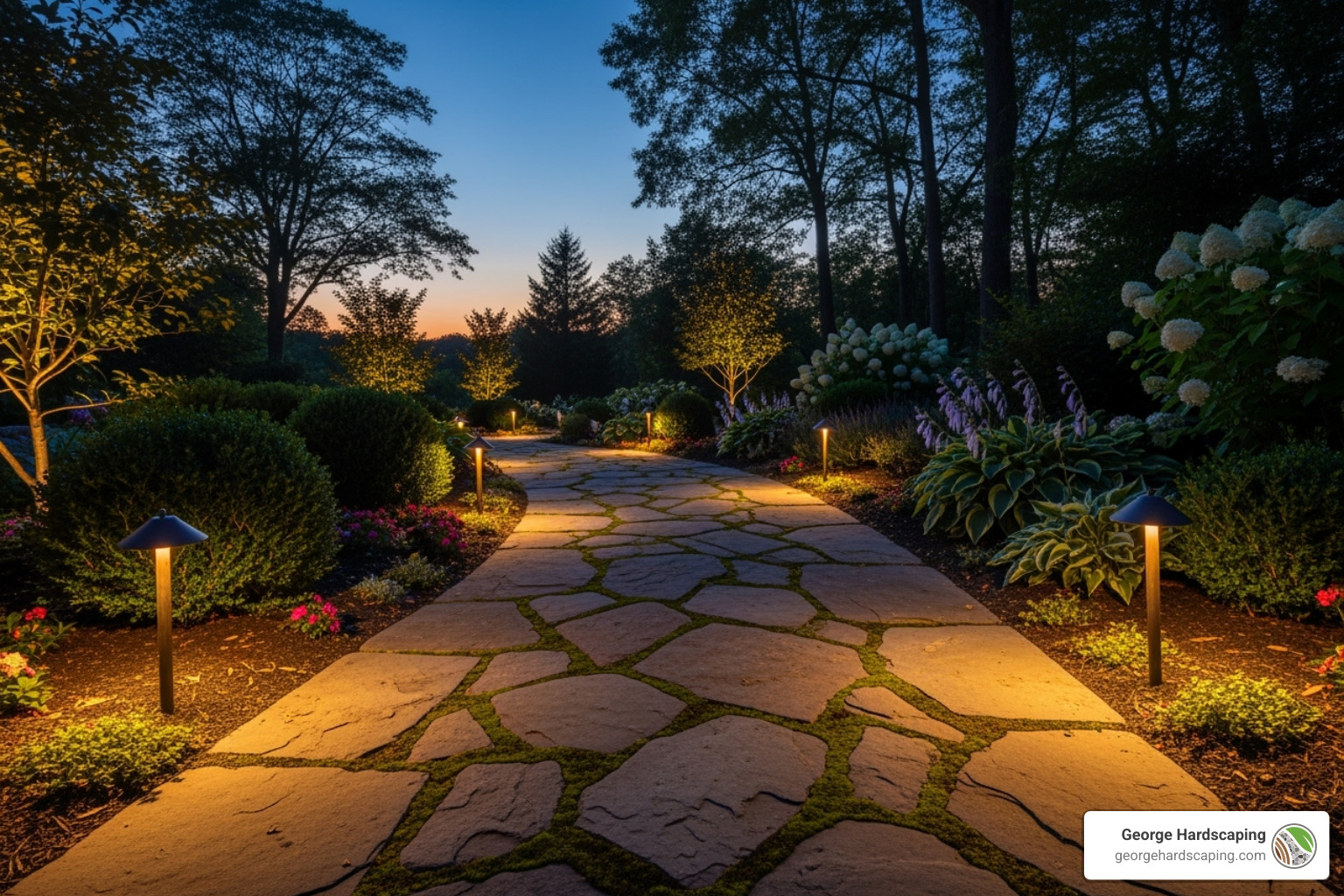
- Pathway lighting improves safety and creates a beautiful ambiance at night. Low-voltage lighting highlights the stone’s texture and extends the usability of your outdoor space.
- Garden borders define the walkway and separate it from the landscape. Use complementary stone, pavers, or low-growing plants for a polished look.
- Planting flowers or shrubs along the path softens the stone’s hard lines and integrates it into the garden. Low-growing options like hostas or ornamental grasses add color without creating extra maintenance.
- For properties with elevation changes, integrating matching stone steps creates a cohesive and grand transition.
Create a cohesive look by connecting your walkway to other hardscaping elements like a patio or firepit. George Hardscaping helps clients in areas like Gloucester and Rockport develop integrated hardscaping services for a unified design that improves property value.
Maintaining Your Flagstone Path
The good news is that a properly installed dry-laid flagstone walkway requires minimal maintenance.
- Regular sweeping prevents debris from accumulating in the joints, which discourages weed growth.
- Weed control is a common concern. For occasional weeds, use boiling water or pull them by hand. Avoid harsh chemical herbicides that can damage the stone.
- Top up joint filler annually in the spring. Sweep fresh stone dust into the joints to keep them full and tight, which maintains stability and prevents weeds.
- If you find a wobbly stone, simply lift it, adjust the stone dust underneath to level it, and tap it back into place.
- Clean your walkway with a stiff brush and water. For tougher stains like moss, use a pressure washer on a low setting. Use stone-safe cleaners for specific stains, testing on a small area first.
- Sealing is optional. It can improve color and protect against stains but isn’t necessary for durability. If you do seal, use a breathable sealer designed for natural stone.
Frequently Asked Questions about Flagstone Walkways
What is the estimated cost of a flagstone walkway?
Understanding the costs of a flagstone walkway helps you budget effectively. The final price depends on several factors.
- Material costs: Flagstone itself typically ranges from $4 to $10+ per square foot. Remember to add about 5% extra for cuts and potential breakage.
- Base material costs: Materials like crushed stone and stone dust might cost $300 to $700 for a 100-square-foot project. This is an essential investment in your walkway’s stability.
- Professional installation: Based on industry averages from various internet sources (and not actual George Hardscaping costs), professional installation typically ranges from $15 to over $45 per square foot. This wide range reflects project complexity and quality.
A professionally installed 100-square-foot walkway could range from $1,500 to $4,500+. This investment provides a durable walkway that can last for decades. The final price is affected by stone type, site complexity (curves, slopes), regional labor rates, and excavation needs.
Please note these are industry averages based on internet data and not actual costs for George Hardscaping. For an accurate estimate custom to your specific project and location in Essex County, MA, we encourage you to contact a professional paver walkway installer.
How thick should flagstone be for a walkway?
The recommended minimum thickness for walkway flagstone is 1.5 to 2 inches. This is crucial for long-term durability. Stones thinner than 1.5 inches are prone to cracking under foot traffic and the stress of New England’s freeze-thaw cycles.
While flagstones range from 1 to 3 inches thick, choosing stones at least 1.5 to 2 inches thick offers the best balance of durability and cost for most residential walkways. For areas with heavy furniture or high traffic, consider stones that are 2 inches or thicker to prevent future repairs. Don’t choose thinner stones to save money; using appropriately thick stones is fundamental to a lasting walkway.
Can I lay flagstone directly on dirt?
No, you should not lay flagstone directly on soil. This shortcut leads to an unstable walkway and future problems. Soil expands and contracts with moisture and temperature changes, causing stones laid directly on it to shift, sink, and become uneven tripping hazards.
Without a proper base, drainage is poor. Water will pool under the stones, creating mud, encouraging weeds, and forming ice in winter. Laying stones on dirt also leads to excessive weed growth, requiring constant maintenance.
A proper base of compacted crushed stone and a stone dust setting bed is essential for drainage, stability, and longevity. It prevents the settling, cracking, and weed growth common with paths laid on dirt. The investment in base materials pays off in reduced maintenance and a durable walkway. The best way to lay flagstone walkway always includes proper excavation and base preparation.
Your Next Step to a Beautiful Outdoor Space
A flagstone walkway is a rewarding project that adds beauty and function to your home. Whether you DIY or hire a professional, you now understand the best methods for a lasting installation. A well-built path, with its proper base and careful details, will provide satisfaction and withstand New England’s climate for decades.
For the DIYer, success depends on following the key steps: proper excavation, a robust base, careful stone placement, and correct joint filling. Base preparation is the most critical part.
If the project seems overwhelming, professional installation ensures quality craftsmanship. George Hardscaping has years of experience with the specific soil and climate challenges of Essex County and the North Shore. Every property is unique, from Topsfield to Wenham or Salem to Swampscott. Our local knowledge ensures your walkway is built correctly for your specific site, improving your property’s beauty and value.
Professional installation saves you time and provides access to proper equipment and expertise for handling unexpected site conditions. It ensures the job is done right the first time and integrates seamlessly with your landscape.
Whether your path is simple or elaborate, the principles of quality materials, proper preparation, and attention to detail are the keys to success. A well-built flagstone walkway improves your outdoor space, creating an inviting experience that connects you with your landscape.
Ready to transform your property with a professionally crafted walkway? Explore our walkway and stair services to get started on your project today.
