
Professional fireplace installation: 7 Powerful Benefits in 2025
The Essentials of Professional Fireplace Installation
Professional fireplace installation is the safest and most effective way to add warmth and character to your home. If you’re considering adding a fireplace, here’s what you need to know:
- Average Cost Range: $2,440 average, typically ranging from $150 to $8,000+ depending on type and complexity
- Installation Timeline: 1-3 days for electric, 3-7 days for gas inserts, 1-3 weeks for masonry fireplaces
- Required Certifications: Look for NFI (National Fireplace Institute), CSIA (Chimney Safety Institute of America), or WETT (Wood Energy Technology Transfer) certified installers
- Types Available: Wood-burning, gas, electric, pellet, each with unique benefits and installation requirements
- Safety & Compliance: Professional installation ensures proper venting, code compliance, and maintains warranties
A fireplace does more than just warm your home—it creates a focal point that improves your living space and can increase your property value by $1,000 to $5,000, according to real estate data. But improper installation can lead to serious safety hazards, including fire risk, carbon monoxide exposure, and voided home insurance coverage.
When James and Sarah from Ipswich hired a certified professional to install their gas fireplace last winter, they were surprised by how seamless the process was. “The installer handled everything from permits to the final inspection,” Sarah shared. “We didn’t have to worry about a thing, and now we have peace of mind knowing our fireplace was installed correctly.”
The difference between DIY and professional installation isn’t just about convenience—it’s about safety and long-term value. Professional installers understand the complex venting requirements, clearance specifications, and local building codes that ensure your fireplace operates efficiently and safely for years to come.
Whether you’re looking to add a traditional wood-burning hearth, a convenient gas fireplace, or an efficient electric unit, professional installation is the critical first step to enjoying the warmth and ambiance a fireplace brings to your home.
Terms related to Professional fireplace installation:
– Custom Fireplaces Installation
– Firepit installation North Shore
Choosing the Right Fireplace for Your Home
Selecting the perfect fireplace for your North Shore home involves balancing aesthetics, functionality, and budget. At George Hardscaping, we’ve guided countless homeowners through this important decision process. Let’s explore the options available to you.
Fuel-Type Breakdown
Wood-Burning Fireplaces: There’s something timeless about the crackling sound and authentic aroma of burning wood. Wood is a renewable resource and widely accessible throughout Essex County. Many of our clients in more rural areas like Boxford and Topsfield prefer traditional wood fireplaces for their rustic charm.
“I grew up with a wood fireplace, and there’s nothing like that smell and sound,” says Michael from Georgetown, one of our recent clients. “The mason from George Hardscaping understood exactly what I wanted and created a stunning stonework fireplace that’s both beautiful and functional.”
Gas Fireplaces: For convenience and clean operation, gas fireplaces are increasingly popular in towns like Beverly and Salem. They provide instant heat at the flip of a switch, require minimal maintenance, and burn cleaner than wood. Modern gas fireplaces also offer impressive flame patterns that closely mimic wood fires.
Electric Fireplaces: These plug-and-play options are ideal for condos in Marblehead or Swampscott where venting might be challenging. They require no venting, produce zero emissions, and can be installed virtually anywhere with an electrical outlet. While they lack real flames, today’s models feature remarkably realistic flame effects.
Pellet Stoves and Fireplaces: Environmentally conscious homeowners in Gloucester and Rockport often opt for pellet units. These burn compressed wood pellets, offering the warmth of wood with greater efficiency and lower emissions. They require electricity to operate feed mechanisms and fans.
Venting Options Explained
Traditional Chimney Systems: Classic masonry fireplaces use conventional chimneys to vent smoke and gases. These systems work through natural draft and require proper height and design to function effectively.
Direct-Vent Technology: Most modern gas fireplaces use direct-vent systems that pull combustion air from outside and exhaust gases through a dual-channel vent, typically through a wall rather than the roof. This design is more efficient and safer than older B-vent systems.
Vent-Free Options: Some gas fireplaces are designed to operate without external venting. While convenient, these units must be properly sized for the space and are not recommended for bedrooms or small, enclosed areas. As one NFI-certified installer notes, “Ventless gas fireplaces are best suited for outdoor applications, as they can cause breathing issues indoors.”
Make-up Air Requirements: When installing any vented heating appliance, professional installers must calculate the make-up air needs to prevent negative pressure issues in tightly sealed modern homes.
Style & Space Planning
Traditional Hearths: Classic masonry fireplaces with substantial hearths and mantels remain popular in historic homes throughout Essex County. These statement pieces often become the focal point of living rooms.
Linear Modern Designs: Contemporary homes in Lynnfield and North Reading often feature sleek, horizontal gas fireplaces with minimal trim and maximum glass viewing area. These units can be installed at various heights on the wall.
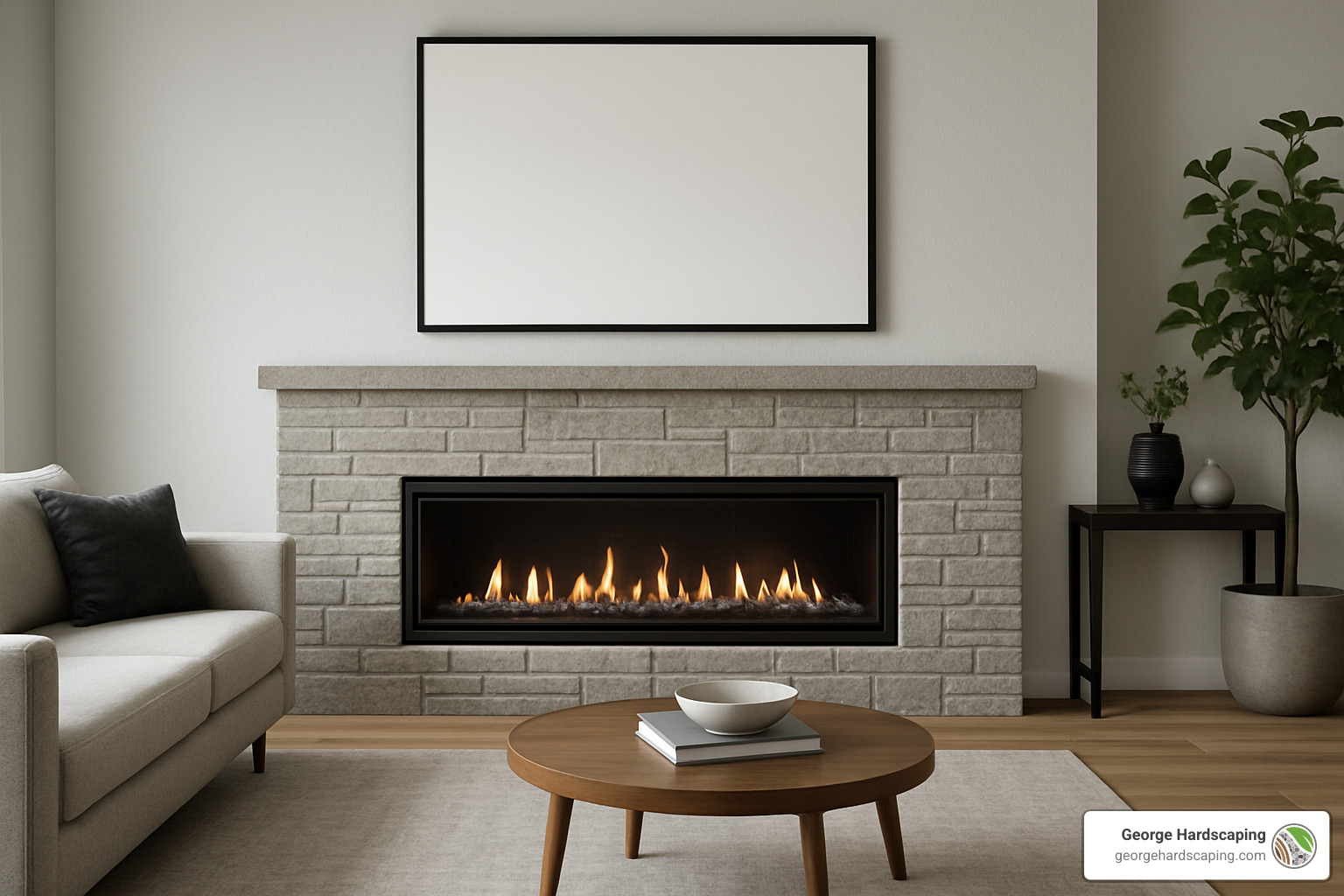
Corner Units: For efficient use of space, corner fireplaces provide warmth without dominating a room. These are popular options for smaller homes or as secondary heat sources in bedrooms.
Outdoor Fire Features: Extending your living space outdoors is a growing trend. Our Outdoor Kitchen and Fireplace services help North Shore homeowners create beautiful outdoor gathering spaces centered around fire.
When planning your fireplace installation, consider not just the current use of the space but how it might evolve. A properly installed fireplace should serve your home for decades, so thinking long-term about style and function is essential.
Professional Fireplace Installation: Why Hiring a Certified Pro Beats DIY
There’s something satisfying about completing a DIY project around the house—but when it comes to fireplace installation, this isn’t the time to test your handyman skills. The stakes are simply too high when dealing with fire and combustion inside your home.
“I’ve seen the aftermath of DIY fireplace installations gone wrong,” says Tom, one of our trusted NFI-certified partners. “The damage from an improperly installed fireplace can be catastrophic, from house fires to carbon monoxide poisoning. It’s just not worth the risk to your family’s safety.”
Professional fireplace installation certifications
When choosing someone to install your fireplace, those letters after their name actually matter—a lot. The most respected credentials in the industry include:
NFI (National Fireplace Institute) certification is the gold standard for hearth professionals. Many states and municipalities recognize NFI certification as the basis for licensure, and certified pros must pass detailed exams specific to gas, wood, or pellet appliance installation.
CSIA (Chimney Safety Institute of America) certified technicians understand the complex science behind proper chimney function. These specialists know how draft works, what clearances are needed, and how to properly size a chimney system for optimal safety and performance.
WETT (Wood Energy Technology Transfer) certification is particularly common here in the Northeast. These professionals specialize in wood-burning systems and understand the specific requirements for hearth construction, clearances, and chimney specifications.
TSSA (Technical Standards & Safety Authority) certification (or similar local gas licensing) ensures your installer understands how to safely work with gas lines—critical knowledge when installing gas fireplaces or converting from wood to gas.
Truly dedicated professionals often pursue the Master Hearth Professional designation, awarded only to those who hold all three core NFI certifications, demonstrating mastery across wood, gas, and pellet systems.
These aren’t one-and-done credentials either. Certified professionals typically complete 24 continuing education units every three years, keeping them current on evolving technologies and safety standards.
Professional fireplace installation vs DIY: Cost & Risk
When homeowners try to cut corners with DIY installation, they often end up spending more in the long run. The average repair cost for an improperly installed fireplace is $575, with costs ranging from $95 for minor fixes to $2,500 for major issues. And that’s assuming nothing catastrophic happens.
Beyond repair costs, DIY installations put you at risk in several ways:
Warranty Protection vanishes with DIY installation. Manufacturers typically void product warranties when their fireplaces aren’t installed by qualified professionals. When you’ve invested thousands in a quality fireplace, losing that coverage is a substantial financial risk.
Insurance Compliance is another critical consideration. Many homeowners insurance policies specifically require professional installation for heating appliances. If a fire occurs—even one unrelated to your fireplace—insurers may deny claims if they find your DIY installation.
Permit and Inspection Failures are common with DIY installations. Professional installers understand local building codes and permit requirements, saving you from costly rework and frustrating delays.
The Hidden Value of Expertise
What you’re really paying for with professional fireplace installation goes far beyond basic assembly:
Heat Efficiency Optimization comes from proper positioning and configuration. Professionals understand how to maximize your fireplace’s heating capacity, potentially saving you hundreds in fuel costs annually.
Code Adherence provides peace of mind. Building codes for fireplaces are complex and vary by location. Professionals stay current with local requirements, ensuring your installation will pass inspection the first time.
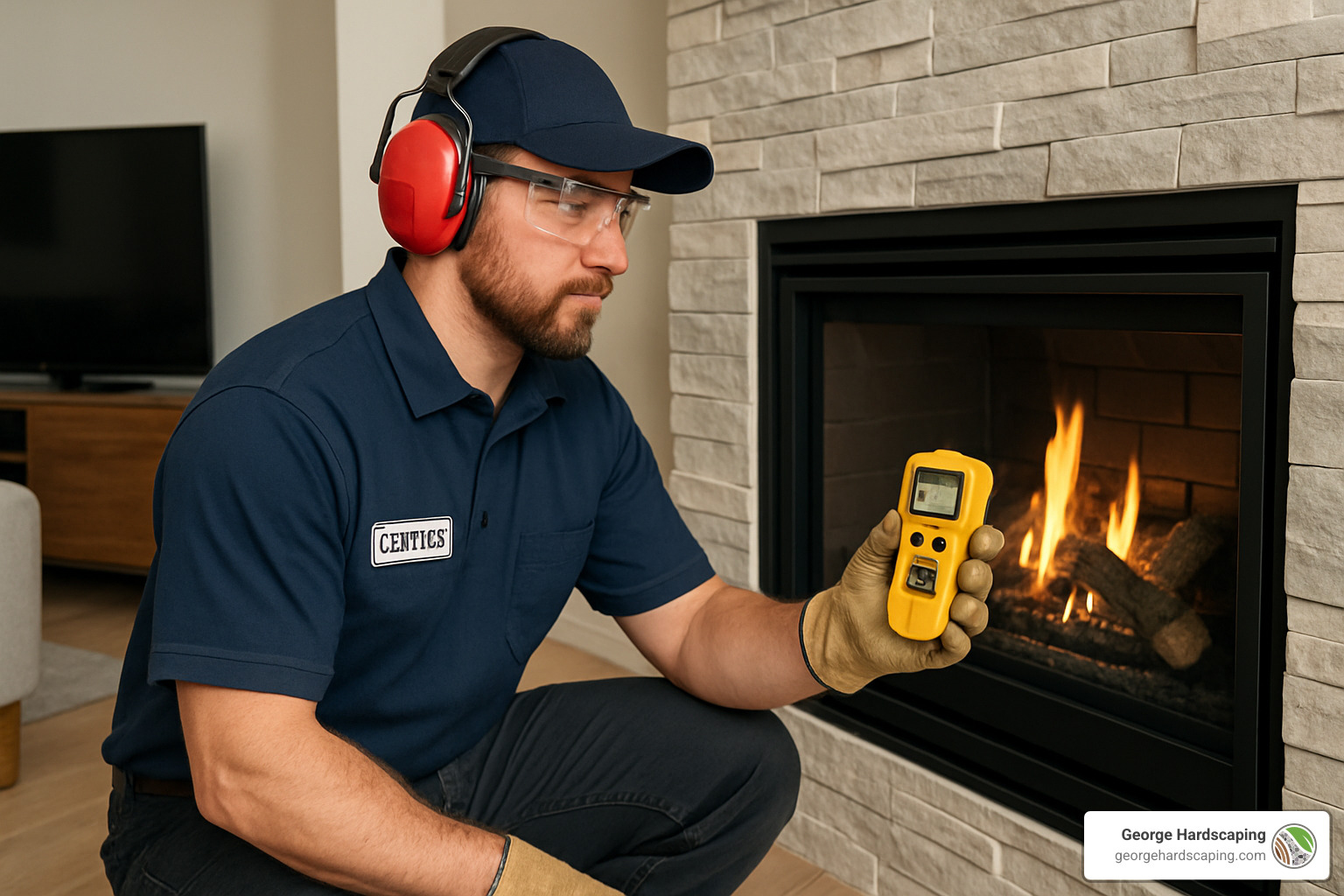
Thorough Safety Testing happens when professionals complete your installation. This includes carbon monoxide level checks, draft testing, and clearance verification—tests that DIYers often skip but are crucial for your family’s safety.
Home Protection during installation matters too. Professional installers use plastic barriers, drop cloths, and industrial vacuums to protect your home and ensure thorough cleanup afterward.
As Karen from Danvers told us after we completed her outdoor fireplace project: “The attention to detail was impressive. They protected our landscaping during the installation and left the area cleaner than when they started. I couldn’t imagine trying to tackle this myself.”
When you invest in professional fireplace installation, you’re not just paying for the physical work—you’re buying safety, compliance, efficiency, and peace of mind that will last for years. To find qualified professionals in your area, resources like the Chimney Safety Institute of America or FIND AN NFI PRO – National Fireplace Institute can help connect you with certified experts.
The Step-by-Step Installation Process
Understanding what happens during a professional fireplace installation helps you prepare for the change of your home. Let’s walk through what you can expect when you decide to add a fireplace to your North Shore property.
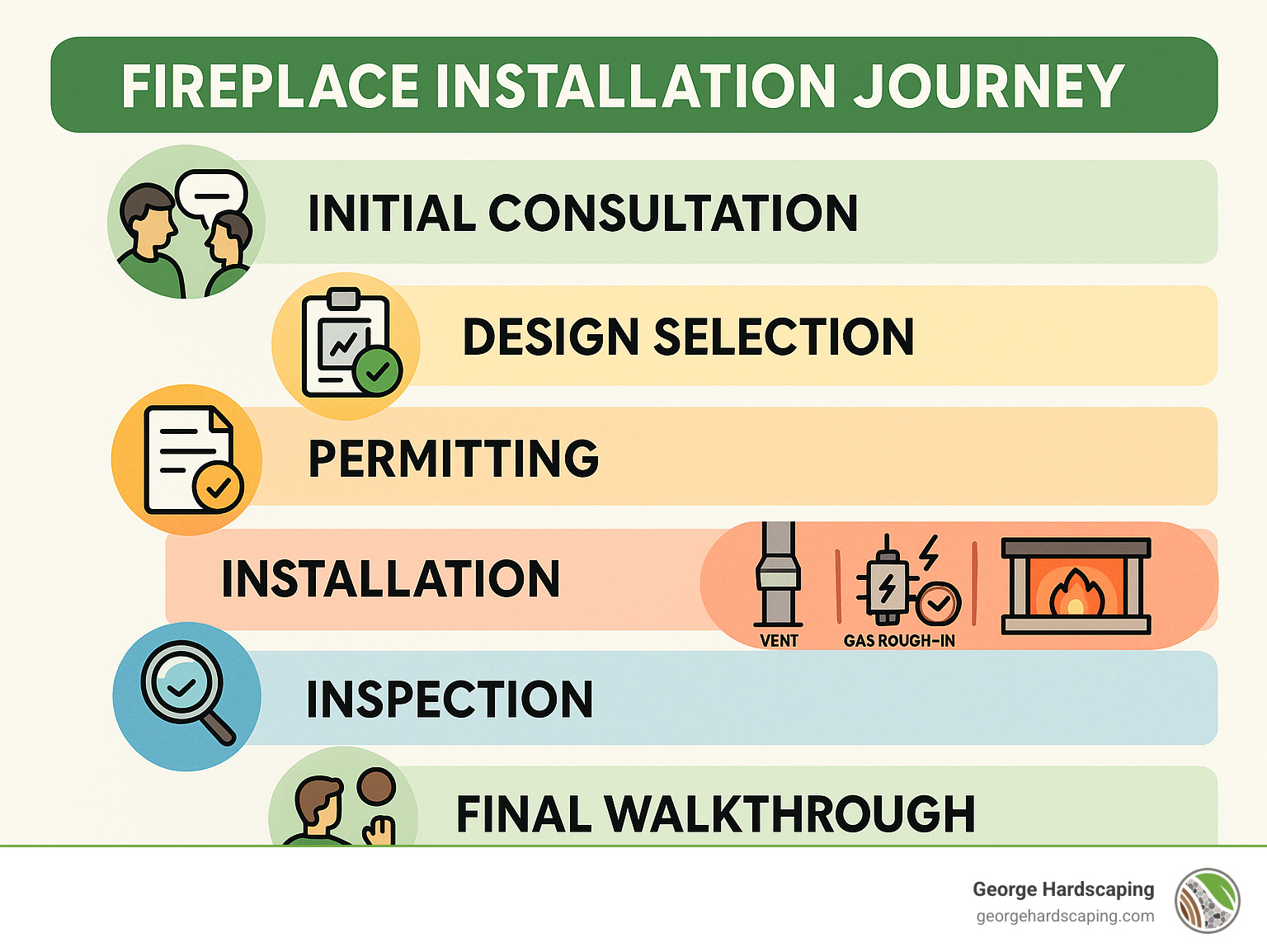
Initial Consultation and Assessment
Everything begins with a thoughtful conversation about your vision. When our team visits homes in Essex County, we’re looking at the big picture—how your family lives, what style speaks to you, and how your home is constructed.
“Most homeowners know they want a fireplace, but aren’t sure what type works best for their space,” explains our project manager. “In historic Marblehead or Salem homes, we need to balance modern safety standards with preserving the character that makes these homes special.”
During this first meeting, we’ll discuss fuel options, potential locations, and start to shape a vision for your project. We might recommend a traditional wood-burning fireplace for a rustic Topsfield home, or suggest a sleek gas insert for a contemporary Beverly condo.
In-Home Estimate
After our initial chat, we’ll schedule a detailed measurement visit. This isn’t just about taking dimensions—it’s about identifying potential challenges like structural considerations or venting pathways. You’ll receive a comprehensive quote covering everything from materials and labor to permits and inspections.
Design Selection and Contract
Once you’ve approved the estimate, the fun begins—selecting your specific fireplace and finishes. Do you prefer the clean lines of a linear gas fireplace, or the classic appeal of a traditional hearth? After making these choices, we’ll provide a formal contract outlining the scope, timeline, payment schedule, and warranty details.
Permitting
Before any physical work begins, we handle all the necessary paperwork. In North Shore communities like Newburyport or Manchester-by-the-Sea, this often involves multiple departments—building, fire safety, and sometimes historical commissions. We steer this bureaucracy so you don’t have to.
Site Preparation
When installation day arrives, our first priority is protecting your home. We set up dust barriers, lay floor protection, and establish clean work paths. For masonry fireplaces, we might need to demolish existing structures or prepare a foundation. Our goal is to minimize disruption to your daily life during the process.
Framing and Structural Work
For built-in fireplaces, proper framing creates the foundation for safety and longevity. We construct the chase (the enclosure housing the fireplace and venting) with precise attention to structural support requirements. Masonry fireplaces often require concrete footings to bear their substantial weight.
Venting Installation
This critical safety component must be installed with absolute precision. Depending on your fireplace type, we might install:
– A new chimney or line an existing one for wood-burning units
– Direct-vent piping for gas fireplaces
– Proper clearances to keep combustible materials safe
One small mistake in venting can lead to serious safety issues, which is why professional installation is non-negotiable.
Gas or Electrical Rough-In
Gas fireplaces require properly sized gas lines installed by certified technicians, while electric units need appropriate electrical connections. This specialized work must comply with strict safety codes—another area where professional expertise makes all the difference.
Appliance Setting
With infrastructure in place, we carefully position and secure your fireplace unit. For inserts, this means precise placement within an existing fireplace opening. For built-ins, we secure the firebox within the framed chase, ensuring perfect alignment and stability.
Finishing Work
Now comes the change that makes your fireplace truly yours. We apply the finishing materials that define the look:
– Traditional stonework or brickwork for classic fireplace designs
– Contemporary materials like tile or stone veneer for modern installations
– Custom mantel installation
– Hearth extensions that meet both safety codes and aesthetic goals
System Commissioning and Testing
Before we consider the job complete, we conduct thorough testing of every component:
– Draft testing ensures wood-burning fireplaces draw properly
– Gas lines undergo pressure testing to verify no leaks
– All controls and safety features are verified for proper operation
– Carbon monoxide detectors are checked or installed
Client Demonstration and Walkthrough
The final step is making sure you’re completely comfortable with your new fireplace. We’ll show you how to operate it safely, explain maintenance requirements, and answer all your questions.
“My favorite part is showing homeowners how to use their new fireplace,” says one of our installation partners. “The smile when they see those first flames is priceless—that’s when they know their house has truly become a home.”
New Construction vs Retrofit Paths
The installation process varies significantly depending on whether you’re building a new home or adding a fireplace to an existing structure.
New Construction Advantages:
Open framing provides easier access for venting and utilities, the fireplace can be integrated into the architectural design from the start, and you’ll have more flexibility in size and placement options.
Retrofit Challenges:
Existing homes may require structural reinforcements to support the fireplace weight, have limited venting options, and sometimes need demolition of existing finishes. In older North Shore homes, chimney lining or repair is often necessary.
A recent client in Ipswich shared, “We were worried about adding a fireplace to our 1920s home, but George Hardscaping helped us find a gas insert that worked with our existing chimney. They handled everything from chimney lining to making sure all the details met code requirements.”
Vented vs Ventless Workflow
The installation process differs between these two systems in important ways:
Vented Systems require precise calculation of flue dimensions and must adhere to specific clearances from windows, doors, and rooflines. Proper draft testing ensures gases flow outward, away from living spaces.
Ventless Systems must be carefully sized to match the room’s volume and include oxygen-depletion sensor checks. Verification of adequate room ventilation is essential, and additional carbon monoxide detectors are often recommended for added safety.
Timeline & Disruptions
Knowing what to expect regarding timeline helps you plan accordingly:
Electric fireplaces typically take just 1-3 days for installation and finishing. Gas inserts usually require 3-7 days, including any chimney lining work. Gas built-ins need approximately 5-10 days, depending on finishing complexity. Traditional wood-burning masonry fireplaces are the most time-intensive, taking 1-3 weeks for complete construction and curing.
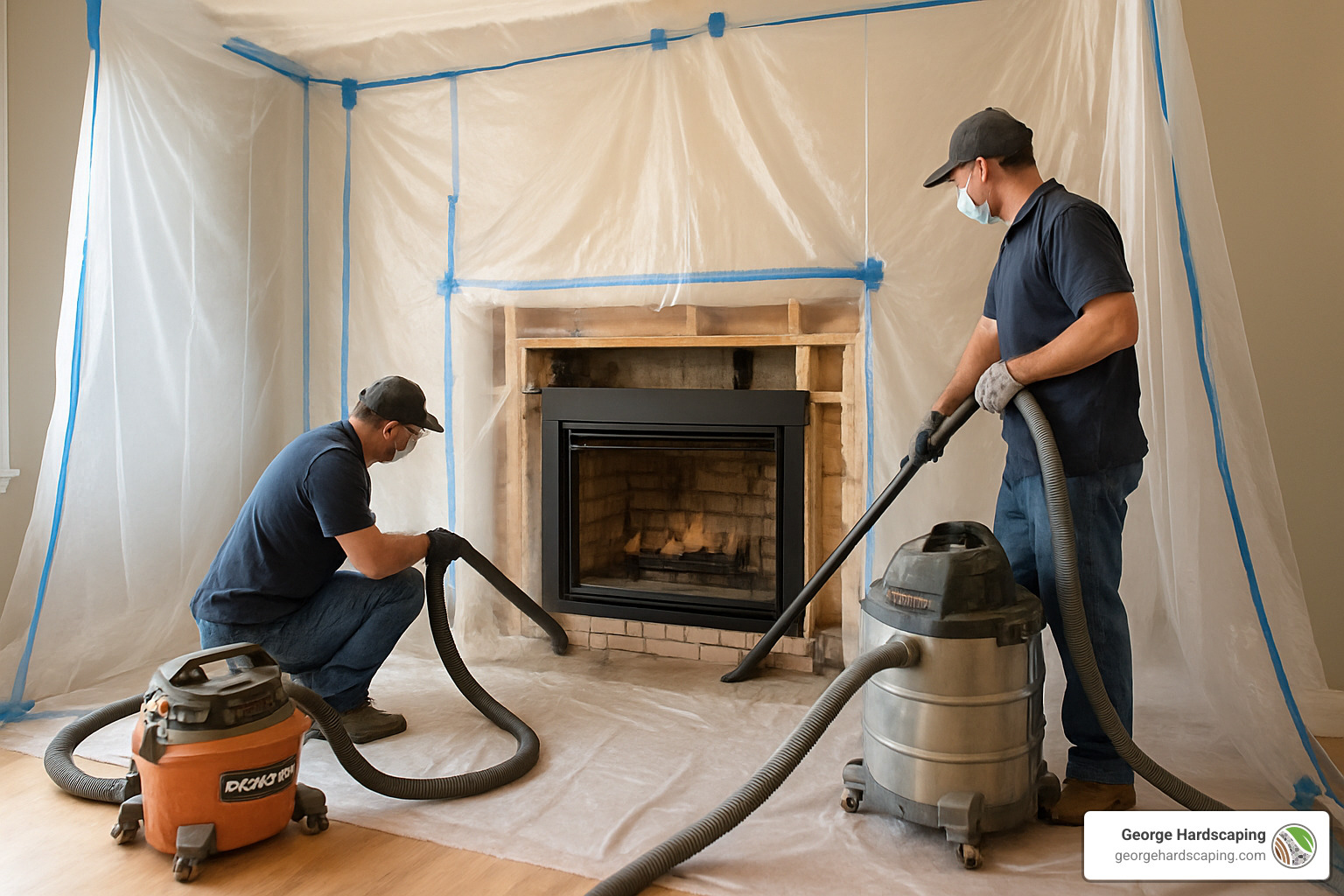
We minimize disruption through careful planning and containment measures. Plastic barriers isolate work areas, industrial vacuums control dust, and we establish clear work paths to minimize impact on your living spaces. We also schedule noisy work during convenient hours whenever possible.
As one Wenham client recently told us, “I was impressed by how tidy they kept everything. They set up plastic barriers that contained the dust to the work area, and they cleaned up thoroughly at the end of each day. It made the process so much less stressful than I expected.”
Costs, Codes & Safety Considerations
When planning for a professional fireplace installation in your North Shore home, understanding the costs, building codes, and safety requirements is crucial for making informed decisions. At George Hardscaping, we’ve guided many Essex County homeowners through this process, helping them steer both the financial and regulatory aspects.
Average Installation Costs
The investment in a fireplace varies significantly depending on the type you choose and your home’s specific requirements. Based on industry data, here’s what homeowners typically spend:
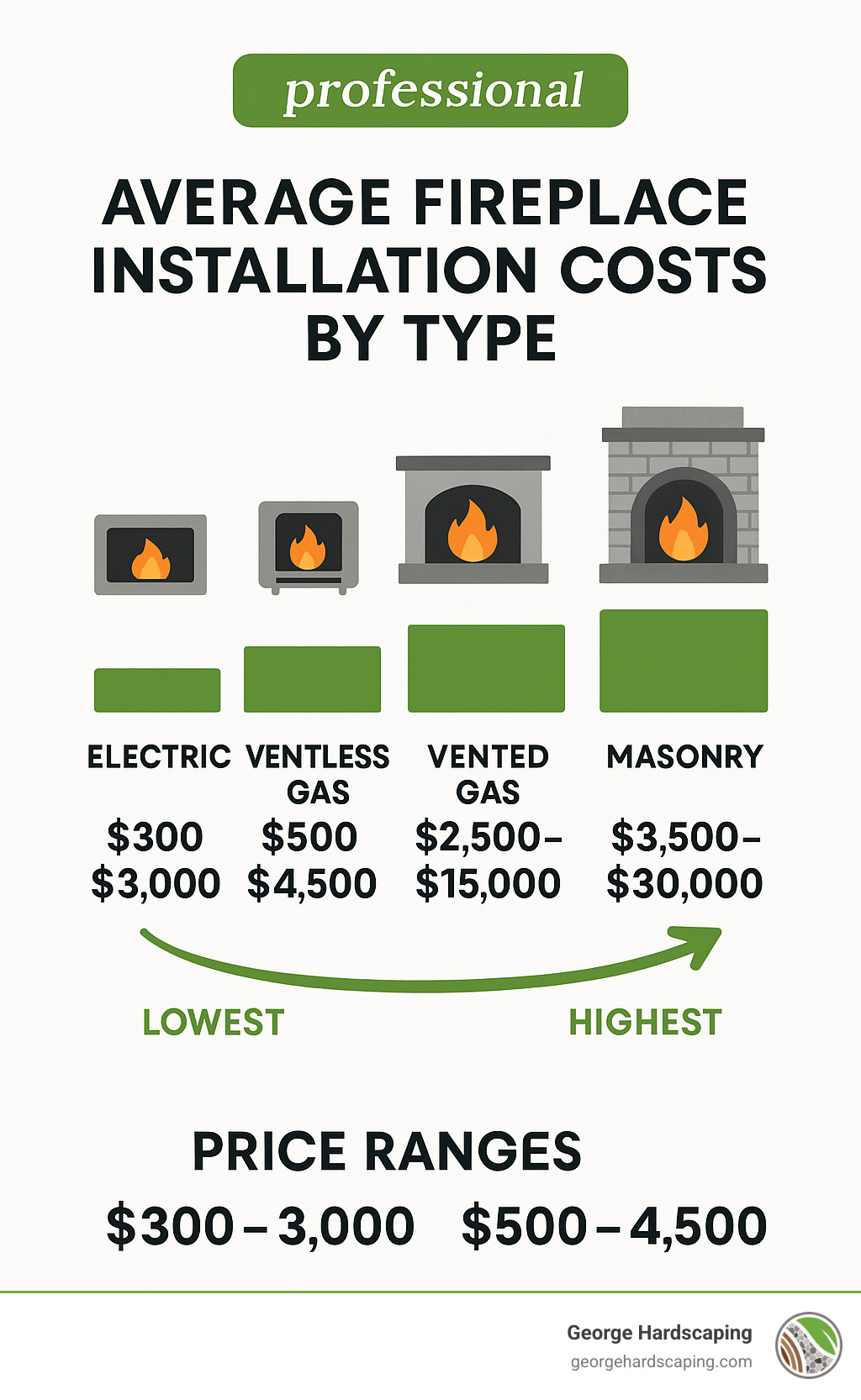
Most homeowners invest between $150 and $8,000+, with the national average hovering around $2,440. Electric fireplaces tend to be the most budget-friendly option at approximately $1,000, while ventless gas fireplaces typically run around $1,500. If you’re considering a vented gas fireplace, expect to spend closer to $5,000, and traditional wood-burning masonry fireplaces can reach up to $10,000 or more for elaborate custom designs.
Note: These are average costs based on internet data and not actual costs for George Hardscaping.
Converting an existing fireplace or removing one altogether? Wood to gas conversions generally range from $500 to $5,500, while complete fireplace removal can cost between $4,000 and $10,000 depending on complexity.
Don’t forget to budget for permits ($100-$1,000) and inspection fees ($75-$500), which vary significantly across Essex County municipalities. As one Danvers homeowner told us, “The permit process was much smoother than expected—my installer handled all the paperwork and scheduling with the building department.”
Factors That Influence Price
Several key factors can significantly impact your fireplace installation budget. Labor rates in Essex County towns like Marblehead or Manchester-by-the-Sea might run higher than in more rural areas. The fuel type you select determines what infrastructure is needed—gas lines for gas units or proper chimney systems for wood-burning options.
Venting complexity plays a major role in the final cost. “When we installed our direct-vent fireplace, we were able to vent through an exterior wall rather than the roof,” explained a Gloucester client. “Our installer mentioned this saved us nearly $1,000 in additional chimney work.”
Your choice of finish materials can dramatically affect the overall investment. While basic surrounds might add a few hundred dollars, custom stonework or elaborate mantels can add thousands to the project. In older North Shore homes, access challenges may require additional work to create proper pathways for venting and utilities.
Understanding Building Codes
Building codes aren’t just bureaucratic problems—they’re essential safeguards for your family and property. Most Essex County towns follow NFPA 211, the national standard for chimneys, fireplaces, and vents, often with local amendments that address regional concerns or historical preservation requirements.
Hearth extension rules specify how far your non-combustible hearth must extend beyond the fireplace opening—typically 16 inches in front and 8 inches on each side for wood-burning units. Modern, energy-efficient homes may require dedicated makeup air systems to ensure proper combustion and prevent negative pressure issues.
“When we installed fireplaces in Newburyport’s historic district,” our partner installer recalled, “we had to work closely with both building inspectors and the historical commission to ensure compliance while preserving the home’s character. It took extra planning, but the results were worth it.”
Financing & Incentives
The investment in a quality fireplace can be more manageable with available financing options and incentives. Many suppliers offer no-interest financing plans that allow you to enjoy your fireplace while paying over time. For environmentally conscious homeowners, the 30% Biomass Tax Credit provides significant savings on qualifying wood and pellet appliances through 2032.
Local utilities sometimes offer energy rebates for high-efficiency hearth products that reduce overall energy consumption. Beyond immediate savings, a professionally installed fireplace can increase your home’s value by $1,000 to $5,000—a significant return on investment when it’s time to sell.
A Manchester homeowner shared, “We financed our gas fireplace installation through the manufacturer’s program, and the monthly payment was easily offset by the reduction in our heating bill from using zone heating. Plus, our real estate agent says it will definitely help when we eventually sell.”
Safety Essentials
Safety should never be compromised when installing a fireplace. Carbon monoxide alarms must be installed on every level of your home and outside sleeping areas—this isn’t just a recommendation but a requirement in Massachusetts. Proper clearances between the fireplace and any combustible materials are critical for preventing hidden fire hazards.
Keep ABC-rated fire extinguishers accessible near your fireplace, and if you have young children, consider additional child safety measures like glass door temperature shields or hearth edge protection. One Beverly family told us, “Our installer recommended a safety screen for our gas fireplace since we have toddlers. It was an easy addition that gives us peace of mind.”
Proper installation isn’t just about aesthetics—it’s about creating a safe, efficient heating source that will serve your family for decades. As one certified installer noted, “A properly installed fireplace should be both beautiful and invisible—you should enjoy its warmth and ambiance without ever having to worry about its safety.”
For more information about creating beautiful outdoor living spaces centered around fire, check out our Custom Outdoor Fire Pits services.
Aftercare: Maintenance, Inspections, Warranties & Long-Term Value
Your relationship with your fireplace doesn’t end on installation day. In fact, that’s just the beginning of what should be a long and warm friendship. Proper aftercare ensures your fireplace remains safe, efficient, and beautiful for decades to come.
Scheduled Service Checklist
Just like your car needs regular oil changes, your fireplace requires consistent maintenance to perform at its best. The specific needs vary by fireplace type, but the importance remains universal.
For wood-burning fireplaces, annual chimney sweeping is absolutely essential. “Creosote buildup in wood systems needs professional sweeping to avoid chimney fires,” explains a CSIA-certified chimney sweep we partner with. “This isn’t optional maintenance—it’s essential for safety.”
Beyond sweeping, wood fireplaces need regular inspections of the chimney cap, spark arrestor, mortar integrity, and damper operation. The firebox should be cleaned regularly, with ash removed to prevent corrosion.
Gas fireplace owners should schedule yearly inspections that include checking burners, pilot lights, gas connections, and venting systems. Safety shutoff mechanisms need testing, and glass doors require cleaning to maintain both appearance and efficiency.
Even electric fireplaces, which are relatively low-maintenance, benefit from annual attention to electrical connections, heating elements, and control systems.
A Danvers homeowner shared her experience: “We schedule our annual fireplace service every fall before the heating season. It’s become part of our routine, like changing smoke detector batteries. The peace of mind is worth it.”
Common Post-Install Mistakes to Avoid
Even the most beautifully installed fireplace can develop problems if used improperly. We’ve seen several common mistakes that homeowners make:
Skipping the first-year inspection is perhaps the most critical error. This initial check helps identify any settling issues or adjustments needed during the break-in period.
Burning green wood creates excessive creosote and dramatically reduces efficiency. Wood needs approximately six months to a year of proper seasoning before it’s ready for your fireplace.
Homeowners sometimes inadvertently block vents with furniture or decorations, restricting crucial airflow. Maintaining proper clearances around your fireplace isn’t just about aesthetics—it’s about safety.
Carbon monoxide detector maintenance is non-negotiable for any home with a combustion appliance. Test monthly and replace according to manufacturer guidelines.
Finally, resist the urge to modify your fireplace setup without professional consultation. Even seemingly minor changes can impact safety and performance.
Boosting ROI with Upgrades
As you grow more comfortable with your fireplace, strategic upgrades can improve both enjoyment and value.
Smart technology has revolutionized fireplace convenience. Adding programmable thermostats or smartphone controls to gas fireplaces allows precise temperature management and scheduling, improving both comfort and efficiency.
Custom mantels transform standard fireplaces into architectural statements. Whether you prefer traditional carved wood or sleek contemporary stone, a professionally crafted mantel complements your home’s unique character.

Expanding your fire experience outdoors creates year-round enjoyment. A Swampscott homeowner told us: “After enjoying our indoor fireplace for a few years, we added one of George Hardscaping’s custom stone fire pits to our backyard. Now we enjoy fire features year-round, and our home has become the gathering place for friends and family.” Our Custom Outdoor Fire Pits bring the same quality craftsmanship to your outdoor living spaces.
Efficiency improvements like adding glass doors to open wood fireplaces or upgrading fans on existing units can improve heating performance while reducing fuel consumption.
Warranty Considerations
Professional fireplace installation protects your warranty coverage in several critical ways. Most manufacturers explicitly require professional installation to maintain warranty validity—a fact many homeowners find too late after DIY attempts.
Certified installers provide proper documentation needed for warranty claims and often handle product registration with manufacturers. Some installers even offer extended warranty coverage beyond manufacturer terms.
“Improper or DIY fireplace installation can void product warranties and increase the risk of home damage, inefficiency, or even house fires,” one certified installer emphasized. The modest upfront cost of professional installation can prevent much larger expenses down the road.
Keep all warranty documents, installation certificates, and maintenance records in a secure location. These papers become valuable if you ever need service or plan to sell your home.
Insurance and Real Estate Value
Your fireplace investment continues paying dividends long-term, particularly when properly documented and maintained.
Insurance companies increasingly require proof of professional installation and regular maintenance for homes with fireplaces. Maintaining complete records of annual inspections helps satisfy these requirements and can prevent complications with claims.
When it comes time to sell your home, a well-maintained fireplace becomes a significant selling point. “When we listed our Beverly home, the real estate agent specifically highlighted our professionally installed gas fireplace as a selling point,” shared a former client. “It definitely helped our home stand out in the market.”
For outdoor installations, our Custom Firepit Installer services create features that improve your property’s appeal and functionality while adding distinctive character that buyers remember.
With proper care and maintenance, your professionally installed fireplace will remain a source of warmth, comfort, and value for generations to come.
Frequently Asked Questions about Professional Fireplace Installation
How long does a typical installation take?
The timeline for professional fireplace installation varies significantly depending on what type of fireplace you choose:
Electric fireplaces are the quickest, typically taking just 1-3 days including all the finishing work. Gas inserts installed into existing fireplaces usually require 3-7 days, which includes any necessary chimney lining work. If you’re opting for a built-in gas fireplace, plan for approximately 5-10 days, with the timeline extending based on the complexity of your finishing choices. Traditional wood-burning masonry fireplaces are the most time-intensive, requiring 1-3 weeks for complete construction plus additional curing time.
Several factors can stretch these timelines, including how quickly your local town processes permits (which varies widely across Essex County), the complexity of your venting setup, whether specialty materials need to be ordered, and how extensive your custom finishing work will be.
As one of our Wenham clients recently told us, “Our gas fireplace installation took about a week from start to finish. The actual installation was just two days, but there was prep work beforehand and finishing touches afterward. The team at George Hardscaping kept us informed throughout the process.”
Will installing a fireplace raise my heating bills?
This is one of our most common questions, and the answer isn’t straightforward—it depends on both the type of fireplace you install and how you use it.
Traditional open wood-burning fireplaces can actually increase your heating costs if used improperly, as they tend to draw already-heated air from your home up the chimney. However, if you install an EPA-certified wood insert or closed combustion unit, you’ll enjoy much greater efficiency.
Modern direct-vent gas fireplaces are designed with efficiency in mind. Many homeowners find that using a gas fireplace for “zone heating”—warming just the room you’re in while turning down your central heating—can actually reduce their overall energy costs.
Electric fireplaces convert 100% of electricity to heat, which is efficient in one sense. However, electricity typically costs more per BTU than gas or wood in most areas of the North Shore. The advantage is their precision in zone heating—you’re not heating rooms you aren’t using.
“A properly selected and installed fireplace should be an asset to your energy strategy, not a liability,” explains one of our NFI-certified installation partners. “We help homeowners understand how to use their fireplace as part of an efficient heating plan that can actually save money in the long run.”
Can I add a fireplace to a home without a chimney?
Absolutely! This is great news for many North Shore homeowners with homes that weren’t built with fireplaces. Several excellent options exist:
Direct-vent gas fireplaces can vent horizontally through an exterior wall, eliminating the need for a traditional vertical chimney. This makes them perfect for ranch-style homes or rooms where a traditional chimney would be impractical.
Ventless gas fireplaces require no external venting at all, though they do have limitations regarding placement and room size that our professionals can explain during consultation.
Electric fireplaces need no venting whatsoever—just a standard electrical outlet. They’ve become increasingly popular in condos in Marblehead and Swampscott where structural changes are limited.
Many pellet stove models can be vented horizontally through an exterior wall with a smaller diameter pipe than traditional chimneys, offering another wood-based option.
If you’ve got your heart set on a traditional wood-burning fireplace, it is possible to construct a new chimney in most homes, though this is naturally more involved and costly.
“We recently installed a direct-vent gas fireplace in a 1950s ranch home in Peabody that never had a fireplace,” shares our project manager. “The homeowners were thrilled to finally have the warmth and ambiance they’d always wanted without major structural changes to their home.”
What maintenance will my new fireplace require?
Every fireplace requires some maintenance, though the requirements vary significantly by type:
For wood-burning fireplaces and stoves, annual chimney sweeping is essential—not optional—for preventing dangerous chimney fires. You’ll also need to remove ashes regularly, periodically inspect the firebrick and door gaskets for wear, and keep an eye out for creosote buildup.
Gas fireplaces require an annual inspection of burners, connections, and venting systems. You’ll also want to periodically clean the glass and logs, check the thermocouple and safety systems, and inspect the fan and controls for proper operation.
Electric fireplaces are the lowest maintenance option, requiring little beyond occasional dusting, checking electrical connections, and cleaning the fan if equipped.
“Regular maintenance isn’t just about performance—it’s about safety,” emphasizes a CSIA-certified technician we work with. “The small investment in annual service prevents much costlier repairs and safety risks down the road. I’ve seen what happens when maintenance is neglected, and it’s never worth the risk.”
How do I choose between wood, gas, and electric?
This is perhaps the most important decision in your fireplace journey, and it should be based on several key factors:
Your lifestyle and convenience needs matter tremendously. Wood offers the most authentic experience but requires storage, handling, and cleanup. Gas provides instant heat at the flip of a switch with minimal maintenance. Electric offers ultimate convenience with zero emissions or venting requirements.
Your home’s configuration will influence what’s practical. Existing chimneys may make wood or gas inserts more economical. Homes without venting options might be better suited for electric or ventless gas units. Space constraints in smaller homes might favor certain configurations over others.
Aesthetic preferences play a big role too. Wood provides the best authentic flame and ambiance that many Essex County homeowners love. Modern gas units offer increasingly realistic flames with convenient operation. Electric units vary in flame realism but offer the most flexible installation options.
Finally, consider budget factors from multiple angles. Initial installation costs are typically highest for wood and lowest for electric. Operational costs will vary based on local fuel prices in your area of the North Shore. Maintenance expenses are highest for wood and lowest for electric units.
A Georgetown homeowner we worked with offered this practical advice: “Think about how you’ll actually use it day-to-day. We loved the idea of a wood fireplace but realized our busy schedule meant we’d rarely take the time to build a fire. Our gas fireplace gets used almost daily because it’s so convenient.”
At George Hardscaping, we’ll walk you through all these considerations during our consultation to help you find the perfect fireplace solution for your North Shore home.
Conclusion
The journey of professional fireplace installation isn’t just about adding a heating source—it’s about creating a heart for your home that combines safety, beauty, and functionality. Throughout this guide, we’ve seen how the right fireplace, properly installed, becomes a gathering place that transforms your living space while adding significant value to your property.
At George Hardscaping, we bring the same dedication to craftsmanship that defines our outdoor stonework to the creation of beautiful, safe fireplaces. Our years of experience working with natural stone and masonry throughout Essex County gives us a unique perspective on creating fireplace installations that seamlessly blend with your home’s architecture and your personal style.
“A fireplace should reflect your lifestyle while enhancing your home’s character,” as one of our Ipswich clients recently told us. “What I appreciated most was how the team helped us think through not just how the fireplace would look, but how we’d actually use it day-to-day.”
The warmth of a professionally installed fireplace extends beyond the physical heat it produces. On cold North Shore winter evenings, there’s nothing quite like the glow of flames to create an atmosphere of comfort and welcome. Whether you’re enjoying quiet moments alone or hosting family gatherings, your fireplace becomes a natural focal point that draws people together.
Professional fireplace installation ensures this investment will serve you well for decades, with proper venting, appropriate clearances, and full compliance with building codes. The peace of mind that comes from knowing your fireplace was installed correctly is perhaps the greatest comfort of all.
For homeowners looking to extend their enjoyment of fire features to outdoor spaces, our Custom Outdoor Fire Pits services create beautiful gathering areas that can be enjoyed nearly year-round. Imagine stepping from your warm indoor fireplace to a custom stone fire pit under the stars—truly the best of both worlds for North Shore living.
From coastal communities like Gloucester and Marblehead to inland towns like Topsfield and North Andover, we’ve helped countless homeowners bring the timeless appeal of fire safely into their homes. Our understanding of both the technical requirements and aesthetic considerations ensures your fireplace will be both beautiful and properly functioning.
With regular maintenance and proper care, your professionally installed fireplace will provide warmth, ambiance, and enjoyment for generations—making it one of the most rewarding investments you can make in your home and quality of life.
When you’re ready to experience the difference that professional installation makes, we’d be honored to help you create the perfect fireplace for your North Shore home—one that combines beauty, safety, and lasting value in equal measure.
