Concrete Pool Pavers: 7 Powerful Benefits for 2025 Success
Choosing the Right Pool Deck Material
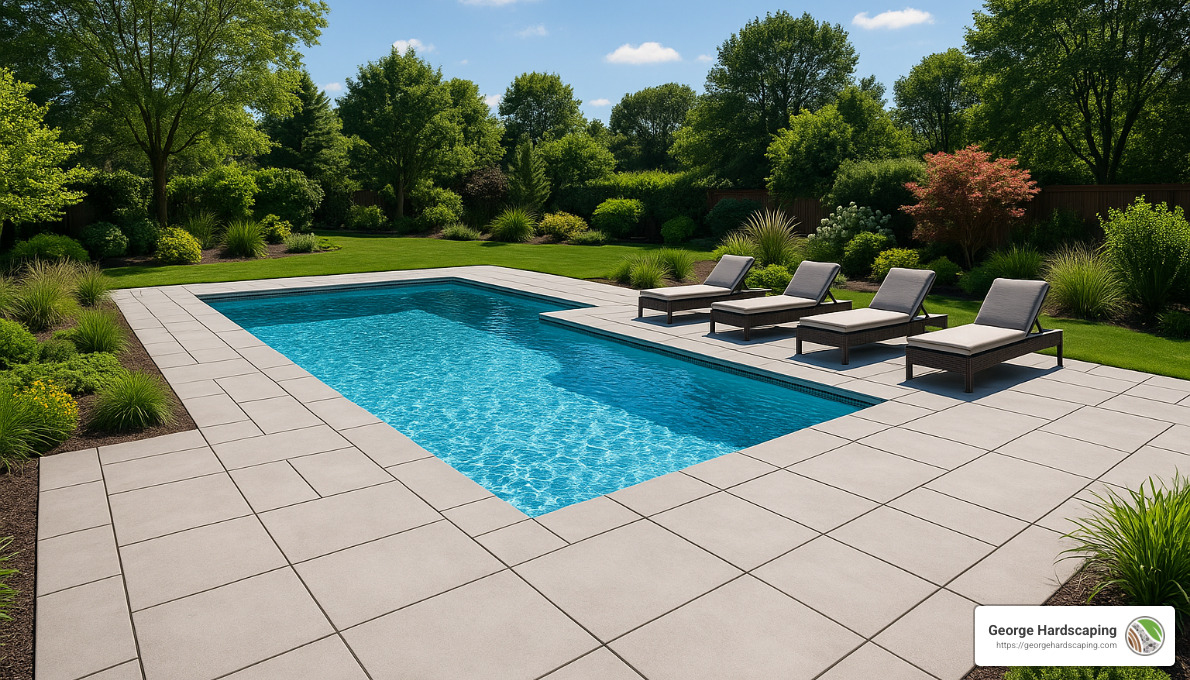
Concrete pool pavers are manufactured stone units designed specifically for pool surrounds, offering the perfect combination of durability, safety, and style for your outdoor oasis.
If you’re comparing pool deck materials, you’re probably noticing there are quite a few options out there. Let me break down what makes concrete pavers stand out from the crowd:
| Feature | Concrete Pavers | Poured Concrete | Natural Stone | Wood Decking |
|---|---|---|---|---|
| Durability | ★★★★★ (8,000+ PSI) | ★★★ (3,500 PSI) | ★★★★ | ★★ |
| Slip Resistance | ★★★★★ | ★★★ | ★★★★ | ★★ |
| Heat Resistance | ★★★★ (light colors) | ★★ | ★★ | ★★★ |
| Maintenance | ★★★★ | ★★★ | ★★ | ★ |
| Repair Ease | ★★★★★ | ★★ | ★★★ | ★★★ |
| Cost Range | $10-30/sq ft | $6-15/sq ft | $20-60/sq ft | $15-30/sq ft |
On a blazing hot summer day in Massachusetts, there’s nothing better than diving into your backyard pool. But let’s be honest – the deck around your pool is where you’ll spend most of your time. It’s your family’s lounging spot, your entertainment area, and the stage for countless summer memories. That’s why choosing the right material isn’t just a design decision – it’s an investment in your outdoor lifestyle.
Concrete pool pavers have become the go-to choice for many homeowners, and for good reason. They hit that sweet spot between affordability and luxury. Unlike a poured concrete slab that’s practically guaranteed to crack eventually (especially with our harsh New England freeze-thaw cycles), these individual units work together while still moving independently. This flexibility is their superpower – allowing minor ground movement without resulting in those ugly cracks that plague solid concrete.
“Are you looking to create a look of ‘Old World’ elegance for your swimming pool area without the high cost of natural stone?” This question perfectly captures why so many of our Essex County clients choose concrete pavers. They deliver that high-end stone look you’re dreaming of, but at a price that won’t make you postpone your vacation plans.
What truly sets concrete pool pavers apart is their remarkable strength. They’re manufactured at over 9,000 PSI – that’s nearly three times stronger than poured concrete! This impressive durability means they stand up beautifully to everything your pool area faces: salt water, chlorine, temperature swings, heavy furniture, and years of summer pool parties. And here’s another huge advantage – if a single paver gets damaged or stained (maybe someone spilled their red wine), you can simply replace that individual piece without tearing up your entire deck.
Looking for more information? Check out these related pages:
– best pavers for pool area
– interlocking pool deck
– pool deck stone pavers
Why This Guide Matters
Let’s talk about what’s really important around a pool – safety. With kids running (despite your constant reminders to walk!), elderly family members, and guests in flip-flops, a slip-resistant surface isn’t just nice to have – it’s essential. Concrete pool pavers provide superior traction compared to many alternatives, especially when wet. That peace of mind alone makes them worth considering.
Beyond safety, your pool area is essentially an outdoor room – an extension of your home and a reflection of your personal style. The material you choose affects not just how it looks today, but how much time and money you’ll spend maintaining it over the years. This is particularly important in our Massachusetts climate, where freezing winters and hot summers put incredible stress on outdoor materials. What looks great in May might be cracked and damaged by November without the right choice.
As Jeff from Dora Creek shared after his installation: “The whole process from formwork to finishing touches was very professional and of high standard.” This is exactly the experience we at George Hardscaping aim to deliver with every pool paver project we complete in Essex County and the surrounding areas.
When you’re making such a significant investment in your outdoor living space, having the right information makes all the difference. That’s why we’ve created this comprehensive guide – to help you make the best choice for your family, your home, and your lifestyle.
What Are Concrete Pool Pavers?
Ever wondered what makes a pool deck both beautiful and practical? Concrete pool pavers are the answer many homeowners find when creating their backyard oasis. These aren’t just ordinary blocks—they’re specially engineered units crafted from a precise blend of cement, sand, aggregate, water, and colorants, all manufactured in controlled factory settings rather than mixed and poured on-site.
Unlike poured concrete that can deliver unpredictable results, these pavers offer consistent strength, color, and dimensions every time. They come in sizes ranging from traditional brick dimensions all the way up to impressive 3′ × 3′ slabs, giving you incredible design flexibility for your pool area.
What really sets concrete pool pavers apart for poolside applications is their thoughtfully engineered surface texture. This provides reliable slip resistance even when splashed with water—a crucial safety feature for any pool deck.
“The interlocking design is what makes concrete pavers so perfect for pool surrounds,” explains George Hardscaping’s lead installer. “Each unit works together as part of a system while still allowing subtle independent movement.” This flexibility proves invaluable around pools, where soil settling, constant water exposure, and temperature changes would cause rigid materials to crack over time.
Sustainability-minded homeowners will appreciate that concrete pool pavers are recyclable and can contribute to LEED certification. As research on freeze-thaw durability confirms, these pavers are built to withstand harsh weather conditions while maintaining their appearance and structural integrity.
For the critical edge where your deck meets the water—the pool coping—specialized pavers come with rounded edges and corners that improve both comfort and safety. These pieces withstand constant water exposure while providing a comfortable surface for swimmers entering and exiting the pool.
Many North Shore homeowners also appreciate permeable paver options, which allow rainwater to filter through rather than run off. This feature can be particularly valuable for properties in Beverly, Danvers, and other communities where effective stormwater management is both an environmental concern and sometimes a regulatory requirement.
Anatomy of a Paver
What makes a concrete pool paver different from an ordinary concrete block starts with its specialized mix. High-quality pavers combine Portland cement with precisely graded fine and coarse aggregates, plus carefully selected additives that improve performance in wet environments.
During manufacturing, this mixture undergoes extreme compression—typically exceeding 9,000 pounds per square inch (PSI). This intense pressure creates an ultra-dense material with minimal porosity, making it highly resistant to water absorption, staining, and freeze-thaw damage that would quickly deteriorate lesser materials.
Look closely at quality pool pavers and you’ll notice the slightly beveled or chamfered edges. This thoughtful design feature creates clean joint lines, reduces edge chipping, improves drainage between pavers, and provides additional slip resistance right where it’s needed most.
Many premium concrete pool pavers also incorporate subtle surface variations that capture the beauty of natural stone. As one manufacturer told us, “Our handcrafted concrete pavers mimic natural stone textures through a proprietary process.” These intentional imperfections add character while maintaining all the performance benefits of engineered concrete.
Concrete Pool Pavers vs. Poured Slab
Here in New England, where we experience dramatic temperature swings between seasons, material expansion and contraction are inevitable facts of life. This is perhaps the most compelling reason to choose concrete pool pavers over a poured concrete slab for your pool deck.
Poured concrete responds to these stresses as a single unit. When pressure exceeds its tensile strength—which happens frequently during our freeze-thaw cycles—cracks form. Once cracking begins, it typically progresses over time, creating not just an eyesore but potentially a safety hazard around your pool.
Concrete pool pavers, by contrast, include built-in flex joints—those small spaces between each unit. These joints, typically filled with specialized polymeric sand, allow for microscopic movement without cracking. When ground movement occurs, the system adjusts collectively while each individual paver remains intact.
“We’ve replaced countless cracked pool decks with paver systems,” notes one of our project managers at George Hardscaping. “The difference in durability is remarkable, especially in coastal areas like Gloucester and Rockport where salt exposure accelerates concrete deterioration.”
Another key advantage is repairability. When a poured slab cracks or stains, repairs are often visible and rarely match the original finish. With pavers, individual units can be lifted and replaced without disturbing the surrounding area, maintaining your deck’s appearance for decades to come.
With LEED certifiable benefits and superior performance characteristics, it’s easy to see why concrete pool pavers have become the preferred choice for discerning homeowners throughout Essex County who want their pool surroundings to be as impressive as they are practical.
Key Benefits of Concrete Pool Pavers
When Essex County homeowners ask us at George Hardscaping why concrete pool pavers have become so popular, I smile because the answer is simple: they’re practically perfect for our New England climate and lifestyle. Let me share why they’ve become the go-to choice for discerning pool owners throughout Beverly, Salem, and beyond.
Safety First: Slip & Heat Performance
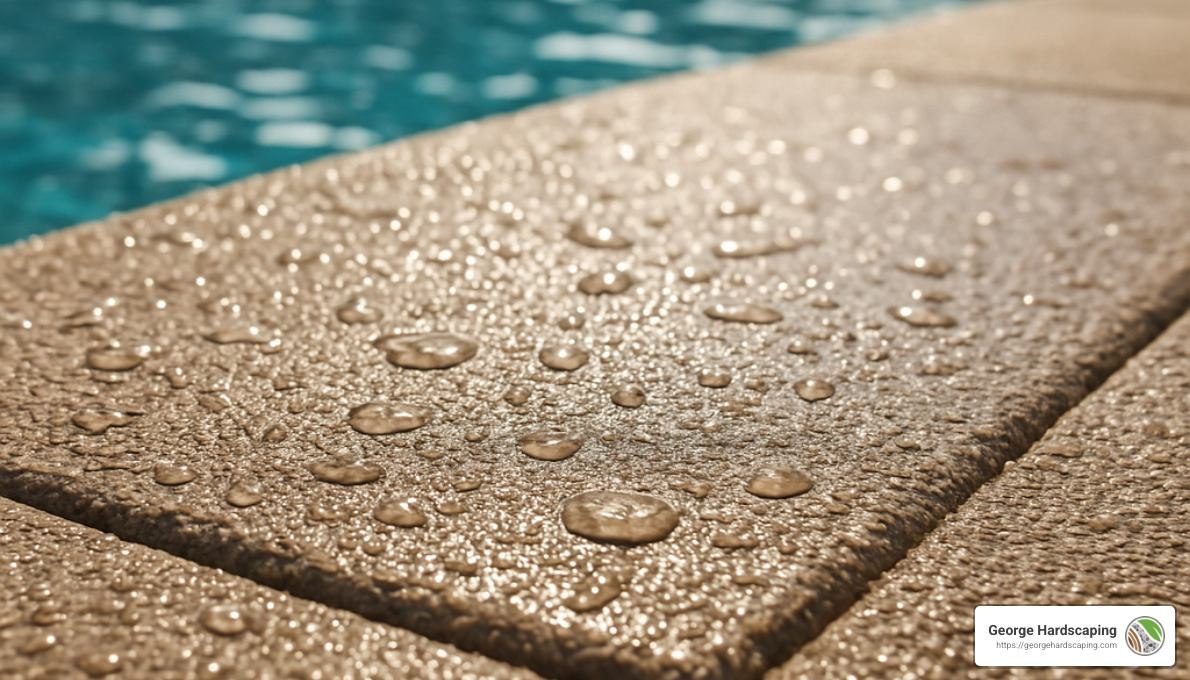
Nothing ruins a pool party faster than someone taking a nasty fall on a slippery deck. That’s why the superior slip resistance of concrete pool pavers tops our list of benefits. Their textured surfaces provide reliable traction even when splashed with water, giving you peace of mind when children or grandparents are enjoying your outdoor space.
What makes these pavers so slip-resistant? It’s actually a combination of smart design features. The micro-textured finish creates tiny grip points for bare feet, while the jointing sand between pavers provides additional traction. Plus, proper installation ensures water drains away rather than pooling on the surface.
“My kids can run around the pool without me constantly yelling ‘slow down!'” is something we hear often from relieved parents after installing concrete pool pavers.
On those scorching July and August days when the sun beats down mercilessly, your deck material makes all the difference. Dark surfaces can become painfully hot, but light-colored concrete pool pavers reflect rather than absorb solar heat. This means you can walk barefoot from your lounge chair to the pool without doing that funny hot-foot dance we’ve all experienced on traditional concrete decks.
For Marblehead and Rockport homeowners with pools in full-sun locations, this heat reduction feature alone can be worth the investment.
Longevity & Low Maintenance
I often tell clients that concrete pool pavers are like the tortoise in the race against other pool deck materials—steady, reliable, and ultimately victorious in the long run. While manufactured under controlled conditions and compressed at pressures exceeding 8,000 PSI, these pavers are built to last decades, not years.
Most quality pavers come with lifetime warranties because manufacturers know their product can withstand whatever Mother Nature throws at them. They resist pool chemicals (including harsh salt systems), stand up to freeze-thaw cycles without cracking, and maintain their color thanks to UV-stabilized pigments.
The maintenance? Refreshingly simple. A quick rinse with the garden hose keeps them looking fresh. Once a year, give them a more thorough cleaning with mild soap. Every few years, you might need to top up the joint sand or apply a fresh coat of sealer (though that’s optional).
But here’s where concrete pool pavers truly shine: repairability. Imagine dropping a bottle of red wine on your beautiful pool deck. With a poured concrete slab, that stain might be permanent. With pavers? Simply lift out the affected units, replace them with new ones, and your deck looks perfect again.
As one delighted Danvers homeowner told us: “After a tree branch fell and cracked two pavers during a storm, your team just popped them out, put new ones in, and you couldn’t tell anything had happened. Try doing that with a concrete slab!”
This easy repairability not only extends the functional lifespan of your pool deck but helps maintain its beauty for decades—making concrete pool pavers a sustainable choice that contributes to LEED certifiable benefits for environmentally conscious homeowners.
When you combine this durability with their natural resistance to salt-water damage (crucial for saltwater pools), warranty protection, and straightforward maintenance, it’s easy to see why concrete pool pavers have become the preferred choice for discerning pool owners throughout Essex County and beyond.
Design & Color Options for Poolside Style
Your pool area isn’t just about functionality—it’s your personal oasis, a reflection of your style and taste. This is where concrete pool pavers truly shine, offering a canvas for creative expression that few other materials can match.
“The variety is honestly overwhelming at first,” admits Sarah, a recent George Hardscaping client from Danvers. “But once you see the patterns laid out, you just know which one feels right for your space.”
Whether you’re drawn to classic elegance or contemporary chic, concrete pool pavers deliver. Traditional patterns like running bond create a timeless brick-like appearance with offset joints that never goes out of style. For something with more visual interest, the herringbone pattern interlocks rectangular pavers at angles that add movement and sophistication to your pool deck.
Homeowners seeking a more organic feel often gravitate toward random or ashlar patterns that mimic natural stone, while those with an eye for geometry might prefer circular or fan designs that create stunning focal points around pool areas.
The magic happens when you add border details. Many of our North Shore clients choose contrasting colors or patterns to define their pool perimeter—a design choice that’s both beautiful and practical, creating subtle visual cues for pool safety.
Choosing the Perfect Look
Color selection is where your pool area truly becomes yours. Concrete pool pavers come in an extraordinary range of hues, from crisp whites that stay cool underfoot to rich earth tones that ground your space in nature.
“I was worried about how hot the deck would get in summer,” explains Mike from Ipswich. “We went with a lighter sandstone color that looks gorgeous but doesn’t burn your feet when you’re heading to the pool.”
Temperature management is indeed a practical consideration—lighter colors reflect rather than absorb heat, making them ideal for sunny pool surrounds. But aesthetics matter too. Consider how your chosen colors will complement your home’s architecture and how they’ll appear when intensified by water reflection.
For easy maintenance, medium tones tend to hide dirt and stains better than very light or dark extremes. And if you’re concerned about fading, extremely dark colors may show more wear over time in our strong New England sun.
What many homeowners don’t realize is how concrete pool pavers can mimic premium materials at a fraction of the cost. The subtle color variations and textured surfaces of today’s pavers can convincingly replicate natural stone, giving you that high-end look without the high-end price tag or maintenance requirements.
Size options are equally impressive. From traditional brick dimensions to statement-making slabs up to 3′ × 3′, you can create truly custom designs that visually expand your space or establish intimate gathering areas around your pool.
Trend Alert: Large-Format Concrete Pool Pavers
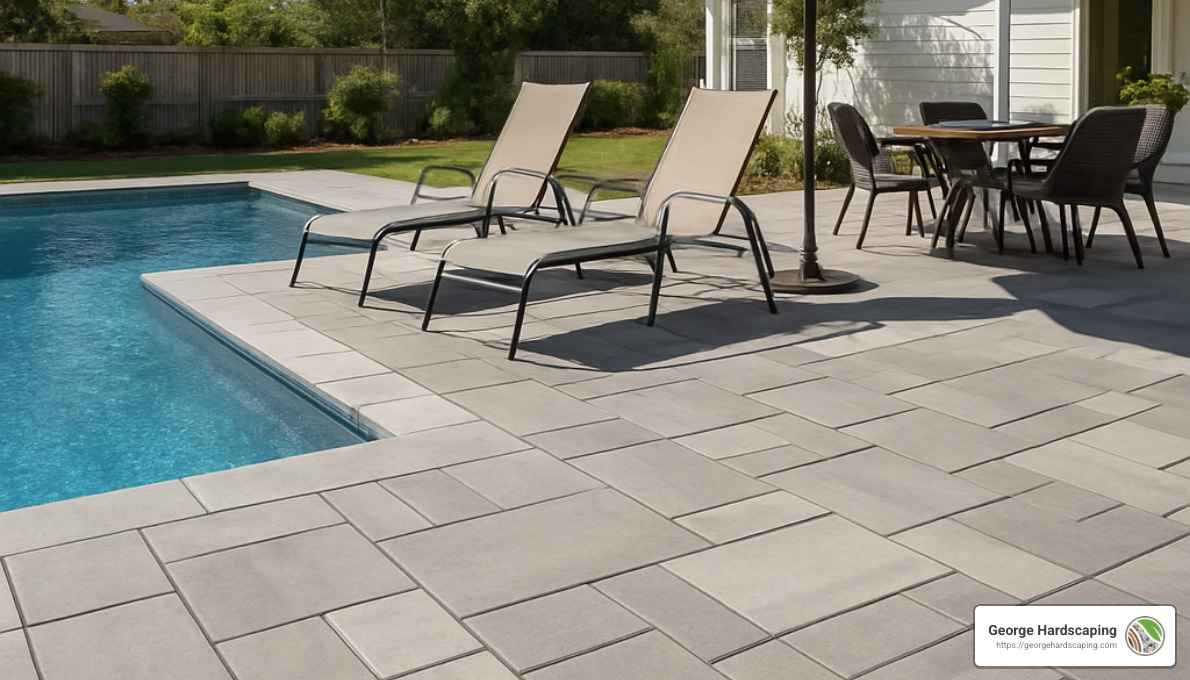
If you’ve flipped through any recent outdoor design magazines, you’ve likely noticed the growing popularity of oversized concrete pool pavers. These large-format units—typically 24″ × 24″ or larger—are changing pool decks across Essex County with their sleek, contemporary look.
“Large-format pavers completely transformed our backyard,” shares Jennifer from Lynnfield. “With fewer joint lines, the whole space feels more expansive and high-end, almost like a resort.”
These substantial pavers create a sense of spaciousness around your pool while requiring less joint maintenance over time. The clean, modern aesthetic particularly complements contemporary architecture, making them perfect for newer homes in communities like Boxford and Topsfield.
Perhaps the most practical benefit of large-format pavers is how they create a smoother surface for pool furniture. No more wobbling lounge chairs or unsteady tables—just a stable, neat foundation for your outdoor living.
For homeowners who entertain frequently, these oversized pavers provide the perfect backdrop for gatherings, with enough visual interest to be striking but not so busy that they compete with your landscaping or pool features.
At George Hardscaping, we’ve seen a dramatic increase in requests for these large-format designs, especially among clients looking to create distinctive outdoor living spaces that stand apart from their neighbors’ more traditional decks.
Installation, Maintenance & Cost Guide
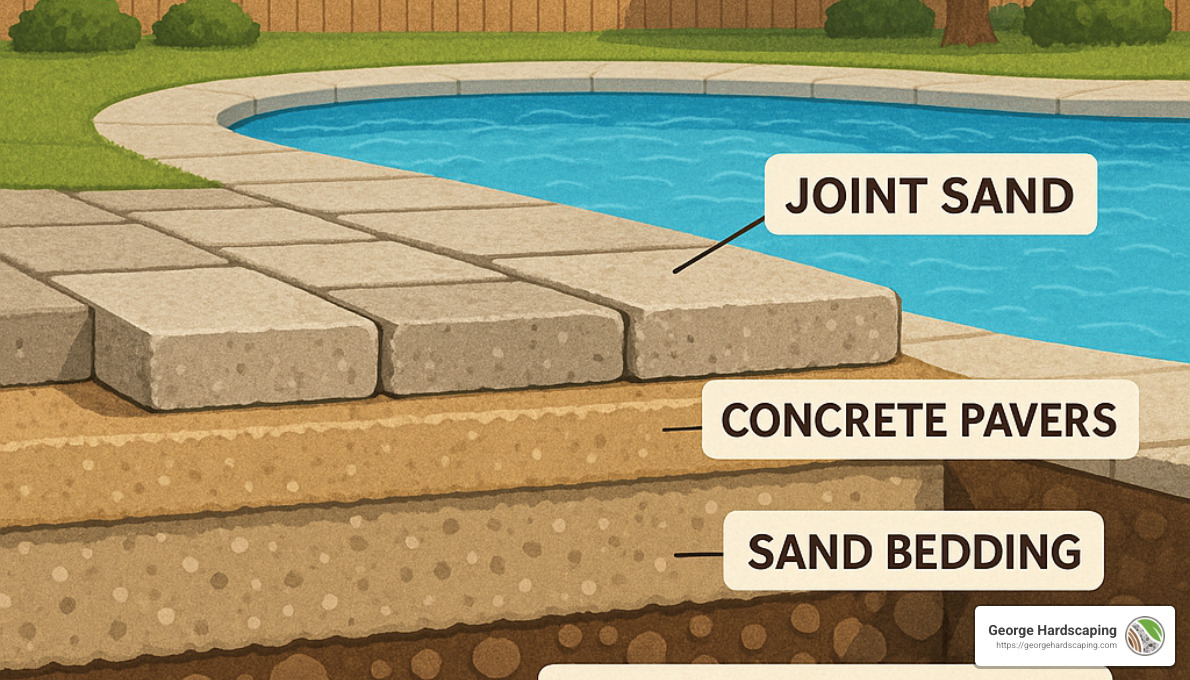
Behind every stunning pool deck is a foundation you’ll never see—but it makes all the difference. While concrete pool pavers might seem like a simple product to install, their performance depends entirely on proper preparation and technique.
Step-by-Step Installation Overview
Think of installing concrete pool pavers like building a layer cake—each layer serves a crucial purpose. At George Hardscaping, we’ve refined our process through years of experience in Essex County’s challenging climate.
It begins with thorough site preparation. We carefully remove existing materials and excavate to a depth of 8-12 inches below the finished grade. This might seem excessive, but this depth ensures proper drainage and frost protection during our harsh Massachusetts winters.
Next comes the invisible hero of your pool deck: geotextile fabric. This permeable material acts as a separator, preventing your base materials from mixing with the underlying soil over time. It’s a small detail that dramatically extends your paver deck’s lifespan.
The foundation of your pool deck is a 4-6 inch layer of crushed stone. We install and compact this material in layers until it reaches 95% density—firm enough to prevent future settling but still allowing water to drain through. This drainage capability is what helps concrete pool pavers resist frost heave better than solid concrete slabs.
“The base preparation is absolutely critical,” explains a pool contractor in our research. “Skimping here is like building a beautiful house on a questionable foundation—it might look great initially, but problems will inevitably emerge.”
Edge restraints come next—whether concrete curbing or aluminum edging—to hold everything securely in place. Then we spread a precise 1-inch layer of concrete sand as a bed for the pavers themselves.
The actual paver placement is where artistry meets precision. Each unit must be perfectly aligned and spaced to achieve the desired pattern. Custom cutting around pool edges and features requires particular skill to ensure a polished final appearance.
After placement, we use a special plate compactor to vibrate the pavers firmly into the bedding sand. Then comes the final touch: sweeping polymeric sand into the joints and misting it to activate the binding agents. This special sand hardens to lock pavers in place while remaining slightly flexible.
For homeowners looking to refresh an existing concrete pool deck, there’s good news. “Concrete pool pavers can often be installed directly over existing concrete, providing an efficient facelift without full demolition,” our research confirms. This overlay technique has become increasingly popular in established neighborhoods like North Reading and Wenham.
Most pool deck installations take between 3-7 days, depending on size and complexity. Considering the decades of enjoyment you’ll get from your new deck, it’s a relatively small investment of time.
Maintaining Concrete Pool Pavers
The beauty of concrete pool pavers isn’t just in their appearance—it’s in how little maintenance they require compared to other materials. With some basic care, your pool deck will remain beautiful and functional for decades.
Seasonal cleaning forms the backbone of paver maintenance. A thorough washing with mild detergent at the beginning and end of pool season removes accumulated dirt, prevents algae growth, and keeps colors vibrant. For most homeowners, this twice-yearly ritual is enough to maintain their deck’s appearance.
Joint sand deserves your attention annually. Take a few minutes each spring to check for areas where the polymeric sand has eroded and replenish as needed. This simple step prevents weeds from taking root and maintains the structural integrity of your deck. It’s far easier than the crack repairs required with poured concrete.
While optional, applying a quality sealer every 3-5 years can improve your concrete pool pavers‘ appearance and performance. For pool areas specifically, choose a non-slip formula designed for wet environments. The right sealer improves colors, prevents staining, and makes cleaning much easier.
“My concrete pool pavers are 15 years old and still look fantastic,” shared one homeowner in our research. “I’ve sealed them twice, and that’s basically all the maintenance they’ve needed beyond regular cleaning.”
When spills happen—and around pools, they inevitably will—prompt attention prevents staining. For existing stains, targeted cleaners designed specifically for concrete pavers can work wonders without damaging the surface. This spot-treatment capability is a significant advantage over materials that require complete refinishing when stained.
Winter care deserves special mention for Essex County homeowners. Avoid using standard deicing salts on newly installed pavers. Instead, use sand for traction or calcium magnesium acetate (CMA) products that won’t damage concrete surfaces. After the first year, quality concrete pool pavers develop excellent resistance to freeze-thaw cycles and salt exposure.
Cost Comparison
When planning your pool deck, understanding the full cost picture helps you make an informed decision. Concrete pool pavers typically represent a middle-ground initial investment with exceptional long-term value.
Based on internet averages (not George Hardscaping quotes), pool deck materials generally cost:
| Material | Average Cost Range (per sq ft) |
|---|---|
| Poured Concrete | $8 – $24 |
| Concrete Pavers | $10 – $45 |
| Brick Pavers | $15 – $50 |
| Natural Stone | $20 – $60 |
| Wood Decking | $15 – $45 |
Several factors influence your final price. Paver quality and style create the widest variation—basic pavers cost significantly less than premium options with specialized finishes or oversized formats. Pattern complexity affects labor costs, as intricate designs require more cutting and precision placement.
Site conditions matter too. Poor soil, significant slopes, or drainage issues may require additional preparation work. Access challenges can increase costs if materials must be transported by hand instead of machinery. And naturally, additional features like custom coping, steps, or drainage systems add to the total project budget.
The true value proposition of concrete pool pavers becomes clear when considering lifetime costs. While the initial investment may exceed basic poured concrete, the long-term math heavily favors pavers. Their modular nature means repairs involve replacing just a few individual units rather than refinishing or replacing entire sections.
“One of the greatest advantages of pavers is that if something happens—a stain that won’t come out or damage from a fallen tree limb—you simply replace those few affected pieces,” notes a hardscaping expert in our research. “With most other materials, damage means replacing large sections or living with imperfect repairs.”
This repairability, combined with their inherent durability, makes concrete pool pavers remarkably cost-effective over their 25+ year lifespan. For homeowners who value both immediate beauty and long-term performance, they represent an ideal balance of upfront investment and lasting value.
Interested in learning more about the installation process? Visit our detailed guide on Pavers Installation for additional information about our approach and expertise.
FAQs & Final Thoughts
Frequently Asked Questions about Concrete Pool Pavers
Are concrete pool pavers safe for wet areas?
Absolutely! Concrete pool pavers are engineered specifically with wet environments in mind. Their textured surfaces provide excellent slip resistance that far surpasses smoother materials like poured concrete or ceramic tile.
What makes them so safe? It’s all in the details. The slight texture creates just enough grip without being uncomfortable on bare feet. As our research shows, “Pavers’ porosity and surface complexity yield better slip resistance than concrete.” This natural traction becomes incredibly important when kids are running (even though we all say “no running!”) around the pool with wet feet.
For families with elderly members or those particularly concerned about safety, look for pavers with ADA-compliant slip resistance ratings. At George Hardscaping, we can help you select options that balance comfort with the reliable traction needed for Massachusetts’ pool season.
Can pavers be installed over an existing concrete deck?
Yes! This is one of our most-requested services, and for good reason. In many cases, concrete pool pavers can be installed directly over your existing concrete deck, saving you thousands in demolition costs while being kinder to the environment.
For this overlay method to work, we need three main conditions:
1. Your existing concrete needs to be structurally sound (though minor cracks are perfectly fine)
2. We can maintain proper drainage patterns
3. There’s enough height clearance for the additional materials
This approach is particularly popular among our clients in established North Shore communities like Swampscott and Marblehead, where many pools were built decades ago with concrete decks that now look dated or have developed cracks.
“It’s like giving your pool a facelift without the surgery,” as one of our clients aptly put it. We simply prepare the surface, add a thin setting bed, install your beautiful new pavers, and fill the joints. The change is remarkable, and you’ll never have to worry about those old concrete cracks again.
How long do concrete pool pavers last?
Here’s where concrete pool pavers truly shine. With proper installation and basic maintenance, you can expect them to last 25-50 years or more. Many manufacturers are so confident in their products that they offer lifetime warranties on the pavers themselves.
What makes them so durable? It’s all in the manufacturing. These aren’t your ordinary concrete blocks. They’re compressed under extreme pressure (over 8,000 PSI) creating incredibly dense units with minimal porosity. The color runs throughout the material—not just a surface coating—so even if they experience slight wear over decades, they won’t show it like other materials.
Even in our challenging New England climate, with freeze-thaw cycles that destroy lesser materials, properly installed pavers will likely outlast most other elements of your outdoor space. As our research confirms, “Many concrete pavers are guaranteed for the life of your home, ensuring long-term durability and value.”
Conclusion & Next Steps
When you’re creating a space where family memories will be made for years to come, the materials you choose matter. Concrete pool pavers offer that perfect balance of beauty, safety, and long-term value that smart homeowners are looking for.
Think about it—they resist cracking through our harsh Massachusetts winters, maintain safe, slip-resistant surfaces when wet, can be easily repaired if damaged (though that’s rarely needed), and typically last decades with minimal upkeep. All while giving you nearly unlimited design possibilities to express your personal style.
At George Hardscaping, we’ve installed countless pool decks throughout Essex County and the North Shore. Our experienced team understands the unique challenges of our local climate and can help you select the perfect pavers for your specific needs. Whether you prefer a classic look that will never go out of style or something more contemporary and bold, we’ll guide you through the options.
Ready to transform your pool area? We invite you to learn more about our pool deck installation services. Our design consultants will work with you to create a custom plan that improves both the beauty and functionality of your outdoor space.
Your pool deck isn’t just a surface—it’s where summer barbecues happen, where kids play, and where you’ll relax after a long day. Invest in materials that will provide beauty, safety, and enjoyment for decades to come.