
Garden Retaining Wall Ideas: 7 Amazing Mistakes to Avoid
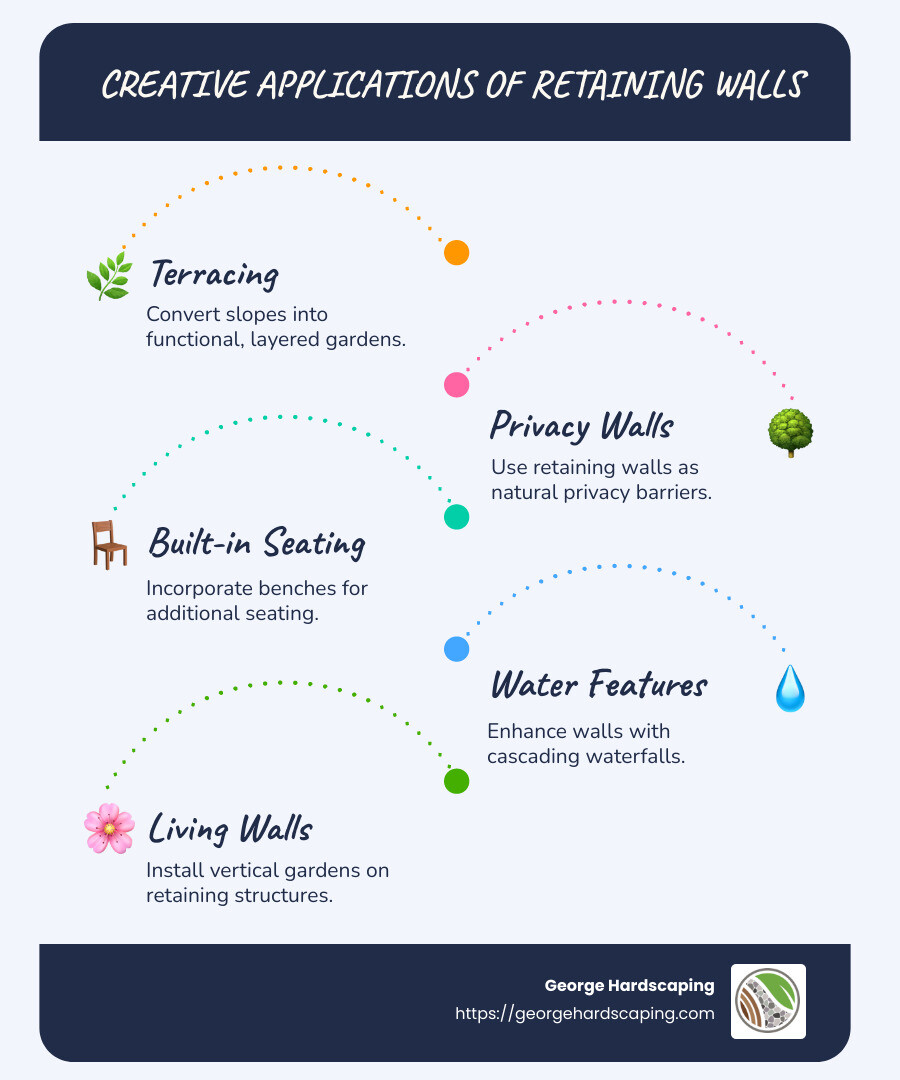
Garden retaining wall ideas offer a fantastic way to improve both the aesthetics and functionality of your outdoor spaces. Homeowners looking to improve their gardens with retaining walls can employ these structures to create visually appealing designs, stabilize soil, and define garden sections. Retaining walls offer multifunctional use beyond simply holding back soil. They can transform slopes into creative, terraced gardens, provide seating, or even become striking focal points with features like built-in benches or waterfalls.
For those in Essex County, MA, the North Shore offers diverse landscapes where hardscapes can significantly improve one’s property both practically and visually. With quality craftsmanship and the right design, retaining walls can address landscaping challenges such as soil erosion while adding genuine elegance.
Garden Retaining Wall Ideas
When it comes to garden retaining wall ideas, the possibilities are endless. Let’s explore some creative ways to use retaining walls to transform your garden space.
Design
Design is key to making your retaining wall both functional and beautiful. A well-thought-out design can turn a plain yard into a stunning landscape. Consider incorporating curves and angles to add interest. These elements can break the monotony and blend with the natural surroundings.
Tip: Use a mix of materials like concrete and natural stone to add texture and contrast. This not only improves the aesthetic appeal but also provides durability.
Slope
If your garden features a slope, retaining walls can be your best friend. They help manage the incline by creating flat, usable spaces. This can be particularly useful for gardens in hilly areas, like those found in the North Shore of Massachusetts.
Pro Tip: Integrate steps into the retaining wall to provide easy access to different levels of your garden. This not only improves functionality but also adds a dynamic visual element.
Multi-Tiered
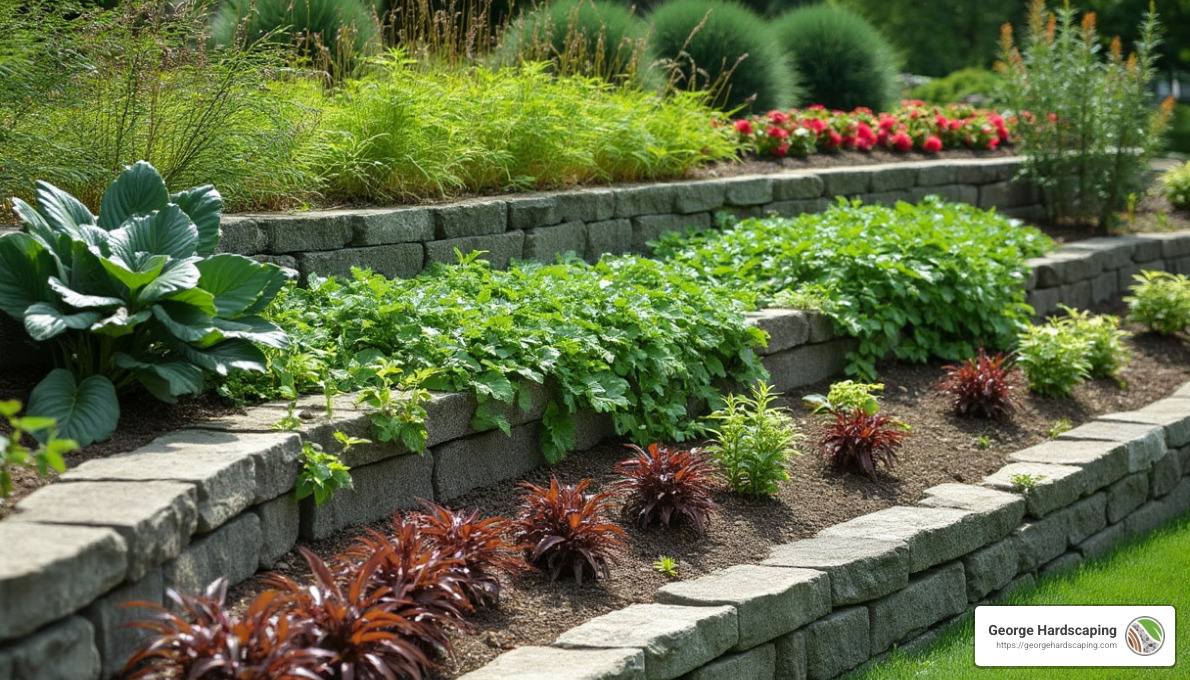
A multi-tiered retaining wall can add depth and dimension to your garden. By creating different levels, you can designate specific areas for various plants or garden features.
- Top Tier: Use for sun-loving plants or a cozy seating area.
- Middle Tier: Perfect for a small herb or vegetable garden.
- Bottom Tier: Ideal for shade-tolerant plants or a water feature.
Case Study: Some homeowners have used multi-tiered walls to create terraced gardens that look like lush, green staircases. This approach not only maximizes space but also makes maintenance easier by organizing plants by their sun and water needs.
With these garden retaining wall ideas, you can transform your outdoor space into a functional and beautiful extension of your home. Whether you’re dealing with a steep slope or just want to add some visual interest, retaining walls offer a versatile solution.
Creative Uses for Retaining Walls
Retaining walls aren’t just for holding back soil. They can be a canvas for creativity in your garden. Here are some inventive ways to use them:
Terraced Gardens
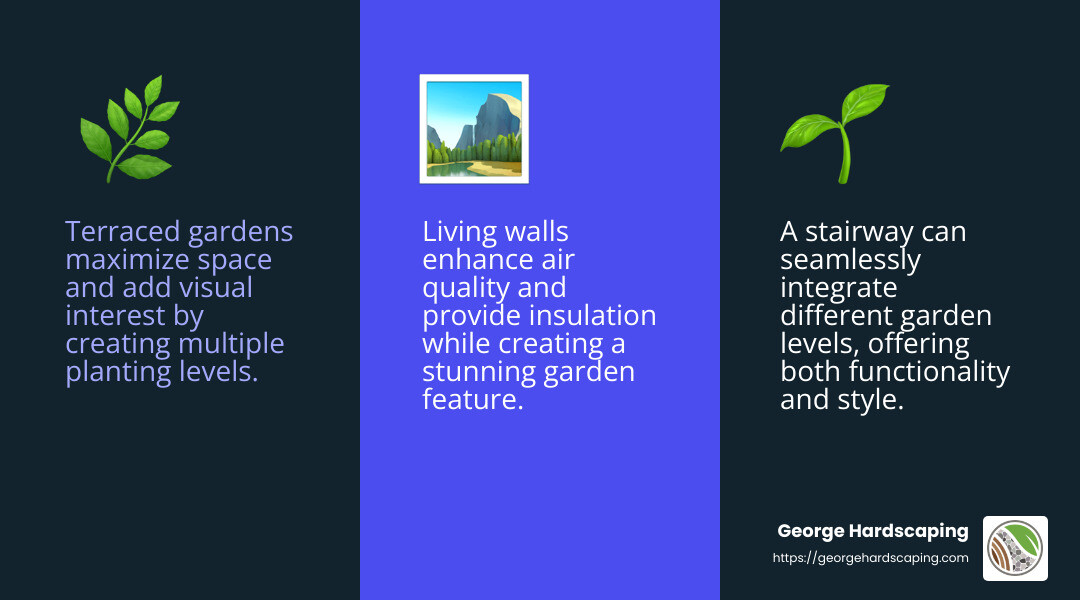
Think of terraced gardens as nature’s staircases. These are perfect for gardens on a slope, allowing you to create multiple flat areas for planting. Each step or level can host different types of plants, making it easier to manage and maintain.
Example: In the North Shore of Massachusetts, some homeowners use terraced gardens to showcase a variety of plants, from vibrant flowers to lush greenery. This setup not only maximizes space but also adds a striking visual element to the landscape.
Stairway
Incorporating a stairway into your retaining wall design is both practical and stylish. It provides easy access between different levels of your garden, especially on steep slopes. Steps can be made from the same material as the wall for a seamless look or from contrasting materials to add interest.
Pro Tip: Use wide, shallow steps for a more comfortable climb, and consider adding lighting for safety and ambiance.
Living Wall
A living wall, or vertical garden, is a unique way to bring life to your retaining wall. This involves planting a variety of plants directly into the wall, creating a lush, green mix. It’s an excellent option for small spaces where ground planting is limited.
Benefits: Living walls can improve air quality, provide insulation, and create a natural habitat for wildlife. Plus, they add a stunning visual element to any garden.
Quote: “Many retaining walls end up as garden or terrace backdrops,” says Mauricio Lobeira, an architect and interior designer. This is a testament to how versatile and impactful retaining walls can be in garden design.
By leveraging these creative uses for retaining walls, you can transform your garden into a dynamic and engaging space. Whether it’s a terraced garden, a stairway, or a living wall, each option adds its own charm and functionality to your outdoor area.
Materials for Retaining Walls
When it comes to building a retaining wall, choosing the right material is crucial. Here are some popular options to consider:
Concrete Blocks
Concrete blocks are a common choice for retaining walls due to their strength and versatility. They are easy to stack and can be used to create a variety of shapes and sizes. If you’re looking for a cost-effective solution, concrete blocks might be your best bet.
- Durability: Concrete blocks are known for their long lifespan and ability to withstand harsh weather conditions.
- Customization: They can be textured or colored to match your garden’s aesthetic.
- Ease of Installation: Many pre-made blocks are designed to interlock, making them simple to install for DIY projects.
Natural Stone
For a more organic and timeless look, natural stone is a fantastic option. Materials like granite, slate, or fieldstone can create a stunning visual impact.
- Aesthetic Appeal: Each stone is unique, offering a one-of-a-kind appearance that blends beautifully with natural landscapes.
- Strength: Natural stone is incredibly durable and can last for decades with minimal maintenance.
- Cost: While often more expensive than other materials, the investment can pay off in long-term durability and visual appeal.
Timber
Timber retaining walls offer a warm and rustic charm, perfect for gardens that seek a natural feel. However, it’s important to consider the lifespan and maintenance requirements.
- Cost-Effective: Wood is generally less expensive than stone, making it a budget-friendly choice.
- Longevity: Opt for pressure-treated wood to extend its lifespan and apply a wood preservative regularly.
- Environmental Impact: Be cautious when planting near treated wood, as chemicals can leach into the soil and affect nearby plants.
Each material has its own benefits and drawbacks, so it’s important to consider your garden’s specific needs and your personal preferences. Whether you choose concrete blocks for their simplicity, natural stone for its elegance, or timber for its warmth, the right material can transform your garden into a beautiful and functional space.
Common Mistakes to Avoid
When building a retaining wall, it’s easy to make mistakes that can lead to big problems down the line. Here are some common pitfalls to watch out for:
1. Poor Drainage
Drainage is crucial for a successful retaining wall. Without proper drainage, water can build up behind the wall, leading to increased pressure and potential failure.
- Solution: Incorporate a drainage system with gravel and weep holes to allow water to escape. Consider using moisture barriers to protect the wall structure and surrounding soil.
2. Inadequate Footing
The footing of your retaining wall is its foundation. If the footing is not strong or deep enough, the wall can shift or collapse.
- Solution: Ensure the footing is level, stable, and built with the right materials. The depth should be at least one-third of the wall’s height, especially for taller structures.
3. Ignoring Weight
The weight of the wall and the soil it holds back is a major factor in its stability. Misjudging this can lead to structural issues.
- Solution: Calculate the weight load carefully, taking into account the type of soil and any additional loads like nearby structures or water flow. Use materials that can support the weight without buckling.
By paying attention to these key areas—drainage, footing, and weight—you can avoid common mistakes and ensure your retaining wall stands strong for years to come.
Frequently Asked Questions about Retaining Walls
What is the cheapest retaining wall to build?
When it comes to building a retaining wall on a budget, concrete blocks are a popular choice. They are strong, durable, and relatively inexpensive. Another cost-effective option is using railroad ties, which are large wooden beams that can be stacked to form a wall. However, keep in mind that while railroad ties are cheap, they can rot over time and may not be the best choice for long-term durability.
For the absolute lowest cost, consider using salvaged materials like leftover bricks or stones from other projects. These can often be sourced for free or at a low cost if you check local community boards or construction sites.
What are the 7 common mistakes made when installing retaining wall blocks?
Building a retaining wall is not as simple as stacking blocks. Here are seven common mistakes to avoid:
- Poor Material Choice: Using the wrong type of block or material can lead to a weak wall. Choose materials that are suited for the wall’s height and the type of soil.
- Ignoring Drainage: Without proper drainage, water can build up and cause the wall to fail. Always include gravel and drainage pipes to manage water flow.
- Skipping the Base Preparation: A solid base is crucial. Failing to compact the soil or use a proper base material can lead to shifting.
- Not Using Geogrid: For taller walls, geogrid reinforcement is necessary to stabilize the structure. Skipping this can lead to collapse.
- Incorrect Block Placement: Misaligned blocks can weaken the wall. Ensure each block is level before stacking the next.
- Overlooking Soil Compaction: The soil behind the wall must be compacted properly to prevent settling and shifting.
- Underestimating Weight Load: Not calculating the weight load correctly can lead to structural issues. Consider the soil type and any additional loads like water or structures.
How to ensure proper drainage for retaining walls?
Proper drainage is essential to prevent water buildup and pressure that can lead to wall failure. Here’s how to ensure your retaining wall has adequate drainage:
- Gravel Layer: Place a layer of gravel behind the wall to allow water to flow freely. This reduces pressure on the wall.
- Drainage Pipes: Install perforated pipes at the base of the wall to channel water away. These pipes should lead to a safe exit point.
- Moisture Barriers: Use moisture barriers behind the wall to protect the structure and prevent water from seeping through.
By focusing on these key aspects, you can build a retaining wall that is both cost-effective and durable, avoiding common pitfalls that lead to costly repairs.
Conclusion
At George Hardscaping, we pride ourselves on bringing exceptional craftsmanship to the North Shore. Our expertise in designing and constructing retaining walls ensures that your outdoor space is not only functional but also beautifully crafted. Whether you’re looking to improve the aesthetics of your garden or need a practical solution for managing slopes, our team is dedicated to delivering results that exceed your expectations.
Our commitment to quality is evident in every project we undertake. By choosing durable materials like natural stone or concrete blocks, we ensure that your retaining wall will stand the test of time. We also focus on integrating smart design features such as proper drainage and structural reinforcements, which are vital for the longevity and stability of your wall.
Serving areas like Beverly, Gloucester, and Marblehead, we understand the unique landscape challenges of the North Shore. Our local knowledge allows us to tailor our services to meet the specific needs of your property, whether it’s crafting a terraced garden or installing a custom firepit.
If you’re ready to transform your outdoor space with a retaining wall that combines functionality with stunning design, contact us at George Hardscaping. Let our team of experts guide you through the process, ensuring a seamless experience from start to finish. Your dream garden is just a call away.
