
Walkway Paving Contractor: 10 Best Expert Tips for Success 2025
Why Finding the Right Walkway Paving Contractor Matters
A Walkway Paving Contractor is a specialized professional who designs, installs, and maintains paved pathways using materials like concrete pavers, brick, natural stone, or permeable systems. Here’s what you need to know when searching for one:
Key Services Provided:
– Site preparation and excavation
– Base installation and drainage planning
– Paver or material installation
– Sealing and finishing work
– Maintenance and repairs
What to Look For:
– Licensed and insured professionals
– 2+ years workmanship warranty
– Fixed estimates with no surprises
– Local permit handling
– References from recent projects
Your front walkway creates the first impression visitors have of your home. Whether you’re dealing with cracked concrete, poor drainage, or simply want to boost your property’s curb appeal, the right contractor makes all the difference.
Professional installation typically lasts decades, while DIY projects often fail within a few years due to improper base preparation. As one homeowner shared in online forums, “I installed my herringbone patio at age 59 with no experience, but it took a month versus one week with a contractor.”
The key is finding someone who understands your local climate challenges – like Essex County’s freeze-thaw cycles – and can recommend materials that won’t crack or shift over time.
Understanding Walkway Paving: Materials, Benefits & Design Inspiration
Choosing the right materials for your walkway is like picking the perfect outfit for your home’s front entrance. When we work with homeowners across Beverly, Salem, and the North Shore, this is often where the magic happens – where practical needs meet personal style.
Concrete pavers have earned their spot as the crowd favorite, and for good reason. They’re tough enough to handle whatever New England weather throws at them, thanks to their interlocking design that actually gets stronger over time. Unlike that old poured concrete that cracks if you look at it wrong, these individual units can be replaced if one gets damaged. Plus, the color and pattern options are practically endless.
Brick pavers bring that timeless New England charm that makes you feel like you’re walking through historic Marblehead or Manchester-by-the-Sea. There’s something about brick that just feels right with our colonial and Victorian homes – it’s like they were made for each other.
For those wanting something truly special, natural stone delivers best elegance. Every piece tells its own story, creating walkways that are genuinely one-of-a-kind. Bluestone, granite, and fieldstone are all readily available here, and they age like fine wine – getting more beautiful with time.
Permeable paving systems are the smart choice for environmentally conscious homeowners. These clever systems let rainwater pass through the joints and soak back into the ground instead of rushing off to storm drains. It’s good for your garden and even better for the planet.
Tarmac offers a budget-friendly option that’s particularly practical for longer walkways or areas where you need a smooth, even surface.
The benefits go way beyond just looking good. A quality Walkway Paving Contractor installation can boost your property value significantly while requiring surprisingly little maintenance. Research consistently shows that well-designed walkways improve both curb appeal and functionality, making your outdoor space more enjoyable year-round.
Unlike traditional concrete that often develops cracks within a few seasons, properly installed pavers move with the ground through our freeze-thaw cycles without breaking. They’re also incredibly durable – we’re talking decades of reliable service with minimal upkeep.
More info about Paver Walkways Ideas
Choosing the Best Material for Your Climate & Style
Essex County’s weather keeps us on our toes, and your walkway materials need to be ready for the challenge. Our freeze-thaw cycles are particularly tough on outdoor surfaces, so choosing the right material isn’t just about looks – it’s about long-term performance.
Natural stone pavers with low water absorption rates are champions when it comes to handling temperature swings. They just shrug off the cold and keep looking great. Concrete pavers that exceed industry standards are another solid choice for our climate.
While heat resistance isn’t our biggest concern here (we’re not Arizona, after all), those summer days can still get toasty. Lighter-colored pavers stay cooler underfoot and won’t turn your walkway into a hot plate during July heat waves.
Your color palette should work with your home’s personality and the surrounding landscape. Earth tones are natural partners for traditional New England homes, while contemporary properties can handle bolder, more dramatic choices without missing a beat.
Slip resistance is absolutely crucial with our wet springs and snowy winters. Textured surfaces and certain stone types provide the grip you need when Mother Nature decides to make things slippery.
Design Trends That Wow in 2024
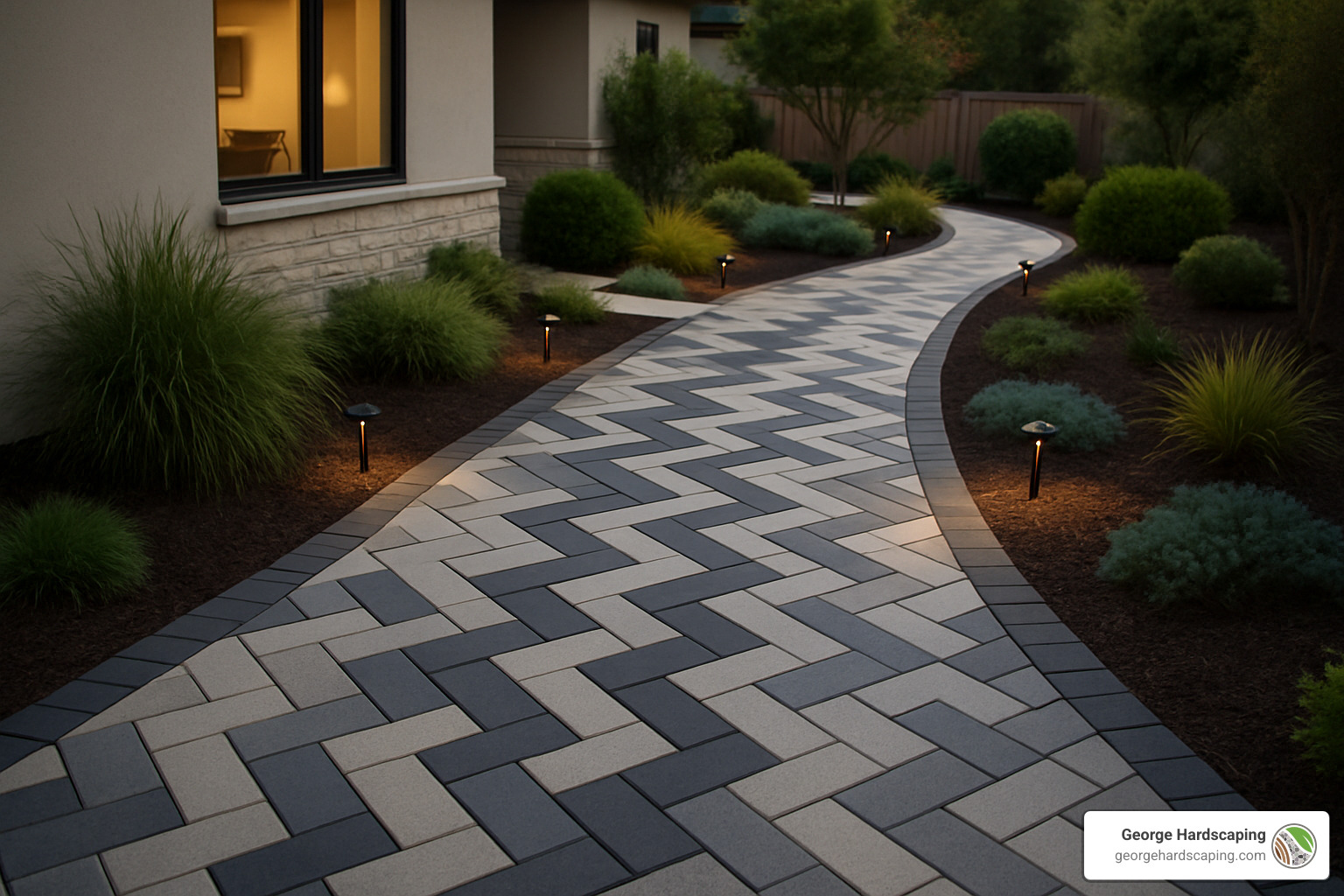
This year’s design trends prove that beautiful and practical can go hand in hand. The herringbone pattern has become incredibly popular, and it’s not just because it looks fantastic – this pattern actually provides superior stability against shifting, which is perfect for our region’s soil conditions.
Curved paths create a more welcoming, natural feel compared to straight-line walkways. They flow better with existing landscaping and can actually make smaller properties feel more spacious. It’s amazing how a gentle curve can completely change the feel of an entrance.
Integrated lighting has transformed from luxury to must-have. It extends your walkway’s usability well into the evening while boosting security around your home. Solar options make installation much simpler and keep your electricity bill happy.
Contrasting borders and accent banding help define spaces and guide visitors naturally toward your front door. This technique also lets you incorporate premium materials as accent pieces without stretching the budget too thin – you get the high-end look without the high-end price tag everywhere.
How to Hire the Right Walkway Paving Contractor
Let’s be honest – finding a trustworthy contractor can feel overwhelming. After decades of working with homeowners across Essex County, we’ve seen too many stories of projects gone wrong simply because folks didn’t know what questions to ask upfront.
The good news? A quality Walkway Paving Contractor will welcome your questions and provide clear, detailed answers. They understand that your walkway is a significant investment in your home’s beauty and functionality.
Licensing and insurance might sound like boring paperwork, but they’re your safety net. In Massachusetts, certain hardscaping projects require proper licensing, and comprehensive insurance protects both you and the workers if something unexpected happens. Don’t feel awkward asking to see these documents – legitimate contractors expect it.
Local permit knowledge separates the pros from the pretenders. Each town from Beverly to Marblehead has its own rules about setbacks, drainage, and construction requirements. Experienced local contractors steer these regulations smoothly, while out-of-area companies often stumble through the process, causing delays and headaches.
When reviewing references and portfolios, don’t just look at pretty pictures. Ask to speak with recent clients about their experience. Did the crew show up on time? Was the job site kept clean? How did the contractor handle unexpected challenges? These conversations reveal character and professionalism.
Workmanship warranties should be standard, not optional. Reputable contractors typically offer at least two years on installation work because they’re confident in their craftsmanship. Quality materials often come with separate manufacturer warranties that can last decades.
Finally, insist on fixed estimates with detailed breakdowns. Honest contractors provide clear pricing upfront and stick to it. If someone gives you a vague estimate or mentions potential “extras” that might come up, keep looking.
More info about Paver Walkways Installer
Essential Questions to Ask Your Walkway Paving Contractor
Before you sign anything, have a real conversation about the details. These questions will help you understand exactly what you’re getting and whether the contractor truly knows their craft.
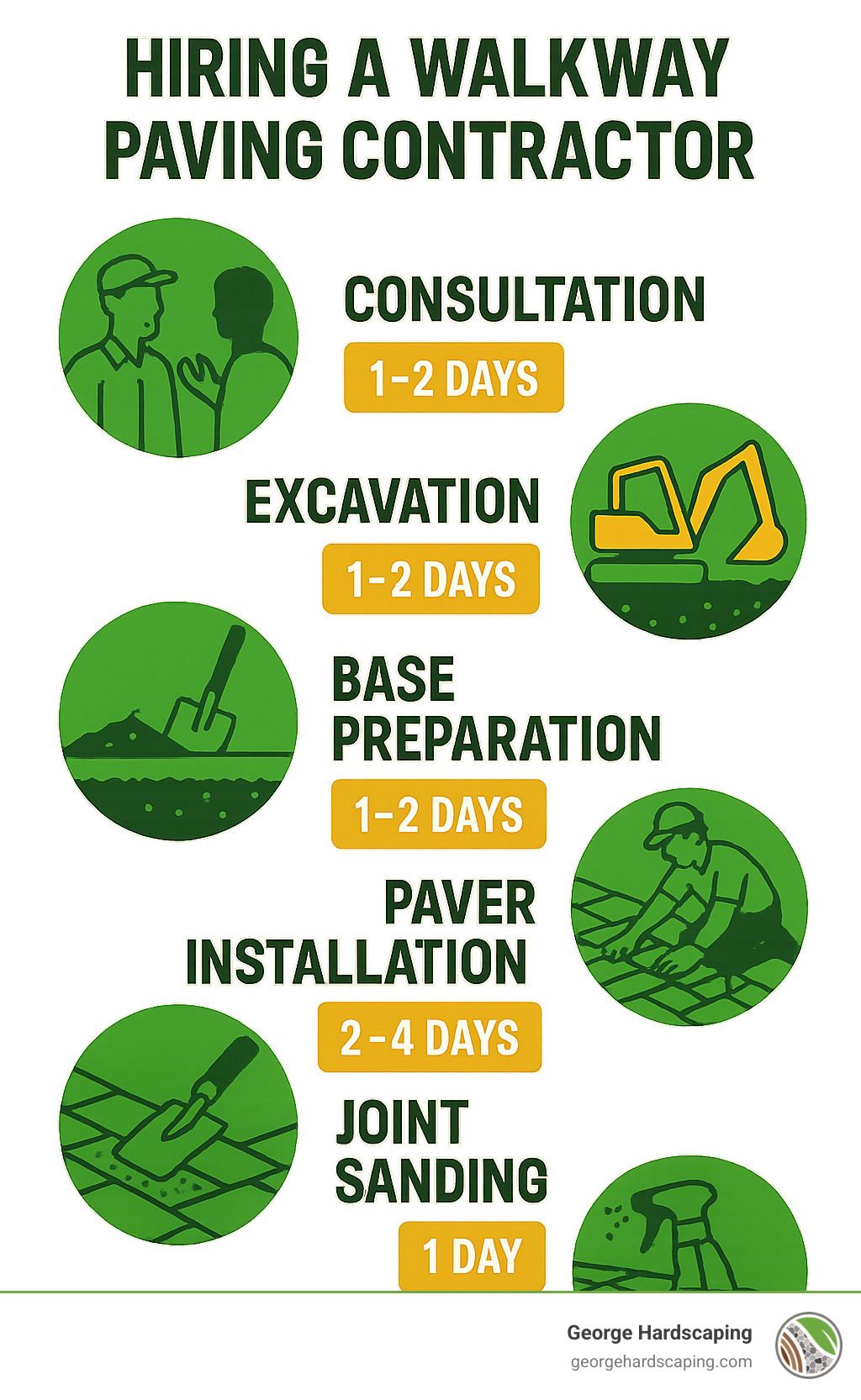
Project timeline matters for planning your life around the work. Most residential walkways take 3-7 days from start to finish, depending on size and complexity. Weather can affect scheduling, especially during our unpredictable New England springs, so ask how they handle delays.
Base preparation is where many DIY projects and cheap contractors fail. Proper excavation typically requires 6-10 inches of depth, adjusted for your specific soil conditions. Sandy soils need less excavation, while clay soils require more. A knowledgeable contractor will explain why your particular site needs what it needs.
Your drainage plan could make or break your walkway’s longevity. Poor drainage destroys even the best materials within a few years. Ask how they’ll handle water runoff and whether they need to adjust existing grades around your property.
Material sourcing reveals a lot about quality standards. Where do their pavers come from? Do they meet ASTM specifications? Local sourcing often means better support if you ever need matching materials for repairs or additions.
Don’t forget about the cleanup policy. Professional contractors protect your existing landscaping during construction and leave your property cleaner than they found it. If someone seems vague about cleanup, that’s usually how they’ll handle the rest of the project too.
Comparing Bids: What Sets One Walkway Paving Contractor Apart from Another
Not all estimates are created equal, and the cheapest bid often becomes the most expensive in the long run. Here’s how to evaluate proposals fairly and avoid costly mistakes.
Scope clarity separates professional estimates from amateur ones. The best bids break down every detail – excavation depth, base materials, paver specifications, edge restraints, joint sand type, and sealing requirements. Vague descriptions like “install walkway” usually mean corners will be cut somewhere.
Look for written guarantees that spell out exactly what’s covered and for how long. Quality contractors put their warranties in writing because they’re confident in their work. Verbal promises disappear when problems arise.
Material grades can vary dramatically in quality and price. Make sure you’re comparing equivalent materials across different bids. Premium pavers cost more upfront but often last decades longer than budget alternatives, making them a better long-term investment.
Finally, ask about crew experience. Will the same experienced team handle your entire project, or do they constantly rotate subcontractors? Experienced crews work more efficiently and deliver consistently better results because they’ve solved similar challenges many times before.
The right contractor will welcome these questions and provide clear, confident answers. If someone seems evasive or rushes through explanations, trust your instincts and keep looking.
Costs, Timelines & DIY vs. Professional Installation
Planning a walkway project means understanding what you’re really investing in. Average internet data shows walkway paving costs ranging from $8-$40 per square foot, with premium stone and intricate designs reaching the higher end (not actual costs for George Hardscaping).
The wide price range reflects several key factors that dramatically impact your final investment. Excavation requirements can make or break a budget – sites with poor drainage, stubborn tree roots, or existing concrete that needs removal require significantly more preparation work. Material selection plays a huge role too, with basic concrete pavers starting at the lower end while premium natural stone commands top pricing.
Pattern complexity affects both materials and labor time. A simple running bond pattern installs quickly and efficiently, while intricate herringbone or circular designs require more precision and time. Site access matters more than most homeowners realize – easy access keeps costs reasonable, but tight spaces where materials must be hand-carried can double labor hours.
Don’t forget about permit fees, which typically range from $50-$200 depending on your project scope and local requirements. Most towns on the North Shore have straightforward permitting processes, but it’s an often-overlooked cost that should be factored into your budget.
Timeline expectations vary based on project size and complexity. Most residential walkways take 3-7 days from start to finish when handled by experienced professionals, though weather delays and permit approval times can extend the schedule.
DIY vs Professional Walkway Paving Contractor: Pros & Cons
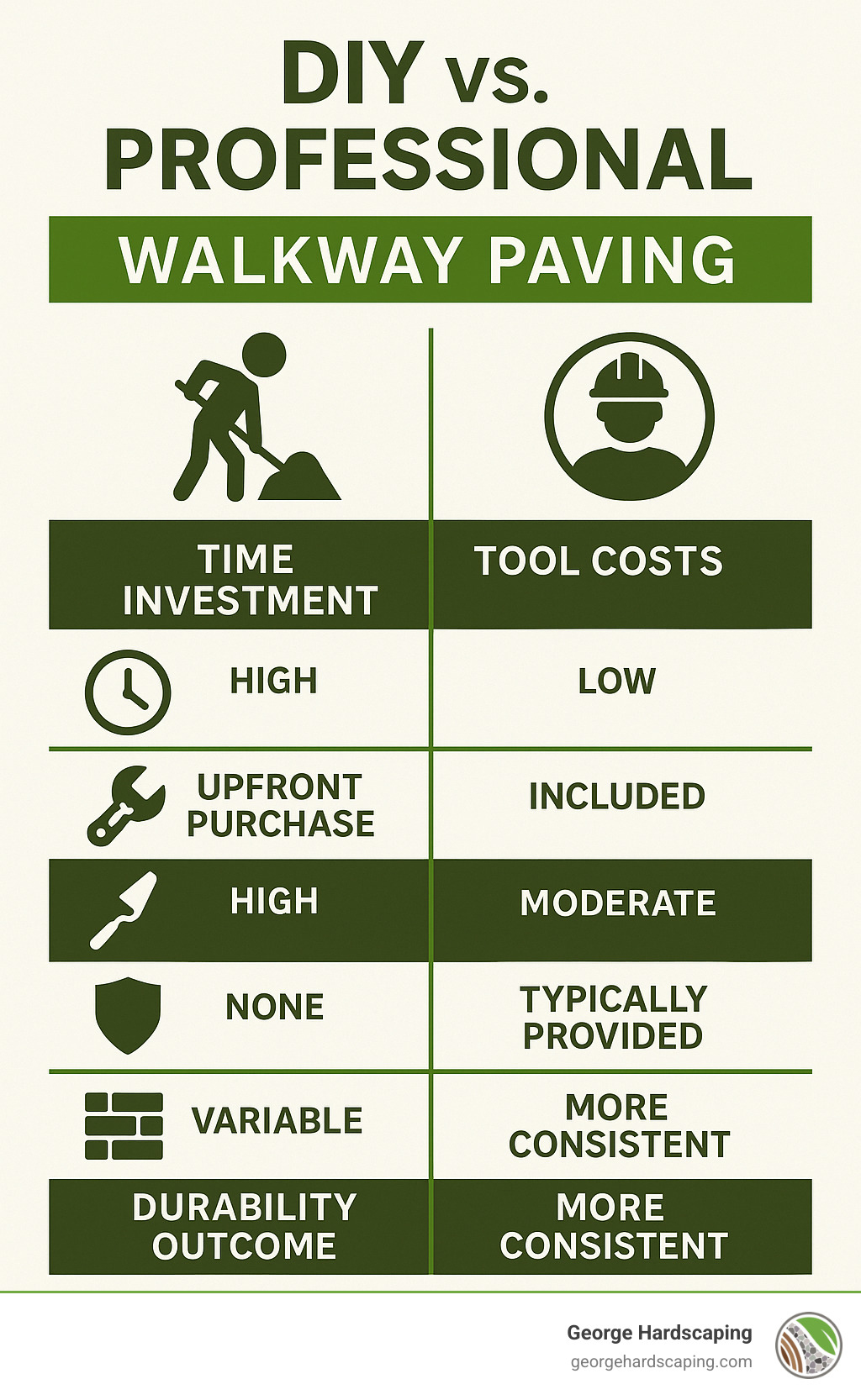
The DIY route tempts many homeowners, especially when they see the potential sweat equity savings. There’s genuine satisfaction in completing your own project, and you can work at your own pace without coordinating schedules.
But the reality check comes quickly. Tool investment adds up fast – compactor rental, wet saw purchase or rental, wheelbarrows, levels, and specialty tools can easily cost $500-$1,000 for a weekend project. The physical demands surprise most people too. One homeowner shared online: “I did mine myself with no prior experience at age 59. It took about a month working mornings and evenings, compared to one week with a contractor.”
Code compliance becomes your responsibility with DIY projects. Getting permits, understanding local requirements, and ensuring proper drainage all fall on your shoulders. Most importantly, there’s no warranty on your own work – if something goes wrong in two years, you’re fixing it yourself.
Professional installation through a qualified Walkway Paving Contractor brings expertise that’s hard to match. Base preparation – the most critical aspect of any paving project – requires knowledge that comes from experience. Proper equipment and trained crews complete work efficiently and correctly the first time.
Warranty coverage and insurance protection provide peace of mind that DIY projects can’t match. Professional contractors handle permit requirements and ensure code compliance, removing that stress from homeowners. The efficiency difference is remarkable – what takes a homeowner weeks often takes professionals just days.
The liability aspect deserves consideration too. If someone gets injured on your DIY project due to improper installation, your homeowner’s insurance might not provide full coverage. Professional contractors carry liability insurance specifically for this protection.
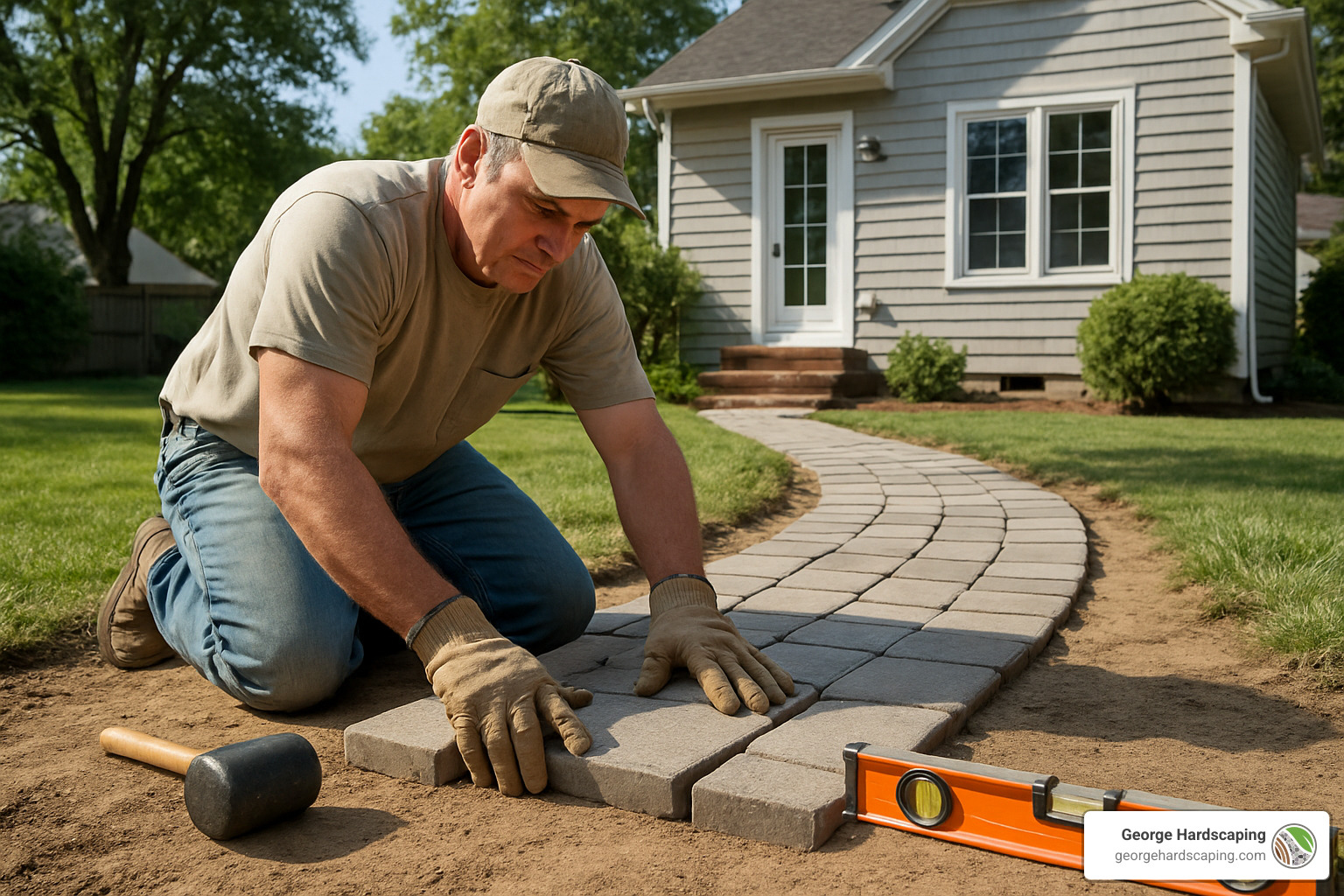
The long-term durability difference often becomes apparent within the first few years. Professional installations typically last decades with minimal maintenance, while DIY projects frequently develop issues requiring expensive repairs or complete replacement.
Average internet data ranges from $8-$40 per square foot, with high-end reflecting premium stone and intricate designs (3x median). These are not actual costs for George Hardscaping.
Maintaining & Upgrading Your Paved Walkway
Think of your paved walkway like a favorite piece of furniture – with the right care, it’ll look beautiful for decades. The good news? Maintaining pavers is surprisingly simple once you know the basics.
Regular sweeping is your best friend. A quick sweep every week or two prevents dirt buildup and keeps your walkway looking fresh. When deeper cleaning is needed, power-washing works wonders, but keep the pressure moderate to avoid damaging joint sand or paver surfaces.
Joint sand refill becomes necessary every few years as weather and foot traffic gradually wash it away. This isn’t just about looks – that sand keeps your pavers locked in place and prevents weeds from taking root between them.
Sealing every 3-5 years maintains color vibrancy and stain resistance. Some homeowners skip this step, but it’s like waxing your car – not absolutely necessary, but it keeps everything looking newer longer.
Winter brings special considerations. Safe de-icers matter more than you might think. Calcium-based products protect your pavers, while rock salt can cause surface damage over time. A plastic shovel prevents scratches during snow removal.
Here’s one of the best features of paver walkways: replacing single pavers is actually possible. Drop something heavy and crack a paver? No problem. A skilled contractor can lift out the damaged piece and replace it without disturbing the rest of your walkway.
For the environmentally minded, eco upgrades like permeable systems can often be retrofitted during major maintenance. And if you really want to go all out, heated surfaces can be integrated to melt snow and ice automatically – though this works best when planned during initial installation.
More info about How to Build a Paver Walkway on a Slope
Latest research on permeable paving
Going Green: Permeable & Recycled Solutions
More homeowners are asking about environmentally friendly options, and for good reason. Permeable paving systems do double duty – they look great while helping manage storm-water control naturally.
Instead of sending rainwater rushing toward storm drains, permeable pavers let it soak back into the ground where it belongs. This reduces flooding, recharges groundwater, and can even contribute to LEED credits if you’re building or renovating with green certification in mind.
Recycled glass pavers and other recycled content options have come a long way. Today’s recycled products maintain the same durability and attractive appearance as traditional materials while reducing your project’s carbon footprint.
The environmental benefits extend beyond the materials themselves. Properly designed permeable systems reduce the strain on municipal storm water systems – something that matters more each year as weather patterns become more intense.
Simple Upgrades for Instant Curb Appeal
Sometimes the smallest changes make the biggest difference. Border banding with contrasting colors or materials instantly lifts any walkway design. This technique also lets you incorporate premium materials as accent pieces without breaking the budget.
Solar lights have revolutionized walkway lighting. Modern versions are reliable, attractive, and require no electrical work. They provide safety for evening walks while creating beautiful ambiance that extends your outdoor enjoyment into the night hours.
Planter integration softens the transition between your paved walkway and surrounding landscape. Whether it’s built-in planters or coordinated garden borders, this approach creates a cohesive look that feels intentional rather than like separate elements competing for attention.

Frequently Asked Questions about Walkway Paving Contractor Projects
These are the questions we hear most often from homeowners considering a walkway project. Having worked with hundreds of North Shore families, we know these concerns keep people up at night – so let’s address them directly.
How long does a typical residential walkway project take?
The honest answer? Most residential walkway projects take 3-7 days from the moment we break ground to the final cleanup. But here’s what really determines your timeline:
A simple, straight walkway with good site access can be wrapped up in just 2-3 days. We’ve completed some smaller projects even faster when conditions are perfect.
Complex designs with curves, intricate patterns, or challenging site conditions need more time – usually a full week. If your walkway involves significant excavation, drainage work, or navigating tight spaces, plan for the longer timeline.
Weather is always a wildcard in New England. Rain delays are inevitable, especially during our wet spring seasons. We also can’t pour concrete or install certain materials when temperatures drop too low.
Permit approvals can add time before we even start. During busy construction seasons, some towns take longer to process applications. Your Walkway Paving Contractor should factor this into project scheduling.
Do I need a permit before hiring a Walkway Paving Contractor?
Permit requirements vary significantly across Essex County municipalities. What’s allowed without permits in Salem might require approval in Beverly – it’s frustrating, but that’s the reality of local regulations.
Generally speaking, simple walkway replacements that don’t change the footprint or drainage patterns may not need permits. But new construction, especially projects that alter how water flows around your property, often trigger permit requirements.
Your contractor should handle this headache for you. Experienced local contractors know each town’s requirements and can steer the permit process efficiently. They’ll tell you upfront what’s needed and factor permit timelines into your project schedule.
Permit fees typically range from $50-$200 depending on project scope and your specific town. It’s a small price to pay for peace of mind and code compliance.
What warranties should come with a new paved walkway?
This is where you separate the professionals from the fly-by-night operators. Expect a minimum 2-year workmanship warranty from any reputable contractor. This covers installation defects, premature settling, or failure due to improper base preparation.
Quality paver manufacturers often provide lifetime warranties on the materials themselves – but these only apply when pavers are installed correctly by qualified professionals. DIY installations typically void manufacturer warranties.
Get everything in writing. Verbal promises disappear when problems arise. Your warranty should clearly spell out what’s covered versus what’s considered normal wear and tear.
The best contractors stand behind their work because they’re confident in their installation methods. If someone hesitates to provide written warranty coverage, that’s a red flag worth paying attention to.
Conclusion
Your walkway is the first thing people notice about your home, so why not make it count? Investing in a professional Walkway Paving Contractor delivers lifetime durability when the job is done right. The magic happens when proper base preparation meets quality materials and experienced installation – creating pathways that improve your property’s beauty and functionality for decades to come.
What we love most about working with homeowners across Essex County is seeing how custom craftsmanship transforms their vision into reality. Whether you’re drawn to the timeless appeal of natural stone, the incredible versatility of concrete pavers, or the environmental benefits of permeable systems, the right contractor makes all the difference between a walkway that’s just functional and one that truly wows.
Here’s something many homeowners don’t realize until later: the ability to replace single-paver repairs when needed is a game-changer. Unlike poured concrete that requires jackhammering and replacing entire sections when problems arise, professionally installed pavers let you swap out individual units as needed. This modular approach, combined with proper installation techniques, explains why quality paver walkways often outlast their warranties by decades.
At George Hardscaping, we understand that your walkway is more than just a path from the street to your front door. It’s the first impression visitors get of your home and a reflection of your attention to quality. Our years of experience serving Beverly, Salem, Newburyport, and communities throughout the North Shore have taught us exactly how to create walkways that stand up to New England’s challenging freeze-thaw cycles while boosting your property’s curb appeal year after year.
Ready to transform your home’s entrance? Let’s discuss how the right materials, thoughtful design, and professional installation can create the perfect pathway to your door – one that you’ll be proud of for years to come.
More info about Walkways and Stairs
