
Stone Steps Design: 7 Stunning Ideas to Boost Curb Appeal 2025
The Beauty and Functionality of Stone Steps Design
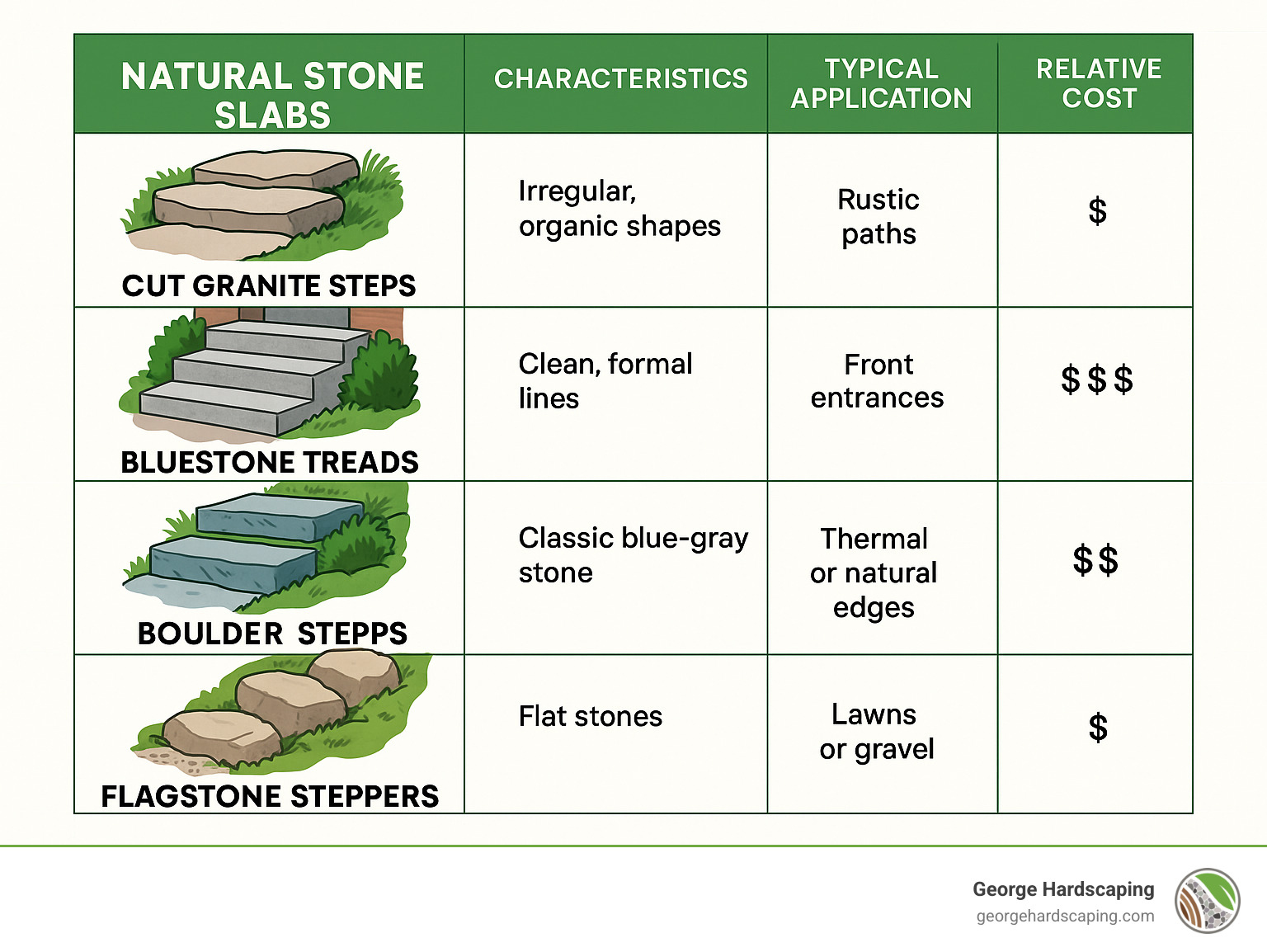
Stone steps design is one of the most impactful landscape features you can add to your property, blending both beauty and practicality. For quick inspiration, here are the most popular stone step designs:
- Natural Stone Slabs – Irregular, organic shapes for rustic paths
- Cut Granite Steps – Clean, formal lines for front entrances
- Bluestone Treads – Classic blue-gray stone with thermal or natural edges
- Boulder Steps – Natural rock formations for steep hillsides
- Flagstone Steppers – Flat stones set in lawns or gravel
Stone steps do far more than simply connect different levels of your landscape. They guide movement, improve safety, and serve as artistic focal points that lift your entire outdoor space. When thoughtfully designed, stone steps create a sense of journey and findy through your property.
As landscape architect Richard Martin once said, “Stairs get no respect. They’re often treated as purely utilitarian when they should be celebrated as both functional art and an opportunity to experience the landscape in stages.”
Whether you’re navigating a sloped yard, creating an impressive front entrance, or designing a garden pathway, the right stone steps can transform challenging terrain into one of your property’s most distinctive features. With materials ranging from natural bluestone and granite to manufactured alternatives, today’s stone step options offer solutions for every style and budget.
Stone steps are a substantial investment in both the aesthetic appeal and functionality of your outdoor space, typically lasting for decades with minimal maintenance. Unlike wooden steps that may require frequent replacement, properly installed stone steps stand the test of time while developing a natural patina that only improves their beauty.
Stone steps design terms you need:
– granite steps design ideas
– stone front steps ideas
– outdoor stone stairs ideas
Top Benefits of Stone Steps in Landscape Design
There’s something magical about stone steps that transform an ordinary landscape into something extraordinary. When we create stone steps designs for our Essex County clients, we’re crafting more than just a pathway—we’re building an experience that improves their entire property.
Stone steps have become one of the most sought-after landscape features, with over 51,000 inspirational photos on platforms like Houzz. This popularity stems from the perfect blend of beauty and practicality they bring to any outdoor space.
The natural durability of stone means your steps can last for generations with minimal upkeep. Unlike wood that deteriorates or concrete that develops cracks, stone ages with grace, developing a character that only improves with time. This longevity translates directly into improved property value—well-crafted stone steps instantly lift your home’s curb appeal by conveying quality and permanence.
Safety comes built-in with stone steps. Most natural stone provides excellent traction, especially when finished with thermal or natural-cleft surfaces that maintain grip even in wet conditions. For properties with slopes, stone steps do double duty by preventing soil erosion while creating stable grade changes that manage water runoff effectively.
What many homeowners appreciate most is how stone performs beautifully year-round. Through freezing winters and scorching summers, stone maintains its integrity when other materials might warp, crack, or fade. And with endless design possibilities—from neat cut granite to rustic boulder formations—stone steps can complement any architectural style while creating safe, accessible pathways for family members of all ages.
How Stone Steps Improve Navigation & Safety
Creating safe, comfortable stone steps isn’t just about aesthetics—it’s about the science of human movement. At George Hardscaping, we carefully calculate each step’s dimensions using the time-tested formula: 2 × riser height + tread depth = 24-27 inches. This mathematical relationship creates the most natural walking rhythm for people of all ages.
Uniform rise is crucial for preventing trips and falls. We ensure all step heights remain within a half-inch of each other throughout the entire staircase. For outdoor applications, we typically recommend comfortable tread depths of at least 12 inches, though 14-15 inches provides an even more relaxed walking experience.
The magic happens when these technical aspects blend seamlessly with beautiful design. Non-slip finishes like thermal-treated bluestone or textured granite provide excellent traction without sacrificing appearance. For evening safety and dramatic effect, proper lighting makes all the difference—recessed fixtures or under-lip LEDs transform stone steps into both a safety feature and a nighttime showpiece.
Landscape design experts generally agree that risers between 6-7 inches high hit the sweet spot for residential applications. Higher steps can feel jarring and potentially hazardous, especially for older adults or children navigating the space.
Stone Steps Design for Multi-Level Yards
Multi-level properties present some of the most exciting opportunities for creative stone steps design. A thoughtfully executed stone staircase can transform a challenging slope into the most dramatic feature of your entire landscape.
Strategic terracing breaks long flights into smaller, more manageable sections with intermittent landings. These natural pauses not only provide resting points but create opportunities for planters, seating, or simply a moment to appreciate a new view. We recommend inserting a level landing after every 5-6 steps—this rhythm creates both safety and natural flow through the space.
The best stone steps guide visual flow through your property, revealing new perspectives as you move through the landscape. On steeper terrain, steps can be integrated into the hillside with complementary plantings that soften the hardscape and create a more organic feel.
For properties with significant elevation changes, stone steps become the essential connective tissue that unites different outdoor “rooms.” They can lead from a patio to a garden, from a driveway to your front entrance, or from a deck down to a fire pit area—each transition becoming an opportunity for creative expression that improves your daily experience of home.
The journey through your landscape should feel natural and intuitive. Well-designed stone steps don’t just solve the problem of elevation change—they transform it into one of your property’s most distinctive and enjoyable features.
Stone Steps Design Styles & Inspirations
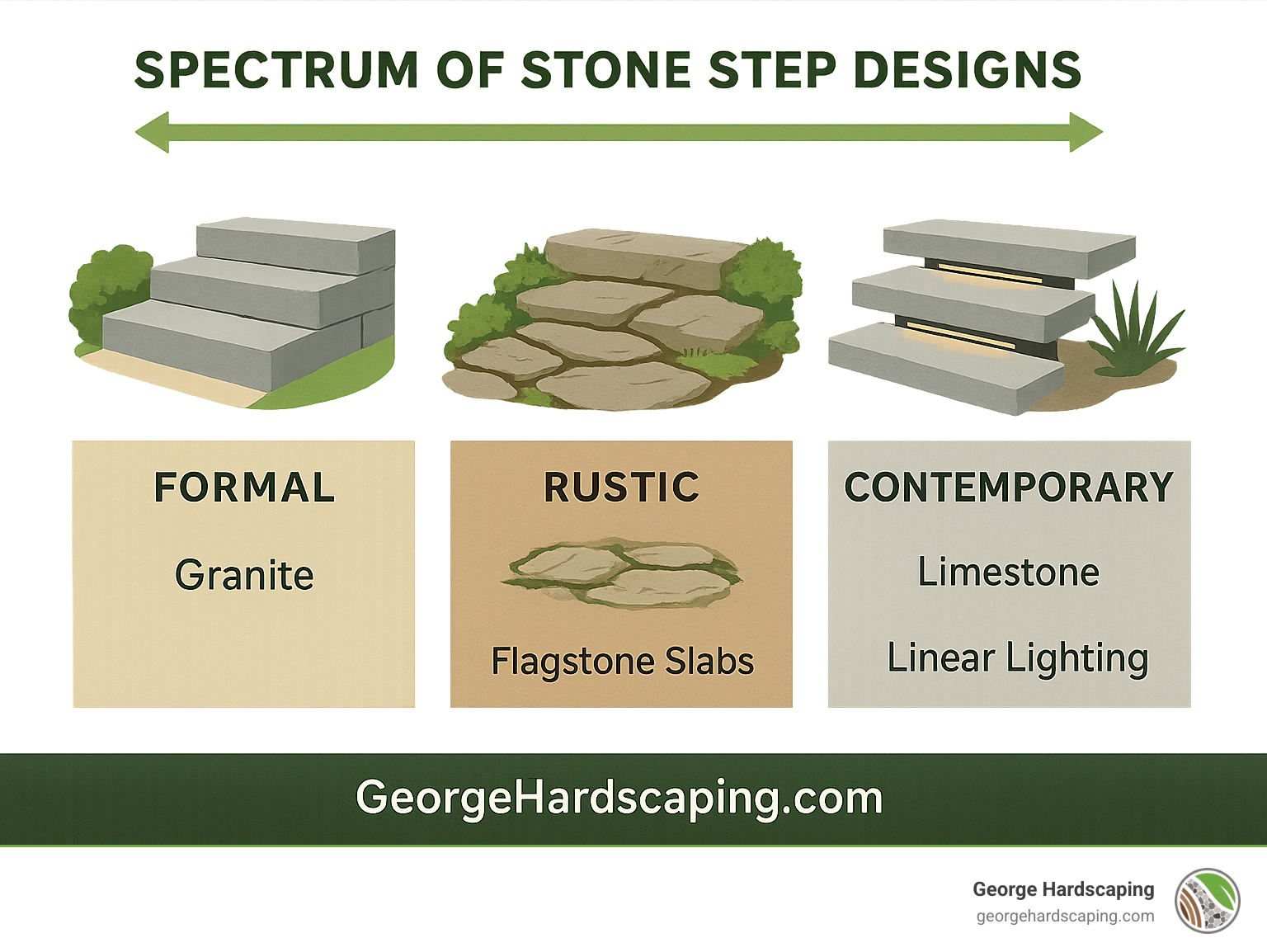
The style of stone steps you choose sets the tone for your entire landscape. From grand formal entrances to whimsical garden paths, stone steps design spans a spectrum of aesthetic possibilities.
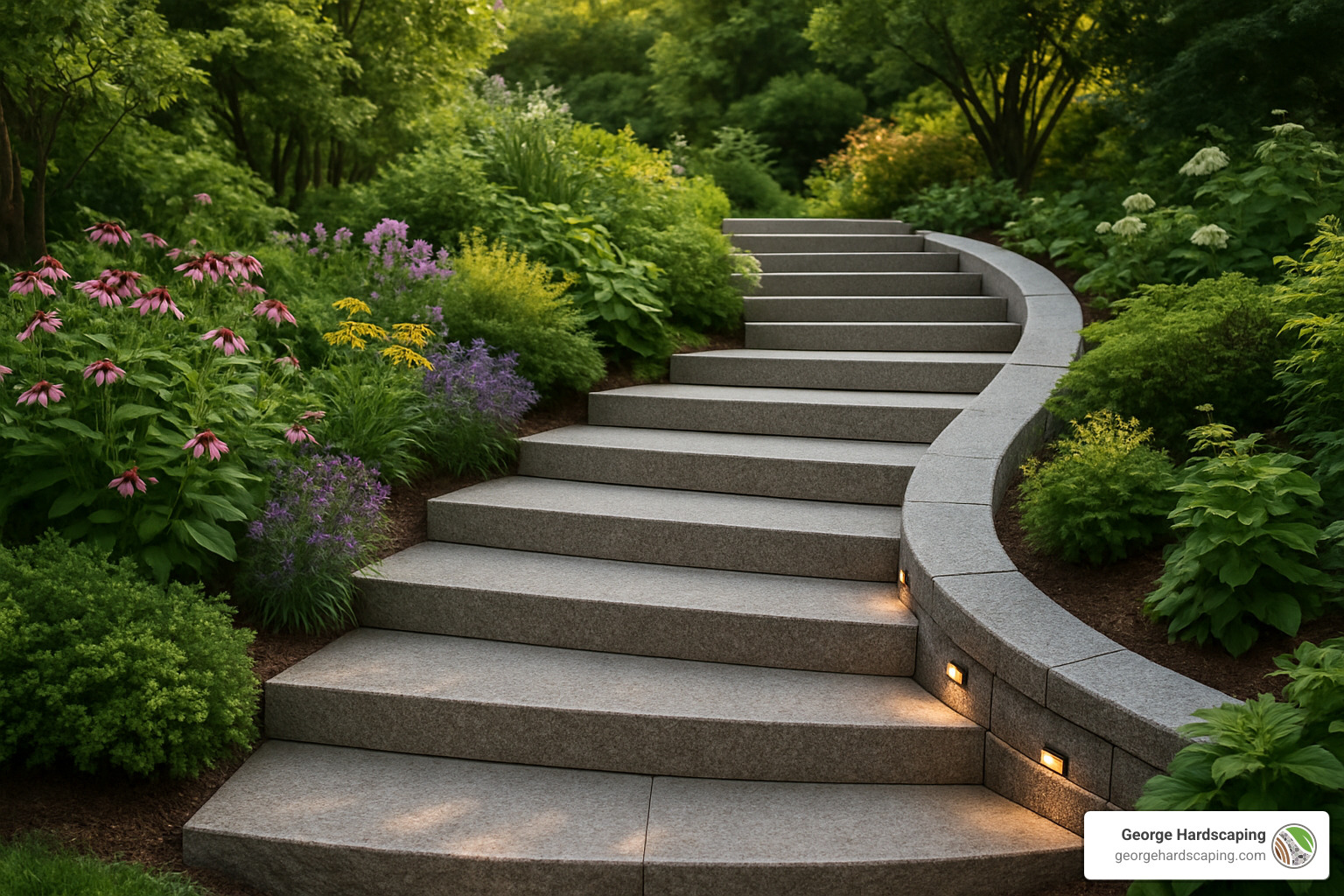
Here at George Hardscaping, we’ve transformed hundreds of properties throughout Essex County with our stone staircases. Through years of experience, we’ve found most designs naturally fall into three distinct yet equally beautiful categories.
Classic & Formal Stone Steps Design
There’s something timelessly neat about formal stone steps. They create that perfect sense of arrival, announcing your home with quiet confidence and sophistication.
When we install formal steps for front entrances, we often use cut granite treads with their precise, clean edges that communicate permanence and refinement. The crisp lines pair beautifully with traditional architecture, especially when the steps span the full width of your home’s facade.
Another beloved classic combination we frequently recommend is bluestone treads with brick risers – a quintessential New England pairing that balances the cool durability of stone with the warm, inviting texture of brick. The symmetrical design of formal steps, with their consistent dimensions and equal widths, creates a sense of intentional order that welcomes guests.
Many of our clients improve their formal steps with flanking elements like built-in planters, cheek walls, or decorative columns that frame the entrance and create a truly grand approach. If you’re curious about working with versatile bluestone, our Bluestone Steps page offers more detailed information about this distinctive material.
Natural & Rustic Stone Steps Design
For homes nestled in more natural settings, rustic stone steps create that perfect organic flow – as if the pathway simply emerged from the landscape itself. These steps tell a different story, one of casual elegance and harmony with nature.
We love creating boulder steps for steep hillsides, carefully selecting and placing large natural stones that provide safe footing while looking completely at home in the environment. The slightly irregular edges and weathered faces of these stones create character that manufactured materials simply can’t match.
For gentler slopes, flagstone slabs with their beautiful irregular shapes create whimsical pathways that invite exploration. The natural variation in these steps – with their variable dimensions that shift subtly in width and depth – mirrors the organic patterns found in nature.
One of our favorite techniques involves integrating steps with plantings – tucking in low-growing thyme between stones or allowing moss to soften edges. This integration with plantings blurs the line between hardscape and landscape in the most delightful way.
For a closer look at this naturalistic approach, visit our Flagstone Walkway and Stairs page to see how we’ve created these earthy, inviting passages for other Essex County homes.
Contemporary & Minimalist Stone Steps Design
For modern homes with clean architectural lines, contemporary stone steps make a bold statement through simplicity and dramatic proportions. These designs accept negative space and geometric precision.
The floating block design creates a particularly striking effect – steps that appear to hover with minimal visible support, especially impressive when illuminated from below. These designs typically use thicker stone slabs (3-4 inches) to maintain structural integrity while achieving that gravity-defying appearance.
Oversized slabs are another hallmark of contemporary design, with extra-wide or extra-deep treads creating dramatic horizontal planes that slow the journey and emphasize the landscape experience. When paired with linear lighting – integrated LED strips that trace the geometry of each step – the effect becomes even more dramatic after sunset.
We often complement these modern steps with minimalist plantings – architectural grasses or sculptural succulents that echo the clean lines rather than softening them. The restrained plant palette allows the material quality and craftsmanship of the stone to take center stage.
Another approach we’ve found successful pairs large-format stone treads with steel or concrete risers, creating a mixed-material look that feels both industrial and refined. The intentional contrast draws attention to the craftsmanship while adding visual interest.
Choosing the Perfect Stone Material & Configuration
Selecting the right stone for your steps isn’t just about picking a pretty rock—it’s about finding the perfect balance between beauty, durability, and practicality for your unique space. After years of installing stone steps throughout Essex County, we’ve learned that the material you choose sets the foundation (literally!) for how your steps will look and perform for decades to come.
Natural Stone Options & Traits
There’s something almost magical about natural stone—each piece carries millions of years of Earth’s history right into your landscape. When we work with homeowners to select materials, we often find ourselves sharing not just the practical aspects but the stories behind each type of stone.
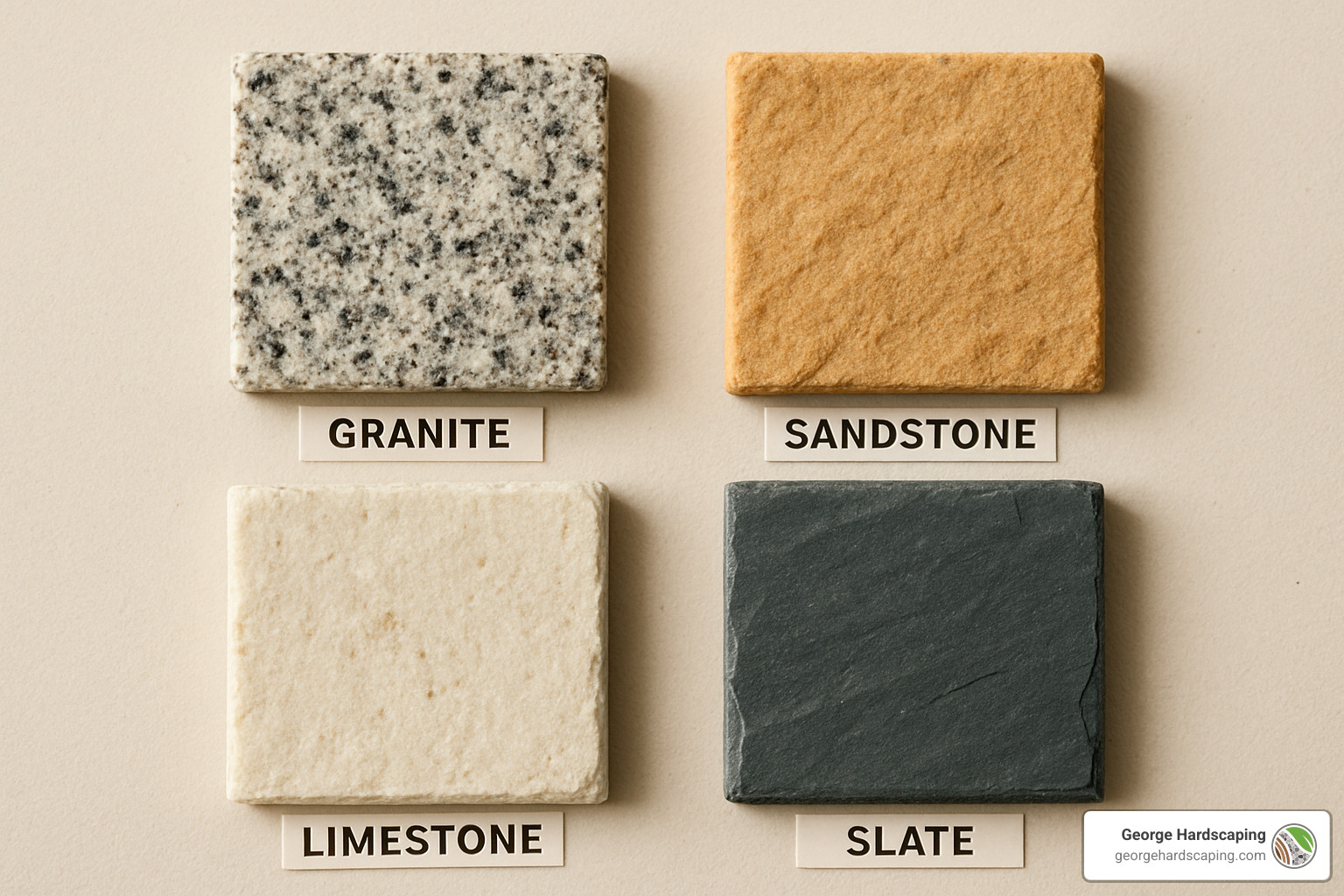
Granite stands as the workhorse of the stone world, with exceptional hardness that makes it perfect for high-traffic areas like your front entrance. Its distinctive grain patterns in grays, blacks, and beiges create a sophisticated look that ages beautifully, especially in coastal properties where salt exposure would damage lesser materials. We can finish granite in several ways—thermal-treated for excellent slip resistance, honed for a smooth matte look, or polished for formal settings.
Bluestone captures the essence of New England with its gorgeous blues, grays, and subtle purples. Whether you choose the natural cleft finish with its slight texture or the more refined thermal finish, bluestone brings traditional charm to pool surrounds and garden steps. Pennsylvania and New York varieties each have their own character, and we love helping clients find which speaks to them.
The warm tans and buffs of sandstone bring a sun-kissed quality to your landscape that’s particularly stunning in Mediterranean or Southwestern-inspired designs. Its natural warmth feels inviting underfoot, while its varied grain patterns ensure no two steps will ever look exactly alike.
Limestone offers neat simplicity with its soft, consistent texture occasionally punctuated by delicate fossil patterns. Its cream, tan, and gray tones complement formal gardens beautifully, though we do recommend extra care in our New England freeze-thaw cycles to ensure longevity.
For woodland settings or rustic designs, slate delivers dramatic impact with rich blacks, grays, greens, and purples. Its naturally cleft surface provides excellent traction even when wet, though proper installation is crucial as slate can be more brittle than other options.
When clients want something truly eye-catching, we often suggest quartzite with its natural sparkle from embedded quartz crystals that catch the light beautifully. Its extreme hardness makes it virtually scratch-proof, perfect for homeowners who want both beauty and bulletproof durability.
Manufactured vs Natural: Pros, Cons & Cost
While we’re stone enthusiasts at heart, we believe in honest conversations about all options. Manufactured stone alternatives have come a long way and offer some compelling advantages worth considering.
At about one-quarter the weight of natural stone, manufactured products make installation significantly easier, especially in challenging access locations. Their consistent dimensions mean less cutting and fitting on-site, which can translate to faster installation times. Many of our clients are pleasantly surprised by how accurately today’s manufactured options mimic the look of natural stone, often at a more accessible price point.
That said, nothing quite matches the authentic character of natural stone. Each piece tells its own geological story, developing a rich patina over time that actually improves its beauty—something manufactured products simply can’t replicate. Natural stone typically offers greater long-term value, both in durability and in how it affects property resale value.
When it comes to cost, stone steps typically range from $15-$60 per square foot for materials alone, based on internet data (not George Hardscaping pricing). High-end natural stone can reach $100-$180 per square foot for rare or exotic varieties, while manufactured alternatives generally fall between $5-$45 per square foot. Installation costs vary widely depending on site conditions, accessibility, and design complexity.
Matching Stone Steps to Home Architecture
The most successful stone steps design feels like it was always meant to be there—as if your home and landscape grew together naturally. This harmony comes from thoughtfully matching materials to your home’s architectural character.
For Colonial and Traditional New England homes, we often recommend bluestone treads with brick risers or clean-edged granite steps. The formal, symmetrical layout echoes the balanced proportions these architectural styles are known for.
Craftsman and Bungalow homes pair beautifully with natural-edge bluestone or warm sandstone. These homes often benefit from mixed materials—perhaps stone treads with wood-toned risers—and slightly wider proportions that create a welcoming approach.
For Contemporary and Modern homes, we lean toward large-format granite or limestone slabs with minimal visible joints. These clean-lined designs often incorporate floating elements and integrated lighting that highlight the architectural precision.
Rustic and Country properties call for more organic approaches—irregular flagstone, fieldstone, or natural boulder steps that look like they might have been finded rather than installed. These steps should feel like a natural extension of the surrounding landscape.
The most cohesive designs often echo materials already present in your home’s facade. If you have brick siding, incorporating brick risers creates an immediate visual connection. For homes with stone veneer, selecting complementary colors and textures for your steps ties everything together beautifully.
For more specific inspiration for your home’s entrance, our Stone Front Steps Ideas page showcases some of our favorite projects.
Planning, Installation & Safety Essentials
Rolling up our sleeves and getting your stone steps design from dream to reality takes careful planning and attention to detail. At George Hardscaping, we’ve developed our installation process through years of experience on Essex County’s varied terrain—from gentle slopes to challenging hillsides.
Good stone steps don’t just happen. They’re the result of thoughtful planning, proper technique, and a healthy respect for both physics and aesthetics. Let’s walk through what makes stone steps stand the test of time.
Laying Stone Steps on Slopes & Hillsides
Tackling a hillside with stone steps is like solving a three-dimensional puzzle. The steeper the slope, the more critical each decision becomes.
We always start with a thorough slope survey, measuring both the vertical rise and horizontal run to determine exactly how many steps we’ll need. This initial assessment helps us visualize the finished staircase and plan for proper water management—a critical factor in preventing erosion and ensuring longevity.
Once measurements are complete, we set up string lines as our guide. This simple tool helps us maintain the right alignment and ensures the finished steps will have a natural, comfortable rhythm for walking.
Working from the bottom up is essential when building on slopes. This approach maintains soil stability and gives each step a solid foundation. We carefully excavate each step location individually, creating a stable pocket for the base material.
For slopes, drainage is non-negotiable. We incorporate subtle slopes of 1-2% on each tread to prevent water from pooling, and often add drainage channels at strategic points. On steeper inclines, we create what trail builders call a “toe kick”—a slight vertical face at the front of each tread that gives your foot something to push against, preventing slips.
The science of comfortable steps isn’t complicated, but it matters tremendously. The ideal outdoor slope falls between a rise-to-run ratio of 1:2 and 1:1.5, which typically means risers of 6-7 inches paired with treads of 12-15 inches. This creates the most natural walking rhythm for most people.
For more detailed guidance on slope installations, check out our How to Lay Stone Steps on Slope page.
Step-by-Step Installation Workflow
Whether we’re creating neat granite front steps or rustic garden stairs, our installation process follows time-tested principles that ensure lasting quality.
Every great staircase starts with proper base preparation. We typically excavate 6-8 inches below the finished grade and install a compacted gravel base that provides both stability and drainage. This foundation work might not be visible in the finished project, but it’s what prevents settling and shifting over time.
We always build from the bottom up, a technique that ensures each step has proper support from below. This approach also allows us to make minor adjustments as we go without destabilizing completed work.
Each step gets carefully leveled side-to-side while maintaining that slight front-to-back slope for drainage. It’s this attention to detail that makes the difference between steps that last decades and those that fail prematurely.
Depending on the design goals and site conditions, we’ll either set steps in mortar for maximum stability (ideal for formal applications), dry-stack with careful fitting (perfect for rustic designs), or use a combination approach. Each method has its place, and choosing correctly affects both aesthetics and longevity.
One of our favorite quality checks comes from trail builders: the “blindfold test.” If you can walk the completed steps blindfolded without stumbling, the rise and run are consistent enough to feel natural underfoot. It’s a simple but effective way to ensure the steps will be comfortable for years to come.
For a more detailed breakdown of our installation process, visit our How to Build Stone Steps page.
Budget & Cost Factors to Expect
Stone steps represent a significant investment in your property, but understanding the factors that influence cost can help you plan appropriately.
Site conditions play a major role in determining final costs. Steep or difficult terrain requires more labor hours, while limited access may necessitate manual transport of heavy materials. Existing structures that need removal or modification can also add to the project scope.
Material selection dramatically affects both aesthetics and budget. Based on internet data (not George Hardscaping pricing), natural stone typically ranges from $15-$60 per square foot, with rare or exotic varieties potentially reaching $100-$180+ per square foot. Manufactured alternatives generally run $5-$45 per square foot, offering cost savings at the expense of some character and longevity.
Design complexity is another significant factor. Simple, straight runs are most economical, while curved steps require more cutting and fitting. Adding landings, cheek walls, integrated lighting, or custom features increases both the visual impact and the investment required.
The overall scale and scope—including the number of steps, width, and associated landscape modifications—directly affect material quantities and labor requirements. A small three-step entrance might start around $1,500, while elaborate multi-level designs with integrated walls and lighting can exceed $15,000+ based on internet data (not George Hardscaping pricing). Complex projects on challenging sites might range from $30,000-$45,000 or more.
While these numbers might seem substantial, it’s worth considering the lifetime value. Unlike wood steps that may need replacement every 8-12 years, properly installed stone steps can last generations with minimal maintenance. This longevity makes them not just beautiful, but cost-effective over time.
The research from the U.S. Forest Service on trail-grade stairs offers valuable insights into the technical aspects of durable outdoor steps, confirming many of the techniques we’ve refined through our years of experience in Essex County. You can learn more about these techniques in their Trail Construction and Maintenance Notebook.
Finishing Touches: Lighting, Landscaping & Maintenance
The magic of stone steps design doesn’t end once the stones are set in place. It’s those thoughtful finishing touches—strategic lighting, complementary plantings, and careful integration with your existing landscape—that truly lift your stone steps from merely functional to absolutely breathtaking.
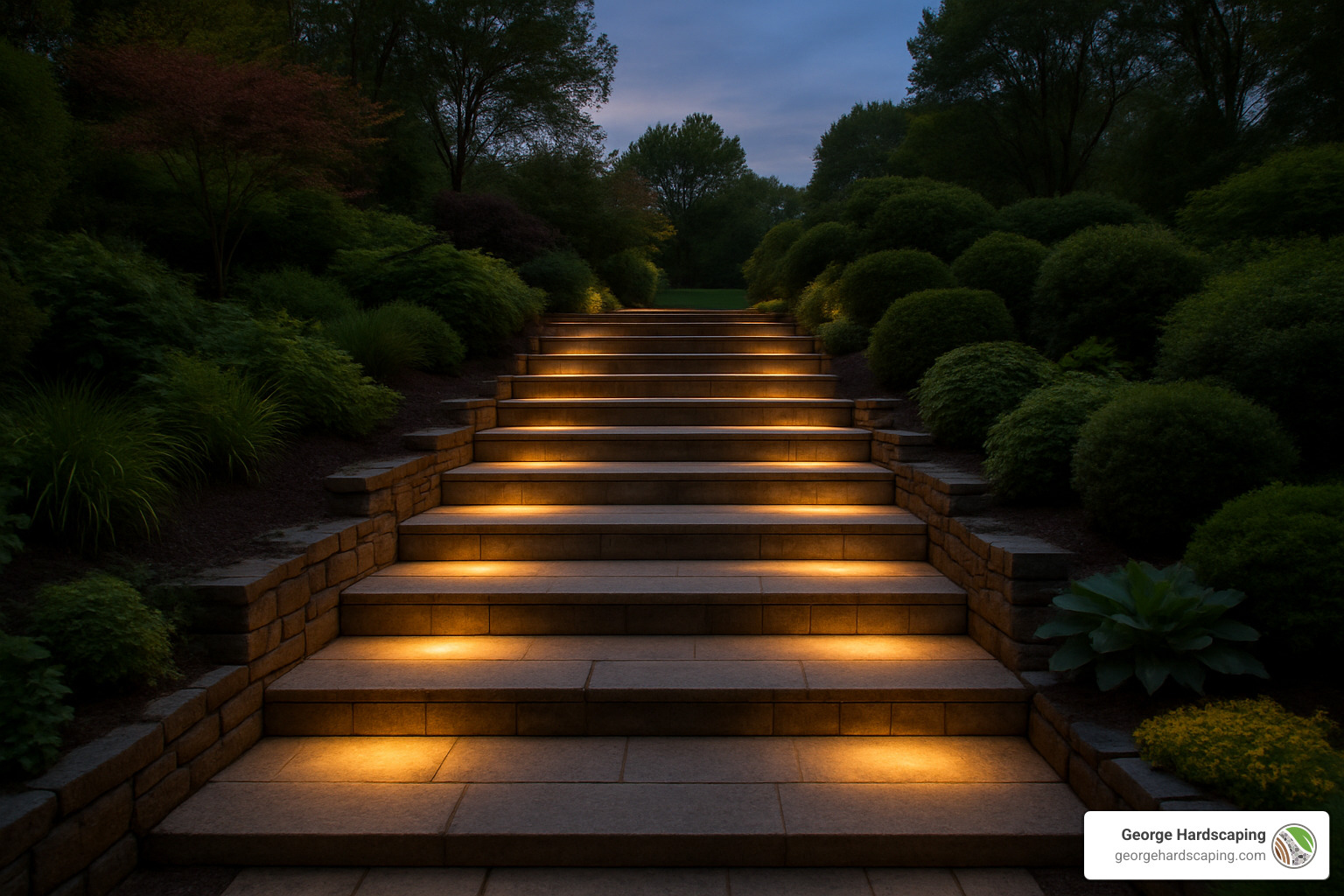
Integrating Stone Steps with Other Hardscape Features
Your stone steps should feel like they belong in your landscape, not like they were simply dropped in as an afterthought. At George Hardscaping, we love finding creative ways to blend steps seamlessly with other elements.
Retaining walls and stone steps make perfect partners. Whether we’re building steps centered within a wall or positioning them alongside, this combination solves elevation challenges while creating visual interest. One of our favorite techniques is using the same stone for both the steps and wall facing to create a cohesive look that feels intentional and thoughtfully designed.
Water features paired with stone steps create magical moments in your landscape. Imagine the gentle sound of water trickling alongside your steps as you descend into your garden, or a small reflecting pool at a landing that captures the sky. These combinations engage multiple senses and make everyday journeys through your yard special.
Don’t overlook the opportunity to incorporate seating into your stone step design. Wider treads or expanded landings can double as casual seating areas, creating natural gathering spots where people instinctively pause to chat or take in the view. We’ve found these “conversation landings” become some of the most-used spaces in our clients’ landscapes.
When your steps connect to a patio or terrace, using complementary materials creates a natural flow between spaces. I remember a Marblehead project where we installed a series of bluestone steps descending from the main patio to a cozy fire pit area below. By using the same bluestone for both spaces, we created a unified design that gently guided visitors through the landscape.
For more inspiration on creating these seamless connections, visit our Stairs and Walkways page.
Maintenance Tips for Long-Lasting Beauty
One of the greatest joys of stone steps design is their longevity—with proper care, your stone steps will likely outlast most other elements in your landscape. Here’s how to keep them looking their best for decades to come:
Regular cleaning makes all the difference. A simple sweep with a broom removes leaves and debris that can stain stone surfaces if left too long. For deeper cleaning, a garden hose with a spray nozzle works wonders for most dirt and pollen. For tougher stains, a mild detergent and soft brush will do the trick without damaging the stone. Once a year, a gentle power washing (emphasis on gentle—high pressure can damage some stones) can restore that just-installed look.
The changing seasons each bring their own maintenance needs. Fall cleanup is crucial—those beautiful autumn leaves can leave tannin stains if they sit too long on light-colored stone. In winter, prompt snow removal prevents ice buildup, but avoid metal shovels on softer stones like limestone or sandstone. Come spring, check for any frost heave and reset stones that may have shifted during freeze-thaw cycles. Summer is perfect for inspecting joints and making minor repairs before fall and winter return.
Not all stone needs sealing, but some types benefit from this extra protection. Porous stones like sandstone and limestone are more susceptible to staining and may benefit from a quality stone sealer. Dense stones like granite and quartzite typically need little to no sealing. If you do seal your steps, plan on reapplication every 3-5 years for continued protection.
Managing the plants around your steps is just as important as maintaining the stone itself. Keep aggressive plants from encroaching on the edges, trim back overhanging branches that drop debris, and control moss and algae in shady locations with gentle cleaning. These simple steps prevent bigger problems down the road.
Don’t forget about the joints between stones. For mortared steps, inspect joints annually for cracking or crumbling. For dry-laid steps, reset any loose stones promptly—what starts as a small wobble can quickly become a safety hazard if left unaddressed. Adding joint sand or fine gravel as needed helps maintain stability between maintenance visits.
For more detailed guidance on installation and ongoing care, visit our How to Install Natural Stone Steps page.
With these finishing touches and maintenance practices, your stone steps will continue to be both a functional pathway and a stunning focal point in your landscape for generations to come.
Frequently Asked Questions about Stone Steps Design
What is the ideal rise and tread for comfortable outdoor steps?
Finding that perfect balance in stone steps design is both an art and a science. In our years of creating outdoor staircases across Essex County, we’ve found that comfort and safety come down to getting the proportions just right.
For most homes, a riser height (the vertical part) of 6-7 inches feels most natural to climb. We never recommend exceeding 8 inches, as taller steps can become challenging for children, older adults, or anyone carrying groceries or gardening supplies!
As for tread depth (where you place your foot), 12-15 inches gives you solid footing. We personally prefer the more generous 14-15 inch depth for outdoor applications – it creates a more relaxed, stately ascent and allows people to comfortably walk side-by-side.
There’s actually a time-tested formula that many landscape architects swear by: 2 × rise + run = 24-27 inches. This creates that natural walking rhythm we all subconsciously expect. With our typical 6-inch rise and 15-inch tread, you hit that sweet spot perfectly (2 × 6 + 15 = 27).
Width matters too! While 36 inches is the bare minimum, we often recommend 48-60 inches for main entrances. There’s something undeniably welcoming about broader steps that invite you to approach a home.
How do I keep stone steps from becoming slippery?
Nothing ruins beautiful stone steps design faster than a slippery surface! Safety is always our top priority at George Hardscaping, and we’ve developed several reliable strategies to keep your steps secure underfoot in all weather conditions.
The stone selection itself makes an enormous difference. Thermal bluestone, with its slightly textured surface, provides excellent traction even when wet. Natural-cleft slate and textured granite similarly offer built-in slip resistance that polished stones simply can’t match.
Even with naturally smooth stones, there are excellent solutions. Thermal finishing is one of our favorites – it uses controlled heat to create a textured surface without changing the stone’s essential character or color.
Water management plays a crucial role too. We always build in a subtle pitch (just 1-2%) that guides water off each step. You’ll barely notice this slight slope, but it prevents the puddles that lead to slippery conditions and winter ice formation.
Lighting dramatically improves safety after dark. Under-lip LEDs create a beautiful effect while illuminating each step edge. For more rustic installations, well-placed path lights provide both safety and ambiance.
Regular maintenance keeps steps safe year-round. A quick sweep removes leaves and debris that can become slippery when wet, while occasional power washing prevents algae buildup in shady locations. In winter, we recommend calcium magnesium acetate instead of salt on natural stone – it’s gentler on the stone while effectively melting ice.
Can I install stone steps myself or should I hire a pro?
We completely understand the appeal of DIY projects – there’s nothing quite like the satisfaction of creating something beautiful with your own hands. That said, stone steps present some unique challenges worth considering before you decide.
DIY might be reasonable if you’re tackling a simple project with just 1-3 steps using manageable-sized stones. If you’ve successfully completed other hardscaping projects like patios or walkways, you’ll have developed some of the necessary skills. Just be sure you have access to proper tools and enough helping hands – natural stone is surprisingly heavy!
For more complex projects, professional installation often makes sense. If you’re creating a formal front entrance, working on a steep slope, or integrating steps with retaining walls, the expertise and specialized equipment professionals bring becomes invaluable. The same goes for projects involving more than 3-4 steps, where even small errors in alignment compound dramatically.
The weight factor alone gives many DIYers pause. A single 4-foot granite step can easily weigh 400+ pounds – that’s not something you want to maneuver without proper equipment and experienced crew members.
Safety considerations ultimately outweigh all others. Improperly installed steps can create serious hazards, especially in our New England climate where freeze-thaw cycles can quickly destabilize inadequately prepared foundations.
At George Hardscaping, we bring specialized equipment, years of experience, and meticulous attention to detail to every stone steps design project. Our team understands the unique properties of different stone types and ensures your steps will remain beautiful, functional, and safe for decades to come.
Conclusion
The beauty of stone steps design lies not just in its immediate visual impact, but in how it transforms your entire outdoor experience. When thoughtfully crafted, stone steps do more than connect different levels—they create a journey through your landscape that feels intentional and inviting.
There’s something deeply satisfying about stone as a material choice for outdoor stairs. Unlike wood that warps or concrete that cracks, stone steps mature gracefully, developing a rich patina that only improves their character over time. The moss that might gather at the edges, the subtle weathering of the surface—these aren’t flaws but rather signs of a material that belongs in the landscape.
I’ve seen countless properties transformed by the addition of well-designed stone steps. A sloped, awkward backyard becomes an neat series of garden rooms. A plain front entrance gains sophistication and presence. A challenging hillside turns into a featured asset rather than a problem to solve.
What makes stone steps particularly special is their versatility. For traditional New England homes, bluestone treads with brick risers create a timeless entrance that feels both neat and approachable. For contemporary properties, clean-lined granite slabs offer minimalist sophistication. And for naturalistic settings, boulder steps or irregular flagstone create pathways that feel as though they emerged organically from the landscape itself.
The investment in quality stone steps pays dividends for decades—often outlasting the homeowner themselves. When properly installed, these structures become part of your property’s legacy, something future generations will appreciate and enjoy.
At George Hardscaping, we approach each stone step project with both technical precision and artistic sensitivity. We understand that steps need to meet specific safety requirements while also serving as a design feature that improves your home’s character. Our team takes pride in creating hardscape elements that feel perfectly suited to their setting—as though they couldn’t possibly be any other way.
Whether you’re dreaming of a grand front entrance, navigating a challenging slope, or simply creating better connections between your outdoor living spaces, thoughtfully designed stone steps can lift both the functionality and beauty of your landscape. The right steps don’t just solve a problem—they create an opportunity to experience your property in a new way.
For more inspiration and information about our approach to creating beautiful, functional outdoor spaces, visit our Walkways & Stairs services page. We’d be honored to help you transform your outdoor living experience with the timeless appeal of stone steps design.
