
Stone Step Repair: Master Your 1st Step
Your First Step: Why Repairing Stone Stairs Matters
Stone step repair is essential for maintaining the safety and value of your home. A cracked or loose stone step isn’t just an eyesore—it’s a genuine safety hazard that can lead to falls and injuries. Beyond safety, damaged steps detract from your home’s curb appeal and can lower its property value.
Quick Answer: Key Steps for Stone Step Repair
- Assess the damage – Check for loose stones, cracked treads, and deteriorating mortar.
- Remove old materials – Chisel out failed mortar and clean all debris thoroughly.
- Apply bonding agent – Wet surfaces and use a concrete bonding agent for better adhesion.
- Mix and apply mortar – Use Type S mortar mixed to an oatmeal-like consistency.
- Reset the stone – Place, level, and tap the stone into position with a rubber mallet.
- Finish and cure – Fill joints, smooth surfaces, and allow 24-48 hours to set.
- Seal for protection – Apply a penetrating stone sealer after the mortar has fully cured.
Properly repaired stone steps can last for decades, making the investment in time or money worthwhile. Many common repairs are manageable DIY projects if you have the right tools and knowledge. For homeowners in Essex County and the North Shore of Massachusetts, understanding how to maintain outdoor stonework is particularly important. Our harsh winters and coastal weather, especially the freeze-thaw cycles that expand moisture within stone and mortar, are a leading cause of damage in the region.
This guide will walk you through the complete repair process, from assessing the damage to applying the final protective seal, helping you decide whether to tackle the project yourself or call in a professional.
Assessing the Damage: What’s Wrong with Your Steps?
Before starting any repair, you must understand why your stone steps are failing. Addressing the root cause is the only way to ensure a long-lasting fix. A superficial patch on a deep-seated problem is a guarantee for repeat work next season. The most common culprits, especially in New England, include:
- Freeze-Thaw Cycles: This is the primary adversary of New England masonry. Water seeps into tiny, often invisible, pores and cracks in the stone and mortar. When temperatures drop, this water freezes and expands with up to 30,000 pounds per square inch of force. This relentless cycle acts like a slow-motion jackhammer, widening cracks, popping mortar joints, and breaking down the materials from the inside out.
- Water Infiltration & Poor Drainage: If water doesn’t flow away from your steps, it becomes a destructive force. It can saturate the soil beneath the foundation, leading to erosion and settlement. This causes the entire structure to become uneven and unstable. Persistent moisture also washes out the essential binding agents in mortar, turning it into sand and leaving joints empty and vulnerable.
- Foundation Settling: The ground beneath your steps is not static. Over time, soil can shift, compact, or erode, causing the foundation or base layer of the steps to sink. This is often visible as a large crack where the steps pull away from the house or as a noticeable slant in the entire staircase.
- Poor Initial Installation: Many step failures are pre-destined due to mistakes made during construction. An improperly compacted base, a weak mortar mix (like using interior-grade mortar for exterior work), or a lack of a proper concrete footing can all lead to premature failure within a few years.
- Salt Damage: Traditional rock salt (sodium chloride) is highly corrosive to masonry. It chemically attacks the cement in mortar and can cause the surface of porous stones to flake and crumble away, a process known as spalling. This damage is often irreversible and accelerates deterioration.
Start with a thorough multi-point inspection. Don’t just glance at the problem area; examine the entire structure. First, perform a visual check for obvious cracks, chips, and missing mortar. Look for discoloration, which can indicate moisture problems. Then, perform the “wiggle test” by applying firm, downward pressure to the front, back, and corners of each stone tread.
A properly set stone should be completely immobile. Any movement, rocking, or shifting indicates a loose step and a serious safety hazard. Next, perform a “tap test” by gently tapping the surface of each stone with your rubber mallet; a hollow sound often indicates a void underneath where the mortar has failed. Finally, check the mortar’s condition by probing it with a screwdriver or trowel tip. If it’s sandy, crumbling, or can be scraped out easily, it has lost its structural integrity and must be replaced.
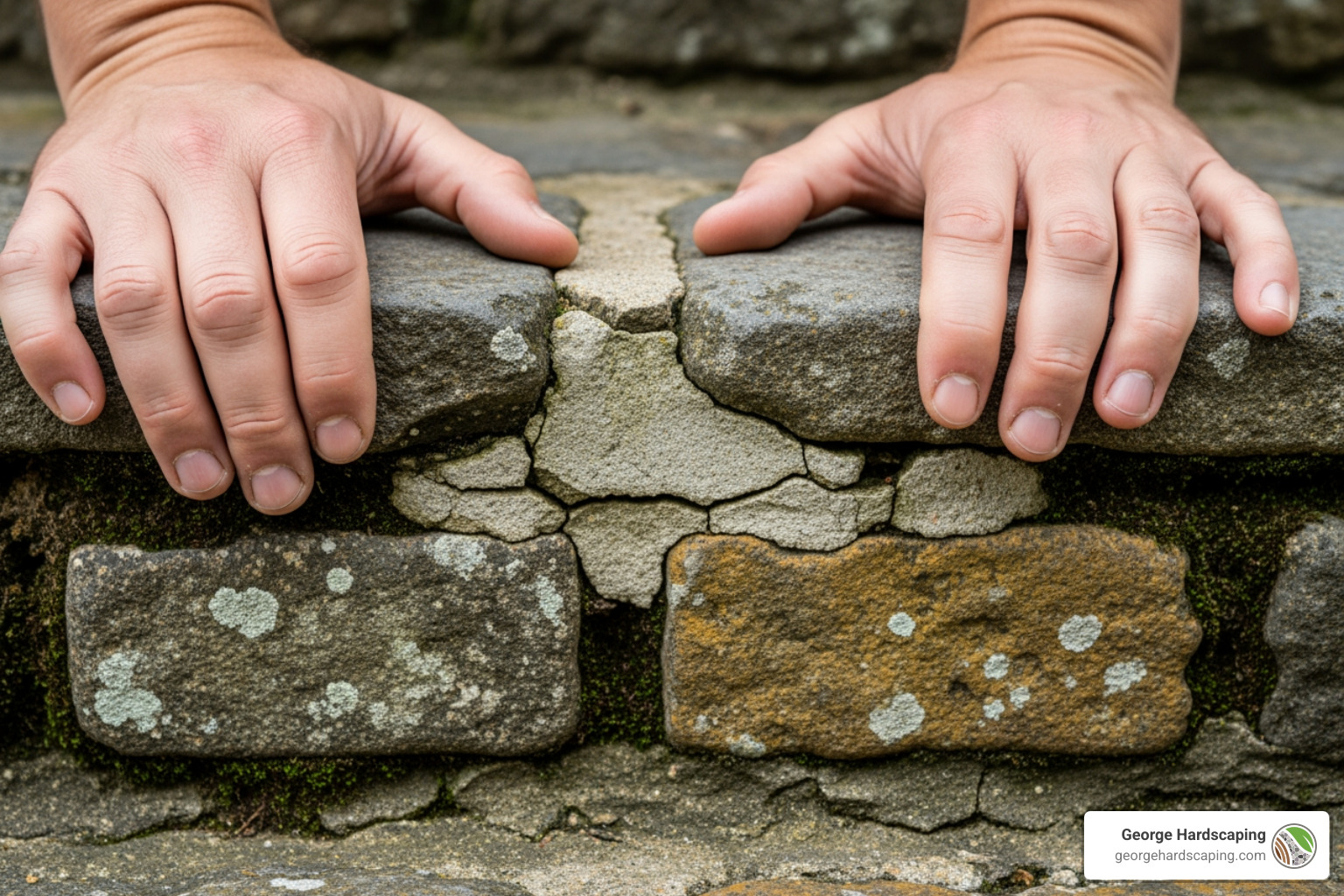
Identifying the Type of Stone and Damage
Knowing your stone type is crucial for selecting the correct repair materials and techniques. Sandstone, a sedimentary rock, is a popular but highly porous choice that is prone to flaking (spalling) and requires diligent sealing to prevent water absorption. Flagstone, a flat stone often used for its natural, irregular look, most commonly needs mortar joint repairs due to its large joint surface area.
Granite, an igneous rock, is the most durable and dense option, typically only requiring repairs for chips or resetting due to base issues rather than material failure. Softer stones like Limestone and Marble are more susceptible to wear, acid damage (from rain or harsh cleaners), and staining, requiring specialized, gentle cleaning and pH-neutral repair products.
Damage can range from hairline cracks (under 1/4 inch), which can often be filled with a color-matched stone epoxy, to deep structural cracks that compromise the stone’s integrity and may require mortar and a backer rod for a flexible fill. Chipped corners and edges are common and can be fixed with moldable, color-matched stone epoxy. Uneven or sunken treads are almost always a red flag for a problem with the underlying base, requiring the stone to be lifted and the base to be rebuilt before resetting.
Essential Tools and Materials for Stone Step Repair
Having the right supplies on hand is crucial for a successful repair. A minor DIY fix typically costs between $50 to $150 in materials.
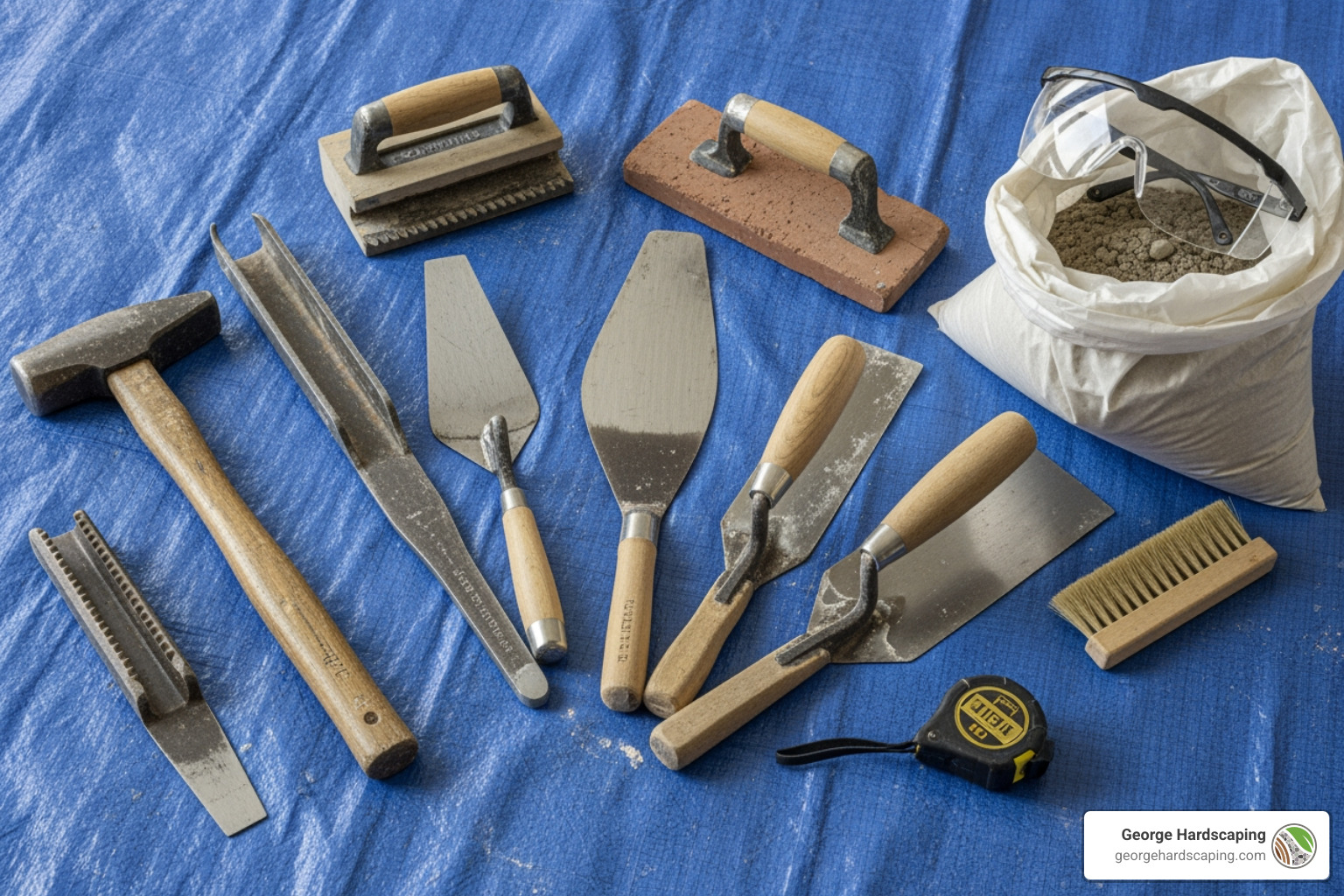
Essential Tools:
- Safety Glasses & Heavy-Duty Gloves
- Mason’s Hammer & Cold Chisel (or a small sledgehammer for more force)
- Wire Brush (and a drill with a wire wheel attachment for faster cleaning)
- Margin Trowel (for getting mortar into tight joints) & Pointed Trowel (for scooping and spreading mortar)
- Rubber Mallet (for setting stones without cracking them)
- Level (a 2-foot level is ideal for steps)
- Buckets (one for mixing, one for clean water)
- Grout Sponge & Stiff-bristled brush
Essential Materials:
- Type S Mortar Mix: This is critical. Type S is a high-strength mortar specifically formulated for structural applications like steps that are load-bearing and exposed to severe weather.
- Concrete Bonding Agent: A milky, paint-on liquid that acts as a powerful primer to ensure the new mortar creates a tenacious bond with the old, clean surfaces.
- Stone Dust or Mortar Colorant: Helps match the new mortar to your existing joints for a seamless, professional-looking repair.
- Two-Part Stone Epoxy: A specialized adhesive for repairing small cracks and rebuilding chipped edges with incredible strength.
- Backer Rod: A flexible foam rod used to fill deep joints or cracks before applying mortar, saving material and creating a more durable joint.
- Penetrating Stone Sealer: Protects the finished repair from moisture and weathering, preventing a repeat of the problem.
- Water: For mixing mortar and cleaning.
While many repairs are DIY-friendly, widespread crumbling or significant structural issues often require professional help. For comprehensive solutions to more serious masonry problems, learn more about our hardscaping and masonry services.
The Complete DIY Guide to Stone Step Repair
This section walks you through the most common stone step repair task: resetting a loose stone. This process requires patience and meticulous preparation. The quality of your repair is directly proportional to the effort you put into the prep work.
Step 1: Preparation is Key
The longevity of your repair is decided here. Skimping on preparation is the number one cause of DIY repair failure. Take your time and be thorough.
- Clean the Area: Use a stiff wire brush to vigorously scrub away all dirt, moss, algae, and loose debris from the stone tread and the substrate below. For stubborn organic growth, a specialized masonry cleaner may be needed. A clean surface is non-negotiable for a strong bond.
- Remove Old Mortar: This is the most critical and labor-intensive step. Wearing safety glasses is mandatory. Using a hammer and cold chisel angled away from the stone edge, carefully chip away all the old, failed mortar from around and beneath the loose stone. You must get down to a solid, clean, and sound surface. New mortar will not stick to crumbling, dusty, or compromised material. For very stubborn mortar, a grinder with a diamond tuckpointing blade can be used, but this requires a steady hand and proper safety gear.
- Clear Debris: Once all the old mortar is removed, use a stiff brush and a shop vacuum to remove every last particle of dust and debris from the cavity and the underside of the stone. The cleaner the surface, the stronger the bond.
- Dampen Surfaces: Lightly mist the substrate and the underside of the stone with water from a spray bottle. The goal is to achieve a surface-damp condition (SSD – saturated surface dry). A bone-dry surface will suck the water out of the fresh mortar too quickly, causing it to cure improperly and become weak. Conversely, pooling water will dilute the mortar and weaken the bond. The surface should be damp to the touch, not soaking wet.
- Apply Bonding Agent: This step is a professional secret for creating a nearly unbreakable bond. Brush a liberal coat of a liquid concrete bonding agent onto the dampened substrate and the entire underside of the stone. As experts at This Old House note, this primer-like adhesive ensures a superior, monolithic bond between the old and new materials, effectively welding them together.
Step 2: Mixing and Applying the Right Mortar
For stone steps, always use Type S mortar mix. Its high compressive strength (over 1800 psi) and superior bond strength are specifically designed to withstand the heavy foot traffic, structural loads, and harsh weather that steps endure.
- Mix the Mortar: In a bucket, add your dry mortar mix first, then gradually add small amounts of clean water while stirring with a trowel. The ideal consistency is like thick oatmeal or creamy peanut butter—stiff enough to hold its shape on the trowel but wet enough to be workable. A common mistake is mixing it too wet; soupy mortar will be weak and prone to shrinkage and cracking. Let the initial mix sit or “slake” for 5-10 minutes, then give it a final stir. This allows the dry ingredients to fully absorb the water, resulting in a better final product.
- Match the Color (Optional): For a seamless repair, color matching is key. Add a small amount of powdered or liquid mortar colorant to your dry mix before adding water. It’s crucial to create a small test batch, apply it to a piece of cardboard, and let it dry for a full 24 hours. Mortar dries significantly lighter than it appears when wet, so testing is the only way to ensure a good match.
- Apply the Mortar Bed: Using a pointed trowel, scoop a generous, even layer of mortar onto the prepared substrate. Create a full bed, about 1-2 inches thick, ensuring it’s slightly higher than the final desired height to allow for compression.
- Back-Butter the Stone: This is a non-negotiable technique for professional results. Apply a thin, uniform layer of mortar (about 1/4 inch) to the entire underside of the stone itself. This technique, known as back-buttering, ensures 100% coverage, eliminates air pockets that can collect water and freeze, and creates a much stronger, more durable repair.
Step 3: Resetting the Stone for a Perfect Finish
This is where your meticulous preparation pays off as the step is permanently set back into place.
- Set the Stone: Carefully lower the back-buttered stone onto the fresh mortar bed. Start by setting the back edge first, then tilt it down. Gently wiggle it back and forth while pressing down firmly to embed it into the mortar and squeeze out any trapped air.
- Level the Stone: Place your level on the stone and use a rubber mallet to gently tap the stone into its final position. Check it side-to-side and front-to-back. For all exterior steps, you must create a slight forward pitch of about ⅛ inch per foot. This subtle downward slope away from the house is absolutely critical for ensuring water drains off the step instead of pooling against the joint or soaking into the stone, which prevents future freeze-thaw damage.
- Fill the Joints: Once the stone is perfectly positioned, use your margin trowel to pack fresh mortar into the joints surrounding the newly set stone. Press the mortar firmly into the joints to ensure they are completely filled with no voids or air pockets.
- Tool the Joints: After the mortar has become “thumbprint hard” (firm enough to hold a thumbprint without sticking, usually 30-60 minutes), tool the joints. Use a concave jointer tool or the back of a spoon to press and smooth the mortar. This compacts the mortar, making it denser and more water-resistant, and creates a clean, professional look.
- Clean Up: Immediately use a damp (not wet) grout sponge and a bucket of clean water to carefully wipe away any excess mortar from the stone’s surface. Change your water frequently. Dried mortar is extremely difficult to remove and can leave permanent stains or “haze” on the stone surface. Use a soft brush for any stubborn bits.
Finally, allow the repair to cure undisturbed. Cordon off the area and avoid walking on the step for at least 24-48 hours to allow the mortar to achieve its initial set.
Advanced Techniques and Long-Term Prevention
Beyond resetting a loose stone, you may encounter other issues like chipped edges, deep cracks, or need to make repairs in less-than-ideal weather. Understanding advanced techniques and focusing on long-term prevention is key to protecting your investment and ensuring your steps remain safe and beautiful for years to come.
Advanced Stone Step Repair and Prevention
Repairing Chipped Edges and Corners: Unsightly chips on step treads are not just cosmetic; they can catch on footwear and grow larger over time. These can be durably fixed with a two-part stone epoxy, which is much stronger than mortar for this application. For a lasting repair, you must undercut the damaged area with a small grinder or a chisel.
This means carving out the void so it’s wider at the bottom than at the surface, creating a dovetail shape. This mechanical lock prevents the epoxy patch from popping out. To make the repair blend in, mix stone dust collected from the original stone into the epoxy to match the color and texture. Carefully apply the mixture, overfilling it slightly, then shape it to the original profile of the step before it begins to set.
Working in Cold Weather: Repairing steps in temperatures below 40°F (4°C) is risky and requires special precautions, as the chemical reaction (hydration) that gives mortar its strength slows dramatically and can stop altogether. If fresh mortar freezes within the first 48 hours, the water inside expands, destroying the crystalline bond and causing the repair to fail completely.
If work is unavoidable, use rapid-set or cold-weather mortars containing chemical accelerators. Most importantly, you must protect the new mortar from freezing for at least 48-72 hours. Cover the entire repair area with insulating blankets or construct a temporary heated enclosure with plastic sheeting and a low-wattage heater.
Dealing with Stains and Efflorescence: A common issue on masonry is efflorescence—a white, powdery deposit left on the surface as water evaporates. This is a sign of moisture moving through the stone or mortar. It can usually be removed with a stiff, dry brush. For stubborn deposits, use a specialized efflorescence remover, but test it on an inconspicuous spot first. To prevent its return, you must address the moisture source and seal the steps. Other stains from rust, oil, or organic matter (leaves, algae) require specific cleaners designed for masonry that won’t damage the stone.
Preventing Future Damage: The best way to avoid future repairs is through proactive, preventative maintenance.
- Seal Your Steps: After your repair has fully cured (wait at least 28 days for the mortar to reach full strength), apply a high-quality, breathable penetrating stone sealer. This is the single most important step to protect against water absorption and freeze-thaw damage. Avoid cheap, film-forming sealers that trap moisture. A good penetrating sealer soaks into the stone and allows water vapor to escape. Reapply the sealer every 2-3 years or when water no longer beads on the surface.
- Use Sand, Not Salt: In winter, prioritize sand for traction. Corrosive rock salt (sodium chloride) and many chemical de-icers will actively destroy your mortar and spall the surface of your stone. If a de-icer is absolutely necessary, choose a less corrosive, pet-friendly alternative specifically labeled as safe for concrete and masonry, such as calcium magnesium acetate (CMA).
- Ensure Proper Drainage: Annually, check that landscaping, mulch, and soil are not piled up against your steps, as this traps moisture. Ensure downspouts and gutters direct water far away from the staircase foundation. Maintaining the slight forward pitch on the treads is crucial to prevent pooling water.
For homeowners looking to create a complete outdoor living space that’s both beautiful and built to last, we also specialize in designing and installing custom walkways and stairs that are engineered to stand up to the rigors of New England weather.
Understanding Material Science for Durability
Making smart material choices ensures your repairs last for decades. The key is compatibility. When patching or replacing a stone, using a material with different physical properties (like porosity, density, and thermal expansion rate) than the original can cause the repair to fail. The two materials will expand, contract, and absorb moisture at different rates, creating stress at the bond line that leads to new cracks.
Porosity (how much water a material absorbs) and density directly impact durability, especially in a climate with harsh freeze-thaw cycles. Using incompatible materials, like a non-porous epoxy on a highly porous sandstone, can trap moisture behind the patch and cause the surrounding stone to spall off during a freeze. For a deep dive into professional standards and material properties, the Dimension Stone Design Manual is an excellent technical resource.
Finally, respect curing times. Mortar doesn’t just dry; it undergoes a chemical reaction called hydration that requires time and water to build its crystalline structure and gain strength. It may feel dry to the touch in hours, but it needs 24-48 hours to set for light foot traffic and up to 28 days to reach its full design strength. Epoxy repairs are generally faster, hardening in 24-48 hours. Rushing the curing process is a primary and entirely avoidable cause of repair failure.
Frequently Asked Questions about Stone Step Repair
How long does a stone step repair take to dry?
It’s important to distinguish between drying and curing, as they are not the same. Mortar gains strength through a slow chemical curing process called hydration, not by simply drying out.
- Initial Set: Your repair will typically be firm enough for light, careful foot traffic after 24-48 hours. You should still avoid any heavy use, stomping, or dragging objects over the step during this critical time. Cordoning off the area is the safest bet.
- Full Cure: Mortar continues to gain strength for weeks. It reaches approximately 70% of its final strength in the first 7 days and achieves its full design strength (maximum weight-bearing capacity) after about 28 days. You should wait this long before moving heavy objects like furniture or planters over the steps.
- Epoxy Repairs: Most two-part stone epoxies are much faster. They typically harden and cure to full strength within 24-48 hours, depending on the product and ambient temperature.
Weather conditions like temperature and humidity significantly affect these times. Curing will be slower in cold, damp weather and faster in warm, dry conditions. Always check the manufacturer’s instructions on the product packaging.
Can I match the color of the new mortar to my old steps?
Yes, and achieving a good color match is the hallmark of a professional-looking repair. It takes a bit of patience. There are a few ways to get close:
- Use Colorants: Add liquid or powder mortar colorants to a standard gray or white mortar mix. Start with a very small amount and add more gradually, mixing thoroughly. It’s easy to add more but impossible to take it out.
- Consider the Sand: The sand is a major component of the final color and texture. The color of the sand (e.g., white, tan, brown) has a huge impact. Try to find sand with a similar color and texture to the original for the best results.
- Test First, Always: This is the most important step. Mix a small test batch with your chosen colorant and sand ratio. Apply it to a piece of cardboard or an inconspicuous area of the steps. Let it dry completely for at least 24-48 hours to see the true final color. Mortar always dries significantly lighter than it appears when wet.
What is the difference between Type S, N, and O mortar, and why is Type S best for steps?
Choosing the right mortar type is critical for durability. The letters come from the alternating letters in the words M-a-S-o-N-w-O-r-K. Each type has a different compressive strength and flexibility:
- Type S Mortar: Has a high compressive strength (minimum 1800 psi) and high tensile bond strength. It is specifically designed for structural masonry applications at or below grade, making it the ideal choice for foundations, retaining walls, and steps that bear significant loads and are exposed to severe weather and soil pressure.
- Type N Mortar: Is a medium-strength mortar (around 750 psi) used for general-purpose, above-grade exterior work like brick walls and chimneys. It offers a good balance of strength and flexibility but is not recommended for high-stress applications like steps.
- Type O Mortar: Is a low-strength mortar (around 350 psi) used for non-load-bearing interior work and historic repointing where a softer, more breathable mortar is needed to protect fragile old bricks.
Using a weaker mortar like Type N for steps will almost certainly lead to premature failure of the joints.
Can I repair a cracked stone, or does it need to be replaced?
This depends entirely on the nature of the crack.
- Hairline or Surface Cracks: If the crack is thin (less than 1/4 inch) and does not go all the way through the stone, it can often be repaired. You can use a high-quality, color-matched outdoor-grade stone epoxy. The crack should be cleaned out thoroughly and the epoxy forced deep into the void.
- Structural Cracks: If the crack runs through the entire thickness of the stone, or if the stone is broken into two or more pieces, replacement is almost always the safest and most effective option. While you can try to epoxy the pieces back together, the repair will create a visible line and may not withstand the stresses of foot traffic and freeze-thaw cycles, posing a significant safety risk.
What are the most common mistakes in DIY stone step repair?
Avoiding a few common pitfalls can make the difference between a lasting repair and one that fails in a year.
- Inadequate Preparation: This is the #1 mistake. New mortar cannot bond to a loose, crumbling, or dusty surface. You must chisel down to a sound, solid base and vacuum out all debris.
- Mixing Mortar Too Wet: Soupy mortar is weak mortar. It will shrink excessively as it cures, causing cracks and a poor bond. Your mix should have a thick, oatmeal-like consistency that holds its shape.
- Ignoring Drainage: Steps must have a slight forward pitch (about ⅛ inch per foot) to shed water. If a repaired step is perfectly level or, worse, slopes backward, water will pool on it and inevitably lead to future damage.
- Walking on the Repair Too Soon: Patience is a virtue in masonry. Premature foot traffic can shift the stone and break the fresh mortar bond, undoing all your hard work. Wait at least 24-48 hours.
- Improper Surface Cleaning: Leaving dirt, moss, or any other debris on the bonding surfaces will prevent the new mortar from adhering properly. A thoroughly cleaned surface is non-negotiable.
If your project involves multiple loose stones, large structural cracks, or signs of settling, it may be beyond a simple DIY fix. For homeowners in Essex County, the team at George Hardscaping can provide a professional assessment to ensure your home’s entrance is safe and beautiful. Request an estimate for your masonry repair project today.
When to Call a Professional for Your Stone Steps
While resetting a single loose stone is a manageable DIY project, some situations demand professional expertise. Knowing when to call for help can save you from a botched repair that costs more time and money in the long run.
It’s time to call a professional mason if you observe any of the following red flags:
- Large, deep cracks that run through multiple stones or the entire staircase.
- Multiple loose or shifting steps, indicating a widespread problem.
- The entire staircase is leaning or pulling away from your home’s foundation.
- Sunken or severely uneven treads, which point to issues with the underlying base or soil.
These are not cosmetic issues; they are signs of structural failure. A simple mortar patch won’t fix an eroding foundation. Attempting a DIY fix on a major structural problem can worsen the damage and create a serious safety hazard. What might be a straightforward professional repair can quickly become a complete and costly rebuild if the root cause isn’t addressed correctly.
For homeowners in Essex County and across the North Shore of Massachusetts, the team at George Hardscaping has the experience to diagnose and solve these complex issues. We understand how our region’s harsh freeze-thaw cycles impact stonework, and we build our repairs to last for decades, not just a season. We are skilled in all aspects of steps and brick stairs and can determine whether you need a targeted repair or a full restoration.
Don’t let damaged steps compromise your home’s safety and curb appeal. A professional repair provides peace of mind that the job was done right with the correct materials, ensuring your steps are safe for your family and guests. If you’re feeling uncertain about the scope of your repair, we’re here to help. Request an estimate for your masonry repair project today!
