
Stone Retaining Walls: Top 10 Tips for Stunning Results
Stone retaining walls are a smart choice for homeowners looking to transform their outdoor spaces. They offer an effective way to manage landscape projects, control soil erosion, and create a terraced look that improves both the beauty and functionality of your property.
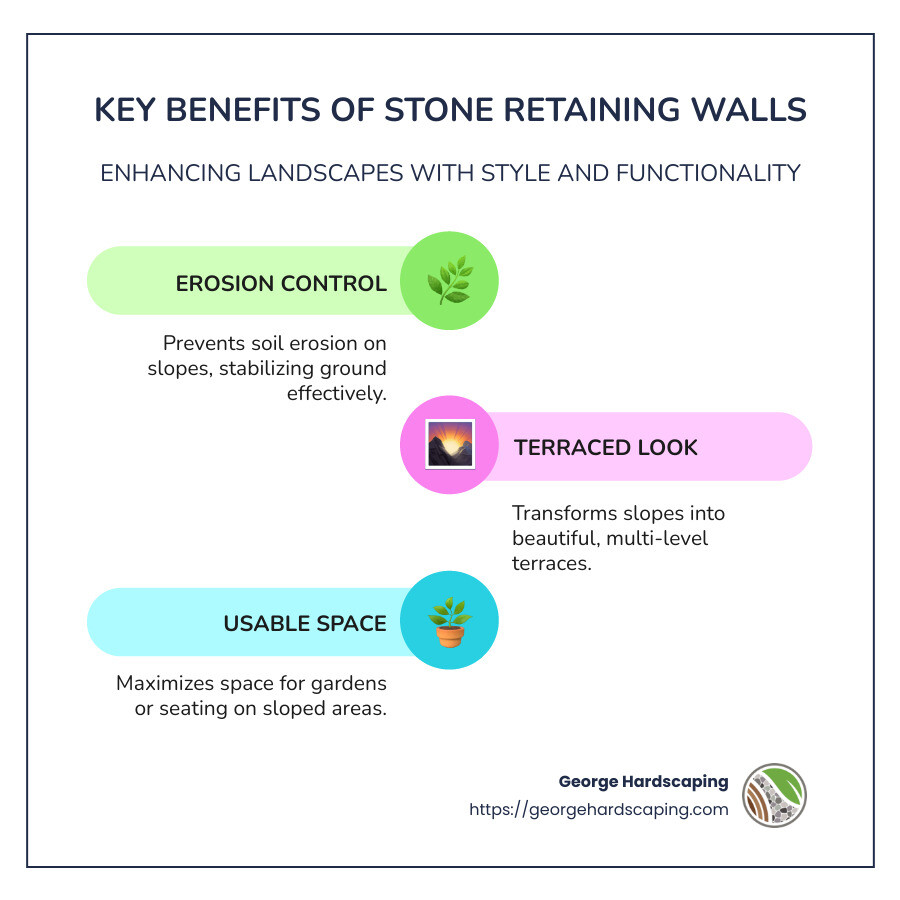
- Erosion Control: Retaining walls are essential for preventing soil erosion, especially on sloped landscapes. They help stabilize the ground by holding soil in place, protecting your yard from washouts and sinkholes.
- Terraced Look: These walls can create beautiful multi-level terraces. This not only adds a visual appeal but also maximizes usable space, turning otherwise unusable slopes into practical areas for gardens or seating.
Starting on a project to add stone retaining walls can significantly improve your landscape’s aesthetic and functional appeal. They are durable and easy to maintain, making them a worthwhile investment for your home. Whether you’re expanding your yard or preventing erosion, stone walls are a striking way to achieve your goals.
Benefits of Stone Retaining Walls
Stone retaining walls are more than just a structural feature; they are a versatile addition to any landscape. Here are three key benefits that make them a popular choice for homeowners:
1. Expand Usable Space
One of the biggest advantages of stone retaining walls is their ability to transform uneven terrain into flat, usable space. By leveling out slopes, you can create new areas for patios, gardens, or seating. Imagine turning a steep, unusable hill into a terraced garden or a cozy outdoor dining area. This not only improves the functionality of your property but also adds significant value.
2. Structural Support
Retaining walls provide essential structural support for your landscape. They hold back soil, preventing it from shifting and causing erosion. This is especially important in areas with heavy rainfall or steep slopes, where soil movement can lead to serious damage. A well-built stone wall acts as a barrier, protecting your home and landscape from potential disasters like landslides or sinkholes.
3. Aesthetic Appeal
Beyond their functional benefits, stone retaining walls offer aesthetic appeal that can transform the look of your yard. With a variety of colors, textures, and stone types available, you can customize your wall to match your home’s style. Whether you prefer the rustic charm of split boulders or the sleek look of cut stones, there’s an option to suit every taste. The natural beauty of stone adds elegance and character, making your outdoor space more inviting.

These benefits make stone retaining walls a smart investment for any homeowner looking to improve their outdoor space. Whether you’re aiming for increased functionality, improved stability, or a stunning visual upgrade, a stone retaining wall can deliver on all fronts.
How to Build Stone Retaining Walls
Building stone retaining walls can be a rewarding DIY project. With careful planning and the right materials, you can create a stunning feature that improves both the beauty and functionality of your landscape.
Choosing the Right Stones
The type of stone you choose will significantly affect the durability and appearance of your wall. Outcropping stones are a popular choice due to their natural look and stability. When selecting stones, consider these factors:
- Stone Types: Options include natural stone, synthetic stone veneer, and stone veneer. Natural stones like limestone and granite offer a classic look and are highly durable.
- Compressive Strength: Look for stones with a compressive strength of at least 3000 psi. This ensures they can withstand the pressure exerted by the soil they retain.
- Shape and Texture: Stones with a rough, non-split face increase friction, preventing sliding. Avoid flat stones that can shift and cause wall failure.
Construction Process
Once you’ve selected your stones, follow these steps to build your stone retaining wall:
- Planning and Preparation:
- Determine the wall’s height and length. For every foot of height, the base should be one foot wide.
- Check local regulations for walls over 30 or 36 inches, as permits may be required.
- Gather Materials:
- You will need stones, crushed stone for the base, and gravel for backfill.
- Order 10-20% extra materials to account for waste and adjustments.
- Base Preparation:
- Excavate a trench for the base of the wall. The depth should be one-tenth of the wall height.
- Fill the trench with crushed stone, compacting it to create a solid foundation.
- Drainage System:
- Proper drainage is crucial to prevent water buildup behind the wall, which can lead to failure.
- Install a perforated pipe at the base, covered with gravel, to facilitate water flow away from the wall.
- Building the Wall:
- Start with the largest, heaviest stones at the base for stability.
- Use a mason line and stakes to maintain a straight line as you build.
- Stack stones carefully, ensuring each layer is level. Use smaller stones or shims to fill gaps.
- Wall Stability:
- For added stability, lean the wall back slightly into the slope.
- Interlock stones where possible to improve structural integrity.
Building a stone retaining wall requires patience and precision. By following these steps and choosing the right materials, you can create a durable and beautiful wall that stands the test of time.
Cost Considerations
When planning your stone retaining wall, understanding the cost implications is crucial. Let’s break down the key factors that will influence your budget.
Cost Per Square Foot
The cost of building a stone retaining wall varies widely, typically ranging from $20 to $60 per square foot. This range depends on factors like the type of stone, wall height, and additional features like drainage systems. Natural stone tends to be more expensive than manufactured options, but it offers best durability and aesthetics.
Affordable Options
For those on a budget, there are affordable options to consider:
- Concrete Blocks: These are a cost-effective choice, often priced lower than natural stone. They are versatile and come in various shapes and sizes.
- Dry Stack Walls: These involve stacking stones without mortar, reducing material costs. They are suitable for shorter walls.
- Gabion Walls: Made from wire cages filled with stones, gabion walls are economical and provide excellent drainage.
Professional vs DIY
DIY Approach:
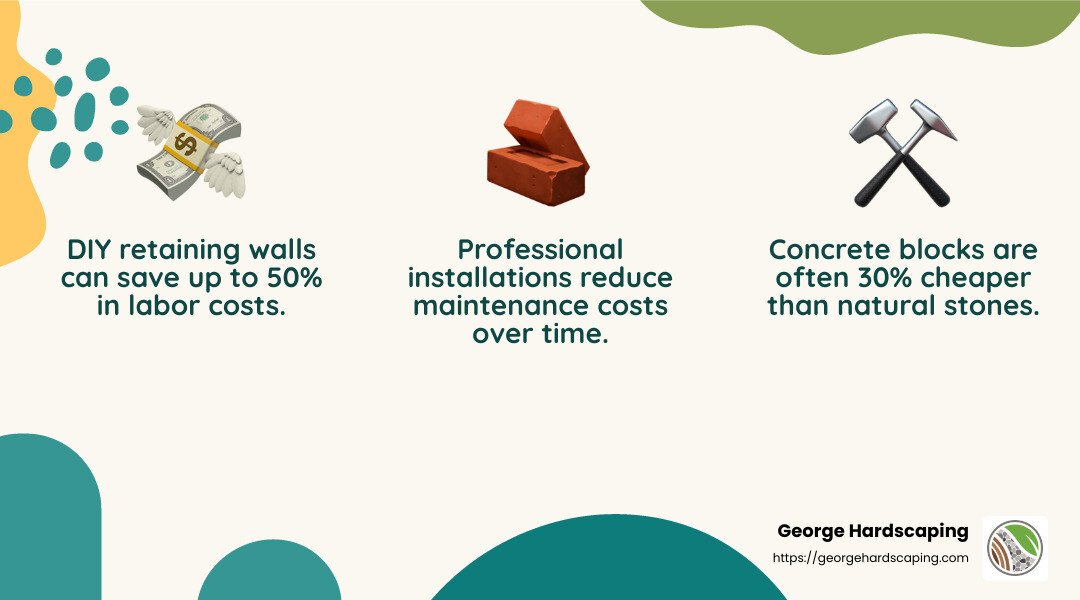
– Pros: Lower labor costs, personal satisfaction, and the freedom to work at your own pace.
– Cons: Requires time, skill, and the potential for costly mistakes if not done correctly. Materials and tools can add up.
Professional Installation:
– Pros: Expertise, quality craftsmanship, and often a warranty on the work. Professionals ensure the wall is built to last, using the best techniques and materials.
– Cons: Higher upfront costs, but this can translate to long-term savings due to reduced maintenance and repairs.
Considering these factors will help you choose the right path for your project. Whether you opt for a DIY approach or hire professionals, planning and understanding costs are key to a successful stone retaining wall.
Frequently Asked Questions about Stone Retaining Walls
What is the cheapest retaining wall to build?
When it comes to affordability, several options stand out:
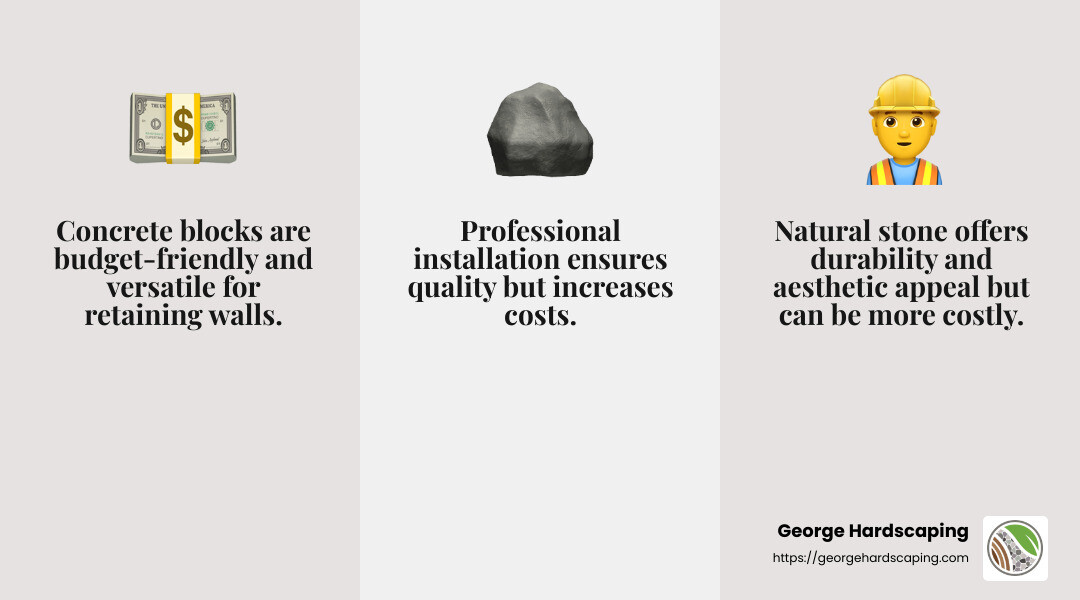
- Concrete Blocks: These are often the go-to for budget-friendly retaining walls. They’re less expensive than natural stone and offer versatility in design and installation.
- Dry Stack Walls: By stacking stones without mortar, you save on materials and labor. This method is ideal for walls under three feet high.
- Gabion Walls: These consist of wire cages filled with stones. They are not only cost-effective but also provide excellent drainage, making them a great choice for areas prone to water runoff.
Is a stone retaining wall expensive?
The cost of a stone retaining wall can vary greatly based on several factors:
- Material Choices: Natural stone is typically more expensive due to its durability and aesthetic appeal. However, synthetic stone veneer offers a more budget-friendly alternative while still providing a natural look.
- Wall Height and Length: Taller and longer walls require more materials and labor, increasing the overall cost.
- Professional Installation: Hiring professionals ensures quality and longevity but comes with higher upfront costs. This investment can pay off with fewer repairs and maintenance over time.
What stone is best for a retaining wall?
Choosing the right stone is crucial for both functionality and aesthetics:
- Natural Stone: Known for its durability and timeless beauty, natural stone is often preferred for high-end projects. It can withstand harsh weather conditions and adds significant value to your property.
- Synthetic Stone Veneer: This option mimics the look of natural stone at a lower cost. It’s lighter and easier to install, making it a popular choice for DIY enthusiasts.
- Stone Veneer: A versatile option that can be applied to existing structures, offering a facelift without the need for a complete rebuild.
When selecting materials, consider the local climate, desired appearance, and budget to ensure your retaining wall meets your needs and stands the test of time.
Conclusion
Building a stone retaining wall is not just about function—it’s about enhancing the beauty and usability of your outdoor space. At George Hardscaping, we’re committed to delivering top-notch craftsmanship for every project we undertake. Our team specializes in creating custom solutions custom to the unique landscapes of the North Shore.
We understand that a well-built retaining wall can transform your yard, providing both structural support and aesthetic appeal. Our expertise in masonry and hardscaping ensures that each wall is not only beautiful but also durable, standing strong against the elements for years to come.
Serving the North Shore area, we pride ourselves on our attention to detail and dedication to quality. Whether you’re looking to expand usable space, control erosion, or simply add a touch of elegance to your property, our stone retaining walls are designed to meet your needs.
Ready to improve your outdoor living space with a beautifully crafted stone retaining wall? Contact us today to discuss your project and find how our expertise can bring your vision to life.
