
Rock Solid Entrances: Creative Stone Step Designs for Your Home
Why Your Front Entrance Deserves Better Than Basic Steps
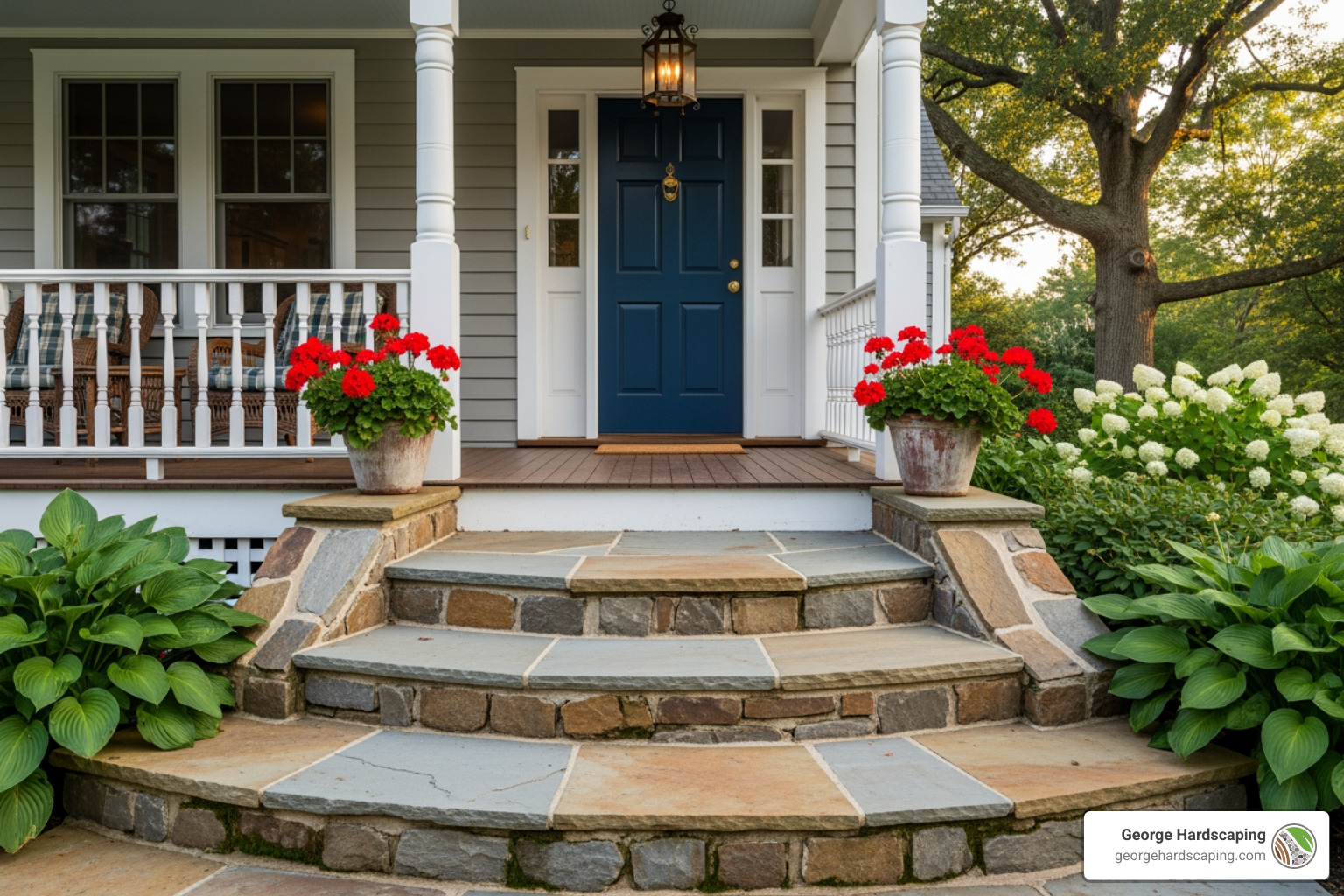
Your front steps are the first thing guests see, setting the tone for your entire property. While many homes settle for basic concrete or wood steps that crack and rot, front porch stone step ideas offer a way to transform your entrance from ordinary to extraordinary. Natural stone steps provide a timeless upgrade that combines exceptional durability with natural beauty.
Unlike other materials, stone lasts for decades, resists New England’s harsh freeze-thaw cycles, and often looks better with age. The right stone steps do more than just provide a path to your door; they improve curb appeal, increase property value, and create a lasting first impression. Whether you prefer the formal elegance of bluestone, the rustic charm of fieldstone, or the modern statement of wide granite slabs, there is a stone step design that perfectly matches your home’s architecture and personal style.
In this guide, we’ll explore why stone is the superior choice for front porch steps, how to select the perfect material, and showcase inspiring designs that prove functional doesn’t have to mean boring. We’ll also cover critical installation and safety considerations and answer common questions homeowners have about stone steps.
For homeowners on the North Shore or in Essex County, Massachusetts, creating a durable and attractive entrance that handles our challenging climate is essential. This guide will show you exactly what’s possible with professional hardscaping services done right.
Why Stone Steps are a Superior Choice for Your Entrance
When considering a home improvement project that truly adds lasting value and beauty, our experience shows that stone front porch steps consistently outperform other materials. It’s not just about getting from point A to point B; it’s about making a statement, enhancing safety, and investing in your home’s future.
Best Durability & Longevity
Natural stone is inherently robust. Unlike wood, which can rot, splinter, or warp, or concrete, which is prone to cracking, stone steps are built to endure. They are made from natural materials that can withstand harsh weather conditions, including the freezing and thawing cycles common in Essex County, MA. This inherent strength means they’ll last for decades, even in areas with high foot traffic.
Weather Resistance
Our New England climate demands materials that can take a beating. Stone steps excel here, resisting moisture damage, UV degradation, and temperature fluctuations far better than other options. This resilience means less worry for you during our snowy winters and humid summers, and a safer, more stable surface year-round.
Natural, Unique Beauty
Every piece of natural stone is unique, offering variations in color, texture, and pattern that cannot be replicated by manufactured materials. This organic beauty brings a timeless elegance to your home’s entrance. Whether you prefer a rustic look or a polished, contemporary feel, stone can be shaped in various configurations to perfectly complement your home’s architecture. A Unilock step, for example, is crafted to be aesthetically pleasing with a timeless look, perfect for any architectural style.
Design Versatility
The versatility of stone is remarkable. It can be used to create multi-dimensional spaces, define separate outdoor “rooms” like seating areas, or simply provide neat access to your porch or patio. From grand entrances to subtle pathways, stone adapts to almost any design vision, making front porch stone step ideas incredibly flexible for customization.
Enhancing Curb Appeal
The front porch is a crucial element in shaping your home’s first impression. Enhancing your front porch steps is a cost-effective way to refresh your home’s exterior without significant structural changes, adding texture, color, and a sense of permanence that instantly lifts your home’s aesthetic.
Increasing Home Value
As a durable, beautiful, and low-maintenance feature, stone steps are a smart investment that can significantly increase your property value. Potential buyers often appreciate the quality and longevity of natural stone, seeing it as a premium upgrade.
Low Maintenance Requirements
Compared to wood, which requires regular staining, or concrete, which might need crack repair, stone steps are remarkably low maintenance. A simple sweep and occasional washing are usually all that’s needed to keep them looking their best over the years.
A Smart Investment
When you consider the durability, beauty, and low maintenance of stone, it becomes clear that it’s one of the most cost-efficient choices in the long run. You’re investing in a quality product that will stand the test of time, saving you from frequent repairs.
Here’s a quick comparison to illustrate the advantages:
| Feature | Stone Steps | Wood Steps | Concrete Steps |
|---|---|---|---|
| Average Lifespan | 50+ years, often 100+ | 10-20 years | 20-30 years |
| Maintenance Needs | Low (sweeping, occasional cleaning/sealing) | High (painting, staining, repairs for rot/splinters) | Medium (sealing, crack repair, power washing) |
| Weather Resistance | Excellent (freeze-thaw, UV, moisture) | Poor (rot, warp, fade, splinter) | Good (but prone to cracking and spalling) |
| Aesthetic Appeal | High (natural, timeless, unique) | Medium (can look worn, requires upkeep) | Medium (can be customized, but often utilitarian) |
Choosing the Perfect Stone for Your Porch Steps
Selecting the ideal stone for your front porch steps involves a blend of aesthetic preference, practical considerations, and an understanding of our local climate. The right choice will not only look stunning but will also perform beautifully for decades. Consulting with a professional landscape designer near me can provide expert advice custom to your specific home and landscape.
Popular Natural Stone Options
The world of natural stone offers a rich palette of choices, each with its own unique characteristics:
- Granite: Renowned for its extreme durability and strength, granite is an excellent choice for high-traffic areas. It comes in a wide range of colors, from light grays to deep blacks, and its dense composition makes it highly resistant to our freeze-thaw cycles, offering a formal, sophisticated look.
- Bluestone: A favorite in New England, bluestone is celebrated for its distinctive blue-gray hues. It’s a type of sandstone that is incredibly dense and durable, making it ideal for outdoor applications. Available in thermal (smooth) or natural cleft (rough) finishes, our clients often choose Bluestone steps for their classic elegance and excellent slip resistance.
- Limestone: Offering a more uniform and classic appearance, limestone typically comes in softer, earthy tones like cream, beige, and light gray. It’s a versatile stone for both traditional and contemporary looks, though some varieties can be more porous and may require sealing.
- Fieldstone & Flagstone: For a truly rustic and organic aesthetic, fieldstone and flagstone are superb choices. Fieldstone consists of irregular, naturally weathered stones, perfect for a cottage style. Flagstone refers to flat, irregularly shaped slabs that create charming, informal steps. We frequently incorporate Flagstone walkway and stairs into designs that emphasize natural beauty.
- Sandstone: Known for its warm, earthy colors, sandstone brings a natural, inviting feel to an entrance. While generally durable, some types can be more porous and require proper sealing to protect against weathering and staining.
Key Factors for Your Front Porch Stone Step Ideas
When finalizing your stone choice, consider these essential factors:
- Architectural Style: Your stone steps should complement your home’s existing architecture. Modern homes suit large, clean-cut slabs of granite, while rustic farmhouses blend beautifully with irregular fieldstone. Traditional or Colonial homes often look best with classic bluestone or finely cut granite.
- Climate Considerations: Given our Massachusetts weather, slip resistance and freeze-thaw durability are paramount. Textured surfaces like natural cleft bluestone or sandblasted granite offer better grip in wet or icy conditions. Ensure your chosen stone is rated for exterior use in cold climates to prevent damage.
- Color & Texture: The color and texture of your stone steps should harmonize with your home’s siding, trim, and existing landscape. Bring samples home and observe them in different lighting conditions to decide between a smooth, refined surface or a rugged, natural feel.
- Maintenance Commitment: While stone steps are low maintenance, some porous stones may benefit from periodic sealing to protect against stains and moisture. Understand the specific care requirements for your chosen stone type.
10 Inspiring Front Porch Stone Step Ideas to Lift Your Curb Appeal
Your front porch steps are more than just a functional necessity; they are an opportunity to express your home’s personality and improve its curb appeal. Here are ten inspiring front porch stone step ideas that combine design creativity with practical functionality, perfect for homes across Essex County.

1. Grand, Wide Slabs for a Modern Statement
Imagine broad, expansive steps crafted from large, precisely cut slabs of granite or thermal bluestone. This design creates a minimalist, sleek aesthetic that feels both luxurious and welcoming. The generous width offers an expansive feel, making your entrance feel grand and unhurried. It’s a perfect choice for modern homes seeking a clean, architectural statement. These steps often integrate seamlessly with our Steps and Walkways projects.
2. Rustic Fieldstone for an Organic, Cottage Feel
For homes that accept a natural, earthy charm, rustic fieldstone steps are an ideal choice. With their irregular shapes and varied textures, these steps appear as if they’ve been part of the landscape for ages. They can be dry-laid or mortared, blending seamlessly with gardens and wooded surroundings. This style is often a cornerstone of our Landscape masonry work.
3. Classic Bluestone with a Formal Landing
Bluestone, with its distinctive blue-gray tones, offers timeless elegance. A formal bluestone step design often features thermal-cut edges for a clean line, leading to a spacious landing. This can be beautifully paired with brick facades or crisp white railings for a sophisticated entrance. It’s a popular choice for traditional New England homes, and we frequently install Bluestone stairs and walkway for our clients.
4. Curved Steps for a Flowing, Graceful Entryway
Straight lines have their place, but curved stone steps introduce a graceful, flowing element to your entrance. Custom-cut stones can create a gentle arc that softens the architectural lines of your home, drawing visitors inward with an neat sweep. This dynamic path feels organic and inviting, a specialty we often bring to life with Custom stone steps Beverly MA.
5. Multi-Level Steps with Integrated Planters
If your home sits on a slight slope, consider multi-level stone steps that incorporate built-in planters. This design adds dimension, creating tiered sections for seasonal flowers or evergreens. It’s a fantastic way to combine hardscaping with softscaping, showcasing our expertise in Landscape design and build.
6. Stone Risers with Contrasting Treads
For a unique visual appeal, combine stone risers (the vertical part of the step) with treads (the horizontal walking surface) made from a contrasting material. Imagine bluestone risers with smooth concrete treads, or granite risers topped with rich wood. This approach allows for creative mixing of textures and colors.
7. Old-World Cobblestone for Timeless Charm
Evoke the charm of European villages with cobblestone steps. These small, rounded stones create a highly durable and textured surface that exudes old-world charm. Ideal for historic homes or cottages, cobblestone steps offer a unique character that matures beautifully over time.
8. Integrating Steps with a Landscape Retaining Wall
For properties with significant changes in elevation, integrating stone steps directly into a Landscape retaining wall is a functional and beautiful solution. This creates a cohesive, terraced entrance that manages sloped terrain effectively while providing a safe and attractive pathway.
9. Illuminated Steps for Nighttime Ambiance and Safety
Safety and aesthetics go hand-in-hand with illuminated stone steps. Discreet under-tread LED strip lighting or in-step riser lights not only highlight the beauty of the stone but also dramatically improve visibility and safety after dark, creating a warm, inviting glow.
10. Floating Stone Steps for an Ultra-Modern Look
For the ultimate contemporary statement, floating stone steps offer an airy, sculptural aesthetic. These cantilevered steps appear to defy gravity, creating a minimalist entrance. This design requires expert engineering, making it a project for an experienced Hardscaping contractor.
Key Installation and Safety Considerations
While the aesthetic appeal of front porch stone step ideas is undeniable, the true value and longevity come from proper installation and thoughtful safety features. A beautiful step that isn’t structurally sound or safe is a hazard waiting to happen.
Building a Foundation That Lasts
The secret to durable stone steps lies beneath the surface. A solid, well-prepared foundation is paramount to prevent settling, shifting, and cracking, especially given Massachusetts’ expansive clay soils and variable weather.
Proper excavation is essential. We dig deep enough to ensure a stable base, removing all organic matter and loose soil before compacting the ground thoroughly. Next, a compacted gravel base, typically several inches thick, is laid down. This gravel provides a stable, well-draining sub-base. Crucially, we ensure proper drainage by creating a slight slope away from your home’s foundation. This prevents water from pooling against the house, which can lead to costly moisture damage. For a detailed look at a professional process, This Old House explains how to build granite porch stairs, highlighting the importance of a meticulous base. This level of detail is why professional hardscape installation near me is a worthwhile investment.
Essential Safety Features for Your Stone Steps
Safety should never be an afterthought, especially for frequently used areas like front porch steps.
- Consistent Riser Height and Tread Depth: This is perhaps the most critical safety feature. Each step must have a uniform height (riser) and depth (tread) to prevent tripping. Building codes typically specify a maximum riser height and minimum tread depth.
- Building Code Compliance: Always ensure your steps meet local building codes in towns like Beverly, Danvers, or Gloucester. These codes dictate dimensions, handrail requirements, and other safety standards.
- Non-Slip Surfaces: Choose stones with a naturally textured or treated surface to provide good traction, especially when wet or icy. Natural cleft bluestone or sandblasted granite are excellent choices. Family Handyman offers a guide on building a stone path and steps with safety in mind, emphasizing textured surfaces.
- Secure Handrails: For steps with three or more risers, handrails are often required by code and are always a good idea for added stability, especially for children or the elderly. They must be securely anchored.
- Adequate Lighting: As mentioned in our design ideas, proper lighting is not just for ambiance; it’s a vital safety feature that ensures clear visibility of each step after dark.
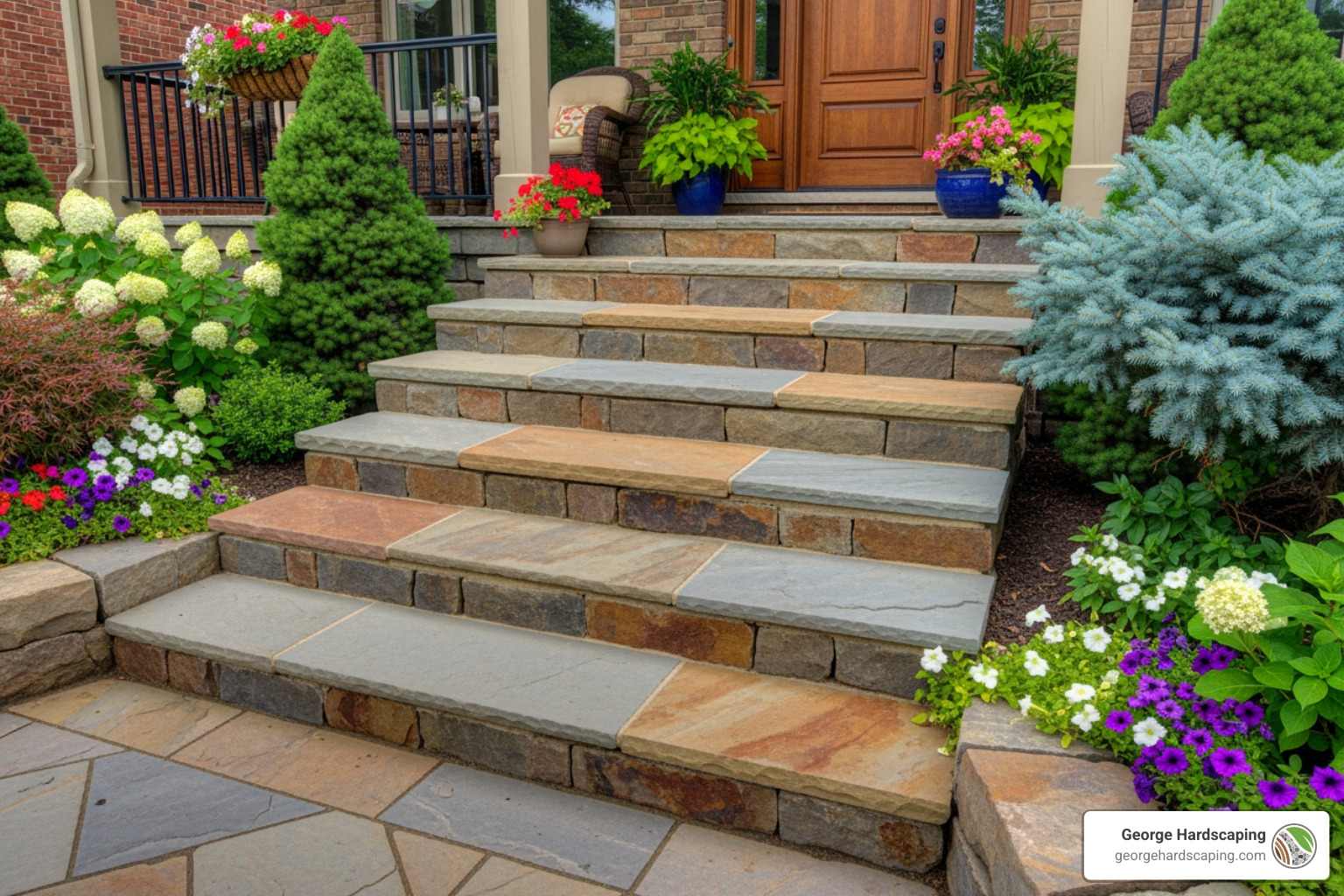
DIY vs. Hiring a Professional Stone Step Contractor
Building stone steps might seem like a straightforward DIY project, but the reality is often more complex and physically demanding. Multi-tiered steps, curved designs, or projects on sloped terrain require significant expertise in grading, foundation work, and stone cutting.
Natural stone is incredibly heavy. A single granite slab for a step can weigh hundreds of pounds, requiring specialized equipment and multiple people to set safely. Achieving professional results also requires precision cutting tools, compaction equipment, and an understanding of mortar mixes and structural integrity. A professional masonry contractor understands the nuances of local soil conditions, climate challenges, and building codes. For homeowners in Essex County, hiring a local contractor like George Hardscaping ensures that your project is handled by experts familiar with regional conditions, delivering a rock-solid, stunning entrance that will last.
Frequently Asked Questions about Front Porch Stone Steps
We often hear similar questions from homeowners considering stone steps. Here are some of the most common ones, along with our expert insights.
How much do stone front steps cost?
The cost of stone front steps can vary significantly based on several factors, including:
- Stone Type: Granite and bluestone tend to be more expensive than some fieldstones.
- Project Size and Complexity: A simple two-step entrance will cost less than a multi-tiered, curved design with integrated lighting.
- Labor: Professional installation accounts for a significant portion of the cost, reflecting the skill and equipment required.
- Site Preparation: Extensive excavation or grading can add to the overall expense.
While it’s difficult to give an exact figure without a custom quote, based on internet data, homeowners in Massachusetts might expect to pay anywhere from $1,500 for a basic project to $15,000 or more for a large, custom entrance. For comparison, you can see our related guide on how much it costs to build brick steps. These are average costs and not actual costs for George Hardscaping, as every project is unique.
How do I maintain and clean my stone steps?
One of the great advantages of stone steps is their low maintenance. However, a little care goes a long way:
- Regular Sweeping: Sweep your steps regularly to remove dirt and leaves, which prevents staining and reduces slip hazards.
- Using pH-Neutral Cleaners: For deeper cleaning, use a mild, pH-neutral stone cleaner diluted with water. Avoid harsh chemicals or acids that can damage the stone’s surface.
- Avoiding Harsh Chemicals: Never use de-icing salts containing chlorides on natural stone, as they can cause pitting and discoloration. Opt for sand or pet-safe ice melt alternatives.
- When to Seal Porous Stones: More porous stones like some limestones and sandstones may benefit from periodic sealing (every 1-3 years) to protect against water absorption and staining.
- Professional Repair: If you notice any loose stones or cracks, it’s best to contact a professional for stone step repair to ensure safety and prevent further deterioration.
Do I need a permit to build front porch steps?
This is a critical question, and the answer depends on your specific municipality in Essex County, as building codes vary from town to town (e.g., Beverly, Ipswich, Newburyport). Generally, you will likely need a building permit if your project involves structural changes, significantly altering the footprint of your porch, or building new steps that exceed a certain height. It’s always wise to check with your local building department before starting any outdoor construction project. A professional contractor like George Hardscaping can often assist with navigating these permitting requirements.
Conclusion: Make a Lasting First Impression with Stone
Your front porch steps are more than just an entryway; they are a defining feature of your home’s character and curb appeal. By choosing natural stone, you’re investing in unparalleled durability, timeless beauty, and a low-maintenance solution that will improve your property for decades to come. From the rugged charm of fieldstone to the sleek sophistication of granite slabs, the possibilities for creating a truly unique and inviting entrance are endless.
We hope these front porch stone step ideas have sparked your imagination and provided valuable insights into creating the perfect entrance for your home. If you’re in Essex County, MA, and ready to transform your entrance, the expert team at George Hardscaping is here to help. We specialize in creating beautiful, durable walkways and stairs that stand the test of time, perfectly suited to our New England climate and your personal style.
Contact us today for a free estimate and let’s build the rock-solid entrance your home deserves.