
Retaining Wall Landscaping: 10 Best Ideas to Transform 2024
Introduction
Retaining wall landscaping can transform your outdoor space, making it functional, attractive, and unique. At its core, a retaining wall is a sturdy structure built to hold back soil and reshape your yard’s terrain. It’s perfect for controlling erosion on slopes and creating level areas for gardens, patios, or any other outdoor activities.
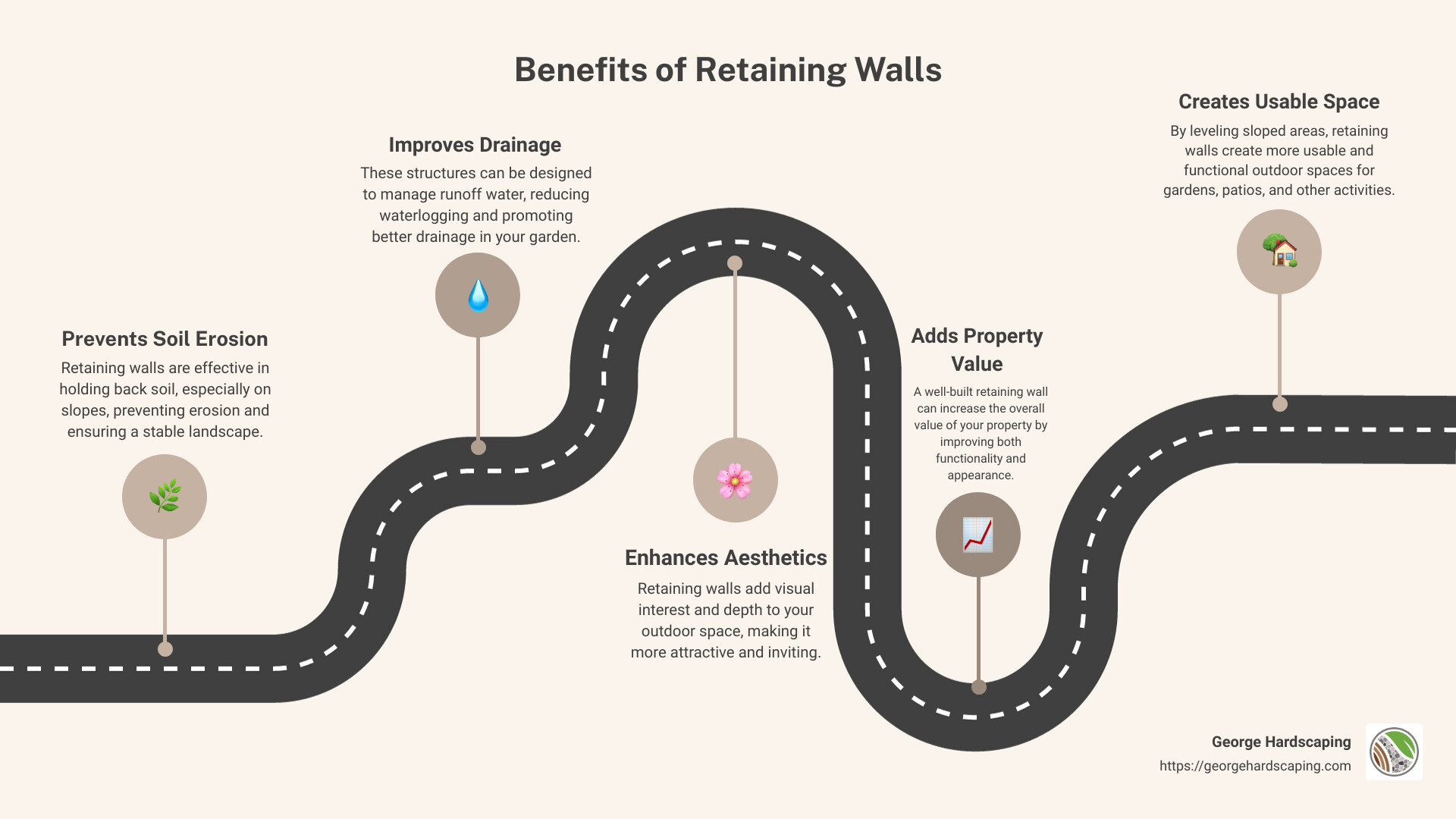
Quick Benefits of Retaining Walls:
– Prevent soil erosion
– Improve drainage
– Enhance aesthetics
– Add property value
Retaining walls are not just about utility; they bring visual appeal and creativity to your landscape. Imagine turning a steep hill into layered garden beds, adding a pathway with steps, or creating a cozy seating area. There are countless ways to integrate retaining walls in your garden design, using materials like concrete blocks, natural stones, or even timber, to suit your style and needs.
Architect Mauricio Lobeira notes that retaining walls can create “usable, uniformed surfaces” from unworkable inclines, adding both beauty and value to your property. Properly planned and executed, they can also double as garden backdrops or terraces, making your outdoor space more enjoyable and practical.
Choosing the Right Materials for Your Retaining Wall
Selecting the right materials is crucial for the durability, appearance, and functionality of your retaining wall. Here’s a breakdown of some popular options:
Wood
Wood is a cost-effective choice for retaining walls. It’s inexpensive and easy to work with, making it a popular option for DIY projects. However, wood has a shorter lifespan compared to other materials. To extend its durability, opt for pressure-treated wood and use a wood preservative. That the chemicals in treated wood can harm nearby plants, so avoid planting too close to the wall.
Tip: Joe Raboine, director of Belgard Residential Hardscapes, emphasizes that wood is an organic material and will eventually degrade but can be a great option for those on a budget.
Masonry
Masonry materials, like bricks and concrete blocks, offer a blend of durability and aesthetic appeal. They are designed to withstand harsh weather conditions and require minimal maintenance. Masonry retaining walls are perfect for those looking for a long-lasting solution.
Fact: Retaining wall blocks are specifically designed for this purpose and will not degrade over time. They are also relatively easy to clean.
Concrete Blocks
Concrete blocks are versatile and durable. They can be molded into various shapes and sizes, allowing for creative designs. Concrete blocks are ideal for creating sleek, modern retaining walls. Plus, they can be integrated with flower beds or steps for added functionality.
Example: A concrete retaining wall with built-in flower beds can add a modern touch to your landscape, combining the industrial look of concrete with the natural beauty of plants.
Natural Stones
Natural stones like granite and limestone offer a timeless and traditional look. Although they are more expensive than wood, their durability and aesthetic appeal make them a worthwhile investment. Natural stone walls can blend seamlessly into the environment, providing a rustic, natural feel.
Quote: Mauricio Lobeira, a Monterrey-based architect, notes that “the placement, pattern, and repetition of natural stones can create a contemporary look while maintaining a traditional aesthetic.”
Choosing the right material for your retaining wall depends on your budget, design preferences, and the specific needs of your landscape. Each material has its pros and cons, so consider all factors to make an informed decision.
Next, we’ll explore some creative design ideas to maximize the impact of your retaining wall.
Designing Your Retaining Wall for Maximum Impact
When it comes to designing a retaining wall, it’s not just about holding back soil. You want to create a structure that is both functional and visually appealing. Let’s break down some key considerations.
Aesthetic Considerations
A well-designed retaining wall can transform your outdoor space. Think about how the wall will integrate with the rest of your landscape.
Materials: Natural stones like granite and limestone offer a timeless look. Concrete blocks provide a sleek, modern feel. Wood gives a rustic charm but may not last as long.
Color and Texture: Choose colors and textures that complement your home and garden. For instance, a concrete retaining wall with built-in flower beds can add a wow factor to your front yard. The juxtaposition of industrial concrete and lush greenery creates visual interest.
Incorporate Steps and Entryways: Adding steps or an entryway can make your retaining wall more functional. Steps provide easy access to different levels of your yard, while an entryway can serve as a welcoming feature.
Use of Plants: Integrate plants into your design. Tall grasses, ornamental trees, and flower beds can soften the look of the wall and blend it into the natural surroundings.
Structural Integrity
A retaining wall must be sturdy enough to hold back soil, especially in areas with heavy rainfall.
Foundation: Start with a solid foundation. A trench filled with crushed rock provides stability.
Height: For walls taller than 4 feet, professional engineering is recommended. Shorter walls can be DIY projects, but ensure the first course of blocks is perfectly level to avoid a lopsided wall.
Drainage: Proper drainage is crucial. Without it, water pressure can build up behind the wall, causing it to fail. Incorporate drainage pipes and gravel to allow water to escape.
DIY vs Professional Installation
Building a retaining wall can be a rewarding DIY project, but it’s not for everyone.
DIY: If you’re confident in your construction skills and the wall is less than 4 feet tall, go for it. Use manufactured blocks with locking flanges for easier assembly.
Professional Installation: For taller walls, complex designs, or if you just want peace of mind, hiring professionals is the way to go. They have the expertise to ensure the wall is both beautiful and structurally sound.
Next, we’ll dive into some creative retaining wall landscaping ideas to inspire your project.
How to Build a Retaining Wall
Building a retaining wall can be a rewarding DIY project, but it requires careful planning and execution. Here are the key steps:
Site Preparation
- Plan the Location: Measure the length and height of your wall. Mark the area with garden stakes and string. Use line levels to ensure the string is level.
- Check for Utilities: Call 811 to locate underground utility lines before you start digging.
- Mark the Layout: For curved walls, use paint to outline the shape.
Base Laying
- Dig a Trench: Dig a trench that’s wide enough to fit the base blocks and deep enough so that half of the first row of blocks will be below ground level.
- Level the Base: Fill the trench with paver base and compact it. Ensure the base is level to provide a solid foundation.
Block Placement
- First Course: Lay the first row of blocks in the trench. Use a level to make sure each block is even.
- Stagger the Blocks: For subsequent rows, start with a half block to stagger the seams. This adds stability to the wall.
- Check for Level: Continuously check that the blocks are level as you go. Adjust as needed.
- Apply Adhesive: Use landscape adhesive between rows for added security.
Drainage Considerations
- Install Drain Pipe: If your area gets heavy rain, install a perforated drainage pipe behind the wall. Cover the pipe with a drain sleeve to prevent clogging.
- Backfill Properly: Backfill the space behind the wall with gravel or sand. This allows for proper drainage and reduces pressure on the wall. If using sand, cover the back of the wall with landscape fabric first.
- Tamp Down: As you backfill, tamp down the material to eliminate hollow areas and ensure it settles completely.
By following these steps, you’ll build a strong and durable retaining wall that enhances your landscape. Next, we’ll explore some creative retaining wall landscaping ideas to inspire your project.
Retaining Wall Landscaping Ideas
Retaining walls can be more than just functional barriers in your yard. With the right landscaping ideas, they can transform your outdoor space into a stunning oasis. Let’s dive into some planting options and creative uses for retaining walls.
Planting Options for Retaining Walls
Tall Grasses
Tall grasses like ornamental grasses are perfect for adding height and texture to your retaining wall. They grow quickly and can create a natural privacy screen. Plus, they come back year after year, making them a low-maintenance choice.
Ornamental Trees
Planting ornamental trees along your retaining wall can add a touch of elegance to your landscape. Trees like Japanese maple or dwarf spruce not only enhance the visual appeal but also provide shade and privacy.
Flower Beds
Incorporate flower beds into the design of your retaining wall for a burst of color. Flowers like moss phlox, creeping thyme, and rock cress can cascade over the edges, creating a beautiful, flowing effect.
Vegetable Gardens
Why not make your retaining wall functional and beautiful? Use the space to plant a vegetable garden. Raised beds along the wall are perfect for growing herbs, lettuce, and other small vegetables. This not only makes your yard look great but also provides fresh produce.
Creative Uses of Retaining Walls in Landscaping
Walkways Integration
Integrate walkways into your retaining wall design for easy access and a cohesive look. This can be particularly useful in sloped areas, making it easier to navigate different levels of your yard.
Stone Pillars
Add stone pillars to your retaining wall for a touch of grandeur. These can serve as focal points or support structures for lighting and decorative elements.
Raised Garden Beds
Use retaining walls to create raised garden beds. This not only adds visual interest but also makes gardening easier by reducing the need to bend over. Raised beds are perfect for flowers, herbs, and even small shrubs.
By incorporating these ideas, you can transform your retaining wall into a beautiful and functional part of your landscape. Next, we’ll look at how to maintain your retaining wall to keep it in top shape year-round.
Maintaining Your Retaining Wall
Maintaining your retaining wall is crucial to ensure its longevity and functionality. Here are some inspection tips, common issues, and repair strategies to help you keep your wall in top shape year-round.
Inspection Tips
Regular inspections are key to catching problems early. Here’s what to look for:
- Cracks or Bulging: These can indicate structural issues that may need immediate attention.
- Water Drainage: Ensure water is draining properly. Look for signs of water pooling or erosion.
- Vegetation: Check for plant roots that could be damaging the wall. Remove any invasive species.
- Shifting or Leaning: A wall that’s moving out of place may need reinforcement.
Make it a habit to inspect your retaining wall at least twice a year, ideally in spring and fall.
Common Issues
Retaining walls can face several common problems:
- Erosion: Water can wash away soil, weakening the wall.
- Poor Drainage: Without proper drainage, water can build up behind the wall, increasing pressure and leading to cracks or bulging.
- Settling: Over time, the ground beneath the wall can settle, causing the wall to shift or lean.
- Material Deterioration: Wood can rot, and concrete can crack over time.
Repair Strategies
Addressing issues promptly can save you from more costly repairs down the line. Here are some strategies:
- Fixing Cracks: Small cracks can be filled with concrete or masonry sealant. Larger cracks may require professional repair.
- Improving Drainage: If water drainage is an issue, consider adding or repairing drainage pipes. Use gravel to improve water flow.
- Reinforcing the Wall: For walls that are leaning or bulging, you might need to add additional supports or anchors. In severe cases, rebuilding the wall may be necessary.
- Replacing Materials: If parts of the wall are deteriorating, replace those sections. For wood walls, use pressure-treated wood to extend lifespan.
By following these maintenance tips, you can ensure your retaining wall continues to enhance your landscape for years to come. Up next, we’ll discuss the cost considerations and budgeting for retaining wall projects.
Cost Considerations and Budgeting for Retaining Wall Projects
When planning a retaining wall project, understanding the costs involved is crucial. Here’s a breakdown of what to consider:
DIY Costs
Building a retaining wall yourself can save on labor costs, but there are still expenses to factor in:
- Materials: Concrete blocks, gravel, landscape fabric, and drainage pipes. Always buy 10% more materials than estimated to account for errors and future repairs.
- Tools: Shovels, levels, wheelbarrows, and possibly a rented compactor.
- Time: DIY projects require a significant time commitment. Be prepared for physical labor, especially for digging and lifting heavy blocks.
Professional Installation Costs
Hiring professionals like George Hardscaping ensures quality and saves time, but it comes with higher upfront costs:
- Labor: Professional labor costs vary by region and project complexity. However, the expertise and efficiency of professionals can prevent costly mistakes.
- Permits: Depending on your location and wall height, permits may be required. These can range from $50 to $450.
- Additional Services: Professionals often include services like site preparation, drainage solutions, and even aesthetic enhancements.
Material Choices Impact
The choice of materials greatly affects the overall cost and longevity of your retaining wall:
- Concrete Blocks: Durable and DIY-friendly. Cost-effective but requires proper drainage to prevent damage.
- Natural Stones: Aesthetically pleasing and durable. More expensive and may require professional installation.
- Wood: Less expensive but prone to deterioration. Requires regular maintenance and may need replacement sooner.
- Bricks: Offers a classic look but can be costly and labor-intensive to install.
Additional Costs and Considerations
Other factors can influence your budget:
- Waterproofing: Essential to prevent water damage. Costs between $2 and $10 per square foot.
- Geographical Location: Local labor rates, material availability, and site characteristics can affect pricing.
- Time of Year: Construction during colder months may cost more due to frozen ground.
By considering these factors, you can better budget for your retaining wall project, ensuring it meets your needs and enhances your landscape.
Up next, we’ll explore how transforming spaces with George Hardscaping can elevate your outdoor living areas.
Transforming Spaces with George Hardscaping
Patio Integration
Imagine stepping out into a backyard where your patio seamlessly blends into the landscape. With George Hardscaping, this dream can become a reality. By integrating retaining walls into your patio design, you can create a unified and visually appealing space. Retaining walls can double as seating areas, making your patio not just beautiful but also functional. Patricia Benner, a landscape architect, mentions that a retaining wall with built-in stone seating “has a nice, organic flow and makes the seating feel of a piece with its surroundings.”
A custom firepit can be the centerpiece of your outdoor space, providing warmth and a gathering spot for friends and family. George Hardscaping specializes in designing firepits that are not only functional but also aesthetically pleasing. By incorporating retaining walls into the firepit area, you can create a sunken, cozy sitting room that’s perfect for year-round entertaining. According to George Hardscaping, “a custom fire pit table can transform your outdoor space,” making it a must-have feature for any backyard.
Steps Enhancement
Enhance your outdoor space with beautifully designed steps that integrate seamlessly with your retaining walls. Stone steps, such as those made from flagstone or bluestone, can add a touch of elegance and practicality. Oversized stone steps can be incorporated into the retaining wall design, creating a cohesive look that’s both functional and stylish. Premium materials like slate or granite can add an extra layer of sophistication to your landscape.
By leveraging these transformative features, George Hardscaping can help you create an outdoor space that’s not just beautiful but also highly functional. Up next, we’ll dive into the long-term benefits and how enhancing your outdoor living spaces can add value to your home.
Conclusion
Retaining wall landscaping offers long-term benefits that go beyond just aesthetics. A well-designed retaining wall can prevent soil erosion, manage runoff water, and add structural integrity to your landscape. This means less maintenance and fewer repairs over the years, saving you time and money.
Enhancing your outdoor living spaces with retaining walls can create more usable areas in your yard. Imagine a cozy firepit integrated into a stone retaining wall, or a series of raised garden beds that make gardening easier and more enjoyable. These features not only make your outdoor space more functional but also increase your home’s value.
At George Hardscaping, we specialize in creating custom retaining walls that blend seamlessly with your landscape. Whether you’re looking to add a patio, custom firepit, or stone steps, our team of experts can bring your vision to life.
Contact George Hardscaping for your next project and transform your outdoor space into a beautiful, functional retreat. Visit our Landscape Retaining Walls page to get started today.

