
Paver Patio Contractors: Top 5 Essential Tips 2024
Choosing a reliable Paver Patio Contractor is crucial for adding beauty and functionality to your outdoor space. Whether you’re dreaming of relaxing in a cozy outdoor area or throwing lively gatherings on your new patio, the right contractor can make that dream come true.
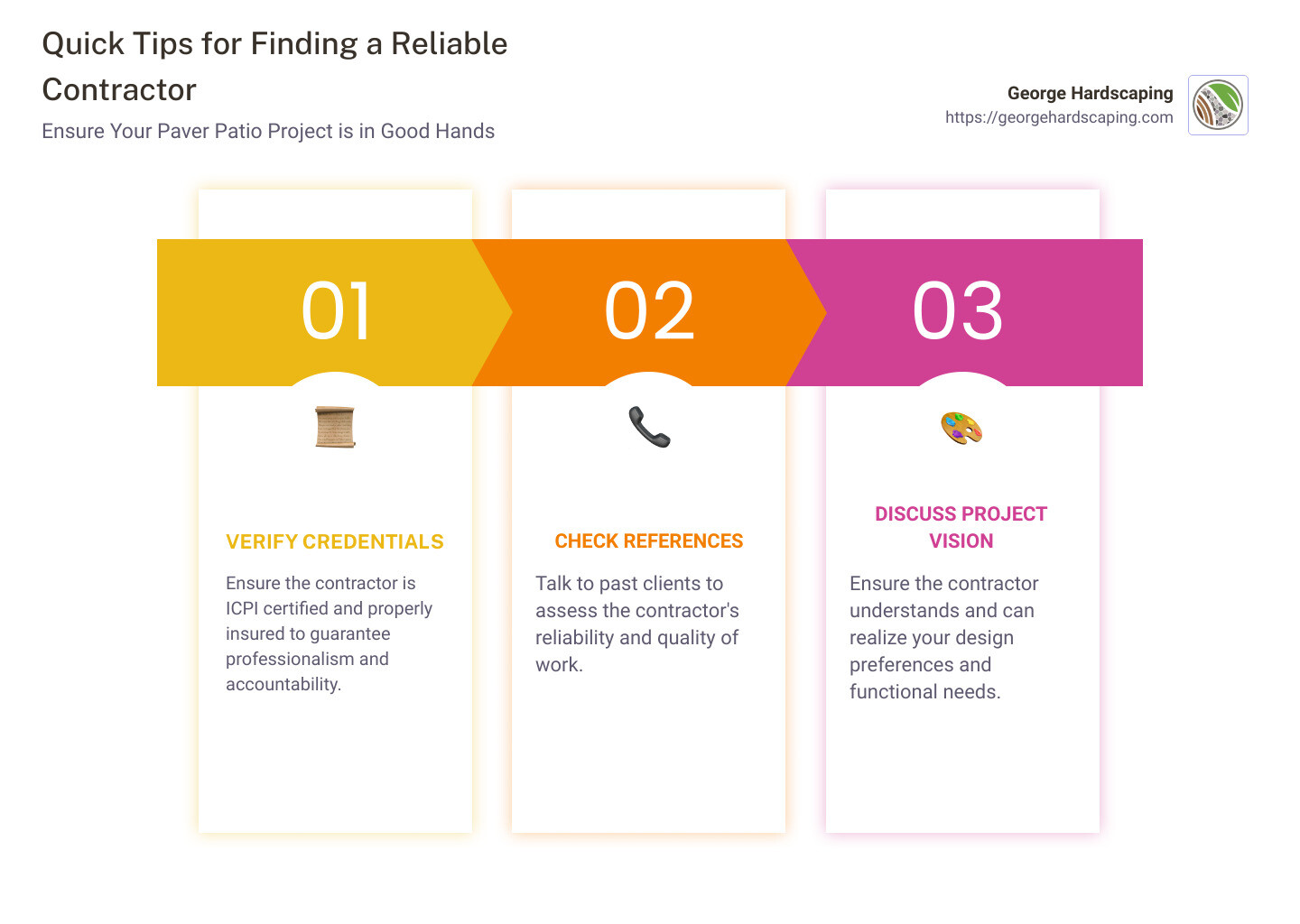
Quick Tips for Finding a Reliable Contractor:
– Check certifications and insurance: Make sure they are ICPI certified and properly insured.
– Ask for references: Speak to past clients to gauge satisfaction.
– Discuss experience and vision: Ensure they have completed similar projects and can offer a clear design plan.
– Understand the payment schedule: Know how payments will be structured.
– Get everything in writing: Always secure a written estimate and contract terms.
Investing in a paver patio not only improves your home’s curb appeal but also provides a practical solution to landscape challenges. By thoughtfully selecting a contractor, you ensure that your patio aligns perfectly with your personal style and functional needs, changing your outdoor space into a beautiful retreat.
Similar topics to Paver Patio Contractor:
– patio contractor
– patio pavers installers
– pavers patios
Understanding Paver Patio Installation Costs
When planning for a paver patio, understanding the costs involved is crucial. These costs can vary based on several factors, including the size of the area, the complexity of the design, and whether you choose to go the DIY route or hire a professional.
Cost Per Square Foot
The cost of installing a paver patio typically ranges from $10 to $20 per square foot. This range can fluctuate based on the materials you choose. For instance, natural stone pavers tend to be more expensive than concrete options.
Material choice significantly impacts the overall budget. While pavers might have a higher upfront cost compared to alternatives like poured concrete, their durability and aesthetic appeal often justify the investment.
DIY vs Professional Installation
Many homeowners consider a DIY approach to save money. While this can reduce labor costs, it’s important to weigh the potential challenges. Installing a paver patio requires heavy lifting, precise leveling, and careful planning. Without proper experience, the project can quickly become overwhelming.
A professional Paver Patio Contractor brings expertise and efficiency. They ensure the patio is installed correctly, minimizing future maintenance issues. Although hiring a professional might be more costly upfront, it often saves time and reduces the risk of costly mistakes.
Long-Term Value
Investing in a well-installed paver patio adds significant value to your home. Pavers are known for their longevity and durability, often lasting 30 years or more when properly maintained. Unlike concrete slabs, pavers are less prone to cracking and can be easily replaced if damaged.
Moreover, the visual appeal of a paver patio can improve your home’s curb appeal, potentially increasing its resale value. This long-term benefit makes hiring a skilled contractor a wise decision for homeowners looking to maximize their investment.
By understanding these cost components, you can make informed decisions that align with your budget and vision for your outdoor space. As you weigh your options, consider the long-term benefits of professional installation and the added value a paver patio can bring to your home.
Key Considerations When Hiring a Paver Patio Contractor
Choosing the right Paver Patio Contractor is crucial to ensure your project meets your expectations in terms of reliability, craftsmanship, and quality. Here’s what you need to keep in mind:
Reliability
A reliable contractor is essential for a successful project. Look for contractors with strong references and positive online reviews. Check their credentials on the Better Business Bureau to confirm their reliability. Also, ensure they are insured and certified, such as through the ICPI, to protect yourself from potential liabilities.
Craftsmanship
The craftsmanship of your patio will affect its durability and appearance. Experienced contractors bring a wealth of knowledge and skill, ensuring your patio is built to last. Ask potential contractors about their experience with similar projects and request to see examples of their past work. A skilled contractor will also provide a detailed sketch or plan for your project, helping you visualize the final outcome.
Quality
Quality materials and installation are key to a long-lasting paver patio. Discuss with your contractor the types of materials available, such as concrete, brick, or natural stone pavers. Each has its benefits in terms of durability and aesthetics. Make sure the contractor uses high-quality materials that suit your climate and intended use.
Aesthetics
Your patio should improve the overall appeal of your outdoor space. Choose a contractor who understands your vision and can offer creative input to achieve it. They should be able to suggest suitable colors, patterns, and layouts that complement your home’s architecture and landscape. Ensure you and the contractor are aligned on the design to avoid misunderstandings later.
Functionality
Beyond looks, your patio must serve its intended purpose. Discuss with your contractor how the space will be used and any specific needs you have, such as accommodating outdoor furniture or creating pathways. A good contractor will balance aesthetics with functionality, ensuring the patio is both beautiful and practical.
By focusing on these key considerations, you can select a Paver Patio Contractor who will deliver a patio that meets your expectations for reliability, craftsmanship, quality, aesthetics, and functionality. This approach not only improves your outdoor space but also adds value to your home.
The Pros and Cons of Different Patio Materials
When planning your patio project, selecting the right material is crucial. Each option has its own advantages and drawbacks. Let’s explore the most common materials: pavers, concrete, and stamped concrete.
Pavers
Pros:
- Durability: Pavers can last over 50 years with minimal maintenance. If one gets damaged, you can replace it individually without redoing the entire patio.
- Aesthetics: They offer a wide range of colors and patterns, allowing for unique, customizable designs that can significantly improve your outdoor space.
- Maintenance: Pavers are relatively easy to maintain. Regular cleaning and occasional sand replacement between the joints can keep them in good shape.
Cons:
- Cost: Pavers can be more expensive initially, ranging from $5 to $30 per square foot. However, their durability often makes them cost-effective in the long run.
- Installation: Laying pavers requires precision. Mistakes in the foundation can lead to uneven surfaces or shifting over time.
Concrete
Pros:
- Cost: Concrete is generally cheaper than pavers, with costs ranging from $10 to $70 per square foot depending on customization options.
- Durability: Concrete is long-lasting and can handle heat well, making it suitable for warmer climates.
- Versatility: It can be poured into various shapes and finished with different textures or colors to match your style.
Cons:
- Cracking: Concrete is prone to cracking, especially in areas with freeze-thaw cycles. Once cracked, it’s challenging to repair without noticeable patches.
- Aesthetics: While versatile, concrete doesn’t offer the same level of design flexibility as pavers.
Stamped Concrete
Pros:
- Appearance: Stamped concrete can mimic more expensive materials like stone or brick, offering a high-end look at a lower cost.
- Customization: It comes in various patterns and colors, providing numerous design options to complement your home.
Cons:
- Durability: Like regular concrete, stamped concrete can crack and is susceptible to damage from freeze-thaw cycles.
- Maintenance: It requires regular sealing to maintain its appearance and prevent stains or fading.
Cost Comparison
Choosing between these materials often comes down to balancing initial costs with long-term value. While pavers might be more expensive upfront, their longevity and low maintenance can make them a smarter investment over time. Concrete and stamped concrete offer lower initial costs but may require more frequent repairs and maintenance, potentially increasing overall expenses.
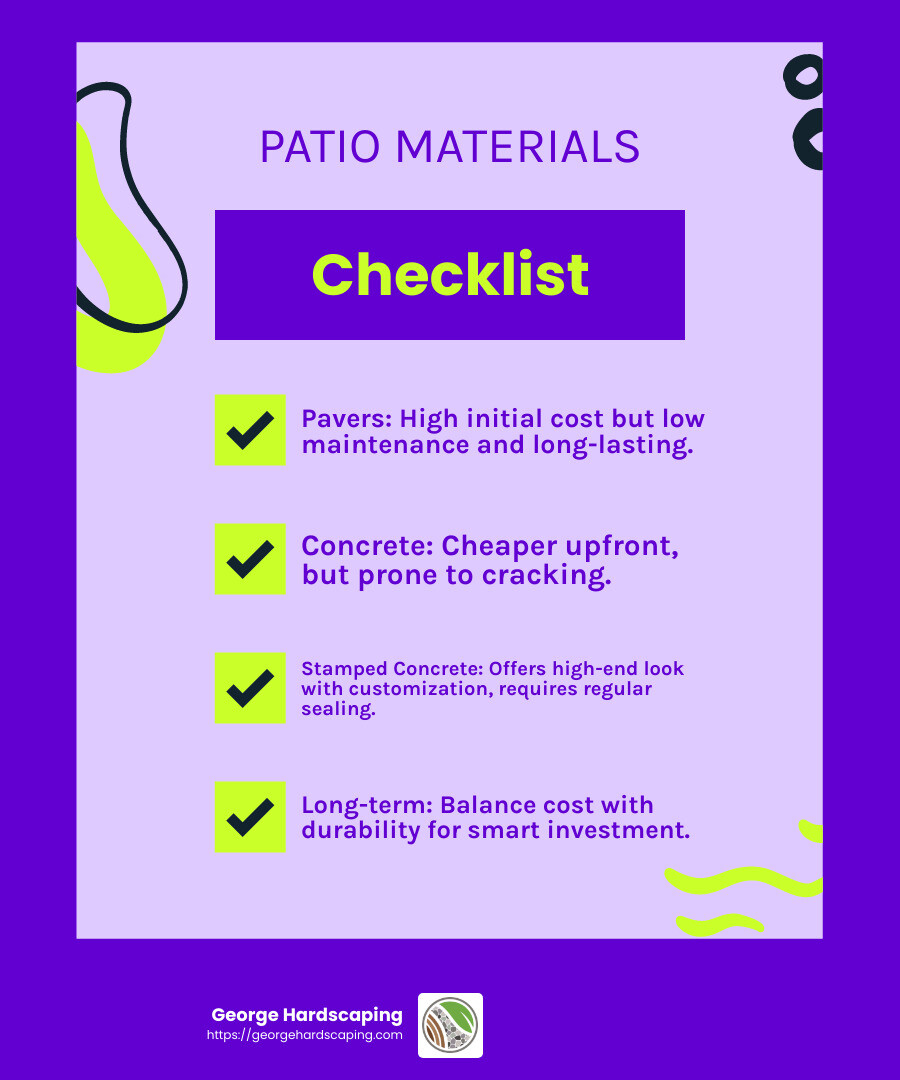
When deciding on the best material for your patio, consider both your budget and your long-term vision for your outdoor space. Each option has its strengths, and understanding these can help you make an informed choice that fits your needs and improves your home’s value.
Frequently Asked Questions about Paver Patio Contractors
How much should I charge to install a paver patio?
When considering the installation of a paver patio, both DIY and professional options come with their own costs. If you’re tackling the project yourself, expect to spend between $5 to $15 per square foot on materials like pavers, sand, and gravel. That DIY projects often require tools and equipment, which might add to your expenses.
On the other hand, hiring a professional Paver Patio Contractor typically costs more upfront, usually ranging from $15 to $30 per square foot. This price includes labor, materials, and expertise. While the initial outlay is higher, a professional installation ensures precision and often includes a warranty, offering peace of mind and potentially saving money on future repairs.
Is it cheaper to build a patio with pavers or concrete?
The choice between pavers and concrete often boils down to balancing initial costs with long-term benefits. Concrete patios generally cost less upfront, with prices ranging from $10 to $20 per square foot. However, concrete can crack over time, especially in areas with freeze-thaw cycles, leading to additional repair costs.
Pavers, while more expensive initially, offer significant long-term value. They are durable, and individual pieces can be replaced if damaged, avoiding the need for costly, large-scale repairs. This longevity can make pavers a more cost-effective choice in the long run, despite the higher initial investment.
Is it cheaper to make your own pavers or buy them?
Creating your own pavers can be a cost-saving option for those willing to invest time and effort. DIY pavers might cost as little as $2 to $5 per square foot for materials like concrete mix and molds. This approach allows for customization in size and design, potentially reducing costs compared to purchasing pre-made pavers.
However, consider the labor and time involved in making your own pavers. For many, buying pre-made pavers is more practical, offering consistency in quality and size. While this option is more expensive, it saves significant time and effort, allowing for quicker project completion.
When deciding between DIY and purchasing, weigh the potential cost savings against the time and labor required. Each method has its trade-offs, and the best choice depends on your budget, timeline, and willingness to engage in hands-on work.
Conclusion
Choosing the right Paver Patio Contractor is crucial for ensuring the success of your outdoor project. At George Hardscaping, we pride ourselves on delivering top-notch services across Essex County and the North Shore. Our commitment to quality and craftsmanship sets us apart, making us a trusted partner for changing your outdoor spaces.
Our skilled team specializes in creating beautiful and functional patios, walkways, retaining walls, and custom firepits. We understand the importance of both aesthetics and durability, ensuring that each project not only looks stunning but also stands the test of time.
By working closely with our clients, we tailor each project to fit their vision and needs. We prioritize clear communication and transparency throughout the process, ensuring that you’re informed and satisfied every step of the way.
Whether you’re looking to improve your home’s curb appeal or create a cozy outdoor gathering space, George Hardscaping is here to help. With our expertise and dedication to excellence, we turn your outdoor dreams into reality. Reach out to us today to discuss how we can bring your vision to life.
