
Patio Surface Options: 10 Best Durable Picks for 2025
Why Choosing the Right Patio Surface Matters for Your Home
Patio surface options range from budget-friendly concrete to premium natural stone, each offering unique benefits for durability, style, and maintenance. Here are the most popular choices:
Top Patio Surface Materials:
– Concrete – Most affordable ($6-18/sq ft), customizable with stamping and staining
– Pavers – Versatile, easy to repair, available in concrete, brick, or stone
– Natural Stone – Premium option (granite, slate, flagstone) lasting decades
– Brick – Classic look, $14-20/sq ft, excellent for traditional styles
– Porcelain Tile – Modern, frost-resistant, supports up to 2,000 pounds
– Gravel – Budget-friendly, excellent drainage, easy DIY installation
– Wood/Composite – Warm look, composite made from recycled materials
– Mixed Materials – Combine surfaces for visual interest and defined zones
Your patio surface choice impacts more than just looks. Research shows a new patio can boost your home’s value by up to 12%, making material selection a smart investment decision.
The right surface depends on your climate, budget, and lifestyle. Essex County’s freeze-thaw cycles demand materials like granite or properly sealed concrete. Meanwhile, families with kids might prefer cushioned rubber pavers or slip-resistant textured surfaces.
This guide breaks down every major patio surface option, from installation costs to long-term durability, helping you make the best choice for your North Shore home.
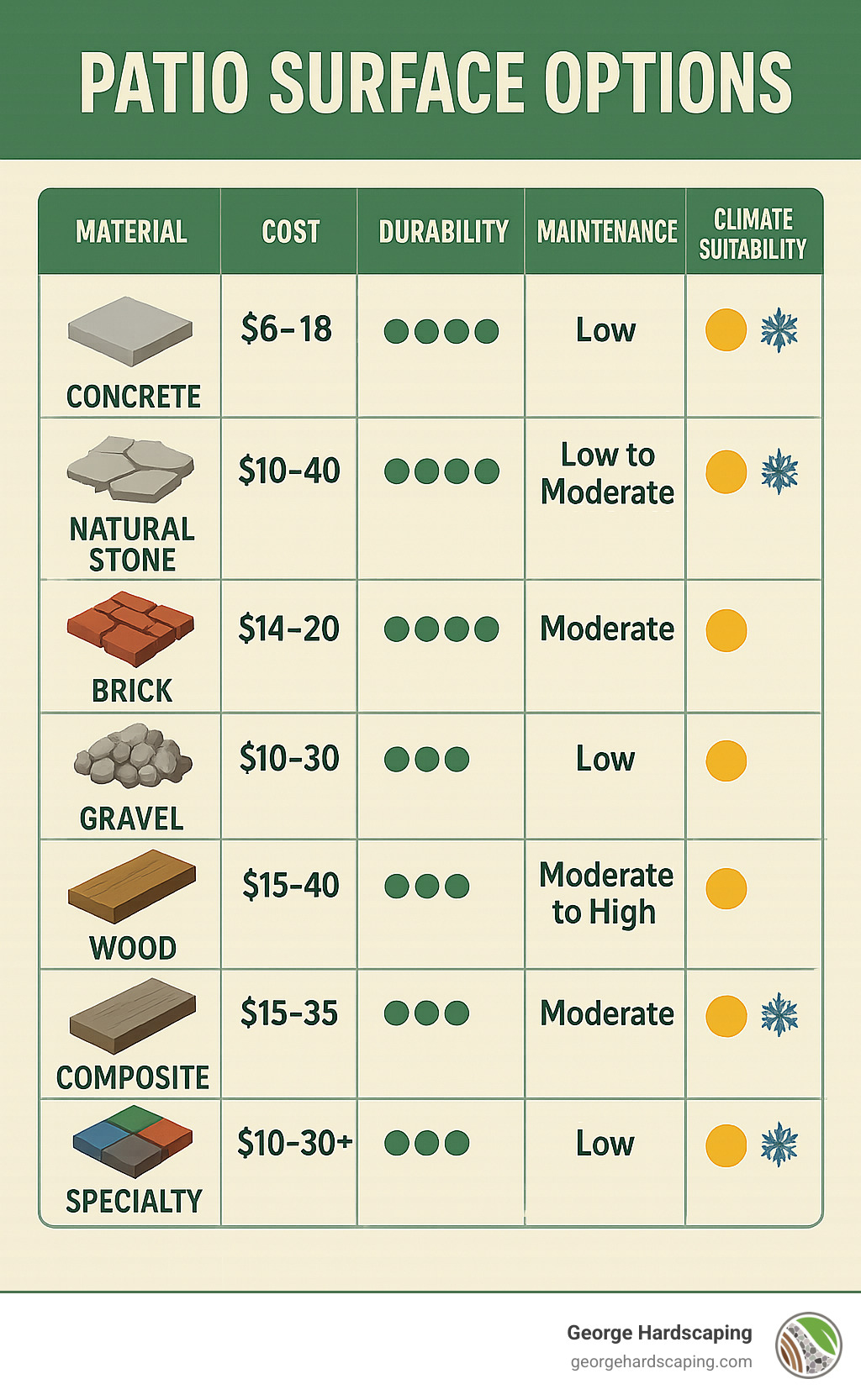
Patio surface options basics:
– eco-friendly patio options
– natural stone pavers
Patio Surface Options: The Complete Line-Up
When we work with homeowners across Essex County, from Beverly to Newburyport, we see the same question repeatedly: “What’s the best patio surface for my home?” The answer depends on balancing your aesthetic vision, budget, and practical needs.
The world of patio surface options has exploded in recent years. Patio Pavers Installers now offer everything from traditional flagstone to cutting-edge composite materials made from recycled plastics. Whether you’re drawn to natural stone or eco-friendly alternatives, there’s a surface that fits your vision and budget.
Concrete: The Budget King of Patio Surface Options
Concrete remains the most affordable hard surface option for patios, typically ranging from $6-25 per square foot based on internet data (not our actual pricing). What makes concrete particularly appealing is its incredible versatility and customization potential.
Stamped concrete can mimic expensive stone, brick, or wood planks with remarkable accuracy. Staining opens up a rainbow of possibilities – acid stains create rich, variegated colors while water-based stains offer uniform coverage.
The key advantage is complete customization. You can mold it to any shape, create integrated planters, or add heating elements. Slip-resistance is easily achieved through brushed finishes or textured stamps.
Maintenance reality: Stamped and stained concrete requires resealing every 2-3 years to maintain appearance and protect against weather damage.
Brick: Classic Charm That Ages Gracefully
Brick patios offer timeless appeal that complements both colonial charm and contemporary design. Cost ranges from $12-35 per square foot based on internet averages, though recycled brick can cost less while adding authentic character.
The herringbone pattern remains most popular for good reason – it creates visual movement, provides excellent slip resistance, and handles seasonal ground movement better than straight patterns.
Unlike materials that deteriorate over time, brick develops beautiful character. The slight color variations and gentle weathering create lived-in charm that many homeowners treasure.
Interlocking & Concrete Pavers
Pavers represent the sweet spot between concrete’s affordability and natural stone’s appeal. Modern concrete pavers convincingly mimic brick, cobblestone, or natural stone textures with remarkable accuracy.
Easy repair stands out as pavers’ biggest advantage. Individual units can be lifted and replaced without affecting surrounding areas. Permeable grids offer an eco-friendly twist, allowing rainwater to infiltrate and reduce runoff.
Natural Stone: Premium Patio Surface Options for Decades of Beauty
Natural stone represents the premium tier, offering beauty that literally lasts centuries. Granite leads the durability race with incredible hardness and weather resistance. Slate brings sophisticated elegance with naturally flat surfaces and rich colors. Flagstone offers the most natural, organic appearance with irregular shapes.
Cost reality: Natural stone typically ranges from $15-50 per square foot based on internet data, with exotic varieties reaching higher prices. The investment pays dividends in longevity, beauty, and property value.
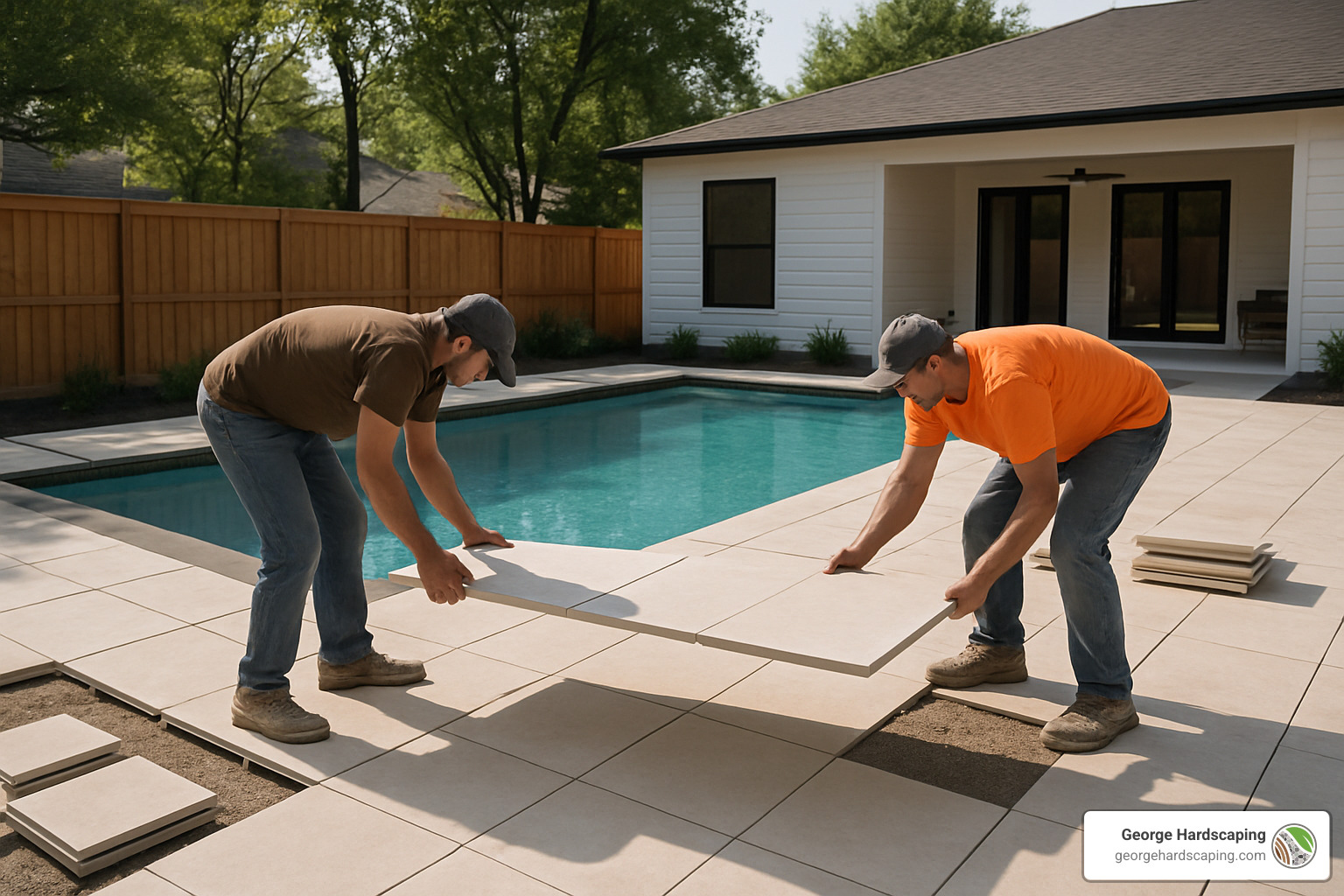
Porcelain & Ceramic Tile
Porcelain pavers bring sophisticated indoor elegance outdoors while handling extreme conditions. These engineered surfaces can withstand 2,000-lb loads and offer frost-proof performance essential for New England climates.
Contemporary style defines porcelain’s appeal, from wood-look planks to stone mimics. Installation flexibility allows dry-laying on sand without adhesives. Maintenance couldn’t be simpler – the non-porous surface repels stains and requires no sealing.
Gravel & Compacted Aggregates
Gravel patios offer exceptional value and natural charm. Pea gravel leads popularity with smooth feel underfoot and excellent drainage. Decomposed granite compacts to create firm, stable surfaces.
Drainage excellence makes gravel ideal for wet areas where other materials might create runoff problems. Quality landscape edging contains gravel migration while creating clean borders.
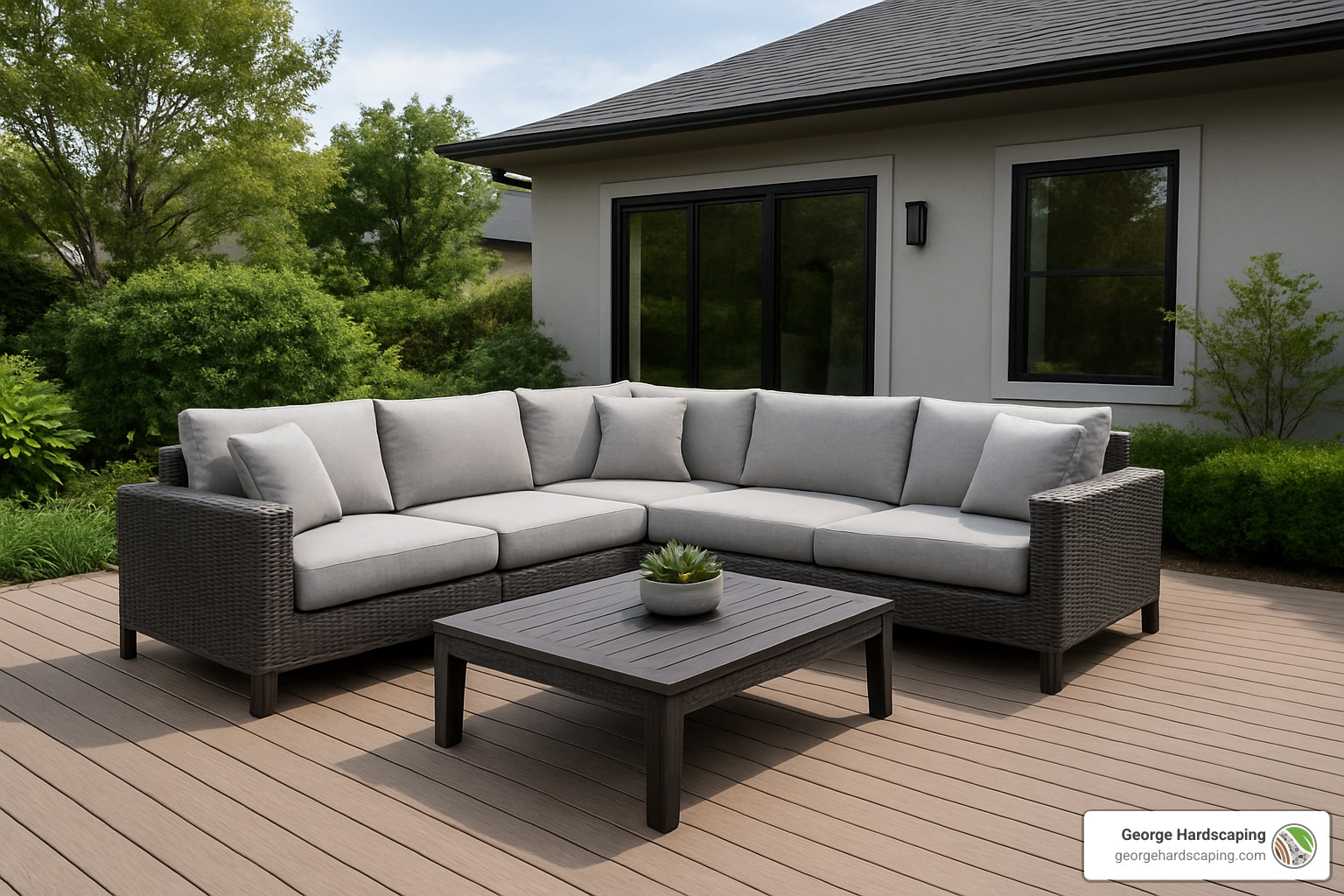
Wood & Composite Decking
Wood brings irreplaceable natural warmth to outdoor spaces. Composite decking offers wood’s visual appeal with dramatically reduced maintenance – made from recycled plastic and wood fibers, composite resists rot, insects, and moisture damage.
Heat retention presents the main composite drawback – dark colors can become uncomfortably hot in direct sunlight. Low maintenance defines composite’s appeal with no staining or sealing required.
Rubber, Grid & Eco Surfaces
Rubber tire pavers transform waste into comfortable, safe surfaces perfect for play areas. Turfstone grass grids combine hardscape functionality with living surfaces. Mixed materials create stunning visual interest while managing costs effectively.
Cost, Durability & Maintenance at a Glance
When choosing patio surface options, smart homeowners look at the complete picture: upfront costs, longevity, and maintenance expenses over time.
The cheapest option isn’t always the best value. Concrete at $6-18 per square foot based on internet data seems like a bargain, but factor in resealing every 3-5 years and potential replacement after 20-30 years for the complete cost picture.
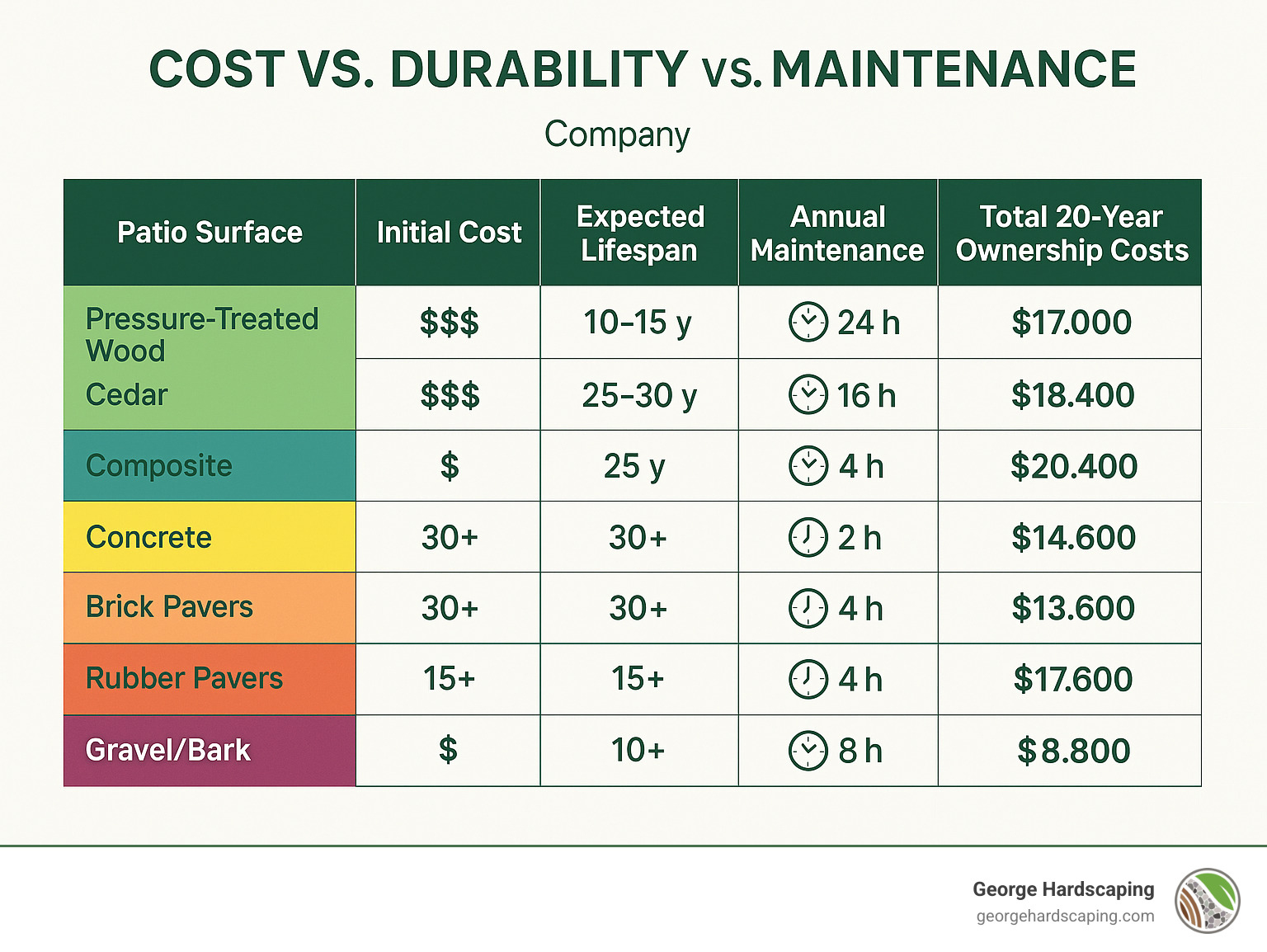
Gravel and bark chippings win the budget championship with lowest initial investment. Natural stone costs $15-45 per square foot based on internet averages, but properly installed stone patios last over 100 years.
Porcelain pavers offer the best of both worlds – moderate upfront investment with virtually zero maintenance. Wood decking demands the most attention with 8-12 hours annually for cleaning and staining.
DIY installation can slash project costs by 40-60% for simple materials like gravel or interlocking pavers. The sweet spot? Brick pavers and concrete pavers offer excellent value with mid-range costs and reasonable maintenance.
Climate, Drainage & Safety Considerations
When choosing patio surface options for Essex County homes, our coastal location brings unique challenges. Salt air, freeze-thaw cycles, and summer storms can make or break your outdoor investment.
Temperature swings are the biggest threat to most patio materials. When water seeps into cracks and freezes, it expands with tremendous force. Materials like granite handle this beautifully because they absorb very little water.
Proper drainage isn’t optional – slope your patio away from your house at least 1/4 inch per foot. Use landscaping fabric under loose materials to prevent weeds while allowing drainage.
Best Patio Surface Options for Wet Regions
Porcelain pavers excel in wet conditions because they’re non-porous. Water can’t soak in, so there’s nothing to freeze and expand. Gravel systems naturally handle drainage better than almost any other surface.
Channel drains at patio edges collect water before it causes problems and direct it away from your outdoor living space.
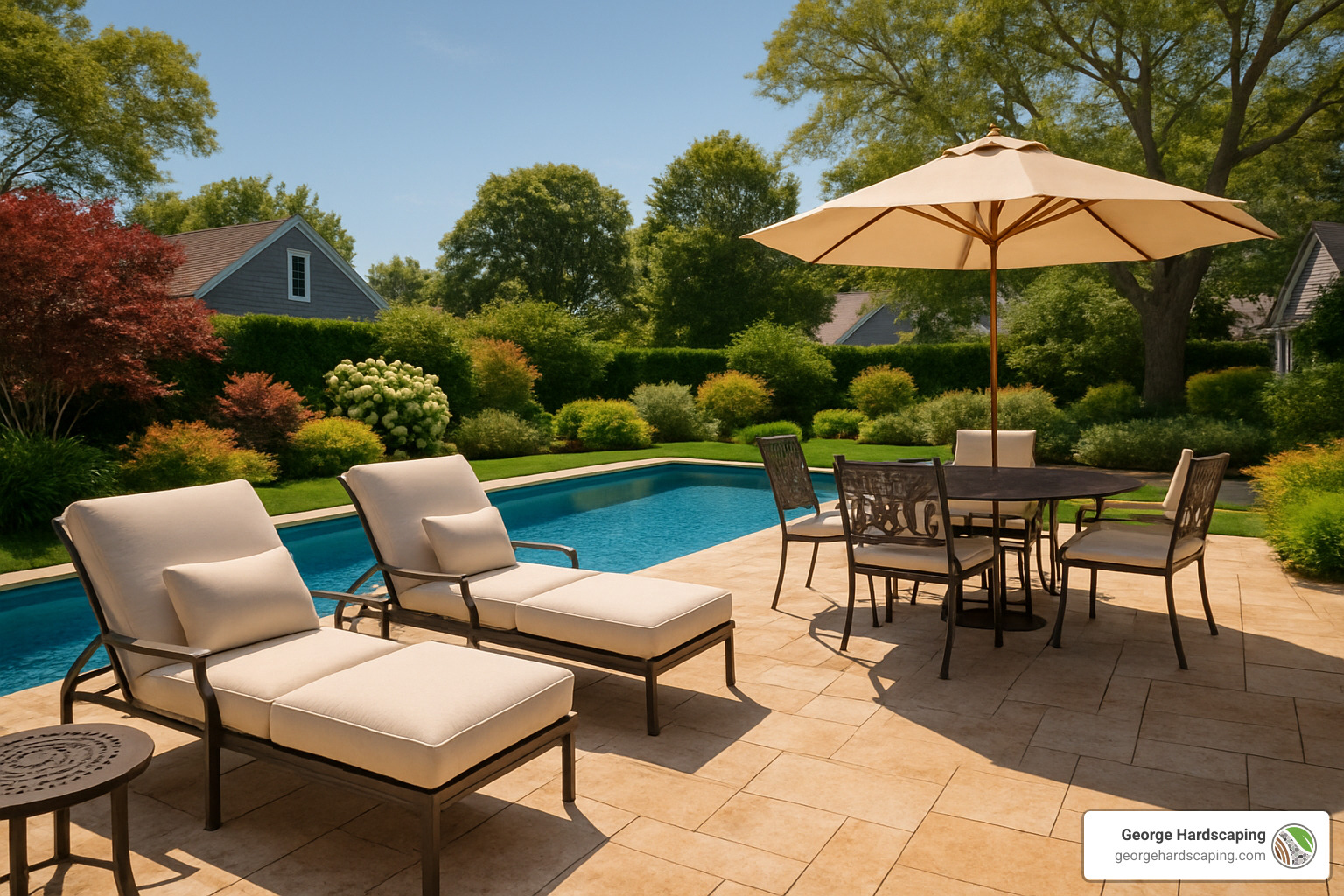
Hot-Summer Strategies & Cool-Underfoot Picks
Travertine leads the pack for staying cool in hot weather due to its unique cellular structure that dissipates heat. Light-colored composite decking reflects heat much better than dark versions.
Traditional brick stays surprisingly comfortable even in direct sunlight. Color choice matters – light colors reflect heat while dark colors absorb it, creating 20+ degree differences.
Winter-Proof & Freeze-Thaw Survivors
Granite earns its reputation as the ultimate survivor because it absorbs almost no water. Air-entrained concrete gets special treatment creating tiny air bubbles that give expanding ice somewhere to go.
Interlocking paver systems handle freeze-thaw cycles gracefully because individual pavers can shift slightly without damaging the overall surface. Sealing schedules become critical for materials that absorb moisture.
Style & Design Inspiration
Your patio surface options tell a story about your home and lifestyle. The best patios feel like natural extensions of the homes they serve.
Modern minimalist patios accept clean lines with polished concrete, large-format porcelain pavers, or smooth granite. Rustic charm celebrates imperfection with irregular flagstone or weathered brick in random patterns. Traditional elegance features classic herringbone brick or formal paver layouts.
For design inspiration, browse our Patio Design Ideas gallery.
Mixing & Matching Materials for Wow Factor
The most memorable patios combine different materials. Stone borders with gravel ribbons define spaces while maintaining drainage. Fire pit zones deserve heat-resistant stone or brick around features, then transition to affordable options in seating areas.
Follow the 60-30-10 design principle: one primary material for 60% of space, complementary secondary material for 30%, and 10% for accent details.
Patio Surface Options That Maximize Home Value
Smart material choices can boost your value of your home by up to 12%. Natural stone consistently tops the list for resale appeal with timeless look and durability.
Quality pavers offer excellent value because they’re widely appreciated. Today’s buyers prioritize low-maintenance surfaces and neutral colors that complement various decorating styles.
Installation & Long-Term Care Guide
Getting your patio installation right from the start makes the difference between decades of service and premature problems. The foundation matters more than the surface – proper site preparation determines long-term success.
Base compaction is absolutely critical. A properly compacted base prevents settling and cracking. Professional installation timelines vary: simple paver patios take 3-5 days, natural stone installations require 5-7 days, concrete pours need 2-3 days plus curing time.
For complex projects, our Stone Patio Installation team handles technical challenges while ensuring your investment performs beautifully.
DIY-Friendly Patio Surface Options
Interlocking deck tiles represent the easiest installation – they click together without tools or base preparation. Gravel patios offer another excellent DIY opportunity with basic excavation and spreading aggregate.
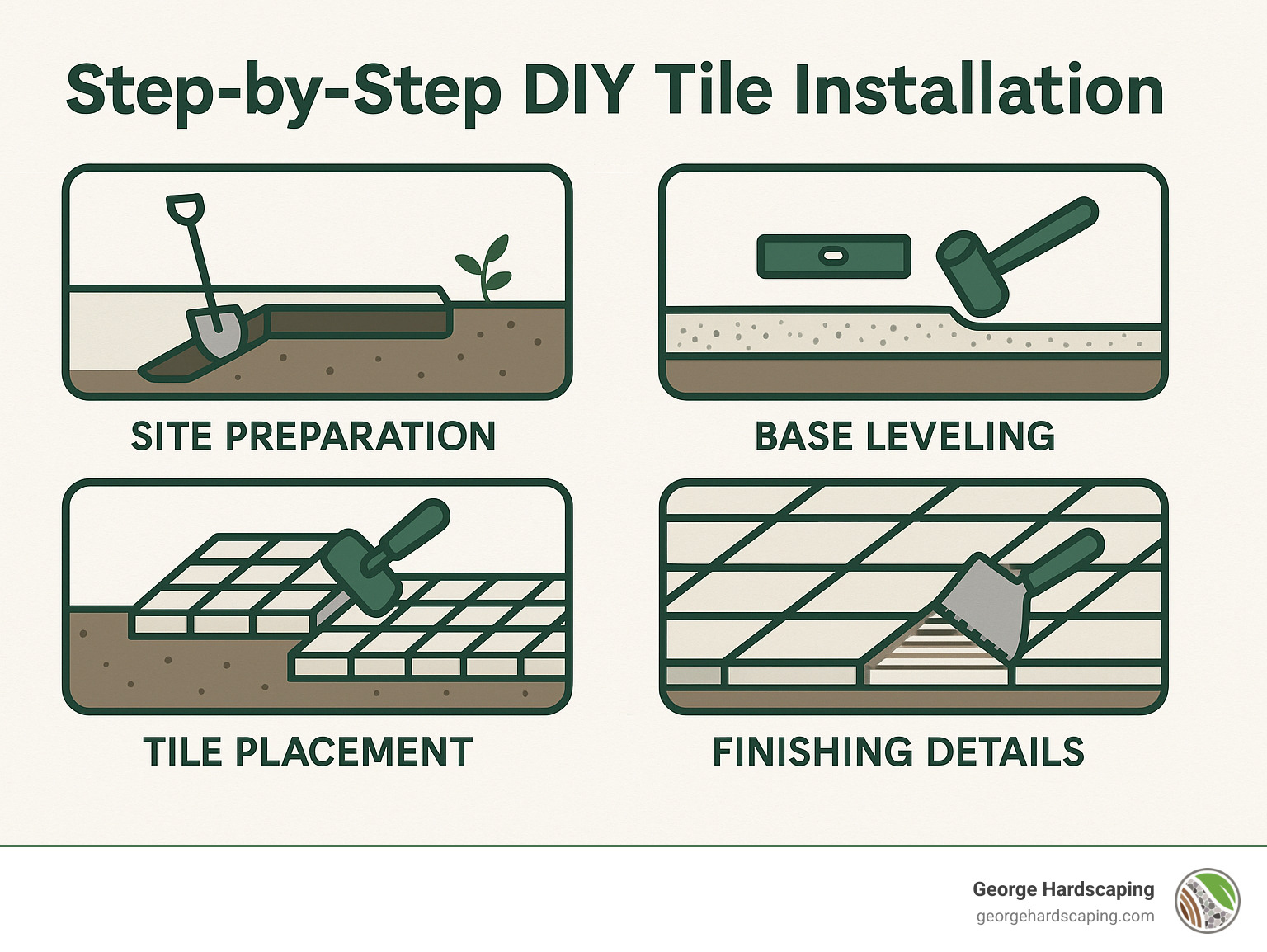
Your basic tool list includes shovel, rake, level, and rubber mallet. You’ll likely need to rent a plate compactor for proper base preparation.
When to Call a Pro & What It Costs
Poor soil conditions and significant grading requirements call for professional expertise. Premium materials like natural stone benefit enormously from professional installation.
Average cost ranges based on internet data vary widely: Concrete patios $6-18 per square foot, brick installation $12-40 per square foot, natural stone $15-45 per square foot, porcelain pavers $10-30 per square foot.
Professional installation brings real value through proper drainage design, warranty coverage, and access to professional-grade materials.
Frequently Asked Questions About Patio Surface Options
Which material lasts the longest?
When homeowners ask us about longevity, natural stone consistently tops the list. Granite, in particular, can literally last centuries when properly installed. We’ve seen flagstone patios with concrete mortar that have been serving families for over 100 years – and they’re still going strong.
The secret lies in granite’s incredibly low water absorption rate. Unlike softer materials that gradually deteriorate, granite maintains its structural integrity through decades of New England’s harsh freeze-thaw cycles.
Porcelain pavers deserve honorable mention here. These engineered surfaces resist frost damage, staining, and cracking while maintaining their appearance for decades. The non-porous surface means no sealing requirements – just occasional cleaning.
Concrete offers solid longevity too, especially when mixed with air entrainment for freeze resistance. Expect 20-30 years of reliable service with periodic resealing. Not bad for one of the most affordable hard surface options.
The reality check: Even premium materials need proper installation. The best granite in the world won’t perform well without adequate base preparation and drainage. That’s why we always emphasize the foundation work – it’s what makes or breaks long-term performance.
What is the most budget-friendly patio surface?
Gravel and bark chippings win the affordability contest hands down. You’re looking at just a few dollars per square foot for materials, and most homeowners can handle the installation themselves. It’s hard to beat that combination of low cost and DIY-friendly installation.
For hard surfaces, concrete takes the crown. Based on internet averages, you’ll typically see ranges from $6-18 per square foot, though complex projects can reach $25-30 per square foot. The beauty of concrete lies in its customization potential – stamping, staining, and decorative aggregates can give you premium looks at budget prices.
Here’s something many homeowners overlook: total cost of ownership matters more than initial price. Wood decking might seem reasonably priced upfront, but annual staining, periodic repairs, and eventual replacement can make it surprisingly expensive over time.
Smart budget strategy: Consider maintenance requirements alongside initial costs. A slightly more expensive material that requires minimal upkeep often provides better value than cheap options that demand constant attention.
We always tell our clients to think about their time too. Spending every spring weekend maintaining your patio isn’t everyone’s idea of fun.
How do I choose the right surface for my climate?
Living here on the North Shore means dealing with some serious weather challenges. Our coastal climate throws everything at outdoor surfaces – salt air, freeze-thaw cycles, heavy rains, and occasional nor’easters that test every material’s limits.
The freeze-thaw cycle is your biggest enemy. Water gets into tiny cracks, freezes, expands, and gradually destroys weaker materials. That’s why we recommend granite or other dense natural stone – their minimal water absorption prevents this destructive cycle.
Air-entrained concrete represents excellent value for our climate. This specially formulated mix includes microscopic air bubbles that give expanding ice somewhere to go without cracking the surface. It’s like built-in insurance against winter damage.
Porcelain pavers handle our temperature swings beautifully. Engineered to withstand extreme conditions, they maintain their appearance and structural integrity through everything our climate can dish out.
What to avoid: Soft limestone can crack with repeated freezing. Smooth tiles become dangerously slippery when wet – not ideal for our rainy springs and falls. Unsealed concrete is asking for trouble when water penetration leads to freeze damage.
Maintenance planning: Factor in annual sealing for porous materials and ensure your installation includes proper drainage. Standing water and ice formation cause more damage than the materials themselves. Good drainage design prevents these problems before they start.
Local advantage: We’ve been working with these materials in Essex County for years. We know what performs well in Beverly’s coastal conditions versus what works better in Newburyport’s slightly more inland climate. That local experience makes a real difference in material recommendations.
Conclusion
Your perfect patio starts with understanding what matters most to your family. After exploring all these patio surface options, there’s no single “wrong” choice, just different materials that work better for different situations.
Start by asking yourself the right questions. How much time do you want to spend on maintenance? Are you planning to stay in your home for decades? Your honest answers will guide you toward the best choice.
Climate compatibility can’t be ignored here in Massachusetts. Our freeze-thaw cycles and coastal weather demand materials like granite, properly sealed concrete, and quality porcelain pavers that have proven themselves in New England conditions.
Budget considerations go beyond initial price. Think about total cost over ten or twenty years, not just what you’ll pay this summer. Sometimes spending more upfront saves money and hassle down the road.
Style should make you smile every time you step outside. Traditional brick for colonial homes, sleek porcelain for modern architecture, or mixed materials for something uniquely yours – the choice should feel natural and exciting.
Eco-friendly options have never been better. Composite decking from recycled materials, permeable pavers for stormwater management, and locally-sourced stone all create beautiful spaces while being environmentally responsible.
Here in Essex County, we’ve seen every type of patio succeed when the material matches the homeowner’s needs and installation is done right. From Beverly’s historic neighborhoods to Newburyport’s coastal properties, each location presents unique opportunities.
Professional guidance makes a real difference when investing in your home’s outdoor space. At George Hardscaping, we’ve helped hundreds of North Shore families steer these decisions and understand how local conditions affect long-term performance.
Ready to move from dreaming to doing? More info about Patio Design & Installation can help you take the next step toward creating that perfect outdoor space.
Your future self will thank you for choosing thoughtfully. Whether hosting summer barbecues, enjoying quiet morning coffee, or watching kids play safely outdoors, the right patio surface becomes the foundation for countless happy memories.
