
Outdoor kitchen and deck: 4-Phase Dream Guide
Why Building an Outdoor Kitchen and Deck is the Ultimate Home Upgrade
Building an outdoor kitchen and deck transforms your backyard into a functional space for cooking, entertaining, and making memories. This popular home upgrade extends your living area outdoors and can add significant value to your property.
Key Steps for Building an Outdoor Kitchen on a Deck:
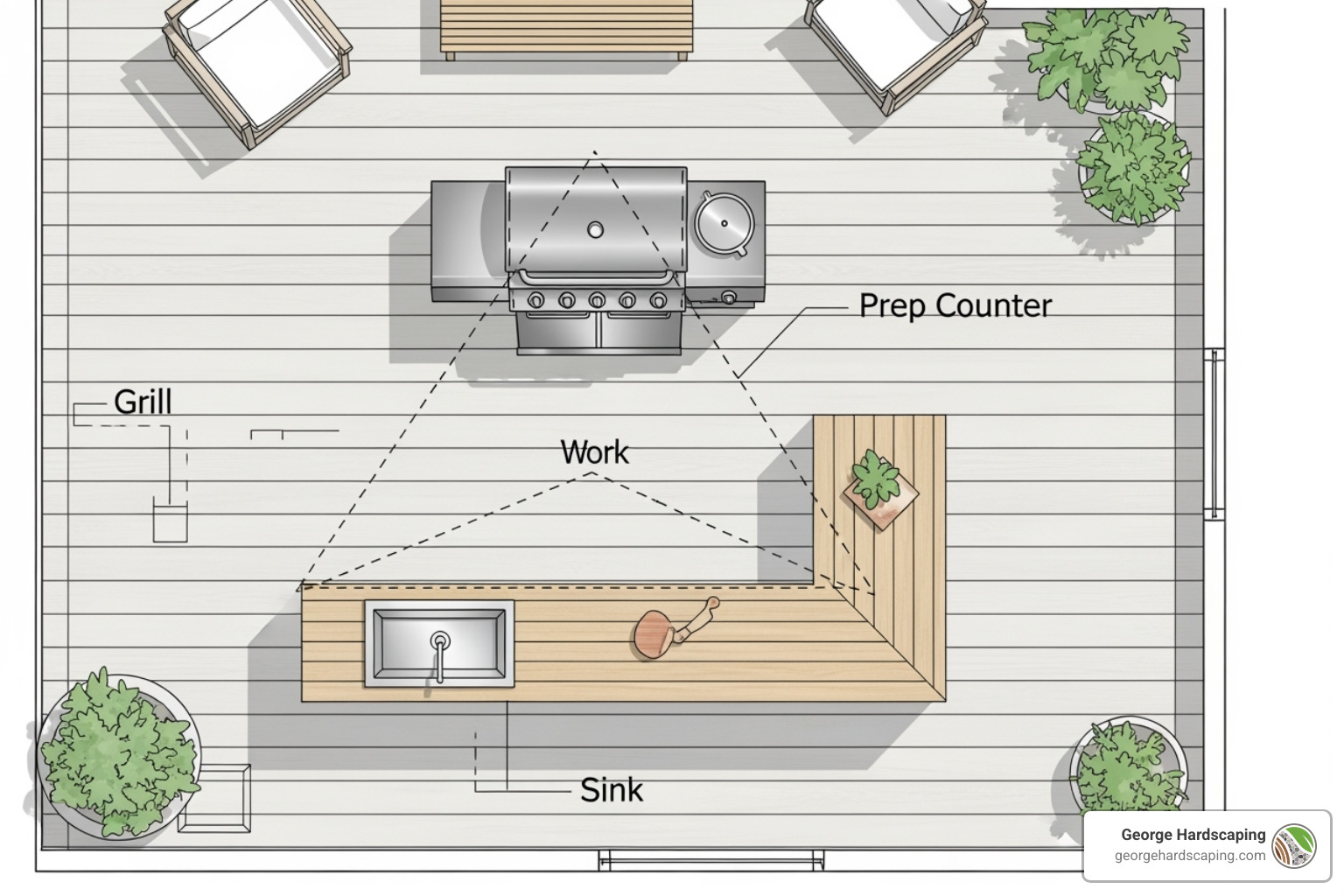
- Plan the Layout: Design a functional work triangle (grill, sink, prep area).
- Verify Deck Capacity: Ensure your deck can support the additional weight (50+ psf).
- Install Utilities: Run water, gas, and electrical lines with professional help and proper permits.
- Select Materials: Choose weather-resistant appliances, countertops, and cabinets.
- Construct the Frame: Build and sheath the kitchen island structure.
- Install Components: Add your grill, sink, refrigerator, and storage.
- Add Finishing Touches: Incorporate lighting, seating, and safety features.
Today’s outdoor kitchens are fully functional, featuring sinks, refrigerators, and professional-grade appliances. However, building on a deck presents a unique challenge: weight. Most decks are not designed to support the thousands of pounds of a kitchen setup, including appliances and stone countertops. A structural assessment is crucial.
Despite the challenges, the benefits are substantial. An outdoor kitchen creates an entertainment hub, keeps your indoor kitchen cleaner, and can boost property value, making it a worthwhile investment for enjoying New England’s beautiful seasons.
Outdoor kitchen and deck helpful reading:
Phase 1: Planning and Designing Your Dream Outdoor Kitchen
This initial phase is crucial for ensuring your project is safe, functional, and beautiful. Proper planning prevents costly mistakes and ensures the final result meets your expectations.
How to Plan the Layout and Design
A successful outdoor kitchen and deck layout ensures everything flows smoothly. Start with the work triangle, a design principle that places the grill, sink, and prep area in a triangular arrangement for efficiency. This prevents you from running back and forth between cooking zones.
Next, zone your space. Create a dedicated cooking zone with proper ventilation and clearance from flammable materials, a cleaning zone around the sink, and a social area where guests can gather without being in the way. Consider traffic flow to prevent pathways from cutting through your workspace, especially if the kitchen is between the house and a pool or play area.
Most functional outdoor kitchens require 100 to 400 square feet, though smaller spaces can work with smart design. Also, consider the proximity to your indoor kitchen. A location that is too far can be inconvenient, while one that is too close may not feel like a true outdoor escape.
More info about patio design installation
Essential Components for Your Outdoor Kitchen and Deck
To create a truly functional space, think beyond just a grill. Here are the essential components:
- Built-in Grill: The centerpiece of your kitchen. Gas grills offer convenience, while charcoal grills provide classic smoky flavor. Look for durable stainless steel construction to withstand New England weather.
- Outdoor-Rated Refrigerator: A must-have for keeping drinks and ingredients cold, eliminating trips inside. These are built to handle outdoor temperature fluctuations and humidity.
- Sink: This transforms a grilling area into a true outdoor kitchen. It’s perfect for washing hands, rinsing vegetables, and quick cleanups. Stainless steel sinks are the most durable option.
- Weatherproof Storage: Marine-grade cabinets and drawers protect your cooking gear from moisture and warping.
- Ample Countertop Space: Crucial for food prep, serving, and giving guests a place to set drinks.
- Task Lighting: LED fixtures are energy-efficient and allow you to cook safely after dark, while ambient lighting creates a welcoming atmosphere.
- GFCI Outlets: A safety requirement for all outdoor electrical connections. These outlets prevent shocks by cutting power if moisture is detected.
More info about adding a sink to an outdoor kitchen
Popular Design Themes and Inspirations
Your outdoor kitchen and deck should complement your home’s style. Here are a few popular themes:
- Modern: Characterized by sleek lines, minimalist design, stainless steel appliances, and concrete countertops. This style is uncluttered and sophisticated.
- Rustic: Creates a warm, inviting atmosphere with natural stone, reclaimed wood, and earthy textures. It’s a cozy feel that encourages guests to linger.
- Mediterranean: Transports you to coastal Europe with stucco finishes, terracotta tiles, and wrought iron details. This style often features warm, sun-drenched colors.
The best theme is one that reflects your personal taste and harmonizes with your home’s existing architecture.
Phase 2: Ensuring a Safe and Solid Foundation for Your Outdoor Kitchen and Deck
Before adding the significant weight of an outdoor kitchen, you must verify your deck’s structural integrity. Safety is the most important part of this project.
Ensuring Your Deck is Safe for an Outdoor Kitchen and Deck Installation
Safety is non-negotiable. Your existing deck was likely built to handle about 50 pounds per square foot (psf), which accounts for people and patio furniture. An outdoor kitchen and deck combination, however, creates heavy “concentrated loads.”
A granite countertop alone can weigh 20-25 psf. Add a grill, refrigerator, and stone veneer, and you could be placing thousands of pounds in a small area, far exceeding the deck’s original design capacity. A 1,500-pound kitchen island concentrated in a 25-square-foot area is a common scenario that most standard decks cannot safely handle.
For this reason, a professional assessment is essential. A structural engineer or experienced contractor must evaluate your deck’s foundation, joists, and overall condition to determine if reinforcement is needed. Solutions may include adding more joists, strengthening beams, or installing helical piles—deep-ground footings that provide an exceptionally solid foundation.
More info about deck and patio services
Choosing the Best Materials for Durability
In Essex County, your outdoor kitchen must withstand UV exposure, moisture, and freeze-thaw cycles. Choose low-maintenance, durable materials.
- Cabinet Materials: Stainless steel is the top choice for its durability. Marine-grade polymer is another excellent option that resists moisture and sun damage. For a natural look, teak is a rot-resistant hardwood, while stone veneer can match your home’s masonry.
- Countertop Materials: Granite is popular for its toughness and heat resistance. Concrete offers custom looks but requires regular sealing. Stainless steel provides a professional, durable surface. We generally advise against quartz for outdoor use, as UV rays can cause its resins to fade.
- Decking Material: Composite and PVC decking offer great durability with minimal maintenance. Pressure-treated wood is a budget-friendly option but requires regular sealing.
| Material | Durability | Maintenance | Cost (Average) | Aesthetics |
|---|---|---|---|---|
| Granite | Excellent (heat, scratch, UV resistant) | Low (requires annual sealing) | Moderate to High | Natural, varied patterns, luxurious feel |
| Concrete | Excellent (very durable) | Moderate (requires regular sealing) | Moderate | Modern, industrial, highly customizable (colors, finishes) |
| Stainless Steel | Excellent (heat, stain, corrosion resistant) | Low (wipes clean, can scratch) | Moderate to High | Sleek, professional, modern |
| Cultured Stone | Good (durable, weather resistant) | Low (minimal cleaning) | Low to Moderate | Natural stone look, wide variety of colors and textures (note: usually a veneer over a sub-structure, not a solid slab) |
Utility Considerations: Water, Gas, and Electricity
Proper utility installation is critical and requires licensed professionals to ensure compliance with local codes.
- Water Lines: In Massachusetts, water lines must be buried below the frost line (36-48 inches) to prevent freezing. PEX tubing is a flexible, freeze-resistant option. The system must include shut-off valves for easy winterization.
- Gas Lines: Choose between natural gas (convenient, constant supply) or propane (flexible placement). Natural gas requires a licensed gas fitter for installation and leak testing.
- Electrical Work: All wiring must be outdoor-rated and run in conduit. Use dedicated circuits to prevent overloads, and ensure every outlet has GFCI protection for safety in wet conditions.
Do not cut corners on utilities. Professional installation is essential for a safe and functional outdoor kitchen.
Phase 3: The Build – Constructing Your Outdoor Kitchen
With a solid plan and a safe foundation, it’s time to build. This section outlines the key construction steps.
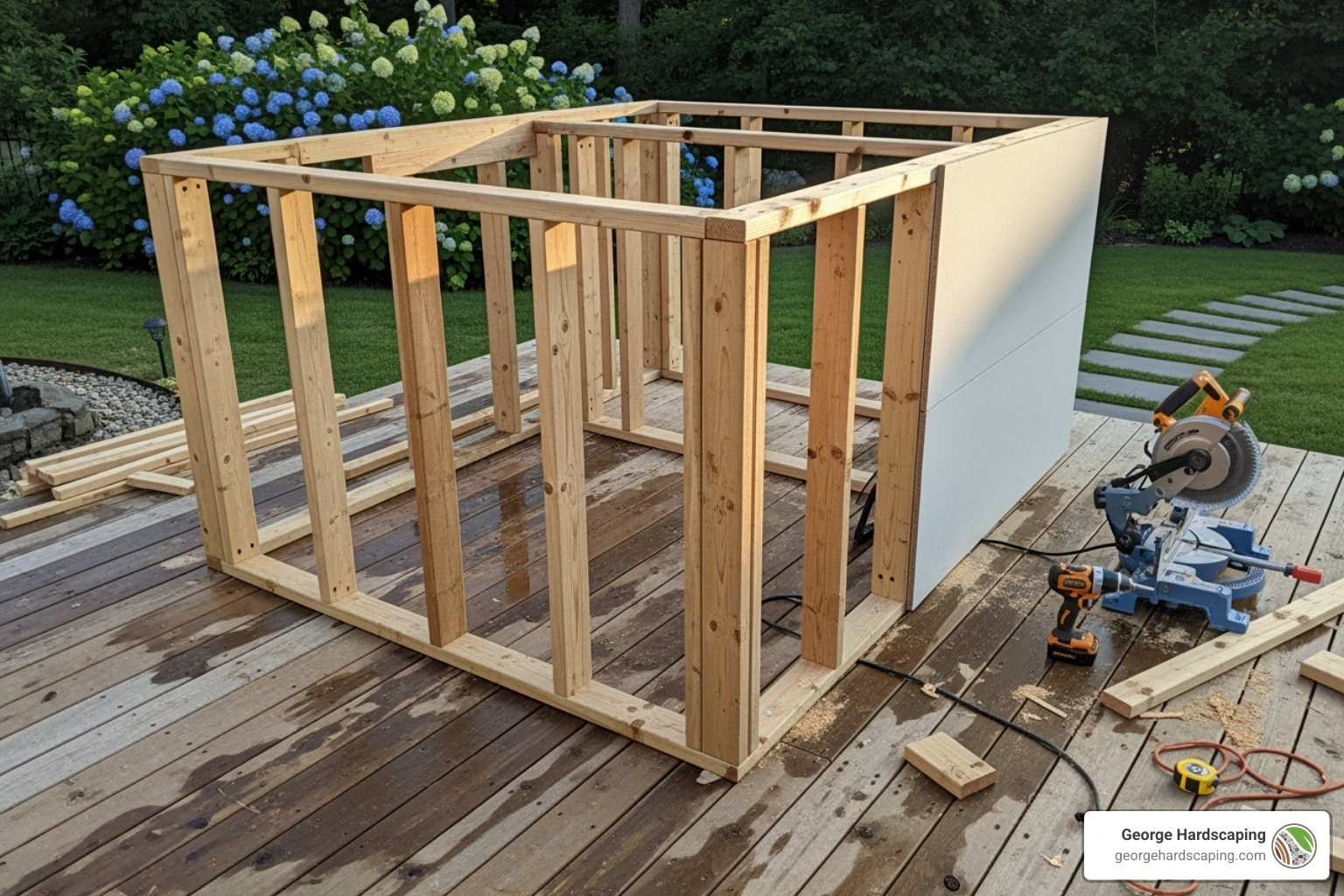
This is where your outdoor kitchen and deck vision comes to life. The construction process follows a logical sequence, where attention to detail is key to a high-quality result.
Step 1: Building and Sheathing the Frame
The frame is the skeleton of your kitchen. Build it using pressure-treated lumber (typically 2x4s) for rot and insect resistance. Use galvanized screws instead of nails for a stronger, rust-proof connection. Building the frame in smaller, manageable modules that can be screwed together on the deck simplifies construction.
Once the frame is built, cover it with exterior-grade plywood to create a stable surface for your chosen finish. In areas near the grill or sink, add a layer of cement backer board over the plywood for extra protection against heat and moisture. Carefully measure and cut out openings for your appliances.
Step 2: Installing Veneer and Countertops
This step defines your kitchen’s aesthetic. If using stone veneer, first apply a scratch coat of mortar to the sheathed frame to give the stones something to adhere to. Apply mortar to the back of each stone (back-buttering) and press it firmly into place, working systematically to keep your courses level.
Countertop installation requires precision. Whether using granite, concrete, or stainless steel, the surface must be perfectly level. Use shims to make fine adjustments. For porous materials like granite or concrete, sealing is critical to protect against stains and weather damage.
Step 3: Installing Appliances and Finishing Touches
With the structure complete, it’s time to install the components of your outdoor kitchen and deck.
- Grill: Slide the built-in grill into its opening. Many models require an insulating jacket when installed in a combustible structure like a wood frame. This is a critical safety feature that protects against heat damage and is often required by fire codes.
- Refrigerator: Ensure proper ventilation around the unit as specified by the manufacturer to maintain efficiency in outdoor conditions.
- Sink and Faucet: Connect the water lines. This is best handled by a licensed plumber to prevent leaks, especially considering Massachusetts’ freeze-thaw cycles.
- Doors and Hardware: Install outdoor-rated cabinet doors and hardware that can withstand the elements without rusting.
- Lighting: Install task lighting for food prep areas and ambient lighting to create a welcoming atmosphere for evening gatherings.
More info on installing a Blackstone griddle
Phase 4: Enjoying the Benefits and Maintaining Your Investment
An outdoor kitchen is more than a cooking area; it’s a lifestyle upgrade that can add significant value to your home.
The Benefits of Adding an Outdoor Kitchen
Your new outdoor kitchen and deck is a transformative addition to your home. The benefits go far beyond simply having a place to grill.
- Increased Property Value: A well-designed outdoor kitchen is a highly desirable feature that can offer a significant return on investment, making your home more attractive to buyers.
- Expanded Entertainment Space: Your backyard becomes a social hub. You can cook and entertain simultaneously, making you part of the party instead of being stuck indoors.
- Convenience and Cleanliness: Having everything you need outdoors eliminates trips back and forth to the indoor kitchen. It also keeps cooking odors, grease, and heat outside, which is especially beneficial on hot summer days.
- Healthier Cooking: Grilling often involves lighter cooking methods, and the outdoor setting encourages the use of fresh, seasonal ingredients.
Fire Safety and Maintenance for Your Outdoor Kitchen and Deck
Proper maintenance ensures your space remains safe and beautiful for years. Safety is paramount to protecting your investment and your family.
- Grill Placement: Position your grill several feet away from combustible surfaces like siding, deck railings, and overhanging branches.
- Regular Cleaning: According to the National Fire Protection Association, failure to clean the grill is a leading cause of grill fires. Regularly clean the drip pan and interior to remove grease buildup.
- Maintain Clearances: Keep the area around and under your kitchen clear of leaves, debris, and other flammable materials.
- Routine Inspections: Periodically check gas lines, electrical connections, and appliances for wear and tear. Use protective covers when not in use.
- Seal Surfaces: Re-seal porous surfaces like granite or concrete as recommended by the manufacturer to protect them from weather and stains.
- Winterize Plumbing: In Essex County, this is crucial. Before the first freeze, shut off the water supply and drain all lines to prevent burst pipes.
For detailed guidelines, refer to the National Fire Protection Association (NFPA) recommendations on grilling safety.
Frequently Asked Questions about Outdoor Kitchens on Decks
How much does an outdoor kitchen on a deck cost?
The cost of an outdoor kitchen and deck project varies significantly. A simple DIY setup with basic components might start around $5,000. However, most professionally installed outdoor kitchens range from $15,000 to over $50,000. This wide range depends on the size, materials, appliances, and overall complexity.
High-end, custom projects with luxury appliances like pizza ovens, extensive cabinetry, and premium stone work can easily exceed $75,000 or more. Factors like your deck’s existing condition, utility access, and local permit requirements will also impact the final price.
Please note these figures are based on national average data for informational purposes only and do not represent a quote from George Hardscaping. An accurate estimate requires a professional on-site consultation.
More info about outdoor kitchen installation costs
Can any deck support an outdoor kitchen?
No, and this is the most critical safety consideration. Most standard residential decks are not designed to support the heavy, concentrated load of an outdoor kitchen. A typical deck is rated for about 40-50 pounds per square foot (psf), but a kitchen with stone countertops, a built-in grill, and cabinets can exert much greater force in a small area.
This concentrated weight, or “point load,” can overstress the deck’s structure, leading to sagging, cracking, or catastrophic failure. It is absolutely essential to have a professional structural assessment by a qualified contractor or engineer before starting. They can determine if your deck needs reinforcement, such as additional joists, stronger beams, or new foundation footings, to safely support the kitchen.
Do I need a permit to build an outdoor kitchen on my deck?
Yes, almost certainly. Building an outdoor kitchen and deck typically involves multiple trades, each requiring a permit from your local building department. In Essex County, MA, you will likely need:
- Structural Permits: For any modifications to the deck to support the new weight.
- Electrical Permits: For installing GFCI outlets, lighting, and appliances.
- Plumbing Permits: For connecting a sink’s water supply and drainage lines.
- Gas Permits: For running a natural gas line to the grill.
Permits ensure your project is built to current safety codes, is properly inspected, and is legally compliant. Unpermitted work can result in fines, insurance complications, and issues when selling your home. Always check with your local town’s building department early in the planning phase to understand the specific requirements.
Transform Your Essex County Deck with a Professional Outdoor Kitchen
Building an outdoor kitchen and deck is a rewarding investment that improves your home and lifestyle, creating a perfect space for cooking, entertaining, and relaxing outdoors. It’s a project that brings years of enjoyment, from casual family barbecues to festive gatherings with friends.
While some aspects can be a DIY project, the most critical elements—structural safety and utility installation—demand professional expertise. Ensuring your deck can safely support thousands of pounds and that gas, water, and electrical lines are installed to code is non-negotiable for a safe, lasting, and successful project.
A professionally built outdoor kitchen is an investment in quality craftsmanship that will withstand New England’s demanding climate for decades to come.
For homeowners throughout Essex County, MA—from Salem to Newburyport and Beverly to Ipswich—George Hardscaping specializes in creating stunning and durable outdoor living spaces. We understand the local building codes and climate challenges, and our team delivers the quality hardscaping and masonry work needed to turn your vision into a reality.
Whether you’re dreaming of a simple grill station or a complete gourmet outdoor kitchen, we can provide the professional guidance to ensure your project is built safely and beautifully.
Contact us today for a professional consultation on your hardscaping project!
