
Installing Stone Veneer on Outdoor Kitchen: Top Benefits
Installing stone veneer on outdoor kitchen projects has become a leading DIY endeavor for homeowners seeking to lift their outdoor space.
- Quick Tips:
- Material: Choose between natural, faux, or manufactured stone veneer.
- Tools: You’ll need cement board, thinset mortar, and proper moisture management.
- Location Consideration: Adjust methods based on your climate, such as using moisture barriers in wet areas.
Changing your patio into a functional and attractive space is easier than you think, especially when using stone veneer. This versatile material provides the charm of real stone without the high costs and heavy labor.
For homeowners in Essex County and the North Shore, who appreciate quality craftsmanship, stone veneer is a game-changer. It’s not just about aesthetics; it’s also about creating durable, eye-catching spaces that blend seamlessly with your environment.
Whether you’re inspired by DIY stories like GenStone customer Mike U., or you’re ready to tackle a custom design, adding stone veneer to your outdoor kitchen can provide both beauty and practicality.
Ready to dive into your own outdoor kitchen project? Let’s explore how stone veneer can transform your space effectively and affordably.
Installing stone veneer on outdoor kitchen terms at a glance:
– installing an outdoor kitchen
– installing an outdoor sink
Benefits of Stone Veneer for Outdoor Kitchens
When it comes to installing stone veneer on outdoor kitchen spaces, the benefits are numerous and compelling. Here’s why stone veneer is a fantastic choice for your next project:
Lightweight and Easy to Install
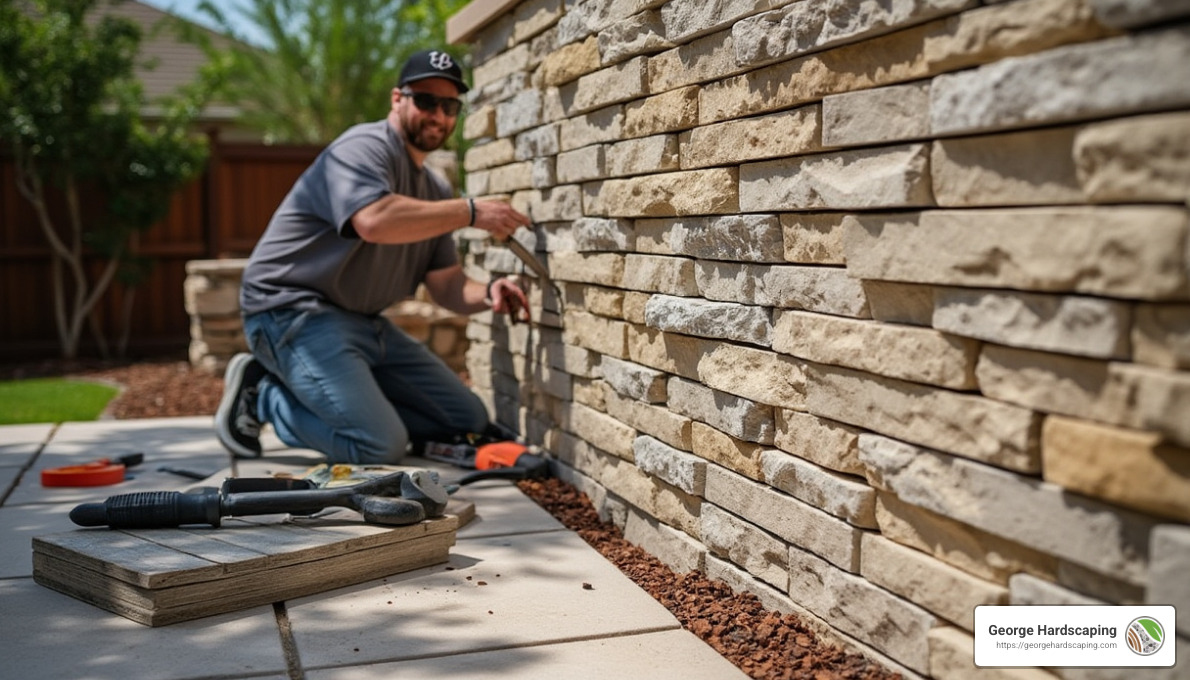
One of the standout features of stone veneer is its lightweight nature. Unlike traditional stone, which can be cumbersome and difficult to handle, stone veneer is easy to maneuver. This makes it a perfect option for DIY enthusiasts who want to tackle the project themselves. The ease of installation means you don’t need to hire a professional mason, saving both time and money.
Cost-Effective Solution
Stone veneer is not only easier to work with but also more budget-friendly compared to natural stone. The cost-effectiveness of stone veneer comes from its reduced material costs and the simplicity of the installation process. With less labor required, you can achieve the stunning look of stone without breaking the bank.
Aesthetic Appeal
Aesthetics play a major role in outdoor kitchen projects, and stone veneer delivers in spades. It offers the timeless beauty of stone, enhancing your outdoor space with a natural look that complements the surrounding environment. Whether you prefer the rustic charm of field stone or the sleek finish of river rock, stone veneer provides numerous design options to fit your style.
Versatile Design Options
Stone veneer comes in various styles and colors, allowing you to customize your outdoor kitchen to match your taste. From the old-world appeal of cobblestone to the polished finish of river rock, the possibilities are expansive. This versatility makes it easy to create a cohesive look that ties together your outdoor living area.
By choosing stone veneer, you’re opting for a material that combines beauty, durability, and practicality. It’s no wonder so many homeowners in the North Shore area are turning to this solution for their outdoor kitchens. Whether you’re aiming for a modern or traditional look, stone veneer can help you achieve your vision with ease and efficiency.
Ready to get started on your own stone veneer project? Let’s explore the next steps of preparing and applying this versatile material to your outdoor kitchen.
Installing Stone Veneer on Outdoor Kitchen
Preparing the Surface
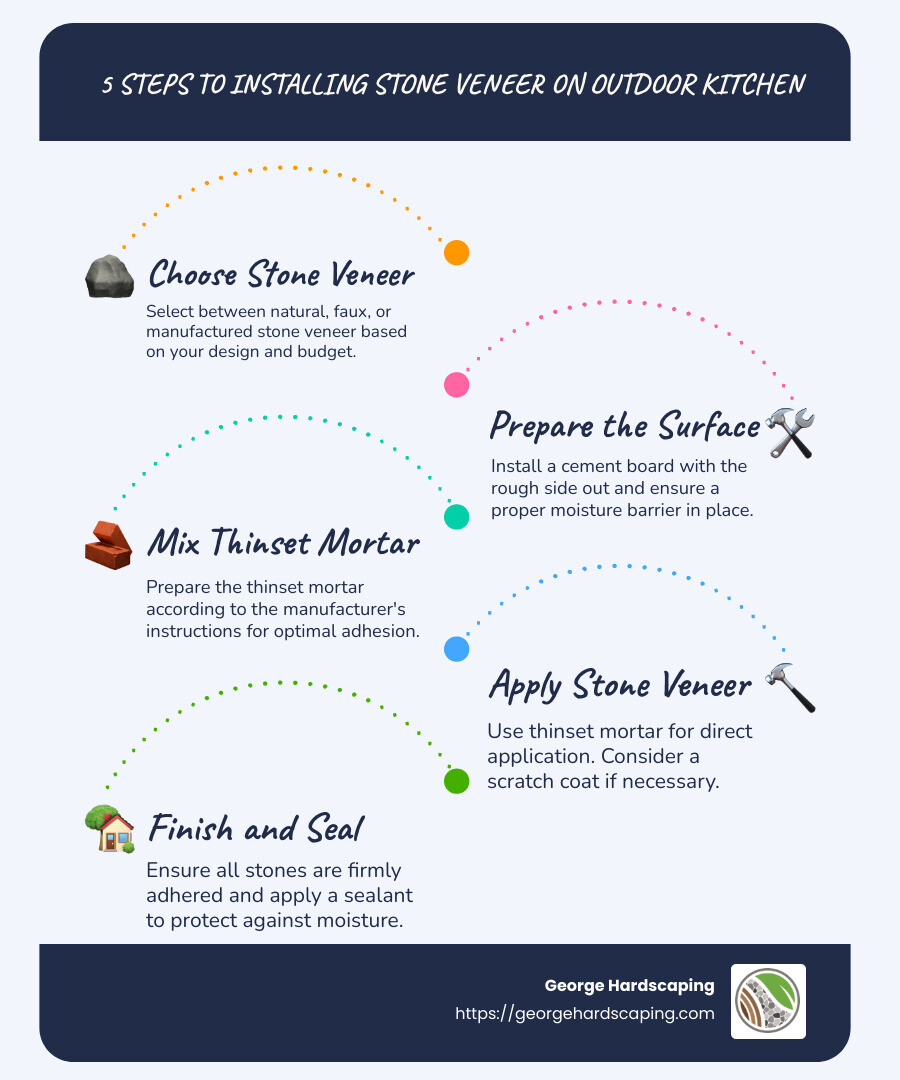
Before you start installing stone veneer on outdoor kitchen surfaces, it’s crucial to prepare the base properly. The foundation of your project will be cement board, which serves as the backbone for the stone veneer. Make sure to install the cement board with the rough side facing out. This texture will help the adhesive bond more effectively.
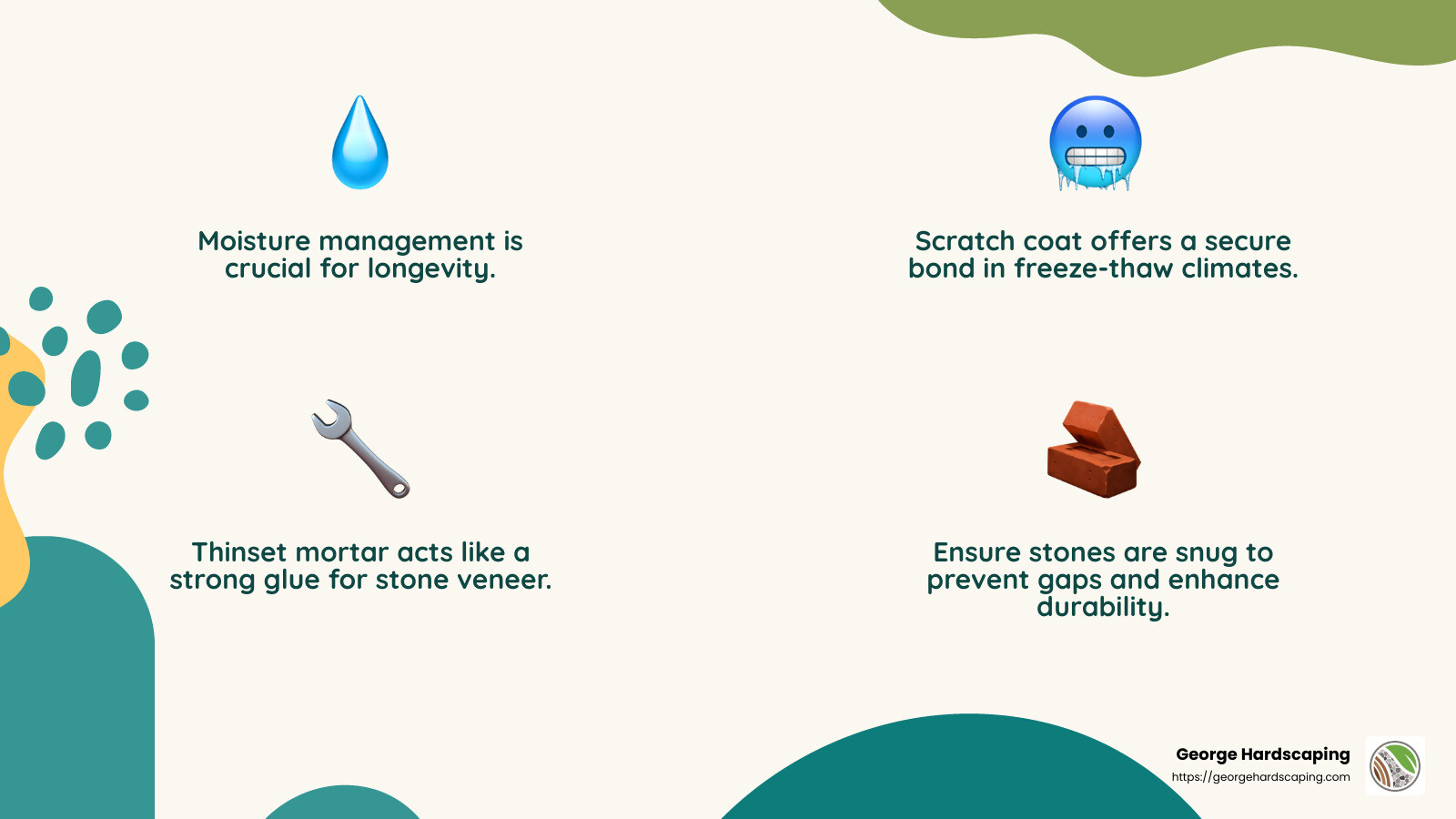
In areas like North Dallas, where weather conditions can vary, it’s wise to consider moisture management. A moisture barrier can be beneficial, especially if your kitchen area is exposed to wind-blown rain. This barrier helps prevent water from seeping through and affecting the underlying structure, which is particularly important if you’re using steel framing to avoid rust.
Applying the Stone Veneer
Now that the surface is ready, it’s time to apply the stone veneer. You have a couple of options for adhesion: thinset mortar or a scratch coat method.
Thinset mortar is a popular choice for direct application. It acts like a strong glue, binding the stone veneer securely to the cement board. Make sure to mix the thinset to the right consistency and apply it evenly for the best results.
For those who prefer a more traditional approach, a scratch coat might be the way to go. This involves applying a base layer of mortar to the cement board, creating a textured surface for the stone to adhere to. While this method can be more labor-intensive, it offers a secure bond that stands up well in freeze-thaw climates.
Whichever method you choose, ensure that the stones are placed snugly together to prevent any gaps. This will not only improve the appearance but also ensure the longevity of your outdoor kitchen.
With these steps, you’re well on your way to changing your outdoor kitchen with the timeless beauty of stone veneer. Next, let’s explore how to choose the right type of stone veneer for your project.
Choosing the Right Stone Veneer
When it comes to installing stone veneer on outdoor kitchen surfaces, selecting the right type of stone veneer is crucial. Each type has its own set of benefits and considerations, so let’s break it down.
Natural Stone
Natural stone veneer is a classic choice that offers best authenticity and beauty. It’s made by cutting real stone into thin slices. This type of veneer provides a natural look that blends seamlessly with the outdoors. However, keep in mind that natural stone can be heavy and may require a more robust support structure.
Pros:
- Authentic appearance
- Durable and weather-resistant
Cons:
- Heavier and may require professional installation
- Typically more expensive
Faux Stone
Faux stone, also known as cultured stone, is a popular alternative. It is made from a mixture of cement, aggregates, and iron oxides, which are molded to resemble natural stone. Faux stone is lighter and more affordable than natural stone, making it a great option for DIY projects.
Pros:
- Lightweight and easier to install
- Cost-effective
Cons:
- Less durable than natural stone
- Can fade over time if not UV-protected
Manufactured Stone
Manufactured stone veneer combines the best of both worlds. It’s designed to mimic the look of natural stone but is engineered for easier installation. Manufactured stone is often available in panels, which simplifies the process and can drastically reduce installation time.
Pros:
- Easier and faster to install
- Available in a variety of styles and colors
Cons:
- May require sealing to protect against weathering
- Can look less authentic up close
Making Your Choice
Consider the climate in your area, your budget, and the look you want to achieve. For example, if you live in a region prone to freeze-thaw cycles, natural stone or a well-sealed manufactured stone might be your best bet. If budget and ease of installation are your primary concerns, faux stone could be the way to go.
Choosing the right stone veneer will not only improve the aesthetic appeal of your outdoor kitchen but also ensure its durability and functionality. Up next, let’s dive into some frequently asked questions about installing stone veneer on outdoor kitchens.
Frequently Asked Questions about Installing Stone Veneer on Outdoor Kitchen
What do you put under stone veneer?
When installing stone veneer on your outdoor kitchen, the base layer is crucial for stability and longevity. Typically, you have a few options:
- Sand and Cement: This traditional mix provides a solid foundation. It’s great for areas that need extra support.
- Masonry Mix: A blend of sand, cement, and lime. It’s more flexible and can help with minor movements in the structure.
- Premix Masonry Mortar: Convenient and ready-to-use, this option saves time and ensures a consistent mix.
Each of these options offers different benefits, so consider your specific needs and local climate conditions when choosing.
Can stone veneer be used outside?
Absolutely! Stone veneer is designed for exterior applications. It can withstand various weather conditions, making it perfect for outdoor kitchens. However, the key is using the right installation method:
- Thinset Mortar: Ideal for applying veneer directly to cement board. It provides strong adhesion and is moisture resistant.
- Exterior Applications: Ensure that the veneer and mortar you choose are rated for outdoor use to prevent issues like cracking or detachment.
What is the best adhesive for exterior stone veneer?
Choosing the right adhesive is vital for a successful installation. Here are some options:
- Thinset Mortar: This is often the best choice for exterior stone veneer. It’s durable and can handle moisture well.
- Mechanical Attachment: For added security, especially in areas with extreme weather, consider using mechanical fasteners in addition to mortar.
- Metal Studs: If your outdoor kitchen has a metal frame, using metal studs can provide extra support for the stone veneer.
These methods ensure that your stone veneer stays put, even under challenging conditions. With the right preparation and materials, your outdoor kitchen will not only look stunning but also stand the test of time.
Conclusion
At George Hardscaping, we’re passionate about changing outdoor spaces across the North Shore into stunning and functional havens. Our commitment to quality craftsmanship ensures that each project, whether it’s an outdoor kitchen or a custom firepit, improves the beauty and usability of your property.
Why Choose Us?
- Expertise in Stone Veneer: We specialize in installing stone veneer on outdoor kitchens, offering both aesthetic appeal and durability. Our team knows the ins and outs of using thinset mortar and cement board, ensuring your installation is both beautiful and long-lasting.
- Quality Craftsmanship: Every stone is laid with precision and care. We believe that details matter, and our skilled masons are dedicated to achieving the perfect finish.
- Enhancing Outdoor Spaces: Our projects are designed to complement the natural landscape, adding value and enjoyment to your home. Whether you’re hosting a barbecue or enjoying a quiet evening by the firepit, your outdoor space will be a place of pride.
- Serving the North Shore: Based in Essex County, MA, we proudly serve communities like Beverly, Gloucester, and Marblehead. Our local knowledge helps us tailor each project to the specific needs and styles of our clients.
Ready to lift your outdoor living experience? Trust George Hardscaping to bring your vision to life. Let’s create something exceptional together!
