
How to Build Outdoor Stone Stairs: 7 Proven Tips
How to build outdoor stone stairs can add both beauty and functionality to your patio, enhancing your overall outdoor experience. Stone stairs are not only durable but also provide an neat touch that boosts curb appeal and increases property value. Here’s a quick overview:
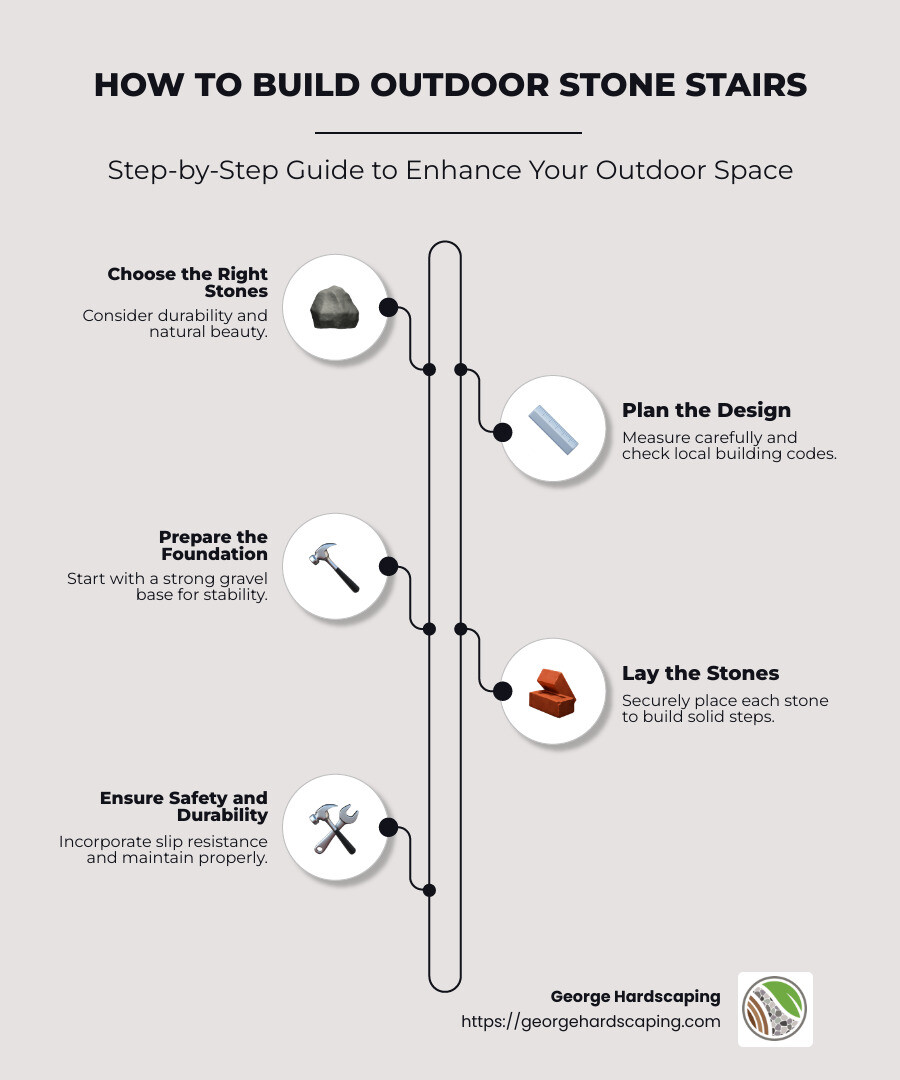
- Choose the Right Stones: Consider durability and natural beauty.
- Plan the Design: Measure carefully and ensure safety by checking local building codes.
- Prepare the Foundation: Start with a strong gravel base.
- Lay the Stones: Securely place each stone to build solid steps.
Changing your outdoor space with stone stairs can feel daunting, but the rewards are well worth the effort. With the right planning and materials, you can create stunning and long-lasting features that connect your garden or patio seamlessly.
Planning Your Stone Stairs
Proper planning is the backbone of any successful stone stair project. It involves thoughtful consideration of design, layout, measurements, and safety to ensure your outdoor stone stairs are both functional and visually appealing.
Design and Layout
Design is the first step in planning your stone stairs. Think about how the stairs will integrate with your existing landscape. Do you want them to lead to a garden, patio, or another focal point? Consider the natural flow of your outdoor space and how the stairs can improve it. For instance, a winding staircase can add a whimsical touch, while a straight staircase offers a more formal look.
Layout involves determining the best position for your stairs. Look at the natural slope of your land and decide where the stairs will fit best. That stone stairs can be a striking feature, so placing them in a visible area can boost your home’s curb appeal.
Measurements
Accurate measurements are crucial. Start by measuring the total rise (the vertical distance from the base to the top of the stairs) and the run (the horizontal distance the stairs will cover). This will help you decide the number of steps needed and their dimensions.
- Step Height (Riser): Typically, the height of each step should be between 6″ and 7″. This range is comfortable for most people.
- Step Depth (Tread): Each step should be between 12″ and 18″ deep. This depth ensures a safe and comfortable footing.
Use these measurements to calculate the total number of steps required. For example, if you have a total rise of 42 inches and each riser is 7 inches, you will need 6 steps.
Safety Considerations
Safety is paramount when planning your stone stairs. Here are some tips to ensure your stairs are safe:
- Slip Resistance: Choose stones with a naturally rough texture, like Buff Sandstone Rockface Treads or Thermal Bluestone, to provide good traction even when wet.
- Local Building Codes: Check with local authorities to ensure your design complies with building regulations. This might include specific requirements for riser and tread sizes or handrail installation.
- Lighting: Consider adding lighting to your stairs, especially if they will be used at night. This can prevent accidents and improve the aesthetic appeal of your stairs.
By carefully planning your stone stairs, you can create a design that is not only beautiful but also safe and functional. Once you’ve nailed down these details, you’re ready to move on to selecting the materials for your project.
Selecting Materials for Outdoor Stone Stairs
Choosing the right materials is crucial when learning how to build outdoor stone stairs. The materials you select will impact not only the durability and safety of your stairs but also their aesthetic appeal.
Natural Stone Options
Natural stone is a popular choice for outdoor stairs due to its beauty and resilience. Here are some options to consider:
- Buff Sandstone Rockface Treads: Known for their warm, earthy color and rough texture, these stones provide excellent traction, making them a safe choice for outdoor steps. They blend seamlessly into garden designs and are perfect for those seeking an organic look.
- Caspian Creme Treads: These limestone treads offer a contemporary, clean aesthetic with shades of beige and white. They are slip-resistant and cost-effective, great for achieving a modern look without breaking the bank.
- Thermal Bluestone: This option is both beautiful and practical. Its blue-gray hue and textured surface add elegance while providing traction. It’s particularly popular for garden steps due to its durability.

Durability and Longevity
When selecting materials, consider their durability. Natural stone is renowned for its ability to withstand the elements, making it ideal for outdoor use. For example, Thermal Bluestone is made from a type of sandstone that has been heated to high temperatures, enhancing its strength and longevity.
Another advantage of natural stone is its resistance to wear and tear. Unlike concrete, which can crack over time, stones like Buff Sandstone and Caspian Creme maintain their integrity for decades with proper maintenance.
Aesthetic Appeal
The aesthetic appeal of your stone stairs can dramatically affect your outdoor space’s overall look. Natural stones offer a range of colors and textures that can complement any landscape design. Whether you prefer the rustic charm of Buff Sandstone or the sleek elegance of Caspian Creme, there’s a stone to match your vision.
Consider how the stone’s color and texture will interact with other elements in your garden or patio. Stones like Thermal Bluestone can serve as a striking focal point, while more neutral tones like Caspian Creme can provide a subtle backdrop that highlights other features.
By carefully selecting the right materials, you can ensure your stone stairs are both beautiful and built to last. Next, we’ll dive into the actual construction process, starting with excavation and laying a solid foundation.
How to Build Outdoor Stone Stairs
Building outdoor stone stairs may seem daunting at first, but with the right approach, it can be a rewarding project. Let’s break down the process into manageable steps: excavation, preparing a gravel base, and stone placement.
Excavation
Before you start, it’s crucial to plan the layout and design of your stone stairs. Once that’s set, the first step is excavation. This involves removing soil to create a space where your stairs will sit.
- Mark the Area: Use stakes and string to outline the shape and size of your stairs. Ensure the area is clear of any debris or vegetation.
- Dig to the Right Depth: Depending on the thickness of your stones, you’ll need to dig down to a depth that allows for a stable base. Typically, this is around 6 to 8 inches.
- Check for Level: Use a level to ensure the excavated area is even. This is crucial for the stability of your stairs.
Gravel Base
A strong foundation is key to building durable stone stairs. A gravel base provides excellent drainage and stability.
- Spread Gravel: Fill the excavated area with a layer of crushed gravel. Aim for a depth of about 4 to 6 inches.
- Compact the Gravel: Use a tamper or plate compactor to pack the gravel tightly. This prevents shifting and settling over time.
- Check for Level Again: Ensure the gravel base is level before moving on to the next step. This will make stone placement much easier.
Stone Placement
With a solid base in place, you’re ready to lay the stones. This step is where your stairs start to take shape.
- Start from the Bottom: Begin placing stones at the bottom of the staircase and work your way up. This ensures each stone is supported by the one below it.
- Ensure Stability: As you place each stone, check for stability. Use a rubber mallet to tap stones into place if needed.
- Level Each Stone: Use a level to ensure each stone is even. Adjust the gravel base as necessary to achieve a smooth surface.
- Secure the Stones: For added security, consider using a construction adhesive between stones, especially if they are not naturally interlocking.
By following these steps, you’ll have a solid foundation for your outdoor stone stairs. The next section will guide you through the finer details of finishing your staircase, including leveling and securing the stones for a polished look.
Step-by-Step Guide to Building Stone Stairs
In this section, we’ll walk you through the essential steps to create sturdy and beautiful stone stairs. This guide will cover the foundation, leveling, and securing stones to ensure your stairs are both functional and aesthetically pleasing.
Foundation
A strong foundation is the backbone of any successful construction project, and stone stairs are no exception. This step sets the stage for the entire structure.
- Prepare the Base: After excavating and laying the gravel base, it’s crucial to ensure the base is compacted and level. This provides a solid foundation that prevents shifting and settling over time.
- Add a Sand Layer: Spread a thin layer of sand over the compacted gravel. This helps with leveling and provides a cushioning effect for the stones.
- Check for Level: Use a long level or a straight board with a level on top to ensure the foundation is even. Adjust the sand layer as needed to correct any uneven spots.
Leveling
Proper leveling is key to the safety and appearance of your stone stairs. It ensures that each step is even and comfortable to walk on.
- Place the First Stone: Begin with the bottom step, ensuring it is level both front to back and side to side. This first stone will guide the placement of all subsequent stones.
- Continue Upward: As you add each stone, use a level to check for evenness. Adjust the underlying sand as necessary to keep each stone level with the one before it.
- Create a Slight Pitch: To allow water runoff, each step should have a slight pitch forward—about 1/8 inch per foot. This prevents water pooling, which can cause damage over time.
Securing Stones
Securing your stones is the final step in building durable stone stairs. This ensures that the stones remain in place and can withstand the test of time.
- Use Construction Adhesive: Apply a high-quality construction adhesive between stones. This adds stability and helps prevent shifting, especially in high-traffic areas.
- Interlock Stones: If using stones with natural edges, try to interlock them as much as possible. This natural fit can improve stability without the need for adhesive.
- Fill Gaps: Use additional sand or gravel to fill any gaps between stones. This not only secures the stones but also improves the overall appearance.
By following these steps, you will achieve a well-crafted set of stone stairs that are both enduring and visually appealing. In the next section, we’ll address some frequently asked questions about building stone stairs, including tips on choosing the best base and ensuring safety.
Frequently Asked Questions about Building Stone Stairs
What is the best base for stone steps?
Choosing the right base is crucial for the stability and longevity of your stone steps. Two popular options are gravel pads and concrete pads.
- Gravel Pad: This option is budget-friendly and provides excellent drainage. A gravel base allows water to pass through, reducing the risk of water pooling and freezing, which can cause the stones to shift. To create a gravel pad, you’ll need to dig out the area, fill it with crushed stone, and compact it thoroughly.
- Concrete Pad: For a more permanent solution, a concrete pad offers best stability and support. While it may be more expensive and labor-intensive to install, a concrete base can handle heavier loads and requires less maintenance over time.
Are stone steps more affordable than concrete?
The cost of building stone steps versus concrete steps can vary based on several factors, including materials, labor, and design complexity.
- Stone Steps: Natural stone, such as bluestone or flagstone, offers a high-end look but can be pricier due to the cost of the stone and the labor involved in shaping and placing each piece. However, stone steps can add significant aesthetic value and curb appeal to your home.
- Concrete Steps: Generally, concrete is more affordable than natural stone. Precast concrete steps are a budget-friendly alternative that still provides durability. However, they might not offer the same visual appeal as natural stone.
In summary, stone steps might have a higher initial cost but can be a worthwhile investment for their beauty and long-term durability.
How do I ensure safety and durability?
Ensuring safety and durability is essential when building outdoor stone stairs. Here are some key considerations:
- Slip Resistance: Choose stone with a naturally rough surface or apply a slip-resistant finish to avoid accidents, especially in wet conditions.
- Proper Maintenance: Regular maintenance is crucial for preserving the appearance and safety of your stone steps. Clean the steps periodically to remove debris and moss, which can cause the surface to become slippery.
- Durability: To improve durability, ensure proper installation with a solid base and secure stone placement. Using construction adhesive or mortar can help keep stones in place, while filling gaps with sand or gravel adds stability.
By focusing on these aspects, your stone stairs will not only look great but also provide a safe and lasting addition to your outdoor space.
Conclusion
Building outdoor stone stairs can transform your patio into a stunning and functional space. At George Hardscaping, we pride ourselves on delivering expert advice and quality craftsmanship for all your hardscaping needs. Whether you’re dreaming of neat stone steps or a complete outdoor makeover, our team is here to help.
Why Choose George Hardscaping?
- Expert Advice: Our experienced team will guide you through every step of the process. From selecting the perfect materials to ensuring a flawless installation, we’re with you all the way.
- Quality Craftsmanship: We believe in doing things right the first time. Our commitment to quality means your stone stairs will not only look beautiful but will also stand the test of time.
- Custom Solutions: Every outdoor space is unique, and we offer customized solutions to match your style and budget. Whether you’re in Beverly, MA, or any of the neighboring towns, we have you covered.
Ready to Start Your Project?
Transform your outdoor area with the elegance of stone stairs. Visit our Stairs and Walkways service page to learn more about our offerings and get started on your dream project today.
At George Hardscaping, we’re committed to bringing your vision to life with the highest standards of excellence. Let’s build something beautiful together!
