
How Much Does It Cost to Build Brick Steps in 2024?
Investing in Brick Steps: What You Need to Know
If you’re wondering how much does it cost to build brick steps, you’re not alone. The cost can vary considerably based on various factors such as materials, labor, and regional pricing trends. But to give you a quick idea:
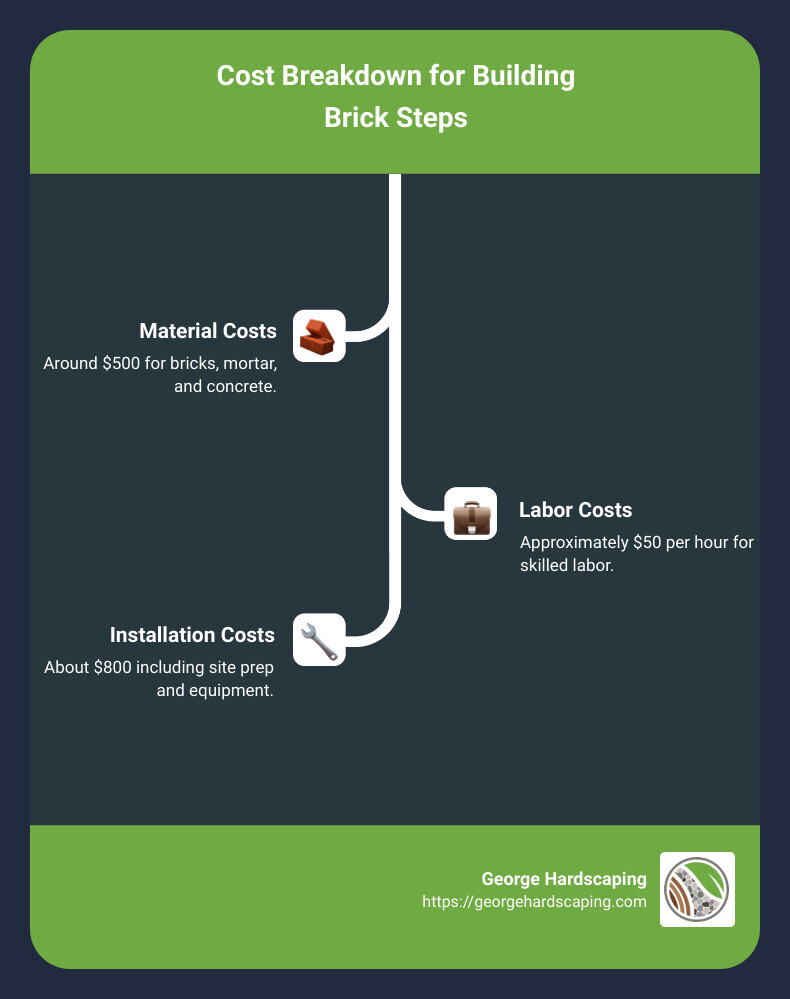
- Material Costs: Around $500
- Labor Costs: $50 per hour
- Installation Costs: Approximately $800
- Other Costs: Equipment delivery, transportation, and site prep
Getting accurate estimates is vital. Why? Because it helps you budget correctly and ensures you get quality work without hidden fees. Comparing quotes from at least three local contractors is always a good idea. This not only helps you find the best price but also ensures the contractor is well-suited for your specific project.
Accurate estimates can save you from unexpected expenses and provide peace of mind. They also help in planning any additional features or subsequent maintenance.
Understanding the Costs Involved in Building Brick Steps
Key Materials and Their Costs
When considering how much it costs to build brick steps, the materials are a significant part of the overall expense. Here’s a breakdown:
- Bricks: The cost of bricks can vary widely depending on the type and quality. Standard bricks typically range from $0.50 to $5.00 each. For a 300 sq. ft. area, you might need around 1,000 bricks, which can cost anywhere from $500 to $5,000.
- Mortar: Mortar is essential for binding the bricks together. A bag of mortar mix costs about $10 to $15, and you might need several bags depending on the size of your project.
- Concrete: Concrete is usually required for the foundation. The cost of concrete is around $100 per cubic yard. For a small set of steps, you might need one or two cubic yards.
Labor and Installation Insights
Labor is another major factor in the cost. Skilled masons are essential for a quality build, and their rates can vary:
- Hourly Rates: On average, you can expect to pay about $50 per hour for labor. The total labor cost depends on the complexity and size of the project.
- Skill Level: Hiring experienced masons is crucial. They ensure the steps are safe, durable, and aesthetically pleasing. While it might be tempting to go for cheaper labor, this can lead to higher costs in the long run due to potential repairs.
Equipment and Tools Necessary
Proper equipment ensures the job is done efficiently and correctly. Here’s what you might need:
- Masonry Saw: Essential for cutting bricks to fit. Renting one can cost around $50 to $100 per day.
- Mortar Box: Used for mixing mortar. A simple mortar box can cost around $50.
- Compactor: Necessary for preparing the foundation. Rental costs for a compactor are about $50 to $100 per day.
Worksite Preparation
Before any construction begins, the site must be prepared:
- Groundwork: This can include removing old steps, leveling the ground, and ensuring proper drainage. This preparation can cost around $200.
- Transportation Costs: Getting materials and equipment to the site can add another $150 to your budget.

Summary of Costs
Here’s a quick summary of the estimated costs based on a 300 sq. ft. project:
| Cost Category | Cost Estimate |
|---|---|
| Material Cost (Bricks, Mortar, Concrete) | $500 – $5,000 |
| Equipment Delivery | $100 |
| Worksite Preparation | $200 |
| Transportation | $150 |
| Installation Costs | $800 |
| Hourly Labor Rates | $50/hr |
These estimates provide a ballpark figure. However, for an accurate quote, it’s best to consult with local contractors.
Understanding these costs helps in planning your budget effectively. Next, we’ll explore how regional price variations and specific project needs can influence these estimates.
How Much Does It Cost to Build Brick Steps?
Factors Influencing the Cost
When asking, “how much does it cost to build brick steps?”, several factors come into play. These include the type of bricks used, the complexity of the design, and the conditions at the site.
- Type of Bricks: The cost of bricks can vary significantly. Standard bricks might cost you around $0.50 each, while more decorative or high-quality bricks can go up to $5.00 per brick.
- Design Complexity: A simple, straightforward design will be cheaper to install compared to a more intricate design. Complex patterns or additional features like railings can increase both material and labor costs.
- Site Conditions: The condition of the site can also influence costs. If the ground needs significant preparation, such as leveling or clearing, this can add to the overall expense.
Average Costs Per Square Foot
According to estimates, the average cost to build brick steps ranges from $25.86 to $33.05 per square square foot. This includes materials, labor, and other associated costs.
Here’s a quick breakdown:
| Cost Component | Average Cost (Per Sq. Ft.) |
|---|---|
| Materials | $4.29 |
| Labor | $20.40 – $25.90 |
| Additional Supplies | $0.50 – $1.00 |
| Equipment | $0.20 – $0.30 |
Calculation Methods
To estimate the total cost, you can use the average cost per square foot and multiply it by the size of the project. For example, for a 300 sq. ft. project:
- Lower Range: 300 sq. ft. x $25.86 = $7,758
- Higher Range: 300 sq. ft. x $33.05 = $9,915
Regional Price Variations
Regional pricing trends can also affect your cost estimates. Labor rates and material costs can vary by location. For instance, urban areas might have higher labor costs compared to rural areas. Therefore, get quotes from local contractors to get a more accurate estimate.
Understanding these factors will give you a clearer picture of what to expect when budgeting for your brick steps project. Next, we’ll compare the costs and benefits of brick steps with other materials.
Comparing Brick Steps with Other Materials
When considering how much does it cost to build brick steps, it’s beneficial to compare them with other materials like concrete and pavers. This comparison helps you make an informed decision based on durability, aesthetics, and long-term costs.
Benefits of Choosing Brick Over Concrete
Durability:
Brick steps are known for their long-lasting nature. Unlike concrete, which can crack and degrade over time, bricks can be reset and reused, enhancing their longevity. A solid foundation and proper maintenance can make brick steps last for decades.
Aesthetic Appeal:
Bricks offer a timeless and classic look that can significantly boost your home’s curb appeal. They come in various colors and textures, allowing for more design flexibility. Concrete, while also versatile, often lacks the unique charm that bricks provide.
Long-term Costs:
While the initial cost of brick steps may be higher, the long-term savings can be substantial. Bricks require less frequent repairs compared to concrete. Also, the ability to reset bricks rather than replace them reduces future costs.
Cost Comparison with Concrete and Pavers
Concrete Costs:
Concrete steps are generally cheaper to install initially. However, they can be more prone to cracking and might require more maintenance over time. The average cost for concrete steps ranges from $10 to $70 per square foot, depending on customization.
Paver Price Range:
Pavers offer another alternative. They are more expensive than both concrete and bricks, with costs ranging from $5 to $30 per square foot. Pavers can be a good middle ground, offering durability and aesthetic appeal, but they can be more costly initially.
Reset Potential:
One of the significant advantages of bricks over concrete is the ability to reset them. If a brick step becomes loose or damaged, it can be easily fixed without replacing the entire structure. This feature makes bricks a more cost-effective option in the long run.
In conclusion, while concrete might be cheaper upfront, bricks offer better long-term value, durability, and aesthetic appeal. Pavers, though more expensive, provide a high-end look and durability but come with higher initial costs.
Maintenance and Longevity of Brick Steps
Preventative Measures and Regular Maintenance
Brick steps are known for their durability. However, to keep them looking good and functioning well, regular maintenance is key.
Sealing your brick steps is a great way to protect them from weathering and stains. Sealing creates a barrier that helps to prevent water from seeping into the bricks and causing damage, especially in regions with constant freeze-thaw cycles. Use a breathable sealant to allow moisture to escape, avoiding potential damage from trapped water.
Tuckpointing is another essential maintenance task. Over time, the mortar between bricks can crack and deteriorate. Tuckpointing involves removing the old mortar and replacing it with new mortar. This not only improves the appearance but also strengthens the structure. Regular inspection schedules can help you catch these issues early before they become major problems.
Foundation issues often arise as the property settles. Brick steps may settle at a different rate than the house, leading to cracks between the steps and the house. Regular inspections can help you spot these issues early. If you notice a diagonal crack between the house and the steps, it’s time to call in a professional for some tuckpointing and possibly foundation repair.
When to Consider Repair or Replacement
Even with regular maintenance, brick steps can develop issues that require repair or replacement.
Cracks in the bricks or mortar are common issues. Small cracks can often be repaired with tuckpointing. However, extensive cracking may indicate a deeper problem with the foundation.
Dislodging bricks can occur if the mortar deteriorates or if the foundation shifts. If you notice loose bricks, it’s crucial to address the issue immediately to prevent further damage.
Foundation problems are the most severe issues you might encounter. If the foundation beneath your brick steps is compromised, you may need to replace the foundation and rebuild the steps. This is often the last resort but is necessary for safety and structural integrity.
By implementing these preventative measures and addressing issues promptly, you can extend the life of your brick steps and maintain their aesthetic appeal.
Next, we’ll answer some frequently asked questions about brick steps to help you make informed decisions about your project.
Frequently Asked Questions about Brick Steps
How to Calculate Brick Step Dimensions?
Calculating the dimensions of brick steps involves understanding two key terms: step rise and brick height.
Step rise refers to the vertical distance from one step to the next. For comfortable and safe steps, the standard rise is typically between 7 to 8 inches.
Brick height is the height of a single brick, including the mortar joint. Standard bricks are usually around 2.25 inches high, but this can vary.
To calculate the number of bricks needed for the step rise, divide the total rise by the brick height. For example, if your step rise is 7 inches and your brick height is 2.25 inches, you’ll need approximately three bricks per step.
Do Brick Steps Require a Foundation?
Yes, brick steps require a solid foundation. This foundation is usually made of concrete and is crucial for the stability and longevity of the steps. Without a proper foundation, the steps can shift, settle unevenly, or crack over time.
A concrete foundation ensures that the brick steps can bear weight and withstand weather changes. The foundation should be at least 6 inches thick and extend below the frost line in colder climates to prevent frost heave.
Comparing Costs: Brick Steps vs. Other Materials
When considering the cost to build brick steps, it’s important to compare them with other materials like concrete and pavers.
Brick Steps:
– Initial Cost: Higher than concrete but offers a unique aesthetic appeal.
– Durability: Very durable and can last for decades with proper maintenance.
– Long-term Benefits: Bricks can be reset easily if they settle or shift.
Concrete Steps:
– Initial Cost: Generally lower than brick.
– Durability: Durable but can crack over time, especially in freeze-thaw climates.
– Long-term Benefits: Less expensive to install but may require more frequent repairs.
Paver Steps:
– Initial Cost: Similar to or slightly higher than brick.
– Durability: Very durable and can be individually replaced if damaged.
– Long-term Benefits: Offers flexibility in design and easy maintenance.
In summary, while the initial cost of brick steps can be higher, their long-term durability and aesthetic appeal often make them a cost-effective choice. They provide a timeless look and, with proper maintenance, can outlast other materials.
Conclusion
Building brick steps is an investment in both the functionality and curb appeal of your home. While the initial costs can vary based on materials, labor, and regional factors, the long-term benefits often outweigh the initial expenditure. Brick steps offer durability, aesthetic appeal, and the potential for a high return on investment.
When considering how much does it cost to build brick steps, it’s crucial to factor in all aspects, from material costs to labor and potential maintenance. Regular maintenance, such as sealing and tuckpointing, can extend the life of your brick steps and keep them looking their best for years to come.
For homeowners looking to enhance their property with brick steps, George Hardscaping offers expert installation and consultation services. Our team is committed to providing high-quality craftsmanship and ensuring that your project meets all safety and aesthetic standards.
By addressing these topics comprehensively, we aim to provide a valuable resource for homeowners considering this type of home improvement. For more information or to request a free estimate, visit our Steps and Brick Stairs page.
Contact George Hardscaping today to transform your outdoor space with beautiful, durable brick steps.
