
Why Dry Well Installation Protects Your Property
Dry well installation is the process of creating an underground stormwater management system that collects excess water and allows it to slowly infiltrate into the surrounding soil, protecting your foundation and preventing landscape erosion.
Every homeowner in Essex County knows the frustration of watching water pool near their foundation after a heavy rainstorm. That standing water isn’t just an eyesore—it’s a threat to your home’s structural integrity and a source of dangerous ice patches in winter.
Poor drainage contributes to billions in property damages annually across the United States. For homeowners on the North Shore, where nor’easters and spring rains can dump inches of water in hours, managing stormwater is essential for protecting your investment.
A dry well offers a permanent, invisible solution. This underground system captures runoff from downspouts, driveways, and other problem areas, then releases it slowly into the soil where it can naturally filter and recharge groundwater. Unlike surface drains that can disrupt your landscape, a properly installed dry well works silently beneath your lawn.
Whether you’re dealing with a soggy yard, icy walkways, or water threatening your basement, this guide covers everything about dry well installation: choosing the right system, proper placement, the installation process, and long-term maintenance.
We’ll also explain how dry wells integrate with broader outdoor improvement projects. When you invest in new patio design services or driveway paver installation, building proper drainage from day one protects those upgrades long-term.
From a sustainability standpoint, dry wells are part of green infrastructure and low-impact development. Organizations like the U.S. Environmental Protection Agency’s stormwater management program and the Massachusetts Department of Environmental Protection stormwater standards emphasize on-site infiltration as a best practice for protecting waterways and maintaining healthy aquifers.
In the following sections, you’ll learn how to evaluate whether a dry well is right for your property, how it compares to other drainage options, and how a professional team like George Hardscaping can integrate drainage seamlessly with your hardscaping and masonry services for a property that looks beautiful and performs reliably in every season.
Understanding Dry Wells: The What, Why, and When
This section covers the fundamentals of dry wells, explaining what they are, the benefits they offer, and when they are the best drainage solution for your property.
What is a Dry Well and How Does It Work?
A dry well is an underground chamber designed to collect excess stormwater and allow it to slowly seep into the surrounding soil, a process known as infiltration and groundwater recharge. Rainwater from a roof, driveway, or patio is directed into the dry well via an inlet pipe. The well, which can be a prefabricated container or a pit filled with gravel, temporarily stores the water. This water then gradually passes through perforations or the surrounding aggregate into the subsoil. The entire system is typically wrapped in a geotextile filter fabric to prevent silt and soil from clogging it, ensuring long-term effectiveness.
Many modern dry wells are designed to work as part of a complete drainage strategy that can include gutters, catch basins, French drains, and surface grading. When you combine a dry well with properly sloped walkways and stairs or well-designed retaining wall drainage systems, you create multiple lines of defense that move water away from vulnerable areas and into zones where it can safely soak into the ground.
Authoritative resources such as the U.S. Geological Survey groundwater basics explain how infiltration supports local aquifers and stream flows. A correctly designed dry well contributes directly to this natural water cycle by capturing runoff that would otherwise rush into storm drains and nearby waterways.
Key Benefits of Installing a Dry Well
Installing a dry well provides numerous advantages for homeowners in Essex County, especially given our region’s climate:
- Foundation Protection: By diverting water away from your home, a dry well prevents hydrostatic pressure that can lead to cracks, leaks, and costly structural damage.
- Erosion and Flood Prevention: It manages heavy runoff, preventing soil erosion that damages landscaping and reducing standing water on your property, which minimizes the risk of localized flooding.
- Groundwater Replenishment: Dry wells return stormwater to the ground, helping to recharge local aquifers and maintain healthy water tables, which is an environmentally responsible approach to water management.
- Invisible Solution: Since the entire system is buried, it provides powerful drainage control without affecting the aesthetics of your lawn or garden.
- Improved Safety: By eliminating puddles on hardscapes like patios and walkways, a dry well reduces the formation of dangerous ice patches in the winter.
- Protection for Outdoor Investments: If you’ve invested in custom patio design, outdoor kitchens, or paver driveway installation, controlling stormwater helps prevent frost heave, shifting pavers, and premature wear.
- Compliance with Modern Best Practices: Many municipalities now encourage or require onsite stormwater mitigation for new construction or major renovations. Following guidance such as the EPA green infrastructure design recommendations by installing a dry well can bring your property more in line with these expectations and may streamline permitting.
When is a Dry Well the Right Solution?
A dry well is an excellent tool but is best suited for specific situations. Consider a dry well if you’re experiencing:
- Persistent soggy areas in your lawn.
- Standing water on patios, driveways, or walkways.
- Concentrated runoff from roof downspouts near your foundation.
- Soil erosion in your garden beds or around your home.
- Ice buildup on walkways and entry stairs because of poorly managed roof runoff.
It’s important to distinguish a dry well, which focuses on collection and infiltration in a single spot, from a French drain, which focuses on redirection and dispersion along a trench. Often, the two systems can be used together for a comprehensive drainage plan. For example, water can be collected along a sloped paver driveway by a French drain and then discharged into a dry well in a safe location further from the home.
The ideal site for a dry well has adequate space for excavation and, most importantly, soil with good permeability, such as sandy or loamy soil. If you are unsure about whether your property is a good candidate, professionals who specialize in hardscaping and masonry services can combine practical experience with data from local soil surveys and guidelines from resources like the Natural Resources Conservation Service Web Soil Survey to help you make an informed decision.
Planning Your Dry Well Installation Project
Proper planning is the most critical phase of successful dry well installation. This involves choosing the right system, determining correct size and location, understanding costs, and securing necessary permits.
Careful planning ensures drainage coordinates with other property improvements. If upgrading with new patio design and installation, adding walkways and stairs, or building retaining walls, designing the dry well simultaneously allows pipes, slopes, and catch basins to integrate cleanly.
Types of Dry Wells: From Simple Pits to Prefabricated Systems
Dry wells come in three main types with different costs, capacities, and installation requirements.
| Dry Well Type | Average Material Cost (DIY) | Lifespan (with maintenance) | Water Capacity | Installation Difficulty |
|---|---|---|---|---|
| Gravel Pit | $50-$250 | 20-30 years | Small to Medium | DIY (moderate) |
| Prefabricated Plastic | $90-$650 | 20-30 years | Small to Medium | DIY (moderate) |
| Concrete | $300-$4,500+ | 30+ years | Medium to Large | Professional |
- Gravel Pit: A hole lined with fabric and filled with washed gravel. Cost-effective for smaller drainage needs.
- Prefabricated Plastic: Popular for DIY projects, these modular chambers are lightweight and efficient for residential use.
- Concrete: Most durable and highest-capacity option, suited for large properties but requires professional installation.
If your dry well supports substantial hardscaping like large paver driveway installation or complex retaining wall systems with drainage, increased water volume may justify a robust concrete system.
The American Society of Landscape Architects stormwater resources highlight choosing accurately sized components coordinated with surrounding landscape.
Sizing, Siting, and Soil Testing
Before digging, careful planning ensures correct function:
- Sizing: Size depends on water volume, calculated from draining surface area, rainfall intensity, and soil infiltration rate. Reference rainfall data from the National Oceanic and Atmospheric Administration precipitation frequency data server.
- Siting: Location is critical. Place dry wells at least 10 feet from foundations and typically 3 feet from property lines. Confirm setback requirements with local building departments. Coordinate placement with future patio design services.
- Soil Testing: Success depends on soil absorption. A percolation test measures this—sandy soils are ideal while clay drains poorly. A rate of 0.5 inches per hour minimum is suitable.
Consult the University of Minnesota Extension’s guide to stormwater infiltration practices for technical background on how soil structure influences performance.
Permits and Costs
- Permits: Requirements vary by Essex County town. Contact your building department before starting. In sensitive areas, review Massachusetts Department of Environmental Protection guidance.
- Installation Cost: Professional installation averages $3,126 (range $1,344-$5,167). Price depends on system type, materials, labor, and soil conditions.
- DIY vs. Professional: DIY small systems save labor, with materials $185-$385. For concrete systems or integration with hardscaping and masonry services, hire professionals.
When working with George Hardscaping, combine projects to maximize value. If planning paver driveway installation or walkways and stairs, equipment already on-site reduces incremental dry well costs.
Ready to plan an effective dry well? Schedule a consultation with George Hardscaping for expert guidance on sizing, placement, and landscape integration.
Step-by-Step Guide to DIY Dry Well Installation
For homeowners tackling smaller drainage issues, installing a prefabricated plastic dry well can be a manageable DIY project.
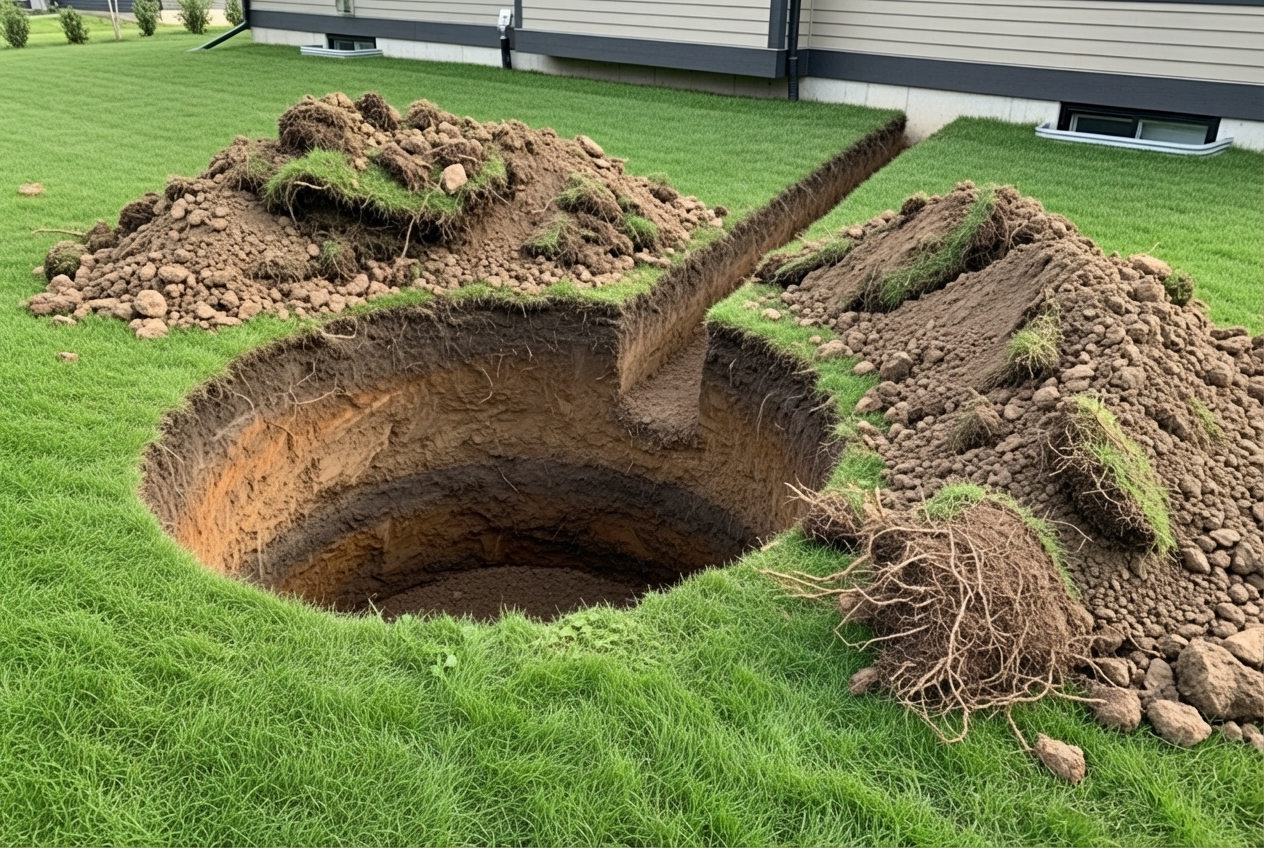
Before starting, consider how your dry well ties into your property. If anticipating upgrades like larger patios, stone walkways and stairs, or driveway pavers, oversize the system slightly or position it to serve future hardscapes.
Step 1: Gather Tools and Materials
Assemble necessary equipment: shovel, wheelbarrow, level, tape measure. Materials include prefabricated dry well kit, 4-inch PVC pipe and fittings, downspout adapter, washed gravel, and non-woven geotextile fabric.
Additional helpful tools:
- Trenching shovel for pipe runs
- Hand tamper for compacting
- String line and stakes for maintaining slope
For integration with larger projects like patio design and installation or hardscaping layouts, contractors use mechanical trenchers and laser levels.
Step 2: Excavate Pit and Trench
Safety First: Call 811 Before Digging! This free service marks underground utilities. Excavate a pit for the dry well plus one foot of gravel on all sides—typically 4 feet deep and wide. Dig a trench from downspout to pit with minimum 1/8-inch per foot downward slope.
Practical tips:
- Place excavated soil on tarps away from plantings
- Check slope frequently to avoid low spots
- Consider adding catch basins at low points in patios or walkways
The Massachusetts Office of Public Safety and Inspections publishes excavation safety recommendations.
Step 3: Prepare Base and Install
Line pit with geotextile fabric, leaving excess to fold over later. Add 6-inch gravel layer and level. Lower dry well unit into center. Connect PVC inlet pipe from trench, maintaining slope.
For multiple chambers or connections to French drains, follow manufacturer diagrams. Consider installing inspection risers for future access—professionals offering hardscaping and masonry services can hide these discreetly.
Step 4: Backfill and Finish
Fill around dry well with gravel to top. Fold fabric over gravel. Backfill with soil, compacting gently in layers. Add topsoil and reseed. Connect PVC to downspout.
Test by running water through system—confirm free flow, no leaks, and no surface pooling.
If this seems labor-intensive, George Hardscaping handles dry well installation start to finish, coordinating with patio design services, walkways and stairs, and other hardscaping projects.
Tired of standing water? Contact George Hardscaping for professional dry well installation and comprehensive drainage planning custom to your property.
Maintaining Your Dry Well for Long-Term Performance
A dry well is a low-maintenance drainage solution, but not a no-maintenance one. With proper installation and simple, periodic care, your dry well can provide reliable performance for up to 30 years. The key to its longevity is preventing the system from clogging with silt and debris.
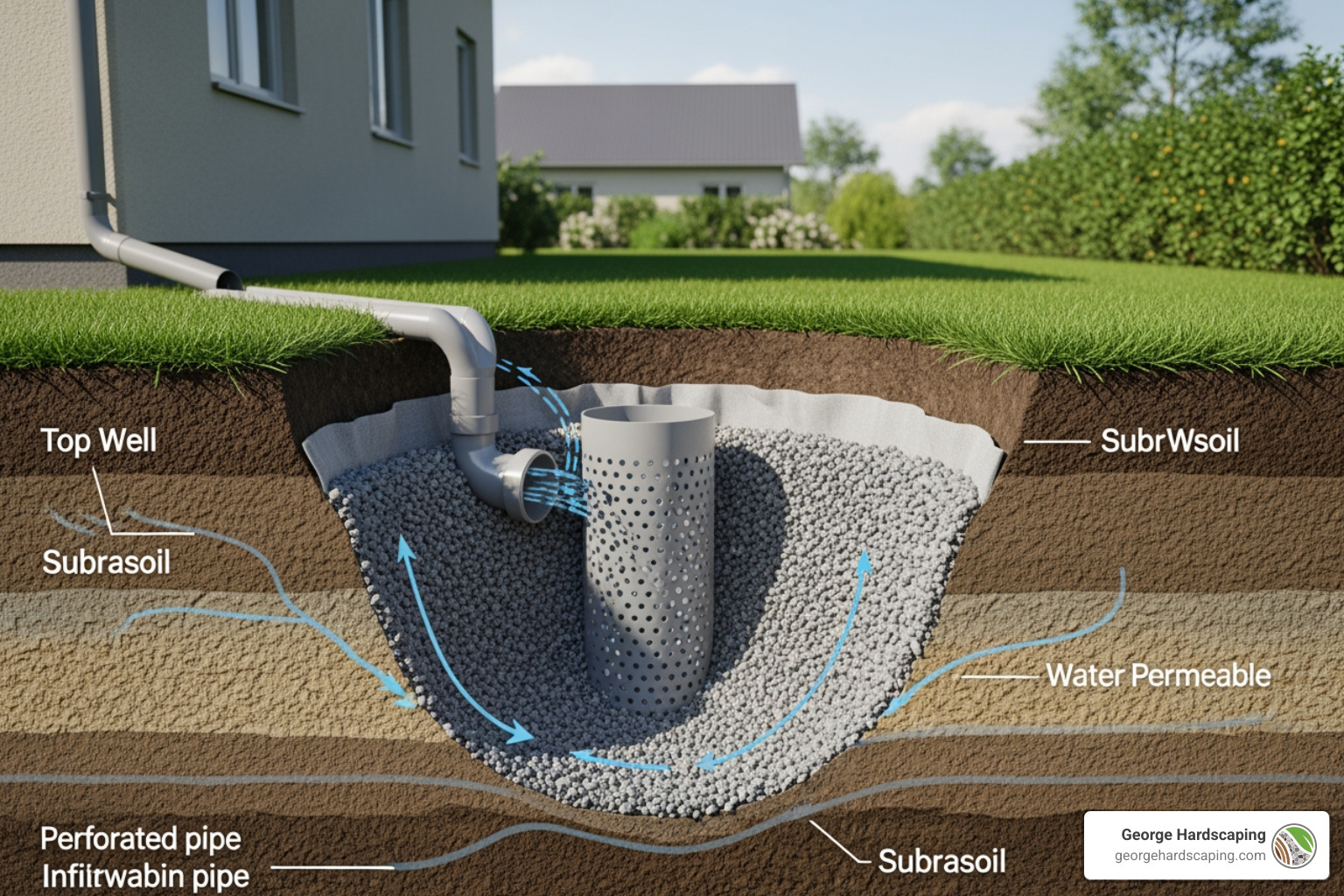
Preventive maintenance is especially important when your dry well supports high-value outdoor spaces such as custom patios, paver driveways, or elaborate walkway and stair systems. Keeping your drainage infrastructure clear protects these features from freeze-thaw damage and erosion.
Essential Maintenance for Your Dry Well
Proactive maintenance is simple and ensures your dry well continues to function effectively. Follow these key steps:
- Clean Gutters Regularly: The primary source of clogs is debris from your roof. Clean your gutters and downspouts at least twice a year, especially in the fall. Installing leaf guards is an excellent way to drastically reduce the amount of material entering your drainage system.
- Inspect Inlets: Annually check the inlet pipe connection for any visible blockages or debris. Clear away anything that could obstruct water flow.
- Check Surface Grading: Over time, soil can settle or be displaced, changing how water flows across your property. Make sure the ground still slopes gently away from your home, patios, and driveways and toward the inlets connected to your dry well.
- Schedule Professional Cleaning: Every 5-10 years, it’s wise to have the dry well professionally inspected and cleaned. A drainage expert can remove the fine sediment that inevitably accumulates over time, restoring the system’s infiltration capacity.
- Monitor the Surface: Keep an eye on the ground above the dry well. Any significant sinking or persistent pooling of water could indicate an issue that needs attention.
For more information on how residential stormwater systems age and how regular upkeep can extend their life, resources such as the Center for Watershed Protection’s stormwater manuals offer in-depth technical discussions that support what homeowners observe on their own properties.
Troubleshooting Common Dry Well Problems
If you notice issues, here are some common causes and solutions:
- Slow Drainage: This is usually caused by silt buildup. Minor clogs can sometimes be flushed with a hose, but significant blockages may require professional jetting to clear the sediment.
- System Overflow: If the well overflows during storms, it may be clogged or undersized for the amount of runoff. After ruling out a clog, the solution may be to install an overflow emitter or a second dry well to handle the excess volume.
- Surface Depression: A sunken area above the well is typically due to soil settling after installation. Simply add more topsoil to the area and compact it to bring it back to level.
- Water Near Hardscapes: If you begin to see puddling along walkways and stairs, on paver driveways, or against retaining walls, it may indicate that inflow to the dry well has been disrupted or that additional collection points are needed.
In many cases, solving these problems is easier when you think about your property as a complete system. Professionals who provide hardscaping and masonry services can evaluate how your dry well, surface grading, and structures interact, then recommend targeted improvements that restore performance without tearing up your entire yard.
If you suspect your existing dry well is failing or wasn’t installed correctly, don’t wait for the next nor’easter to test it. Reach out to George Hardscaping for a drainage inspection and a clear plan to repair, upgrade, or replace your system before water causes lasting damage.
Frequently Asked Questions about Dry Well Installation
Homeowners in Essex County often have questions when considering a dry well. Here are answers to some of the most common inquiries.
How far should a dry well be from a house?
A dry well must be installed at least 10 feet away from your home’s foundation. This is a critical safety measure to ensure the water it disperses soaks into the ground without compromising your foundation or causing basement moisture issues. You should also maintain a distance of at least 3 feet from property lines. Always verify specific setback requirements with your local building department, as codes can vary by town.
Can I install a dry well myself?
Yes, a DIY dry well installation is feasible for smaller prefabricated plastic or gravel pit systems if you have the right tools and are comfortable with significant physical labor. However, for larger concrete systems, properties with challenging soil conditions, or if the drainage issue is complex and affects hardscapes like your walkways and stairs, hiring a professional is strongly recommended. A pro ensures proper sizing, siting, and code compliance for a durable, effective solution.
Do dry wells work in clay soil?
Dry wells are significantly less effective in heavy clay soil because its dense structure prevents water from draining quickly. A percolation test is essential to determine if your soil’s absorption rate is adequate (at least 0.5 inches per hour). If you have heavy clay, a standard dry well may overflow. In these cases, a professionally engineered system or an alternative solution like a French drain or a specialized retaining wall drainage system may be a better choice.
Conclusion: A Lasting Solution for a Drier Property
Installing a dry well is a smart, proactive investment in the health and safety of your property. By managing stormwater at its source, you protect your home’s foundation from water damage, prevent landscape erosion, and help create a more resilient and environmentally friendly property. It’s an invisible guardian working to keep your Essex County home safe and dry through every New England storm.
While a DIY installation is an option for simple projects, achieving a truly effective and long-lasting drainage solution often requires professional expertise. Proper sizing, soil analysis, and integration with existing hardscapes are critical for success. For homeowners on the North Shore, ensuring new custom patios and paver driveways are built with proper drainage from the start is the best way to protect your investment.
Dry wells also align with broader environmental goals. By infiltrating water on site, you reduce the burden on municipal storm sewers, decrease polluted runoff, and support healthier local waterways and aquifers. These are the same principles promoted by leading organizations in the field of green infrastructure, including the U.S. Environmental Protection Agency’s green infrastructure initiative and the Massachusetts Department of Environmental Protection stormwater standards.
When you partner with a company that specializes in both drainage and hardscaping and masonry services, you gain the advantage of a holistic, design-driven approach. George Hardscaping can:
- Evaluate how water currently moves across your property.
- Recommend the right combination of dry wells, grading changes, and surface drains.
- Integrate those solutions with beautiful patio design services, walkways and stairs, and paver driveways.
- Provide long-term reliability backed by professional installation techniques and quality materials.
You don’t have to live with soggy lawn corners, icy walkways, or the constant worry that the next storm will send water toward your basement. A well-planned dry well installation can transform how your property handles rain, snowmelt, and runoff, making every season more comfortable and worry-free.
Ready to protect your home and upgrade your outdoor spaces at the same time? Contact George Hardscaping today to schedule a professional consultation and estimate for dry well installation and integrated drainage solutions.
Take the next step toward a drier, safer, and more beautiful propertyreach out now and let George Hardscaping design a custom drainage and hardscaping plan tailored to your Essex County home.
