
Custom Patios: 5 Easy Steps for Stunning Results
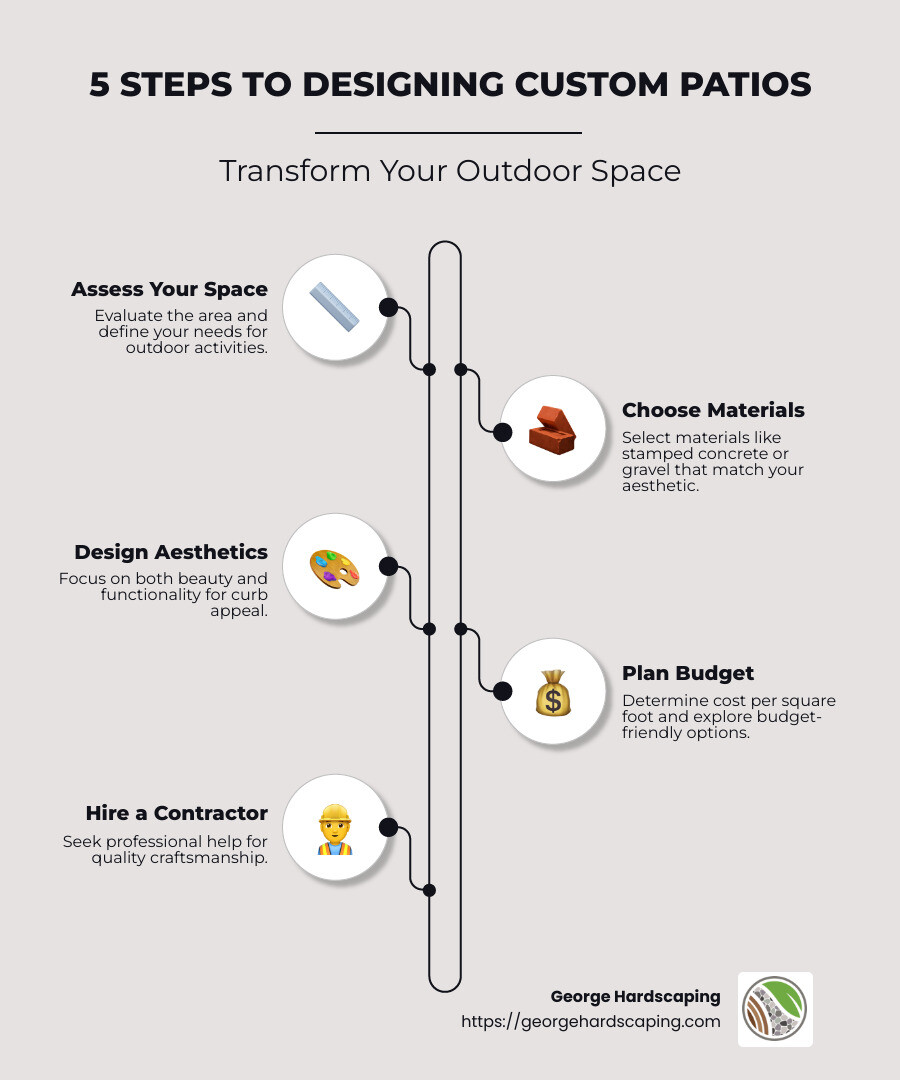
Custom patios transform ordinary backyards into stunning extensions of your home, offering a perfect blend of beauty and functionality. If you’re dreaming of an outdoor space custom just for you, a custom patio is the way to go. Here’s a quick breakdown of the design process:
- Assess Your Space and Needs: Determine what you want from your patio.
- Choose the Right Materials: Opt for materials that match your home’s aesthetic.
- Design for Aesthetics and Functionality: Balance between looks and practical use.
- Plan for Budget and Costs: Be mindful of how much you want to spend.
- Hire a Professional Contractor: Ensure quality with expert help.
Creating a unique outdoor living area involves more than just picking a spot and laying down stones. It’s about designing a space that seamlessly weaves into your lifestyle while enhancing the natural charm of your home. For homeowners in Essex County and the North Shore, where aesthetics meet practicality, designing a custom patio is an opportunity to craft an engaging outdoor experience that adapts to your needs.
Patios aren’t just concrete slabs anymore; they’re an integral part of your living space. From quiet moments under a pergola to lively gatherings around a fire pit, a well-designed patio adds value and joy to your home. Jump into the design process, and soon you’ll have a personal oasis right outside your door.
Custom patios terms simplified:
– custom patio enclosures
– custom patio table
– patio covers designs
Step 1: Assess Your Space and Needs
Before diving into the design of your custom patio, evaluate your outdoor space and understand your needs. This foundational step ensures that your patio will not only look great but also serve its purpose effectively.
Space Evaluation
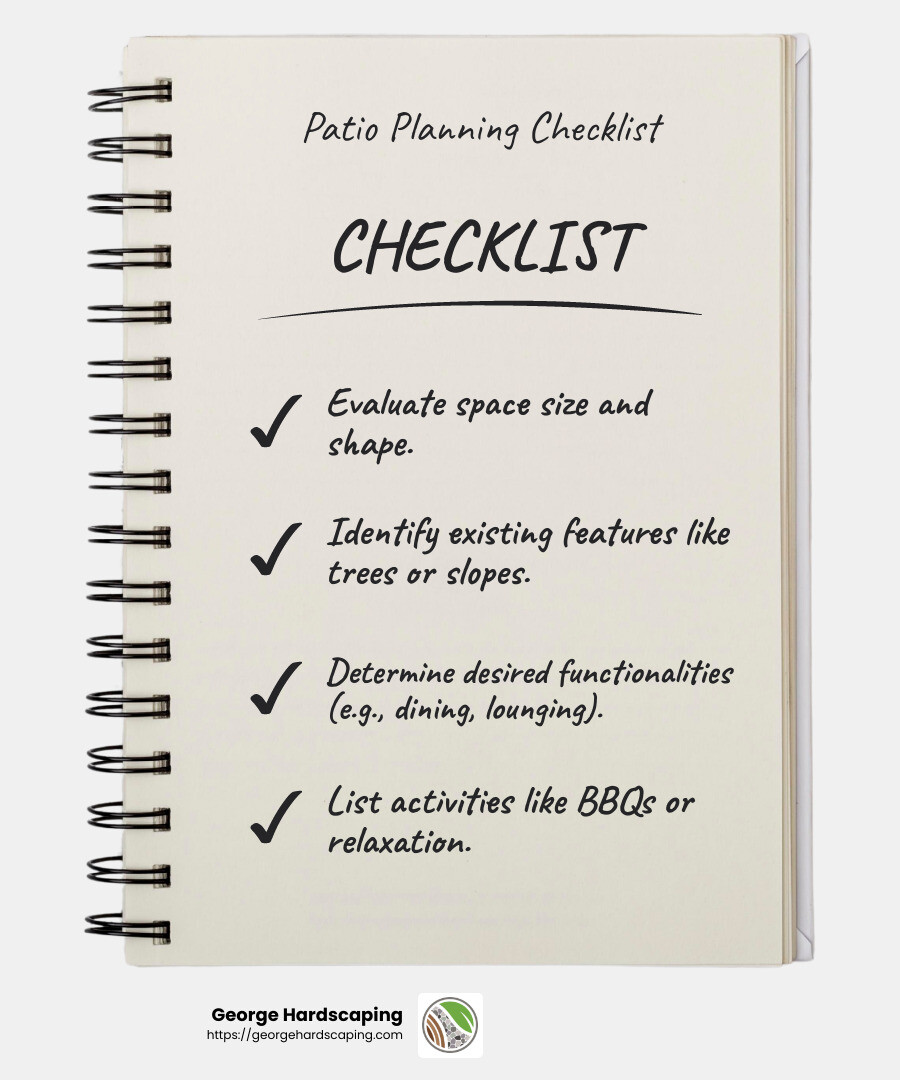
Start by examining the size and shape of your outdoor area. Take note of any existing features, like trees or slopes, that might influence your design. Consider how much space you have and how it can be best used. A small yard might benefit from a compact, multi-functional design, while a larger area might allow for distinct zones, like dining and lounging.
Functionality
Think about how you plan to use your patio. Do you envision it as a serene retreat for reading and relaxation, or as a busy hub for family gatherings and barbecues? Your lifestyle and interests should guide your design choices. For example, if you love cooking outdoors, incorporating an outdoor kitchen might be a priority.
Outdoor Activities
List the activities you want to enjoy on your patio. Whether it’s hosting summer parties, practicing yoga, or simply enjoying a morning coffee, understanding these activities will help shape your patio’s layout and features. For those who enjoy evening gatherings, including a fire pit could improve the ambiance and extend usability into cooler months.
By carefully assessing your space and needs, you’ll lay a solid foundation for designing a patio that complements your lifestyle and improves your home’s outdoor appeal.
Step 2: Choose the Right Materials
Once you’ve assessed your space and needs, it’s time to select the right materials for your custom patio. The materials you choose will impact not only the look and feel of your patio but also its durability and maintenance needs. Here are some popular options to consider:
Stamped Concrete
Stamped concrete is a versatile and cost-effective choice for patios. It offers the look of more expensive materials like brick or stone but at a fraction of the cost. You can customize it with various patterns and colors to match your home’s aesthetic.
- Durable and Long-lasting: Stamped concrete can withstand heavy foot traffic and harsh weather conditions, making it ideal for outdoor use.
- Low Maintenance: Unlike real stone, stamped concrete requires minimal upkeep. A simple wash and reseal every few years will keep it looking fresh.
Gravel
Gravel is another budget-friendly option that provides a natural look. It’s especially suited for informal and rustic settings.
- Easy to Install: Gravel patios are relatively easy to install, making them a great DIY project for handy homeowners.
- Good Drainage: Gravel allows rainwater to drain through, reducing puddles and runoff.
Retaining Walls
Retaining walls are essential if your outdoor space includes slopes. They help prevent soil erosion and create level areas for your patio.
- Functional and Attractive: Retaining walls can be both functional and decorative, adding structure and character to your patio.
- Material Choices: You can build retaining walls from various materials, including stone, brick, or concrete blocks, each offering a different aesthetic.
By carefully selecting the materials that best suit your design vision and practical needs, you can create a custom patio that improves your outdoor living space beautifully and sustainably.
Step 3: Design for Aesthetics and Functionality
Now that you’ve chosen the right materials, it’s time to focus on designing your custom patio for both aesthetics and functionality. A well-designed patio not only boosts your home’s curb appeal but also serves as a functional outdoor living space. Let’s explore some key elements to consider:
Curb Appeal
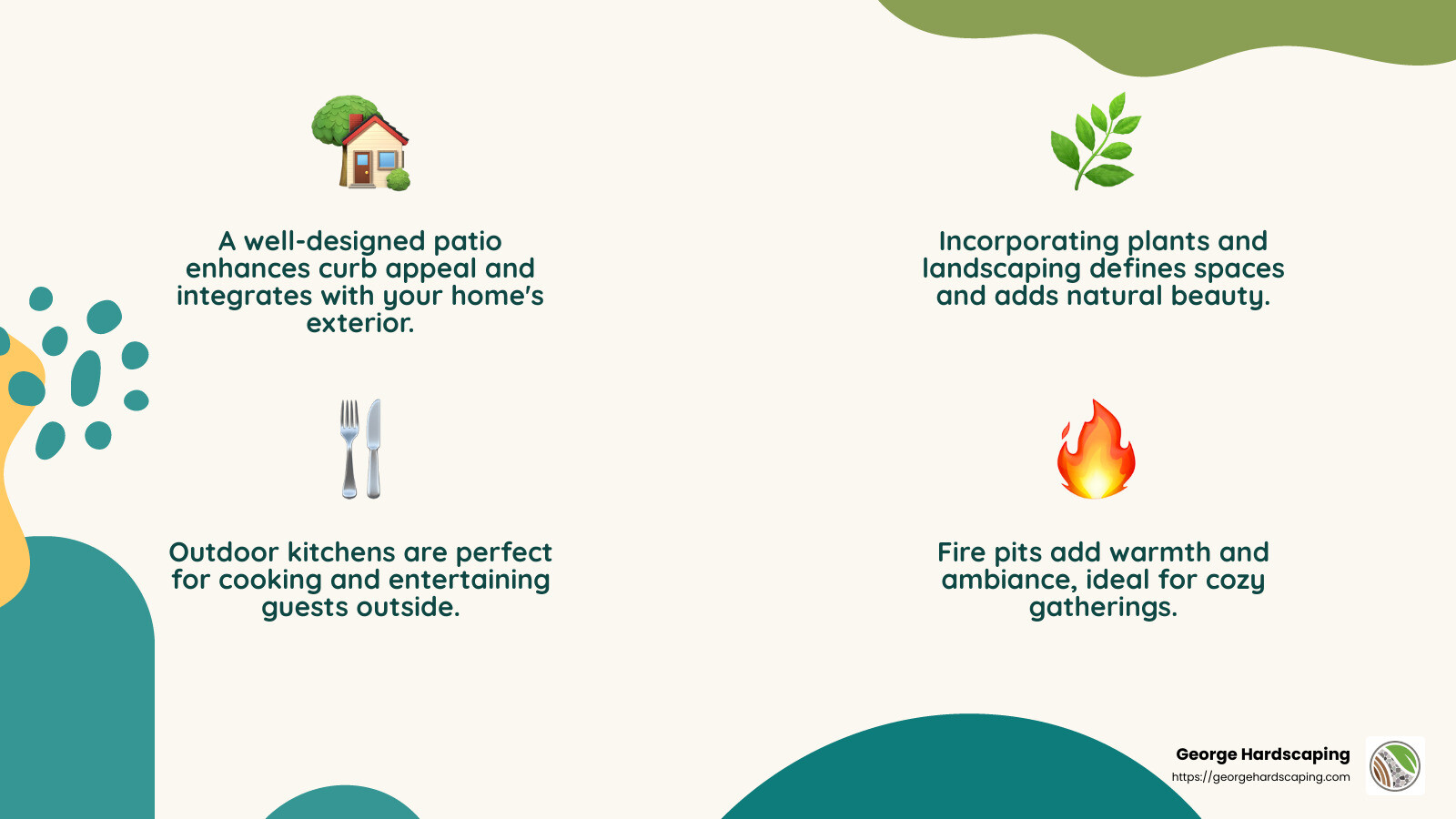
Your patio is an extension of your home, and its design should reflect that. A well-designed patio can significantly improve the overall look of your property.
- Harmonize with Home Design: Use materials and colors that complement your house’s exterior. This creates a seamless transition from indoors to outdoors, making your patio feel like an integrated part of your home.
- Landscaping: Incorporate plants, shrubs, and flowers around your patio to add natural beauty. Consider using garden borders and retaining walls to define spaces and create a structured look.
Outdoor Kitchens
An outdoor kitchen can transform your patio into a hotspot for entertaining and dining. It’s perfect for those who love cooking and hosting gatherings outside.
- Design Elements: Include essential features like a grill, countertop space, and storage. You might also want to add a sink or small refrigerator for convenience.
- Integration: Ensure your outdoor kitchen blends with the rest of your patio design. Use similar materials and colors to maintain a cohesive look.
Fire Pits
Fire pits are a popular feature for patios, providing warmth and ambiance. They are perfect for cozy gatherings with family and friends.
- Styles and Materials: Choose from various styles, such as rustic stone or modern geometric designs. Each style can set the tone for your outdoor space.
- Safety Considerations: Position your fire pit safely away from flammable materials and ensure it’s easily accessible for maintenance and use.
By focusing on these elements, you can design a custom patio that not only looks amazing but also serves your lifestyle needs. Up next, we’ll discuss how to plan for your budget and costs, ensuring your patio project stays within financial reach.
Step 4: Plan for Budget and Costs
When designing a custom patio, it’s crucial to plan for your budget and understand the costs involved. Knowing the cost per square foot, patio cover costs, and exploring budget-friendly options can help you make informed decisions.
Cost Per Square Foot
The cost of your patio largely depends on its size and the materials you choose. Here’s a simple breakdown:
- Basic Materials: Gravel and basic concrete are typically more affordable, ranging from $1 to $3 per square foot. These options are great if you’re on a tight budget.
- Mid-Range Options: Stamped concrete and pavers can cost between $5 to $15 per square foot. These materials offer a balance of durability and aesthetic appeal.
- High-End Choices: Premium stone or custom designs might set you back $15 to $30 per square foot. These are ideal for those looking to make a bold statement.
Understanding these costs helps you plan your patio’s size and material selection according to your budget.
Patio Cover Costs
A patio cover can extend your outdoor living space’s usability by providing shade and protection from the elements. Here’s what to expect:
- Simple Covers: Basic pergolas or awnings can cost anywhere from $1,000 to $3,000. These are functional and add a touch of style.
- High-End Solutions: More elaborate structures, like pavilions or custom-built covers, can range from $5,000 to $15,000 or more. These options provide improved functionality and aesthetic value.
Consider how much coverage you need and how it fits into your overall design and budget.
Budget-Friendly Options
If you’re looking to save, here are some tips:
- DIY Elements: While major construction should be left to professionals, you can save by doing some prep work yourself, like clearing the area or basic landscaping.
- Mix and Match Materials: Combine different materials to manage costs. For example, use gravel for walkways and more expensive pavers for the main patio area.
- Reuse Existing Materials: If your current patio has usable materials, consider incorporating them into your new design.
By carefully planning and considering these factors, you can create a beautiful custom patio that suits your style without breaking the bank. Next, we’ll discuss the importance of hiring a professional contractor to ensure quality craftsmanship and successful project management.
Step 5: Hire a Professional Contractor
When it comes to building custom patios, hiring a professional contractor is a game-changer. Let’s explore why this step is vital for achieving quality craftsmanship and effective project management.
Quality Craftsmanship
A professional contractor brings expertise and precision to your custom patio project. They have the skills and experience to ensure every detail is executed perfectly. Here’s why quality craftsmanship matters:
- Durability: Proper installation means your patio will withstand the test of time and weather. Professionals use high-quality materials and techniques to ensure longevity.
- Aesthetics: A well-crafted patio improves your home’s curb appeal. Professionals have an eye for design, ensuring your patio is not only functional but also visually stunning.
- Safety: Experienced contractors follow safety standards, reducing the risk of mishaps during and after construction.
At George Hardscaping, we pride ourselves on delivering exceptional craftsmanship that meets our clients’ expectations. Our team is dedicated to creating patios that are both beautiful and built to last.
Project Management
Managing a patio project can be complex. A professional contractor takes the stress off your shoulders by handling all aspects of the project. Here’s how:
- Scheduling: Contractors coordinate timelines, ensuring your project stays on track and is completed on time.
- Permits and Regulations: They manage necessary permits and ensure compliance with local building codes, so you don’t have to worry about legal problems.
- Coordination: From material procurement to coordinating with other tradespeople, contractors streamline the process, minimizing disruptions to your daily life.
George Hardscaping excels in project management, offering a seamless experience from start to finish. Our team communicates with you every step of the way, ensuring your vision is realized efficiently.
Why Choose George Hardscaping?
Choosing the right contractor is crucial for your patio project’s success. Here’s why George Hardscaping is the ideal choice:
- Expertise: With years of experience in custom patio design and installation, we understand the unique needs of our clients.
- Reputation: Our clients trust us for our reliability and quality work. Positive reviews and testimonials speak to our commitment to excellence.
- Locations: Serving multiple areas in Massachusetts, including Beverly, Boxford, and Salem, we’re conveniently located to assist you with your patio needs.
By hiring a professional contractor like George Hardscaping, you ensure your custom patio is crafted with skill and managed with care. Next, we’ll answer some frequently asked questions about custom patios to help you make informed decisions.
Frequently Asked Questions about Custom Patios
How much does a custom patio cost?
The cost of a custom patio can vary widely depending on several factors. On average, you might expect to pay anywhere from $15 to $50 per square foot. This range considers materials, labor, and design complexity. For instance, using premium materials like natural stone or intricate designs can push costs higher.
In addition, features like outdoor kitchens or fire pits can add to the total expense. It’s important to get a detailed estimate from a contractor to understand the full scope of costs involved.
What is the cheapest patio build?
If you’re looking for a budget-friendly option, consider a gravel patio. Gravel is one of the cheapest materials available, costing as little as $1 to $3 per square foot. It’s easy to install and maintain, making it a popular choice for those looking to save money.
Another cost-effective option is stamped concrete, which offers the look of more expensive materials like stone or brick but at a lower cost. It typically ranges from $8 to $12 per square foot.
How much does a covered patio cost?
Adding a cover to your patio can improve its usability but also adds to the cost. A basic covered patio might start at around $1,000 to $5,000, depending on materials and size. If you opt for high-end materials or custom designs, prices can exceed $10,000.
Covering options include pergolas, awnings, or fully enclosed structures. Each type offers different levels of protection and aesthetics, influencing the overall price. Consider your climate and usage needs when deciding on the best option for your outdoor space.
By understanding these cost factors, you can better plan your budget and create a custom patio that fits your financial and functional needs.
Conclusion
Enhancing your outdoor space with a custom patio can transform your backyard into a beautiful and functional living area. At George Hardscaping, we specialize in creating patios that not only add aesthetic value but also improve the usability of your outdoor environment.
Our commitment to quality and craftsmanship ensures that each project is completed with precision and care. We work closely with our clients to understand their vision, needs, and budget, delivering results that exceed expectations. Whether you’re dreaming of a cozy fire pit area or a sophisticated outdoor kitchen, our team has the expertise to bring your ideas to life.
Serving the North Shore, our skilled professionals use the finest materials, ensuring durability and style that last for years. We believe that a well-designed patio is more than just an addition to your home—it’s an investment in your lifestyle, providing a space for relaxation, entertainment, and creating memories.
Ready to improve your outdoor space? Let George Hardscaping guide you through the process of designing and building the perfect custom patio for your home. Contact us today to get started on your outdoor change.
