
Custom Outdoor Kitchen B uilder: Top 5 Stunning Picks 2025
Why Essex County Homeowners Are Choosing Custom Outdoor Kitchen Builders
A custom outdoor kitchen builder creates personalized cooking spaces that transform your backyard into an entertainment hub, unlike prefab kits that offer limited layouts and materials. Here’s what to look for when choosing the right builder:
Key Qualities of Top Custom Outdoor Kitchen Builders:
– Experience: 20+ years in outdoor construction and design
– Materials: Weather-resistant concrete, stainless steel, and premium finishes
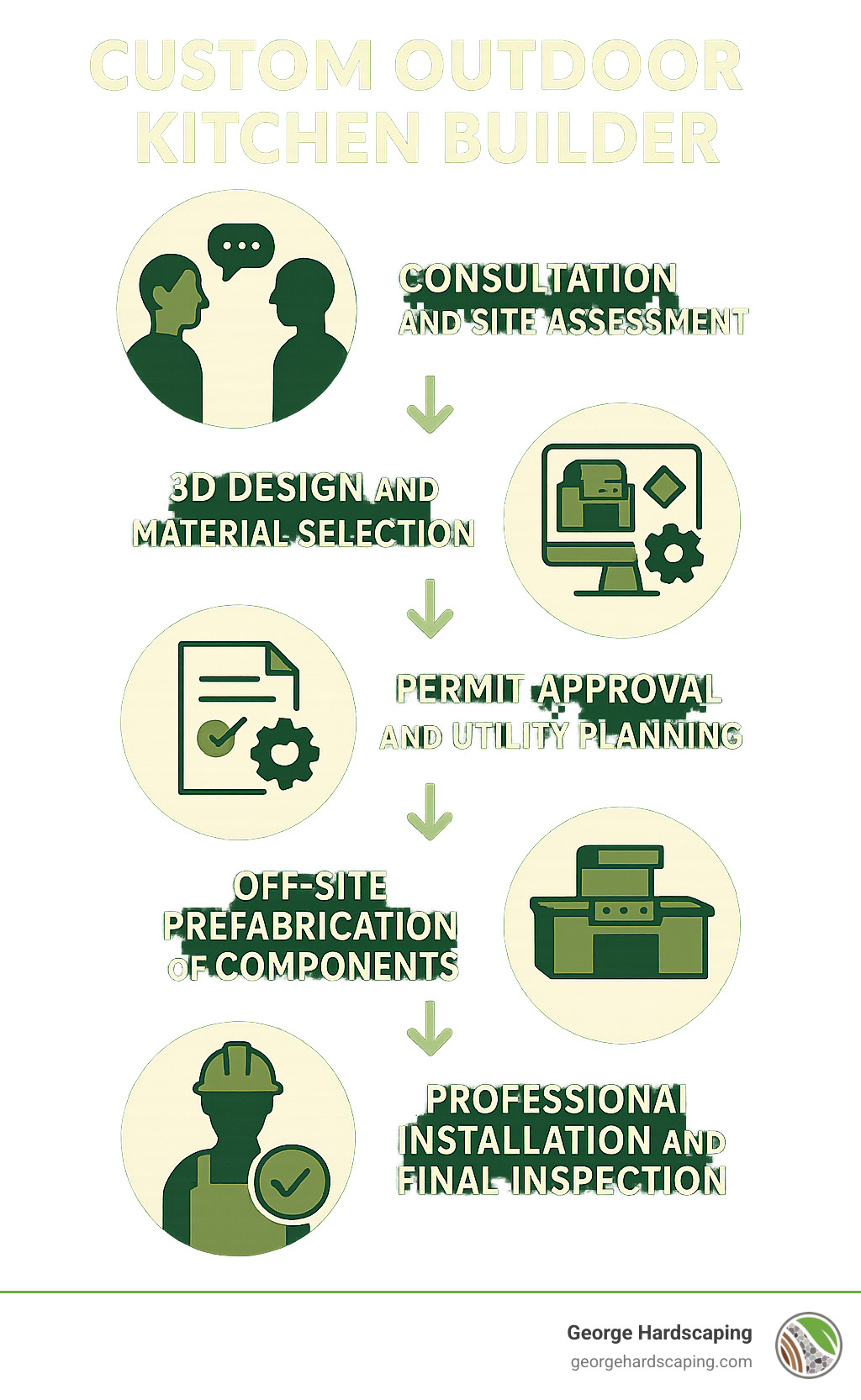
– Process: Free consultation, 3D design, and professional installation
– Timeline: 2-3 weeks from approval to completion
– Warranty: Lifetime structural warranties on quality builds
The outdoor kitchen trend has exploded across Essex County’s North Shore communities. Homeowners are finding that custom-built outdoor kitchens not only extend their living space but also boost home values significantly. According to the National Association of Realtors, homes with outdoor kitchens sell for higher amounts and sell faster than those without.
Unlike DIY kits or prefab options, working with a custom outdoor kitchen builder means getting exactly what fits your space, cooking style, and budget. Whether you have a compact deck or sprawling patio, professional builders can design anything from a simple grill island to a full outdoor cooking suite.
Why a Custom Outdoor Kitchen Builder Beats Prefab Kits
A custom outdoor kitchen builder creates cooking spaces designed around your exact requirements, your specific outdoor space, and your cooking style. Meanwhile, prefab kits force you to work within their limited size options and basic material choices.
The durability difference is striking. Professional builders use 100-year rated concrete construction that’s engineered to handle everything Mother Nature throws at it. Those lightweight prefab materials might look good in the showroom, but after a few seasons of Essex County weather – from scorching summer sun to ice storms – you’ll start seeing the difference.
Personalization is where custom builders really shine. We’re talking about more than 15 different powder coat finishes that can perfectly match your home’s style. Want your outdoor kitchen to complement those beautiful shutters? No problem. Need it to blend seamlessly with your existing stone work? A skilled builder can make that happen.
The resale value boost is real money in your pocket. Homes with professionally built outdoor kitchens consistently sell for higher prices and spend less time on the market. It’s an investment that pays you back both in daily enjoyment and when it’s time to sell.
For Essex County homeowners dealing with coastal conditions, working with specialists in Outdoor Kitchen and Fireplace construction means your project will meet local codes and stand up to salt air and seasonal weather changes.
Benefits Only a Custom Outdoor Kitchen Builder Provides
When you work with a custom outdoor kitchen builder, you’re not stuck with the “small, medium, or large” options that come with prefab kits. Professional builders can create anything from a compact 12-foot setup perfect for a cozy deck to expansive L-shaped configurations that become the centerpiece of your backyard entertaining area.
Custom layouts mean your outdoor kitchen actually works for how you cook. Professional builders understand kitchen workflow – they know where to place your grill in relation to your prep space and storage so you’re not constantly running back and forth. They can integrate premium finishes like natural stone countertops with custom edge details that match your style perfectly.
Utility routing is a game-changer. Instead of trying to figure out how to get gas and electricity to a prefab unit after the fact, custom builders plan all your connections from day one. Proper gas lines, electrical connections, and plumbing are built into the design, so everything works smoothly from the start.
How a Custom Outdoor Kitchen Builder Works With Your Space
A professional custom outdoor kitchen builder starts every project by actually looking at your space – not just measuring it, but understanding how you use your backyard. They’ll check drainage patterns, note where the sun hits throughout the day, and figure out the best spots for utility connections.
Proper foundation work separates the pros from the DIY disasters. These outdoor kitchens are heavy – we’re talking about stone, steel, and appliances that need solid concrete footers to prevent settling and cracking. Professional builders know exactly what’s needed to support your investment for decades.
The magic happens in the integration. Experienced builders can work with your existing patio, deck, or yard space to create something that looks like it was always meant to be there. Whether you need new Patio Design & Installation work or want to incorporate your kitchen into existing hardscaping, professionals create cohesive designs that improve your entire outdoor space.
Designing Your Dream Outdoor Kitchen: Layouts, Materials & Appliances
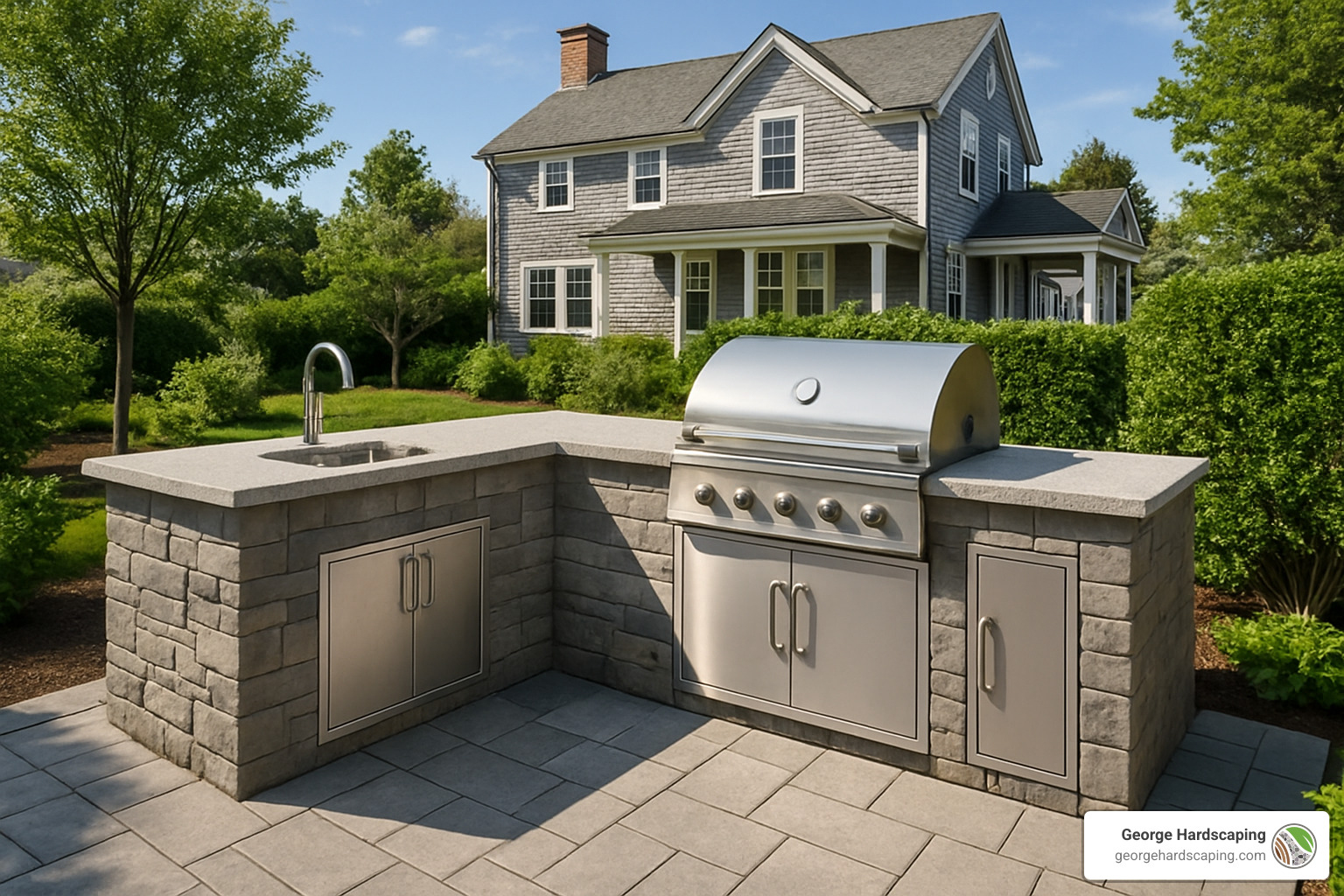
Planning your outdoor kitchen feels overwhelming at first, but breaking it down into layouts, materials, and appliances makes the process much clearer. Most homeowners find that 12 feet is the absolute minimum for a workable outdoor kitchen, but the sweet spot is closer to 20 feet.
Think of your outdoor kitchen in zones – just like indoor kitchens have that famous triangle between sink, stove, and refrigerator. You’ll want distinct areas for prep work, actual cooking, and serving. The flow between these zones makes the difference between smooth entertaining and kitchen chaos.
Island layouts work beautifully in open spaces because they naturally draw people around them for conversation. L-shaped designs are perfect for corner spaces and create that efficient workflow most cooks love. U-shaped kitchens offer tons of counter space but need larger areas with at least 5 feet of clearance.
When it comes to materials, you’re basically choosing between durability, looks, and maintenance. Granite countertops handle heat like champs and look stunning, but they need sealing every year or two. Stainless steel gives you that professional kitchen vibe and cleans up easily. Concrete might surprise you – it’s incredibly versatile, can be shaped into anything, and holds up better than most people expect.
| Material | Durability | Maintenance | Cost | Best For |
|---|---|---|---|---|
| Granite | Excellent | Periodic sealing | $$$ | Heat-resistant surfaces |
| Stainless Steel | Very Good | Regular cleaning | $$ | Modern look, easy sanitizing |
| Concrete | Excellent | Minimal | $ | Custom shapes, integrated features |
For Essex County homes, adding water features requires extra planning because of our freezing winters. If you’re considering Adding a Sink to Outdoor Kitchen setups, proper winterization becomes crucial to prevent costly pipe damage.
Layout & Workflow Essentials
The kitchen triangle concept works just as well outdoors as it does inside. Your grill, prep area, and storage should form an efficient triangle that keeps you from running marathons while cooking. The ideal distance between these points is 4 to 9 feet – close enough to be efficient, far enough to avoid crowding.
Seating integration separates good outdoor kitchens from great ones. Bar-height counters with 12 to 15-inch overhangs accommodate standard bar stools perfectly. Lower dining-height surfaces work better for families with younger children.
The 5-foot clearance rule behind cooking areas isn’t just a suggestion – it’s about safety and sanity. Grill areas need proper ventilation and clearance from anything that could catch fire. A custom outdoor kitchen builder understands these requirements instinctively.
Working with Custom Patios specialists ensures your outdoor kitchen doesn’t look like an afterthought but rather like it was always meant to be part of your outdoor living space.
Material Showdown: Pros & Cons
Weather-resistant concrete offers the best combination of durability and customization options. It can be formed into virtually any shape, colored to match your existing hardscaping, and even integrated with features like built-in planters or fire elements. Concrete handles our New England freeze-thaw cycles better than most alternatives.
Aluminum frames with outdoor-rated powder coat finishes give you rust-free construction with extensive color options. These systems often feature modular designs that allow for future changes if your needs evolve.
HDPE cabinetry might sound technical, but it’s basically marine-grade plastic that won’t rot, rust, or warp. It handles coastal environments beautifully and comes in colors and textures that can mimic wood grain.
Stone veneer provides that natural beauty and excellent heat resistance that many homeowners crave. Natural stone requires periodic sealing to prevent staining, but the timeless appeal and exceptional durability make it worth the extra care.
Appliance & Feature Wishlist
Gas grills remain the heart of most outdoor kitchens. Professional-grade models offer precise temperature control, multiple cooking zones, and the kind of durability that makes the higher cost worthwhile. A 36-inch grill handles most family cooking beautifully, while 48-inch models accommodate those larger gatherings.
Side burners provide the versatility you need for sauces, sides, and anything that needs boiling. Look for models with wind-resistant designs because there’s nothing more frustrating than trying to simmer a sauce in a breeze.
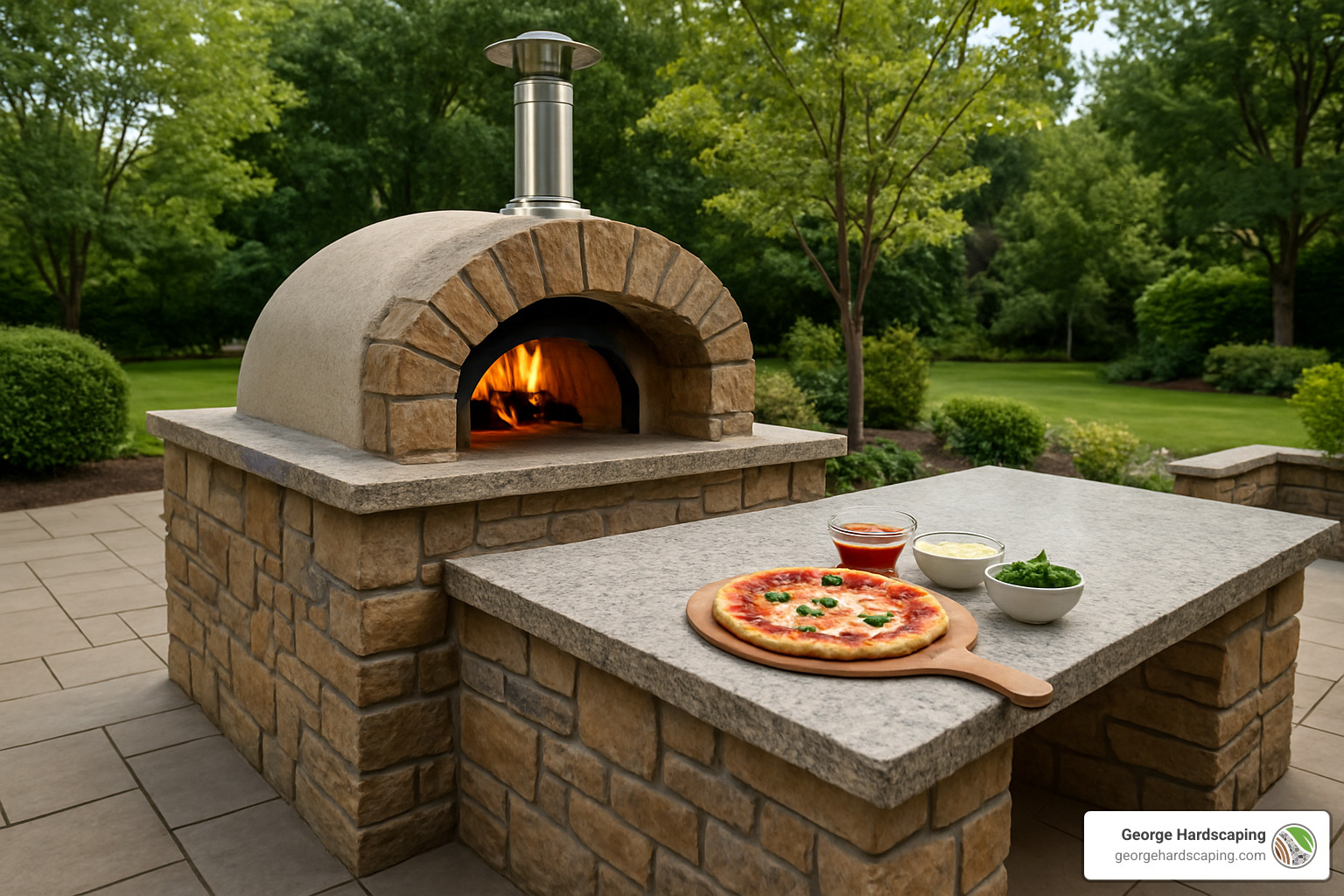
Pizza ovens have become the rock stars of outdoor kitchens, adding both serious cooking capability and visual wow factor. Wood-fired models provide those authentic flavors, but they require more hands-on maintenance. Gas-powered options offer convenience with consistently great results.
Beverage centers keep drinks cold and easily accessible. Options range from simple ice bins to full refrigeration units with beer taps. Consider your entertaining style – are you more of a casual cooler family or do you lean toward the built-in wine fridge crowd?
Storage solutions include cabinets, drawers, and specialized organizers for grilling tools, cleaning supplies, and serving items. Weather-resistant construction becomes essential for anything staying outdoors year-round.
Ambient lighting extends your outdoor kitchen’s usable hours and creates the kind of atmosphere that makes people want to linger. Under-counter LED strips provide task lighting, pendant lights over bar areas create focal points, and accent lighting highlights architectural features.
Cost, Timeline & Financing Insights for Essex County Projects

Custom outdoor kitchen builder projects in Essex County typically range from $8,000 for a straightforward grill island to well over $40,000 for those “go big or go home” installations with all the bells and whistles. These are average costs based on internet data and not actual costs for George Hardscaping.
The wide price range reflects how much your choices matter. A basic setup with a quality grill and some storage might cost $8,000 to $15,000. Step up to premium appliances, gorgeous stone counters, and plenty of storage, and you’re looking at $15,000 to $30,000. Want that wood-fired pizza oven, full outdoor refrigeration, and custom stonework that makes your neighbors jealous? You could easily hit $40,000 or more.
Most design work takes just 1-3 weeks, depending on how many “what if we moved this here” conversations you have with your builder. Installation can be surprisingly quick too – some projects wrap up in a single day, while more elaborate builds might take up to a week.
Financing options make these projects more accessible than you might think. Latest rates for flexible payments vary based on your credit situation and project size, but many homeowners find that spreading costs over time makes their dream kitchen achievable sooner rather than later.
For homeowners considering a complete outdoor makeover, Hardscaping Services can integrate your new kitchen with updated patios, walkways, and other landscape features for a cohesive look.
Budget Breakdown & Savings Tips
Understanding where your money goes helps you make smarter decisions. The grill island structure typically eats up 40-50% of your budget – that’s your foundation, framework, and basic construction. Appliances usually claim another 25-35%. The remaining budget covers countertops, cabinetry, and finishing touches.
Labor costs vary dramatically depending on your approach. Modular systems designed for handy homeowners can save 30-40% on labor costs, but you’ll still need professionals for gas lines, electrical work, and proper foundations.
Seasonal scheduling can be your wallet’s best friend. Many contractors offer discounts during slower periods. Planning your installation for early spring or late fall might save you money and get you better attention from your builder.
Consider a phased approach if your dream kitchen exceeds your current budget. Start with a solid grill island and add that pizza oven or expanded storage later. Just make sure your builder plans the infrastructure to support future additions.
Project Timeline From Sketch to Sizzle
The journey from “wouldn’t it be nice” to “fire up the grill” follows a predictable path. Your initial consultation takes about 1-2 hours and covers everything from measuring your space to understanding how you actually cook and entertain.
3D renderings and detailed plans usually take 1-2 weeks, though this depends on how decisive you are about materials and features. These visual tools help you spot potential problems before construction starts and ensure everyone’s on the same page about the final result.
Permit approval varies by town but typically takes 2-4 weeks. Professional builders handle this paperwork maze and know exactly what each municipality requires.
Off-site prefabrication is where modern outdoor kitchen construction gets clever. Components built in controlled shop environments fit together better and install faster than trying to cut and fit everything on-site.
Installation day – or days – depends on your project’s complexity. Simple modular setups might be ready for your first cookout the same day, while elaborate custom builds need several days to a week.
Maintenance, Regulations & Long-Term Value

Your outdoor kitchen is built to last, but like any investment, it needs some TLC to keep performing at its best. The good news? Maintenance is surprisingly straightforward when you work with a quality custom outdoor kitchen builder who uses the right materials from the start.
Most homeowners find that spending just a few hours each season on basic care keeps their outdoor kitchen looking and functioning like new for decades. Professional builders typically provide detailed maintenance guidelines custom to your specific materials and appliances.
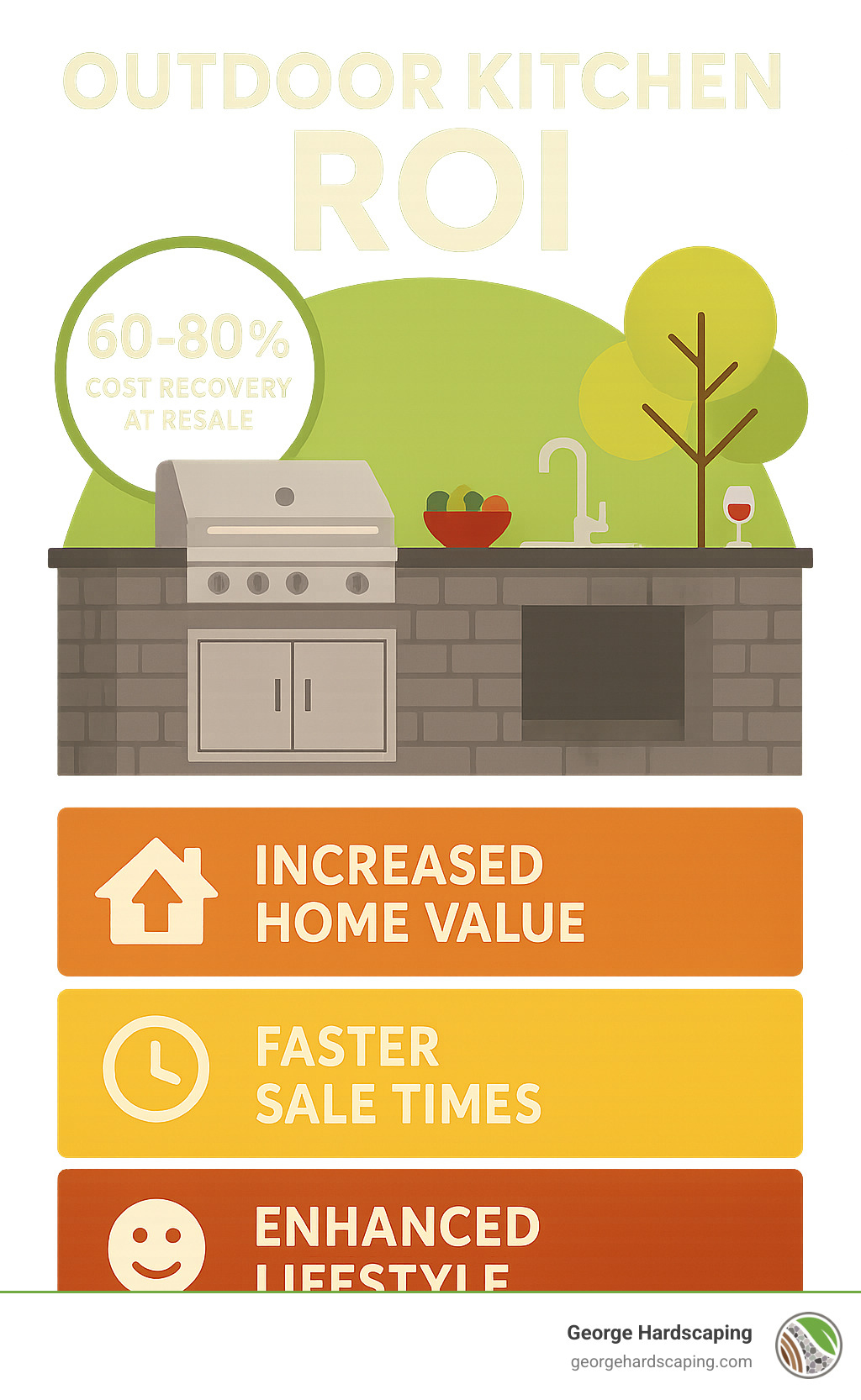
The long-term value proposition is compelling. Beyond the 60-80% cost recovery at resale, outdoor kitchens provide daily lifestyle benefits that many homeowners say are priceless.
For visual learners, this Watch How-To Video walks through essential maintenance steps that keep your outdoor kitchen in peak condition.
Keeping Your Outdoor Kitchen in Top Shape
Seasonal washing is your outdoor kitchen’s best friend. A gentle soap-and-water cleaning every few months removes cooking residue, pollen, and salt air buildup. Stainless steel surfaces need special attention – regular household cleaners can actually damage the finish, so stick with cleaners specifically designed for outdoor stainless steel.
Stone surfaces are remarkably forgiving, but they do appreciate pH-neutral cleaners that won’t strip protective sealers. Avoid anything acidic like vinegar or lemon-based products on natural stone – they can cause permanent etching.
Grout resealing might sound tedious, but every 2-3 years, fresh sealer keeps water from sneaking behind tiles and causing problems. Many homeowners tackle this as a weekend project.
Appliance winterization is non-negotiable in New England. Draining water lines prevents burst pipes, while disconnecting propane tanks eliminates safety risks. Covering sensitive equipment protects against ice and snow damage.
Quality protective covers are like insurance policies for your appliances. They shield against UV damage, keep debris out of burner ports, and prevent that frustrating spring cleanup routine.
Annual inspections catch small issues before they become big headaches. Check gas connections for leaks using soapy water, look for loose electrical connections, and examine structural elements for any settling or movement.
Permits, Codes, and Climate-Smart Choices
Setback requirements exist for good reasons – safety being the main one. Most Essex County communities require outdoor cooking equipment to sit at least 10 feet from your house and other combustible structures. Professional custom outdoor kitchen builders know these rules inside and out.
Gas and electrical installations always require permits and licensed professionals. This isn’t DIY territory – improper installations can be dangerous and void your homeowner’s insurance. The permit process typically takes a few weeks, but it ensures everything meets current safety codes.
Living near the ocean means salt-air resistance isn’t optional – it’s essential. Not all stainless steel grades handle coastal conditions equally well. Marine-grade finishes and specialized powder coatings protect against the corrosive effects of salt air.
Insurance considerations are worth discussing with your agent before construction begins. Most policies cover outdoor kitchens as part of your home’s structure, but some insurers require specific safety features or professional installation for full coverage.
Frost heave protection might not sound glamorous, but it’s crucial for long-term structural integrity. Proper foundation work and drainage prevent the freeze-thaw cycles that can crack concrete and shift structures.
The return on investment numbers tell a compelling story, but they don’t capture the real value – those summer evenings cooking with family, the convenience of outdoor prep space during parties, and the simple pleasure of grilling year-round.
Frequently Asked Questions about Custom Outdoor Kitchen Builders
Planning an outdoor kitchen brings up plenty of questions, especially for Essex County homeowners who want to make smart decisions about their investment. Let’s tackle the most common concerns we hear from families considering this exciting addition to their homes.
How much does a custom outdoor kitchen cost in Essex County?
The short answer? It depends on your dreams and your budget. Custom outdoor kitchen builder projects in Essex County typically start around $8,000 for a basic grill island and can reach $40,000 or more for fully loaded cooking suites. These are average costs based on internet data and not actual costs for George Hardscaping.
Here’s what drives those numbers up or down. Size matters – a compact 12-foot island costs significantly less than a sprawling L-shaped setup. Appliance choices can make or break your budget too. That basic propane grill? Much friendlier to your wallet than a professional-grade setup with side burners and rotisserie attachments.
Material selection plays a huge role in final pricing. Concrete counters offer great value and durability, while natural granite or custom stonework pushes costs higher. Don’t forget about the behind-the-scenes work either – utility connections for gas lines, electrical, and plumbing add to the total investment.
Most Essex County families find their sweet spot in the $15,000 to $25,000 range. This gets you a well-designed kitchen with quality appliances, attractive finishes, and the functionality you need for great backyard entertaining.
How long does the design & build process take?
Good things take time, but you won’t be waiting forever to fire up that new grill. The typical journey from “I want an outdoor kitchen” to “Let’s cook!” runs about 4 to 8 weeks.
The design phase usually wraps up in 1 to 2 weeks. This is when you’ll work with your builder to nail down the layout, pick materials, and finalize appliance choices. It’s the fun part where your vision really starts taking shape.
Permit approval can be the wild card in your timeline. Most Essex County municipalities need 2 to 3 weeks to review and approve outdoor kitchen plans. Your custom outdoor kitchen builder handles this paperwork maze, but government schedules aren’t always predictable.
Once permits are in hand, fabrication of custom components takes another 1 to 2 weeks. Many builders prefabricate parts off-site, which actually speeds up the final installation.
Installation day (or days) depends on your project’s complexity. Simple modular setups might finish in a single day, while elaborate custom builds can take up to a week. Weather plays a role too – nobody wants to set concrete footers in a downpour.
Can my new kitchen sit on my existing patio?
This question comes up constantly, and the answer is usually “yes, but…” Your existing patio can often support an outdoor kitchen, but it needs a professional evaluation first.
Concrete patios typically handle the weight of outdoor kitchens better than other surfaces. They provide solid, stable foundations that won’t shift or settle under heavy stone and steel structures. Paver patios might work too, depending on their base preparation and the kitchen’s weight requirements.
Load capacity is the technical term, but it’s really about whether your patio can handle a few thousand pounds of outdoor kitchen without cracking or sinking. Most professionally installed concrete patios pass this test easily.
Foundation requirements vary by project scope. A simple grill island might sit fine on existing concrete, while a massive U-shaped kitchen with stone counters could need additional footings for support.
Don’t forget about utility access either. Your dream outdoor kitchen needs gas for the grill, electricity for lighting and appliances, and possibly water for a sink. Getting these utilities to your existing patio location affects both feasibility and cost.
Drainage considerations matter too. Outdoor kitchens create grease, food debris, and cleaning water that need proper management. Your existing patio’s drainage might need upgrades to handle these new demands safely and effectively.
Conclusion
Your dream outdoor kitchen doesn’t have to remain just a dream. Working with a custom outdoor kitchen builder who understands Essex County’s unique coastal environment makes all the difference between a project that looks great on day one and one that still looks amazing twenty years later.
The truth is, outdoor kitchens have become more than just a luxury – they’re a lifestyle investment that brings families together and creates memories that last a lifetime. When you choose custom over cookie-cutter, you’re not just buying an outdoor kitchen. You’re investing in craftsmanship that stands up to New England winters, salt air, and everything else Mother Nature throws your way.
At George Hardscaping, we’ve seen how the right outdoor kitchen transforms backyards from Beverly to Newburyport. Our masonry and hardscaping expertise means your outdoor kitchen won’t just sit on your patio – it’ll become part of your landscape, looking like it was always meant to be there.
The numbers speak for themselves. Outdoor kitchens typically recover 60-80% of their cost at resale, but the real value comes from the countless summer evenings spent grilling with friends and the holiday gatherings that spill seamlessly from indoors to out. That’s the kind of return on investment you can’t put a price tag on.
Ready to turn your backyard into the neighborhood gathering spot? We’d love to sit down with you for a free consultation where we’ll walk your space, listen to your ideas, and show you exactly what’s possible. No pressure, no sales pitch – just honest advice from people who’ve been creating beautiful outdoor spaces for years.
Your Essex County home deserves an outdoor kitchen that’s built to last and designed to impress. Let’s make it happen together.
For comprehensive outdoor living solutions that tie everything together beautifully, explore our Hardscaping Services in Essex County and find how we can transform your entire outdoor space into something truly special.
