
Concrete fire pit designs 2025: Master Stunning
Why Concrete Fire Pit Designs Transform Your Outdoor Living Space
Concrete fire pit designs offer homeowners a perfect blend of durability, style, and functionality for year-round outdoor entertaining. A well-designed fire pit does more than just provide warmth; it creates a magnetic focal point, drawing people together and turning an underutilized patio into a cherished outdoor room. Whether you’re drawn to sleek modern fire tables, rustic circular fire bowls, or custom freeform designs, concrete delivers a unique combination of versatility and longevity that other materials simply can’t match.
Quick Answer: Top Concrete Fire Pit Design Options
- Round Fire Pits – The quintessential campfire shape, this classic design encourages conversation and is ideal for creating an intimate, cozy atmosphere for smaller gatherings.
- Square/Rectangular Fire Tables – Offering a distinctly modern aesthetic, these designs feature clean lines and provide functional ledge space for drinks and small plates, making them perfect for entertaining.
- Fire Bowls – These low-profile, sculptural pieces make a dramatic statement, often serving as a minimalist art piece in the landscape. They are perfect for yards where the flame itself is the intended star.
- Custom Shapes – The ultimate in personalization, freeform and custom-shaped concrete fire pits can be designed to follow the curve of a patio, integrate into a retaining wall, or fit a unique, irregular space.
- Fuel Options – Choose between wood-burning for a classic, rustic ambiance with crackling sounds and smoky aromas, or gas (natural gas or propane) for clean, convenient, smoke-free flames at the flip of a switch.
- Materials – Options range from DIY-friendly standard concrete blocks to high-end poured concrete and lightweight Glass Fiber Reinforced Concrete (GFRC), which is ideal for rooftops and decks.
- Finishes – Concrete can be finished to match any style: a smooth, polished finish for modern homes; a board-formed or rough-troweled finish for rustic or industrial aesthetics; or even stamped and stained to mimic natural stone.
The research is clear: concrete fire pits are incredibly strong, designed to withstand outdoor elements while providing a firm foundation for countless gatherings. Unlike metal fire pits that rust and stain your patio or some stone versions that can shift and crack under thermal stress, concrete offers superior weather resistance and fireproof properties that keep your investment looking great for decades.
What makes concrete particularly appealing is its chameleon-like versatility. A circular concrete fire ring with a rough finish can anchor a cozy, rustic backyard retreat, while a sleek, white rectangular fire table becomes the sophisticated centerpiece of a contemporary patio. Custom concrete designs can incorporate specific integral colors and unique textures to match your home’s architectural style and color palette perfectly.
The warmth of a crackling fire extends your outdoor season well beyond summer, turning crisp fall evenings and even mild winter nights into new opportunities for gathering. A fire pit transforms an ordinary backyard into the neighborhood’s favorite destination. However, proper planning is essential. From choosing between wood-burning romance and gas-powered convenience to understanding local codes and ensuring proper clearances, every decision impacts the safety, functionality, and ultimate satisfaction of your project.
This guide walks you through designing and building a durable concrete fire pit. You’ll learn which materials work best, how to construct a safe foundation, and how to integrate your fire pit seamlessly with patio design services and landscape retaining walls for a cohesive, professional result that elevates your entire property.
Planning Your Perfect Concrete Fire Pit Design
Thoughtful planning is the most critical phase of creating a concrete fire pit that you’ll love for decades. This is where you’ll make essential decisions about materials, shape, fuel type, and safety that ensure your project is a success from the ground up. Rushing this stage can lead to a feature that is improperly scaled, unsafe, or doesn’t fit your lifestyle. Taking the time to consider every detail will pay dividends in long-term enjoyment.
Why Choose Concrete Over Other Materials?
While big-box stores offer flimsy metal bowls and pre-fab stone kits, concrete stands as the heavyweight champion of fire pit materials. It offers a unique combination of true permanence and unlimited creative possibilities. Here in Essex County, MA, where we experience New England’s dramatic weather, that durability is paramount. Your concrete fire pit won’t rust and leave unsightly stains on your patio like steel, crack from thermal shock like cheap paver stones, or warp and degrade like synthetic composite materials.
Concrete’s resilience comes from its inherent weather-resistant and fireproof nature. When properly installed on a gravel base for drainage, it stands up to brutal freeze-thaw cycles without issue. While not all materials handle intense heat equally well, concrete, when constructed with fire-rated inserts, provides essential safety and peace of mind. Its true strength, however, is its versatility.
Whether you envision a sleek modern fire table with a polished finish, a rustic board-formed design that mimics the texture of wood, or an industrial-chic piece with a raw, utilitarian feel, concrete can deliver. For installations on decks, rooftops, or patios where weight is a concern, Glass-Fiber Reinforced Concrete (GFRC) offers a significantly lighter solution without sacrificing the strength and permanence of traditional concrete.
While the upfront cost of a quality custom concrete fire pit is higher than a cheap metal bowl from a department store, its longevity makes it the smarter financial choice. With minimal maintenance and no need for frequent replacement, you are investing in a permanent architectural feature that adds tangible character and value to your home. To see how we can craft a custom solution for your space, learn more about our custom outdoor fire pit solutions.
Choosing the Right Shape and Style for Your Space
The shape of your fire pit fundamentally affects how people gather and how the feature integrates with your landscape. Round fire pits are the classic choice, promoting face-to-face conversation and creating an intimate, communal atmosphere reminiscent of a traditional campfire. Square and rectangular fire pits offer clean, contemporary lines that integrate beautifully with modern patios and angular furniture layouts. They also make a bold architectural statement and often provide more surface area, making them perfect for entertaining larger groups. Consider the lines of your home and existing hardscaping to choose a shape that feels harmonious.
Beyond shape, the finish sets the mood. A minimalist modern style with smooth, honed, or polished surfaces creates a sophisticated, high-end appeal. Rustic designs with textured, stamped, or board-formed finishes evoke natural warmth and can blend seamlessly with more traditional or naturalistic landscapes. For more visual ideas on what’s possible with concrete, the Concrete Network offers a gallery of fire pit designs that showcases a wide range of styles.
A key practical decision is choosing between fire bowls and fire tables. Fire bowls are sculptural and dramatic, making the flames the undeniable star of the show. They sit lower to the ground and are purely for ambiance and warmth. Fire tables, however, are the ultimate entertaining workhorses, providing a wide, functional ledge for drinks, appetizers, and plates. This seemingly small feature makes a huge difference in usability, creating a relaxed, lounge-like atmosphere where guests can settle in for hours.
Fueling Your Fire: Wood vs. Gas
This is a personal decision that defines your fire pit experience. Wood-burning fire pits offer an authentic, primal appeal with the crackle of logs, the radiant heat, and a smoky aroma that many people love. They also provide the fun of cooking s’mores or hot dogs over an open flame. However, this comes with the responsibility of sourcing and storing dry wood, managing smoke direction, and cleaning up ash after each use.
Gas fire pits (fueled by propane or natural gas) are the champions of convenience and control. With the flip of a switch or the turn of a key, you have instant, smoke-free fire with no cleanup required. This ease of use often means you’ll use your fire pit more frequently. Propane offers portability via exchangeable tanks, which can be cleverly concealed within the base of many modern fire pit designs. Natural gas provides an endless, cost-effective fuel supply by connecting directly to your home’s gas line, though this requires professional installation by a certified technician to ensure safety.
With gas pits, you can also customize the look with different fire media. Lava rock provides a classic, rustic look, while colored fire glass can create a stunning, contemporary effect as the flames dance across the reflective surfaces.
Safety First: Placement, Codes, and Precautions
Proper placement and safety precautions are non-negotiable. Your fire pit must sit on a non-flammable surface like a concrete patio, stone pavers, or a properly prepared gravel base. Never place a fire pit directly on a lawn or wooden deck without a proper heat-rated barrier. If you need a safe foundation, our patio design services can create one that is both beautiful and secure.
Clearance distances are critical:
- Wood-burning pits need at least 15-25 feet of clearance from your home, sheds, fences, and neighboring properties due to flying sparks and intense radiant heat.
- Gas pits can often be closer (check manufacturer specifications), but a minimum of 10 feet is a safe rule of thumb.
Ensure there is no overhead obstruction like low-hanging tree branches, pergolas, or awnings. Also, consider the prevailing wind direction to guide smoke from wood fires away from seating areas and your neighbors’ homes. Always have a fire extinguisher, garden hose, or bucket of sand nearby. Before finalizing plans, check local municipal codes and HOA regulations. Different towns in Essex County, MA, have varying requirements for setbacks and permits. The National Fire Protection Association offers comprehensive fire pit safety guidelines that provide an excellent starting point. When you work with George Hardscaping, safety is built into every aspect of the design, ensuring your fire pit is a source of relaxation, not worry.
The Build: A Step-by-Step Guide to Your DIY Concrete Fire Pit
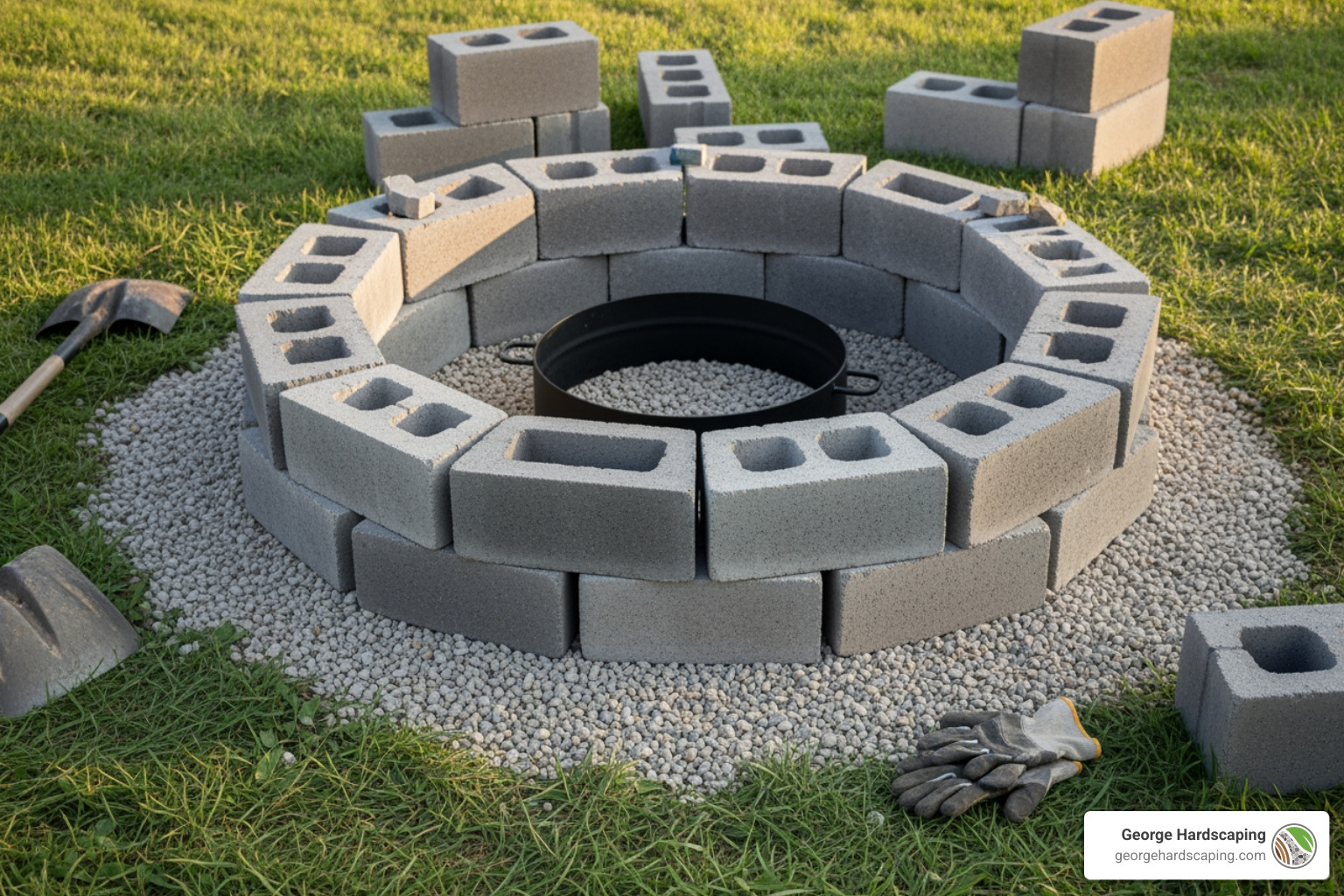
While we love creating custom, professionally installed fire features, we understand the immense satisfaction that comes from a well-executed DIY project. Building a fire pit with concrete blocks is an accessible and highly durable approach for the handy homeowner. When properly constructed with a fire-rated liner and a solid foundation, a block fire pit can last for decades, becoming a permanent fixture in your landscape.
Step 1: Gathering Your Materials and Tools
Thorough preparation is the key to a smooth building process. Before you dig the first shovel of dirt, gather all your necessary materials and tools to avoid frustrating interruptions and trips to the hardware store.
Materials Checklist:
- Concrete Blocks: Use trapezoidal (wedge-shaped) blocks for smooth, tight curves on round pits. For square or rectangular designs, standard rectangular blocks will work perfectly.
- Fire-Rated Liner: This is not optional; it is essential for safety and longevity. You must use either a heavy-gauge steel fire ring insert or build a separate inner wall using fire-rated bricks (firebrick) and refractory mortar. Standard concrete will spall and crack from direct exposure to high heat without this protective barrier.
- High-Heat Construction Adhesive: Choose a landscape block adhesive specifically rated for outdoor masonry and high-temperature applications to bond the courses of blocks together.
- Crushed Gravel and Sand: You’ll need several bags of all-purpose gravel or crushed stone for the foundation and a bag of paver sand for the leveling layer.
- Capstones: Choose flat flagstones, concrete pavers, or pre-cast concrete caps for a polished, functional top layer.
Tools Checklist:
- Shovel and Tamper (a hand tamper is crucial for a solid base)
- Level (a 4-foot level for the overall structure and a smaller torpedo level for individual blocks)
- Measuring Tape, String Line, and Stakes
- Caulking Gun (for applying the adhesive)
- Rubber Mallet (for tapping blocks into place without damaging them)
- Wheelbarrow
- Safety Gear: Heavy-duty gloves and safety glasses are a must.
Step 2: Site Preparation and Foundation
A rock-solid foundation is the secret to a long-lasting fire pit that won’t shift or settle over time. First, choose your location wisely, adhering to all safety guidelines (a minimum of 15-25 feet from structures for wood-burning pits). Double-check with your local Essex County, MA, municipality for specific setback requirements, as these can vary by town.
Mark your layout using a stake and string to draw a perfect circle, or use stakes and lines for a square. Excavate the area to a depth of 6-8 inches, removing all grass, roots, and topsoil. Fill the excavated area with 4-6 inches of gravel, spreading it evenly. Using a hand tamper, compact the gravel thoroughly. It’s best to do this in 2-inch layers, compacting each layer before adding the next. This process is critical to prevent future settling and cracking. Once compacted, add a 1-inch layer of sand and use a flat board to screed it perfectly level.
Lay the first course of blocks directly onto your prepared sand base. This course is the most important, so take your time. Use your level to ensure each block is level front-to-back and side-to-side, and that the entire ring is perfectly level. Use the rubber mallet to gently tap blocks into place, adjusting the sand underneath as needed.
Step 3: Building the Walls
As you build, stagger the joints of each subsequent course in a running bond pattern, just like a brick wall. This means the blocks on one layer should straddle the joints of the layer below it. This technique is essential for distributing weight and ensuring structural integrity. Before placing each new course, apply a generous bead of high-heat construction adhesive to the tops of the blocks below to bond the layers into a single, solid structure.
After the first or second course is in place, insert your fire-rated liner. If using a steel fire ring, center it inside the blocks, leaving a 1-inch air gap all around. This gap is crucial as it allows the metal to expand and contract with heat without pushing against and cracking your concrete blocks. If using firebrick, build a separate inner wall, “buttering” the bricks with high-heat refractory mortar. This protective layer is paramount for absorbing the intense heat and preventing thermal shock to your structural blocks. For more guidance, This Old House offers excellent guidance on how to build a fire pit safely.
Continue stacking and adhering courses to your desired height, typically 12-18 inches from the ground. This height is ideal for containing the fire safely while allowing guests to enjoy the warmth from a seated position. Check for level and plumb frequently as you build.
Step 4: Finishing and Curing
The final steps give your project a professional, finished look. Add a capstone layer using flagstone, pavers, or pre-cast concrete caps, securing them with the same high-heat adhesive. An overhang of 1-2 inches on both the inside and outside of the wall looks best and provides a useful ledge.
Now for the hardest part: waiting. Allow the construction adhesive to fully cure according to the manufacturer’s instructions, which can take anywhere from 24 to 72 hours, depending on temperature and humidity. Do not rush this step. Lighting a fire too soon can compromise the chemical bonds in the adhesive, weakening the entire structure. Once cured, you can fill the bottom of the pit with a few inches of lava rock or fire glass to aid drainage and heat distribution.
If this process seems daunting, or if you desire a more complex poured-concrete design, our team at George Hardscaping specializes in creating stunning custom outdoor fire pits that are engineered to last a lifetime.
Beyond the Build: Integrating and Maintaining Your Fire Pit
A fire pit is more than a structure—it’s the heart of an outdoor room. To truly maximize its impact, it must be thoughtfully integrated into the surrounding landscape. Proper integration and simple, consistent maintenance will transform it from a standalone feature into a cohesive part of your home’s living space, ensuring decades of safe, memorable enjoyment.
Integrating Your Fire Pit into the Landscape
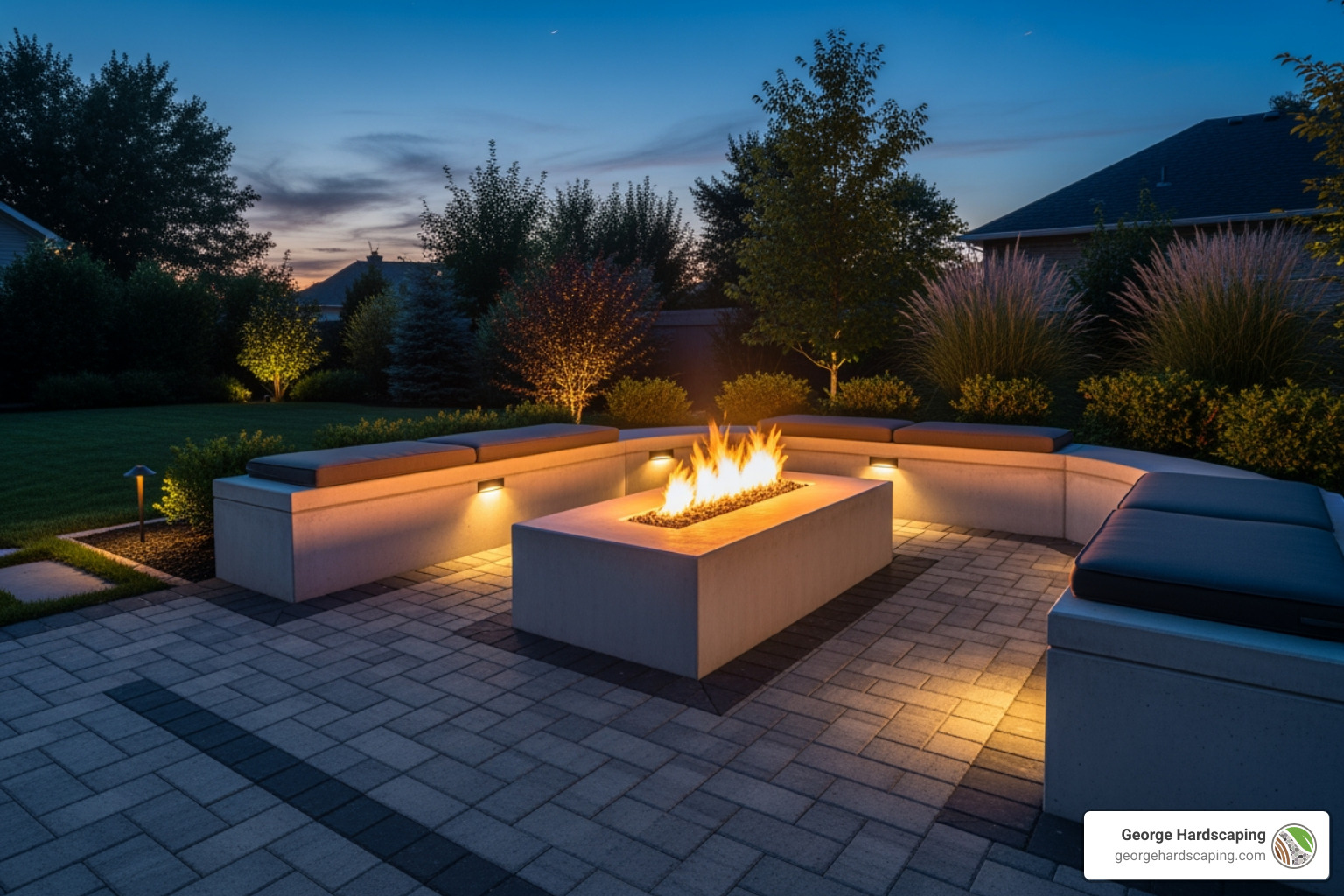
To make your fire pit feel like it truly belongs, surround it with complementary hardscaping and softscaping elements. A concrete fire pit design flows naturally from a well-designed paver patio, which acts as the non-combustible floor of your outdoor living room. Connecting the area to other parts of your yard with thoughtful walkways and stairs creates a natural, intuitive flow, guiding guests toward the warmth and light.
For the ultimate in comfort, style, and functionality, nothing beats built-in seating. Low landscape retaining walls can be designed to curve gracefully around your fire pit, providing permanent, comfortable seating that also helps to define the space and manage grade changes in your yard. This creates a unified, high-end look that movable chairs cannot replicate.
Complete the ambiance with a layered outdoor lighting scheme. Low-voltage landscape lighting is key to creating a magical atmosphere that encourages everyone to linger long after the sun goes down. Consider path lighting to ensure safe passage, subtle uplighting on nearby trees or architectural features, and string lights overhead for a festive, celebratory feel. Finally, soften the hardscape edges with plantings. Choose heat-tolerant, non-resinous plants and keep them a safe distance from the flames.
Once integrated, your fire pit becomes the hub for memorable gatherings. Host classic s’mores nights with the kids, enjoy sophisticated outdoor cocktail parties with friends, or have a cozy al fresco dinner for two by the firelight. A fire pit naturally draws people together, extending your outdoor season and turning ordinary evenings into cherished memories.
Maintenance and Care for Lasting Durability
One of the most significant advantages of concrete is its low-maintenance nature. However, a few simple habits will keep it looking pristine for years. For wood-burning pits, the main task is to remove cool ash after each use with a small shovel and metal bucket. This ensures good airflow for your next fire and prevents a messy, hardened buildup.
For all fire pits, a periodic inspection for minor cracks or shifts is wise, especially in the spring after a harsh New England winter. Using a weatherproof cover is the single easiest and most effective way to protect your investment. It shields the fire pit from rain, snow, and falling debris, preventing freeze-thaw damage, minimizing cleaning, and protecting gas burner components.
Additionally, applying a high-quality penetrating concrete sealer every one to three years is highly recommended. This creates an invisible protective barrier that repels water, prevents stains from spills or soot, and inhibits efflorescence (the chalky white residue that can sometimes appear on masonry). For gas pits, periodically clean the burner ports with a soft brush to ensure a clean, even flame and check gas connections for leaks.
For winterization, ensure the pit is completely clean and dry before covering it for the season. For gas pits, turn off the gas supply at the source. These simple habits will ensure your concrete fire pit design remains a beautiful, functional focal point for years to come.
Professional Concrete Fire Pit Design and Installation
While a DIY project is rewarding, professional installation offers a level of precision, safety, and aesthetic refinement that is difficult to replicate, especially for complex or custom designs. At George Hardscaping, our experienced masons ensure your fire pit is not just beautiful but also structurally sound, properly drained, and engineered to withstand decades of New England weather.
Our expertise is critical for safety. We are intimately familiar with local building codes and safety regulations across Essex County, and we are certified to handle the professional installation of natural gas lines. This is not just about convenience—it’s about the absolute safety of your home and family.
The craftsmanship we bring to our hardscaping and masonry services results in a high-end, seamless finish. We can create truly one-of-a-kind concrete fire pit designs, from polished GFRC fire tables to rustic, board-formed bowls that perfectly match your home’s unique style. When you’re ready for a fire pit that lifts your entire outdoor space, we’re here to make it happen.
Frequently Asked Questions about Concrete Fire Pits
Here are answers to some of the most common questions homeowners have when considering concrete fire pit designs for their properties.
How much does a concrete fire pit cost?
The cost of a concrete fire pit varies widely based on size, complexity, fuel type, finish, and whether it’s a DIY project or a professional installation.
- DIY Block Kits: This is the most budget-friendly option. Materials for a basic, wood-burning block fire pit typically cost between $300 and $800.
- Pre-Cast Fire Pits: Ready-made concrete or GFRC fire bowls and tables purchased from a retailer generally range from $1,500 to $5,000+, depending on size, brand, finish, and whether it includes a gas burner system.
- Custom-Built Pits: Professionally designed and installed fire pits are a permanent investment in your home. These projects, especially those involving poured concrete, natural gas lines, and integration with patios or seating walls, typically start around $5,000 and can go up to $15,000 or more for large, highly complex designs.
These are general estimates; every project is unique. We provide detailed, transparent quotes based on your specific design and site requirements.
Can a concrete fire pit crack from the heat?
Yes, a concrete fire pit can absolutely crack from heat, but only if it’s built incorrectly. Standard concrete is not designed to handle the direct, intense heat of a fire, which causes a phenomenon called thermal shock, leading to spalling and cracking. This problem is entirely preventable with proper construction methods.
The non-negotiable solution is to install a protective barrier between the flames and the structural concrete. This is achieved by using either a heavy-gauge steel fire ring insert or an inner layer of fire-rated bricks (firebrick) laid with refractory mortar. These components are designed to absorb and withstand the direct heat, protecting the surrounding concrete structure from damage. Any reputable builder, including our team at George Hardscaping, considers this an essential, non-optional part of safe and durable construction.
Are concrete fire pits weatherproof?
Absolutely. Concrete’s exceptional weather resistance is a primary reason for its popularity in demanding climates like New England. High-quality, properly mixed and cured concrete is designed to stand up to rain, snow, ice, and intense sun without rusting, rotting, or warping like other materials.
Proper construction is key to maximizing this durability. A compacted gravel base is critical as it ensures good drainage, preventing water from pooling and causing damage during freeze-thaw cycles. To further improve weather resistance and longevity, we strongly recommend sealing the concrete every few years with a quality penetrating sealer and using a weatherproof cover when the pit is not in use. These simple steps will significantly extend its life and keep it looking new.
Can I put a concrete fire pit on a wooden or composite deck?
This is a common but critical question. The answer is yes, but with extreme caution and specific products. You cannot place a standard, heavy concrete block fire pit on a deck due to its immense weight and the risk of heat transfer. However, lighter-weight Glass Fiber Reinforced Concrete (GFRC) fire tables are often designed for this purpose.
It is absolutely essential to place a heat-rated barrier or insulation pad beneath the fire pit to protect the deck surface from heat damage. Always check the fire pit manufacturer’s specifications for deck installation and consult with a professional to ensure your deck’s structure can support the weight. For safety reasons, only gas-fueled fire pits should be considered for deck installations; wood-burning pits are too unpredictable.
What is GFRC and is it better than standard concrete?
GFRC stands for Glass Fiber Reinforced Concrete. It’s a composite material made of high-strength cement, fine aggregates, and alkali-resistant glass fibers. These fibers act like rebar in traditional concrete but on a microscopic level, creating a material that is incredibly strong yet significantly lighter and less brittle. For fire pits, GFRC allows for the creation of thinner, more complex shapes and designs that would be difficult with traditional poured concrete. It is not inherently ‘better,’ but it is the superior choice for applications where weight is a concern, such as on decks, rooftops, or balconies. For ground-level, custom-poured installations, traditional concrete remains an excellent and cost-effective choice.
Where can consumers find and purchase concrete fire pits?
You have several options for finding the perfect concrete fire pit in Essex County, MA.
- Online Retailers & Specialty Stores: Offer a wide selection of pre-cast GFRC fire pits and tables in various styles.
- Home Improvement Stores: Carry a more limited selection of basic fire pits and materials for DIY block kits.
- Local Hardscaping Contractors: For custom work, guaranteed safety, and maximum durability, local professionals like George Hardscaping are your best choice. We design and build fire pits that are custom-fit to your space, handle all local codes and gas line installations, and can seamlessly integrate the feature with a new paver patio or retaining walls.
Working with a local contractor ensures you receive a premium, long-lasting product that perfectly suits your vision. If you’re ready to explore custom possibilities, we invite you to view our gallery of finished fire pit projects for inspiration.
Your Dream Outdoor Space Awaits
There’s something uniquely magical about gathering around a crackling fire, sharing stories and laughter with family and friends under the stars. A concrete fire pit does more than just add a feature to your yard; it transforms it, creating a year-round destination for relaxation, connection, and making memories. From choosing between a sleek modern fire table that becomes the centerpiece of your patio parties or a rustic circular bowl for quiet, cozy evenings, every design choice helps create a feature that is both deeply personal and highly functional.
Throughout this guide, we’ve explored why concrete fire pit designs are an unparalleled choice for homeowners in Essex County, MA, and beyond. The material’s exceptional durability against our harsh weather, its limitless design versatility, and its simple ability to extend the outdoor season make it a wise and lasting investment. More than that, a fire pit becomes the true heart of your outdoor living space—the place where everyone naturally wants to be, and where the best moments are made.
Ready to lift your outdoor living space?
While a DIY project can be a rewarding weekend endeavor, there is tremendous value in the expertise, safety, and refined craftsmanship of a professional installation. At George Hardscaping, our skilled masons specialize in creating custom outdoor fire pits that are engineered to last and designed to seamlessly integrate with your complete outdoor living area. We handle every critical detail, from navigating local building codes and ensuring safe, certified gas line installation to achieving a high-end, architectural finish that looks like it was always meant to be part of your home.
We proudly serve communities throughout the North Shore of Massachusetts, including Beverly, Boxford, Danvers, Essex, Georgetown, Gloucester, Ipswich, Lynnfield, Manchester-by-the-Sea, Marblehead, Middleton, Newburyport, North Reading, Peabody, Rockport, Rowley, Salem, Swampscott, Topsfield, and Wenham. Whether you envision a standalone fire bowl, a functional fire table for entertaining, or a completely custom design integrated with new paver patios and landscape retaining walls, we bring your vision to life with an unwavering commitment to quality and safety.
Take the first step toward your dream backyard—request your free estimate today!
Your perfect outdoor gathering space is closer than you think. Let’s work together to create something extraordinary that your family will enjoy for generations.
