
Outdoor Stone Stairs Ideas: 10 Stunning Designs 2025
Transform Your Outdoor Space with Stone Steps
Outdoor stone stairs ideas can dramatically improve both the beauty and functionality of your landscape. If you’re looking to create stunning vertical transitions in your yard, here are the most popular options:
- Natural stone slab steps – Durable flagstone or bluestone slabs for a timeless look
- Boulder steps – Rustic, natural appearance perfect for sloped terrain
- Formal cut stone staircases – Neat, uniform appearance for grand entrances
- Stacked stone risers – Versatile option that works with various landscape styles
- Stone steps with integrated lighting – Combines safety and ambiance
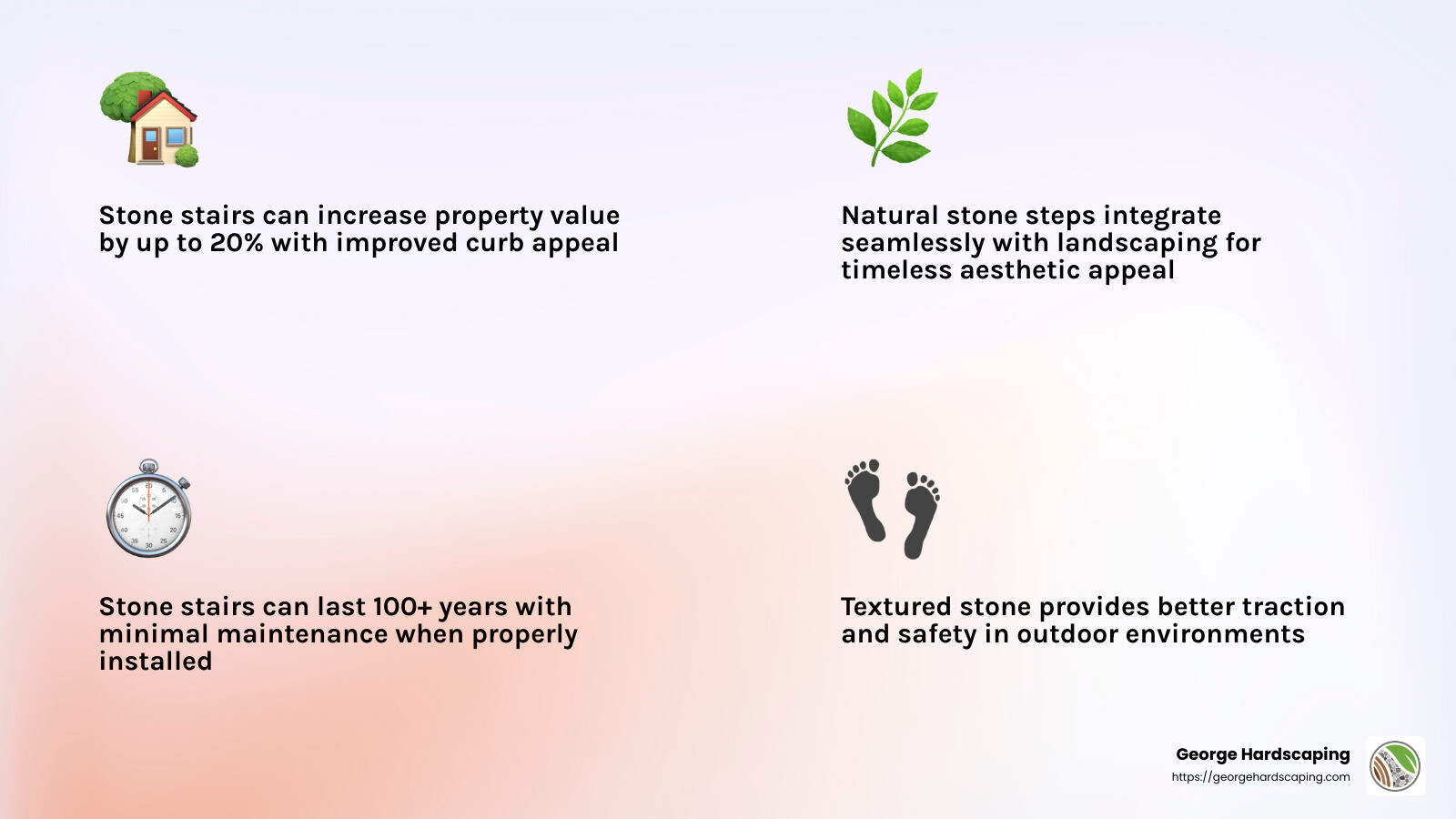
Stone steps do more than just connect different levels of your property – they create focal points, improve safety, and can increase your home’s value by up to 20% according to landscape design statistics.
The appeal of stone steps lies in their perfect blend of beauty and practicality. Unlike wooden steps that typically last 15-20 years, properly installed stone stairs can endure for 50+ years with minimal maintenance. Their naturally textured surfaces also provide excellent traction, reducing slip hazards by up to 65% compared to smooth concrete alternatives.
“Stone steps are often thought of as a practical feature, but they are so much more,” notes one landscape design expert. They transform challenging slopes into stunning, accessible outdoor spaces that invite exploration and enjoyment.
Whether you’re looking to create a grand entrance, steer a steep hillside, or simply add character to your garden, stone steps offer a timeless solution that grows more beautiful with age.
The Benefits of Integrating Stone Steps into Your Landscape
When you’re looking to improve your outdoor area, few options pack a punch quite like stone steps. Here at George Hardscaping, we’ve helped countless homeowners across Essex County, MA transform their yards with beautifully designed outdoor stairways. And let’s just say—the results are pretty amazing.
One of the greatest advantages of stone steps is simply how long they last. Unlike wooden steps, which typically need replacing after 15-20 years, natural stone steps can easily last more than 50 years if they’re installed and cared for properly. Choosing stone is a bit like picking a wonderful bottle of wine—it gets even better with age (and doesn’t leave splinters in your toes).
Safety is another big reason homeowners love these steps. Thanks to their naturally textured, slip-resistant surfaces, stone stairs significantly reduce the risk of slipping—up to 65% fewer slip-and-fall accidents compared to smooth concrete steps. This extra grip is especially valuable here on the North Shore, where our weather can swing from rainy to snowy to sunny in a single afternoon (and no, that’s not an exaggeration).
Beyond their practicality, outdoor stone steps add irresistible charm and beauty to your property. With a wide selection of colors, textures, and styles available, you can easily find something that perfectly complements your home’s architecture—whether it’s a classic colonial in Salem, a charming historic home in Marblehead, or a sleek modern home in Beverly. The natural beauty of stone effortlessly creates graceful transitions between different areas and elevations in your yard.
And here’s something homeowners especially appreciate: stone steps can actually boost your home’s value. According to landscape industry data, thoughtfully designed stone steps integrated into your landscaping can increase your property’s value by as much as 20%. So, while you’re stepping up your yard’s style, you’re also building equity—talk about a win-win!
It’s no surprise then, that homeowners rank stone step projects among their favorite outdoor upgrades. Surveys show a 76% homeowner satisfaction rate for outdoor stone stairs—one of the highest scores among all landscaping improvements. As one Ipswich client recently shared with us, “Our stone steps didn’t just fix the slope in our backyard—they became everyone’s favorite feature. Neighbors keep asking how they can get some of their own!”
Ready to start exploring some inspiring outdoor stone stairs ideas for your yard? Keep reading—we’ve got plenty of stunning designs and tips to share.
Choosing the Right Stone Material for Your Outdoor Stairs
Deciding on the best stone material for your outdoor stairs is one of the most important steps (pun intended!) in your landscaping project. With so many beautiful stones available, it helps to think about your home’s style, climate conditions, and how you’ll be using your stairs. Here in Essex County, MA, we experience everything from sunny summer days to icy winter storms, so you’ll want something that’s both eye-catching and durable.
Popular Stone Types for Outdoor Steps
Bluestone is a North Shore classic and for good reason. Its distinct blue-gray color blends effortlessly with local architecture, from historic colonials in Salem to charming cottages in Marblehead. Bluestone is exceptionally durable, offering excellent slip-resistance—ideal for our rainy springs and snowy winters. Pricing typically ranges from $15 to $45 per square foot, depending on factors like thickness and finish.
If longevity tops your wish list, you can’t beat granite. This ultra-durable stone is virtually weatherproof, standing strong against harsh winters and busy foot traffic. Available in various shades from soft gray to rich black, granite stairs add an instant impression of quality and permanence to your landscape. Granite generally costs between $20 and $60 per square foot, reflecting its premium quality.
For homeowners seeking warmth and elegance, limestone offers a cozy, inviting appearance with its neutral, earthy tones. While it’s slightly softer than granite, properly sealed limestone steps can comfortably handle Essex County’s climate with regular care. Limestone prices usually range from $20 to $60 per square foot.
If your style is a bit more rustic, consider sandstone. Its warm, natural color palette—think soft reds, golden tans, and earthy browns—makes it ideal for informal garden pathways or Mediterranean-inspired outdoor spaces. Sandstone is budget-friendly, ranging from $10 to $40 per square foot, giving you both charm and affordability.
Looking for something truly unique with a bit of character? Fieldstone steps offer a naturally irregular look that’s perfect for informal gardens and winding paths. While working with fieldstone can be a bit more challenging, the result is always charmingly distinctive. Plus, its textured surface provides excellent traction. Prices typically fall between $10 and $30 per square foot.
Here’s a quick overview to help you compare:
| Stone Type | Appearance | Durability | Slip Resistance | Average Cost Range |
|---|---|---|---|---|
| Bluestone | Blue-gray, subtle texture | Excellent | Very good | $15-$45/sq ft |
| Granite | Various colors, speckled | Superior | Good | $20-$60/sq ft |
| Limestone | Warm neutral tones | Good | Moderate | $20-$60/sq ft |
| Sandstone | Earthy, warm colors | Good | Good | $10-$40/sq ft |
| Fieldstone | Natural, irregular | Very good | Excellent | $10-$30/sq ft |
Note: These are average costs based on internet data and not actual costs for George Hardscaping. Actual project costs depend on your specific materials, project complexity, site conditions, and other considerations.
Factors to Consider When Choosing Stone
At George Hardscaping, we love helping homeowners across Essex County choose the perfect stone for their outdoor stairs. When you’re making this important choice, make sure to consider the following factors:
Climate Compatibility: Our New England weather puts materials through a tough test—freeze-thaw cycles, ice, rain, and high humidity. Stones like granite and bluestone hold up remarkably well in our local climate and require less frequent maintenance.
Architectural Harmony: Your outdoor stone stairs should complement your home’s existing style. Traditional homes in communities like Newburyport and Beverly often pair beautifully with classic bluestone or granite. Contemporary houses in Manchester-by-the-Sea or Swampscott might prefer the clean, modern look of limestone or sandstone.
Usage Patterns: Think about who will be using the stairs and how often. High-traffic entries or main pathways benefit from ultra-durable options like granite and bluestone. Softer stone types may be better suited for decorative or less-traveled routes.
Safety Needs: Slip-resistance is critical for stairs used by elderly family members, children, or in shaded areas prone to moss and moisture (common in wooded neighborhoods in Boxford or Topsfield). Bluestone and fieldstone typically offer excellent traction.
Maintenance Preferences: Some stones need regular sealing and cleaning to look their best. If you’d rather spend more time relaxing than scrubbing, consider lower-maintenance options like granite.
At George Hardscaping, we only source materials from trusted quarries and suppliers, ensuring your stairs will stand the test of time. We’re always happy to show you samples, explain maintenance needs, and help you choose the perfect stone to bring your outdoor stone stairs ideas to life.
Ready to discuss your project? Contact us today—we can’t wait to help you create outdoor stairs you’ll love for decades!
10 Inspiring Outdoor Stone Stairs Ideas

Are you wondering how you can lift your landscape and add some serious charm to your outdoor space? You’re in luck! We’ve gathered ten beautiful and practical outdoor stone stairs ideas to inspire your next landscaping project. Whether your style is rustic, modern, or somewhere in between, you’ll find plenty of creative options to suit your property.
Let’s explore these stunning design ideas—who knows, your dream outdoor staircase might be just a scroll away!
1. Rustic Garden Pathway Steps
Imagine strolling along a charming garden path lined with natural stone slabs. Their irregular shapes blend seamlessly into cottage-style gardens, creating a warm, inviting feel. Using flagstone or fieldstone, these steps offer a relaxed, countryside aesthetic that’s both practical and beautiful.
2. Grand Entrance Stone Staircase
If you’re looking to create a striking first impression, consider a formal grand entrance stone staircase. With clean, symmetrical lines and precisely cut stones—such as granite or bluestone—this style adds elegance and sophistication to your home’s entryway. It’s the kind of entrance that makes visitors say “wow!” before even stepping through your front door.
3. Modern Minimalist Stone Steps
Sleek and contemporary, modern minimalist stone steps use geometric shapes and clean-cut lines to complement trendy, modern homes. Bluestone slabs or limestone are excellent choices here. The minimalist approach keeps your space looking open and uncluttered—perfect if you’re aiming for a chic, streamlined look.
4. Natural Rock Steps for Sloped Terrain
Got a slope that’s challenging to steer? Natural rock steps using boulders or large, irregular stones are a fantastic solution. Not only do they help control erosion, but their rugged beauty also integrates effortlessly with your landscape, giving it an organic and natural feel.
5. Multi-Level Patio Stone Stairs
Do you love entertaining outdoors? Multi-level patio stone stairs connect different areas of your yard, creating smooth transitions between your patio, lawn, garden, and other spaces. Whether hosting a family barbecue or simply relaxing outside, these stone stairs improve functionality and ease of movement through your outdoor areas.
6. Stone Steps with Integrated Planters
Why not combine function and flair with stone steps featuring integrated planters? This clever design allows greenery and flowers to thrive right in your staircase, creating a lush, vibrant look. It’s space-efficient and visually appealing—perfect for homeowners looking to maximize every inch of their outdoor oasis.
7. Floating Outdoor Stone Stairs Ideas
One of the most stylish trends today is the illusion of floating outdoor stone stairs. These contemporary designs use hidden supports, giving the appearance of steps suspended in mid-air. If you’re looking for something unique and eye-catching, floating steps will surely impress your guests (and make you feel just a little bit magical).
8. Curved Stone Staircase Designs
For a softer, more organic aesthetic, explore curved stone staircase designs. These stairs gently wind through your landscape, creating visual interest and a sense of natural movement. Sandstone or limestone are great options, enhancing the warmth and charm of the curves.
9. Stone Steps with Lighting Features
Safety is always important, and stone steps with integrated lighting features are an excellent way to boost visibility and ambiance in one go. LED or solar lights built into your stone stairs illuminate the way in the evenings, making your outdoor spaces safer and more inviting after sunset.
10. Outdoor Stone Steps with Water Features
Bring a sense of tranquility and luxury to your landscape by combining your outdoor stone steps with water features, such as small waterfalls, fountains, or ponds. Imagine relaxing outdoors to the calming sound of gently flowing water, all beautifully integrated with your stone staircase.
Feeling inspired yet? At George Hardscaping, we’ve helped countless homeowners on the North Shore bring their outdoor stone stairs ideas to life. We’re ready to do the same for you.
If you’re ready to improve your landscape with beautiful stone stairs, contact George Hardscaping today—we’d love to help you create your dream outdoor space!
1. Rustic Garden Pathway Steps
Rustic garden pathway steps offer an inviting and charming way to explore your outdoor space. Using irregular stone slabs with naturally textured edges, these steps bring a relaxed, organic feel that fits beautifully into informal gardens and cottage-style landscapes.
At George Hardscaping, we’ve crafted rustic stone steps throughout Essex County, from cozy backyards in Beverly to seaside gardens in Rockport. Flagstone and fieldstone are popular choices, providing varied colors and natural shapes that look like they’ve always belonged there. When thoughtfully placed, these stones blend harmoniously with native plants, flowers, and greenery, creating an appealingly wild, yet welcoming pathway.
One memorable project of ours involved a homeowner in Rockport who faced a challenging, sloped backyard. By carefully following the natural contours of the land, we installed a rustic stone pathway using irregular slabs. To add even more charm, we incorporated native coastal plantings like creeping thyme and moss between the stones. The result was a pathway that appeared to have been there forever, beautifully changing an awkward and unused slope into a favorite garden feature.
For that extra touch of charm, we recommend allowing small ground covers—such as creeping thyme, moss, or even low-growing sedums—to grow between the stones. This softens the edges and helps your rustic pathway steps blend seamlessly into the surrounding landscape. It’s especially effective here on the North Shore, where natural stone and lush greenery come together so effortlessly.
If you’re exploring outdoor stone stairs ideas and love the casual charm of a rustic garden path, our team at George Hardscaping would be thrilled to help bring your vision to life.
2. Grand Entrance Stone Staircase
Nothing makes a statement quite like a grand entrance stone staircase. These formal, symmetrical designs create an impressive approach to your home, elevating its curb appeal and creating a genuine sense of arrival that wows visitors from their first glance.
For homes in the more established neighborhoods of Beverly, Marblehead, and Swampscott, we often design grand entrance staircases using cut granite or bluestone. These materials aren’t just beautiful—they offer the precision and refinement that formal designs require, along with exceptional durability for this high-traffic area. After all, your front steps need to withstand not just the elements, but years of daily use!
A well-designed entrance staircase should feel like a natural extension of your home’s character. For colonial and traditional homes, we typically recommend bullnose steps with clean lines and classic proportions that honor architectural heritage. For more contemporary homes, we can create sleeker designs with minimal ornamentation that complement modern aesthetics without feeling cold or uninviting.
I still remember one of our most rewarding projects—creating a sweeping entrance staircase for a historic home in Salem. We used reclaimed granite to match the period of the house, carefully selecting pieces that looked like they could have been there for centuries. We incorporated subtle lighting into the risers for both safety and dramatic effect after dark. The homeowners told us it completely transformed how they felt coming home each day.
Grand entrance staircases truly shine when complemented by thoughtful surrounding elements. Flanking planters filled with seasonal blooms, decorative balustrades, or low walls that frame the steps can guide visitors to your door while adding personality. These elements don’t just improve the visual impact—they provide practical benefits like additional seating during summer gatherings or improved security and definition for your entryway.
The symmetry of a grand entrance staircase creates a sense of order and intention that makes your home feel more substantial and welcoming. It’s like rolling out the red carpet for yourself and your guests every single day. And while these staircases certainly make a statement, we make sure they never overwhelm your home’s architecture but rather improve and lift it.
3. Modern Minimalist Stone Steps
If you’re drawn to clean lines and contemporary aesthetics, modern minimalist stone steps might be exactly what your outdoor space needs. These designs beautifully complement the sleek architecture often found in communities across Essex County, such as Lynnfield, North Reading, and Peabody.
Modern minimalist steps emphasize simplicity, precision, and elegance. Instead of ornate patterns or irregular shapes, these steps typically feature large, rectangular slabs of stone with crisp, straight edges. Popular materials for modern designs include thermal bluestone, honed granite, and smooth limestone, each offering subtle textures that improve a modern look without overwhelming your landscape.
One of our favorite recent projects was installing floating stone steps for a homeowner in Lynnfield. This contemporary style creates an eye-catching illusion that the steps are magically suspended, bringing a sense of sophistication and openness to the yard. Despite the heavy weight of the stone, careful hidden supports give these steps their impressive appearance of floating effortlessly. (We promise—no magic tricks were used, just good old-fashioned craftsmanship!)
Spacing is especially important in minimalist step designs. At George Hardscaping, we carefully plan the rise and run of each step to ensure comfortable and natural movement, while keeping a cohesive and harmonious look throughout. Precise gaps and consistent sizes create a tidy, balanced feel that perfectly aligns with modern architecture.
Lighting is another element that pairs beautifully with modern stone stairs. Integrated LED strip lighting beneath the steps or along the edges not only highlights their sleek lines but also increases nighttime visibility and safety. Many of our clients in Peabody and North Reading have told us that adding subtle lighting to their outdoor stairs was one of the best decisions they made for both beauty and practicality.
If you’re considering a contemporary upgrade, these outdoor stone stairs ideas offer a stylish, functional way to improve your landscape, making your yard feel fresh, inviting, and thoroughly modern.
4. Natural Rock Steps for Sloped Terrain
If your property has a challenging slope or hillside, natural rock steps could be your landscape’s new best friend. Here in Essex County, we’re no strangers to uneven ground, tricky hills, and rocky terrains. Rather than fighting against these natural features, we at George Hardscaping help you accept them—turning a landscaping headache into an eye-catching feature that looks like Mother Nature herself laid it out (with just a little help from us!).
Using larger, weathered boulders and flat stones arranged in an organic pattern, natural rock steps create a pathway that blends beautifully into your property’s natural contours. Unlike formal staircases, these steps offer a rustic charm that complements homes and gardens from Topsfield and Boxford to Georgetown.
One of the biggest benefits we’ve seen when installing these natural rock steps is their incredible ability to tackle erosion control. Steep slopes can quickly become unstable—and nobody wants their garden sliding away after a heavy rainstorm! By carefully placing large, stable boulders, we not only form solid, safe steps but also anchor the hillside in place, slowing water runoff and preserving your soil.
We recently completed a memorable project for a homeowner in Essex, whose property sloped sharply down to the water. The family needed safe, reliable access—but didn’t want to sacrifice the natural beauty of their waterfront setting. Our team hand-selected weathered granite boulders with flat, stable upper surfaces, carefully setting each stone into the hillside. Rather than looking “installed,” the finished staircase seemed as if it had grown naturally from the land itself.
People often assume that because these steps look natural and rustic, they’re easy to throw together. But in reality, selecting and arranging these stones takes careful planning and a sharp eye for detail. Every stone needs to provide solid footing, with spacing and positioning that feels comfortable and intuitive when walking.
Another great touch we’ve found clients love is incorporating small planting pockets between and around the stones. Native plants, grasses, or mosses fill in these gaps, further blending your steps into their surroundings. Before long, your new staircase looks like a charming woodland path that’s been there forever.
If you’re looking for inspiring outdoor stone stairs ideas that add rustic charm and practical hillside access, natural rock steps could be the ideal solution. They don’t just solve a landscaping challenge—they transform it into one of your property’s most beautiful and inviting features.
5. Multi-Level Patio Stone Stairs
If your backyard has you feeling like you’re stuck on a hillside obstacle course, multi-level patio stone stairs could be your landscape’s new best friend. Rather than fighting against a slope, these thoughtfully designed stone steps transform challenging terrain into inviting, functional spaces you can actually enjoy.
At George Hardscaping, we’ve helped many Essex County homeowners turn steep or uneven yards into practical, beautiful outdoor living areas. Multi-level patios connected by stone stairs not only solve the problem of elevation changes but also create distinct zones that expand your usable outdoor space.
One of our favorite projects was for a family in Manchester-by-the-Sea who wanted more room to entertain and relax outdoors. Previously, their sloped yard felt disconnected and tricky to steer. We designed a stunning outdoor area with three tiered patios: an upper dining terrace right by the home, a cozy mid-level lounge complete with a fire pit, and a relaxing lower garden patio surrounded by lush plantings. Bluestone stairs seamlessly connected each level, making it easy for family and guests to move naturally between spaces.
“What was once just an awkward slope became the heart of our outdoor entertaining,” the homeowner shared. “Each patio area has its own purpose now, and the stone steps cleverly unify everything.”
When designing outdoor stone stairs ideas for multi-level patios, we pay close attention to how each space interacts. The stairs themselves become more than just practical walkways—they’re integral to the overall design. Often, we’ll use the same stone materials for both your patio surfaces and steps, creating a cohesive look. In some cases, using a contrasting stone for the steps can highlight them beautifully, turning your stairs into a focal point.
We also carefully scale each patio level and stairway for maximum comfort and usability. Outdoor steps typically have about a 6-7 inch rise and at least a 12-inch tread depth. Of course, we adjust these dimensions to your specific site’s conditions, your preferences, and local Essex County safety guidelines.
With the right design, multi-level patio stone stairs don’t just solve a problem—they turn your tricky backyard slope into an outdoor oasis you’ll love for years to come.
6. Stone Steps with Integrated Planters
Stone steps with integrated planters are a fantastic way to combine beauty, practicality, and creativity into one stunning outdoor feature. If you want the hardscaping and landscaping elements of your yard to seamlessly blend together, this design option offers an ideal solution.
At George Hardscaping, we’ve brought this concept to life in various Essex County properties—from formal entrances in Marblehead to charming backyard retreats in Salem. By thoughtfully integrating planting areas right into your stone staircase, you get the best of both worlds: sturdy, functional steps and lush, eye-catching greenery.
One memorable project we completed in Danvers featured stone stairs with built-in planters arranged in alternating patterns. This created a beautiful rhythm of stone and foliage that transformed the home’s previously plain entryway into a warm, inviting path. Visitors couldn’t help but comment on the picturesque approach—it truly liftd the home’s curb appeal.
When designing these integrated planters, it’s important to consider the unique microclimate produced by the stone. Natural stone tends to retain heat, so selecting the right plants is crucial. For sunny south-facing steps, we typically suggest drought-tolerant species like sedums, lavender, or small ornamental grasses. These plants not only tolerate heat but thrive in it, providing beautiful colors and textures without demanding extensive care.
If your steps happen to be in a shadier spot, don’t worry—we have plenty of suitable plant recommendations. Shade-loving plants like ferns, hostas, or native woodland wildflowers often thrive in these cooler spots, creating an enchanting, tranquil feel as you ascend or descend the stairs.
Integrated planters aren’t just about looks—although they certainly excel in that department. They also provide practical benefits, particularly in areas with drainage challenges. Strategically placed planting areas can help absorb excess water runoff, preventing pooling water from damaging your steps or causing erosion. This is especially valuable during Essex County’s rainy springs and snowy winters, reducing ice buildup and keeping your stairs safer year-round.
Of course, maintenance is an essential aspect of any landscaping plan. When we design stone steps with integrated planters, we ensure they’re easy to care for. Proper drainage systems are built into each planter, protecting both the stone structure and your precious plants. Choosing low-maintenance plants and planning for accessibility means you’ll spend more time enjoying your beautiful outdoor space and less time tending to it.
Whether you have limited yard space in downtown Newburyport or a spacious suburban lot in Topsfield, stone steps with integrated planters offer an efficient, neat solution that improves every inch of your landscape. It’s yet another wonderful entry in our list of inspiring outdoor stone stairs ideas—a design feature you’ll enjoy for years to come.
7. Floating Outdoor Stone Stairs Ideas
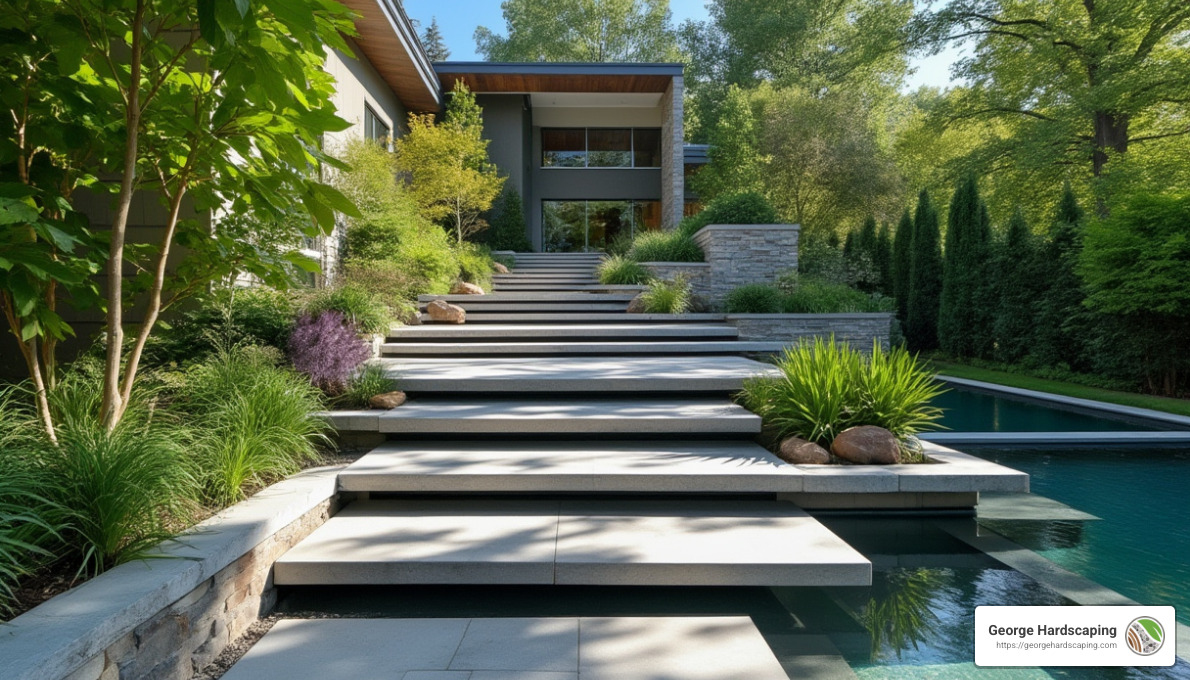
If you’re looking to bring a touch of drama and modern elegance to your yard, floating stone steps might be just what your landscape needs. These striking stone staircases give the illusion of massive stone slabs floating effortlessly above the ground, creating undeniable visual interest and contemporary charm.
At first glance, floating stone steps seem almost magical. But trust us—it’s less about wizardry and more about careful design and quality engineering. These impressive stairs are supported by hidden steel or concrete structures anchored securely into the earth. This invisible support allows the weighty stone slabs to appear suspended in mid-air, providing that coveted “floating” effect.
We recently had the pleasure of installing a beautiful floating outdoor staircase for homeowners in Swampscott. They wanted a seamless transition from their main patio area to an liftd meditation garden. Using sleek granite slabs, we created steps that appeared to hover effortlessly. We improved this illusion with subtle, integrated LED lighting beneath each tread. The result was stunning—especially at night, when the softly illuminated steps seem to glow, guiding visitors safely and stylishly through the landscape.
Floating steps aren’t just for grand, formal designs. They can also be organized creatively in a more organic pattern, guiding visitors along winding pathways or up gentle slopes. Whether arranged in precise straight lines or playful curves, floating stone stairs make a bold statement in any outdoor space.
Of course, great looks aren’t enough on their own—safety always comes first. Each step we install is fully engineered to support far more weight than it’ll ever need to bear. At George Hardscaping, we ensure consistent rise heights and tread depths so that the staircase is comfortable, safe, and enjoyable to use.
For homeowners on the North Shore looking for fresh and innovative outdoor stone stairs ideas, floating stone steps are an outstanding choice. They offer the perfect blend of contemporary aesthetics, reliable function, and just a hint of architectural magic.
8. Curved Stone Staircase Designs
Curved stone staircases bring a gentle elegance and inviting flow to your landscape. Unlike standard straight steps, these graceful designs create a sense of movement and findy, encouraging visitors to slow down and enjoy the journey. Plus, they just look gorgeous!
Here in Essex County, many homes feature naturally rolling terrain. Rather than fighting the landscape, a thoughtfully designed curved stone staircase accepts the natural slopes and contours, turning tricky slopes into charming, accessible features.
Recently, we completed a curved staircase project for a wonderful family in Ipswich. Their property had a steep hillside connecting their backyard to the waterfront below. Instead of installing straight steps that would feel stiff and rigid, we designed a gently winding stone staircase that flowed gracefully down the slope.
As you climb or descend curved steps, each corner reveals a new angle or view of your outdoor space—adding a bit of playful surprise. It’s like creating a mini-trip right in your yard!
Creating these flowing designs does require special care and expertise. Each stone tread must be precisely measured, cut, and positioned to maintain a comfortable, consistent stepping experience. That’s why we usually recommend durable, easily-cut materials like bluestone or granite for curved staircases. With these materials, we can ensure each step feels just right underfoot, while holding up beautifully over time.
Curved stone staircases also pair perfectly with complementary landscape elements. In a recent project for a Gloucester homeowner, we improved their curved staircase design by adding matching curved stone retaining walls along the sides. The walls echoed the staircase’s gentle curves, creating a look that felt seamless, neat, and intentional. Soft plantings tucked along the edges further complemented the stonework, giving the steps a warm, welcoming feel.
Beyond their beauty, curved staircases offer practical advantages too. When space is limited or slopes are steep, curves or switchbacks can help you steer elevation changes more comfortably, without needing extensive excavation. By winding gently rather than rising sharply, the stairs become safer and easier for young children, older adults, or anyone who appreciates a more relaxed pace.
If you’re exploring outdoor stone stairs ideas for your own property, consider the charm and ease that curved designs can bring. At George Hardscaping, we’re always excited to help homeowners across Essex County create outdoor spaces that feel beautiful, functional, and uniquely theirs.
9. Stone Steps with Lighting Features
When it comes to elevating your landscape design, there’s nothing quite as inviting as stone steps illuminated by thoughtfully placed lighting. Adding lights to your outdoor stone stairs ideas doesn’t just boost the charm and character of your space—it also dramatically improves safety after the sun sets.
There are several attractive ways to integrate lighting into your stone steps, each offering a different look and feel. For a classic, understated style, small recessed lights can be set neatly into the risers themselves. These fixtures cast a warm, welcoming glow directly across each stair tread, clearly marking the path ahead without overpowering the natural beauty of the stone.
At George Hardscaping, we’ve had fantastic results with this recessed approach. In a recent project at a historic Salem home, we installed subtle bronze fixtures in weathered bluestone risers. The gentle illumination beautifully complemented the home’s traditional architecture, creating a safe, inviting pathway that felt completely natural—not a spotlight in sight!
For those who love a contemporary look, sleek LED strip lighting offers a sophisticated, modern aesthetic. Placed discreetly under the lip of each stone stair tread, these strips create the magical illusion that the steps are softly floating on planes of light. We recently completed a project in Marblehead featuring floating granite steps highlighted by LED strips, and the effect was stunning—especially impressive when viewed from inside the home.
If you’re looking for something even simpler, small pathway lights installed along the sides of your stone steps provide soft, indirect illumination. This approach gently defines the stairway without the need for extensive modifications to the steps themselves. It’s an excellent option if you’re retrofitting existing stairs or prefer a subtle, natural ambiance.
Another fantastic solution gaining popularity on the North Shore is solar-powered step lighting. Solar lighting has come a long way in recent years, providing reliable illumination without the hassle of wiring. If your staircase is located further out in your yard or garden—perhaps connecting separate outdoor spaces—solar lights can be a convenient, eco-friendly way to keep the path visible and safe.
Whichever lighting method you choose, well-lit stone steps create depth and dimension in your outdoor landscape at night. They help define outdoor “rooms,” guiding guests safely from one space to another while highlighting the beauty and craftsmanship of your stonework.
Whether your style is traditional, contemporary, or somewhere in between, incorporating lighting into your stone stairs will lift your outdoor space, making it more inviting, safe, and enjoyable long after sunset.
10. Outdoor Stone Steps with Water Features
If there’s one combination that instantly transforms a good landscape into something truly special, it’s pairing outdoor stone stairs ideas with water features. The calming sound of running water, the natural beauty of stone, and the inviting pathways created by beautiful steps all come together to create a magical, relaxing outdoor environment.
At George Hardscaping, we’ve found that adding water to your stone stair design can be done in many imaginative ways. Imagine walking beside a gently flowing stream that runs parallel to your staircase, with quaint stone bridges guiding you across at graceful intervals. This kind of design turns your backyard steps into a charming journey rather than just a practical feature.
For a dramatic yet peaceful look, cascading waterfalls alongside your stone steps are ideal. Picture small waterfalls gently tumbling down the slope beside the stairs, creating soothing sounds as you step from level to level. Not only does this provide a lovely visual effect, but it can also naturally manage drainage and runoff in tricky sloped landscapes, such as those found throughout Essex County.
Sometimes, a simpler approach is equally charming. A small fountain or water basin strategically positioned at the top or bottom of your steps can become a delightful destination feature. It’s the perfect place to pause and enjoy your garden, offering an inviting focal point that draws friends and family outdoors.
One particularly memorable project our team completed in Manchester-by-the-Sea involved wide, neat stone steps designed with thin sheets of water gently flowing over each riser. The effect was stunning during the day and absolutely magical at night, thanks to subtle LED lighting built into the water feature. Guests described it as stepping through “curtains of water”—a truly luxurious outdoor experience.
If your taste leans toward a more natural, woodland aesthetic, consider integrating your stone steps directly with a meandering stream. In a recent Boxford garden project, we created stone stairs that gracefully crossed back and forth over the stream at several points. The steps seemed to rise naturally out of the water itself, creating an trip-like path through the woods. An added bonus was how effectively it addressed drainage challenges on the site.
While these designs are undeniably beautiful, they also require careful planning and solid engineering. At George Hardscaping, we ensure each water feature is constructed for maximum durability and simple maintenance. High-quality pumps, effective filtration, and professional-grade waterproofing ensure your water features run smoothly, even through the changing seasons of New England.
Speaking of seasons, our Essex County winters require special consideration. We design your water feature systems to be easily drained and winterized. Some of our clients even choose to keep certain features running year-round, creating stunning natural ice formations that give their landscape a magical winter wonderland vibe.
By thoughtfully combining stone steps with water elements, you’ll lift your outdoor space to something remarkable—a place you’ll want to spend time every day.
How to Incorporate Outdoor Stone Stairs into Your Landscape
Changing your property with beautiful stone steps isn’t just about placing stones in a line—it’s about creating thoughtful transitions that feel natural and inviting. At George Hardscaping, we’ve helped countless Essex County homeowners turn challenging slopes into stunning, accessible spaces through carefully designed stone stairs.
Assessment and Planning
Before we place a single stone, we take time to understand your property’s unique characteristics. We walk your land, noting where water flows during rainstorms, how the sun tracks across your yard, and how people naturally move through your space. This careful observation helps us identify the perfect locations for steps—places where they’ll not only be functional but feel like they belong.
“Most people don’t realize how much thought goes into step placement,” explains one of our senior designers. “We’re not just solving a height problem; we’re creating a journey through your landscape.”
We pay special attention to how your steps will be used. A grand front entrance deserves a different treatment than a casual garden path or a functional side yard connection. We consider traffic patterns, frequency of use, and who will be using the steps—children, elderly family members, or guests unfamiliar with your property all have different needs.
The varied landscapes across Essex County present unique challenges and opportunities. Coastal properties in Marblehead might require steps that withstand salt spray and complement ocean views, while wooded lots in Topsfield might call for steps that blend with the natural forest setting.
Design Considerations
Comfort and safety drive our step design process. We carefully calculate the ideal rise and run for each step, typically aiming for a 5-7 inch rise and at least 12-14 inches of depth for each tread. This proportion creates steps that feel natural to climb, reducing trip hazards and making your outdoor space more accessible.
Step width is equally important—too narrow and your steps will feel cramped and uninviting; too wide and they might seem out of scale with your home. For main pathways, we recommend at least 4 feet of width, allowing comfortable side-by-side walking. Entrance stairs might be substantially wider to create a more impressive approach, while secondary garden paths might be a bit narrower.
Landings play a crucial role in comfortable step design. We incorporate these flat resting areas wherever direction changes or after long runs of steps. A well-placed landing gives users a moment to pause, catch their breath, and perhaps appreciate a carefully framed view of your garden. These landings can become delightful mini-destinations with the addition of a small bench or striking container planting.
“The landings in our stone staircase have become my favorite spots to pause with my morning coffee,” shared one client in Wenham. “What could have been just a functional walkway has become a series of little moments to enjoy the garden from different perspectives.”
Integration with Overall Landscape Design
The most successful stone steps feel like they’ve always been part of your landscape—not an afterthought or a purely functional addition. We achieve this seamless integration by considering how your steps relate to other elements in your outdoor space.
Material coordination is essential. We often select stones for your steps that complement or match other hardscape elements on your property, creating a cohesive design language that ties everything together. A bluestone patio might pair beautifully with bluestone steps, while a fieldstone wall might call for steps with similar coloration and texture.
Plantings soften the hard edges of stone steps and help them blend into the surrounding landscape. We might suggest cascading thyme spilling over the edges of formal steps or robust native ferns flanking a woodland path. Strategic placement of plants can frame views as you ascend or descend, creating moments of findy and delight.
For properties with significant elevation changes, we often design a series of terraced spaces connected by steps. This approach not only makes steep slopes accessible but creates distinct outdoor “rooms” for different activities. A recent project in Hamilton transformed a challenging hillside into three flat terrace areas—an upper dining space, a mid-level fire pit area, and a lower lawn for play—all connected by beautiful stone steps that flow naturally with the land.
When done right, stone steps do more than just solve a grade problem—they become the organizing principle for your entire outdoor space, creating a journey that reveals new perspectives and possibilities with every step. As one Newburyport client told us after their project was complete, “We never realized how much we’d enjoy simply walking through our yard now that the stone steps have made every part of it accessible and beautiful.”
Maintenance Tips for Outdoor Stone Stairs
Your beautiful outdoor stone stairs can last a lifetime—or even longer—if you give them some simple TLC. Thankfully, stone steps are pretty low-maintenance, especially compared to wooden stairs. But a little regular care goes a long way toward preserving their beauty and safety. Here are our top tips to keep your stone stairs looking great season after season, even in Essex County’s famously unpredictable weather.
Regular Cleaning Makes All the Difference
One of the easiest and most effective ways to maintain your stone stairs is simple: sweep them regularly. Removing fallen leaves, twigs, dirt, and other debris not only keeps your stairs looking sharp, but also helps prevent stains and slippery spots.
A few times a year, it’s a good idea to give your stone steps a more thorough cleaning. Usually, a gentle scrubbing with a soft brush and some water will do the trick. For more stubborn dirt or mild stains, mix a bit of mild dish soap with the water. Just make sure to rinse thoroughly afterward.
Whatever you do, avoid using high-pressure washers. While tempting, that strong jet of water can damage the stone surface and weaken mortar joints. As our senior mason likes to joke, “Treat your stone steps like a nice sweater: a gentle touch beats aggressive scrubbing every time.”
Preparing Your Steps for New England Winters
Here in Essex County, winter can be tough on outdoor stone stairs. But don’t worry—with a bit of prep, you can keep damage at bay.
Before the cold sets in, inspect your stairs carefully for any loose stones or cracks in the mortar. Repairing these issues early prevents water from seeping in, freezing, and causing bigger problems later on.
During winter, steer clear of rock salt (sodium chloride) for ice removal, as it can damage some types of stone and harm your landscape plants. Instead, use a safer alternative like calcium magnesium acetate (CMA) or even plain sand for added traction. And when you’re shoveling snow, a plastic shovel is your friend. Metal blades can scratch or chip stone surfaces, so go easy and keep that metal shovel in the garage.
When spring finally rolls around, take a few minutes for a thorough check-up. Look for loose or shifted stones, areas of erosion, or any damage to nearby landscaping that could compromise your stairs’ stability. Catching these issues early makes them much easier (and cheaper) to fix.
To Seal or Not to Seal Your Stone Steps?
Not every type of stone needs sealing, but for certain varieties—like sandstone or limestone—it can help prevent staining and water absorption. Denser stones like granite or bluestone usually do just fine without sealing. However, if you notice your stone absorbing moisture or showing stains, a good sealer can be a smart preventive measure.
Choose a high-quality, penetrating sealer made specifically for outdoor natural stone. These products protect the stone while still allowing it to “breathe,” preventing trapped moisture. Expect to reseal every two to three years, depending on wear and exposure. If you’re unsure whether sealing makes sense for your specific outdoor stone stairs, reach out to us at George Hardscaping—we’re always happy to help you decide what’s right.
Dealing with Common Stone Stair Issues
Sometimes you’ll see a white, chalky deposit called efflorescence appear on your stone stairs. Don’t panic—it just means natural salts from within the stone or mortar have risen to the surface due to moisture exposure. It’s harmless, but if it bothers you, specialized stone cleaners can gently remove it.
If your stairs have mortar joints between stones, check these regularly for cracks or deterioration. Promptly repairing (called repointing) damaged mortar keeps your stairs safe and solid, preventing bigger issues down the road.
Your landscaping can also affect your stone steps. Plants are wonderful for softening edges and adding charm, but aggressive roots and moisture buildup from dense plantings can cause stone to shift or crack. Keep larger plants trimmed back, and choose ground covers that won’t trap moisture right against the stairs.
By giving your outdoor stone stairs some simple, regular attention, you’ll preserve their beauty and functionality for decades. Stone stairs age gracefully, gaining character and charm over time—especially with a little occasional love from you (and maybe a little help from your friendly neighborhood mason at George Hardscaping).
Frequently Asked Questions about Outdoor Stone Stairs Ideas
How Do Stone Steps Increase Property Value?
Installing beautiful stone steps is more than just a design choice—it’s a smart investment in your home’s value. In fact, according to landscaping industry data, thoughtfully designed and professionally installed stone steps can boost your property’s value by as much as 20%.
Why such a significant increase? It primarily comes down to curb appeal. Gorgeous stone steps at the front entrance immediately create a welcoming, high-end impression, signaling to potential buyers that your home is well-maintained and built to last.
Beyond looks, functionality plays a big role, too. Stone steps transform tricky slopes or uneven ground into safe, usable spaces. More usable space outdoors effectively extends your home’s living area, which is an attractive feature for any homebuyer.
Then there’s durability. Unlike wooden steps, which typically need to be replaced after 15-20 years, quality stone steps can last upwards of 50 years or longer. This long-lasting quality adds real value for future homeowners who won’t have to worry about frequent repairs or replacements.
Real estate professionals in Essex County consistently notice the positive impact quality hardscaping has on marketability. As one Marblehead realtor recently mentioned, “Stone steps and pathways give buyers confidence in the property’s overall quality. It instantly lifts their perception of the home.”
What Are the Average Costs of Installing Stone Steps?
When planning your outdoor stone stairs project, cost is naturally a key factor. While exact prices vary based on your design choices, materials, and site conditions, here’s a general idea of what homeowners might expect based on average internet price ranges:
- Bluestone typically ranges from $15 to $45 per square foot, although premium varieties can easily climb to $90 or higher.
- Granite, known for its durability, starts around $20 per square foot and can reach as high as $100 per square foot for particularly high-quality or decorative selections.
- Limestone costs depend heavily on quality and sourcing, ranging from $20 per square foot up to around $90 per square foot.
- Sandstone is more affordable, generally starting at $10 per square foot, but premium grades can approach $80 per square foot.
- Fieldstone gives a natural, rustic feel and usually costs between $10 to $30 per square foot, though certain unique varieties could run up to $60 per square foot.
Aside from the stone itself, project costs are also influenced by the complexity of your design and your property’s specific conditions. A straightforward, three-to-five-step staircase might cost between $1,500 to $4,500. However, a grand entryway featuring elaborate curves, integrated lighting, or accompanying walls and planters could easily range anywhere from $8,000 to $30,000 or beyond.
Although the initial investment might seem higher compared to wood or concrete, the exceptional lifespan and low upkeep needs of stone steps make them highly cost-effective over time. You’ll be enjoying your beautiful, maintenance-light stairs long after less durable materials need replacing.
Note: These prices are average costs gathered from internet data. For a specific, accurate quote custom to your project, please contact the team at George Hardscaping.
What Tools and Materials Are Needed to Build Stone Steps?
Creating beautiful, durable stone steps is equal parts art, science, and good old-fashioned elbow grease. While some homeowners with solid masonry experience might tackle smaller projects, most find that professional installation ensures the best results (and fewer future headaches!).
Tools for building stone steps typically include excavation equipment (like shovels or mini-excavators), measuring and leveling tools, compaction gear, stone-cutting saws, chisels, and safety gear. Each step requires careful measuring, excavating, and leveling to ensure a safe, sturdy finished product.
Materials include more than just the stone slabs themselves. You’ll need crushed gravel or stone for the base, geotextile fabric to prevent soil mixing, sand or stone dust for precise leveling, mortar or concrete to secure stones, and drainage materials to avoid water buildup.
While you certainly could attempt a DIY approach, the complexity involved is usually greater than it appears at first glance, especially here in Essex County with our challenging New England conditions.
One client of ours on the Gloucester waterfront summed it up perfectly: “It looked like a simple project at first—but watching the team work, I quickly realized how much expertise goes into properly engineering each step. I sleep better at night knowing the job was done right.”
If you enjoy DIY, starting with smaller projects like a simple stone walkway is a good way to build skills and confidence. For larger projects—especially stone stairways—most homeowners find the peace of mind that comes with professional installation is worth every penny.
Conclusion
With so many inspiring outdoor stone stairs ideas to choose from, the possibilities are nearly endless when enhancing your landscape. Whether you’re dreaming of a cozy rustic garden path or an impressive formal staircase, stone steps offer a beautiful balance of looks, durability, and practicality.
At George Hardscaping, we’ve helped homeowners all across Essex County transform challenging slopes and awkward spaces into landscapes they love. From the charming coastal properties of Marblehead and Gloucester to wooded retreats in Boxford and Topsfield, we’ve seen how thoughtful stonework can solve outdoor challenges while enhancing beauty and enjoyment.
Stone stairs aren’t just a temporary fix—they’re an investment built to last. Unlike wooden steps that eventually need replacement, well-built stone steps will gracefully weather decades (often outlasting the folks who install them!). With minimal maintenance, they’ll continue improving your home’s safety, functionality, and curb appeal year after year.
If you’d like to learn more about general hardscaping concepts, check out this overview of Hardscape on Wikipedia.
Our expert team at George Hardscaping brings over a decade of masonry experience to every project. We’re proud of our craftsmanship and attention to detail, working closely with you to ensure your stone stairs perfectly complement your home’s architecture and landscape style.
No matter your landscape challenge—whether it’s navigating steep terrain, creating a memorable entrance, or adding a striking outdoor feature—we’d love to help you explore what’s possible.
Ready to take the first step toward your outdoor change? Contact George Hardscaping today and let’s turn your vision into a reality—beautifully, one stone step at a time.
